How to Do Digital PR for Law Firms that Earns Credibility Money Can’t Buy


After running digital PR campaigns for law firms over the past several years, I've noticed something that surprises most attorneys: the firms winning new clients aren't always the ones with the biggest ad budgets. They're the ones showing up when potential clients Google them after getting a referral.
That's the thing about digital PR for law firms. It's not about flashy press releases or getting your name in the paper once. It's about building an online presence that makes people trust you before they ever pick up the phone. And in a world where nearly everyone researches attorneys online before hiring, that trust is everything!
In this guide, I’m going to cover what digital PR actually looks like for law firms and the specific tactics that generate real results.
What Is Digital PR for Law Firms
When someone gets a referral to your firm, they don't just call. 74% of legal clients research firms online even after getting a personal recommendation. In fact, 92.4% of legal consumers research their issue before contacting an attorney. Digital PR is how you control what they find.
Digital PR for law firms means building your online reputation through earned media, content distribution, expert commentary, and strategic visibility.
The goal is simple: create an authoritative brand that shows up everywhere your ideal clients are looking (from Google searches to industry publications, social media to podcast interviews).
Why PR for Law Firms Has Shifted to Digital Channels?
Here's what changed: your clients moved online, and they're not coming back.
Three forces are driving this shift:
- Client behavior: People research everything online before making decisions, especially for high-stakes services like legal help
- Economic efficiency: Digital PR creates compounding value. One media placement or backlink improves your position permanently, unlike one-time ads!
- Competitive pressure: 80% of law firms maintain social presence, and 70% of solo firms now have websites, up from 53% in 2021
That means digital presence isn't optional anymore. It's table stakes.
7 Proven Digital PR Strategies for Law Firms
Let me walk you through the specific tactics that consistently generate results for law firms across practice areas. Each has a different purpose, timeline, and ROI profile:
1. Expert Commentary on Legal Topics
Expert commentary involves providing in-depth insights into ongoing legal issues, trends, or developments. This kind of content is valuable when a law firm positions itself as a thought leader, offering advice and perspectives on matters relevant to their audience. While expert commentary can be tied to breaking news, it often delves deeper, offering actionable insights, analyses, and predictions.
How it works:
- Monitor news and trends in your legal practice area.
- Write in-depth articles or blog posts that provide expert analysis on key issues.
- Offer thought leadership on emerging trends, recent changes in law, or ongoing cases.
- Pitch your articles to reputable industry publications, offering your expert take.
Why it's valuable for law firms: Expert commentary helps build trust with clients by showcasing your firm’s deep knowledge of the law. It allows you to consistently demonstrate your expertise in a way that resonates with both current and potential clients, increasing your visibility as an authority on the topic.
Real-life example: “8 Lessons from the 8‑Year Divorce of Angelina Jolie and Brad Pitt” - This is a legal blog post written after Angelina Jolie and Brad Pitt’s lengthy, headline‑grabbing divorce finally settled. The firm uses the breaking news hook of the divorce conclusion to publish practical legal commentary, distilling lessons from the high‑profile split for everyday clients (e.g., privacy, custody, prenups).

2. Thought Leadership: Publishing Expert Articles in Legal Publication
Thought leadership means pitching and publishing your own bylined articles in industry publications, trade journals, and legal magazines. Unlike reactive PR where you comment on others' stories, here you're setting the agenda. You choose the topic, develop the analysis, and establish yourself as a forward-thinking authority.
How it works:
- Target publications your ideal clients read (state bar journals, practice area magazines (ACC Docket for corporate counsel, Trial Magazine for litigators), and business publications).
- Pitch article ideas that address emerging trends, offer contrarian viewpoints, or provide deep-dive analysis on complex issues.
- Most publications provide author bio links back to your firm.
Why it's valuable for law firms: 45% of law firm managing partners rank thought leadership in their top three marketing priorities. Bylined articles position you as a thought leader who shapes conversations, not just responds to them. They're evergreen assets you can share with prospects and clients for years. Published articles carry third-party validation, appearing in The National Law Review or ABA Journal signals expertise more powerfully than your own blog.
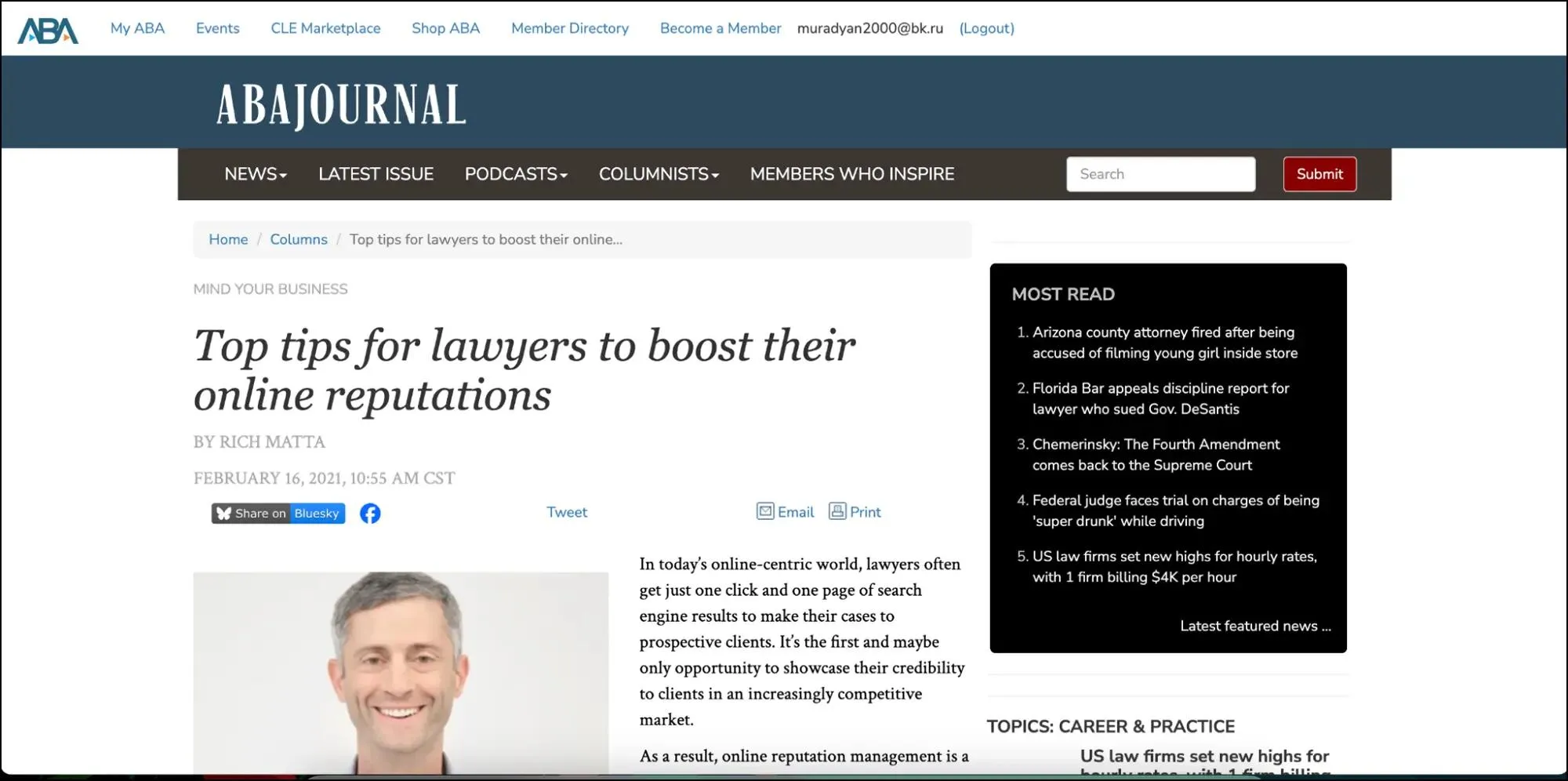
Real example: A great example of thought leadership is an article in ABA Journal titled “Top Tips for Lawyers to Boost Their Online Reputation.” The lawyer shared expert tips on online reputation management, a key concern for legal professionals. This bylined article positions the lawyer as an authority.
That means, when publishing in a respected journal, they showcased their expertise to both peers and potential clients!
3. Video Content Marketing: Educational and Testimonial Videos
Video marketing transforms complex legal concepts into accessible content that builds trust before prospects even contact you. For example, you can create short-form social media clips or longer educational content. Video allows potential clients to see your personality and expertise in action!
How it works: Create a mix of content types: educational explainers answering common questions ("What happens during a divorce mediation?"), client testimonial videos showing real results, behind-the-scenes footage humanizing your team, and short-form clips for TikTok, Instagram Reels, and YouTube Shorts.
Why it's valuable for law firms: Video content is 12 times more likely to be shared than text and images combined. Pages with video are 53 times more likely to rank on page one of Google. Video builds trust by letting prospects see and hear you, making you feel less like a stranger when they call. Client testimonials in video format carry more emotional weight than written reviews.
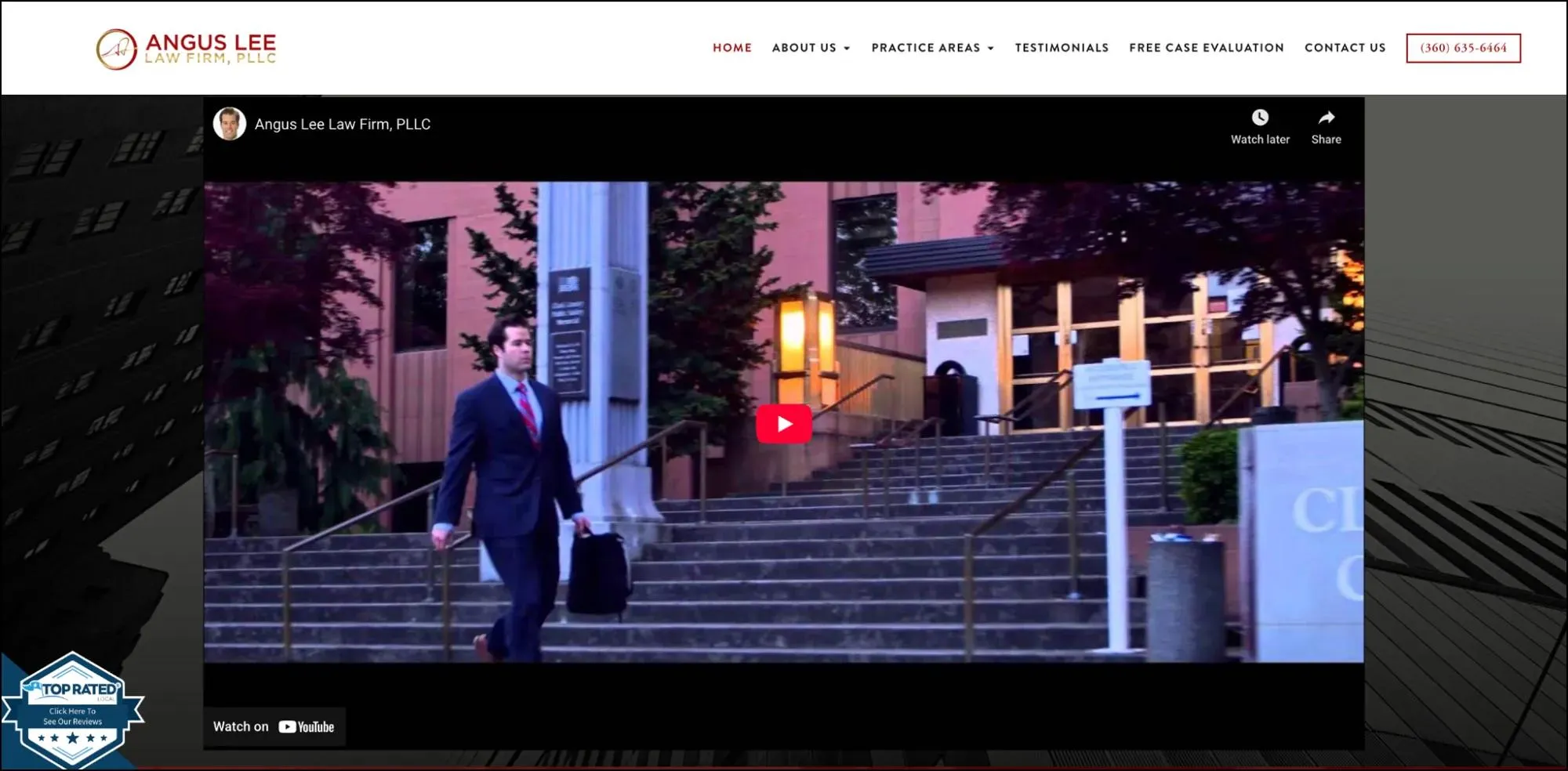
Real example: Angus Lee Law, a criminal defense firm in Vancouver, Washington, launched with a professional brand video on their homepage. In their first year, the video delivered a 1,000% ROI; the founder reported hearing from 50% of new clients that they hired him specifically because they watched the video. The video streamlined consultations by educating prospects before they walked in the door.
4. Strategic Social Media Engagement
Social media isn't just for consumer brands. For law firms, platforms like LinkedIn, Facebook, and even TikTok have become essential channels for establishing expertise, building relationships, and reaching clients where they already spend time.
How it works: Different platforms serve different practice areas:
- LinkedIn works best for corporate law, employment law, and B2B practices
- Facebook excels for personal injury, family law, and estate planning.
- TikTok and Instagram Reels are emerging channels where attorneys share quick legal tips and explainers.
You can share a mix of educational content, firm news, case results (when appropriate), and personality-driven posts.
Why it’s valuable for law firms: Social media keeps you top-of-mind with past clients and referral sources. Educational content demonstrates expertise in bite-sized formats that are easy to consume and share. Platforms like LinkedIn help build relationships with potential clients and other professionals who might refer business.
Real example: Michelle Murphy, known as @TheTradeMarkAttorney on TikTok, shares contract and trademark law tips with short videos that regularly get 200,000+ views. She repurposes this content to LinkedIn, generating qualified leads from both platforms. The approach combines education with brand building, positioning her as an accessible expert!
5. Original Data Studies and Research
Original research positions your firm as a data-driven authority and generates media coverage and backlinks. Journalists need statistics and data to support their stories. And when you're the source, you become the story.
How it works:
- Analyze public legal data and publish findings as original research. Examples: "Analysis of 1,000 employment discrimination settlements in California" or "State-by-state comparison of DUI penalties."
- Create data visualizations, infographics, and press releases.
- Pitch findings to legal and business journalists who cover your practice area.
Why it's valuable for law firms: Original research earns high-authority backlinks because journalists cite your data as the primary source. It demonstrates analytical capabilities that appeal to sophisticated clients. Data studies often get picked up by multiple publications, multiplying your reach from a single effort.
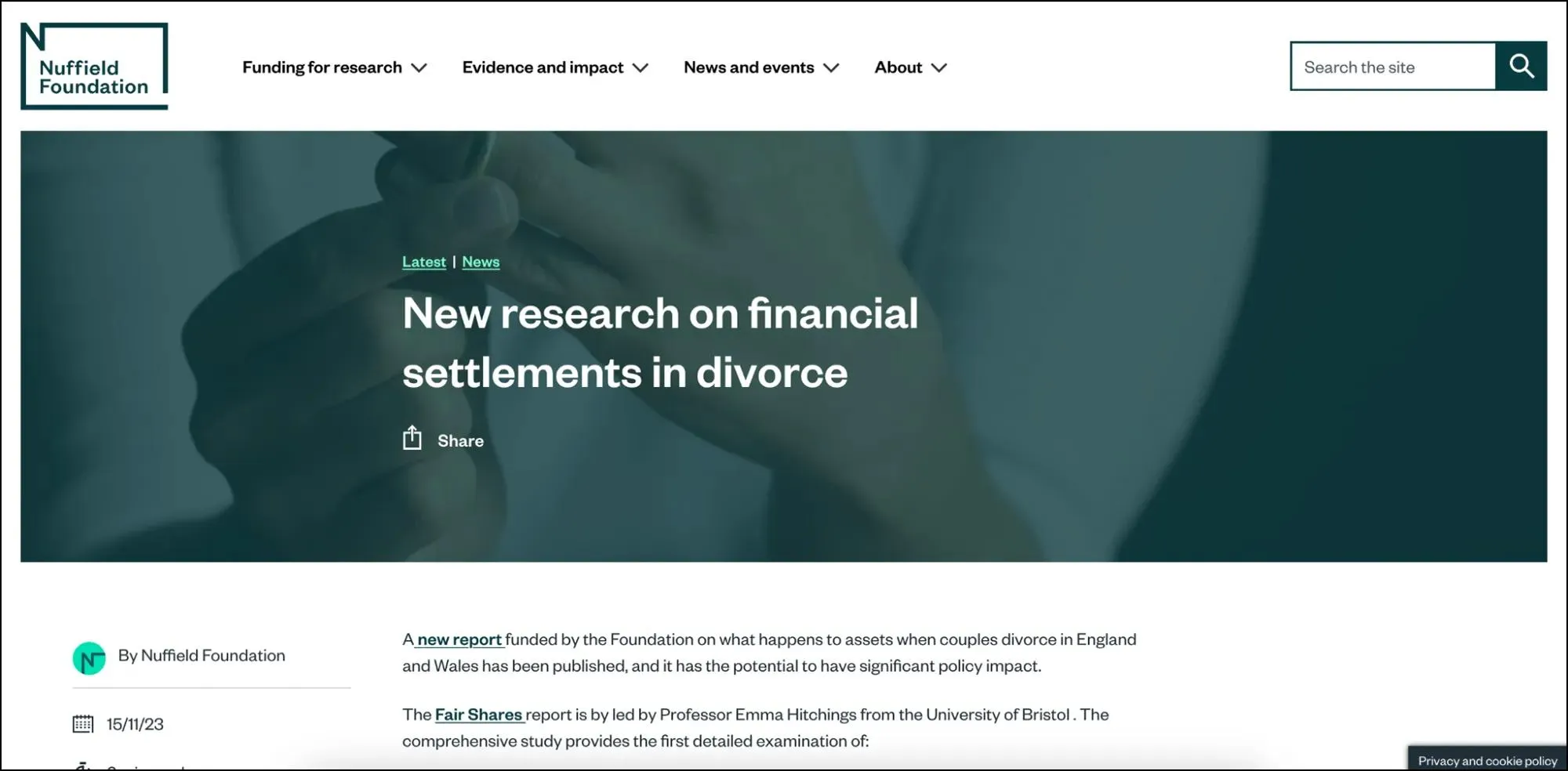
Real example: The Fair Shares Report on Divorce Financial Settlements dives deep into how couples divide assets during divorce in England and Wales, revealing surprising truths that challenge common media myths, especially around high‑wealth splits. This research uncovers real data on property and financial outcomes, offering a fresh perspective on the process. Published by the Nuffield Foundation, it’s already shaking up legal reporting and sparking important policy discussions.
6. Podcast Guest Appearances and Hosting
Podcasts offer an intimate format where you can showcase expertise through extended conversations. You can appear as a guest, you can host your own show. Nevertheless, podcasts build deeper connections than written content alone.
How it works:
- Pitch yourself as a guest expert on podcasts that serve your target audience: legal industry shows, business podcasts where entrepreneurs need legal guidance, or niche shows in industries you serve (construction, healthcare, tech).
- Alternatively, launch your own podcast interviewing clients, other attorneys, or industry experts. Episodes typically include backlinks to your website in show notes.
Why it's valuable for law firms: Podcast audiences are highly engaged, listeners often consume entire episodes while commuting or exercising. The long-form format lets you dive deep into complex topics and showcase your thought process. Podcast appearances position you alongside other recognized experts in your field.
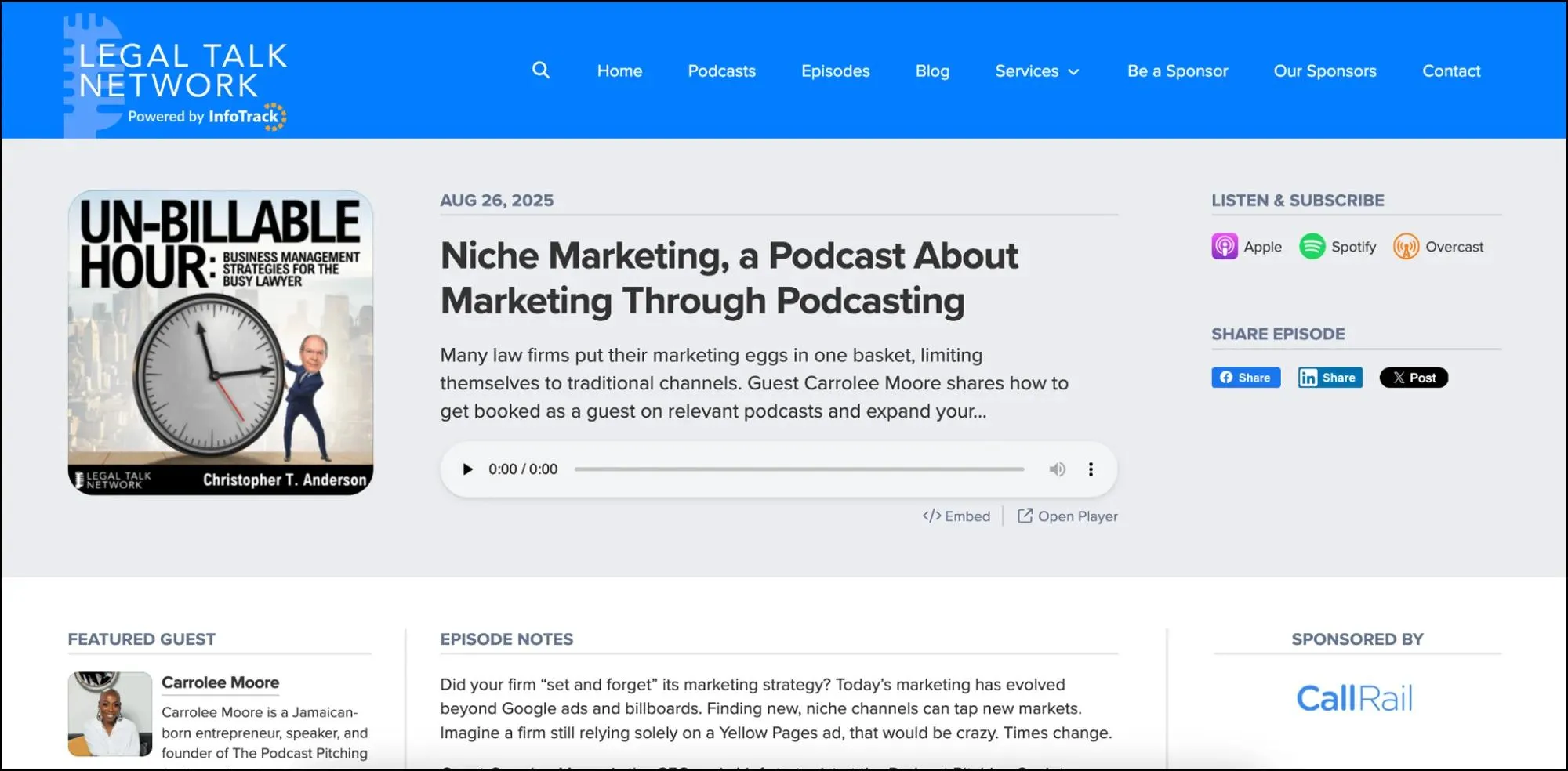
Real example: The “Un‑Billable Hour” podcast invites legal experts to dive into topics like modern firm marketing and strategy in long‑form conversations that educate listeners. Being featured as a guest on shows like this lets lawyers share deep insights, connect with engaged audiences, and position themselves alongside other respected voices in the profession.
7. Co-Authoring Articles with Clients
Co-authoring content with clients creates a win-win scenario: you provide legal expertise while they provide industry-specific insights. The collaboration produces more valuable content than either party could create alone.
How it works:
- Identify clients with complementary expertise or interesting business challenges.
- Propose collaborative articles for industry publications that serve both your audiences. For example, a construction attorney and a general contractor writing about risk management, or an IP attorney and a tech founder discussing patent strategy.
- Split the writing workload and both parties get byline credit and visibility.
Why it's valuable for law firms: Co-authoring deepens client relationships by demonstrating investment in their success beyond billable work. It provides visibility to both the legal and business sides of complex issues. Articles reach your client's network and your network, doubling your exposure. The collaborative approach often leads to referrals as clients see you as a true partner.
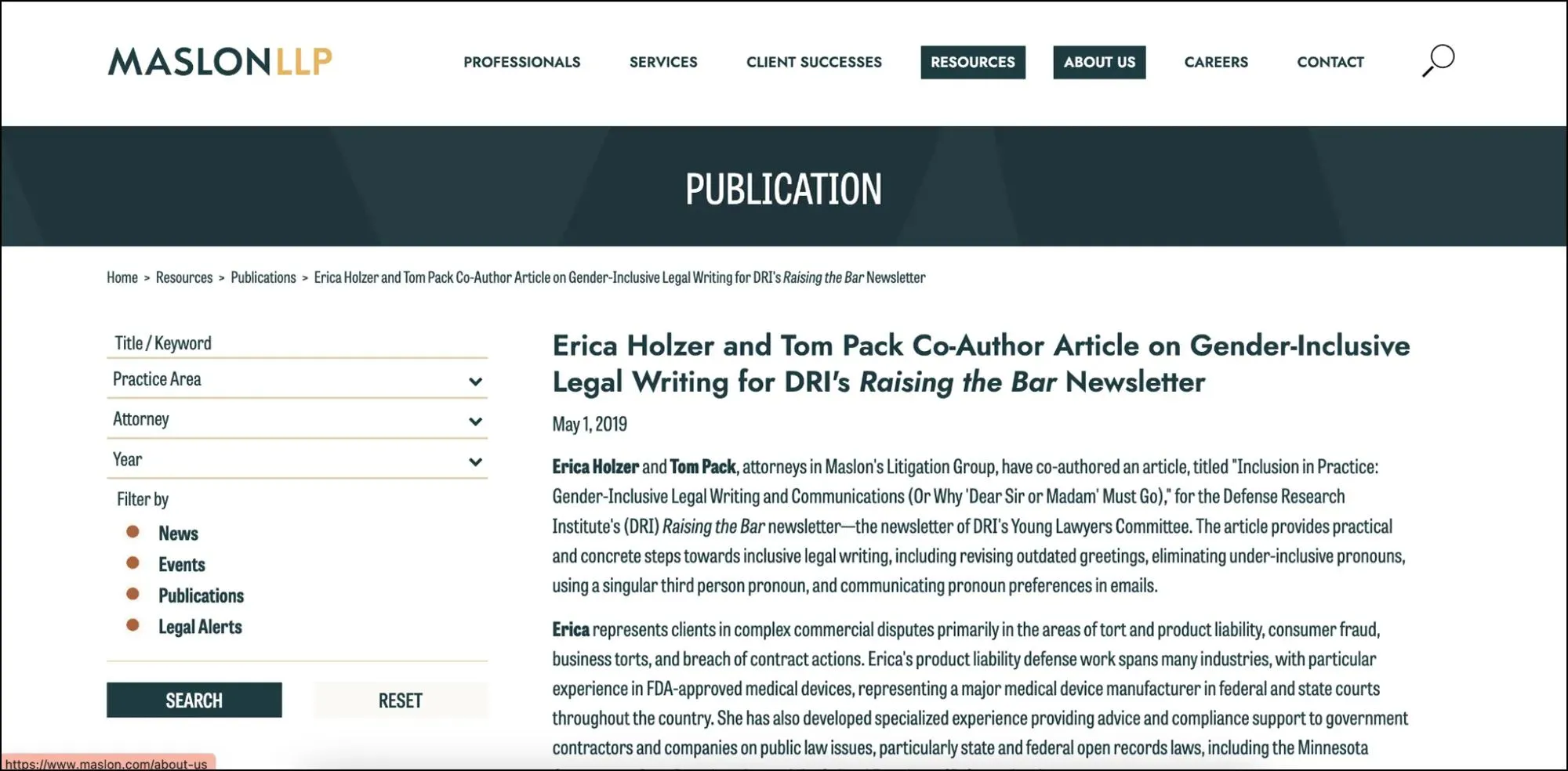
Real example: Two attorneys from Maslon’s Litigation Group teamed up to co‑author a bylined article on inclusive legal writing for the Defense Research Institute’s Raising the Bar newsletter. The piece blends perspectives from two legal professionals and was published in a respected legal newsletter.
This is exactly the kind of collaboration that doubles the reach; the article gets seen by readers in the client’s industry and the lawyer’s professional network, and both authors benefit from the exposure.
Which KPIs Can Law Firms Track to Measure Digital PR Effectiveness
Track both visibility metrics and business metrics. Most firms do best focusing on 5-7 core KPIs rather than tracking everything.
Website Traffic and Referral Traffic
- Website traffic indicates overall visibility growth.
- Referral traffic directly measures PR placement effectiveness.
Website traffic helps assess whether your firm’s online presence is growing in response to your digital PR activities. By analyzing where the traffic is coming from and which pages attract the most visitors, you can see which content is resonating with your target audience.
Search Engine Rankings
Monitor 10-15 high-value keywords monthly that are relevant to your practice areas. For example, a family law firm might track keywords like “divorce lawyer Chicago” or “child custody attorney New York.”
Quality backlinks from media placements and PR efforts gradually improve search engine rankings over a period of 3-6 months, not overnight. Expect a steady, gradual improvement in rankings as these backlinks build authority for your website.
Backlink Quality and Domain Authority Growth
Prioritize links from sites with Domain Rating 40+ in legal or business categories. One high-authority link beats 50 low-quality links.
Strong performance looks like 10-20 new quality backlinks per quarter for small firms, 30-50+ for larger firms.
Conversion Rate and Lead Generation
Conversion rate measures the percentage of visitors who take action. Legal services average 7.4% visitor-to-lead conversion rate.
Track which media placements drive conversions using UTM parameters and CRM source tracking.
Brand Awareness and Reputation Metrics
To measure the success of your PR efforts, monitor key brand awareness and reputation metrics. This includes tracking branded search volume (how often your law firm’s name is searched), social media mentions (how frequently your firm is talked about on platforms like Twitter, LinkedIn, and Facebook), and review ratings (on Google, Yelp, or other platforms).
These metrics give insight into how well your firm’s brand is being recognized and how your reputation is growing. The key question to always ask is: “Did this PR effort bring in cases?” Tracking this will help you understand if your efforts are translating into tangible business results.
Best Practices for Executing a Successful Digital PR Strategy
Develop a Content Calendar Aligned with Legal Trends
Publish 2-4 substantive pieces per month. Plan content around predictable events like tax season and legislative sessions, but leave flexibility for breaking news.
Content mix: 40% evergreen educational content, 30% timely commentary, 30% original research.
Prioritize Quality Over Quantity in Media Outreach
Send 10 highly personalized pitches to relevant journalists rather than 100 generic blasts.
One polite follow-up 3-4 days later. If no response, move on.
Use Social Media Strategically
Different platforms work for different practice areas:
- LinkedIn: Corporate law, employment law, business litigation
- Facebook: Personal injury, family law, estate planning
- X (Twitter): Legal commentary and journalist engagement
Manage Online Reputation Proactively
Monitor reviews across Google, Avvo, and Yelp. Respond to all reviews within 24-48 hours.
Next Steps for Your Firm
Digital PR represents a real opportunity for law firms willing to invest in building authority over time. The firms seeing results are the ones treating PR as a system, not a one-time campaign.
Start with an audit of your current digital presence. Identify 3-5 journalists covering your practice area. Create one piece of original research or data-driven content. Then pitch it.
The 14-month timeline to break-even might feel long, but the compounding effect is real. Every backlink, every media mention, every bylined article adds to your authority in ways that paid ads simply can't replicate.
Submit the form - Get Free Proposal
%202.png)
24 hours
Submit the form - Get Free Proposal
24 hours