How to Write a Press Release That Gets Media Coverage in 2026

After helping clients land coverage in publications from TechCrunch to Forbes, I've noticed something: most press releases fail before a journalist even finishes the first paragraph. The format looks simple on paper, but the difference between a release that gets picked up and one that gets deleted comes down to a few specific choices.
Here's the thing about learning how to write a press release: the structure hasn't changed much in decades, but what journalists expect from that structure has. They're drowning in pitches, skeptical of AI-generated content, and hungry for stories they can actually use.
This guide walks through everything from the basic format to distribution strategy, with real examples and the mistakes I see teams make over and over.
What Is a Press Release?
A press release is an official written statement sent to journalists announcing something newsworthy. The goal is simple: get media coverage while controlling how your story gets told.
You'll hear different names for the same document. News release, media release, press statement: all interchangeable. What changes is what you're announcing: a product launch, funding round, executive hire, partnership, award, or crisis response.
The Cision 2025 State of Media Report found that 79% of journalists rely on press releases to generate story ideas. That's not a dying format, delivering an average ROI of 100-175% over 90 days.
What's changed is how we use them. The same release now gets repurposed across social media, email newsletters, and blog posts.
One thing worth watching: AI is changing the game. According to PR Newswire's 2025 Global Report, 57% of comms professionals now use AI to draft releases, with 64% using AI-powered tools for content creation and campaign analytics. But 72% of journalists worry about factual errors in AI content, so human verification matters more than ever.
How a Press Release Works?
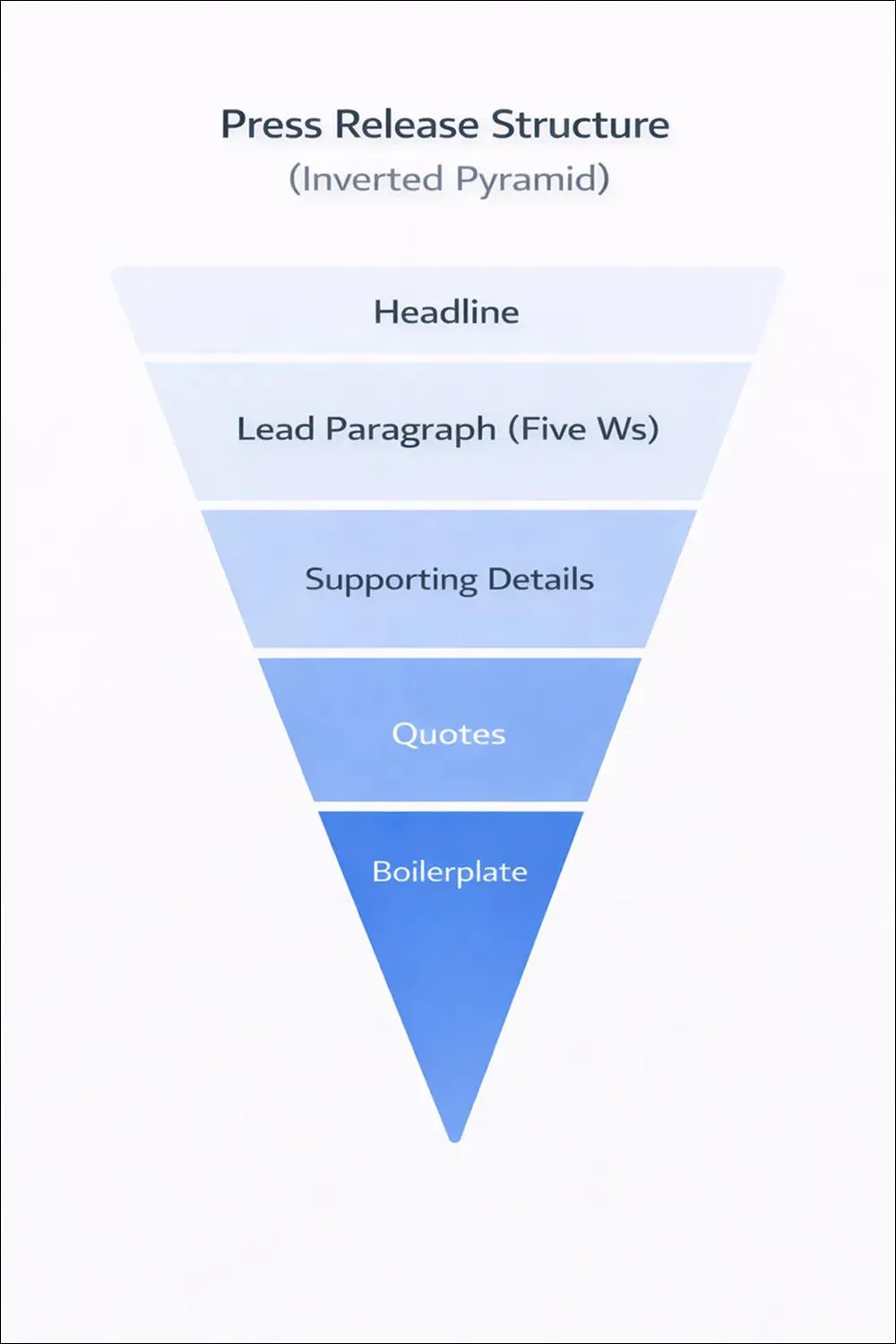
The structure follows what journalists call the inverted pyramid. Put the most important information first, then add supporting details in descending order of importance.
This matters because journalists can grab the story quickly or cut from the bottom without losing the core news. According to a Muck Rack 2024 Survey, 46% of journalists receive 6+ pitches daily, yet only 45.3% are opened. Your release has seconds to prove its worth to read.
When to Write a Press Release?
Not everything deserves a press release. Ask two questions before writing one: "Who cares beyond our organization?" and "Is this timely, significant, or unexpected?". If you can't articulate why an external audience cares, don't issue the release.
Scenarios that typically warrant a press release:
- Product or service launches: New offerings solving a documented problem
- Funding and investments: Series rounds, capital raises, strategic investor announcements
- Company milestones: Revenue thresholds, customer acquisition numbers, market expansion
- Executive appointments: C-suite hires or board additions with industry significance
- Events and conferences: Major speaking engagements, product unveilings
- Partnerships: Strategic alliances, technology integrations
- Awards: Third-party industry recognition, certifications
- Crisis communications: Official statements addressing incidents or recalls
Types of Press Releases
Different announcements call for different emphasis. Choosing the right format helps journalists immediately understand the story and decide whether it fits their beat.
Product Press Release
Product releases focus on what you built and who it helps. Lead with the core problem your product solves, then cover features, benefits, pricing, and availability. Include technical specs if you're targeting trade or industry publications, but keep them scannable.
A strong product release also includes a proof point beta results, early adoption numbers, or a customer quote that shows real-world impact rather than just a feature list).
Launch Press Release
Launch releases are broader than product announcements. They cover company launches, service debuts, rebrands, or market entries. The key angle here is "why now" - what market shift, customer demand, or industry gap makes this launch timely?
If you're entering a crowded category, address what makes your approach different. Journalists hear about new companies every day; they cover the ones with a clear reason to exist right now.
Event Press Release
Event releases prioritize logistics first: date, time, location, format (in-person, virtual, or hybrid), speakers, and registration details. But logistics alone don't earn coverage. Answer why someone should care enough to attend - a keynote from a notable speaker, an exclusive product reveal, or access to unreleased research.
If you have past attendance numbers or notable past speakers, include them to establish credibility.
Partnership and Acquisition Press Release
These releases need to tell a clear story about what both parties gain. Include deal terms if they're public, the strategic rationale behind the partnership, and what the combined capabilities mean for customers.
Get quotes from leadership on both sides. Journalists notice when only one party is quoted, and it raises questions. For acquisitions specifically, address what happens to the acquired company's existing customers and team.
Award Press Release
Award releases work because they carry built-in third-party validation, but only if you provide context. Include who gives the award, what the selection criteria are, how many companies were considered, and what category you won in. A generic "we're honored" quote adds nothing. Instead, tie the award back to specific results or milestones that led to the recognition.
Essential Elements of a Press Release
Every press release includes specific components. Miss one, and you look unprofessional.
Release Timing Indicators
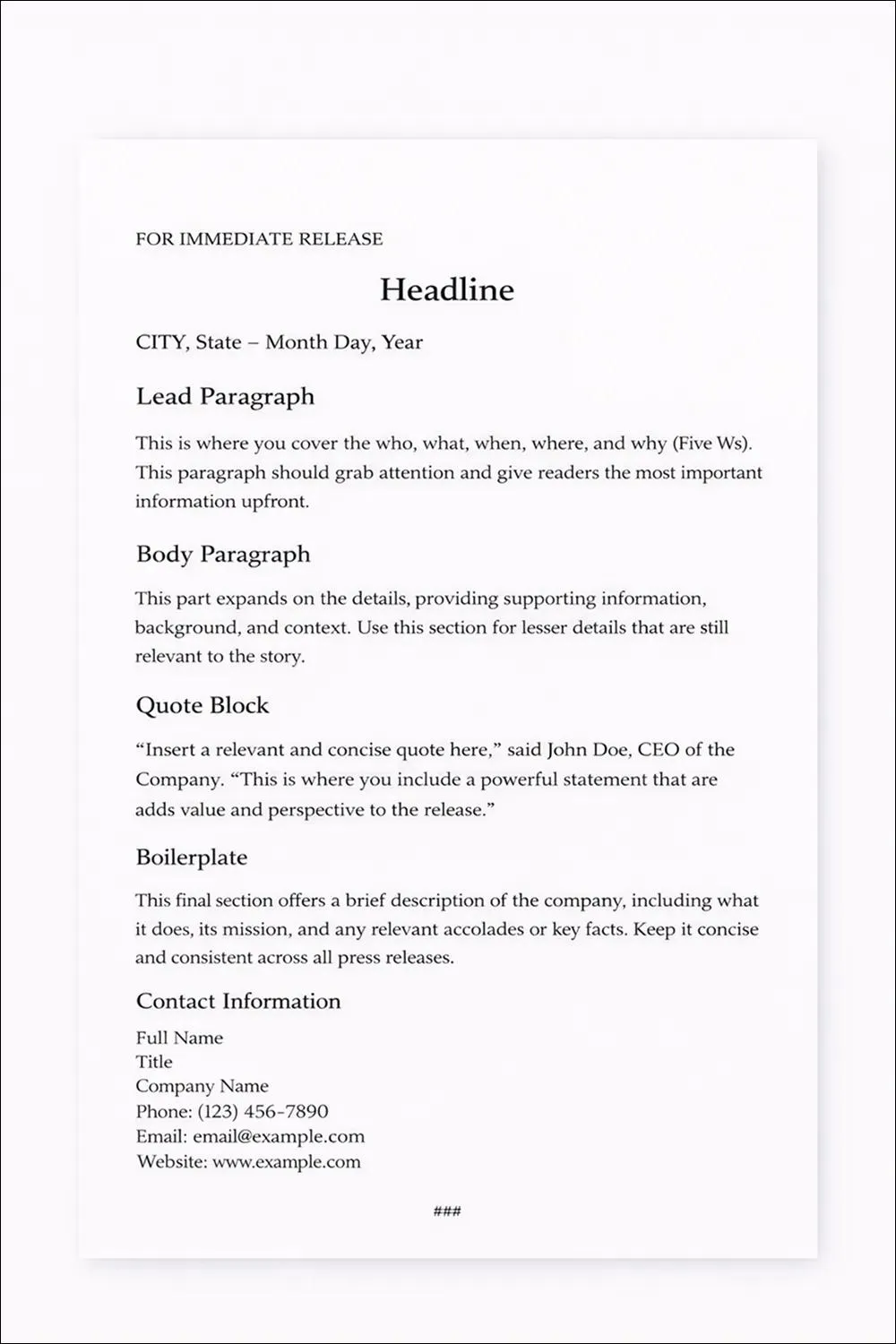
Place "FOR IMMEDIATE RELEASE" at the top left. This tells journalists they can publish right away. If you want them to hold the story, use "EMBARGOED UNTIL [Date/Time]" with timezone included.
Headline
According to PRSA's headline analysis, 79% of headlines exceed 65 characters. Stay around 55 to avoid truncation.
Use active voice and present tense. "Acme Corp Raises $50M Series B to Expand AI Platform" works. "Acme Corp Announces Funding" doesn't.
Subheadline
Optional but useful. Add a supporting detail or proof point like "Investment led by Sequoia Capital brings total funding to $120M."
Dateline
Format: CITY, STATE – Date. Example: "SAN FRANCISCO, CA – February 4, 2026 –"
Lead Paragraph
Your first 1-2 sentences answer the Five Ws: Who, What, When, Where, Why. A journalist reading only your lead paragraph can write their own headline and opening.
Body Paragraphs
Expand on the lead with context, background, and proof points. Each paragraph gets less critical than the one before. Editors cut from the bottom.
Quotes
Add a human perspective that journalists can use directly. According to Cision's 2024 Report, journalists prefer executive quotes for strategy and vision.
Boilerplate
Your standard "About" section: 2-4 sentences covering founding year, mission, key products, notable metrics, and website URL. Keep this consistent across releases.
Contact Information
Include media contact name, title, company, direct email, direct phone, and timezone.
Call to Action
Optional. Link to a product page, event registration, or demo request. Place after boilerplate.
End Notation
Center three pound signs (###) or "END" to signal the release is complete.
Press Release Format and Structure
Here's the standard order:
| Element | Location | Purpose | Length |
|---|---|---|---|
| Release Timing | Top left | Publication instructions | 1 line |
| Headline | Below timing | Capture attention, convey news | 55–80 characters |
| Dateline | Start of body | Geographic/temporal context | 1 line |
| Lead Paragraph | First paragraph | Answer Five Ws | 1–2 sentences |
| Body | Middle section | Supporting details, context | 2–4 paragraphs |
| Quotes | Within body | Human perspective, soundbites | 1–2 quotes |
| Boilerplate | End of body | Company background | 2–4 sentences |
| Contact Info | After boilerplate | Media inquiries | 3–5 lines |
| End Notation | Bottom center | Signal completion | 1 line |
For formatting: single-spaced body, double-space between paragraphs, 1-inch margins, 11-12pt standard font (Times New Roman or Arial), left-aligned.
How to Craft an Effective Outreach Pitch
When reaching out to journalists, your pitch needs to be clear, concise, and compelling. Here’s how to ensure your outreach stands out:
- Clarity and Understandability: Your pitch should be easy to understand. Clearly state the purpose and main points of your research or article right from the beginning.
- Three Main Points: Include the three most important findings or aspects of your research in the pitch. These points should capture the essence of your work and grab the journalist's attention immediately.
- Subject Lines: The subject line is crucial. Make sure it mentions the date or indicates that the research is recent, as journalists prefer up-to-date information. Each subject line should be tailored to the specific journalist and should ideally include numbers to highlight key data points. Avoid misleading subject lines, as this can lead to your email being ignored or marked as spam. Your subject line should accurately convey what the press release is about.
Subject lines must also follow a specific guideline. Generally, here’s what makes a good email subject line:
- Emotive Words: Include words that communicate urgency, recency, and timeliness to grab the reader's attention immediately. For example, "Urgent: Latest Study Reveals Declining Homeownership Rates".
- Reference Research: Use words like Report, Study, Survey, Map, or Data to give your email more credibility and better performance. For example, "New Report: 2023 Trends in Renewable Energy Adoption".
- Factual Statements: Subject lines with factual statements perform consistently well across all sectors. For example, “[X]% of Americans do [Y] in 2024” or “25% of Served Don’t…”
- Compelling Statements: Use statements that draw the recipient in and make them want to read more. For example, “More Americans Are Living off of Their Parents' Money, Study Finds.”
- Combined Format: Combine facts, statements, and indicators of recency or timeliness in a single subject line to create a powerful impact. For example, “Urgent Study, 2020: 45% of Teens Face Online Bullying".
- Curiosity and Interest: Include numbers or words that pique the recipient’s natural curiosity and interest. For example, "10 Surprising Facts About Teen Nutrition in 2023".
- Match Tone and Trends: Align your subject line with the tone and trends of the journalists you are pitching to ensure relevance and engagement.
- Personalization: Personalize the subject line by including the journalist’s name, the publication they work for, location, or any other relevant detail. For example, “John, Exclusive Insights for The Tech Journal on AI Innovations".
- Main Point Focus: Make sure the subject line reflects the main point of the entire press release. Avoid writing something that is not presented in the content.
- Concise Length: Aim for a subject line length of around 60 characters or 4 to 7 words. Being concise is generally better than using complex and flowery language.
Here are some examples of good subject lines:
- Subject Line 1: Reimagining King Charles' £100M Coronation: What pressing challenges could be solved?
- Subject Line 2: Google’s New AI Chatbot Bard: Mysterious Origins Revealed
- Subject Line 3: Top house-moving tips: Experts Reveal
How to do An Outreach?
The outreach stage involves contacting the selected journalists. Typically, you might reach out to between 1,500 and 2,000 journalists using bulk outreach methods. It’s important to note that journalists often do not respond directly, so you may need to check if your press release has been published by using tools like Ahrefs’ backlink checker or setting up alerts to track new publications.
Pro Tip: Journalists check their messages even on Sundays, and research indicates that they are most likely to publish press releases on this day. Therefore, timing your outreach to include Sundays can be beneficial in getting your content published.
After handpicking the journalists, the next step is to launch your outreach campaign. There are various tools like Outreach.io and ClickUp for managing outreach, but Instantly.ai is particularly effective for easily managing your campaigns. It also allows you to track the open rates of your communications, helping you monitor and refine your outreach strategies efficiently.
Here’s how to do it using Instantly.ai:
1. Prepare Your Email List: Compile the list of journalists you have selected, ensuring that their contact information is accurate and up to date.
2. Set Up Your Campaign on Instantly.ai:
- Log In: Access your Instantly.ai account.
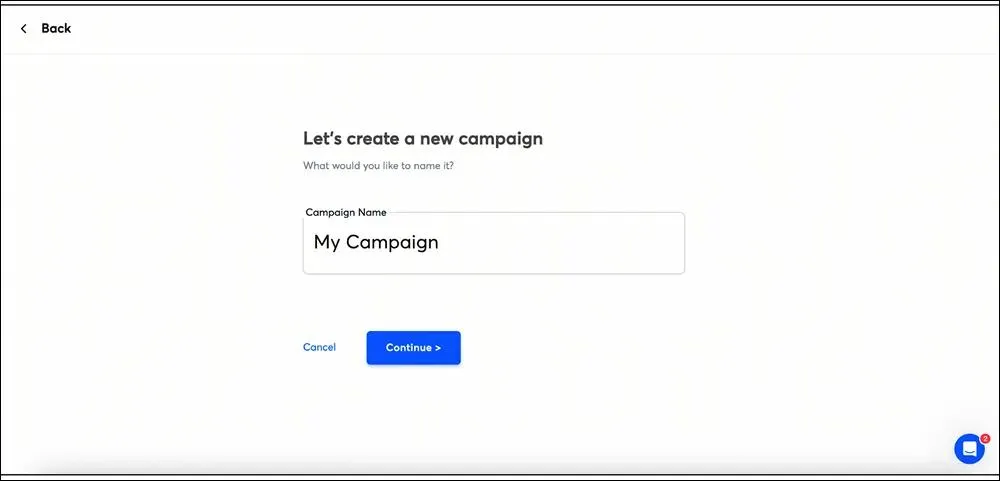
- Create a New Campaign: Click on the option to create a new campaign.
- Import Contacts: Upload your list of journalists to the platform.
- Send the Pitch: In the next step, you only need to add the pitch along with the follow- ups. Then go to Options and choose the account from which the outreach should be done.
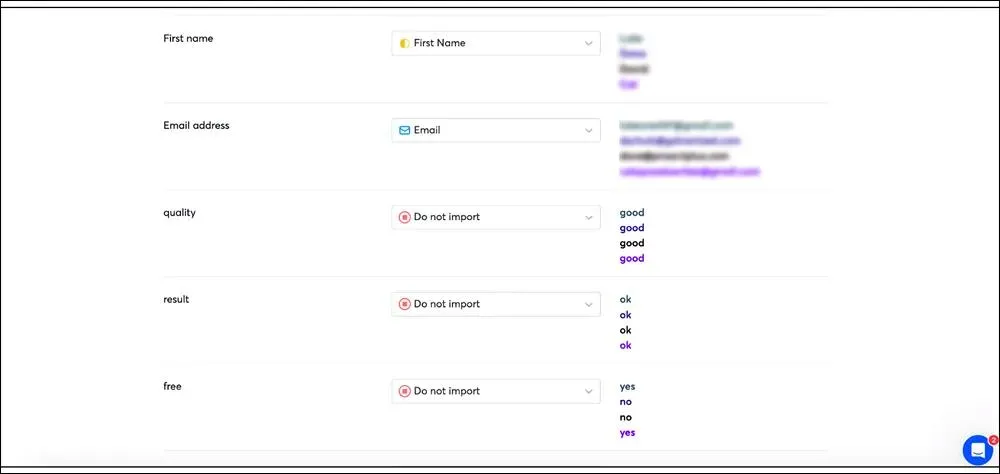
3. Monitor Campaign Performance: Use Instantly.ai’s analytics tools to track the performance of your campaign. Pay attention to open rates, click-through rates, and responses to measure the effectiveness of your outreach.
How to Distribute Your Press Release?
A three-tier approach works well:
- Tier 1 (Wire services): PR Newswire, Business Wire, and GlobeNewswire reach thousands of outlets
- Tier 2 (Targeted outreach): Email 10-20 beat-matched journalists with a personalized 150-word pitch plus link to the full release
- Tier 3 (Owned channels): Post to your company newsroom, share on LinkedIn with pull quotes, send to email subscribers
According to Propel's data, pitches of 51-150 words get a 7.49% response rate, though the overall average is just 3.43% across 400,000 pitches.
Tip: Send wire and journalist emails simultaneously. Post to owned channels one hour later. Follow up once after 3-5 days with non-responders.
Turn Your Press Release Into Real Media Coverage
Distribution is just the beginning. Set up Google Alerts for your company name. Respond to journalist inquiries within 2 hours. After a journalist covers your release, send a thank-you email and offer to be a source for future stories.
Repurpose coverage: create "As Seen In" badges for your website, share media mentions on social with journalist tags, and include top-tier coverage in sales decks.
Press releases remain one of the most direct paths to earned media coverage. Start with one announcement, follow the format, and track what works. Learn how our Digital PR services can help your brand grow!
Submit the form - Get Free Proposal
%202.png)
24 hours
Submit the form - Get Free Proposal
24 hours