How Much Does Digital PR Cost in 2026?

After working with digital PR for years, the question I still get the most is: how much does digital PR cost?
To answer it, we looked at agency pricing pages, freelancer rate cards, and common package structures across the market, and here’s what we discovered:
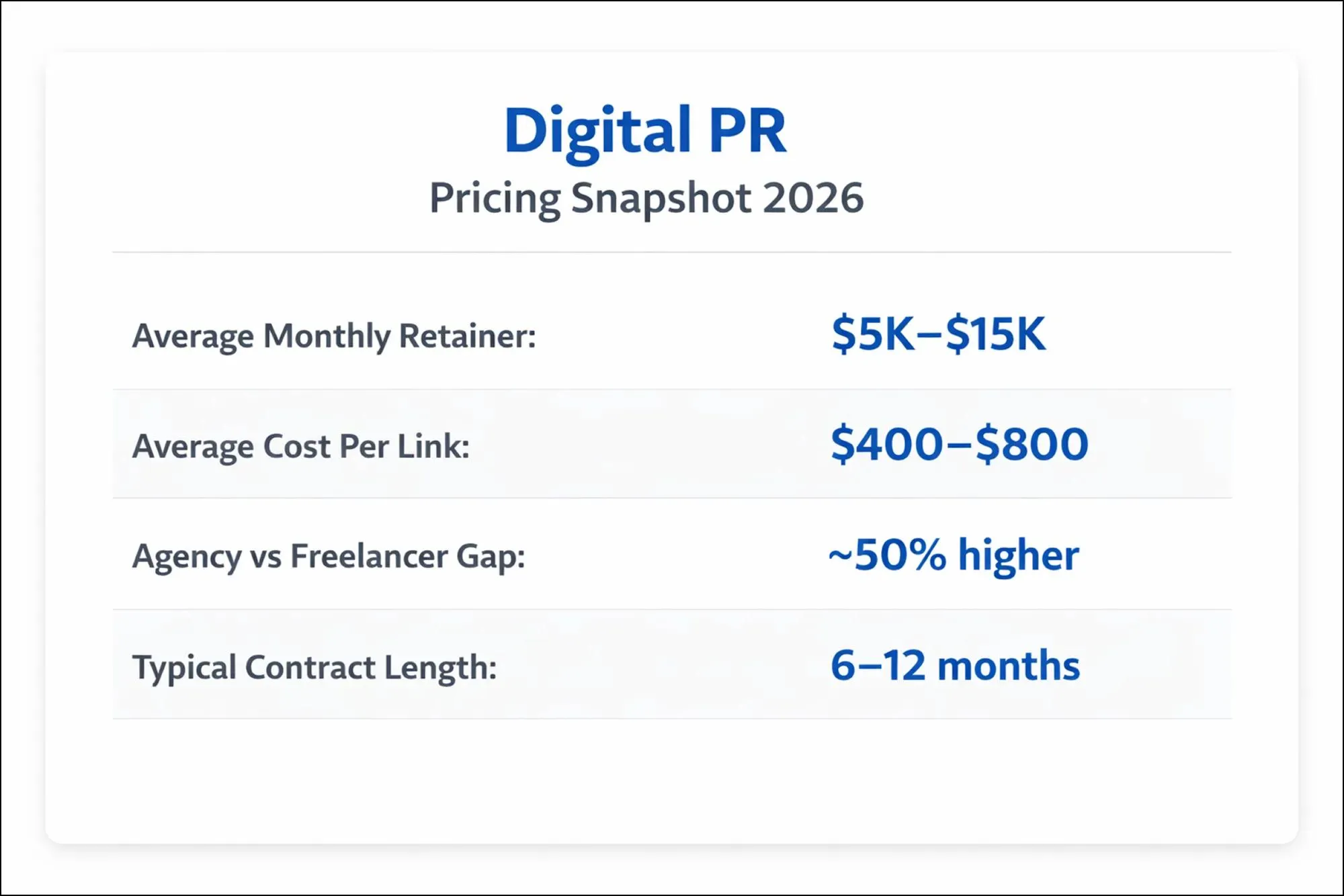
- Monthly retainers usually range from $5,000 to $15,000
- Entry-level programs, often focused on reactive PR, range from $3,000 to $7,500
- Large data-driven or tier 1-focused campaigns can range from $15,000 to $30,000 or more
- Freelancers and consultants often charge 30% to 50% less than agencies for similar hours
I put together this guide to give you the real numbers. You'll see exactly what agencies charge, what freelancers cost, and when building an in-house team makes sense. More importantly, you'll understand why prices vary so much and how to figure out what's reasonable for your situation.
What You're Actually Paying For with Digital PR
Let me start with the uncomfortable truth: digital PR is expensive because it's a people business. It comes down to time and expertise.
According to the PR Council's 2025 U.S. Labor Billing Rate Report, which analyzed data from 152 member firm offices representing 73 agencies and 18,000 client rates, the average hourly billing rate for PR professionals hit $278 in 2025 (up 7% from $252 in 2023).
Here is what that often looks like in practice:
- 15 hours for strategy and research: around $4,000
- 20 to 30 hours for content development: $5,500 to $8,000
- 15 to 25 hours for personalized outreach and follow-ups: $4,000 to $7,000
- Reporting and performance analysis: $1,500 to $3,000
Even a moderate campaign can take 50 to 80 professional hours. That is why monthly retainers often start above $5,000.
Digital PR also depends heavily on relationships. A typical campaign includes:
- Building a media list of 30 to 100 journalists
- Sending personalized pitches, not mass templates
- Following up in multiple stages
- Managing ongoing media relationships
These tasks take time and are usually handled by experienced strategists, not automated tools.
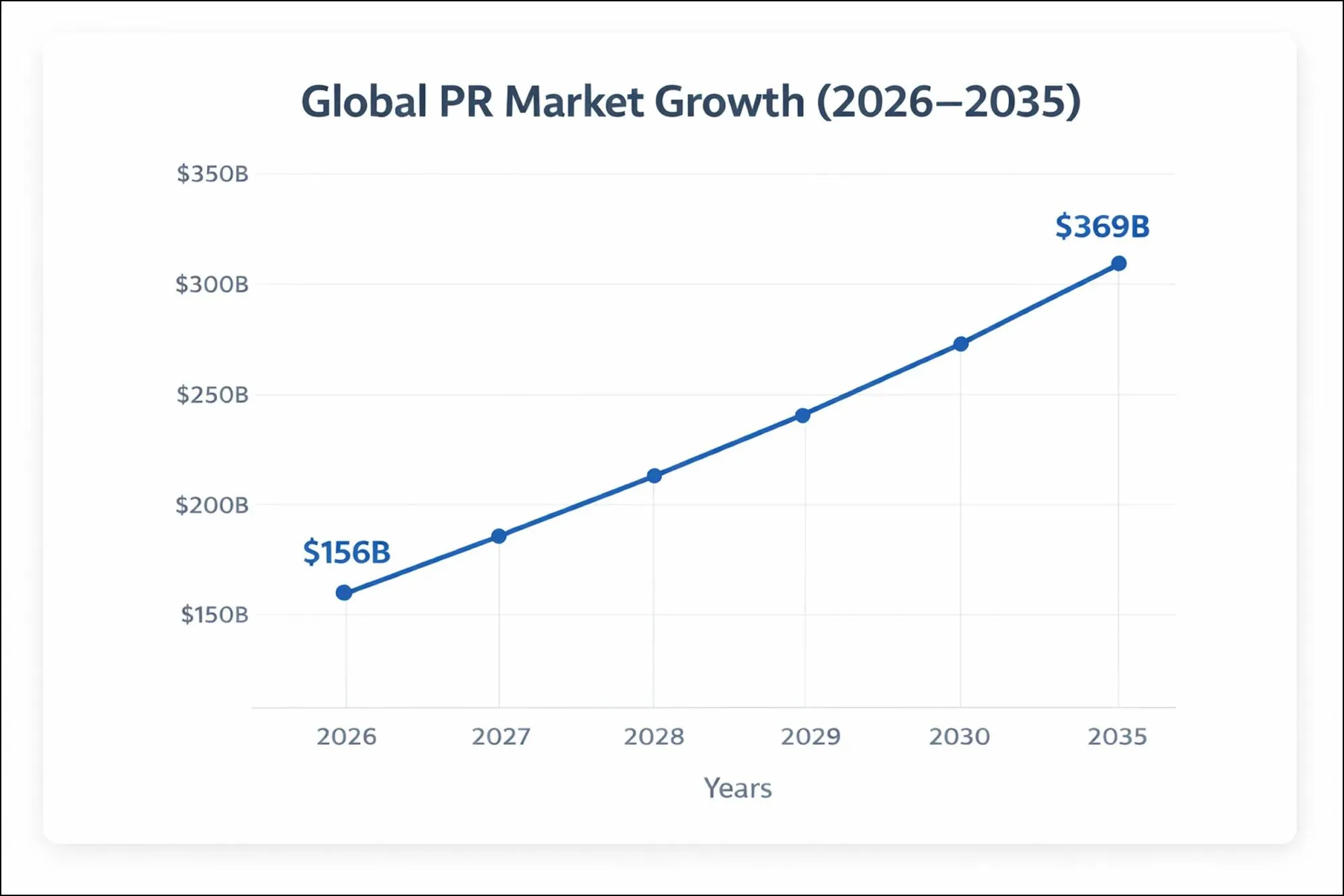
The market is growing fast, too. The global public relations market is valued at about $156.08 billion in 2026 and is projected to grow to $368.93 billion by 2035. That's a 10% annual growth rate, which tells you something: companies see value here.
Digital PR Pricing Models and Agency Packages
When you hire a PR agency, you may encounter four main pricing structures:
Monthly Retainers
Ongoing digital PR work usually ranges from $5,000 to $15,000 per month, depending on the scope.
Here is what brands typically get at different levels:
Around $5,000 per month:
- Reactive PR and journalist request monitoring
- 1 to 2 proactive pitches per month
- Outreach to 15 to 25 journalists
- Basic monthly reporting
$10,000-$15,000 per month
- Quarterly data-driven or hero campaigns
- Outreach to 30 to 50 targeted journalists
- Broader proactive pitching
- Detailed reporting and performance tracking
$15,000 or more per/month
- Large scale hero campaigns with multimedia assets
- Targeting tier 1 publication
- Ongoing media relationship management
- Weekly analytics and strategy adjustments
As the scope grows, more of the budget goes toward original research, content production, and senior level outreach.
Contract Length
Most retainer agreements run between 6 to 12 months.
Short-term contracts under three months are rare for earned media campaigns. Agencies may offer a small pricing discount of around 10% to 15% for longer commitments , especially annual agreements. Makes sense: they're investing in building relationships that take time to pay off.
Project-Based Campaigns
If you're not ready to commit to a monthly retainer, project-based pricing lets you test digital PR with specific campaigns.
Based on market pricing and agency proposals, most projects fall into three levels:
$5,000 to $10,000
- A single story angle using existing data
- A 2 to 3 week execution timeline,
- Outreach to 15 to 20 relevant publications
$15,000 to $20,000
- Moderate original research,such as 200 to 300 survey responses or data points
- Custom visual assets
- Outreach to 30 to 40 targeted publications
$20,000 to $30,000 or more
- Large-scale original research, such as 500 or more survey respondents or proprietary datasets
- Interactive or multimedia content production
- Targeting tier-1 publications with 50 or more media contracts
Pay-Per-Link Pricing
Cost per link, or CPL, usually ranges from $400 to $800 per secured placement. The price depends on the authority of the publication and the industry.
On the surface, it is simple. You only pay when a link is delivered.
But when payment is tied directly to link volume, it can shape how campaigns are run.
Securing coverage in high authority publications often takes more research, stronger angles, exclusivity, and senior-level outreach. Because of that, CPL programs tend to focus more on scalable link building than long-term brand positioning.
In most cases, this model is used for:
- SEO focused link building
- Journalist requests monitoring
- Guest posting services
It is less common among agencies running large earned media campaigns built around original research or hero content.
Some providers also set minimum authority requirements in their CPL agreements, especially when targeting mid to high-tier publications.
Hourly PR Consulting Rates
Hourly billing is still common for advisory work where ongoing execution is not included.
In the U.S, PR agency hourly rates average from $270 to $278
Freelancers and consultants typically charge 60%-80% of agency rates:
- Junior practitioners: $75 to $150 per hour
- Senior specialists: $150 to $250 per hour
- Industry experts: $250 or more per hour
Hourly pricing is most often used for:
- Strategy audits
- Media training
- Campaign planning without execution
- Short term advisory support
This model offers flexibility, but monthly costs can vary depending on the hours used. For ongoing digital PR work, many agencies move clients to retainer agreements to create more predictable budgeting and a clearer scope.
What Your Digital PR Budget Pays For
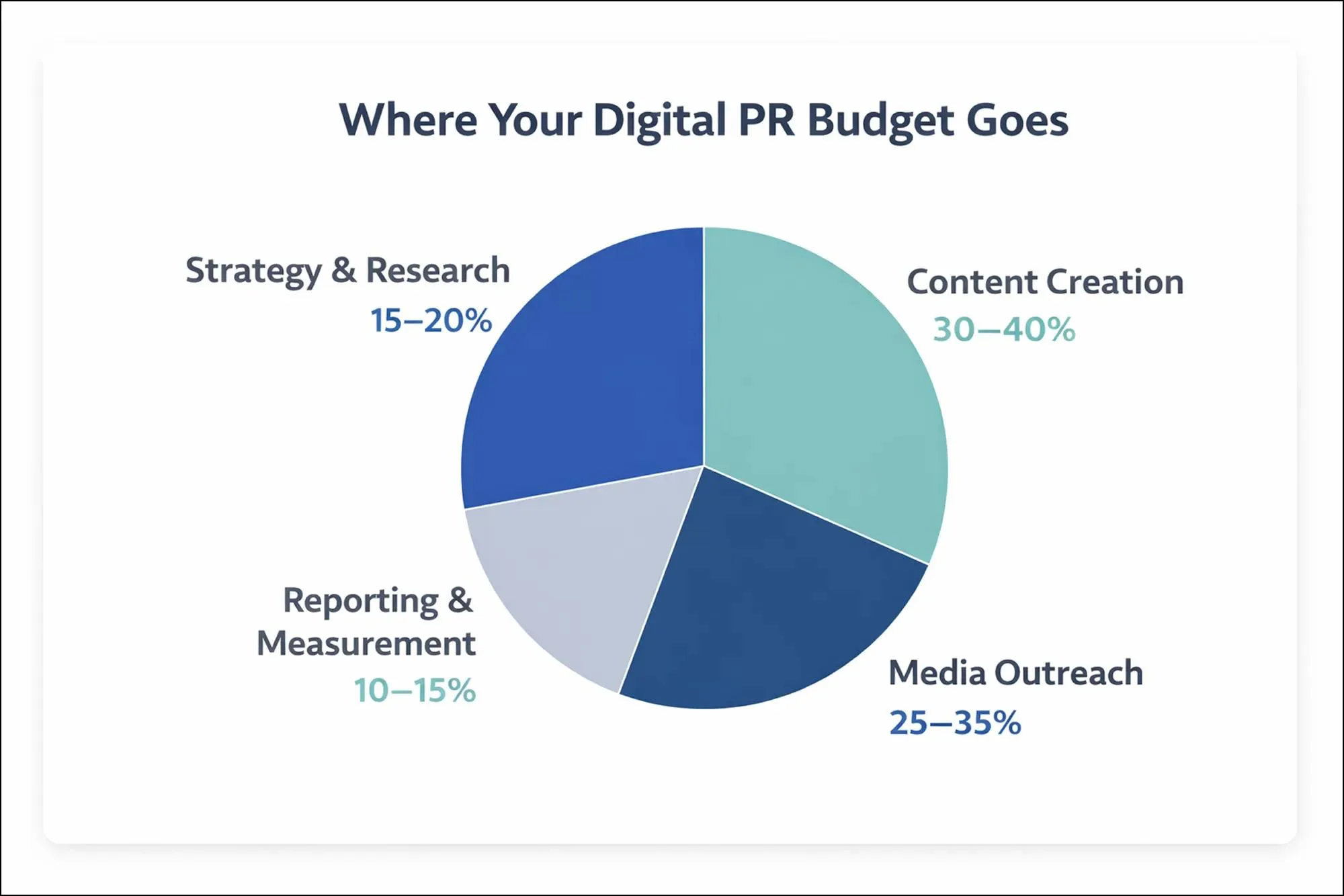
Here's where your money goes:
Strategy and Research
Strategy and research usually make up about 15 to 20% of a digital PR budget.
For a typical campaign, this stage takes around 10 to 15 professional hours, depending on how complex the project is.
This phase often includes:
- Setting clear and measurable objectives, such as domain authority targets, traffic benchmarks, or specific publications to secure)
- Reviewing competitors and defining your positioning
- Building a targeted media list of 30 to 100 journalists who cover relevant topics
Relevance matters a lot. 86% of journalists reject pitches because they're not relevant to their beat.
Content Creation
Content production usually takes up the largest part of a digital PR budget, often around 30 to 40% of the total campaign cost.
Earned media campaigns depend on useful, value-driven content, not promotional copy. Common content investments include:
- Data studies: $5,000 to $15,000.This covers research design, data collection, analysis, and visuals.
- Infographics: $500 to $2,500, Professional design to present findings clearly
- Interactive tools: $5,000 to $20,000 or more. Includes development, testing, hosting
- Video assets: $2,000 to $10,000. Covers scripting, production, and editing
With 87% of journalists using supplied multimedia, the baseline package needs to include pitch materials, press releases, and visual assets. Cutting corners here kills your placement rate.
Media Outreach and Relationship Building
Media outreach usually makes up 25 to 35% of a digital PR budget, depending on how large the campaign is.
Here's what quality outreach actually looks like:
- Personalized pitches sent to 30 to 50 carefully selected journalists
- Follow-up messages over a one or two week period
- Ongoing relationship nurturing beyond active campaigns
- Access to established media networks, often 100 to 300 active media contacts built over time
Journalists receive over 100 pitches weekly but respond to only 3.15%. That is why results depend heavily on relevance, personalization, and strong media relationships.
This is why experienced PR professionals ask for premium rates; they've spent years building these relationships, so journalists will actually open their emails.
Measurement and Reporting
Measurement and reporting usually represent 10 to 15% of a campaign budget, depending on how detailed the tracking needs to be.
Unlike traditional PR, digital PR makes it easier to measure real performance across search, traffic, and visibility.
Most reports include:
- Backlinks, including volume, authority metrics and do-follow status
- Referral traffic and assisted conversions
- Changes in domain authority or rating
- Brand mentions and share of voice
- AI citations and visibility in generative search results
What Affects Digital PR Pricing?
Digital PR costs can vary by three to five times depending on the campaign scope and the industry.
Four main factors usually explain these differences.
Industry Competition
Industries that are more competitive or highly regulated usually cost more to get meaningful press attention. This is because:
- Reporters in complex sectors (like SaaS, fintech, healthcare, legal, and tech) tend to expect deeper expertise, data‑backed stories, and more tailored pitches, which take more time and senior experience to produce.
- Press offices or PR partners working with regulated subjects often need extra approvals, messaging review, and specialist research (all of which add labor and hours).
- Highly competitive sectors saturate journalists’ inboxes, making it harder to earn placements. So more persistent outreach and refinement of angles is required.
Campaign Scope and Complexity
The breadth and complexity of what you want done heavily affect cost:
Bigger, more content‑heavy work costs more:
- Developing original research or surveys requires questionnaire design, data collection, analysis, and reporting. This is specialized labor that increases cost.
- Creating multimedia assets like high‑quality graphics, videos, or interactive tools adds design and production costs.
- A wider outreach scale (targeting hundreds of media outlets instead of a handful) increases hours of list building, personalization, follow‑ups, and reporting.
Target Publication Authority
Where you want your coverage matters a lot as well:
- Coverage in high‑authority publications (major news outlets with large audiences) often takes more effort because journalists there expect highly newsworthy, exclusive, or expert‑level content.
- Lower‑tier industry blogs or smaller outlets typically require simpler outreach and lower resourcing.
Agency Experience and Track Record
Agencies or consultants with established track records and deep media networks charge higher fees because they bring proven placement ability, faster journalist response rates, and refined messaging skills.
Newer firms or freelancers typically price lower but may lack the same depth of relationships or strategic insight.
Red flags: guaranteeing specific placement counts, promising "DA 70+ links" at budget rates, or portfolios heavy on "contributor content" vs. earned editorial. If you're evaluating agencies, our guide to the best digital PR agencies breaks down what to look for in proven partners.
PR Agency Costs vs Freelancer Rates vs In-House Teams
Each option comes with its own set of advantages, depending on your budget, campaign goals, and the level of expertise you need. With 39% of CMOs planning to cut agency budgets, more businesses are exploring alternatives to traditional agency models:
| Model | Monthly Cost | Best For |
|---|---|---|
| Agencies | $5K–$15K+ | Turnkey execution, tier-1 placements |
| Freelancers | $2.5K–$8K | Testing digital PR, specialised expertise |
| In-house | $10K–$17K (fully loaded) | High-volume, ongoing PR needs |
What Agencies Typically Charge
PR agencies typically charge between $5,000 and $15,000+ or more per month for comprehensive services, depending on the complexity of the campaign and the industry.
Larger, more established agencies, especially those targeting tier-1 placements or highly competitive sectors, may charge upwards of $20,000 per month. This fee generally covers strategy development, media outreach, press release creation, and ongoing reporting.
What Freelancers Typically Charge
Freelance PR professionals usually can charge between $2,500 and $8,000 per month, depending on their level of expertise and the scope of the project.
Freelancers are ideal for businesses that need specialized expertise or want to test out digital PR efforts without committing to a full‑service agency. They may focus on specific tasks like media outreach or content creation.
What In-House Teams Typically Charge
Building an in-house PR team is often more expensive when you factor in salaries, benefits, and overhead costs. The cost for an in-house team typically ranges from $10,000 to more than $17,000 per month (fully loaded), depending on the team’s size and the scope of the PR efforts.
This can include everything from press relations to content creation, often with a focus on long-term, ongoing brand management.
How to Decide Between Them
The right setup often depends on your budget, goals, and internal resources.
Agencies
- Most common for budgets above $10,000 per month
- Handle everything from strategy and content production to outreach and reporting
- Often chosen by brands without an internal PR team
Agencies are usually a good fit for companies that want full service execution and predictable structure.
Freelancers and Consultants
- Common in the $3,000 to $8,000 per month range
- Often focus on outreach, journalist requests, or strategic advice
- Frequently used by brands testing digital PR or supporting an existing marketing team
This model offers flexibility and lower upfront commitment.
In-House Teams
- Fully loaded monthly costs often exceed $15,000 or more
- Better suited for brands with ongoing PR needs and strong product or executive positioning goals
- Require long term investment in hiring, training, and relationship building
Digital PR Budget Guidelines by Company Size
Here's what makes sense based on your revenue:
Startups (<$1M revenue): $3,000-$7,500/month. Focus on reactive PR, thought leadership building, and responding to journalist requests. You're building a foundation, not expecting Forbes coverage next month.
Small Business ($1M-$10M revenue): $7,500-$15,000/month. Quarterly hero campaigns plus reactive PR. You can start targeting mid-tier publications and building meaningful media relationships.
Mid-Market ($10M-$100M revenue): $15,000-$30,000/month. Monthly hero content, tier-1 publication targeting, and comprehensive measurement. This is where you can really move domain authority and compete for attention.
Enterprise ($100M+ revenue): $30,000-$100,000+/month. Integrated programs across multiple channels, crisis readiness, and executive positioning. You're playing a different game entirely.
| Company Size | Revenue | Typical Monthly PR Budget |
|---|---|---|
| Startups | <$1M | $3,000–$7,500 |
| Small Business | $1M–$10M | $7,500–$15,000 |
| Mid-Market | $10M–$100M | $15,000–$30,000 |
| Enterprise | $100M+ | $30,000–$100,000+ |
Industry context: B2C brands allocate about 9.1% of revenue to marketing, while B2B companies allocate 10%. Ambitious growth goals may warrant 15% of revenue dedicated to marketing, with digital PR representing a portion of that investment.
How to Hire the Right Digital PR Agency for Your Goals
When evaluating agencies, look for proven track records in your industry with named placements and DA improvements.
- Start with a 6-month pilot: Avoid 12-month commitments until you've validated performance
- Build in performance milestones: Tie 20-30% of fees to hitting agreed KPIs
- Clarify ownership: Ensure you own all content and journalist relationships developed
- Surface hidden costs: Wire distribution ($475+ per release), paid amplification ($2K-$10K per campaign), rush fees (20-30% premiums)
Digital PR represents a real opportunity for businesses ready to invest in organic growth. The timeline runs 6-12 months but the compounding returns on domain authority and brand visibility make it worthwhile for companies with the right foundation.
Your next step? Audit your current website and identify 2-3 newsworthy angles your brand can own. Then start conversations with agencies or freelancers who specialize in your industry:
Submit the form - Get Free Proposal
%202.png)
24 hours
Submit the form - Get Free Proposal
24 hours