What Is Digital PR? Best Strategies to Attract SEO Backlinks and Media Coverage

You've probably seen a brand go from unknown to everywhere overnight. A study is picked up by Business Insider, then a dozen industry blogs, and goes viral on social media. That's digital PR at work.
Everything you do to market your brand online is one form of digital PR and communication. When you post on social media, that’s digital PR because you’re communicating your brand. When you’re hosting an industry podcast, that’s another way of communicating your brand and your message. When you publish an industry study, that’s also a form of digital PR. So basically, anything you do online to promote your brand is, broadly speaking, some form of digital PR.
In this specific article, I’m going to look at digital PR from the SEO side - brand mentions, backlinks, and how you can actually use digital PR to get SEO results. I’ll talk about what strategies to use (actual strategies that we use at Loopex) and what channels work best to create successful digital PR campaigns.
The goal is to help your brand get mentioned in relevant, top-tier media publications like Forbes, Huffington Post, and industry-relevant publications. That kind of exposure is not only great for brand awareness, but it’s also very powerful for SEO, because it gives you the chance to be mentioned in publications that Google already trusts.
I’ll also talk about digital PR to see whether or not it’s effective for GEO (Generative Engine Optimization). This is the most interesting channel for business owners and marketers in 2026, and how this fits into where search is going next.
What is Digital PR for SEO?
Digital PR for SEO is about earning quality backlinks from high-PR websites that help your site rank better in search results.
Instead of doing PR just for visibility or branding, you do it with the goal of getting your brand mentioned online in the right places. That usually means earning backlinks, brand mentions, and coverage from trusted, relevant, freshly published pages like news sites, industry publications, and authority blogs.
The reason this works for SEO is because Google pays attention to who is talking about you. When authoritative websites mention your brand or link to your site, it sends a strong trust signal. It shows that your brand is real, credible, and worth ranking.
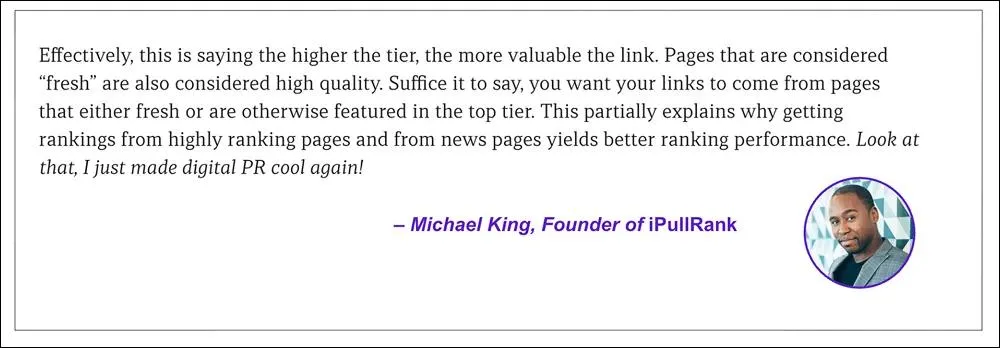
Mike King and Rand Fishkin, two bright minds in the SEO space, analyzed the ranking factors leaked from Google back in 2024, and the screenshot below from iPullRank is the conclusion they came to regarding the effectiveness of digital PR for SEO. Team at Loopex Digital, then confirmed this conclusion by running hundreds of digital PR campaigns across many industries. Check the case studies here.
So digital PR for SEO is basically the bridge between traditional PR and SEO. You’re creating stories, data, or insights that journalists and publishers want to talk about, and those mentions then help improve your rankings, visibility, and long-term organic growth.
On the top level, Digital PR for SEO is a two-step process:
- Unique content creation: Developing shareable assets like original research studies, data-driven reports, and expert guides that journalists and reporters genuinely want to feature. The litmus test? If a journalist can't use your content to make their article better, you haven't created a digital PR asset - you've just created more noise.
- Media outreach: Building real relationships with journalists, bloggers, and influencers. It's strategic, personalized outreach to writers who actually cover your industry and care about the stories you can tell and the expertise you have. At Loopex, we've learned the hard way that five carefully researched pitches outperform 100 templated ones every single time.
Again, the main goal is earning media coverage that results in backlinks, brand mentions, and referral traffic.
Search engines treat backlinks as votes of confidence, and with 27.6% of all clicks going to the first Google result, more quality backlinks can significantly improve rankings.
What is the Difference Between Digital PR and Link Building?
This trips up even experienced marketers, so let me draw a bright line between Digital PR and Link building:
- Link building is primarily focused on acquiring backlinks through tactics like guest posting, niche edits, resource page outreach, or broken link building. The goal is links. It's transactional. You're essentially asking, "Hey, will you link to us?"
- Digital PR is a broader strategy focused on earning media coverage, brand mentions, and thought leadership. Backlinks are a byproduct, not the sole objective. It's relational. You're offering, "Here's valuable content your readers will appreciate," and because your brand is the source of that content, journalists intuitively link to the resource on your website, not because they were asked to.
| Aspect | Link Building | Digital PR |
|---|---|---|
| Primary Goal | Acquire backlinks | Earn media coverage and brand awareness |
| Approach | Direct link requests | Newsworthy content and journalist relationships |
| Brand Impact | Limited to SEO value | Builds brand equity and credibility |
| Link Quality | Varies widely | Typically high-authority editorial links |
| Relationship Depth | Often transactional or one-off | Long-term relationships with journalists and editors |
How Digital PR Helps SEO and Brand Growth?
Let me walk you through exactly what digital PR delivers when you execute it well, because these benefits compound in ways that aren't immediately obvious:
- Helps gain high-authority backlinks at scale - just one feature in a publication like Business Insider can provide a backlink that might otherwise take months to acquire.
- Strengthens domain authority and search rankings by adding quality backlinks that signal confidence to search engines.
- Increases brand visibility - when potential customers see your brand mentioned in publications they already trust, they remember you differently.
- Drives qualified traffic - readers who click through are already interested in your topic, making them more likely to convert.
- Builds thought leadership - consistent media coverage positions you as the industry leader, creating a flywheel of recognition and media attention.
Each Digital PR strategy listed below works because it gives journalists something they genuinely need - not what you think they need:
Run Data-driven Original Research Campaigns
The data-driven digital PR strategy delivered the highest ROI in terms of both the number and quality of backlinks earned across all Loopex clients.
What is Data Driven Digital PR
Data-driven digital PR is a strategy where you pitch journalists original, newsworthy data or insights so they cite your brand as the source (often with a backlink) when they use it in their articles.
Journalists usually love data and facts. The problem is that a lot of public sources (like Statista) can be too general, and sometimes they need something more specific and unique (data that isn’t already published everywhere and can’t be easily found online).
For example, you might run a survey using your internal data, then pull out the key findings and insights. If those results are interesting and useful, a journalist can write about them and include your data as evidence. It can also be an analysis where you combine different stats and come to a unique conclusion, or even a set of new industry statistics you’ve created.
Data-Driven Digital PR Real World Example
Our campaign analyzing countries leading the AI race earned 75 backlinks from media outlets, including Digital Journal and Enterprise Times. We identified a major gap in technology coverage: while media frequently discussed individual countries' AI achievements, no one was comparing nations head-to-head in the global AI race.
We analyzed a decade of private AI investment, tracked workforce concentrations across major tech hubs, and cross-referenced startup funding with market success to create the first comprehensive AI leadership ranking. The campaign succeeded because it transformed scattered data into a simple, compelling answer to a question people were already asking: who's actually winning the AI race?

Try Newsjacking/Reactive PR
Newsjacking is about jumping into the conversation when breaking news happens. It's all about speed and relevance. This puts you at the center of trending stories when media attention peaks and journalists actively seek new angles.
What is Newsjaking/Reactive PR
Newsjacking is when you react to breaking news stories with a relevant, timely commentary that positions your brand as an expert in the field. The key here is speed because you need to move fast to catch the trend.
For example, let’s say a major event happens in your industry, like a new law passing or a big shift in market trends. If you’re the first to share your expert opinion about it, journalists and bloggers may cite you as a source, and within a few hours, you could see coverage across multiple outlets.
Newsjaking/Reactive PR Real World Example
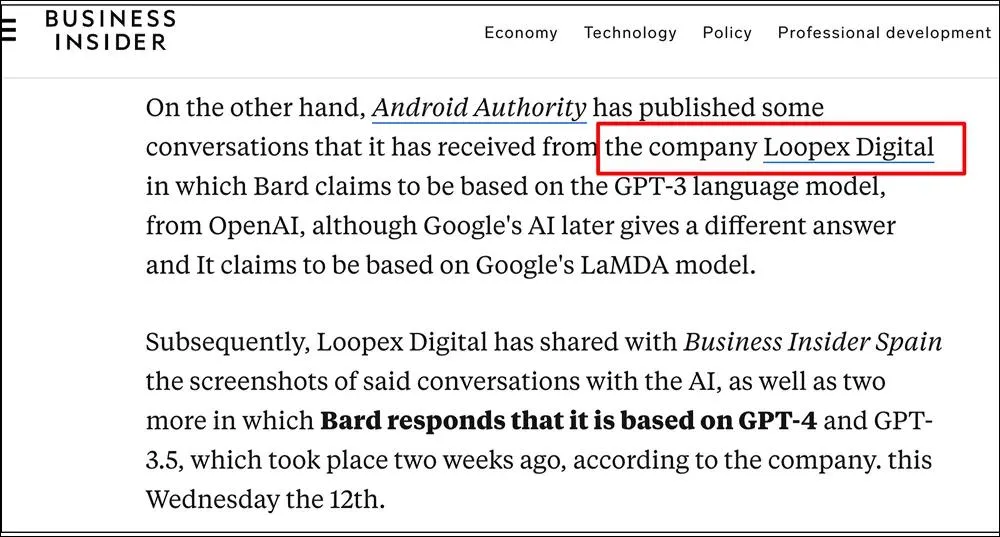
When Google launched Bard AI to massive media attention, we took a different angle while everyone else rushed to test its capabilities. Within the first hour of public release, our team asked Bard direct questions about its own technology and discovered it couldn't decide whether it was built on GPT-3 or LaMDA. We immediately captured screenshots of these conflicting answers and packaged a breaking story before other outlets had even finished their basic capability reviews.
Our findings made headlines across 38+ media platforms, including Business Insider (DR: 92), MSN (DR: 92), and Android Authority (DR: 85).
Do Content Partnerships
Content partnerships are about collaborating with industry publications to share your expertise and help you reach a wider audience and gain credibility.
What are Content Partnerships?
The idea behind content partnerships is to find 10-15 valuable sources, industry publications that are relevant to your brand, and publish an article based on your expertise. It allows you to share your knowledge with a wider audience, position yourself as an expert, and the website, in turn, gets an expert-written article.
Content Partnership Real World Example
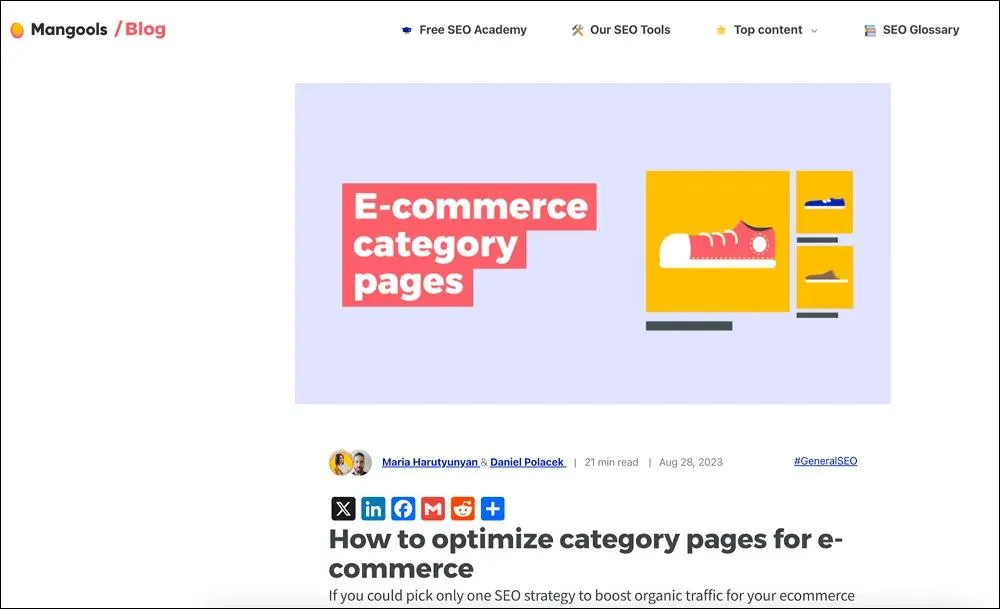
I published an expert article on Mangools, a platform that reaches a wide audience of business owners and marketers interested in optimizing eCommerce category pages. I partnered with their content team to create an insightful experience-based article. The value here is twofold: for Mangools, they get expert input on a relevant topic, and for me, it’s a chance to increase the credibility of Loopex.
Provide Expert Commentary
When it comes to expert commentary, you have two main approaches: manual journalistic outreach or using platforms that connect journalists seeking expert insights with qualified professionals (such as HARO, Featured, or Help a B2B Writer).
What is Expert Commentary?
Method 1: Experts Approach Journalists
This is when you directly reach out to journalists, bloggers, or editors to offer your expert commentary. You manually find relevant media outlets and contact the right people to share your expertise on a specific topic.
Method 2: Journalists Approach Experts
This is when journalists post queries for expert commentary on various topics. As an expert, you can sign up and respond to these requests and offer your input when a journalist is looking for an expert in your field.
Expert Commentary Real World Example
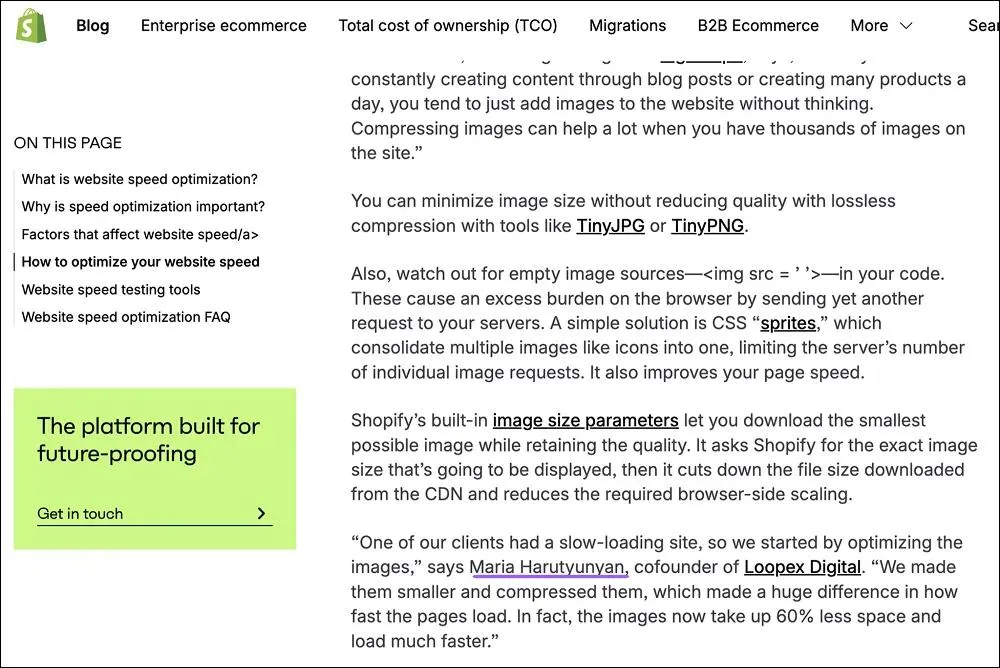
Shopify published an article on website speed optimization tips and tools, where they featured several experts in the field, including me. Shopify was looking for expert commentary on how to optimize eCommerce sites for speed. They asked for input from professionals, and I shared my thoughts on how to optimize images for faster load times.
Not only did this commentary provide value to Shopify’s readers, but it also boosted my personal authority and credibility as an SEO expert, which in turn helped Loopex Digital gain exposure and credibility in the industry.
Distribute Strategic Press Releases
Strategic press releases help you share newsworthy information, updates, or launches in a way that catches the attention of journalists, media outlets, and your audience. When you craft releases around genuine news value, you create ready-to-publish content that generates multiple backlinks from authoritative news sites when outlets pick up and distribute your story.
What are Press Releases?
A strategic press release is a well-crafted, news-oriented announcement that helps you communicate important developments about your company. It could be a product launch, a partnership, an award, or any other significant event.
The goal is to create a story that will attract media attention and, by doing so, earn backlinks and coverage.
But here's what most companies get wrong: press releases alone rarely work. They need a strong story angle and targeted distribution. I've seen thousands of press releases go nowhere because they announced things only the company cared about. The question isn't "What do we want to announce?" It's "What would journalists' readers actually care about?"
Press Release Real World Example
We created and distributed a press release for a major sports event about UFC legend Nate Diaz’s viral $20,000 bet on the Jake Paul vs. Anthony Joshua boxing match.
This press release focused on the widespread interest in the fight and Diaz’s rivalry with Jake Paul, drawing attention from sports fans and betting enthusiasts alike. The result was significant media coverage, including mentions in major outlets like Yahoo Finance, AP News, and Business Insider.

Create Statistic Pages
Statistic pages are compilations of key statistics on a given topic. They serve as a go-to resource for journalists, bloggers, and content creators who are looking for reliable data to back up their claims and make their arguments more authoritative. These become evergreen link magnets that earn backlinks passively for months or years!
What are Statistic Pages?
Statistic pages are valuable because they collect relevant, useful data on a specific topic. Writers and media outlets often need statistics to support their articles, and when you create a page that offers this data, your content becomes a “linkable asset.”
This means that other websites are more likely to link to your page as a source. When your statistic page starts ranking well on search engines, it can attract passive, natural backlinks at scale.
Statistic Page Real World Example
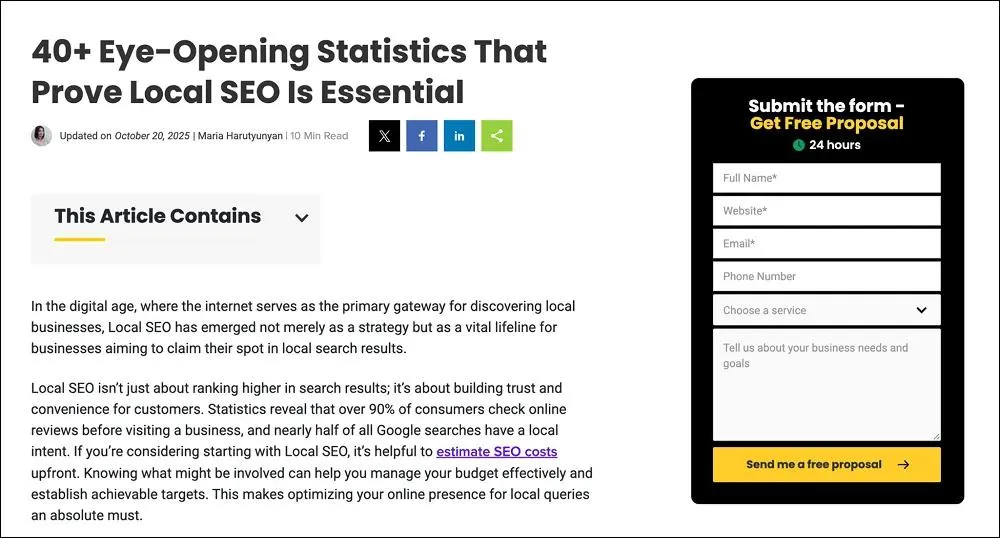
We created a comprehensive statistics page on local SEO that compiled verified data from authoritative sources, organized by category (search behavior, Google Business Profile stats, mobile trends, conversion data), and properly cited everything.
The page became the go-to citation source for local SEO statistics because it solved a real problem: instead of hunting through multiple reports, journalists and marketers could find all the essential local SEO data in one place with clear sourcing. This made us the easiest and most reliable option to reference, turning the page into a link magnet that earned 155 unique referring domains!
Create Interactive Free Tools and Calculators
Visual and interactive tools are engaging, user-friendly elements that enhance the user experience and increase the likelihood of your content being shared and linked to by others.
What are Visual and Interactive Free Tools?
Infographics, interactive tools, calculators, or quizzes that publications can embed or link to. Visual content gets shared 25.8% more than text-only articles and earns passive links over time.
I've found that interactive elements perform especially well because they provide utility beyond just information. People bookmark them. Journalists return to them for multiple stories. These tools help simplify complex information. They can also increase time spent on your site and encourage social sharing.
Interactive Tool Real World Example
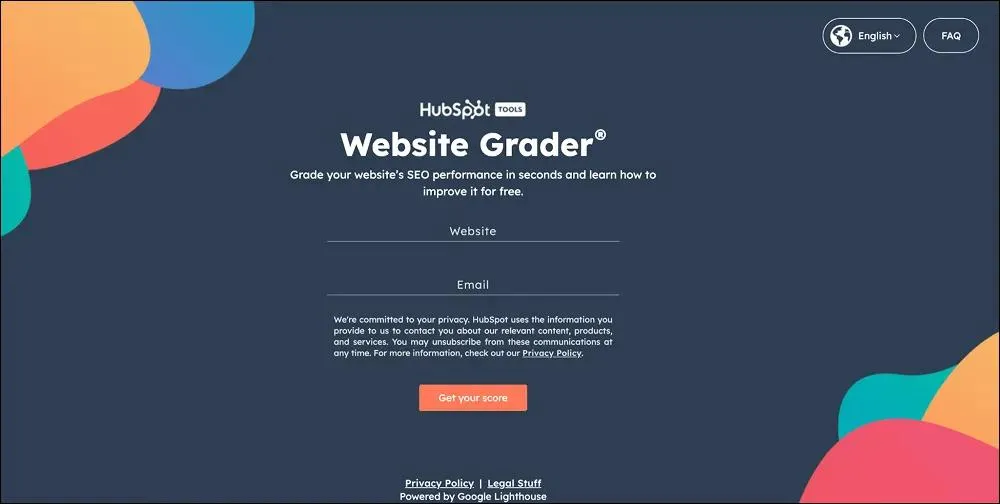
HubSpot’s Website Grader Tool allows users to evaluate their website’s SEO, mobile optimization, and performance. It has been widely shared and embedded by top publications like Forbes, Entrepreneur, and Inc., which continuously reference it for their own articles. Because the tool provides ongoing value, it earns backlinks long after its release.
Conduct Industry Studies and Benchmarking Reports
Creating annual or quarterly benchmark reports that track industry metrics over time. These become reference resources that journalists cite repeatedly. For digital PR, this establishes you as the definitive data source in your industry, with backlinks that multiply with each report release as journalists come to rely on your data.
What are Industry Studies and Benchmarking Reports?
Industry studies and benchmarking reports collect and analyze data to provide valuable insights into a specific sector or market. These reports often compare key performance indicators (KPIs), industry trends, or best practices, offering a comprehensive view of how businesses in the industry are performing.
The power here is consistency. When you publish the same study annually, journalists start anticipating it. They bookmark it. They reference historical data from previous years. You become the definitive source.
Benchmarking Report: Real World Example
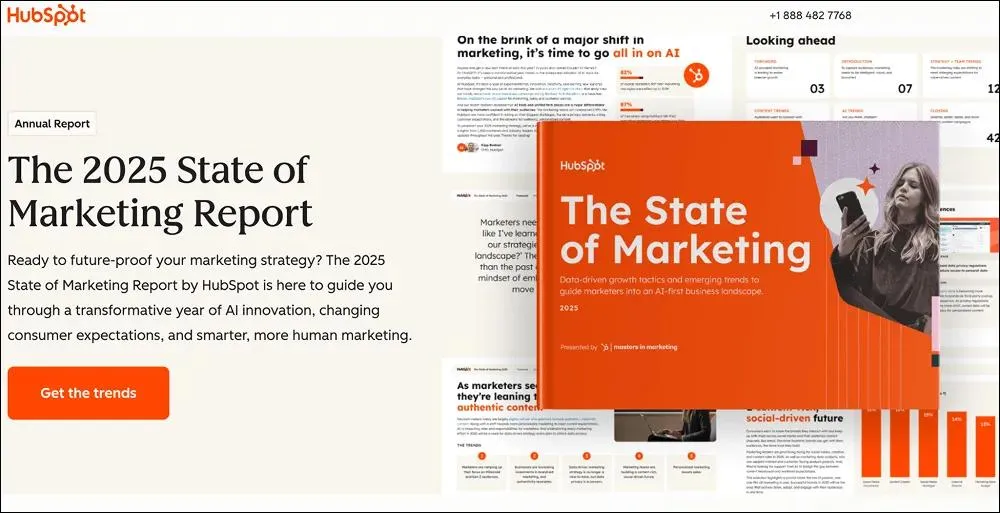
Annually, HubSpot publishes its State of Marketing Report, a comprehensive benchmarking study that gathers data from thousands of marketers to reveal trends, challenges, and performance indicators shaping modern marketing strategies. By publishing this report consistently every year, HubSpot has built up a reliable resource that journalists look to for data, making it a core part of their media strategy.
Conduct Location-Based and Timely Data Studies
Location-based and timely data studies are focused on specific geographic regions or current events. These make your content locally newsworthy to dozens of media markets at once, with each outlet eager to cover data specific to their market.
What are Location-based and Timely Data Studies?
Location-based and timely data studies focus on specific geographic areas or current events that are of immediate interest. Think: "How do shopping behaviors change during major holidays?" or “Which cities experience the highest ecommerce growth during Black Friday?”
Location-specific data gets picked up by local publications while national data attracts broader coverage. Holiday or event-tied research gets coverage during those peak interest periods.
Timely Data Study Real World Example
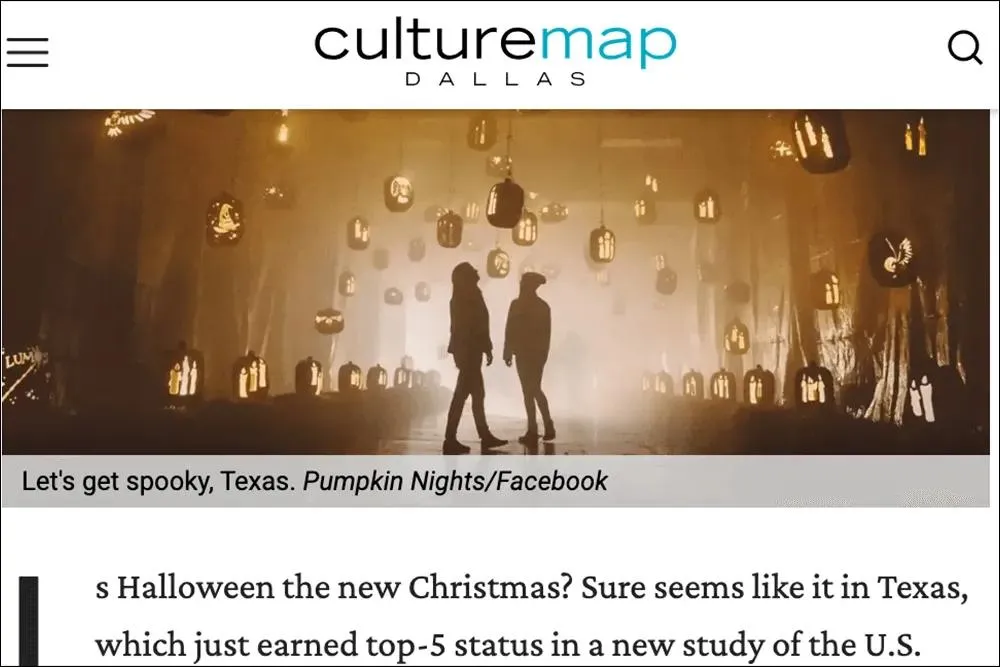
“Which States Are the Most Excited About Halloween” campaign worked because it tapped into Halloween, one of America’s favorite holidays. We came up with a unique ranking that highlighted regional differences in Halloween enthusiasm.
The campaign worked because regional pride is a powerful motivator. People love seeing how their state ranks, and local news outlets eagerly covered data specific to their audience. Combined with perfect seasonal timing, the story had natural media appeal and secured 25+ publications, including Culture Map, The Ledger, Audacy, and MSN.
Organize Expert Roundups and Collaborative Content
Expert roundups and collaborative content bring together insights from multiple professionals.
What are Expert Roundups and Collaborative Content?
Expert roundups and collaborative content involve gathering opinions, advice, or insights from several industry experts on a particular topic. This works because (a) the featured experts share the content with their audiences, and (b) publications appreciate the diverse perspectives.
I've found that when you feature 10-15 experts in a roundup, a good portion will share it with their networks, amplifying reach far beyond what you could achieve alone.
Expert Roundups Real World Example
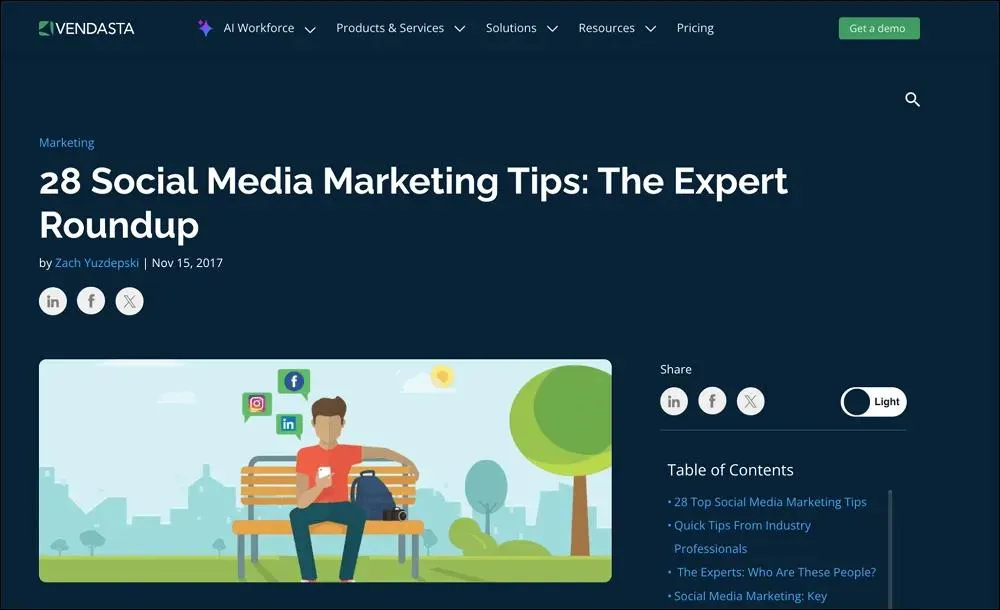
Vendasta published “28 Social Media Marketing Tips: The Expert Roundup,” where they collected actionable social media strategy tips from 28 different industry experts. It was a true expert roundup that offered value from multiple professionals in one place. Because the content features recognizable names and practical insights, it’s the kind of piece that gets shared by contributors and referenced by others.
How to Launch Your First Digital PR Campaign?
Let me walk you through exactly how we approach a campaign from scratch - this is the process that's worked across dozens of industries:
Step 1. Set clear campaign goals
Be specific. "Get more backlinks" isn't a goal. "Earn 5 backlinks from domains with DR 40+ within 90 days" is a goal.
Advice: Your goals might include: earning backlinks from 10+ publications, getting featured in 3 specific target outlets, increasing brand mentions by 5%, or driving 100 qualified visitors to a landing page.
Step 2. Conduct Media Journalist Analysis
Begin by analyzing journalists and their content. Look closely at what they’re covering, their niche, and the types of stories they’re publishing. This will help you understand what resonates with their readers and where you can fit in.
Step 3. Research competitor PR strategies
Analyze where competitors have earned coverage. This competitive research serves two purposes: it shows you what's already worked, and it gives you a target list of journalists who have demonstrated interest in your industry.
Step 4. Develop newsworthy story angles
This is where most campaigns live or die. You need to understand what makes content genuinely "newsworthy" - timeliness, relevance, uniqueness, human interest, or challenging conventional wisdom.
Ask yourself these specific questions to shape a campaign:
- What is happening in your industry-past, present, and future?
- What does the reader want to know?
- What does this specific journalist want to write about?
- What types of articles get shared most in your niche?
- Should you focus on data-rich campaigns or is newsjacking more suitable for your brand?
- Is there a national or seasonal event that can amplify your idea?
- What specific data points should be compared?
- Will this achieve placements in top-tier publications?
Step 5. Create a compelling press release
Build the asset you'll pitch. Depending on the type of campaign you're running, your research will vary. This could be original research, an expert guide, an interactive tool, or visual content; but quality determines pickup rates.
Step 6. Build a targeted media list
Research relevant journalists, bloggers, and publications. This is time-intensive work that you cannot skip.
How to find the right journalists:
We use tools like MuckRack, Anewstip, or JustReachOut.io to build my media lists, but here's the exact filtering process:
- Enter your niche keyword to generate an initial journalist list.
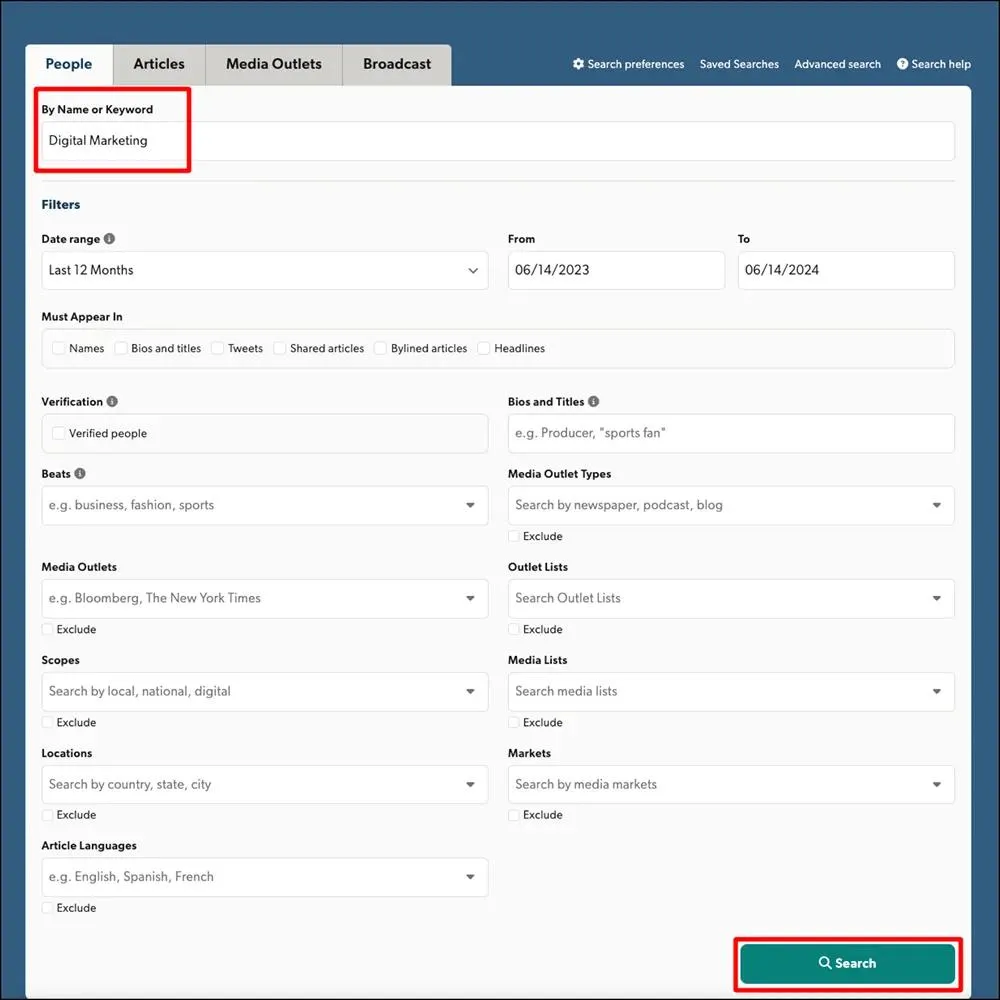
- Focus on journalists who've written about your topic in the last 12 months. Someone who covered your niche two years ago may have completely switched beats.
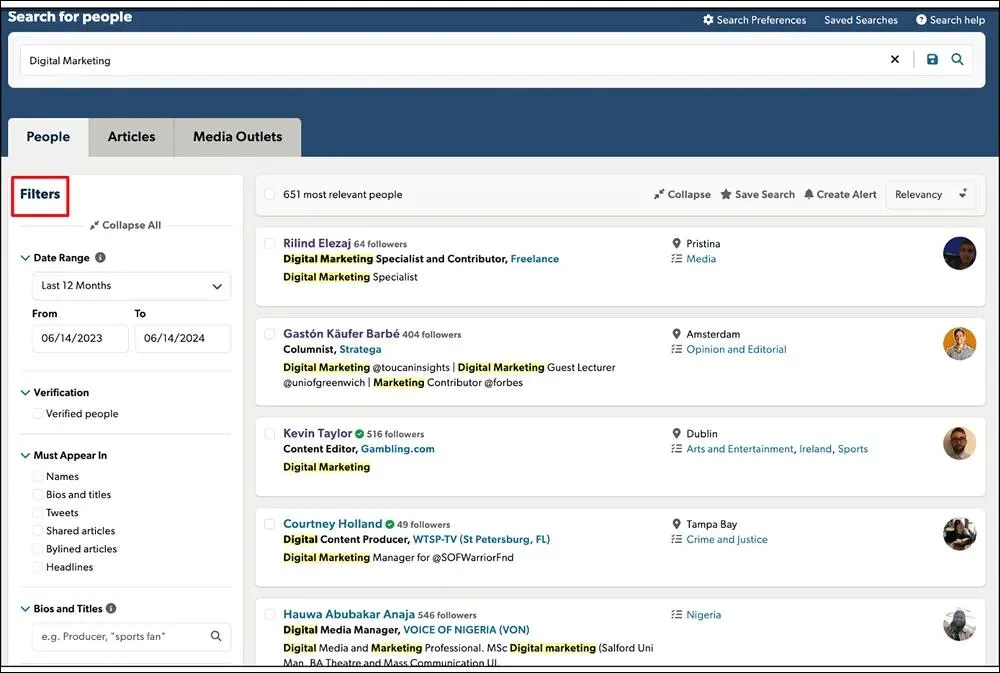
- Ensure your keyword appears in their bios, titles, recent articles, or tweets, confirming they're actively covering your topic.
- Exclude podcasts, radio, and TV if you're specifically targeting written coverage and backlinks.
- Skim through their recent work to verify quality and tone. Check they haven't written negatively about your industry or similar topics.
- Many journalists include submission guidelines or preferred article formats on their profiles. Some prefer four-paragraph pieces, others want extensive data - understanding this upfront increases your success rate.
Step 7. Craft your outreach strategy and materials
Write email pitches tailored to each journalist. Reference their past work, explain specifically why your content matters to their audience, and make their job easier by highlighting the exact angle or data point they'd find most useful.
Your pitch might be 3-4 paragraphs max. For some campaigns (especially data-heavy research or newsworthy announcements), we'll also develop a formal press release (typically around 500 words) that packages the findings professionally:
Headline: "Company X Releases New Study" is a bad headline. A good one would be: "73% of Remote Workers Report Burnout, New Study Reveals".
Opening section - three compelling points:
- Point 1: Present your most compelling and surprising finding - the stat or insight that makes people say "wait, really?"
- Point 2: Share a relevant statistic or fact that supports your main narrative
- Point 3: Provide an insight that adds depth and highlights why this matters now
For example, if you're analyzing ecommerce behavior, don't bury the lead. Lead with "Mobile shoppers abandon carts 40% more on Sundays than weekdays, "not "Our comprehensive analysis examined shopping patterns..."
Detailed explanation: Follow up with context for each of those three points. Include supporting data, expert quotes, and any information that adds credibility.
Methodology section: This is non-negotiable. Clearly explain how you collected data, what sources you used, sample sizes, timeframes, and analytical methods.
How to Measure Digital PR Success for SEO?
You can't improve what you don't measure. To measure digital PR success, here's exactly what we track:
Backlinks and referring domain growth
Track new backlinks earned from coverage, but more importantly, monitor unique referring domains.
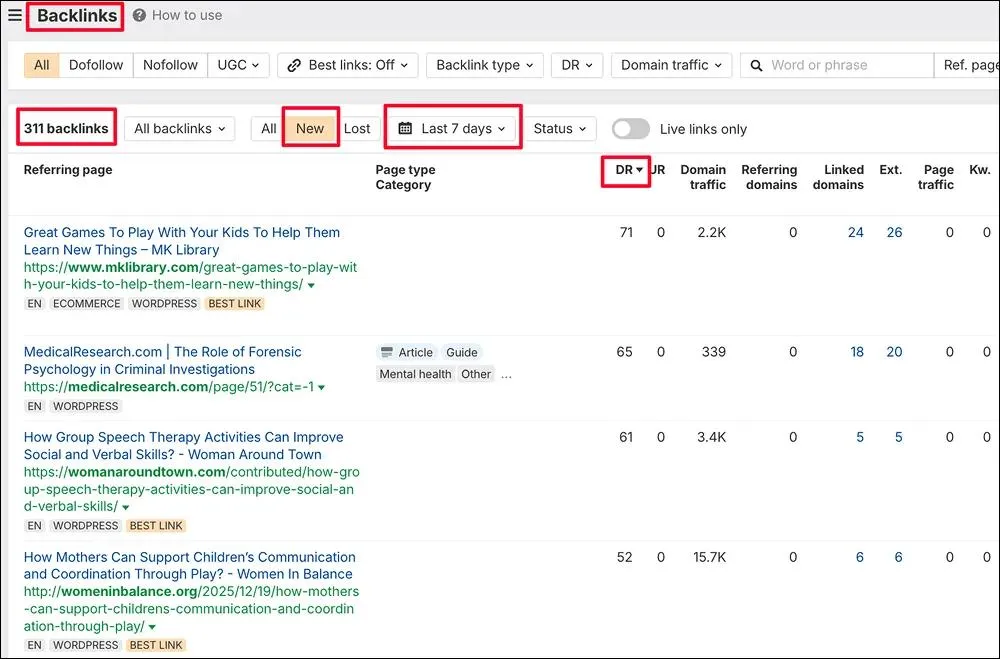
We use tools like Ahrefs or Semrush to monitor this weekly. Look for both volume (total new backlinks) and quality (domain authority of linking sites).
Domain authority changes
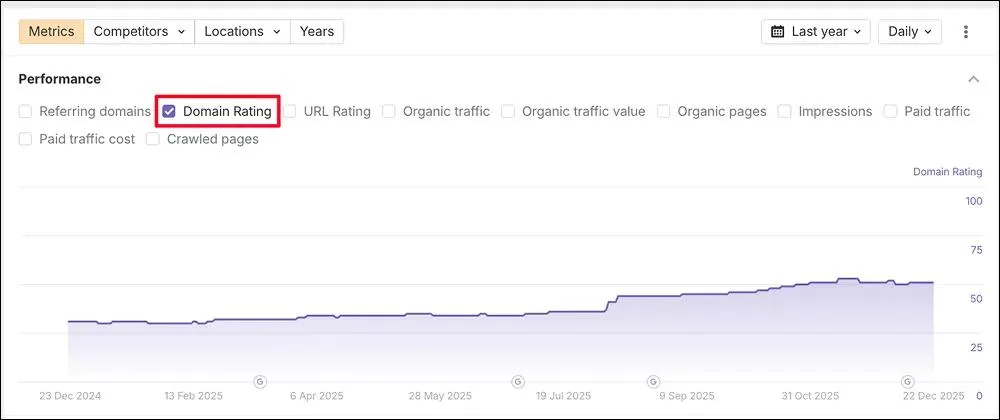
Monitor your overall domain authority or domain rating over time. This metric reflects your site's link profile strength and tends to move slowly (don't expect big jumps after one campaign). E.g., a 5-point increase over six months is good progress.
Brand mentions and media coverage
Count mentions in publications, even unlinked ones. Not every piece of coverage includes a backlink, but brand mentions still build awareness and credibility.
Referral traffic and conversions
Measure visitors arriving from PR placements using Google Analytics. But don't stop at traffic - track whether they convert.
Set up specific UTM parameters for PR placements to see exactly which pieces of coverage drove actual business results.
What are Essential Digital PR Tools to Track Results?
Here's my core toolkit of digital PR tools:
Tools for content ideation and research
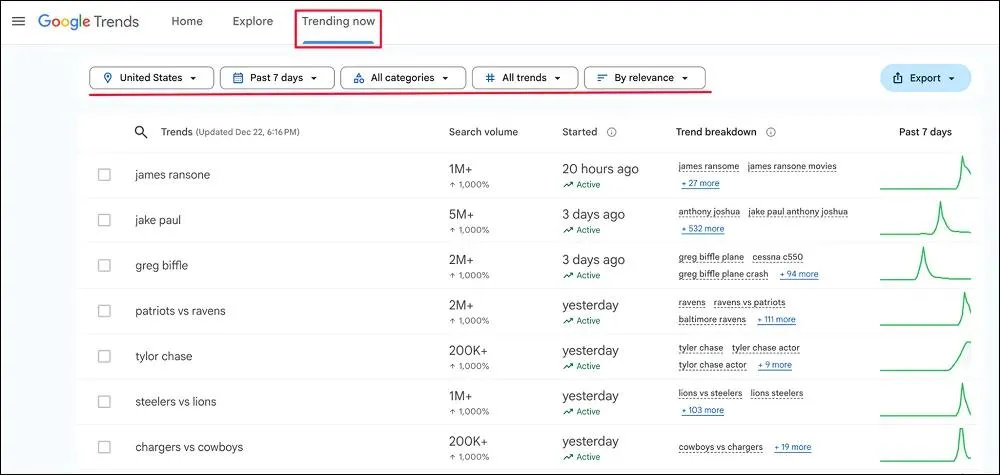
- Google Trends: Search terms related to trending topics in your industry and look for spikes in interest - these indicate growing trends worth exploring.
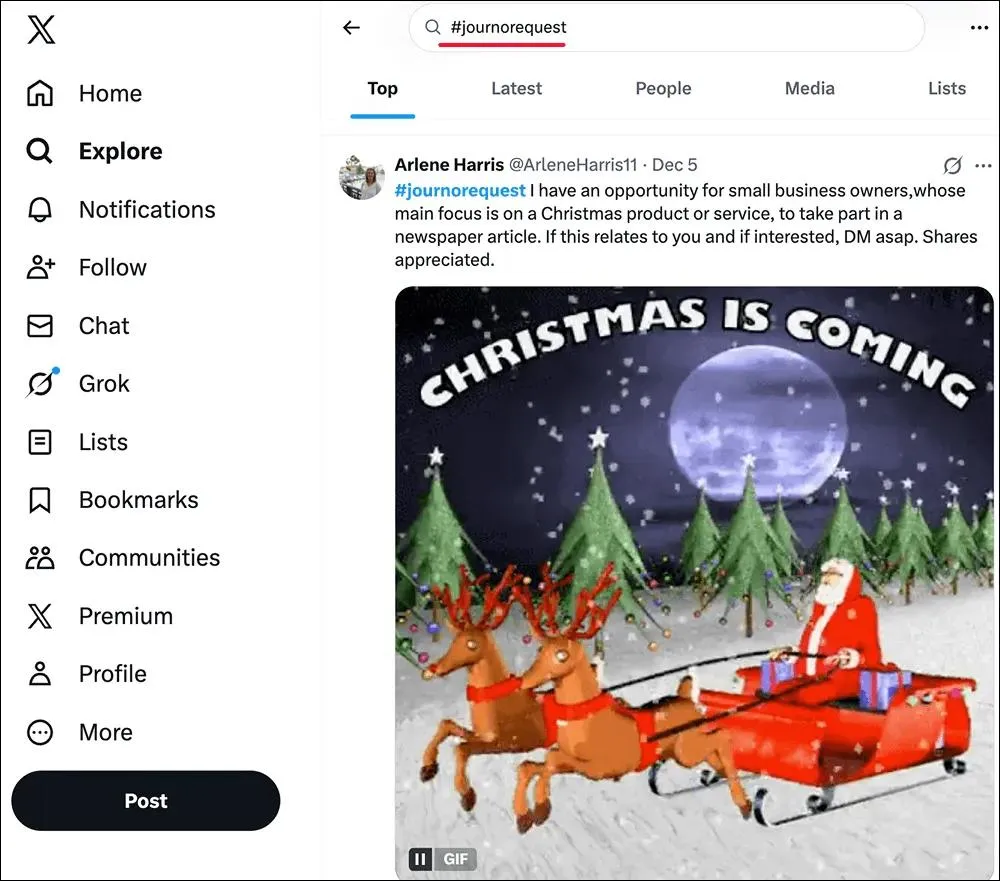
- Twitter/X: Search hashtags like #journorequest to find journalists actively looking for specific stories or information.
- Reddit: Explore subreddits related to your industry to find discussions and questions that can inspire content ideas.
- Statista: I use this platform to find data that supports content ideas and adds credibility to research campaigns.
- BuzzSumo: It helps identify which content formats and topics resonate most in your industry.
- Google’s Advanced Search: Use Google’s Advanced Search features to narrow down content ideas and find industry-specific content that can inspire new angles (use specific search operators like “site:.edu” or “intitle:” to access more targeted, high-quality content).
Tools for journalist discovery and outreach
- MuckRack: The industry standard for finding journalists, reviewing their coverage history, and building targeted media lists. Worth the investment for serious digital PR.
- Roxhill: A comprehensive media database that helps you discover journalists, track their coverage, and build targeted media lists to improve your outreach efforts.
- Prowly: A PR software platform that simplifies media outreach by offering tools for finding journalists, creating media lists, and managing campaigns.
- Anewstip and JustReachOut.io: Alternative platforms for journalist discovery and outreach management, particularly useful if you're just starting out.
Tools for monitoring and performance tracking
- Google Alerts and Mention: Set up alerts for your brand name, competitor names, and industry keywords. This catches coverage you might otherwise miss and helps you spot reactive PR opportunities as stories break.
- Ahrefs or Semrush: Use these for backlink monitoring, domain authority tracking, and competitive analysis. I check these weekly during active campaigns to track new referring domains and assess link quality.
- Google Analytics: Referral traffic, user behavior, and conversion tracking.
- BuzzSumo: Content performance analysis and social share tracking beyond the ideation phase.
Start Building Your Digital PR Strategy
Look, digital PR takes time. You need to build journalist relationships, create genuinely newsworthy content, and earn coverage from publications that matter.
But here's what I know from running campaigns across dozens of industries: brands that commit to strategic digital PR consistently outperform those that rely solely on traditional link building or paid acquisition. They build compounding SEO value that works 24/7. They establish thought leadership that opens doors. And they create brand equity that competitors can't easily replicate.
If you're ready to build a digital PR strategy that actually drives results, we've helped hundreds of brands do exactly that. Our digital PR services offer original research, strategic outreach, and proven content frameworks to earn the kind of coverage that moves rankings and revenue.
Submit the form - Get Free Proposal
%202.png)
24 hours
Submit the form - Get Free Proposal
24 hours