
SEO for Surgeons Strategies and Keywords by Surgeon SEO Agency
Get more patients with SEO for surgeons, just like 65+ surgeons and surgical clinics across the U.S. who’ve grown with our surgeon SEO agency.
5.0

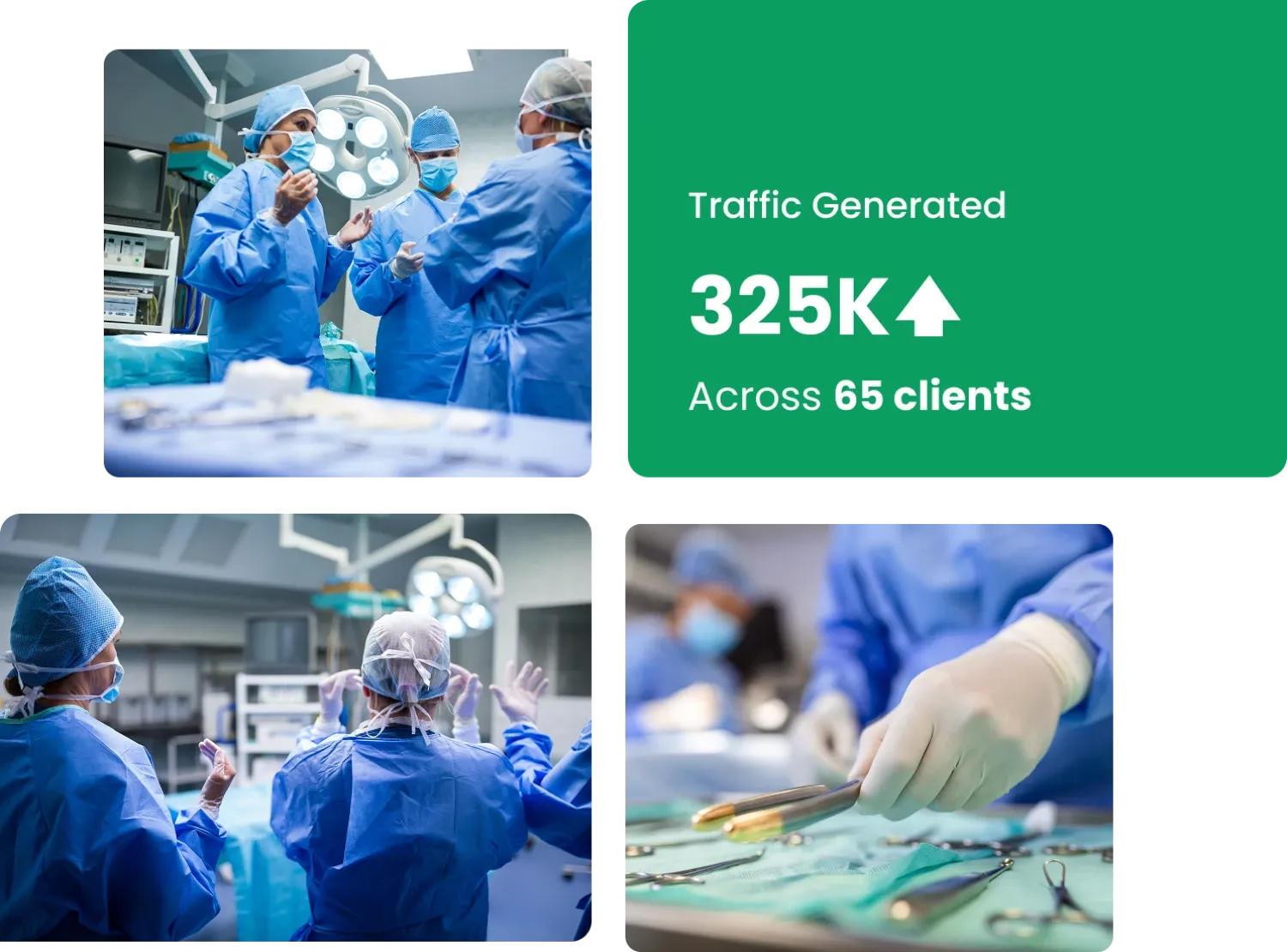


Hospital systems are rapidly absorbing private practices, forcing independent surgeons into direct competition with large networks and 40,000+ certified surgeons across specialties. At the same time, patients arrive influenced by TikTok and YouTube medical content, often with unrealistic expectations that lengthen consultations and complicate education.
Behind the scenes, the strain adds up. EHR documentation consumes hours each day. Case volume expectations rise. Costs for robotics, AI imaging, and malpractice insurance, especially in New York and Florida, continue to rise.
To create a steady, passive flow of patients without relying on referrals, SEO for surgeons becomes essential. As a professional surgeon SEO agency, we’ve helped 65+ surgeons and surgical clinics across the U.S. build predictable patient demand, and this guide explains how.
Why Do Surgeons Need to Invest in SEO?
- With thousands of surgeons nationwide, SEO helps your practice appear in search results so patients find you before competitors.
- Accurate, procedure-specific content educates patients before consultations, reducing confusion and the need for repeated explanations.
- Surgeon SEO delivers a steady flow of qualified patients, allowing you to grow your case volume without chasing referrals or adding stress.
- Paid ads can cost $5,000+ per month and stop the moment spending pauses. SEO continues to attract patients long after content is published, and you can even calculate SEO cost with the right tools.
- A strong search presence helps independent practices compete with hospital systems that patients already recognize and trust.
- Optimized content highlights your procedures, technology, and outcomes, building confidence before the first call.
- Consistent patient flow supports growth, offsets rising malpractice costs, and enables future investments.
These are the main reasons surgeons invest in SEO. Next, we’ll break down how it works in practice.
Do Keyword Research and Competitive Analysis for Your Surgical Clinic’s Website
Begin by listing every procedure your clinic offers. Each service becomes a search opportunity. Common examples include:
- oral surgery
- general surgery
- orthopedic surgery
- colon surgery
- pediatric surgery
- plastic surgery
- hernia surgery
- minimally invasive surgery
Add each service to tools such as SEMrush, Ahrefs, or Google Keyword Planner to view search volume, ranking difficulty, and competing pages. These tools also reveal related queries patients use, such as variations around “pediatric surgeon” or procedure-specific terms.
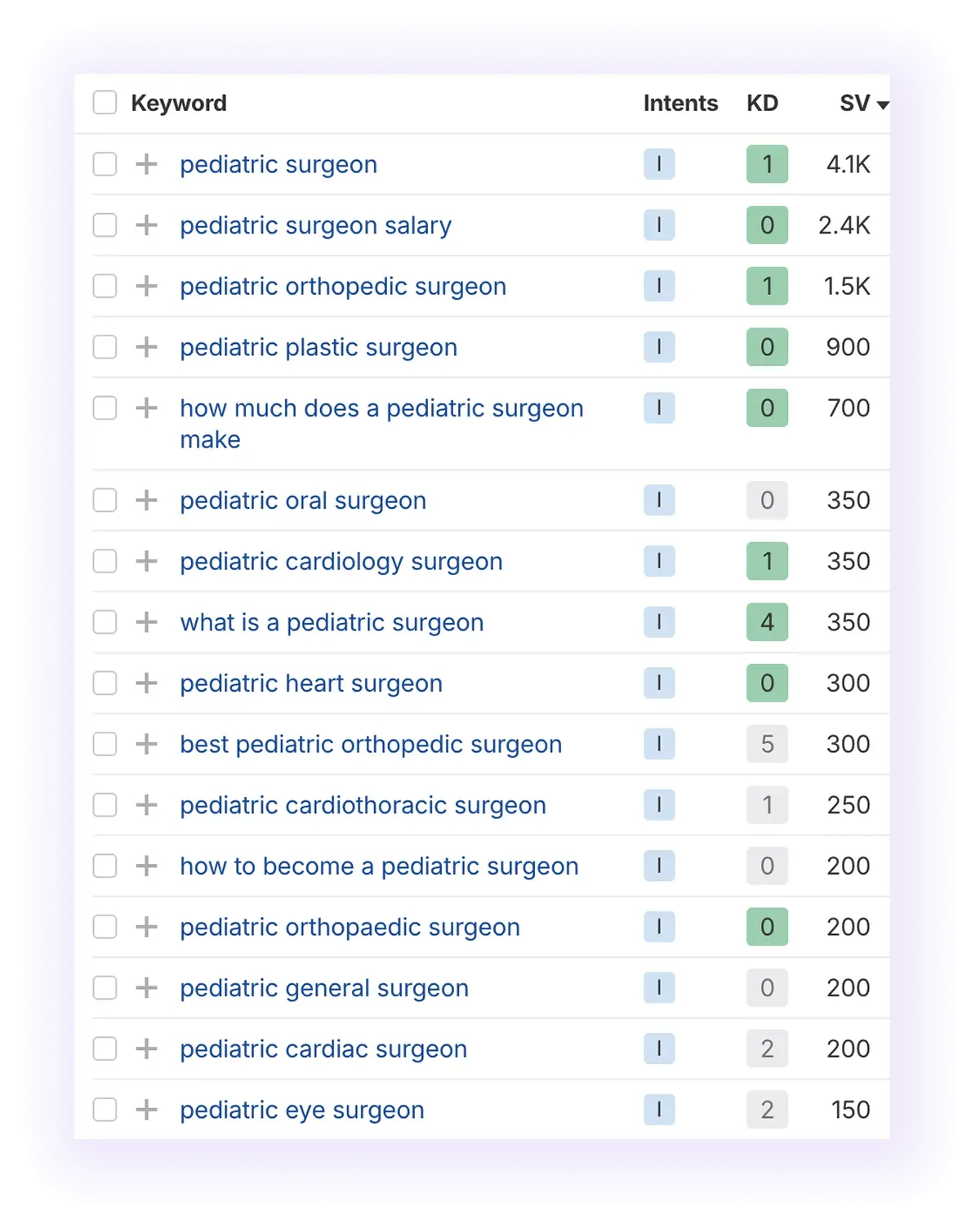
Beyond procedures, target broader intent keywords patients use early in their search:
- surgeon
- surgical clinic
- surgery specialist
- experienced surgeon
Prioritize keywords with lower difficulty and solid search volume. These rank faster and tend to convert better. A CTR calculator can also help you estimate expected traffic at each ranking position.
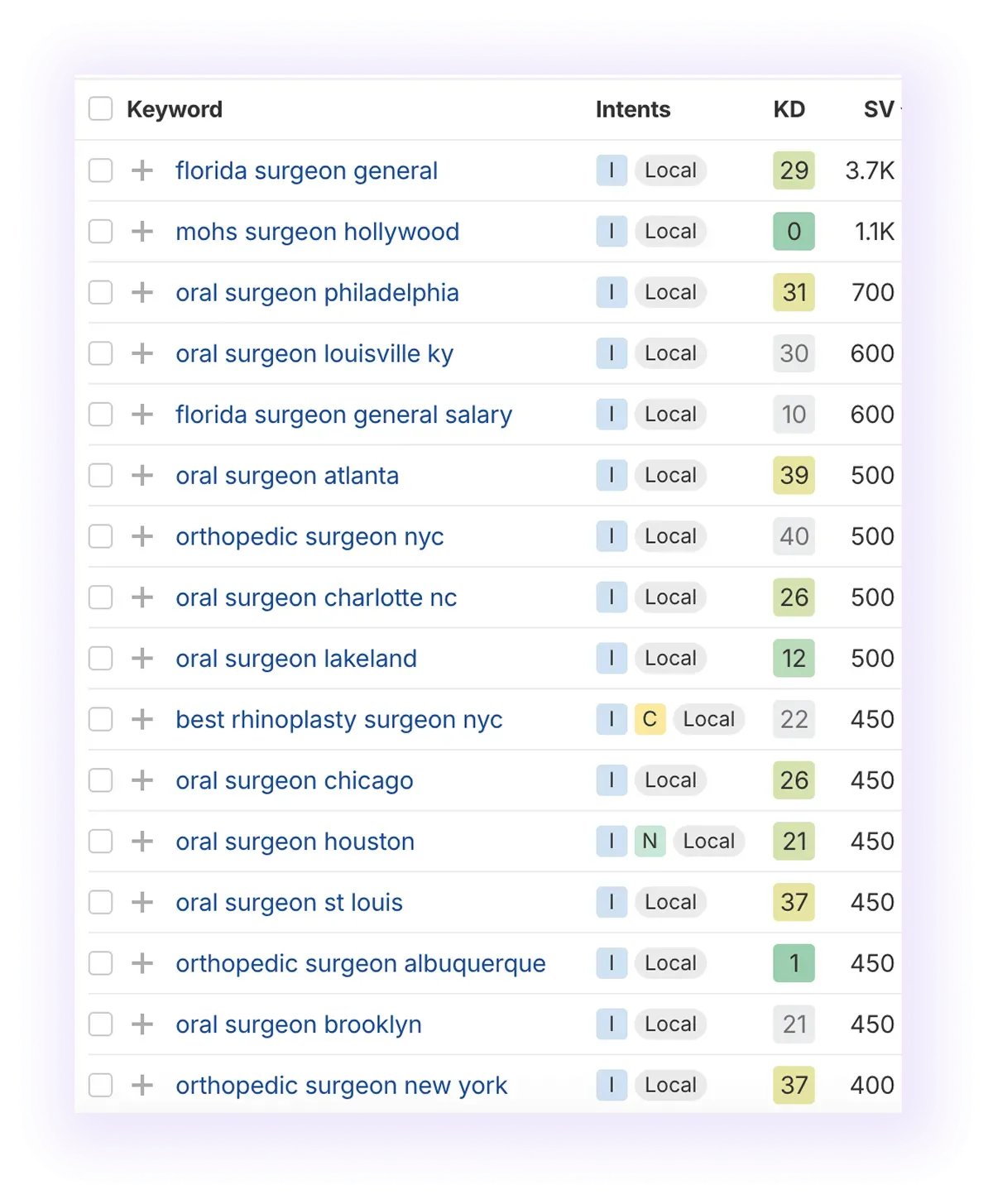
Use Ahrefs geo-filters to identify states, cities, or neighborhoods with the highest demand for surgeons or surgical clinics. This tells you exactly where to focus pages, content, and local SEO work.
If you want a structured approach, our keyword research checklist walks through each step so nothing gets missed.
Top 30 Real Keywords for Surgeons
Transactional for Targeting Potential Patients
- surgical clinic
- pediatric surgeon
- hernia surgeon
- pediatric surgery
- hernia surgery
- minimally Invasive surgery
- minimally Invasive spine surgery
- colon cancer surgery
- general surgeon
- general surgery
- oral surgery
- robotic surgery
- robotic knee surgery
- cardiothoracic surgeon
- hand surgeon
Informational for Educating Patients
- preparing for surgery safely
- understanding surgical recovery process
- common surgical procedure risks
- tips for postoperative care
- minimally invasive surgery benefits
- choosing the right surgeon
- understanding anesthesia risks safely
- surgery preparation checklist guide
- post-surgery pain management tips
- preventing surgical complications effectively
- surgical consultation questions guide
- rehabilitation after major surgery
- surgical procedure cost breakdown
- benefits robotic surgery offers
- improving surgery outcomes safely
SEO for surgeons goes beyond keywords and pages. It takes a complete strategy built by people who understand how surgical search works. If you’re ready to compete where others don’t, our surgeon SEO agency is here to help. Simply contact us!
Outline Your Surgeon Website Hierarchy and Menu Structure
Your website hierarchy defines how pages are organized, how search intent is matched, and where each keyword lives. A surgical website needs a clear structure, starting with three core pages that anchor everything else:
- Home page. Targets broad terms like “surgeon,” “surgical clinic,” and “surgery specialist.” It should also preview your main procedures, so patients instantly know what you offer.
- About page. Builds trust by covering your background, training, certifications, and awards. Multi-surgeon clinics should include short bios for each surgeon.
- Contact page. Removes friction. Use a simple form, clear calls to action, click-to-call buttons, and links to any messaging tools you use.
Add these pages to your main navigation. This makes the site easier to use, helps Google understand its structure, and improves search visibility.
Service Pages and Treatments
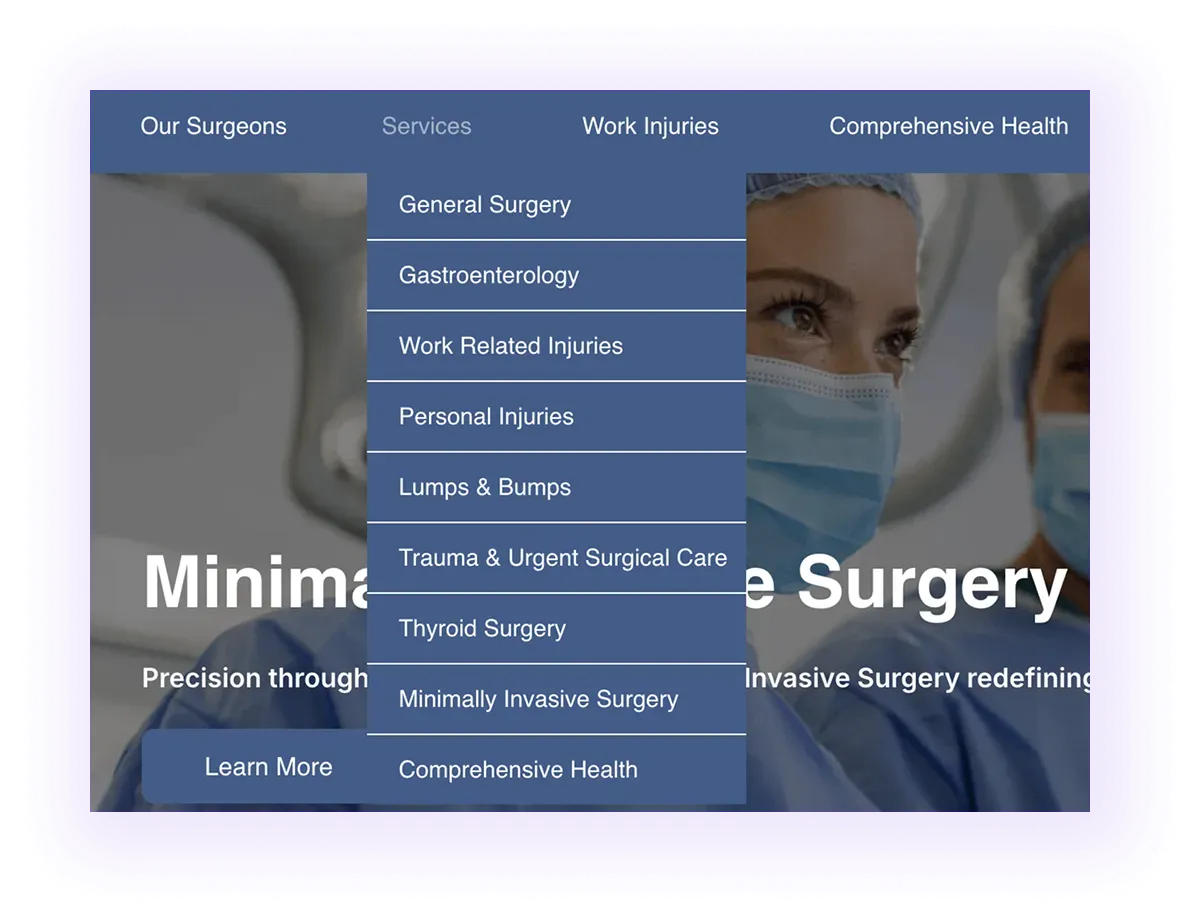
Patients search by need. Parents look for a pediatric surgeon. Others search for oral surgery, hernia repair, or a general surgeon. To match that intent, create a separate page for each treatment or specialty you offer.
Common examples include:
- general surgery
- minimally invasive surgery
- pediatric surgeon
- hernia surgeon
Group these pages under a “Services” or “Specialty areas” menu with a transparent dropdown. This improves navigation, captures more search intent, and strengthens overall surgeon SEO coverage.
Pages for Your Surgeons
Surgical websites fall under Google’s YMYL standards, which means credibility directly affects visibility and patient trust. One of the strongest trust signals is a dedicated profile page for each surgeon.
These pages outline training, certifications, and experience, and also enable individual surgeons to rank when patients search for their names. This supports both discovery and confidence before a consultation.
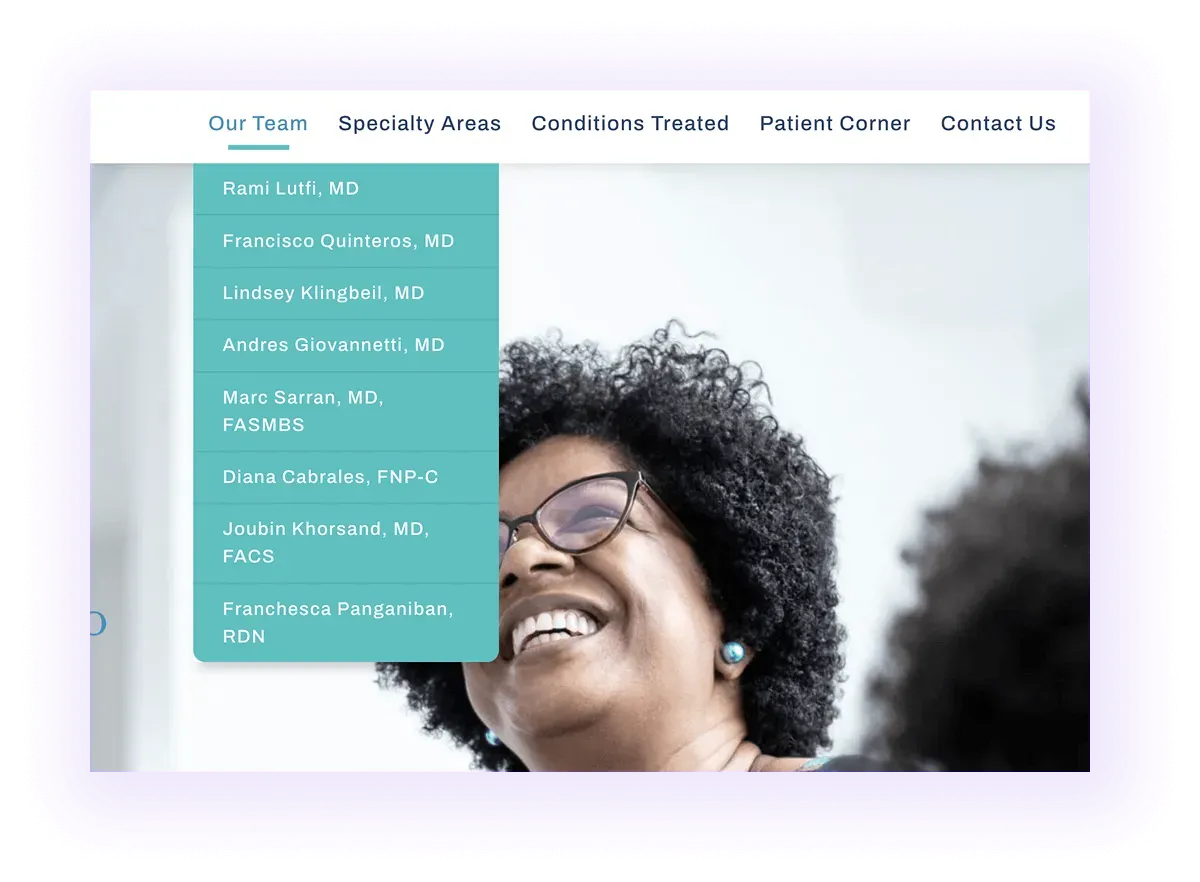
Add surgeon profiles to your main navigation under labels like “Our team” or “Our surgeons.”
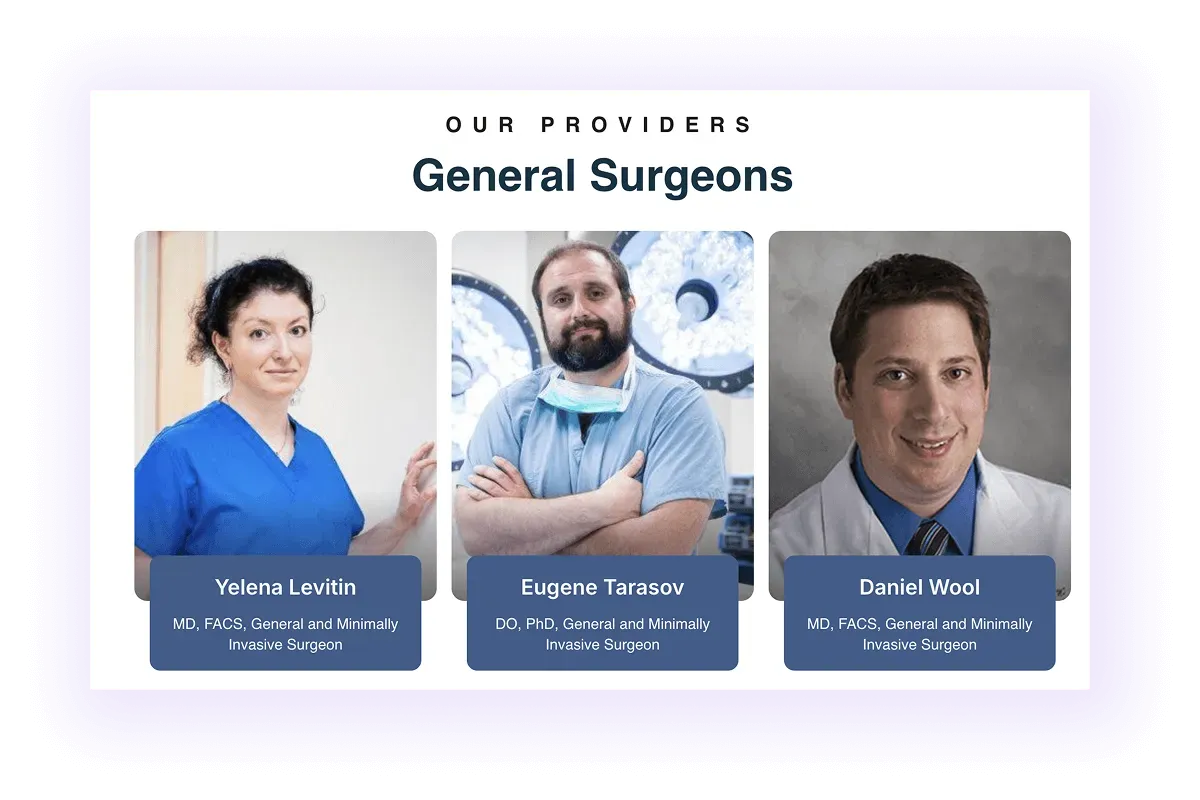
You can also feature key surgeons on high-traffic pages, such as general surgeons on the homepage, with direct links to their full profiles.
Local Pages
Keyword research shows strong local intent. Patients search by city or state, using terms like:
- oral surgeon philadelphia
- orthopedic surgeon nyc
- oral surgeon atlanta
To capture this demand, create dedicated location pages for every area where you offer surgical care.
Each page should clearly state the services available at that location and be linked in your main navigation. This helps patients quickly find nearby clinics and signals geographic relevance to Google, an essential part of SEO for surgeons.
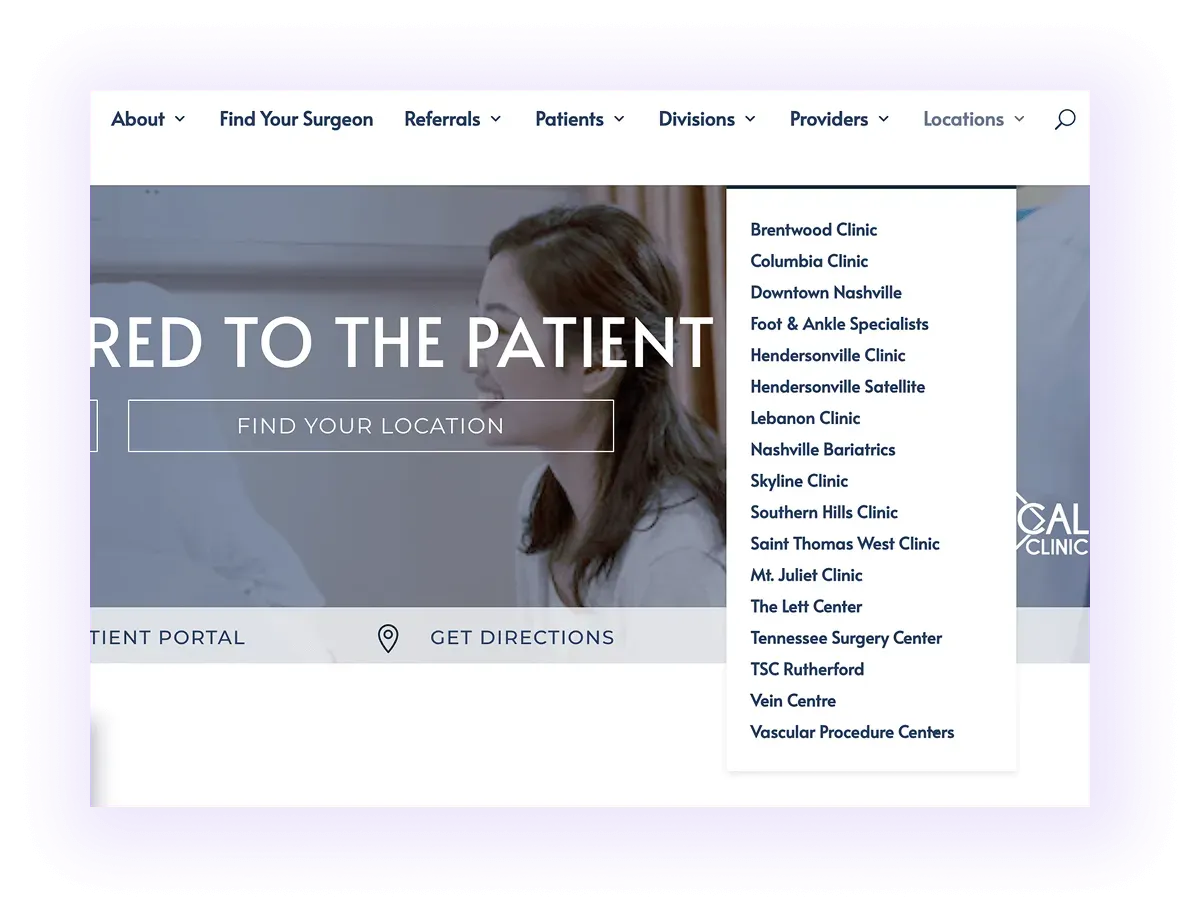
You can also add a simple “Surgeons by location” section to help users navigate by city or state.
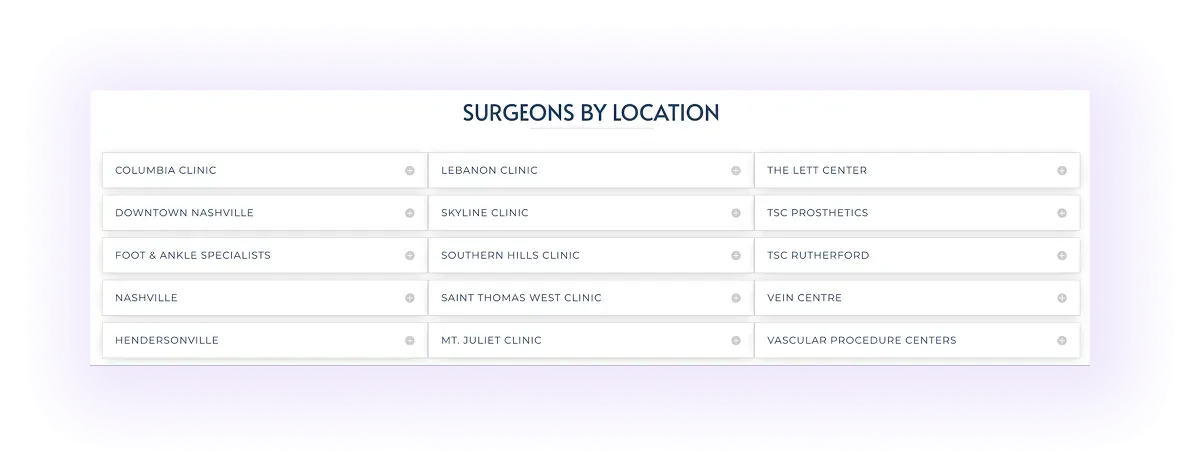
Location pages are the foundation of local SEO. Later, we’ll cover how to strengthen these pages with Google Business Profile and related tactics. For a deeper walkthrough, we also recommend reviewing our local SEO checklists.
Blog Pages
Medical misinformation spreads fast on TikTok and YouTube, leaving patients confused and unsure what to trust. Many turn to Google to verify what they’ve seen, searching questions like:
- Is minimally invasive surgery safe?
- Do I need surgery for a hernia?
- How long is the recovery after surgery?
These searches are a clear opportunity. Publishing blog posts that answer real patient questions attracts high-intent traffic and positions your clinic as a credible source. It also handles patient education before the consultation, cutting down time spent correcting misconceptions.
Well-written blog content also:
- Builds trust before first contact
- Supports and strengthens service pages
- Keeps your clinic top of mind when patients are ready to book
Stop Guessing Your Surgeon Website Structure—We Will Show You Exactly What Pages You Need
Creating these pages correctly for your location and specialization takes real experience in SEO marketing for surgeons. Our surgeon SEO agency has supported 65+ clinics, and we’re here when you’re ready to move forward. Just contact us!
How to Do Local SEO for Surgeons
Patients rarely travel far for surgery. When they search, they include location-based terms like:
- oral surgeon near me
- knee surgery specialist in [city]
- best surgical clinic in my area
To appear in these searches, your site needs local SEO for surgeons. This places your practice in front of patients at the exact moment they’re looking nearby.
Ranking for these queries comes down to two clear local SEO strategies, which we’ll break down next. If you don’t have the time to handle this in-house, our local SEO services can support your surgical clinic.
Local Surgical Clinic
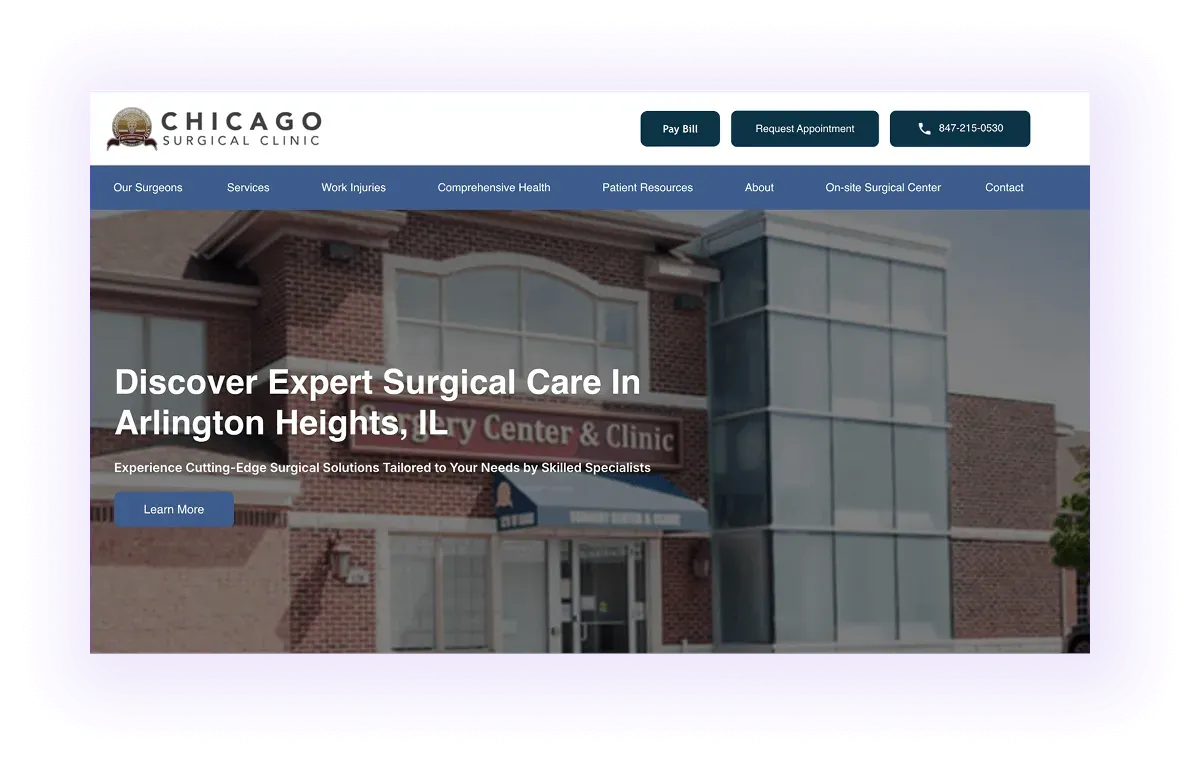
If you serve patients in a single city, your website should mirror how local search works. Patients don’t look for a generic surgeon; they search terms like “surgeon in chicago” or “chicago surgical specialists.” Strong surgery SEO starts by matching that local intent.
Your service pages should pair procedures with city names, such as:
- general surgeon chicago
- colon cancer surgery chicago
- minimally invasive surgery chicago
- hernia surgery chicago
Once you’ve chosen the right keywords, place them where they matter:
- Title tags and meta descriptions
- H1 and H2 headings
- Page content and service descriptions
This clarifies where you operate and helps nearby patients find your clinic when they’re ready for treatment.

National or Multi-Area Surgical Clinic
If your clinic serves multiple cities or states, create a dedicated location page for each area. Every page should pair your procedures with the specific location. Examples include:
- general surgeon in austin
- orthopedic surgery denver
- hernia surgeon in brooklyn
- minimally invasive surgery phoenix
Once again, use these keywords naturally across title tags, meta descriptions, headings, and page content.
You can also add an interactive map to show all clinic locations at once, making it easy for patients to find the nearest surgical center.
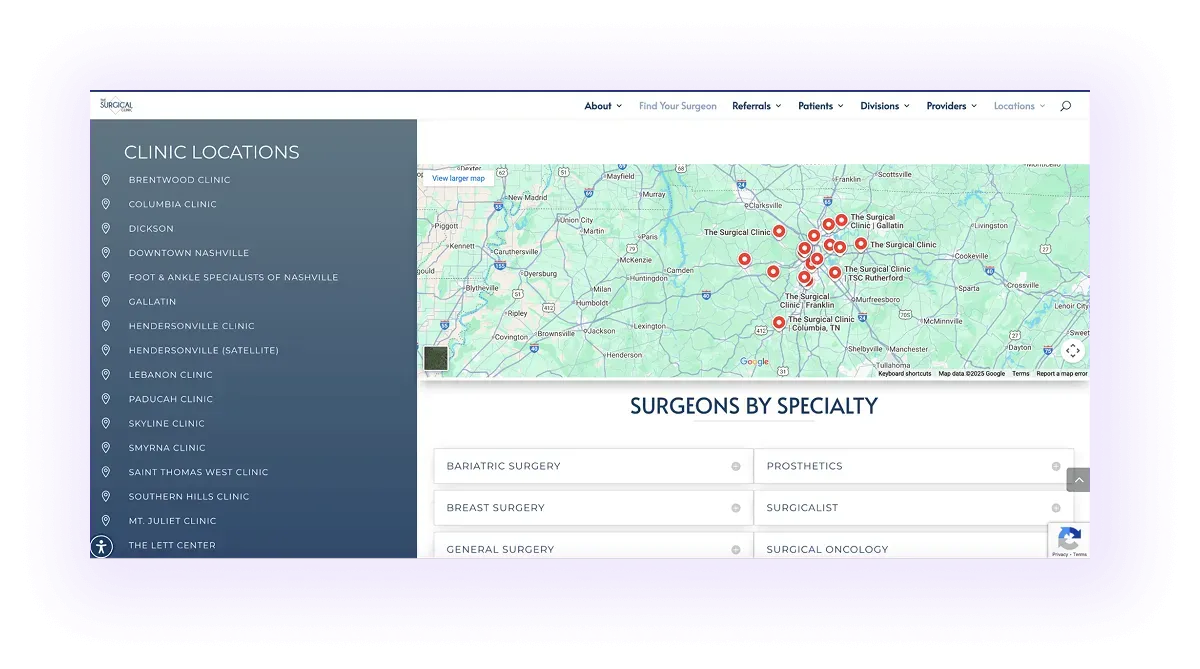
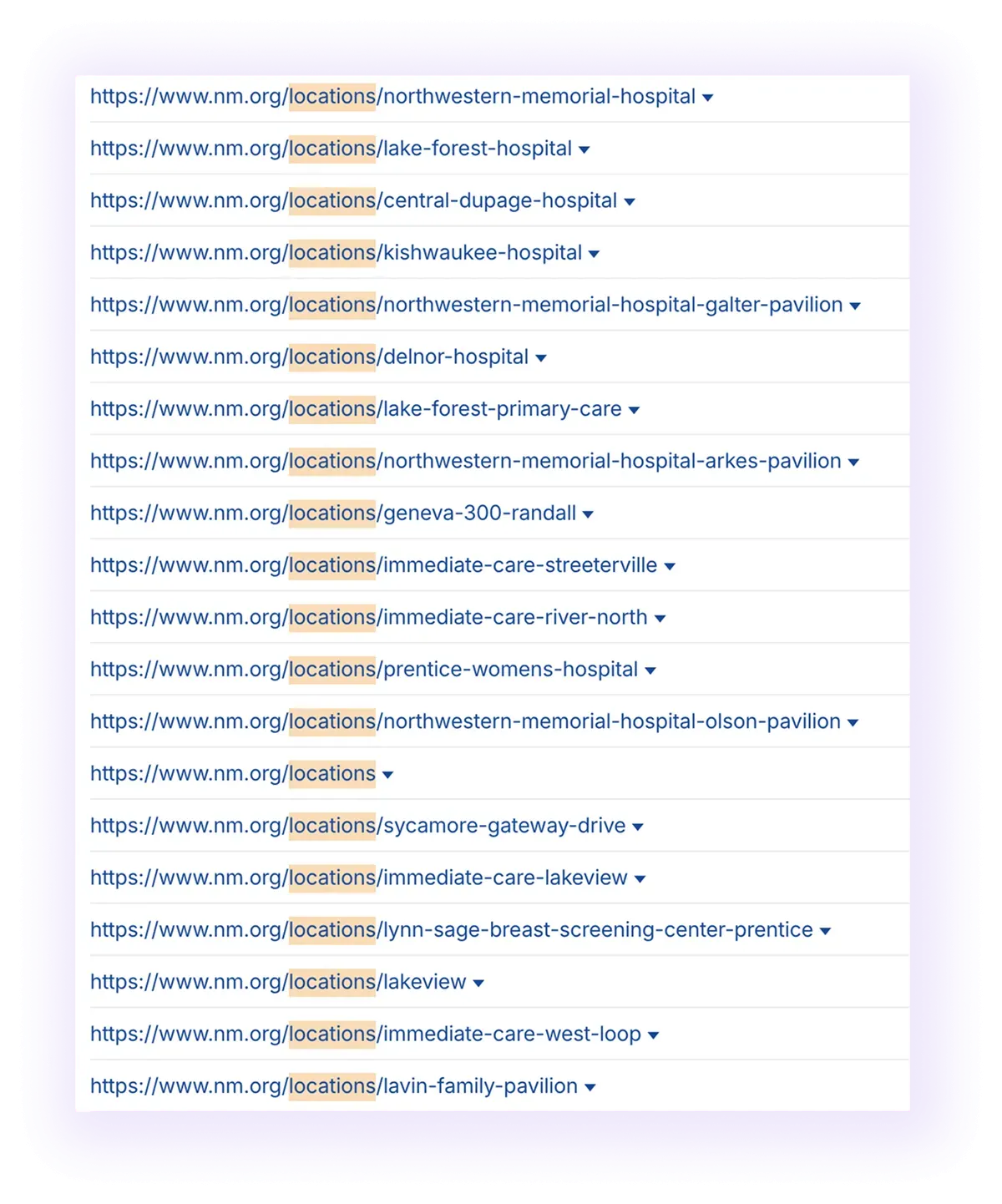
Your URL structure should also clearly show that the page belongs to your locations section, such as:
Set up Your Google Business Profile and Optimize it for Google Maps
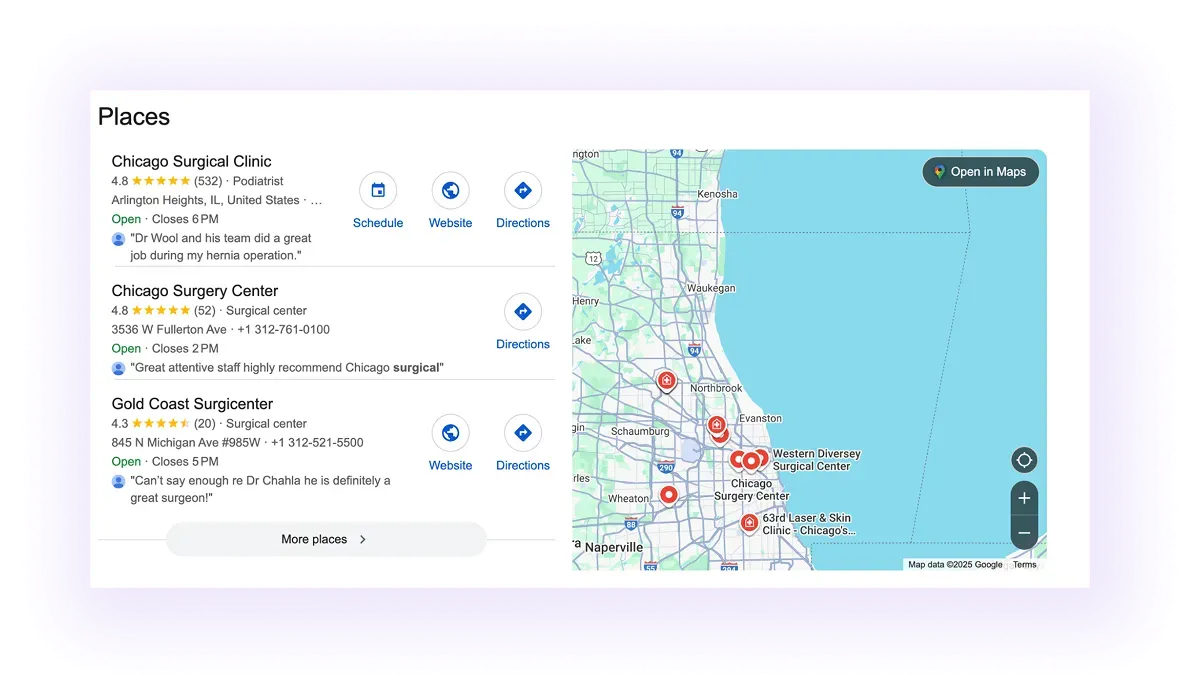
Many of the search results your future patients see are on Google Maps. They see your surgical clinic there and often check reviews to confirm credibility. That makes Google Business Profile a core part of local visibility and SEO for surgeons, especially if you want to appear in the Map 3-Pack. To optimize your profile:
- Keep your name, address, and phone number consistent across your website and listings; 80% of patients lose trust when details don’t match.
- Add your website URL.
- Write a clear clinic description that highlights your surgeons and main treatments.
Example: “ABC Surgical Clinic provides general and minimally invasive surgery in Chicago. Our board-certified surgeons specialize in hernia repair, colon surgery, and outpatient procedures, with a focus on patient safety, clear communication, and predictable recovery.” - List all procedures under “Services,” such as general surgery or minimally invasive surgery.
- Ask patients for reviews in a natural, low-pressure way.
- Monitor and respond to questions in the Q&A section.
- Add social media profiles.
- Upload high-quality photos of your clinic, operating rooms, equipment, and surgeons.
There are additional steps to optimize your Google Business Profile that can improve Map Pack visibility; apply them as well.
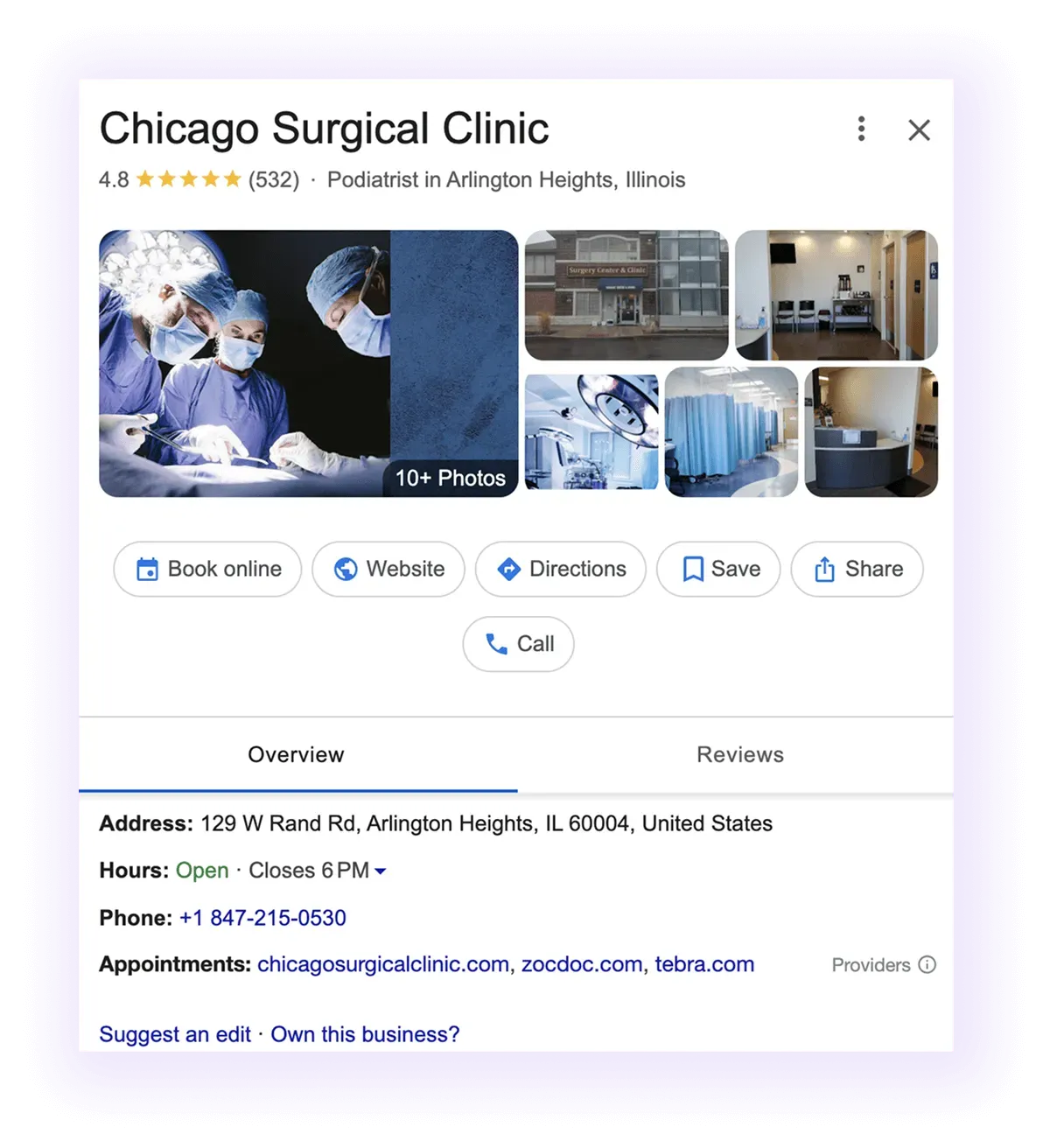
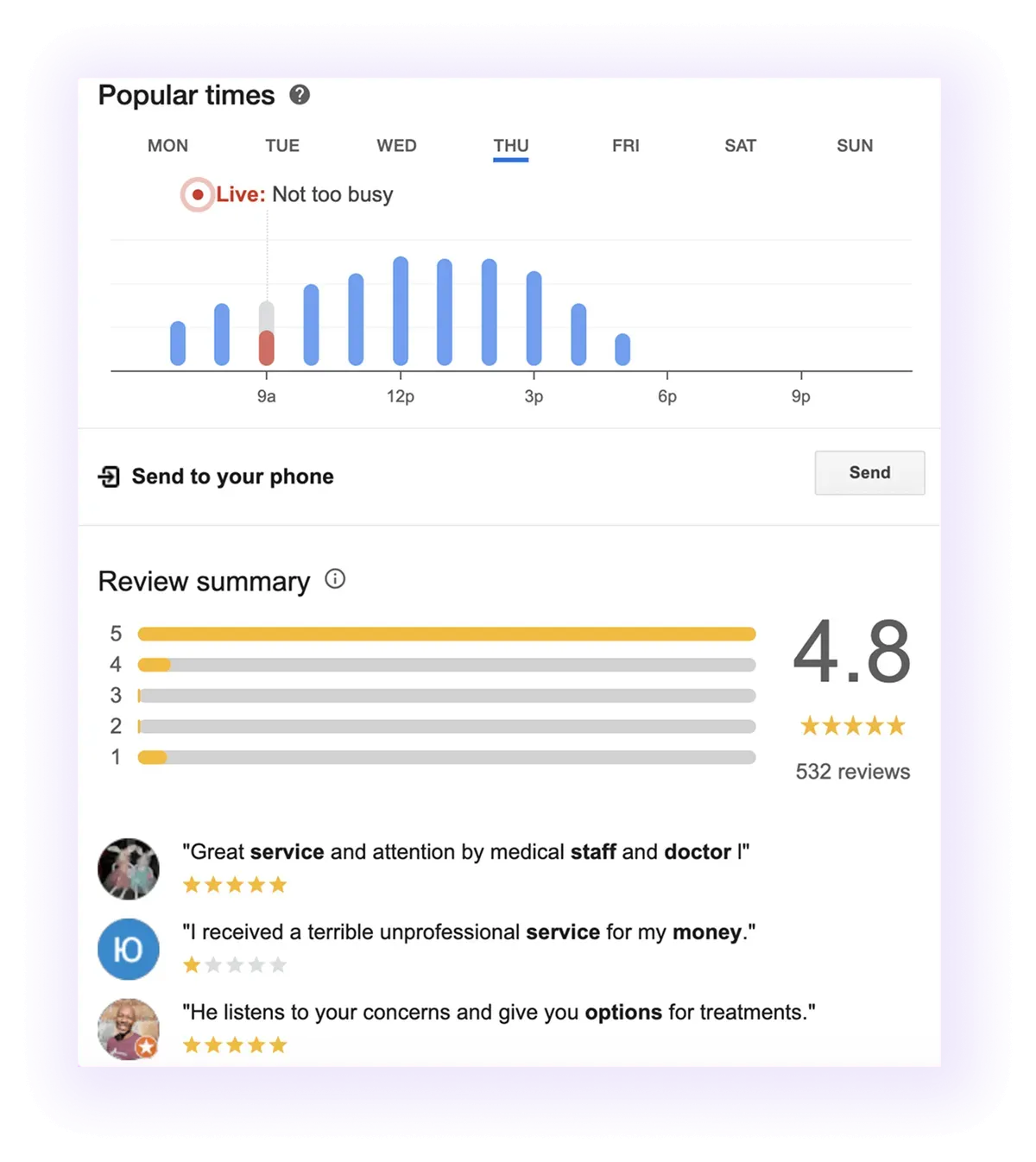
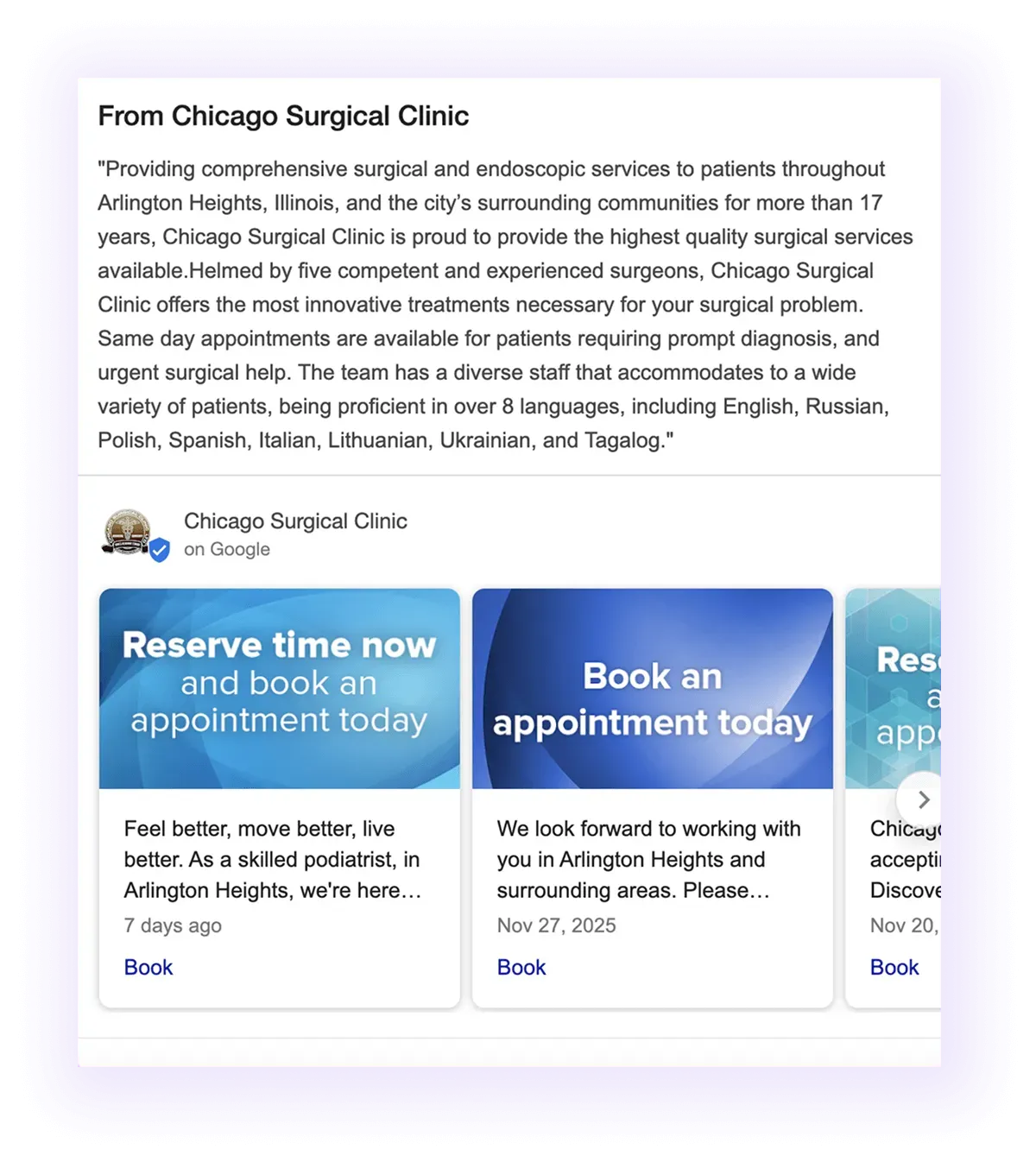

When fully optimized, your profile appears prominently in local surgeon searches, helping patients find you faster and build trust before they reach out.
Build High Quality Content for Your Surgical Clinic’s Website
Ranking well on Google takes more than service, location, or doctor pages. Your content needs to be original and easy to read (check readability score with our tool). At the same time, you should demonstrate your understanding of patient concerns and how you treat them. Use a clear heading structure and place target keywords naturally in titles, meta descriptions, headings, and body content.
Because surgical websites fall under Google’s YMYL standard, credibility matters, and strengthens trust with clear signals such as:
- Meet Our Team: Introduce surgeons and staff, so patients know who’s providing care.

- Education and Training: List degrees, certifications, and specialized training.
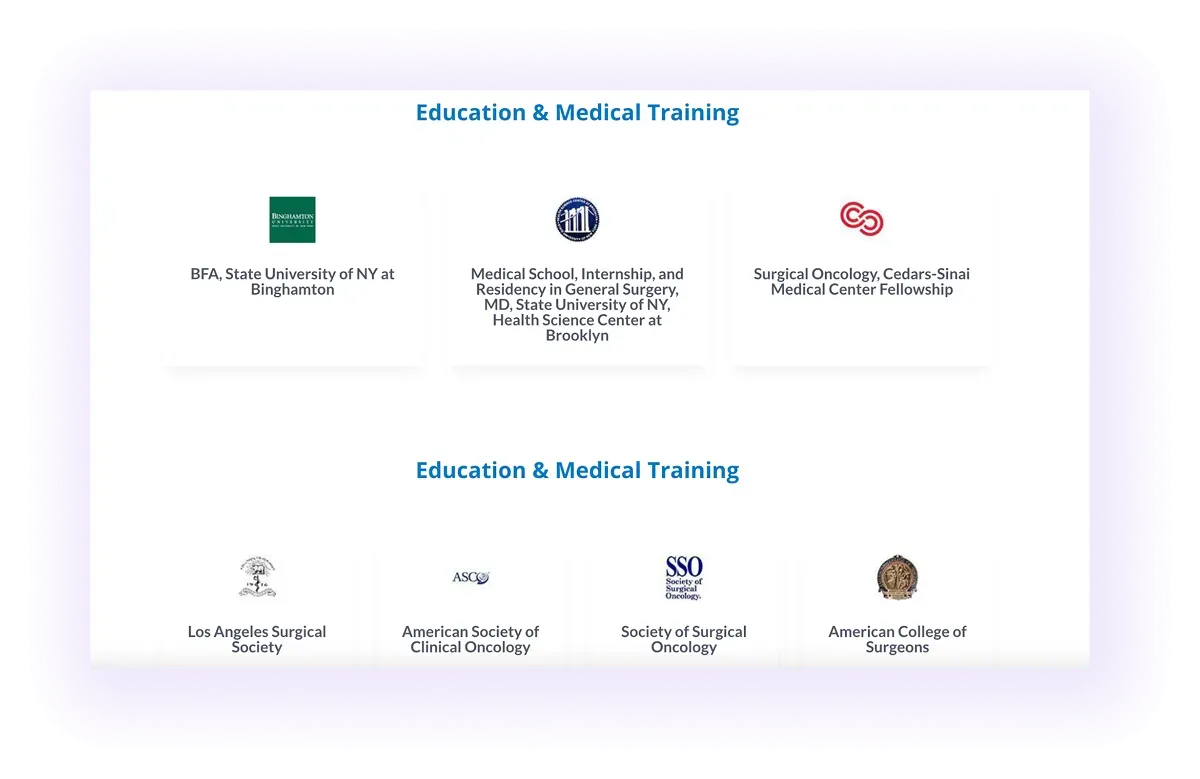
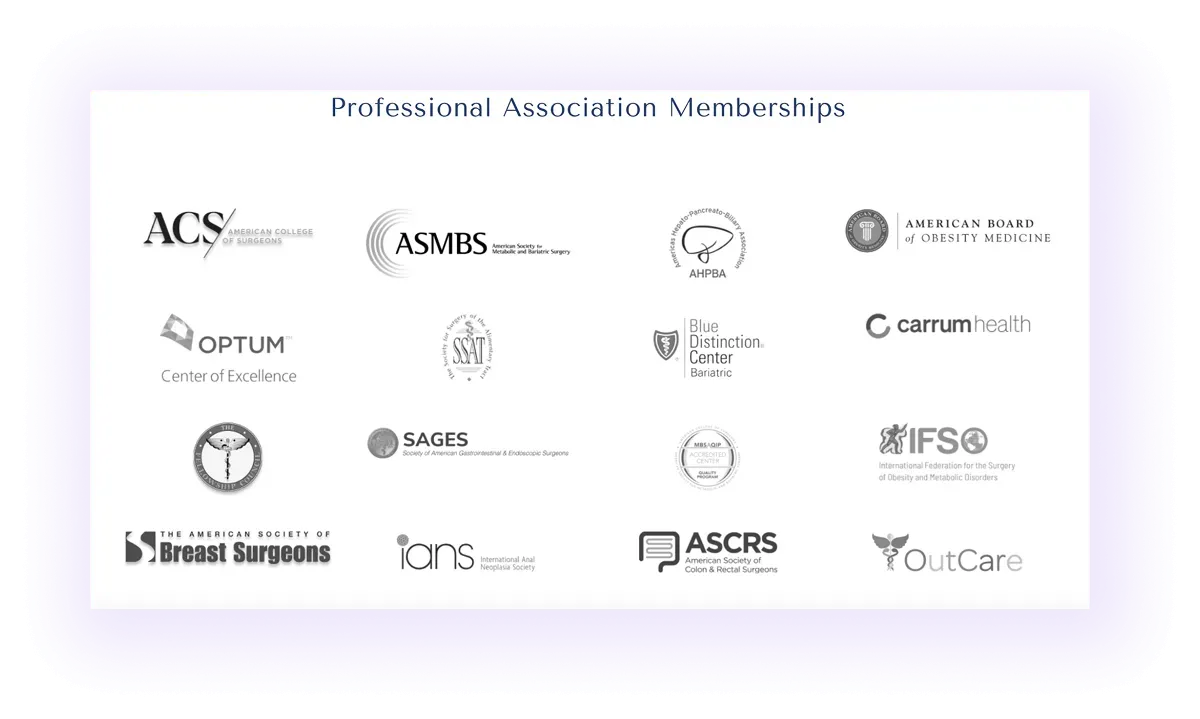
- Professional Memberships: Show affiliations with recognized medical or surgical organizations.
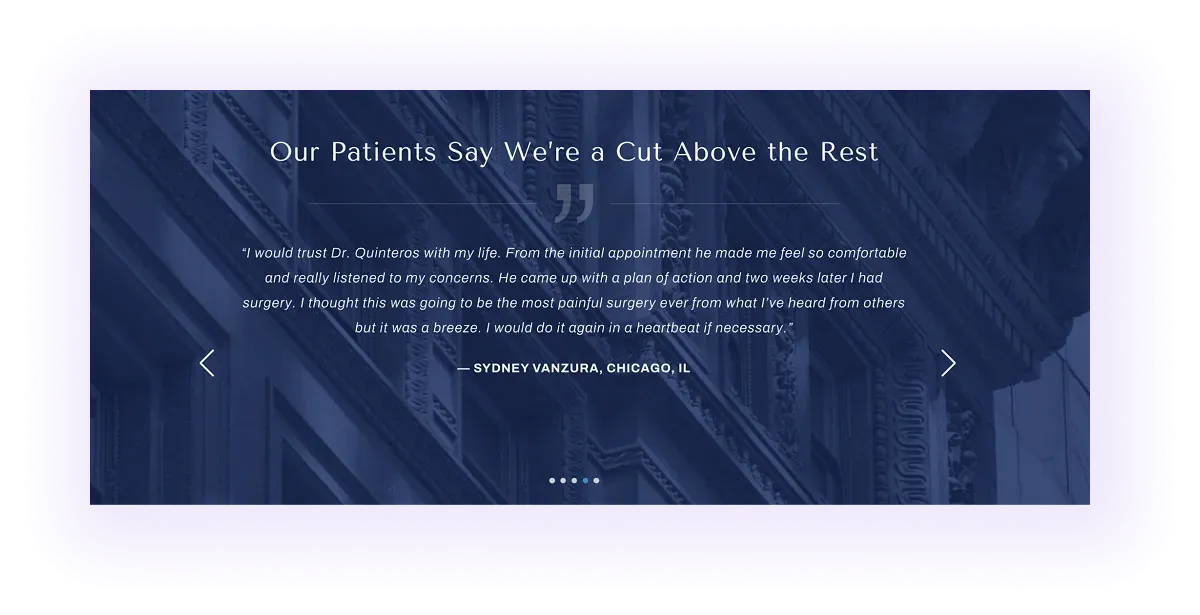
- Patient Testimonials: Use written or video reviews to demonstrate real outcomes.
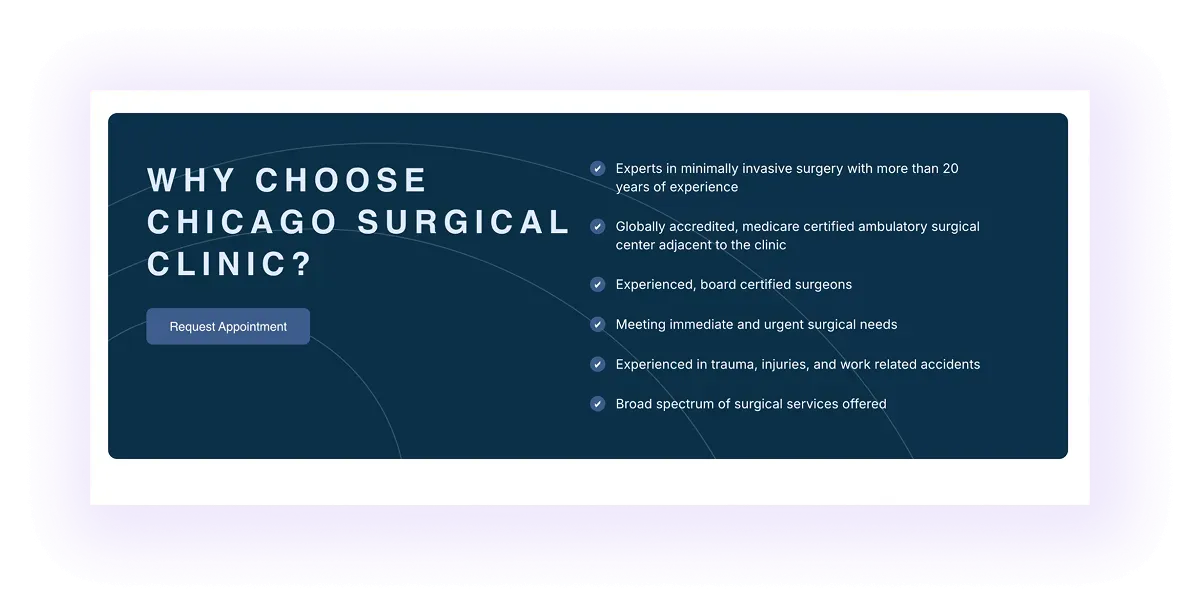
- Clear Value Proposition: Explain why patients should choose your clinic.
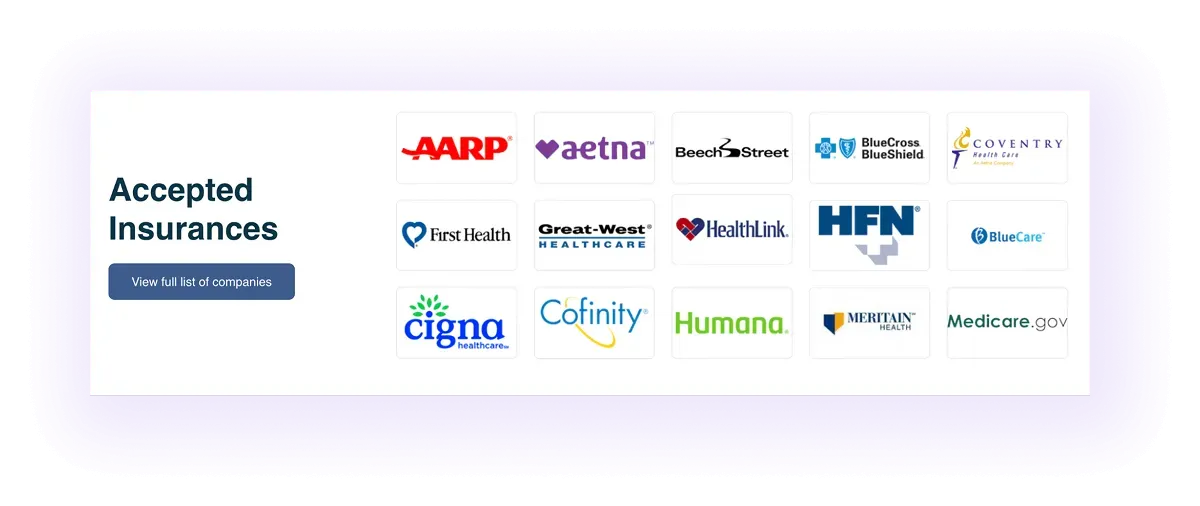
- Accepted Insurance Plans: Help patients quickly confirm coverage.
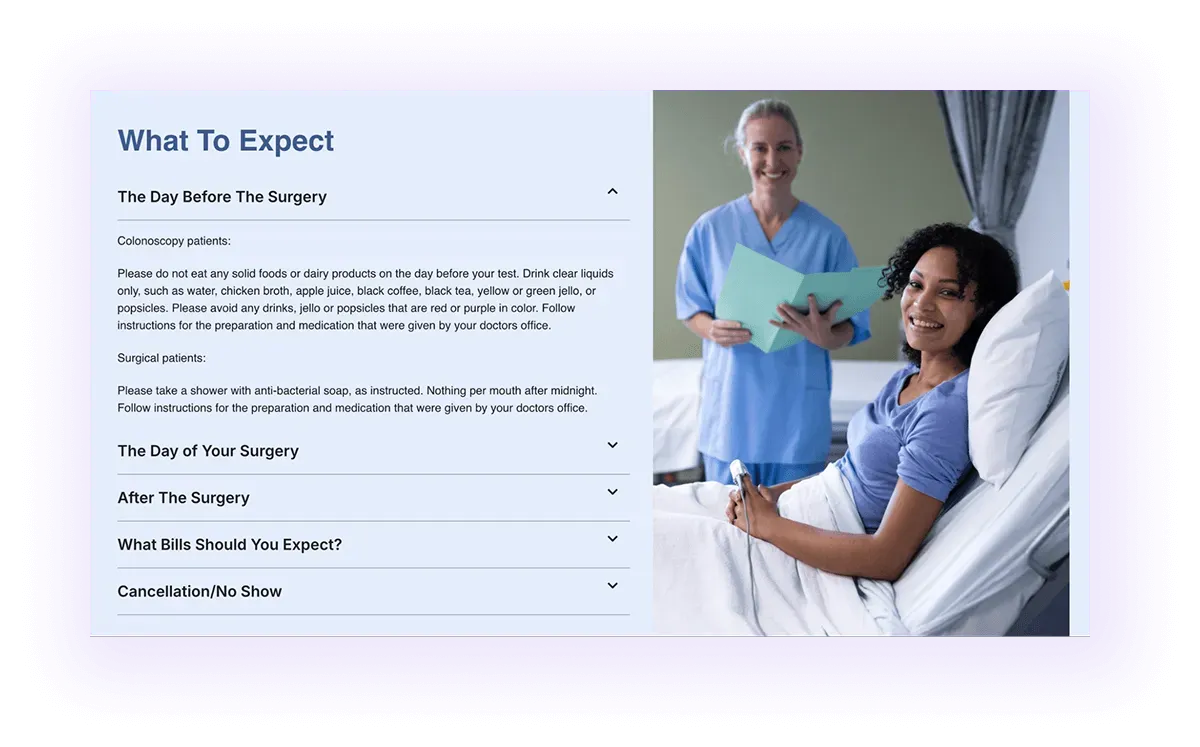
- Patient Expectations: Outline what to expect before and after surgery.
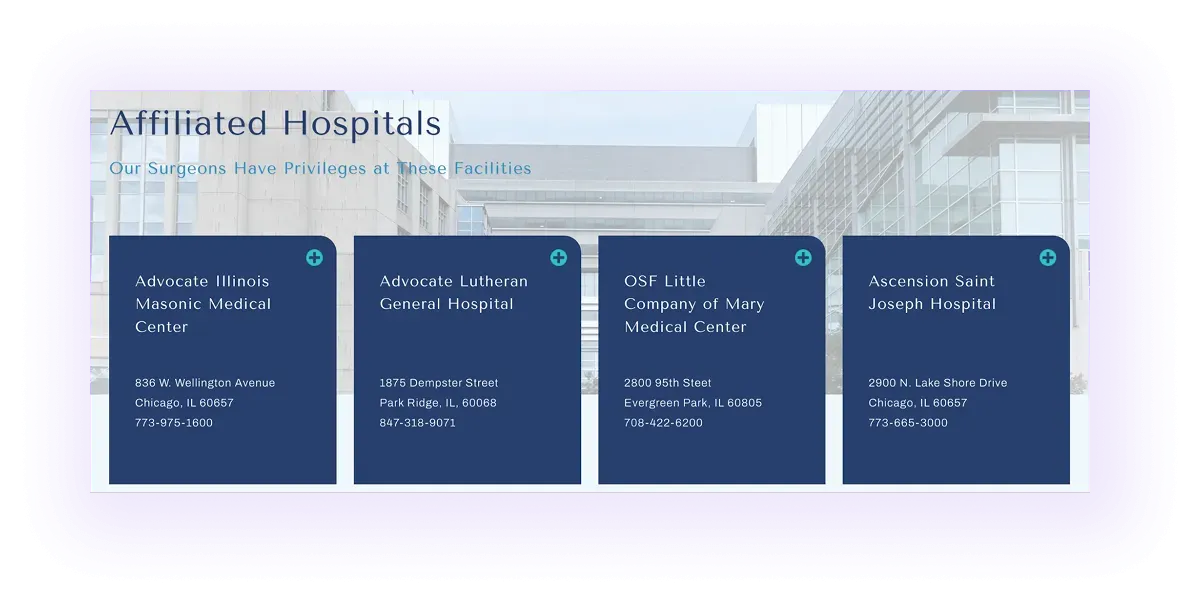
- Affiliate Hospitals: Mention partner facilities where procedures are performed.
- Awards and Recognition: Display relevant honors to reinforce credibility.
This type of content builds trust, improves search rankings, and prepares patients for the first consultation.
Blog Posts
Blog content is one of the most effective content SEO strategies. It attracts patients searching for educational questions and passes authority to your service pages through internal linking, a structure often called pillar clustering, and a core tactic in SEO marketing for surgeons.
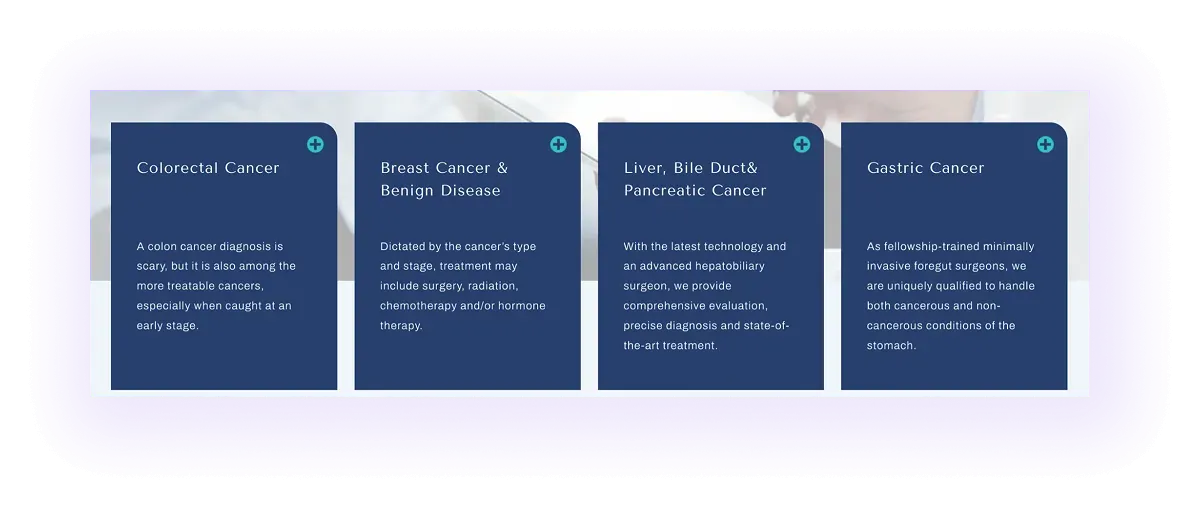
Start with a main treatment page, such as minimally invasive surgery. Then publish supporting blog posts that answer related patient questions, like:
- How minimally invasive surgery works
- Recovery time after minimally invasive procedures
- Risks and benefits
- How to prepare for surgery
Each blog should link back to the main treatment page. This signals depth, builds topical authority, and supports higher rankings.
You can find blog topics using Ahrefs Questions, Google’s People Also Ask, and competitor research.
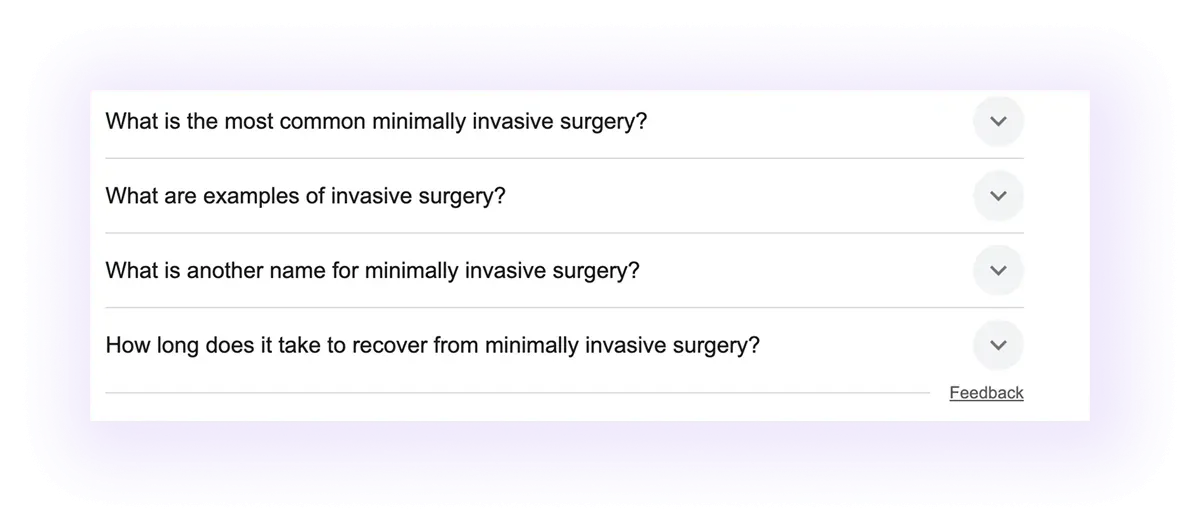
To rank and convert, make sure your blogs:
- Are original and easy to read
- Use keywords naturally in titles, meta descriptions, headings, and body text
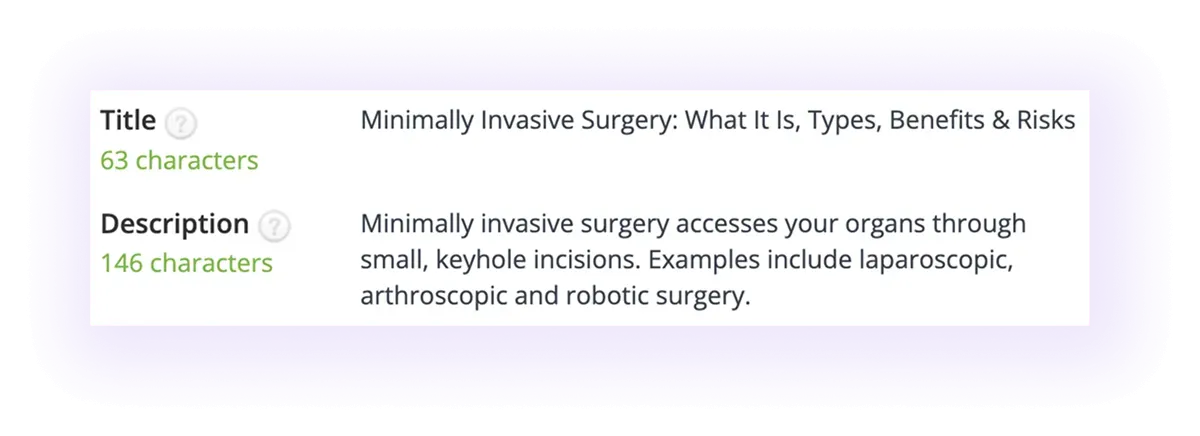
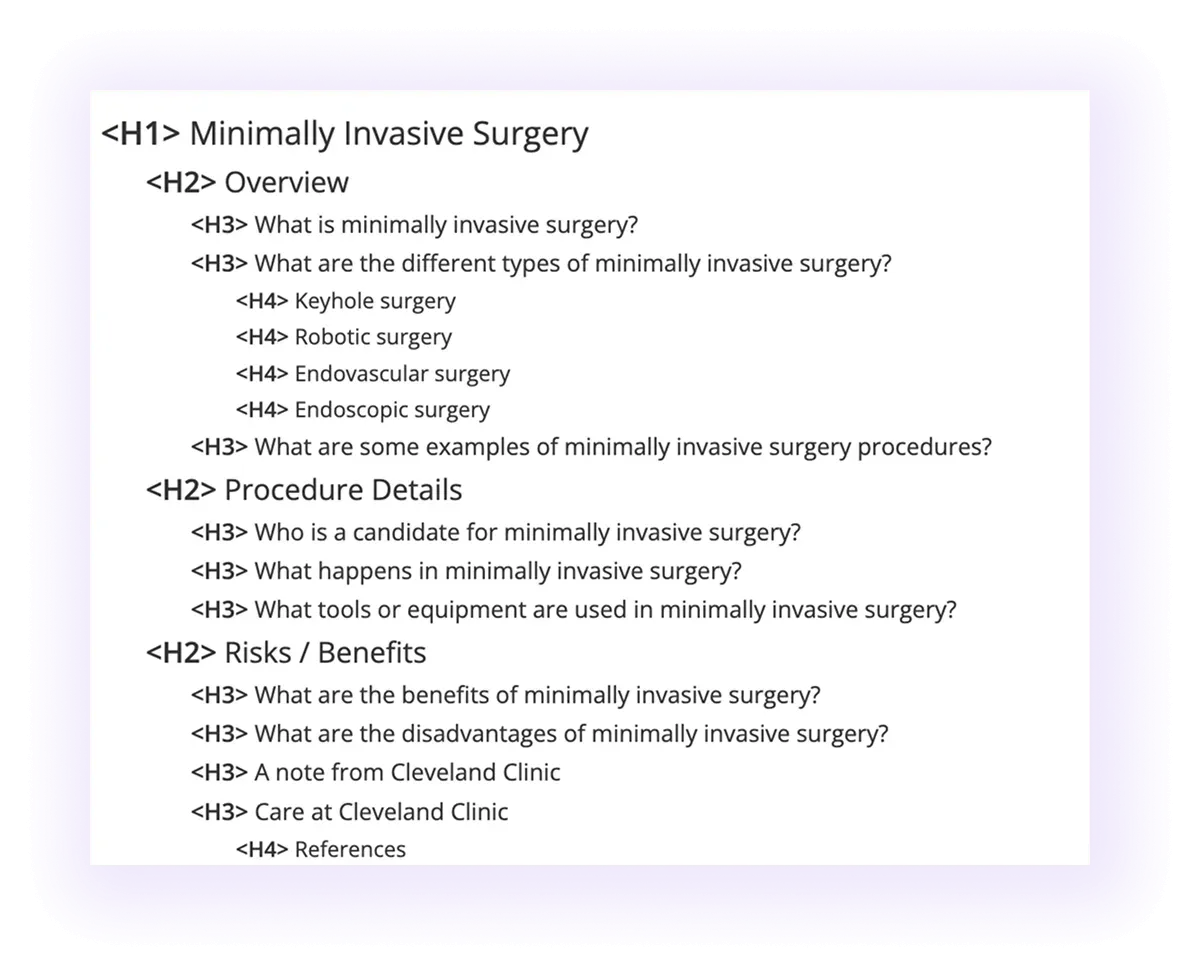
- Follow clear heading structure (H1-H4)
- Include surgeon insights to reinforce credibility
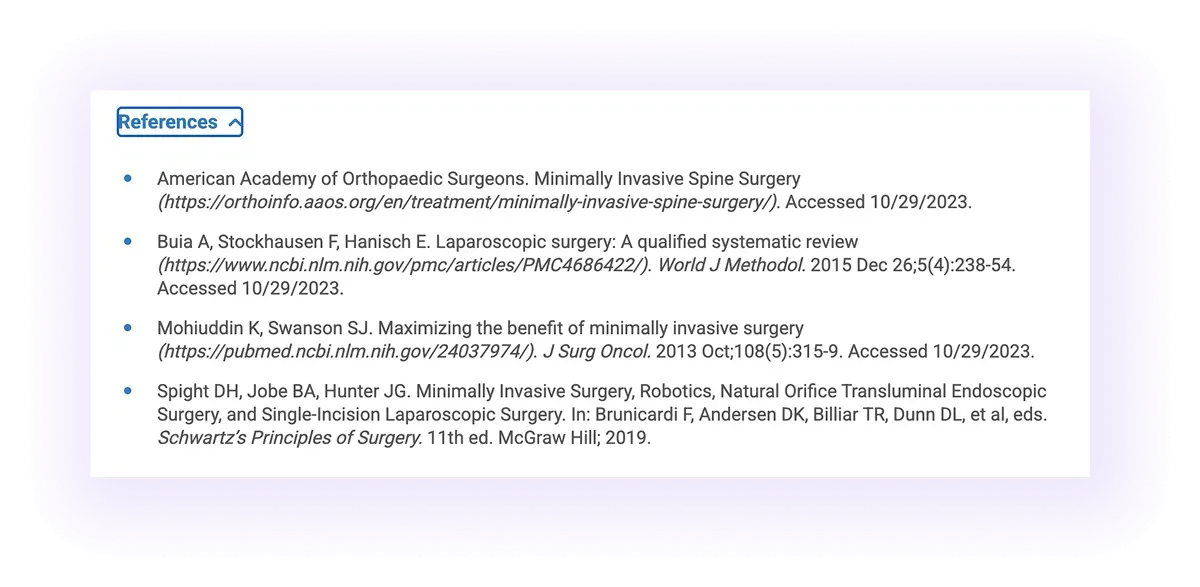
- Reference reliable sources when citing data
- Use images, videos, tables, and lists to simplify education
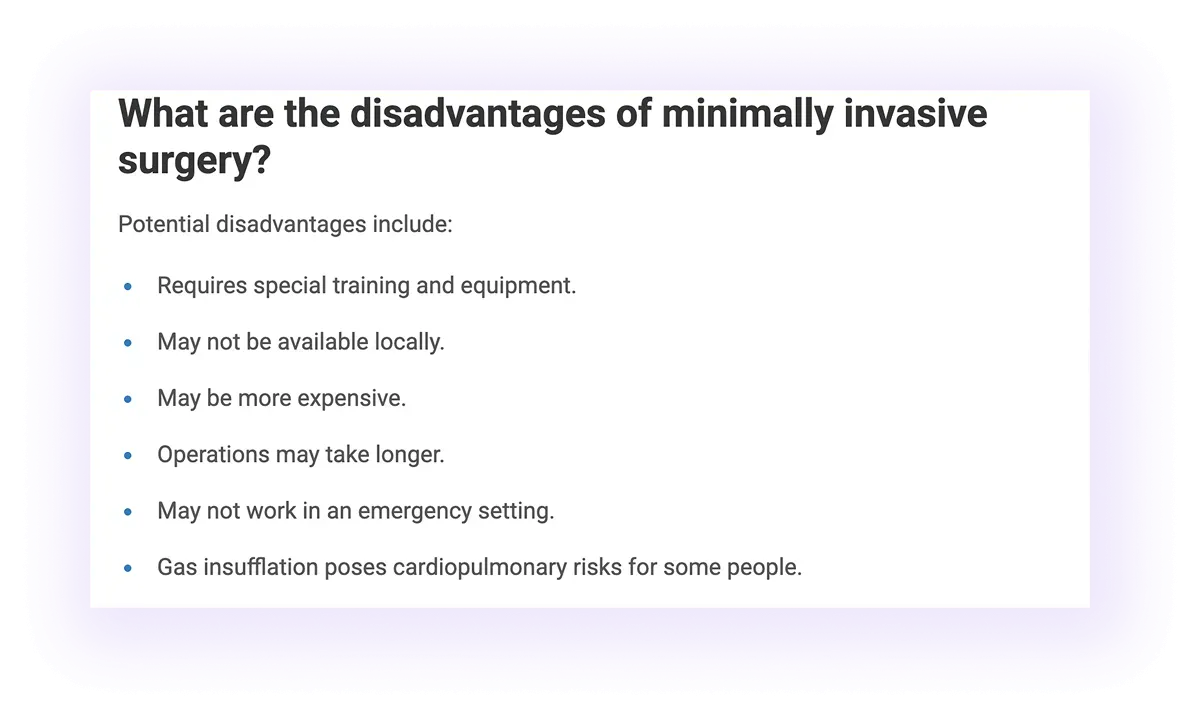
Well-structured blogs educate patients, reduce consult friction, and strengthen your service pages across the site.
Implement Technical SEO for Your Surgical Clinic
For your pages to rank, Google must be able to crawl and index them. At the same time, patients expect fast load times, clear structure, and easy navigation. Both are essential to surgeon SEO.
These factors fall under technical SEO. In our technical SEO checklist, we break down each component and show you how to optimize it step by step.
XML Sitemap and Robots.txt
An XML sitemap tells Google which pages to crawl and index. Include only essential pages, such as:
- Homepage
- Treatment pages
- Surgeon profile pages
- Location pages
- Patient education pages
Keep the sitemap clean and well-organized.
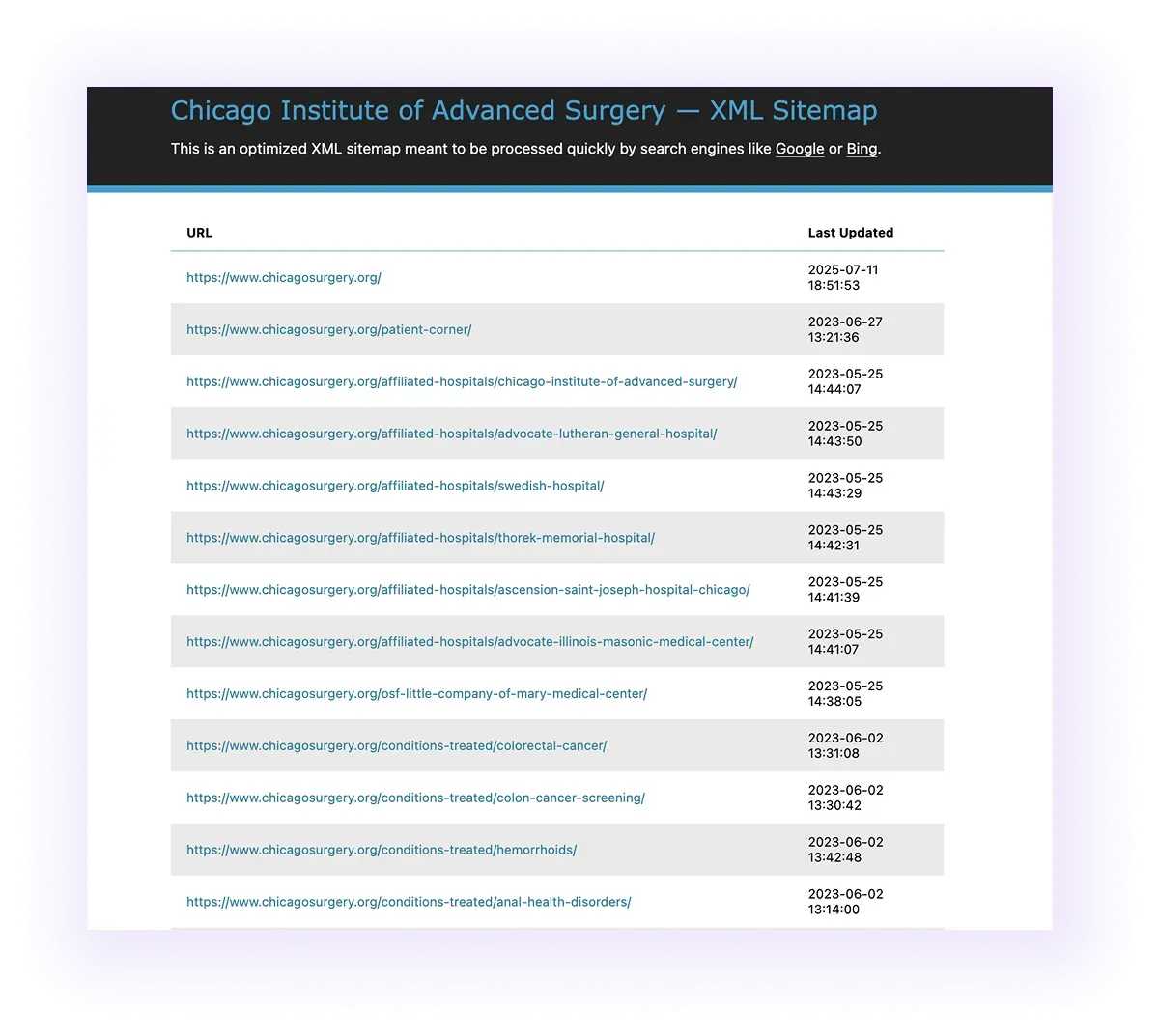
Use your robots.txt file to block pages that shouldn’t appear in search results, such as admin areas, login pages, or internal portals. Your robots.txt should also reference your XML sitemap so Google can find it easily.

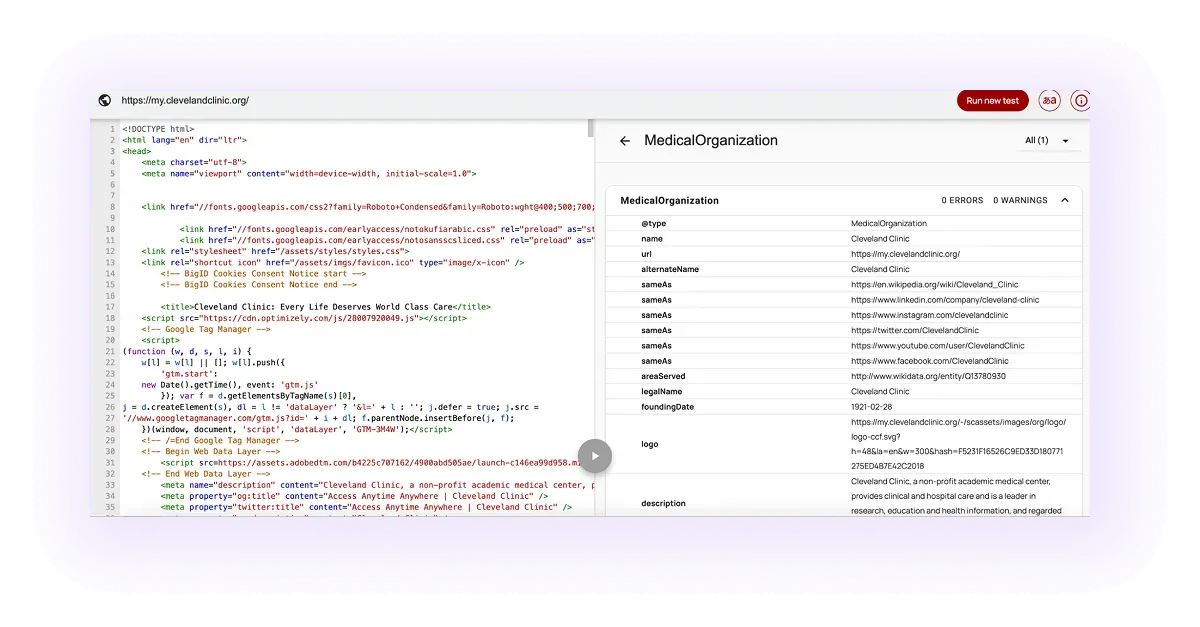
Schema Markup and Structured Data
Schema markup helps Google understand that your website represents surgeons and surgical services. It also improves eligibility for rich results, such as:
- FAQs shown directly in search results
- Treatment pages appearing as rich snippets
- Aggregate review ratings
Key schema types for surgical websites include:
- MedicalBusiness: Defines your practice as a medical provider.
- MedicalOrganization: Establishes your clinic as a healthcare organization.
- LocalBusiness: Signals location and service area for local visibility.
- AggregateRating: Displays review scores (only if hosted on your site).
- FAQPage: Surfaces patient questions in search results.
- Service: Clarifies each surgical treatment you offer.
- Person: Identifies individual surgeons and their credentials.
Used correctly, structured data strengthens your SEO for surgeons, relevance, visibility, and trust in search.
URL Structure
Use clean, descriptive URLs that include relevant keywords and follow basic surgeon SEO standards. Separate words with hyphens and avoid random numbers or characters.
Good URL Example (descriptive and easy to understand): yourclinic.com/services/minimally-invasive-surgery
Bad URL Example (confusing and offers no context): yourclinic.com/p123?id=89xY
Internal Link Building for Surgeon Websites
Internal links help patients navigate your site and signal to Google how pages connect. They also pass authority between pages, which supports rankings.
Key internal links to use:
- Navigation Links: Header links to core pages like Treatments, Our Surgeons, and Locations.
- Blog-to-Blog Links: Link related posts, such as a hernia surgery recovery blog to a how hernia surgery works blog.
- Blog-to-Service Links: Point articles like what to expect during knee surgery to the knee surgery page.
- Service-to-Service Links: Connect related treatments, such as general surgery to minimally invasive surgery.
- Service-to-Location Links: Link procedures to cities, like the oral surgery page to a landing page for oral surgeons in Chicago services.
- Service-to-Surgeon Links: Connect each treatment to the surgeon who performs it, such as the colon surgery page to Dr. Smith’s profile.
Clear internal linking improves usability and strengthens site structure for surgery SEO.
Mobile Optimization for a Surgical Clinic Website
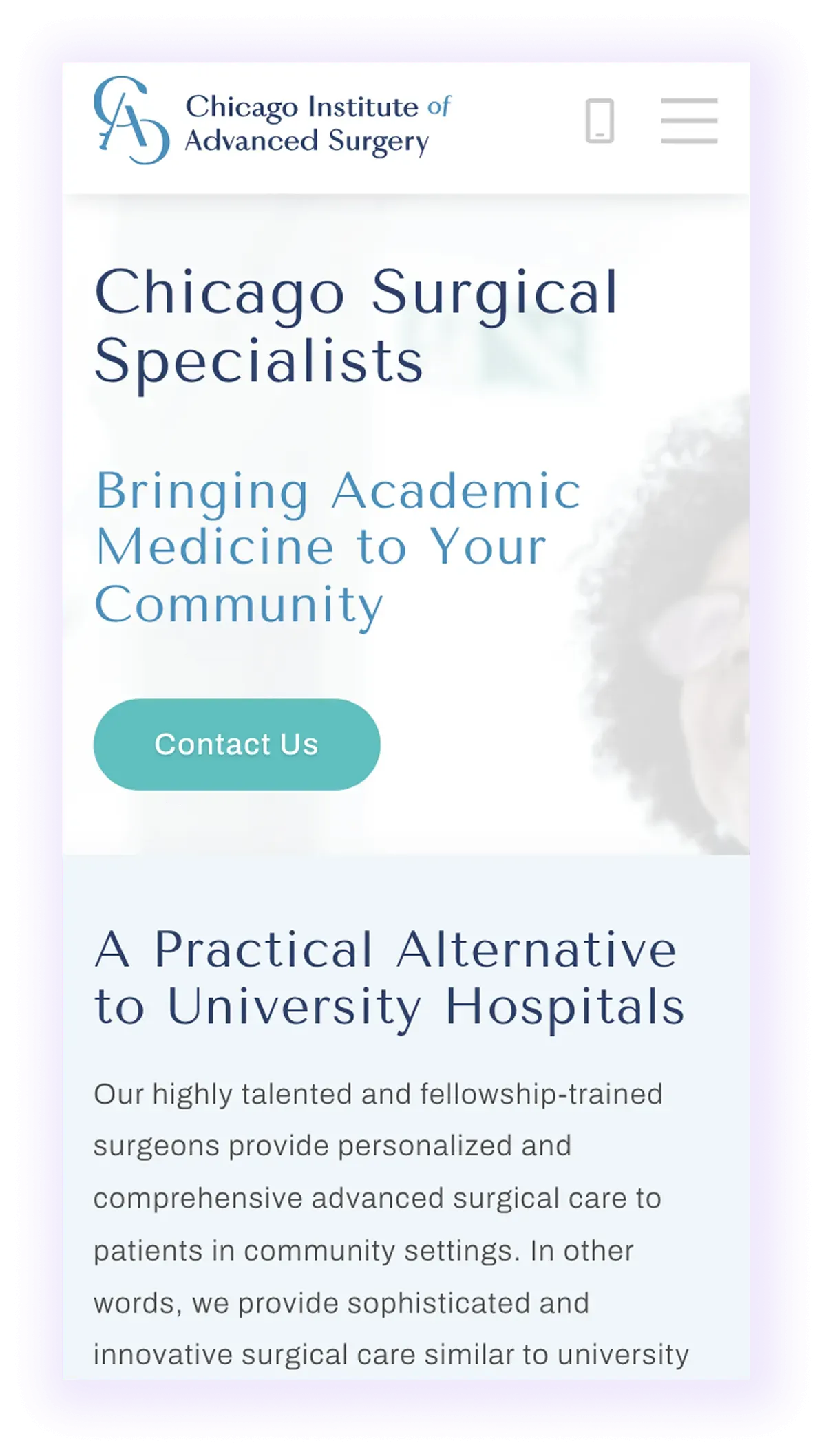
Many patients search for surgeons on their phones, and Google favors mobile-friendly sites. To perform well on mobile, your website should:
- Be fully responsive across screen sizes
- Use large, easy-to-tap buttons
- Keep body text at 16px or larger
- Include a hamburger menu for simple navigation
- Compress images for faster load times
- Show clear calls to action or click-to-call buttons
For step-by-step guidance, see our full mobile SEO checklist.
Website Speed & Performance (Core Web Vitals)
Site speed affects both rankings and patient experience. Slow pages increase drop-offs and hurt visibility. To keep your surgical website fast and stable:
- Compress and optimize images without sacrificing quality
- Use reliable hosting and a CDN for faster regional loading
- Apply server-side rendering to complex pages
- Use lightweight video formats
- Lazy-load below-the-fold images
- Minify JavaScript, CSS, and HTML
Test your surgeon's website performance with GTmetrix or Google PageSpeed Insights.
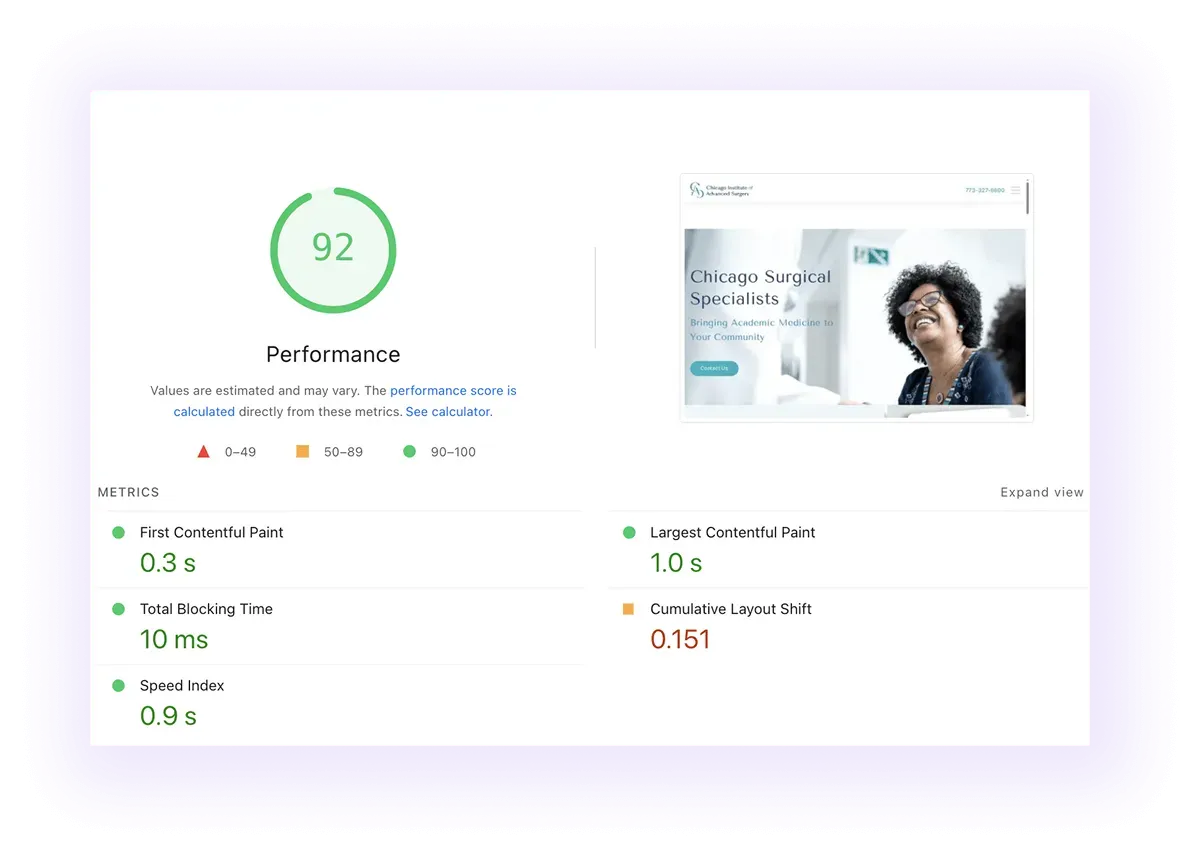
Your Core Web Vitals should meet Google’s benchmarks:
- Largest Contentful Paint (LCP): under 3 seconds
- First Contentful Paint (FCP): under 1 second
- Cumulative Layout Shift (CLS): as close to 0 as possible
Strong performance keeps patients engaged and supports higher rankings.
Frequent Technical Audits
Surgical websites change often: new blog posts, locations, treatments, or surgeons can all impact performance. Regular technical audits keep everything stable and searchable, which is critical for SEO for surgeons. During audits, check the following:
- Scan for duplicate content with Copyscape or Screaming Frog
- Find broken links and 404 errors using Screaming Frog
- Review and fix redirects with Ahrefs or Screaming Frog
- Resolve indexing issues in Google Search Console
- Test mobile usability and speed with PageSpeed Insights
- Monitor Core Web Vitals (LCP, FCP, CLS)
- Validate schema using Google’s Rich Results Testing Tool
This is a lot to manage. If you’d rather not handle it in-house, our surgeon SEO agency can handle ongoing technical audits for you.
Link Building for Surgeon SEO
Link building is the core of off-page SEO marketing for surgeons. High-quality backlinks signal trust and authority to Google, directly influencing surgeon SEO rankings. Below are three proven link-building strategies for surgical websites.
Guest Posting and Link Insertion
Start by identifying relevant health and medical websites, such as:
- Health publications like Healthline
- Medical news sites like Medscape
From there, choose one of two link-building approaches:
- Guest Posting: Write an original article related to your surgical procedures or expertise, then secure a backlink when it’s published. For example, write an article on minimally invasive surgery and recovery and publish on a health blog, linking back to your clinic.
- Link Insertion: Add your site to an existing article by filling a content gap with expert input or updated medical information. For example, link to your hernia surgery page in an article on abdominal surgeries and recovery.
Both methods build authority for surgery SEO and signal trust to search engines when placed on credible medical sites.
Directory Listings for Surgical Clinics
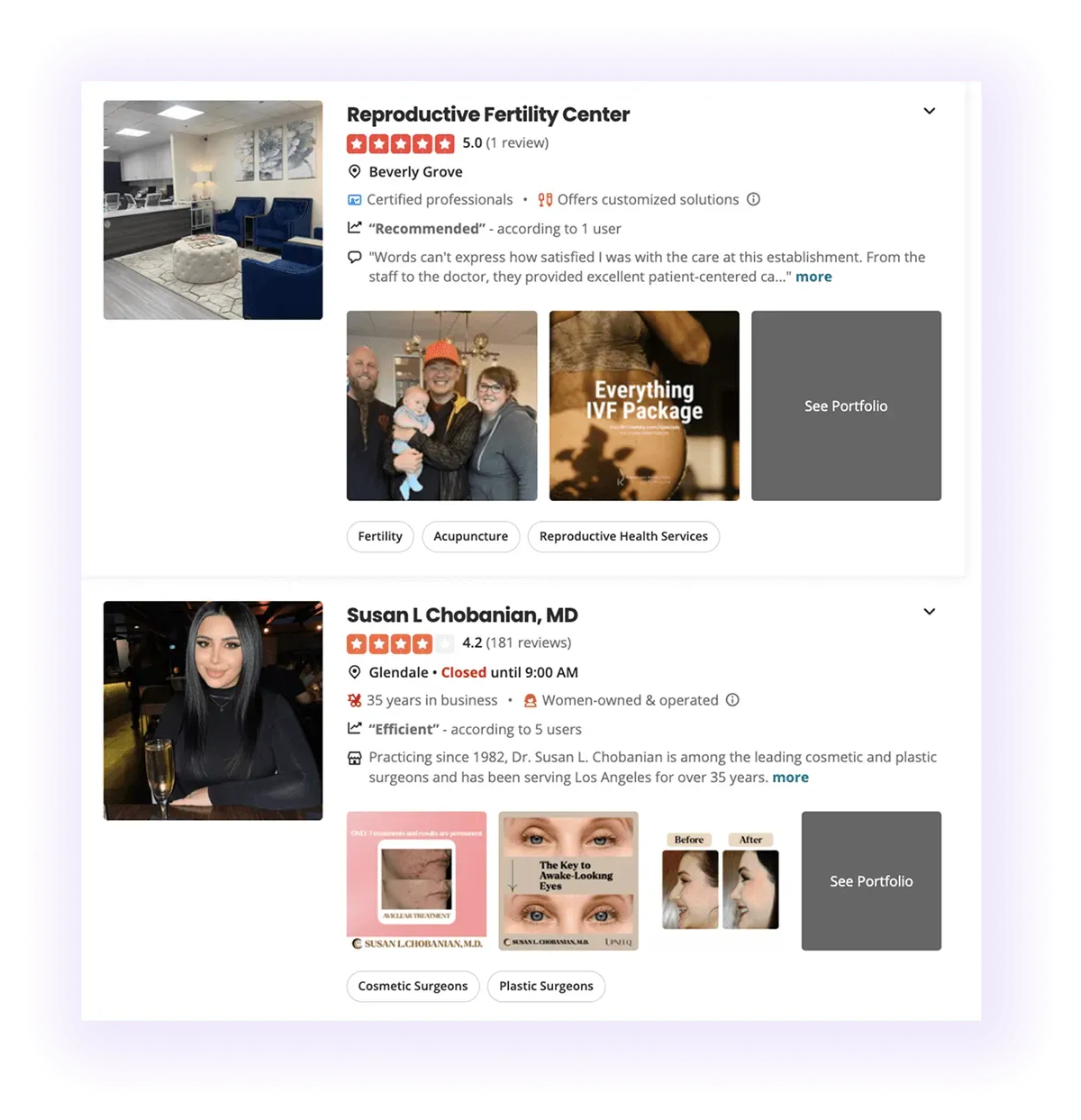
Directory listings support off-page SEO for surgeons by improving visibility, credibility, and backlink strength. Focus on reputable platforms, such as:
- Medical directories like Vitals
- Surgeon organizations like the American College of Surgeons
- Local business directories like Yelp
Our SEO agency also provides local link-building services designed specifically to grow surgeon authority.
As with Google Business Profile, directory listings must be optimized to deliver value. Make sure to:
- Keep your name, address, and phone number consistent with your site and GBP
- Add your website URL
- Write a clear clinic description highlighting key treatments
- List surgeons and upload photos, awards, or certifications
- Include all services you offer
- Respond to reviews to build patient trust
Consistent, well-optimized listings strengthen authority and support local rankings.
Digital PR for Surgeons
Digital PR is a great way to earn high-authority backlinks, including coverage from major outlets like Forbes and surgical publications such as General Surgery News. These links directly impact surgeon SEO by strengthening trust and authority. To do it effectively:
- Choose a newsworthy topic tied to procedures, outcomes, or technology. For example, the topic could be “How minimally invasive surgery is reducing recovery time and complications.”
- Support the story with real data, such as surgeon insights, patient surveys, or clinic records.
- Write a clear, journalist-friendly article that’s easy to scan.
- Pitch the story by explaining how the data was gathered, why it matters, and who it helps.
- Reach out to reporters or editors at relevant outlets.
When picked up, these stories earn authoritative links and position your clinic as a credible voice in surgery.
How to Track the Success of Your Surgeon SEO Strategy
Tracking performance shows whether your SEO is driving patients or wasting effort. With the right metrics and SEO reporting tools, you can refine pages, improve rankings, and strengthen SEO marketing for surgeons over time. Key tracking steps include:
- Monitor indexing, impressions, clicks, and keyword rankings for service and location pages using Google Search Console or Ahrefs.
- Review your backlink profile and competitors’ backlink profiles using Ahrefs or SEMrush.
- Test speed and mobile usability for treatment, location, and surgeon pages using Google PageSpeed Insights.
- Analyze traffic and conversions (calls, forms, bookings) through Google Analytics.
- Analyze user behavior using heatmaps, scroll depth, and clicks with Hotjar or Microsoft Clarity.
- Track key actions, such as call clicks and form submissions, with Google Tag Manager.
Consistent tracking keeps your surgery SEO focused on what actually drives patient acquisition.
Partner with a Surgeon SEO Company That Knows Your Industry
That’s the full picture of SEO for surgeons. It’s a lot to manage: tools, time, and ongoing effort add up fast. That’s why most practices choose to work with a trusted surgeon SEO agency.
If you’re ready, contact us, and we’ll help turn your site into the first choice for patients searching for your care.
Submit the form - Get Free Proposal
%202.png)
24 hours
FAQ


Submit the form - Get Free Proposal
24 hours
.svg)