SEO for Dermatologists Strategies and Keywords by Dermatology SEO Agency
Attract more patients with proven 2026 dermatology SEO: keywords, structure, and local rankings built by an agency that’s optimized 25+ dermatologist sites.
5.0



With more than 395,000 physician group practices in the U.S., competition keeps rising, and smaller dermatology clinics feel the squeeze as large private-equity groups move quickly into local markets.
Growth matters more than ever, whether that means adding new services, expanding to nearby cities, or simply keeping a strong patient pipeline. But packed schedules, admin demands, and compliance work make it hard to give marketing any real attention.
That’s where a steady, low-stress growth channel becomes worth its weight. Many clinics turn to dermatology search engine optimization for exactly that reason.
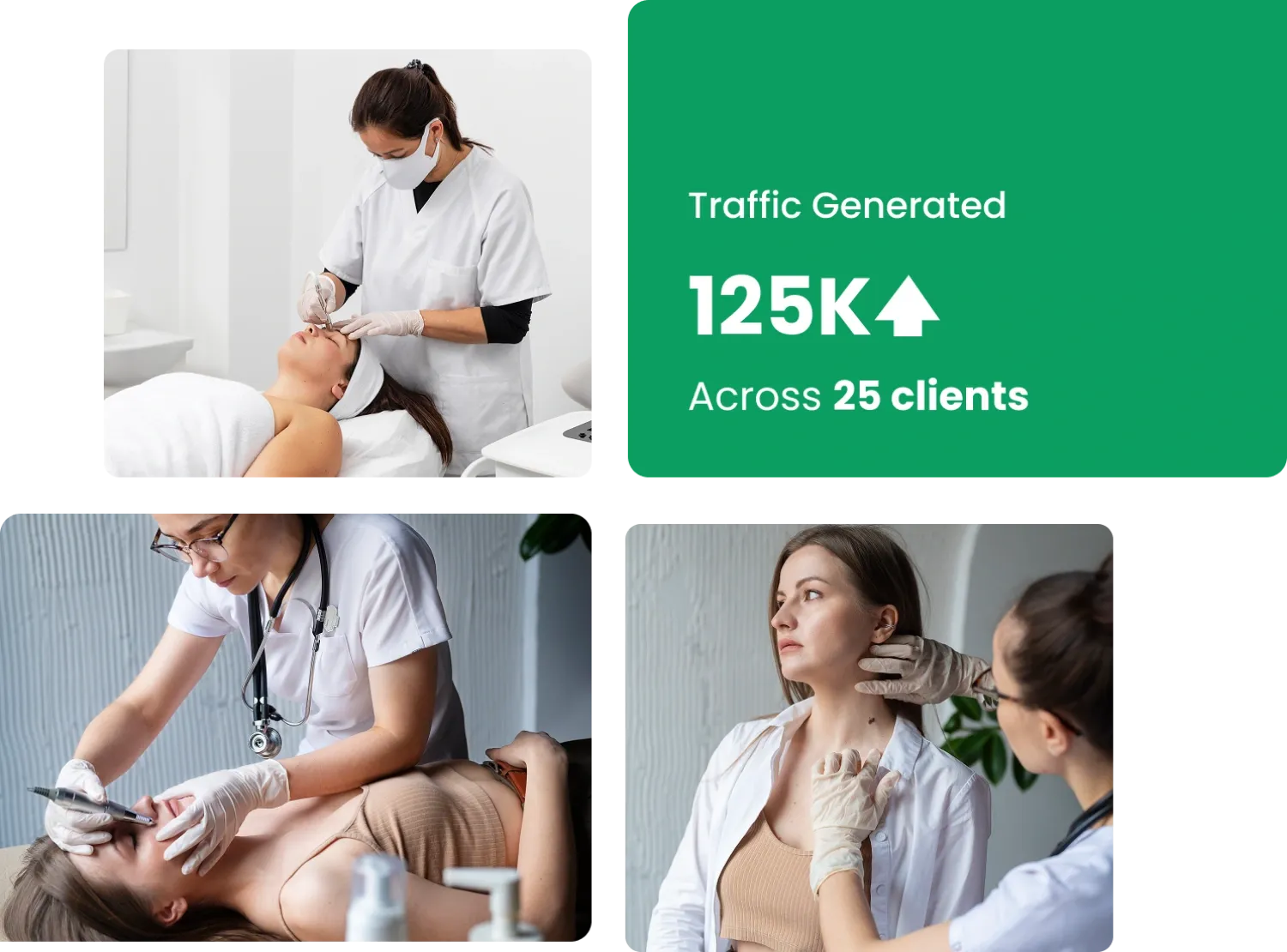
Below, you’ll see the same approach our dermatology SEO experts used to help 25+ dermatology clinics strengthen their online presence and compete with bigger groups.
Why Do Dermatologists Need to Invest in SEO?
- A strong organic presence helps independent dermatologists compete with larger, better-funded groups without matching their marketing budgets.
- SEO for dermatologists builds long-term visibility that keeps working even when ads stop. Many dermatologists spend around $2,500 on PPC before agency fees, and organic traffic reduces that burden. You can compare costs using our SEO pricing calculator.
- Ranking for high-intent terms like “acne treatment,” “eczema treatment,” “cosmetic dermatology,” “mohs surgery” brings in patients who are already ready to book.
- Dermatologist SEO supports growth without adding extra work, giving busy dermatologists a steady flow of new patients without daily marketing tasks.
- Local SEO helps clinics draw patients from nearby neighborhoods and cities without needing physical expansion.
- Consistent rankings keep your practice visible during packed clinical seasons when marketing usually slips.
- Organic search builds a predictable patient pipeline instead of relying on unpredictable referrals.
Now let’s move into the first step of dermatology SEO: finding the right keywords.
Do Keyword Research and Competitive Analysis for Your Dermatology Website
Start by listing every service your practice offers, including:
- medical dermatology
- surgical dermatology
- photodynamic therapy
- cosmetic dermatology
- laser treatments
- acne care
- mole removal
- any other specialized procedures
Drop these terms into tools like Ahrefs, SEMrush, or Google Keyword Planner to see what patients are typing into search.
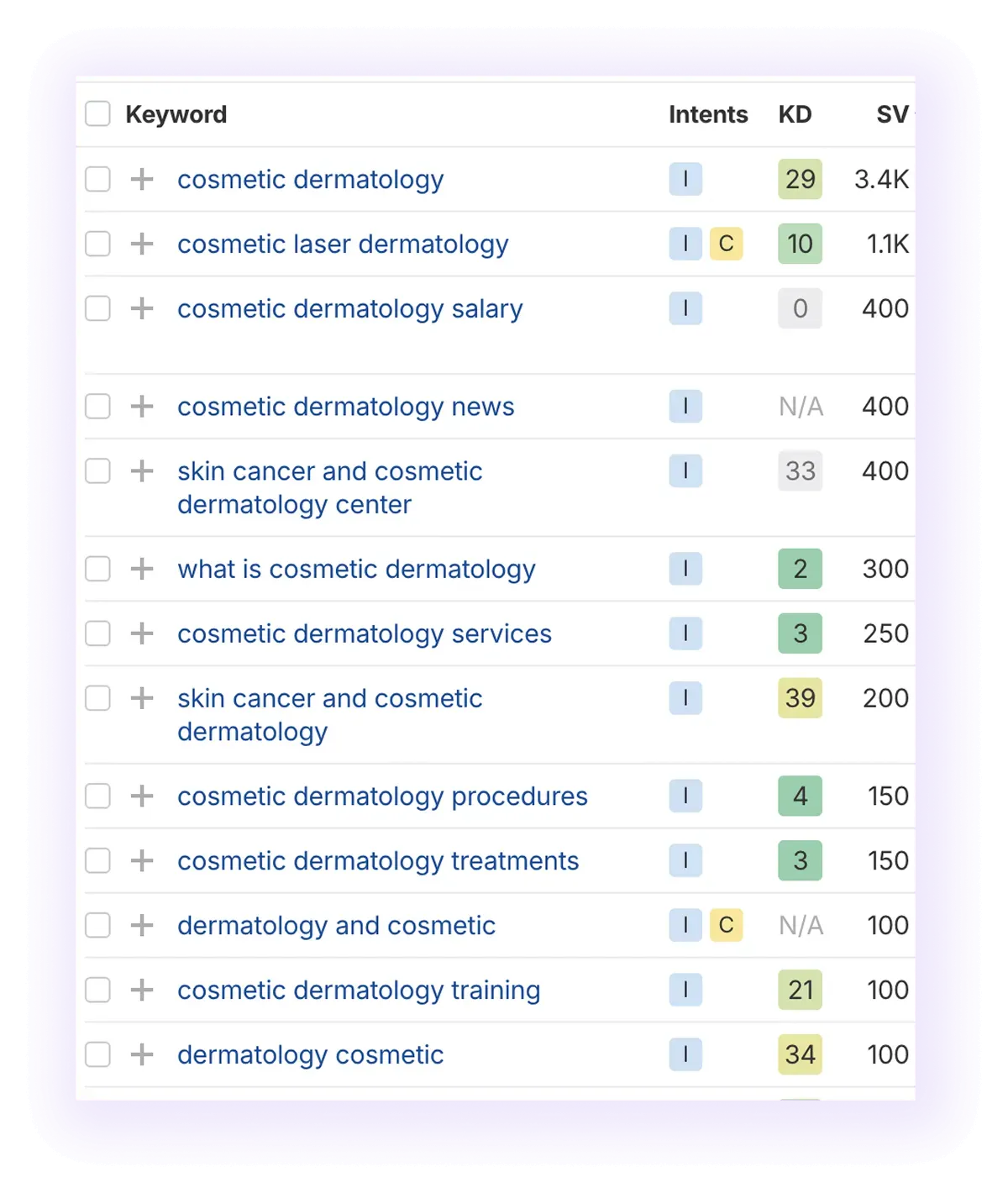
Include broader, high-intent terms like “dermatologist,” “dermatology clinic,” and “dermatology center.” These bring in strong search volume and help you reach patients who are still exploring options. Prioritize terms with strong volume and lower difficulty to capture intent quickly. You can also use our CTR estimation calculator to see these keywords potential in terms of traffic.
You should also check location-based demand. Use the location filters in Ahrefs or SEMrush to see which nearby cities or neighborhoods generate the most searches for your services.
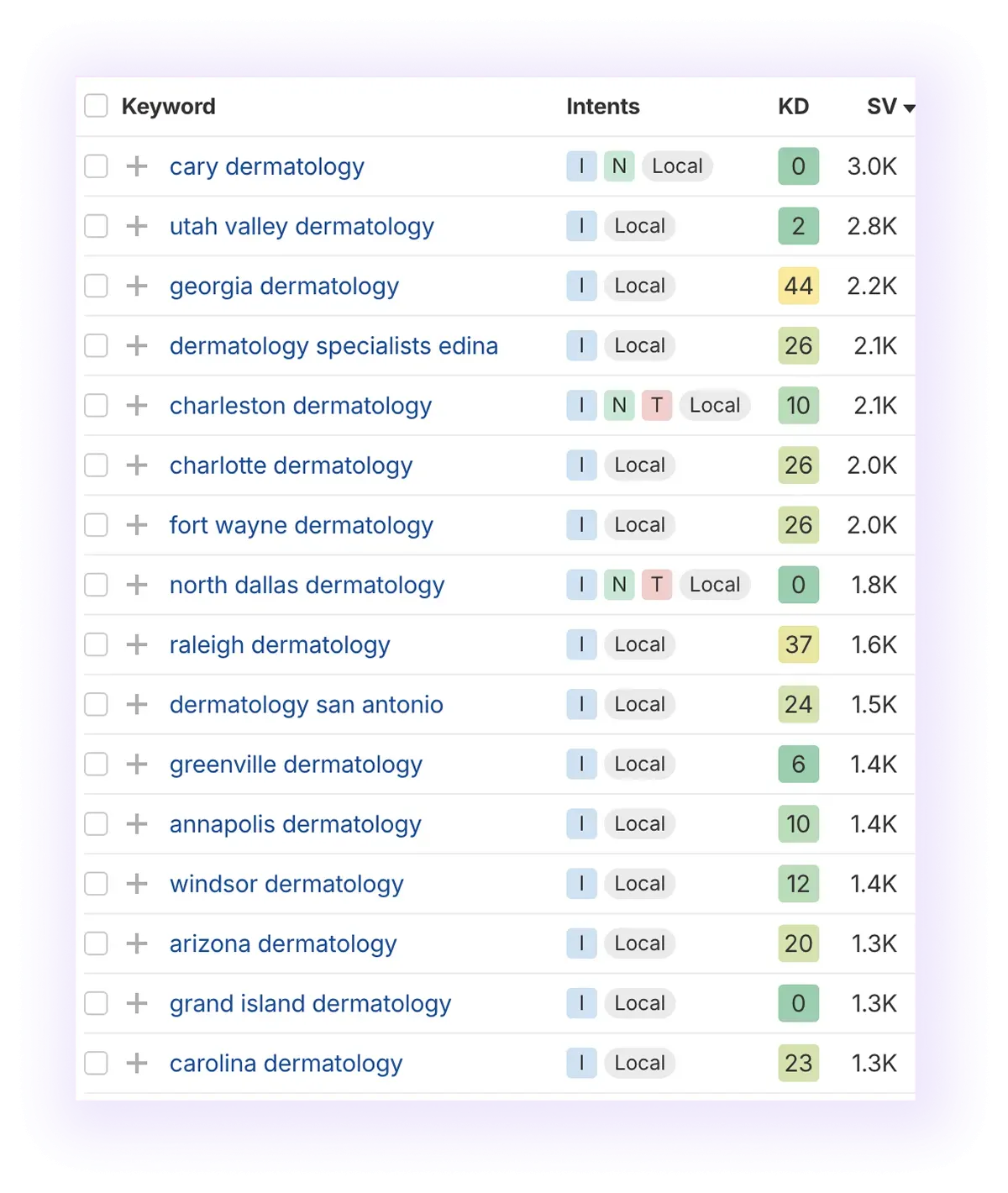
Make sure to bookmark our keyword research and planning system so you can use it whenever you need to conduct research.
Top 30 Real Keywords for Dermatologists
Transactional for Targeting Potential Patients
- dermatology specialists
- cosmetic dermatology
- certified dermatology
- dermatology skin care
- surgical dermatology
- pediatric dermatology
- dermatology and skin health
- family dermatology
- comprehensive dermatology
- skin cancer dermatologist
- jaw botox
- full body laser hair removal
- scar revision surgery
- acne scar removal
- laser skin treatment
Informational for Educating Patients
- how to treat eczema
- best acne scar treatments
- causes of adult acne
- treatment options for psoriasis
- what causes skin rashes
- laser therapy for acne
- how to detect melanoma
- skin cancer warning signs
- best sun protection methods
- how to prevent hyperpigmentation
- what triggers contact dermatitis
- treatment for cystic acne
- how to remove moles
- dry skin treatment options
- permanent hair loss treatment
Our research shows you exactly what other dermatology clinics rank for and where they fall short. We’ll help you fill those gaps and outpace nearby competitors with a smarter, more complete dermatology SEO plan.
Contact us, and our dermatologist SEO agency will build a strategy that gives your clinic a clear advantage.
Outline Your Dermatology Website Hierarchy and Menu Structure
Once you’ve gathered your keywords, you need a clear plan for where each one belongs. Before building service pages or articles, your site should have three foundation pages:
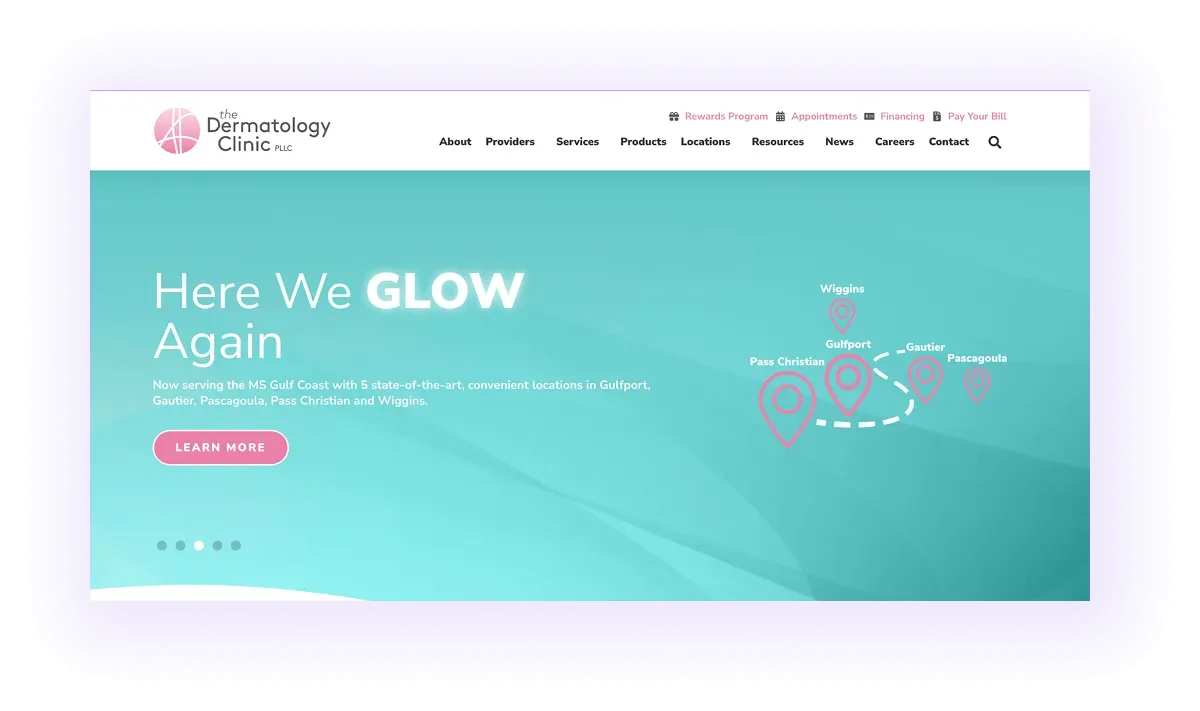
- Homepage: Use broad dermatology terms such as “dermatology clinic,” “dermatologist,” and “dermatology center.” Give a quick overview of your practice and the treatments you offer. Your homepage should guide visitors to the right sections of your site with zero confusion.
- About Us Page: Share your clinic’s story, background, certifications, and experience. Add professional photos and short bios of your dermatologists. If allowed, include before-and-after photos to build trust and show real results.
- Contact Us Page: Make it easy for patients to reach you. Add a simple form, a click-to-call button, your email address, and any other contact options your clinic uses. The goal is quick, low-friction appointment requests.
These three pages form the base of a strong dermatology search engine optimization. Keep them clearly linked in your navigation bar so visitors and search engines can move through your site without confusion.
Service Pages and Treatments
Your keyword research will show that patients search for treatments with different intents. Someone might look for “laser skin treatment,” while another searches for “cosmetic dermatology.” Since each query reflects a separate need, every one of these terms deserves its own page.
Create individual service pages for each treatment you offer, such as:
- cosmetic dermatology
- medical dermatology
- laser skin treatments
- acne treatment and acne care
- botox and dermal fillers
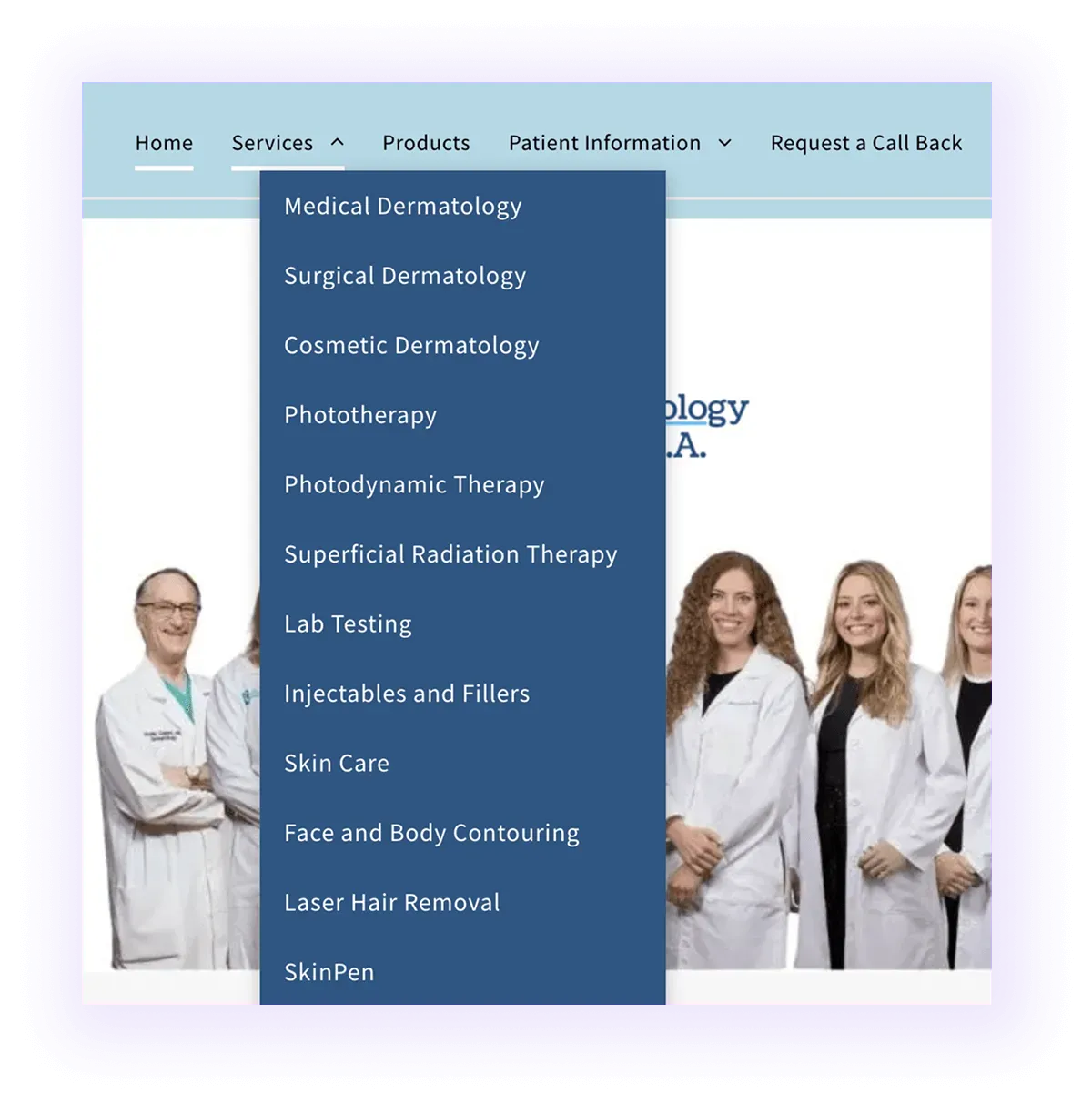
Add each new page under the “Services” tab so patients can find it quickly. You can also group pages by treatment type, such as medical dermatology and cosmetic dermatology, to keep your navigation clear and support stronger dermatology SEO.
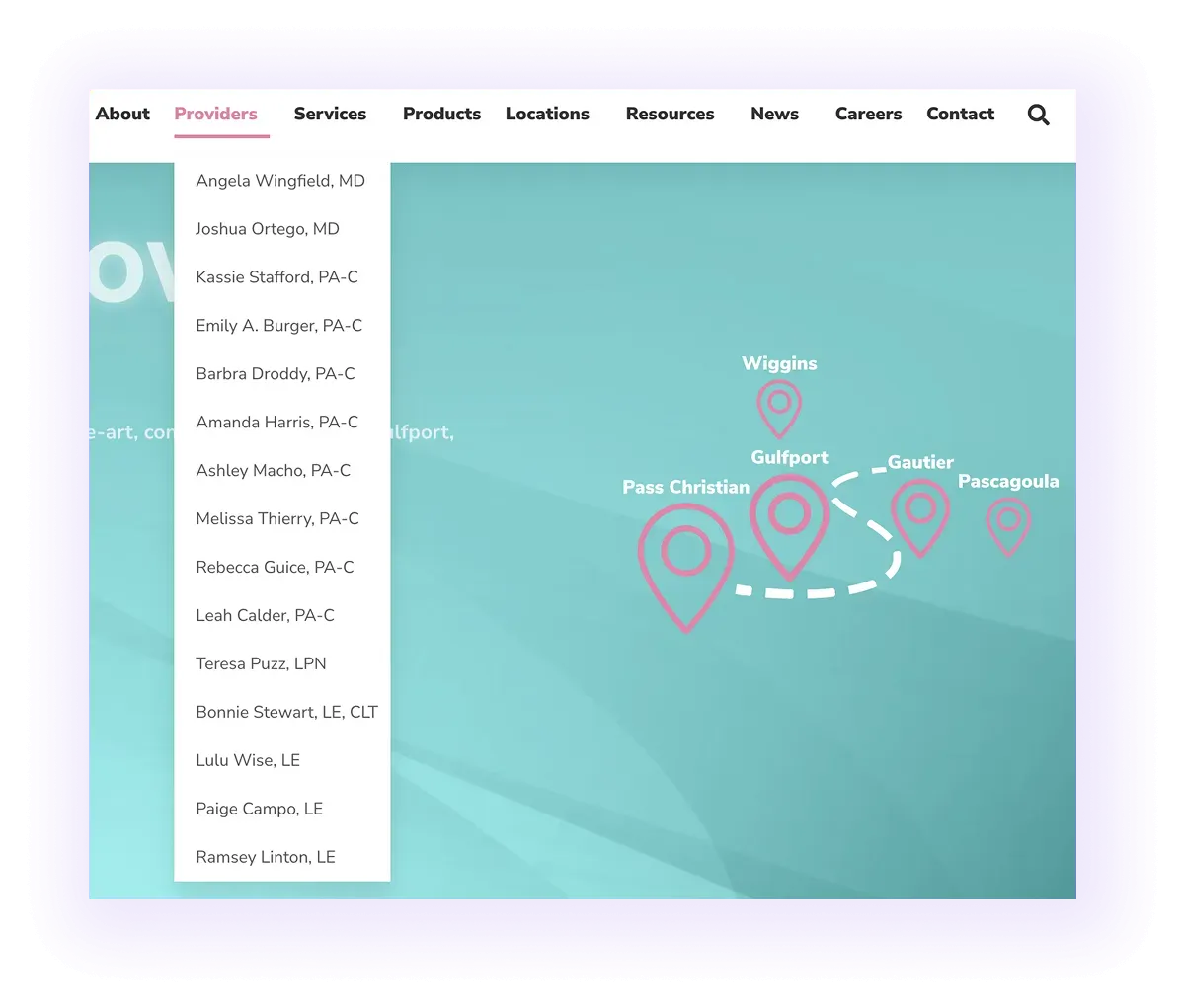
Pages for Your Dermatology Doctors and Providers
Dedicated doctor and provider pages help Google confirm that your clinic is staffed by qualified professionals. This matters because dermatology falls under Google’s YMYL standards: pages that affect someone’s health or safety must show real medical credibility to rank well.
These pages also help patients who search for a dermatologist by name. When your provider page appears in the results, it gives them a clear introduction to the doctor and, in many cases, to your clinic as a whole.
Place your doctor and provider pages in your main navigation, or in an easy-to-spot “Our doctors” or “Providers” section, so patients and search engines can find them quickly.
Local Pages
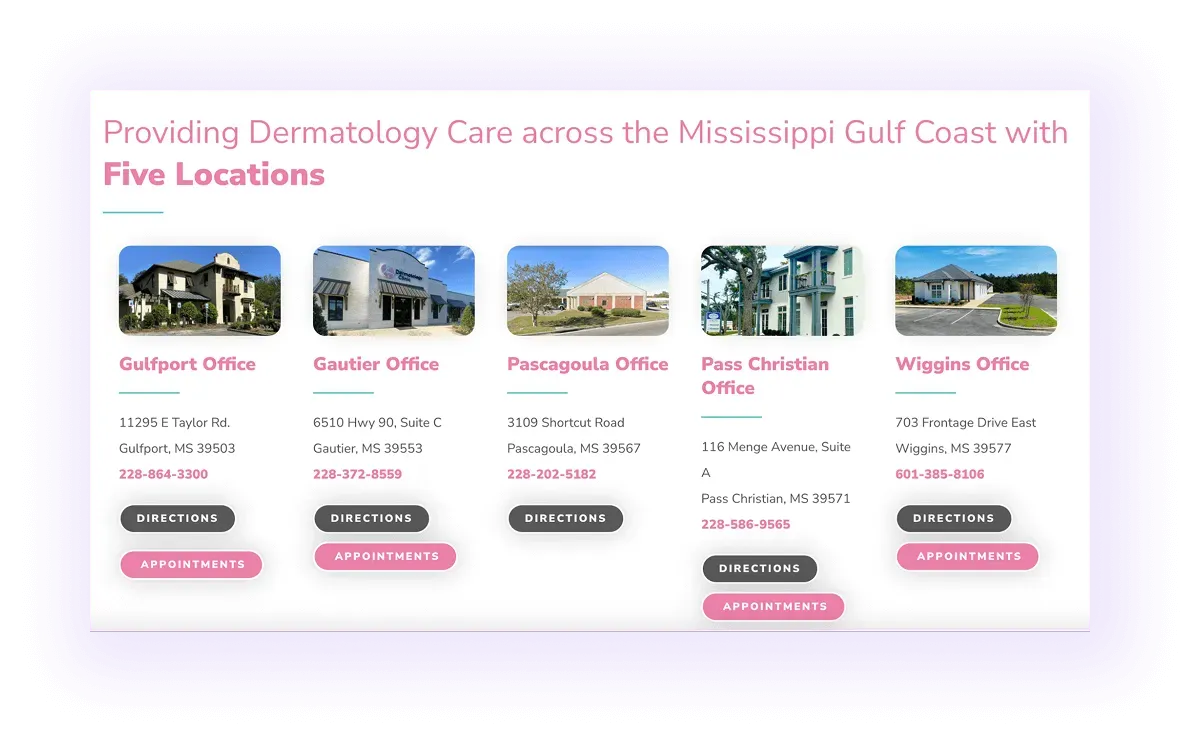
Create location pages for every area you serve, especially cities or neighborhoods with strong search demand. This is how you start your local search optimization process.
If you notice searches like “utah valley dermatology,” “georgia dermatology,” or “north towne dermatology,” each one needs its own page. These pages play an important role in strong SEO for dermatologists.
After creating them:
- Add each page under a “Locations” or “Areas we serve” section in your navigation.

- Link to them naturally from your service pages and blog posts to strengthen your internal structure.
Blog Pages
Not everyone searching online is ready for a treatment. Many are simply looking for answers. They may be asking things like:
- What’s the difference between Botox and fillers?
- Which cosmetic dermatology treatment helps with fine lines?
- How does laser skin treatment work for acne scars?
Your blog should cover questions like these in a clear, patient-friendly way. Posts that explain treatments, expectations, and results help readers feel informed and supported, and many eventually turn into patients once they understand their options.
Stop Guessing Your Dermatology Website Structure—We Will Show You Exactly What Pages You Need
This is a great start for your dermatology SEO, but it’s also a lot of work. If you need help with that, reach out to us, and our dermatologist SEO agency will support you every step of the way.
How to Do Local SEO for Dermatologists
Patients looking for skin care or laser treatments want clinics nearby. They’re not traveling far for an appointment.
Your approach will differ slightly depending on whether you operate one location or several, but both require a clear plan to capture searches like “dermatologists near me.”
Local Dermatology Clinic
Let’s say you serve only the Boston area. In that case, your homepage and main pages should use location keywords so Google can match your site with local searches. For example:
- dermatology boston
- boston dermatology clinic
- dermatology institute of boston
Your service pages should also use location terms to reach patients searching for specific treatments in your city, such as:
- medical dermatology boston
- cosmetic dermatology boston
- body care laser treatment boston
Place these terms in your titles, meta descriptions, headings, and on-page content. This strengthens your local presence and supports effective dermatology search engine optimization.

National or Multi-Area Dermatology Clinic
If your practice serves multiple areas (across states, cities, or neighborhoods), create a dedicated page for each location. Each page should target its own location keyword, such as:
- dermatology clinic boston
- new york dermatology
- dermatologist los angeles
Include the location term in the meta title, meta description, headings, and page content so each page can rank for local searches.
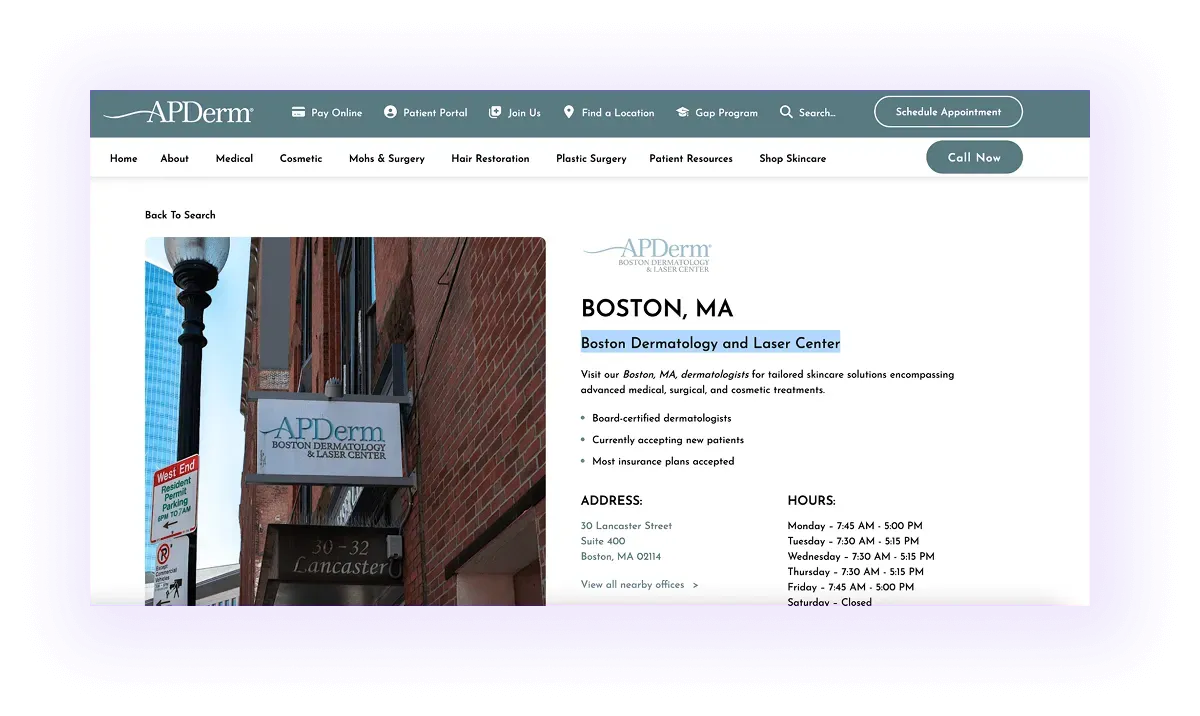
Add a central “Locations” page that lists all clinics with links (or a simple map) so users can quickly find the nearest office.
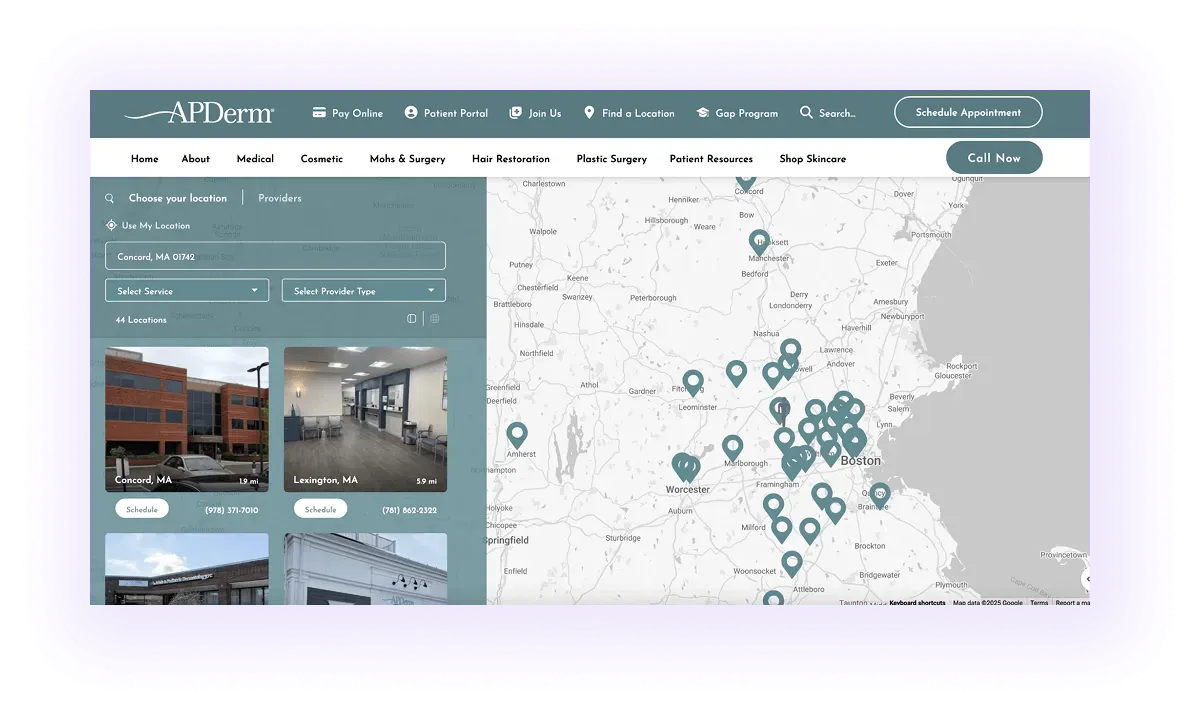
Keep your URL structure clear and consistent. A Boston page, for example, could use a URL such as:
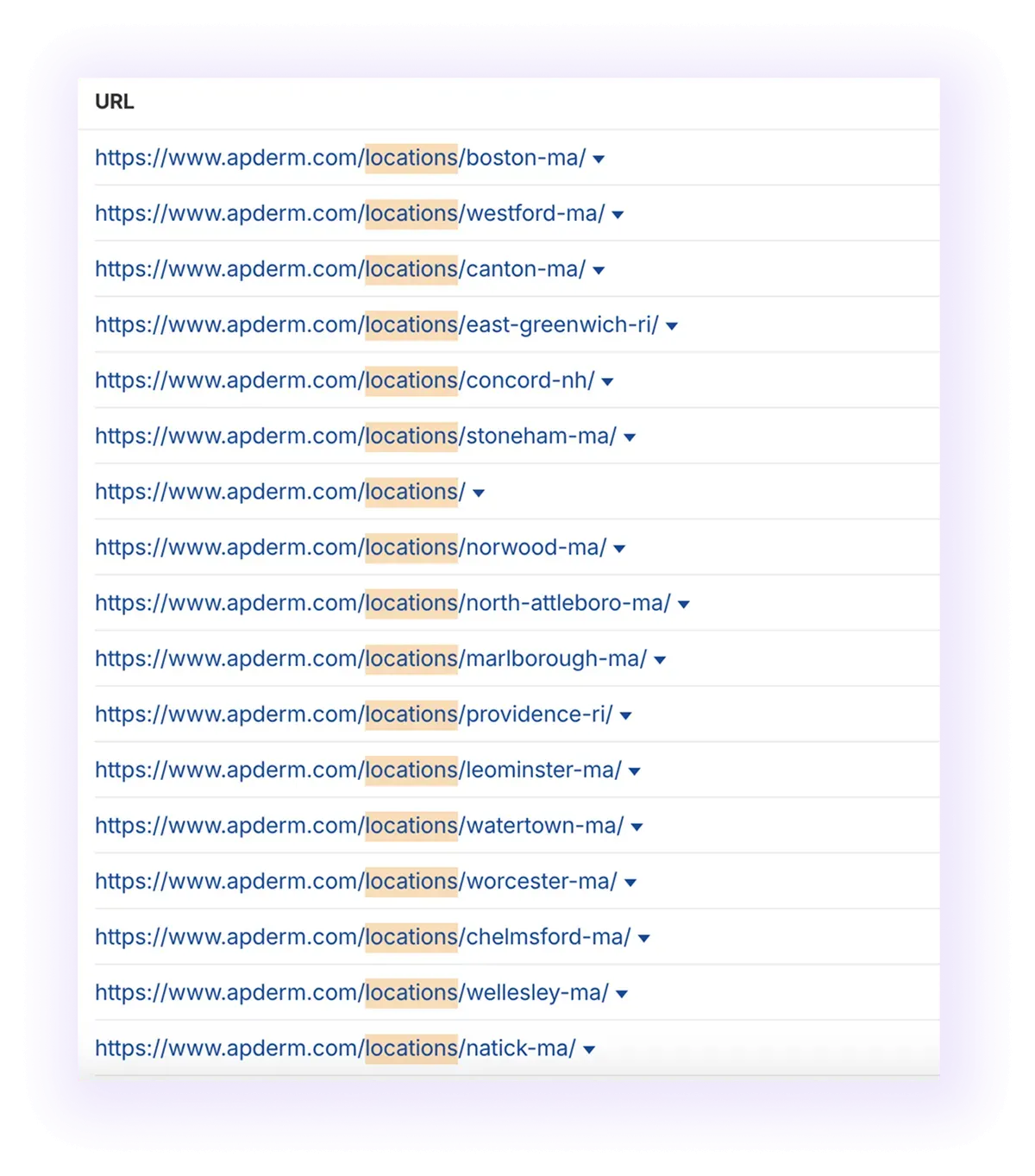
As dermatologists are often busy with patients, we provide expert local search services to simplify your process and save your valuable time.
Set up Your Google Business Profile and Optimize it for Google Maps
When patients search for local dermatology care, Google often shows Google Maps results first. More than 64% of patients read Google reviews before choosing a doctor, so a complete Google Business Profile (GMB) listing is essential. To optimize GMB:
- Match the exact details on your website to your GMB, especially name, address, and phone number (NAP).
- Add your website URL or a relevant service page to your GMB.
- Write a clear description, highlighting your clinic, your dermatologists, and the services you offer.
- Use the products section to list your medical and cosmetic treatments.
- Encourage and reply to reviews. Aim for 4 stars or higher, since 72% of patients prefer doctors with 4+ ratings.
- Use the Q&A section to answer common patient questions directly on your profile.
- Upload quality photos. Include clinic images, interiors, equipment, and your providers.
- Link your social profiles to build trust.
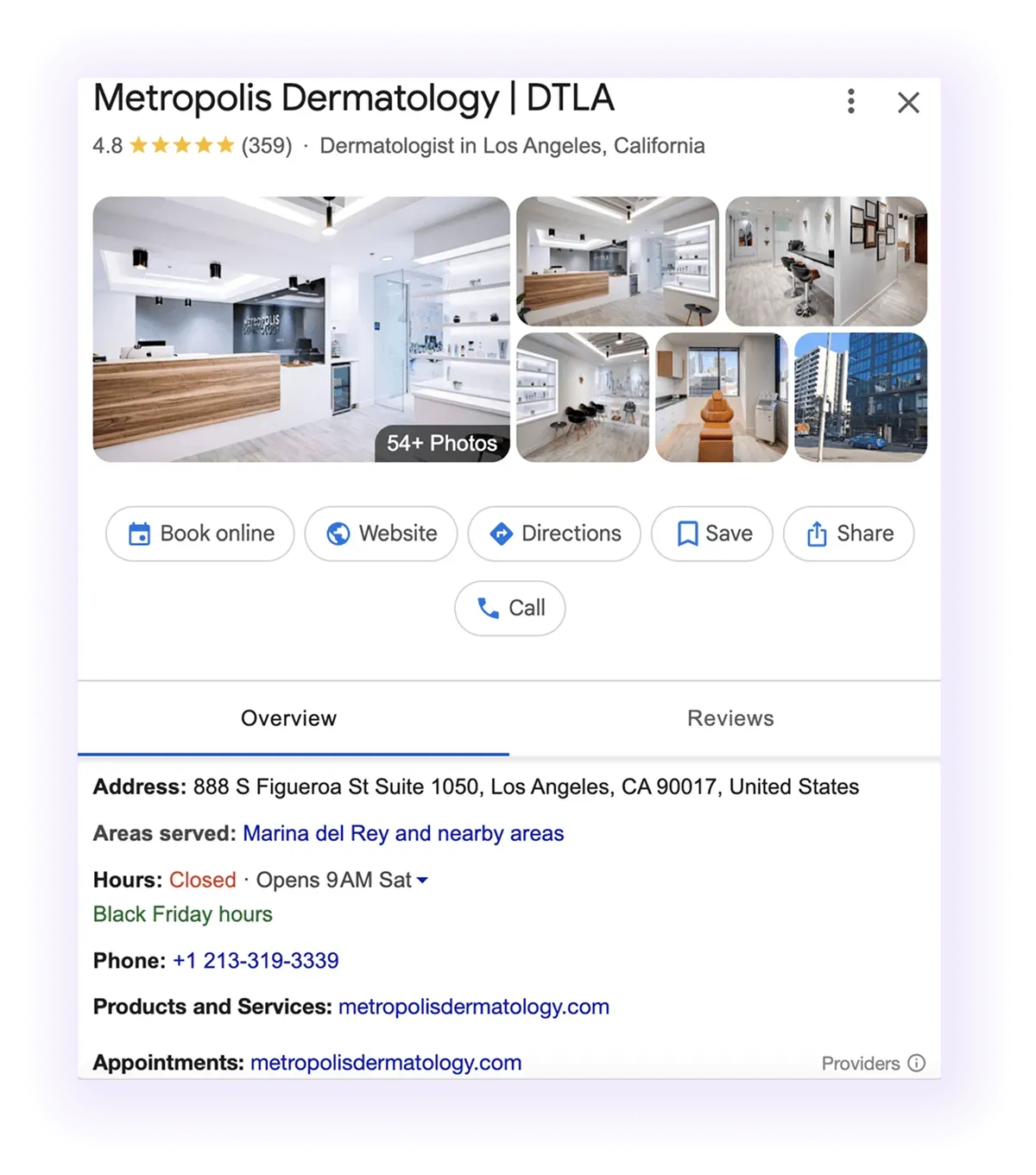
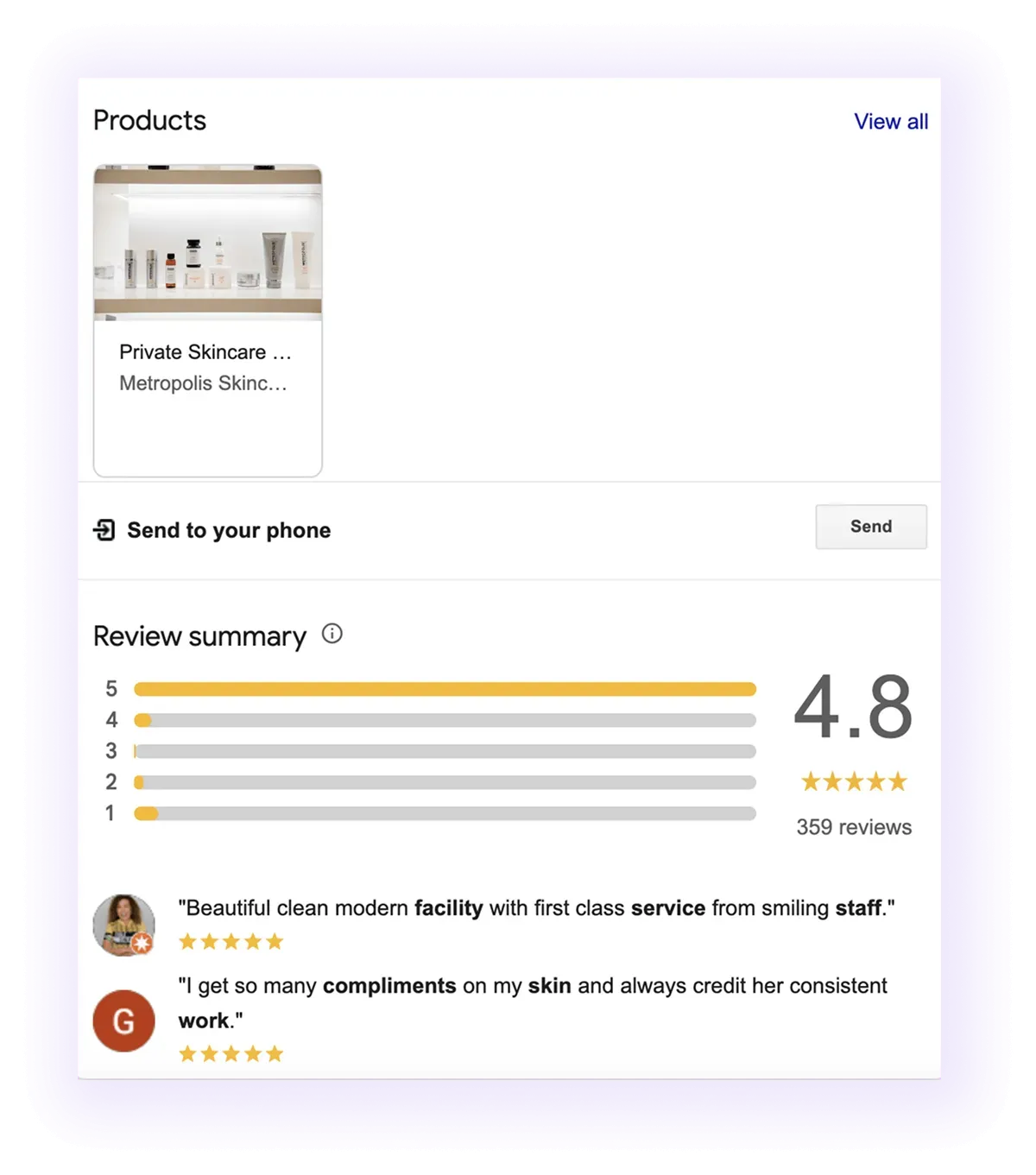
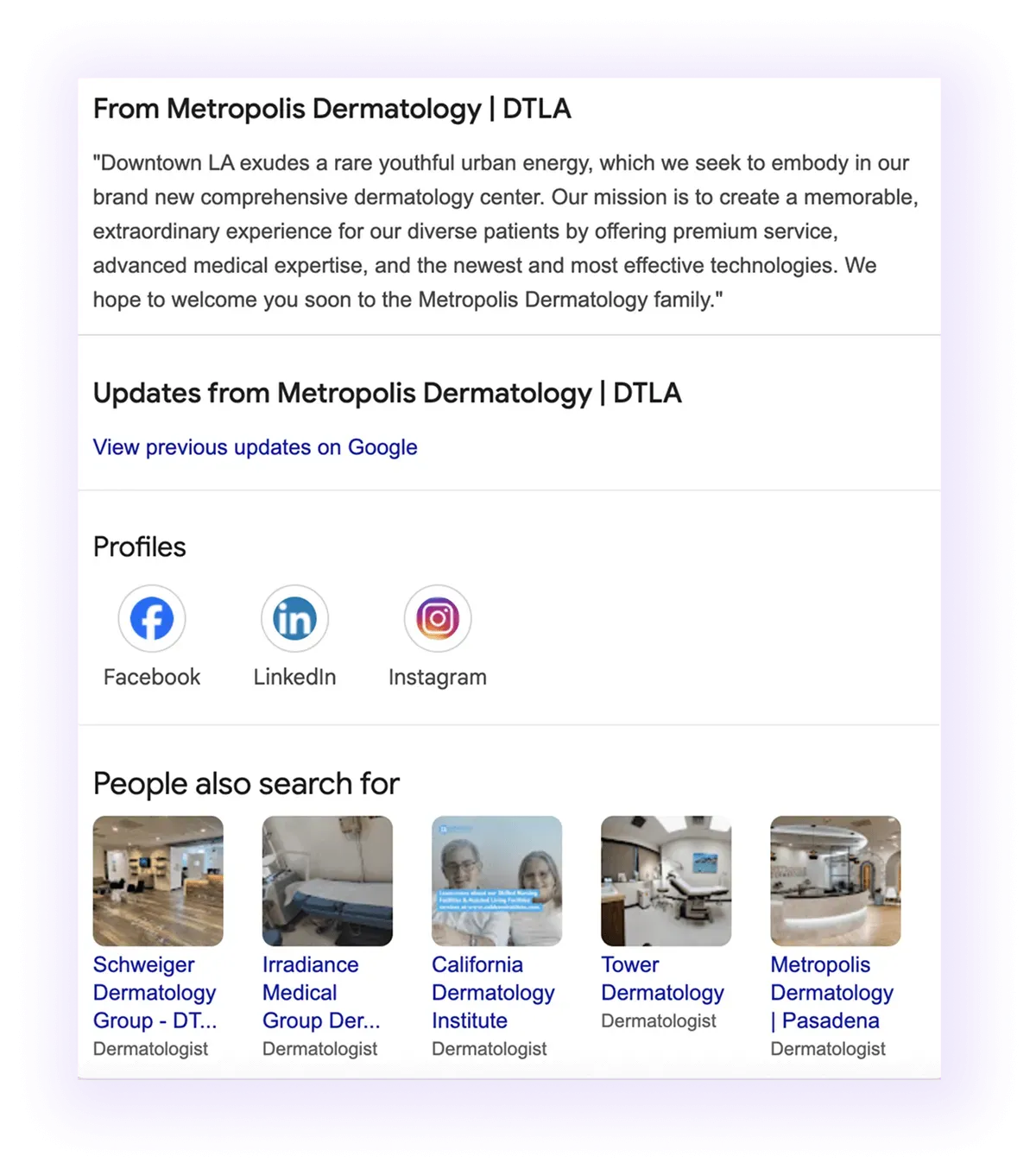
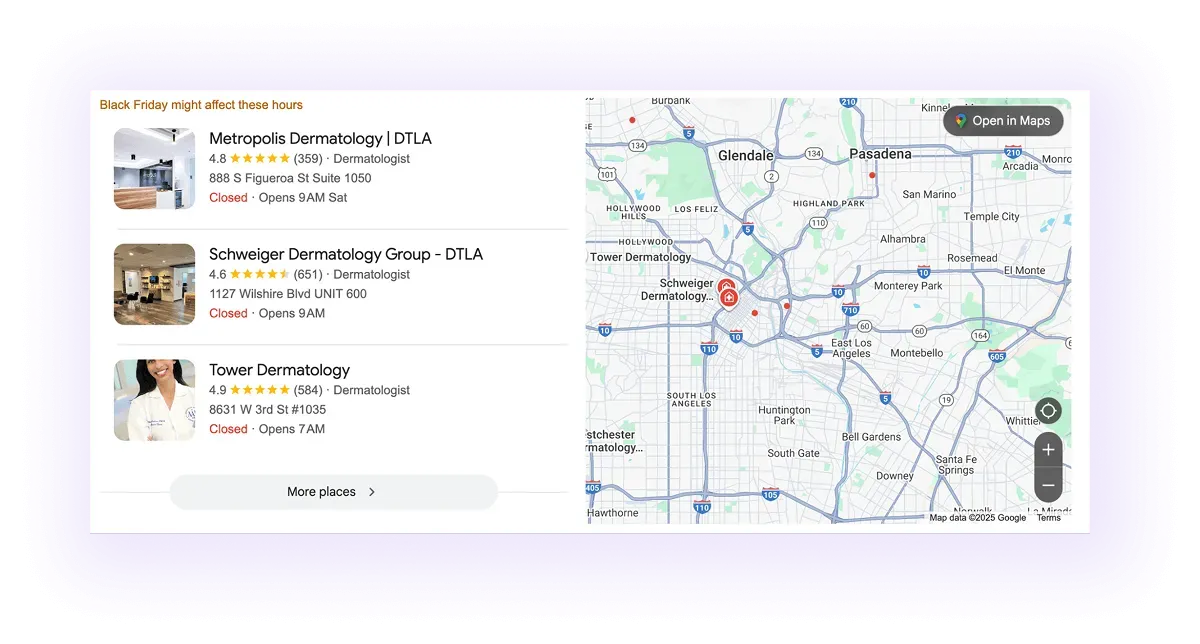
A well-optimized GMB plays an important role in strong SEO for dermatologists and improves your visibility on Google Maps, like shown below:
Build High Quality Content for Your Dermatology Website
You need content with a high readability and clarity score to help real patients understand their conditions and treatment options. When your pages answer common questions clearly and accurately, Google sees your site as a reliable resource and rewards it.
Keep every piece original. Avoid copying competitor text or reusing content across your site. Use your keywords naturally in the content, meta titles, meta descriptions, and headings.
Since dermatology falls under YMYL standards, your site, like any other healthcare website with strong SEO, also needs strong trust signals, such as:
- Testimonials: Text or video stories showing real patient results.

- Featured In and Awards: Media mentions or awards that add credibility.

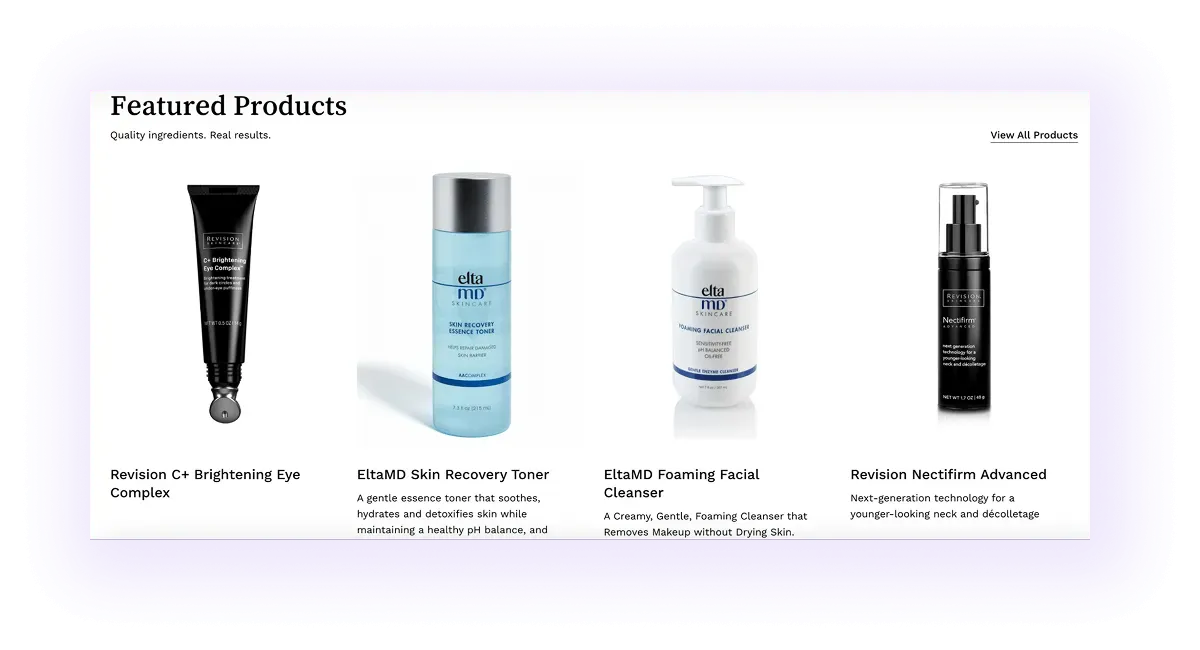
- Featured Products: Trusted products used in your treatments.
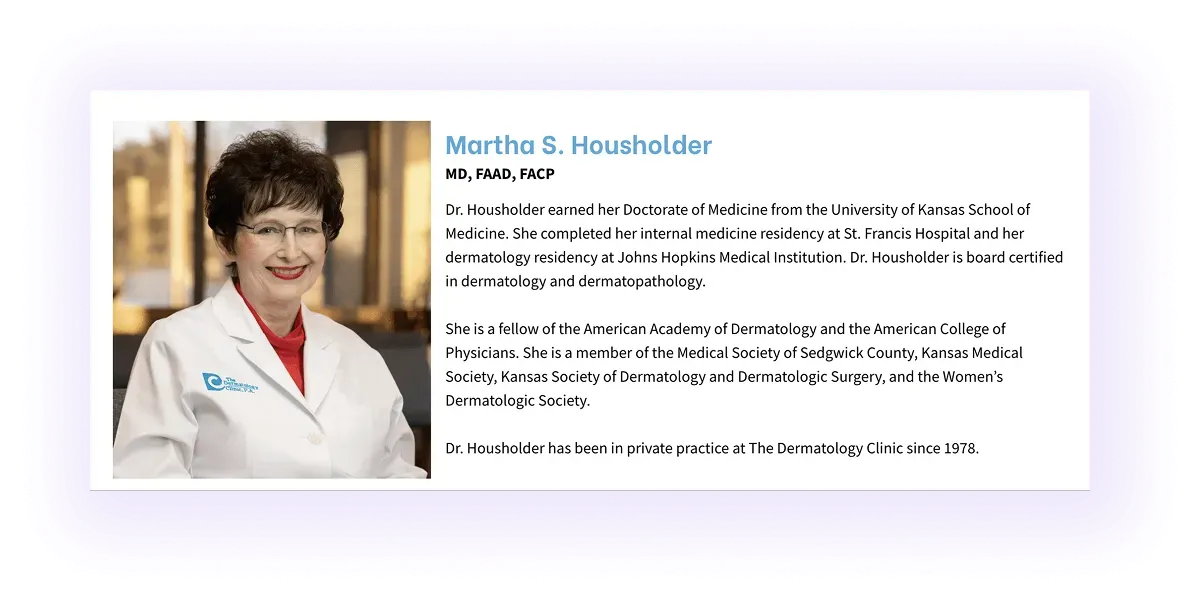
- Doctors’ Names and Specialties: Clear credentials for each provider.
- Accepted Insurance: Straightforward coverage information.
These elements help patients feel confident and strengthen the overall quality of your content, both important for dermatologist SEO.
Blog Posts
You already know you need blog pages, and you need strong content. Your blog is your chance to show real authority on dermatology topics while building trust with people who are still researching their options.
The best ranking-focused content strategy is a simple pillar-cluster structure.
Pillar pages cover broad keywords like “laser treatments” or “cosmetic dermatology.”
Cluster posts cover related subtopics and link back to the pillar page:
- Top 5 anti-aging treatments explained
- How to choose between Botox and fillers
- Safe laser procedures for skin rejuvenation
Each post should link back to the main service page so Google understands which page is the core resource.
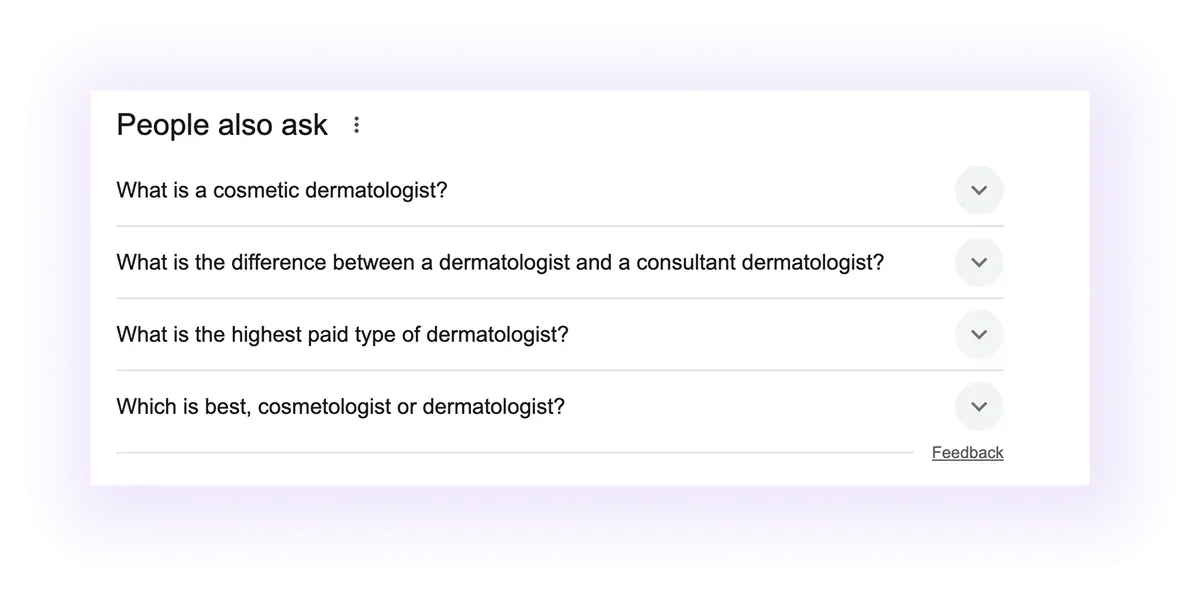
To find topics, check real search queries in Ahrefs or SEMrush, look at Google’s People Also Ask, and review competitor blogs for ideas patients respond to.
For stronger results:
- Keep posts original and clear.
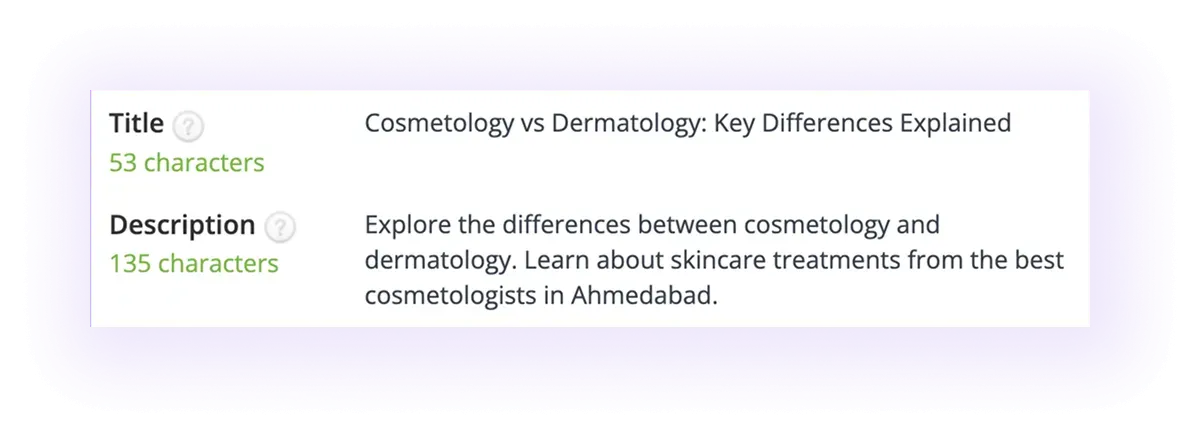
- Use keywords naturally in titles, headings, and meta descriptions.
- Add insight from your dermatologists.
- Include photos or videos when helpful.

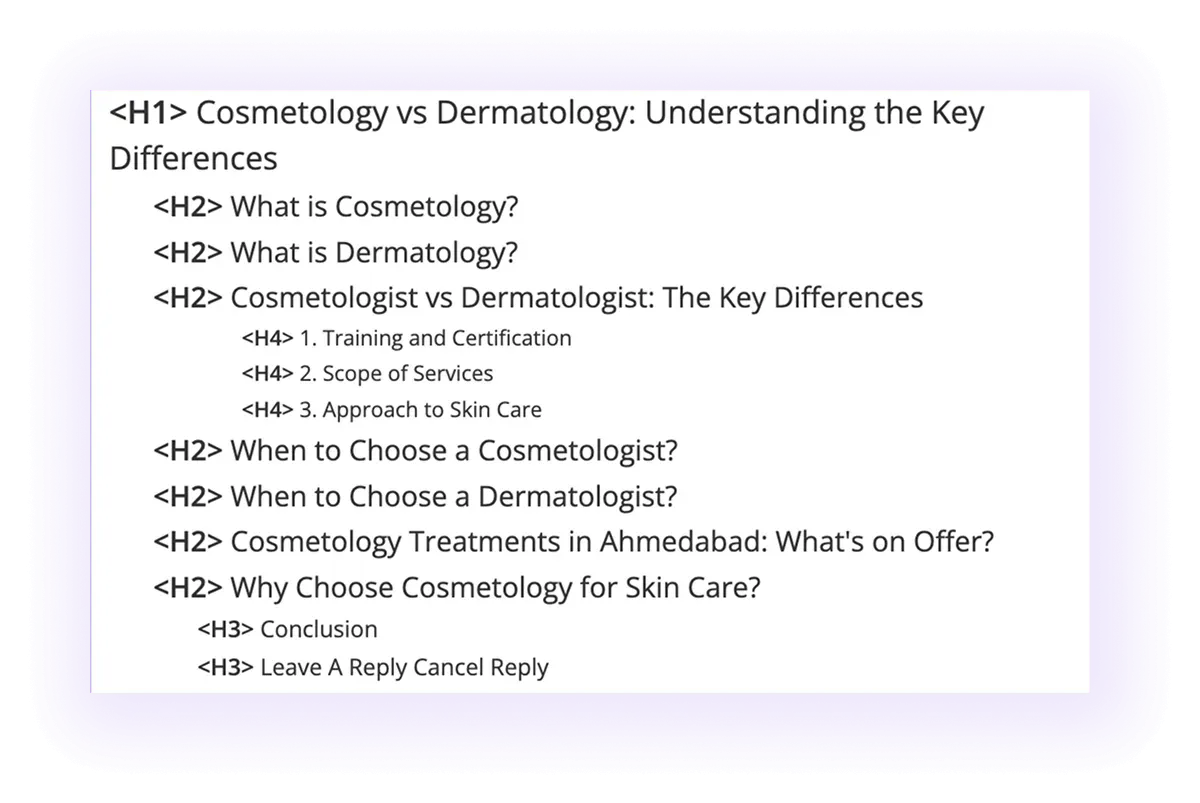
- Use clean headings for easy scanning.
- Cite reliable data to meet YMYL expectations.
- Use lists or tables to keep posts readable.
A blog built this way supports your authority and strengthens your overall dermatology search engine optimization.
Implement Technical SEO for Your Dermatology Clinic
Now you need to make sure your website is technically sound so Google can crawl and index it without issues.
XML Sitemap and Robots.txt
Your first technical SEO task is making sure Google can crawl and index your site correctly.
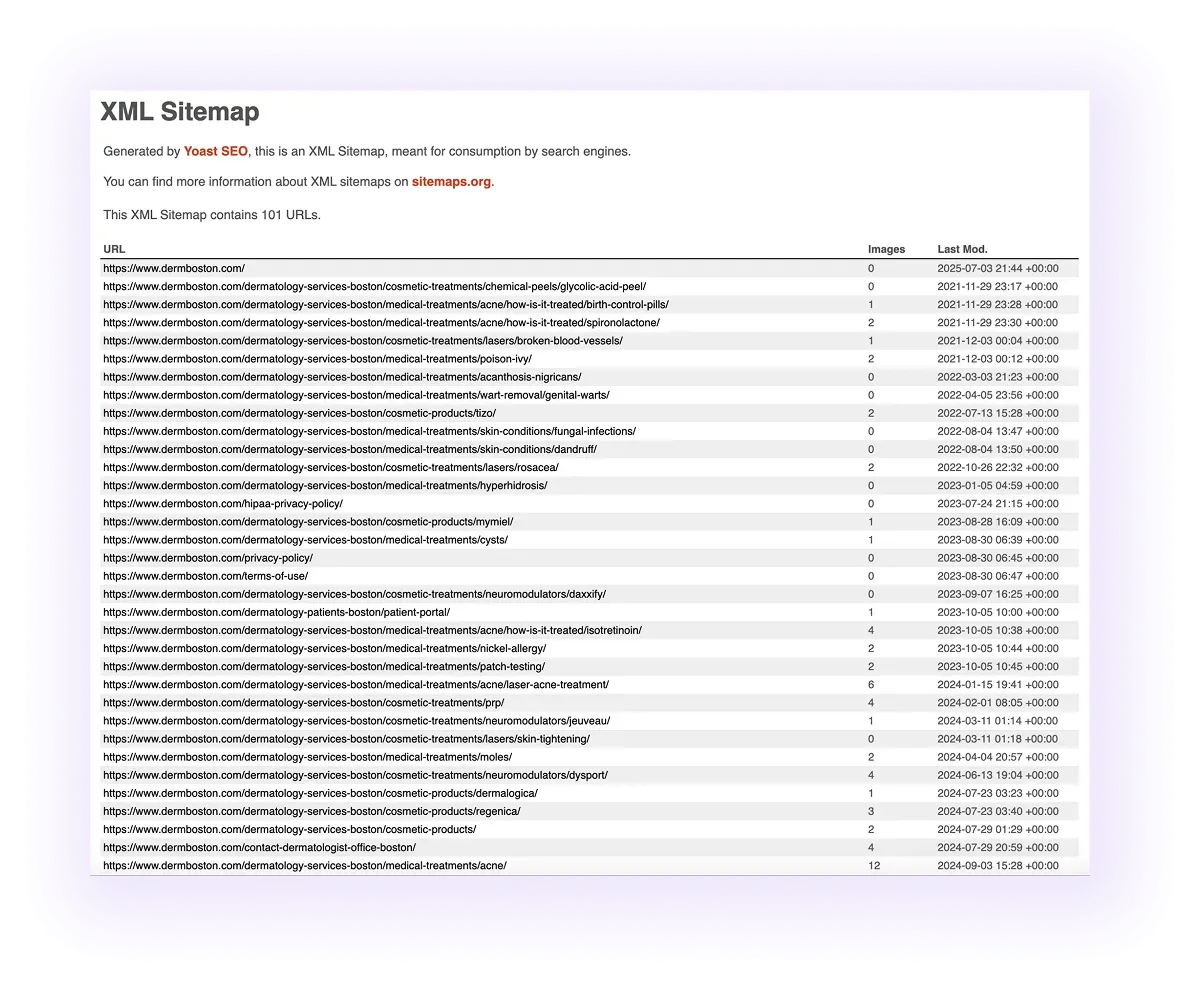
Create a clean XML sitemap that lists your important pages (dermatology homepage, service pages, doctor profiles, location pages, and blog posts), so search engines can find them quickly.
Use a robots.txt file to block pages that shouldn’t appear in search, such as admin areas, internal dashboards, or patient-only sections. This keeps Google focused on the pages that matter.

Schema Markup and Structured Data
Schema markup helps Google understand your pages and display rich results like FAQs, reviews, and services.

Adding the right schema types strengthens visibility and supports stronger SEO for dermatologists:
- MedicalBusiness: Tells Google your clinic provides medical services.
- MedicalOrganization: Identifies your practice as a recognized medical group.
- FAQ: Marks up common questions so they can appear directly in search results.
- AggregateRating: Shows patient ratings and reviews in search snippets.
- LocalBusiness: Provides location details for better local and map visibility.
- Physician/Person: Highlights each doctor’s credentials and specialties.
URL Structure
Your dermatology site needs clear, readable URLs so both users and Google can understand each page at a glance. To create SEO-friendly URLs:
- Keep them short and descriptive.
- Include keywords that match the page topic.
- Use hyphens between words.
- Avoid random characters or numbers.
Good SEO URL: www.yourclinic.com/services/cosmetic-dermatology
Bad SEO URL: www.yourclinic.com/page?id=12345&cat=xyz
Internal Link Building for Dermatology Websites
Some dermatology pages target tougher keywords and need more support to rank. Internal links help by connecting related pages, passing strength from well-established pages to newer ones, and guiding users through your site.
Here are the main link types and how they work:
| Link Type | Purpose | Example |
|---|---|---|
| Navigation Links | Help users and Google reach important pages. | Homepage → Services in the main menu |
| Blog → Blog | Keep readers engaged and share authority across related posts. | “Botox vs fillers explained” blog → Post on teh top 5 anti-aging treatments |
| Blog → Service | Send traffic and topical relevance from blog posts to core revenue pages. | “Laser acne scar treatments” blog → Laser skin treatments page |
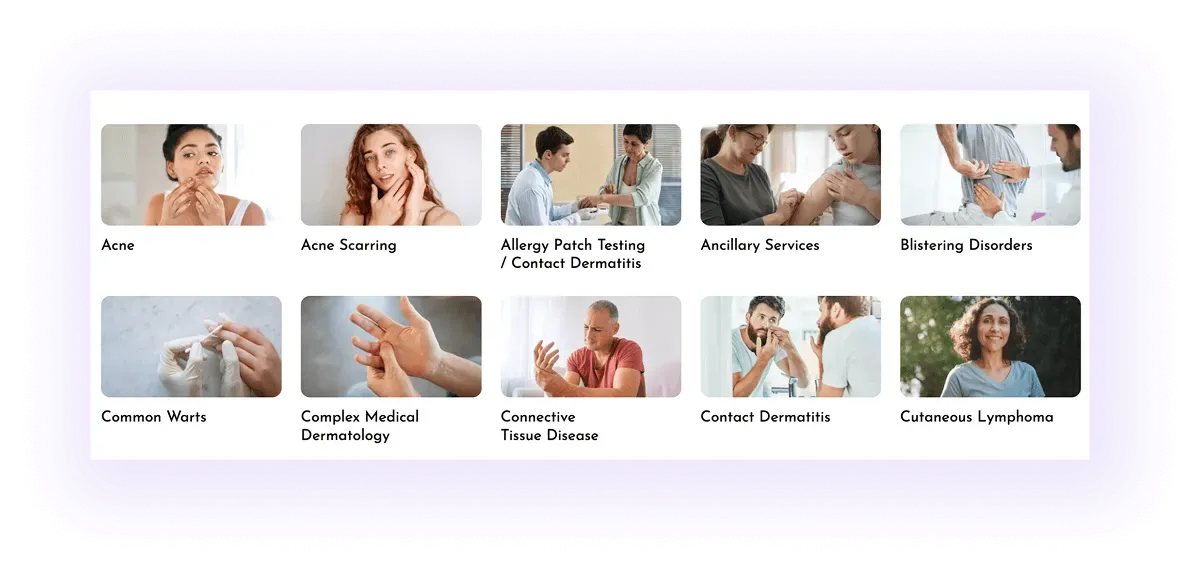
| Service → Service | Connect related treatments to help users and Google understand relationships. | Acne treatment → Acne scar removal |
| Service → Location | Support local visibility by tying services to specific geographic areas. | Cosmetic dermatology → Boston cosmetic dermatology |
Mobile Optimization for a Dermatology Clinic Website
Many patients start their search on mobile, often right after seeing a treatment post on social media. Your site needs to load quickly and work smoothly on smaller screens if you want to keep those visitors engaged.
To optimize the website for mobile:
- Use a responsive design so your layout adjusts cleanly on any device.
- Compress images to keep pages fast.
- Use large, tappable buttons so users don’t click the wrong element.
- Keep text readable with a minimum 16px font size.
- Use a simple hamburger menu to make navigation easy.
- Add clear CTAs, including click-to-call buttons for instant contact.
Strong mobile performance supports both user experience and your overall dermatology SEO.

Website Speed & Performance (Core Web Vitals)
Google rewards fast sites, so your dermatology website needs to load quickly on all devices. To improve speed:
- Compress and optimize large images and videos.
- Use reliable hosting and a CDN (Content Delivery Network).
- Implement server-side rendering for heavier pages.
- Enable lazy loading for images below the fold.
- Optimize JavaScript, CSS, and HTML to remove render-blocking code.
Test your performance with Google PageSpeed Insights or GTmetrix.
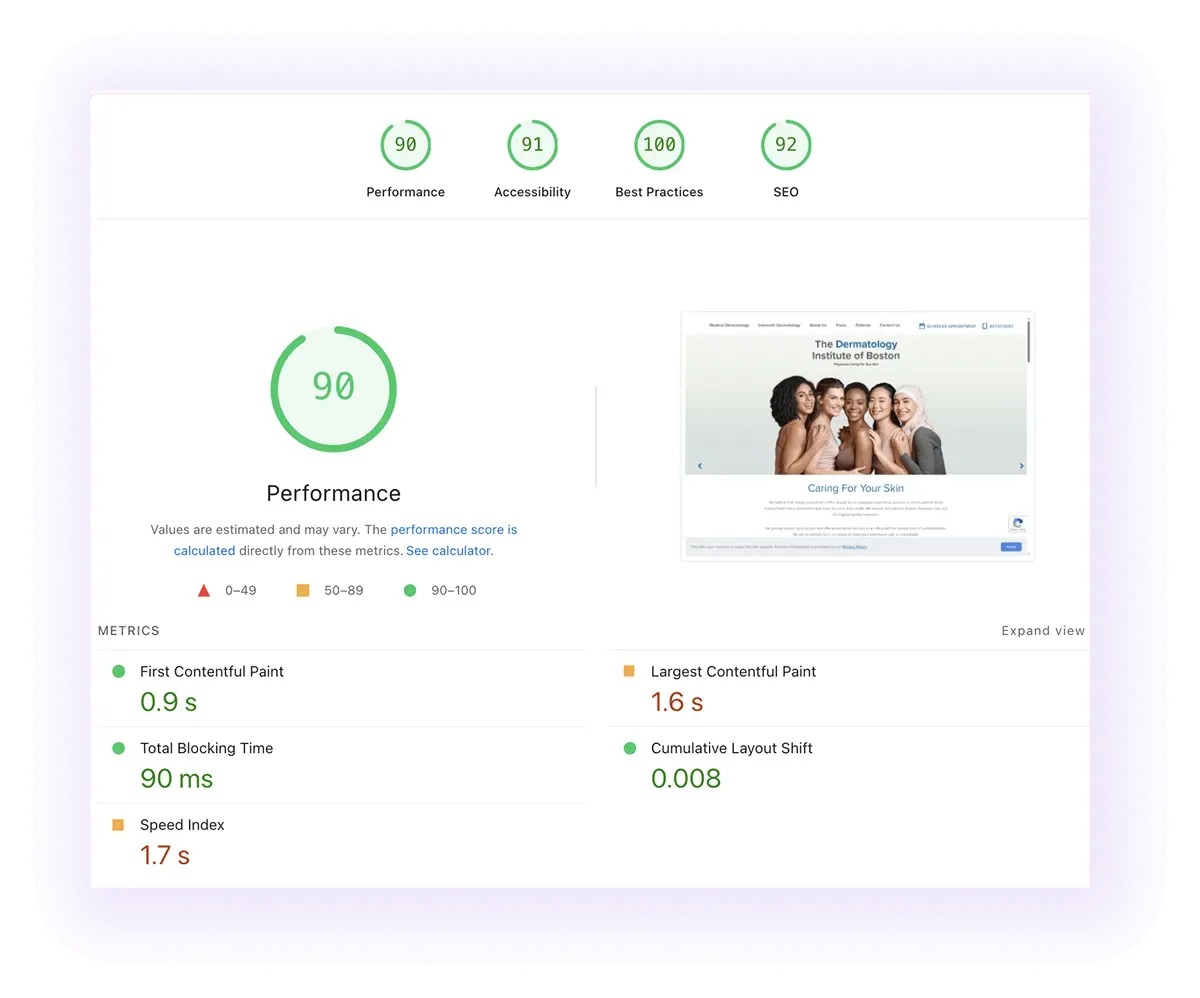
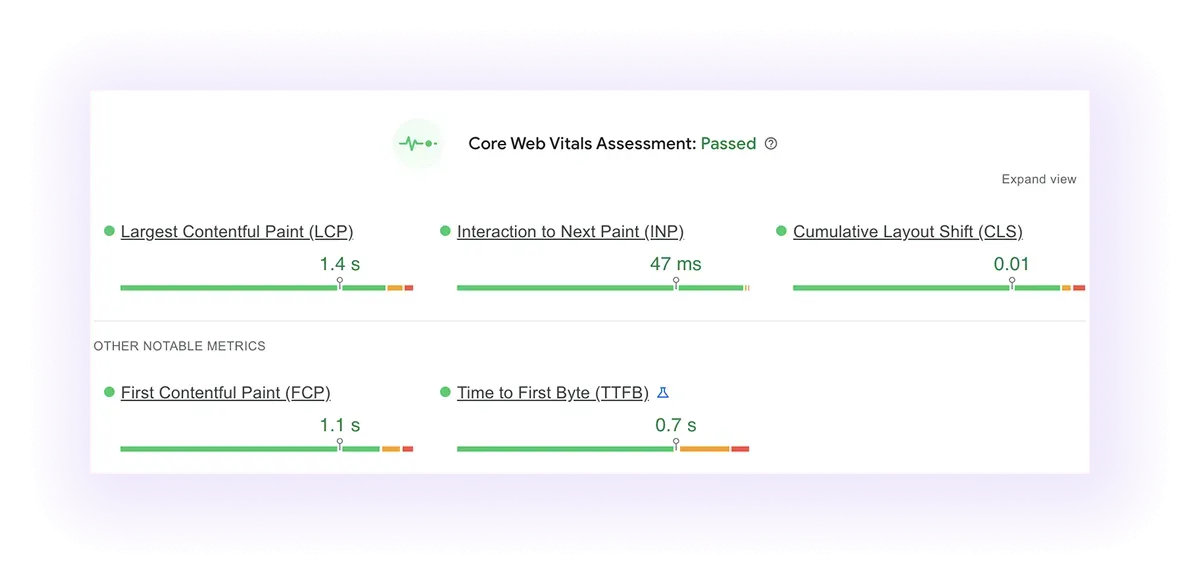
Focus on these Core Web Vitals:
- Largest Contentful Paint: Under 3 seconds
- First Contentful Paint: Under 1 second
- Cumulative Layout Shift: As close to 0 as possible
Frequent Technical Audits
Even small website changes can create hidden issues behind the scenes. Regular audits help you catch those problems early and keep your dermatology site running smoothly.
Check these items each month:
- Redirect errors with Ahrefs or Screaming Frog
- Broken links and 404 pages with Screaming Frog
- Duplicate content with Copyscape
- Indexing issues in Google Search Console
- Mobile usability issues in PageSpeed Insights and Search Console
- Crawl errors with Screaming Frog
- Core Web Vitals in PageSpeed Insights
- Slow pages with GTmetrix and PageSpeed Insights
- Schema markup accuracy using Google’s Rich Results Test
If you’d rather have a team watch these technical details for you, our dermatologist SEO agency can run full technical audits and fix issues before they affect your rankings.
Link Building for Dermatology Websites
Even with strong on-site work, your dermatology clinic still needs authority to climb in search results. That authority comes from backlinks, links from reputable, relevant websites pointing to yours.
Here are proven backlink building tactics designed for dermatology sites to help strengthen your visibility.
Guest Posting and Link Insertion
Start by identifying websites connected to dermatology, health, wellness, or skincare. You can group them like this:
| Type | Example Website |
|---|---|
| Wellness | mindbodygreen.com |
| Healthcare | healthline.com |
| Medical | medscape.com |
| Dermatology Products | dermstore.com |
After building your list, choose the approach that fits each site:
- Guest Posting: Write a fresh article related to dermatology or skincare and link back to your service pages or homepage. This adds value to the host site while giving your clinic more visibility.
- Link Insertion Strategy: Find existing articles on those sites where you can offer added insight or clarification. Then contact the editorial team and request a link back to your page.
Directory Listings for Dermatology Clinics
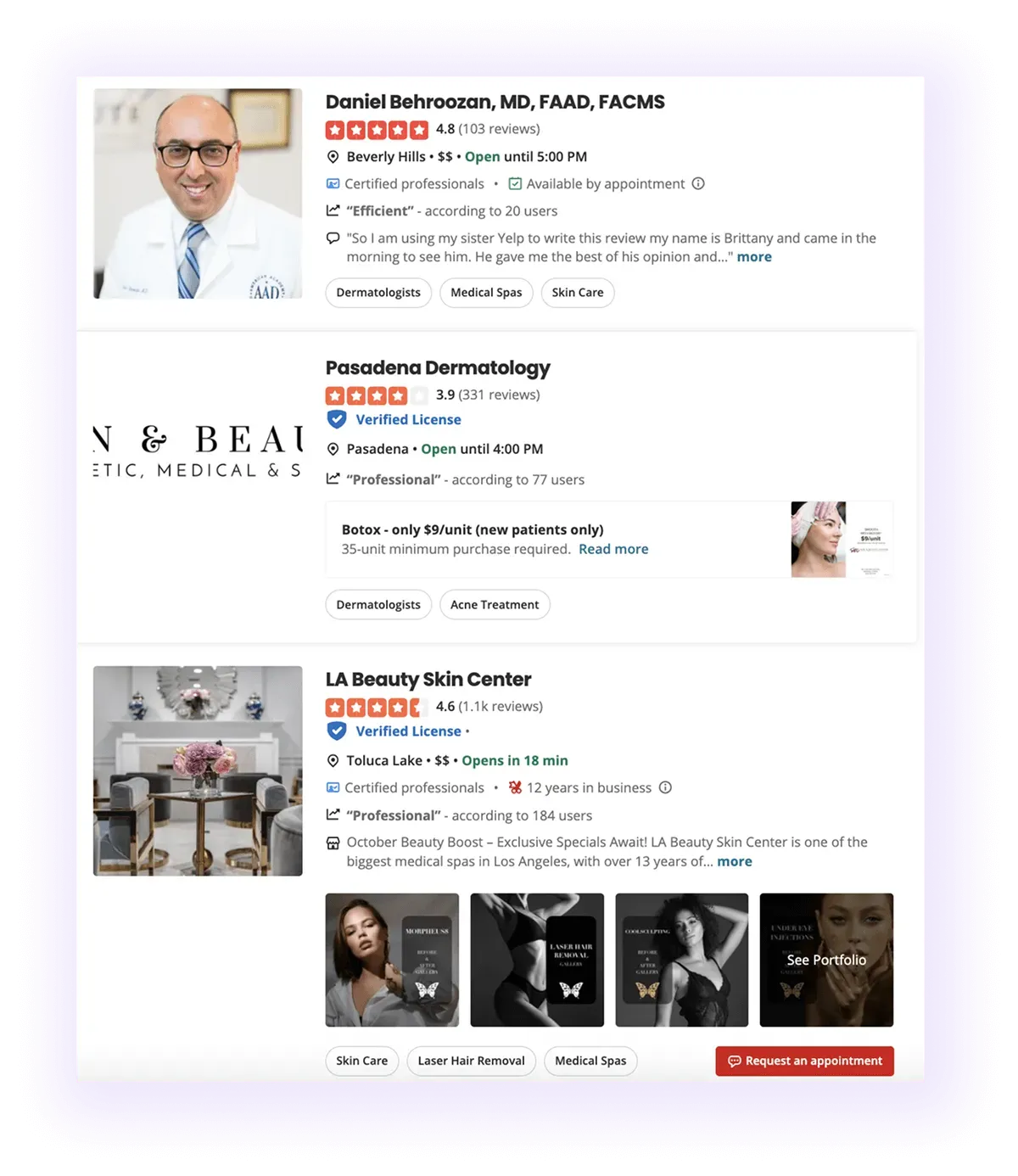
Adding your clinic to reputable directories is a simple way to earn backlinks and reach new patients. Directories help in two ways:
- Authority: They add trusted backlinks to your site.
- Patient Discovery: Many patients look for doctors and reviews directly inside these platforms.
Useful directory types include:
| Directory Type | Example |
|---|---|
| Dermatology Directories | find-a-derm.aad.org |
| Doctor Directories | healthgrades.com |
| Local Business Directories | yelp.com |
When doing local backlink building and submitting your clinic, make sure to:
- Use the same NAP as your website and Google Business Profile.
- Add your website URL.
- Write a clear description of your clinic.
- Upload quality photos of your doctors, certifications, awards, and optional before-and-after images.
- List all treatments offered, including cosmetic services like Botox, fillers, laser treatments, and acne care.
- Reply to reviews to show you value patient feedback.
Digital PR for Dermatology Websites
Digital PR is one of the strongest ways to earn high-authority backlinks. It’s how dermatology clinics get featured on major outlets like Forbes or industry sites such as Dermatology Times. These placements boost visibility, strengthen credibility, and support stronger SEO for dermatologists.
To run an effective digital PR campaign:
- Choose a newsworthy angle with real public interest, for example: “New ways dermatologists use tech tools to catch early skin cancer signs.”
- Gather data. Use patient surveys, clinic records, or insights from your doctors to support the story.
- Create a simple structure. Write the piece in a clear, organized way so journalists and readers can follow it easily.
- Craft a strong pitch. Explain the data, your angle, and why the topic matters to their audience.
- Contact reporters who cover health, skincare, or medical news. If the topic resonates, they may publish it and link back to your clinic’s site.
Building organic backlinks requires experience and thorough research. To help dermatologists boost their website's authority and traffic without wasting time or money, we offer editorial backlink services.
How to Track the Success of Your Dermatology SEO Strategy
Once your dermatology website is fully optimized on-site and off-site, the next step is tracking performance. Clear metrics show what’s working, where issues appear, and how to adjust your strategy. Here are the analytical and reporting tools for SEO and metrics to monitor:
- Keyword Movement and Rankings: Track rankings, indexing, coverage, impressions, visibility, and CTR in Google Search Console.
- Backlink Profile and Competitors: Use Ahrefs or SEMrush to review backlinks, compare competitors, check keyword trends, and assess site health.
- User Acquisition, Traffic, and Conversions: Use Google Analytics to review traffic sources, engagement rate, top pages, and lead activity.
- Technical Issues: Use Screaming Frog to find duplicate content, 404 errors, broken links, crawl problems, orphan pages, and missing meta tags.
- Page Speed and Performance: Monitor Core Web Vitals and overall speed in PageSpeed Insights and GTmetrix.
- User Behavior: Use Microsoft Clarity for heatmaps, scroll depth, click patterns, and session recordings.
- Event Tracking: Use Google Tag Manager to track form submissions, calls, button clicks, and other important actions.
Partner with a Dermatology SEO Company That Knows Your Industry
Every day, people in your area search for dermatology care. The real question is whether they’ll find your clinic or someone else’s.
Our dermatologist SEO agency can help your practice stand out online with a clear dermatology SEO plan that brings in more patients and supports steady growth. Just contact us and let’s get your patients to find you!
Submit the form - Get Free Proposal
%202.png)
24 hours
FAQ


Submit the form - Get Free Proposal
24 hours
.svg)