
SEO for Physical Therapists Strategies and Keywords by Physiotherapy SEO Agency
Bring more of the right patients to your clinic with physical therapy SEO strategies from a physiotherapy SEO agency trusted by 50+ clinics like yours.
5.0




Running a physiotherapy clinic in the USA means competing with 267,000+ physiotherapists, plus orthopedic surgeons, chiropractors, and large national chains. Many patients can’t tell these professions apart, which makes visibility even harder.
Most search with everyday injury terms like “runner’s knee,” “tennis elbow,” or “swimmer’s shoulder.” Many also need clear guidance on same-day appointments, why physical therapy helps beyond post-surgery care, and why surgery alone doesn’t solve ongoing pain.
Referrals bring their own stress. Physician instructions vary, and doctor turnover can suddenly cut monthly revenue.
SEO for physical therapists can help steady your lead flow. After helping 50+ physiotherapy clinics grow consistent patient volume across the USA, our physiotherapy SEO team will share that same approach with you here. So, let’s start.
Why Do Physiotherapists Need to Invest in SEO?
- SEO for physios helps people searching phrases like “low back tightness” or “heel pain when running” land on your clinic before they ever learn the clinical terms.
- Strong Google placement helps patients see your clinic instead of lumping you in with orthopedists, chiropractors, or national chains.
- SEO for physiotherapists drives steady patient flow without the ups and downs of physician turnover or inconsistent prescribing.
- Local SEO helps independent clinics show up above big-brand physiotherapy chains in neighborhood searches.
- SEO-optimized pages explain treatment expectations and recovery phases so patients arrive already informed.
- Consistent online visibility across service pages and reviews helps patients understand what makes your care different.
- With PPC hitting $25 per lead in some markets and stopping as soon as you stop paying, SEO for physical therapy clinics becomes a long-lasting source of new patients. Use our SEO budget calculator to see whether it aligns with your budget.
To build the right physio SEO plan, we’ll begin with keyword research.
Do Keyword Research and Competitive Analysis for Your Physical Therapy Website
Your keyword research and selection checklist starts by listing every service your clinic offers, then matching those services to the way patients search online. Your list might include:
- sport rehabilitation
- post-operative care
- injury prevention
- back pain physiotherapy
- elbow pain physiotherapy
- physiotherapy for headaches
Once you have your list, plug each service into tools like Ahrefs, SEMrush, or Google Keyword Planner to see the exact phrases patients use. Also, for traffic estimation, you can use our free CTR estimator.
The example we showed for the “sport rehabilitation” keyword below should be repeated for every service on your website.
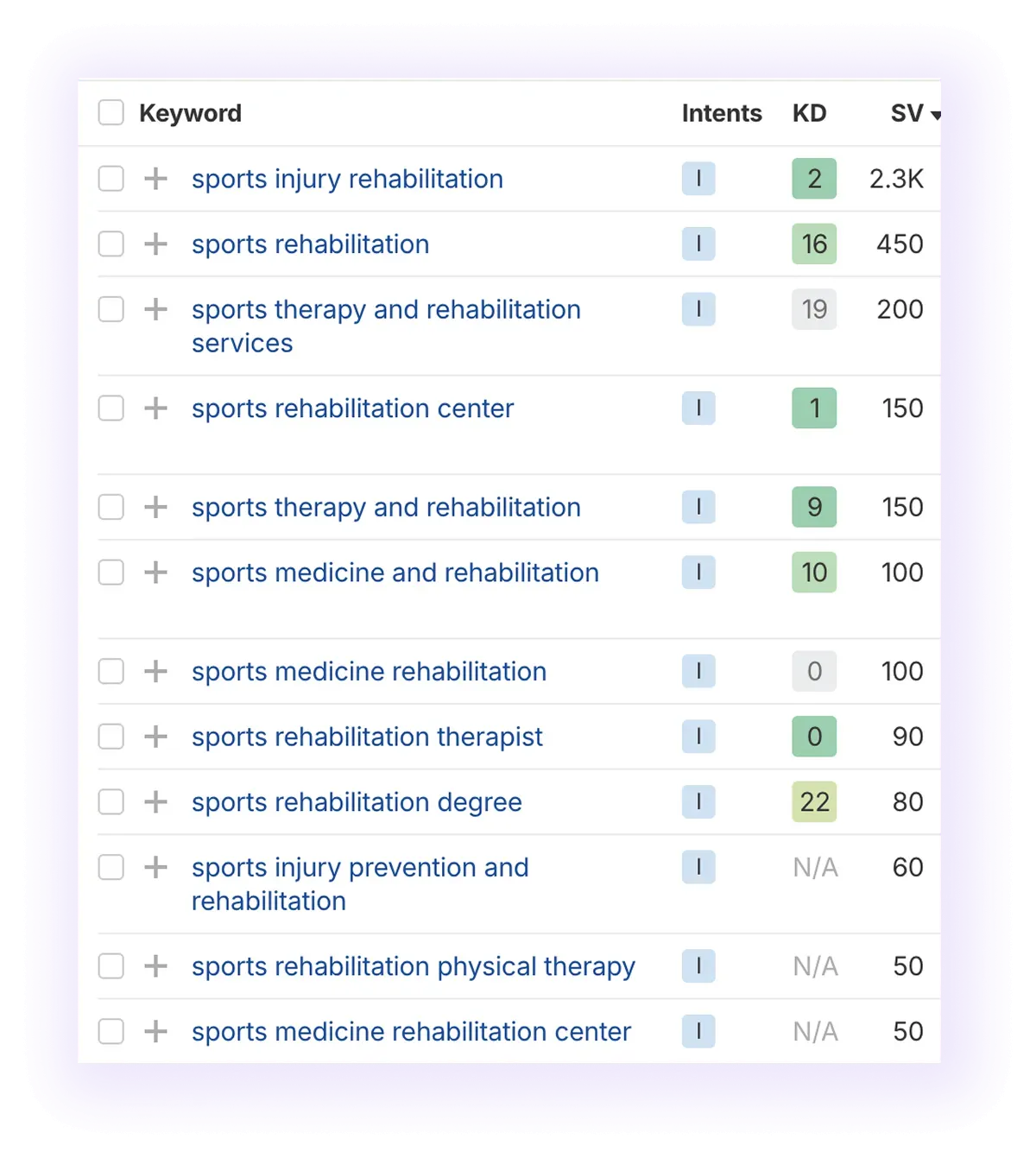
Check your broader terms too (“physiotherapy”, “physiotherapist,” “physical therapy,” “physical therapy center”) and keep an eye on difficulty scores so you know which phrases are easier to rank for.
In Ahrefs, turn on the “Local” filter for those broader terms to see which states, cities, or neighborhoods have the highest search demand. This helps you spot where real opportunities exist and guides how you shape your SEO for physiotherapy.
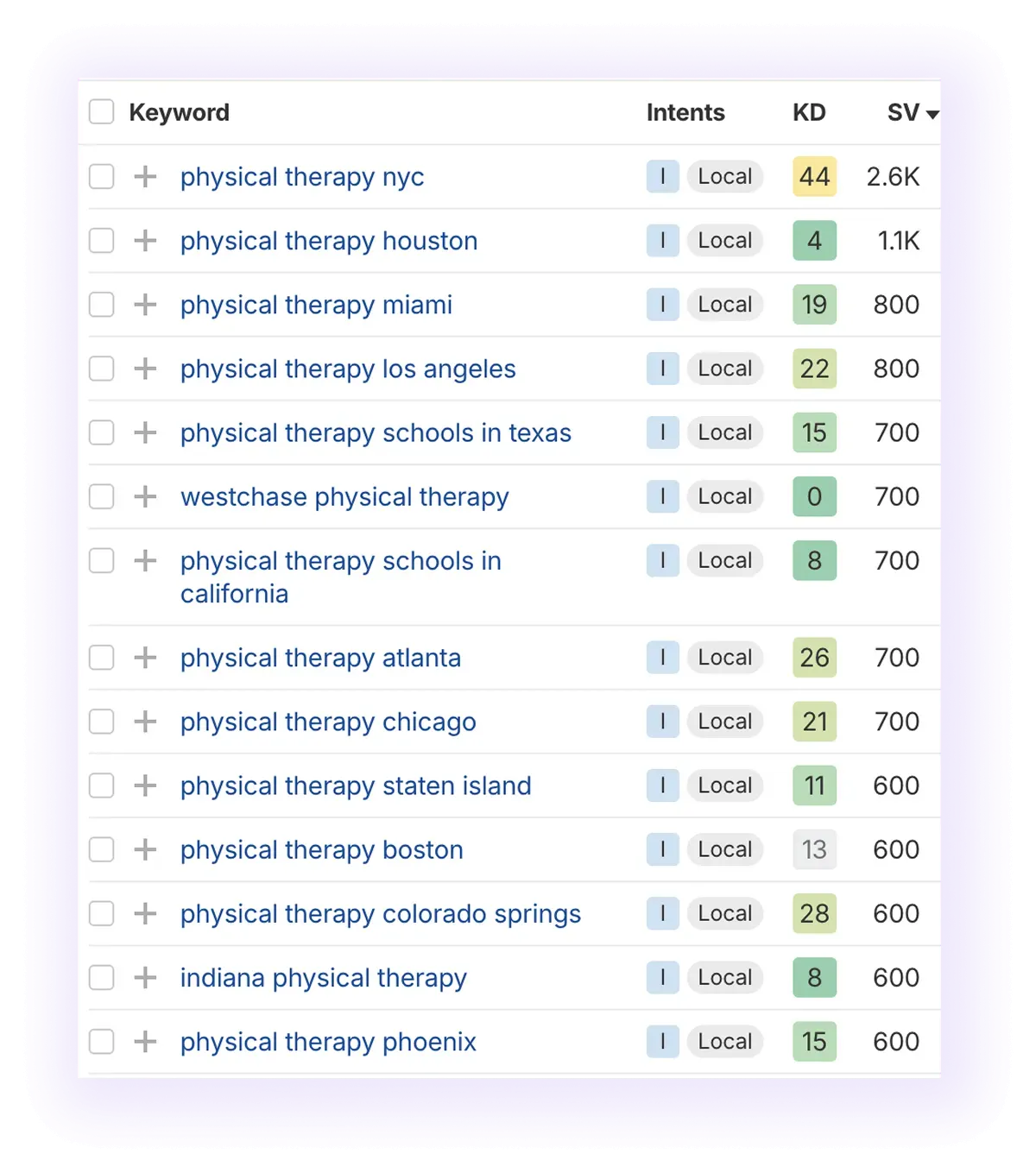
Top 30 Real Keywords for Physiotherapists
Transactional for Targeting Potential Patients
- sports physiotherapy
- tennis elbow physiotherapy
- physiotherapy for broken hand
- hip physiotherapy
- physiotherapy for back pain
- physiotherapy for neck pain
- physiotherapy for sciatica
- physiotherapy for knee pain
- physiotherapy for foot pain
- sports rehab
- sports injury rehabilitation
- geriatric care
- chest physiotherapy
- pelvic floor physiotherapy
- physiotherapy clinic
Informational for Educating Patients
- what is physiotherapy treatment
- benefits of physical therapy
- how physiotherapy reduces pain
- physical therapy recovery timeline
- physiotherapy exercises for beginners
- how to improve mobility
- when to start physiotherapy
- how physiotherapy helps injuries
- types of physiotherapy treatments
- physical therapy session expectations
- physiotherapy for posture correction
- how physiotherapy improves movement
- importance of rehabilitation exercises
- how muscle recovery works
- physiotherapy role in healing
Your physiotherapy SEO playbook starts with strong keywords, but each one still needs its own page tuned on-site and off-site. Our physio SEO agency can guide you through the whole process, so reach out when you’re ready.
Outline Your Physiotherapy Website Hierarchy and Menu Structure
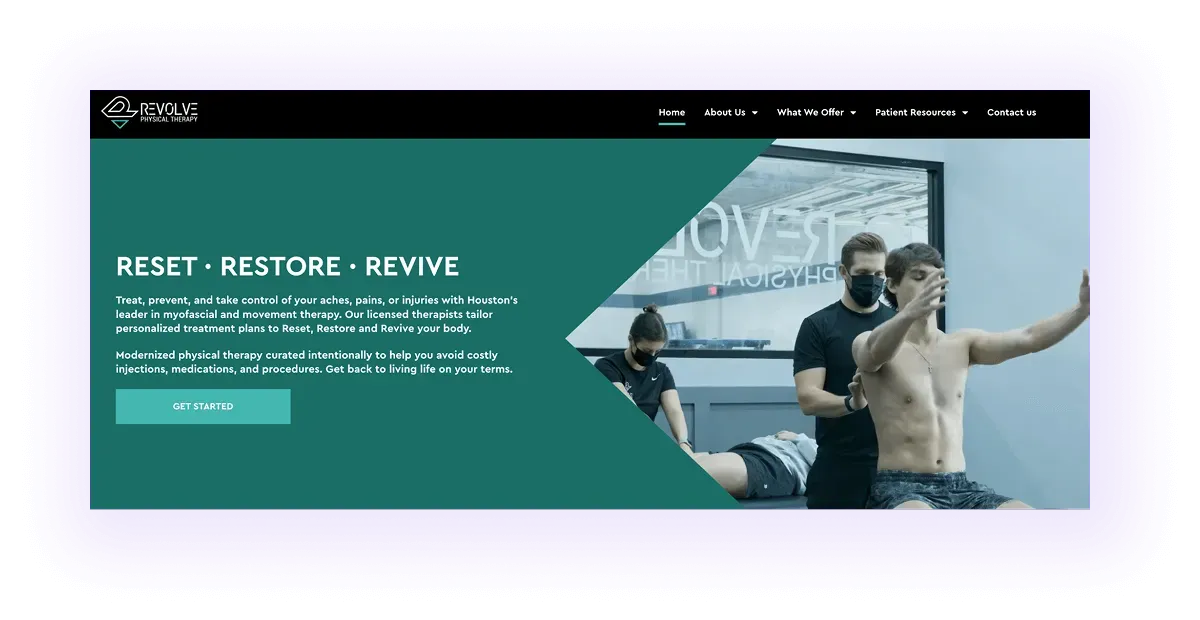
When we talk about website hierarchy, we’re simply talking about creating pages that match different search intents. Your physiotherapy site needs this same structure, starting with three foundation pages:
- Homepage: This is where you target broad terms like “physical therapist,” “physical therapy,” and “physiotherapy clinic,” while giving a quick snapshot of your services.
- About Us: Share your story, certifications, awards, and short bios, whether you’re a full clinic or an individual physiotherapist.
- Contact Us: Make it easy for patients to reach you through a form, call button, or messaging platform.
Once these pages are ready, place them in your main navigation so both users and Google can find them easily. This structure becomes the starting point for strong SEO for physical therapists as you build out more targeted pages.
Service Pages and Treatments
When athletes get hurt, they usually search for terms like “sports physiotherapy” or a specific issue such as “tennis shoulder therapy,” and some even look for related options like Pilates or other therapy methods.
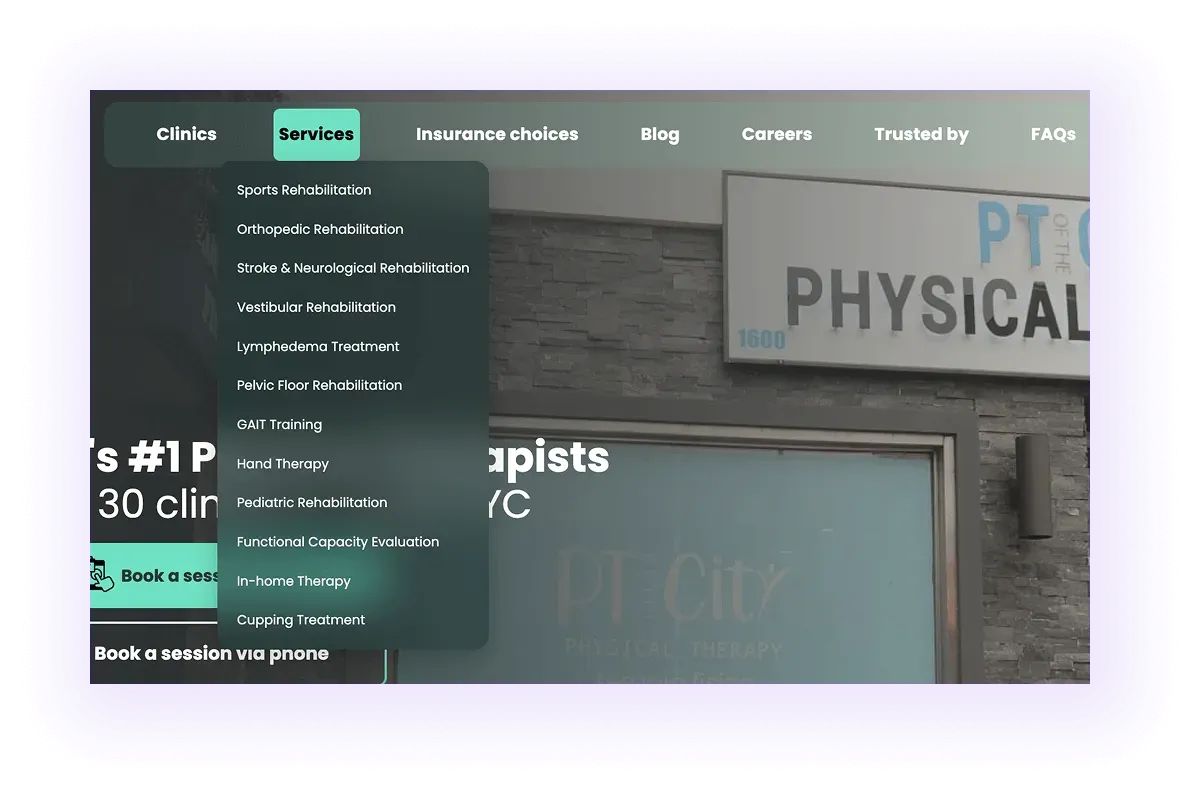
To match those searches, list the services you offer and create a separate page for each one. Common pages include:
- sports rehabilitation
- post-operative physiotherapy
- back pain treatment
- injury prevention
Place these pages under a “What we treat” or “Services” tab in your menu so athletes, seniors, or anyone in pain can find what they need right away.
Pages for Your Physiotherapists
Google treats physiotherapy sites as YMYL content, meaning the information can influence someone’s health, so your pages need to show clear trust and credibility for both patients and search engines.
A simple way to build that trust is to create individual pages for each physiotherapist, highlighting their experience, certifications, and focus areas.
You can link these profiles from your “About us” page or a “Staff” section and place them in your menu, which helps patients feel comfortable with your team and strengthens your SEO for physiotherapy by showing Google who’s behind your care.

Local Pages
Your keyword research will show that many people search with location intent, such as “physiotherapists in houston” or “physical therapy in la,” and some even look for specific neighborhoods.
If your clinic serves several areas, create a separate page for each one so patients can quickly find the location closest to them. Add these pages to your navigation menu for easy access.

Include a simple locations section on your site that lists each address and links to its page.
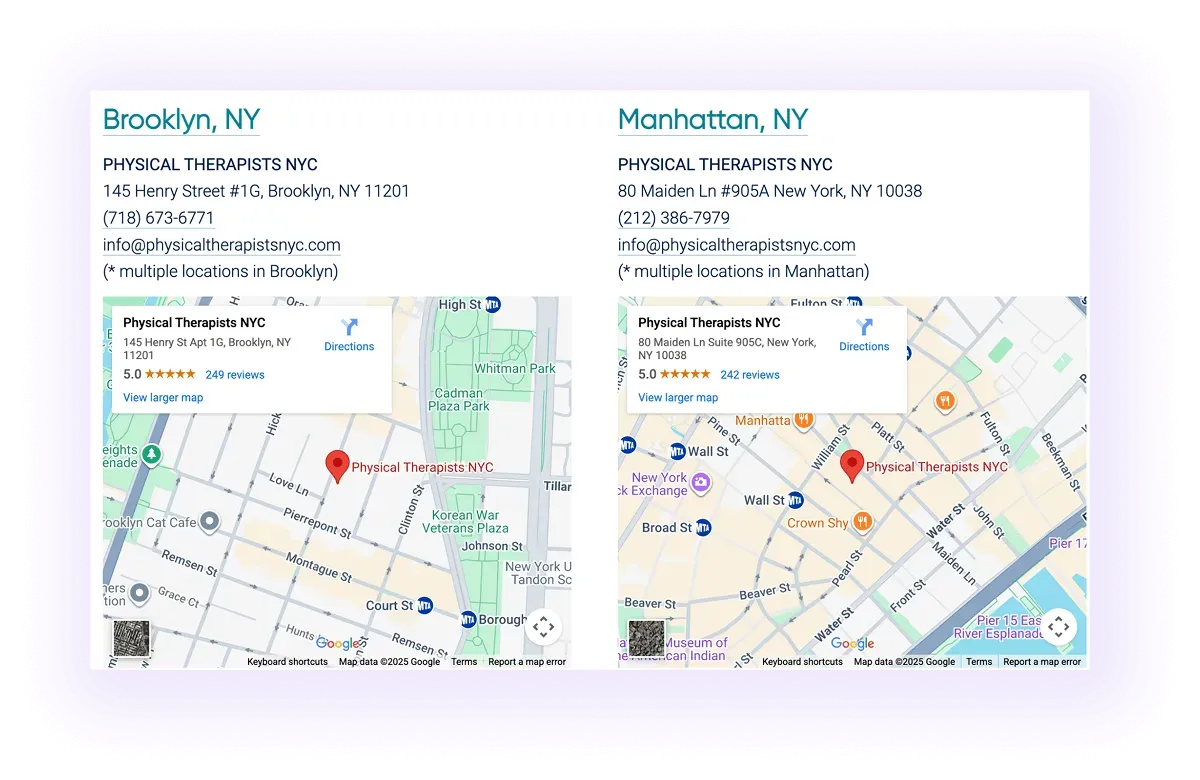
This was just a small part of your local SEO roadmap, which we will break down to you later in this guide.
Blog Pages
Many people with pain, like a swimmer dealing with shoulder soreness, aren’t sure if they need physiotherapy yet, so they start with questions such as:
- How do I know if I need physiotherapy for shoulder pain?
- Exercises for a swimmer’s shoulder at home
- When should I see a physical therapist for sports injuries?
Searches like these come from patients seeking guidance, not immediate treatment.
To reach them, create blog pages that answer these questions clearly and introduce readers to your clinic. These posts build trust, support your service pages, and strengthen your SEO for physical therapy clinics as you grow your content.
Stop Guessing Your Physical Therapy Website Structure—We Will Show You Exactly What Pages You Need
You now have the full list of pages to build, but creating them correctly takes real experience in physiotherapy SEO. Our physiotherapy SEO agency has supported 50+ clinics, and we’re here to help whenever you’re ready to reach out!
How to Do Local SEO for Physical Therapists
When someone feels pain, they usually search for location terms like “physiotherapist in houston” or “physical therapy near me in downtown la,” so your clinic needs strong local visibility.
We want to note that we have helped many physiotherapists reach local patients through our local SEO support, and we want to sharehow we did it.
If your clinic serves one area, you focus on that community; if you serve several, each location gets its own attention in search. In both cases, this local approach plays a significant role in effective SEO for physiotherapists.
Local Physiotherapy Clinic
If your clinic has one location, say New York City, your homepage should target location terms like “physiotherapist nyc,” “physiotherapy new york city,” or “physical therapist in nyc.”
Your service pages should follow the same pattern, using phrases such as “knee pain physiotherapy new york” or “shoulder rehabilitation nyc” so patients and Google know exactly where you work.
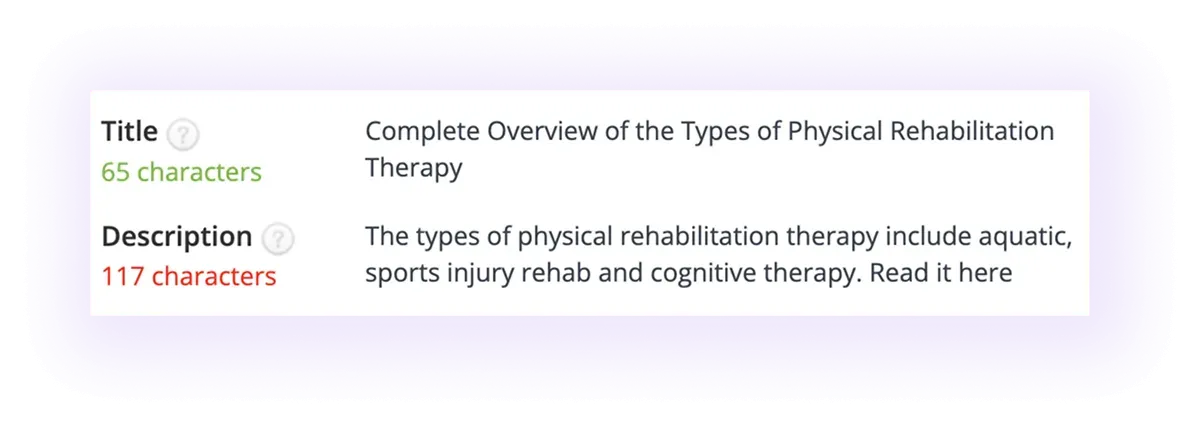
Use these location keywords in your titles, meta descriptions, headings, and page content to strengthen your local SEO for physios.
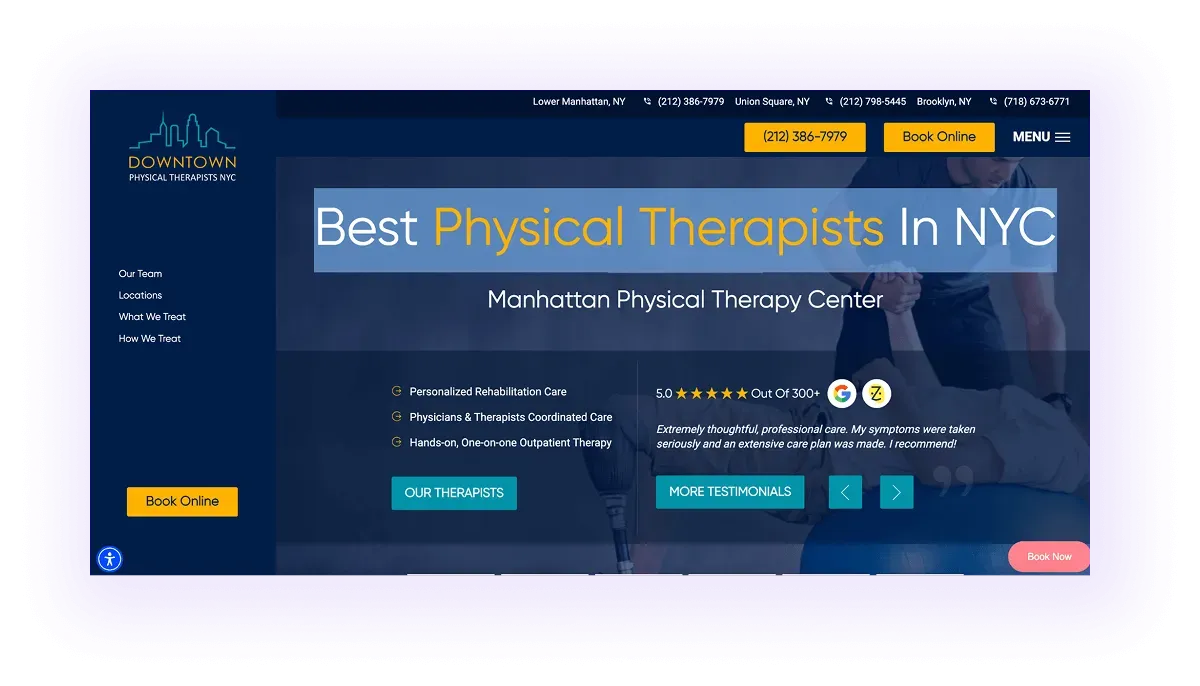
National or Multi-Area Physiotherapy Clinic
If your clinic serves several neighborhoods, cities, or states, create a separate location page for each area you cover. Each page should target a mix of service and location terms, such as:
- physiotherapist in nyc
- physiotherapy clinic in la
- sports rehabilitation houston
- knee pain physiotherapy texas
Here too, use these phrases naturally in titles, meta descriptions, headings, and page content, to give location signals and support your SEO for physical therapy clinics.
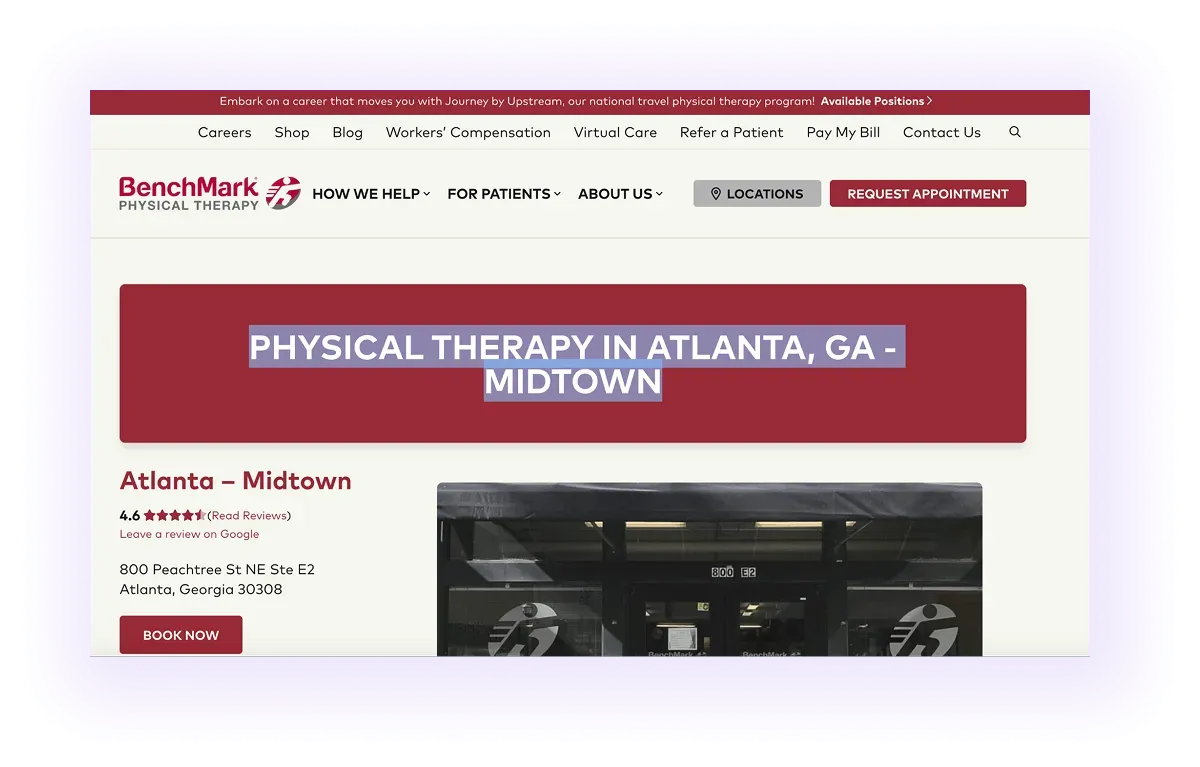
Make sure your URL structure reflects your “Locations” section. For example, /locations/houston/, so both users and search engines understand your multi-area reach.

Set up Your Google Business Profile and Optimize it for Google Maps
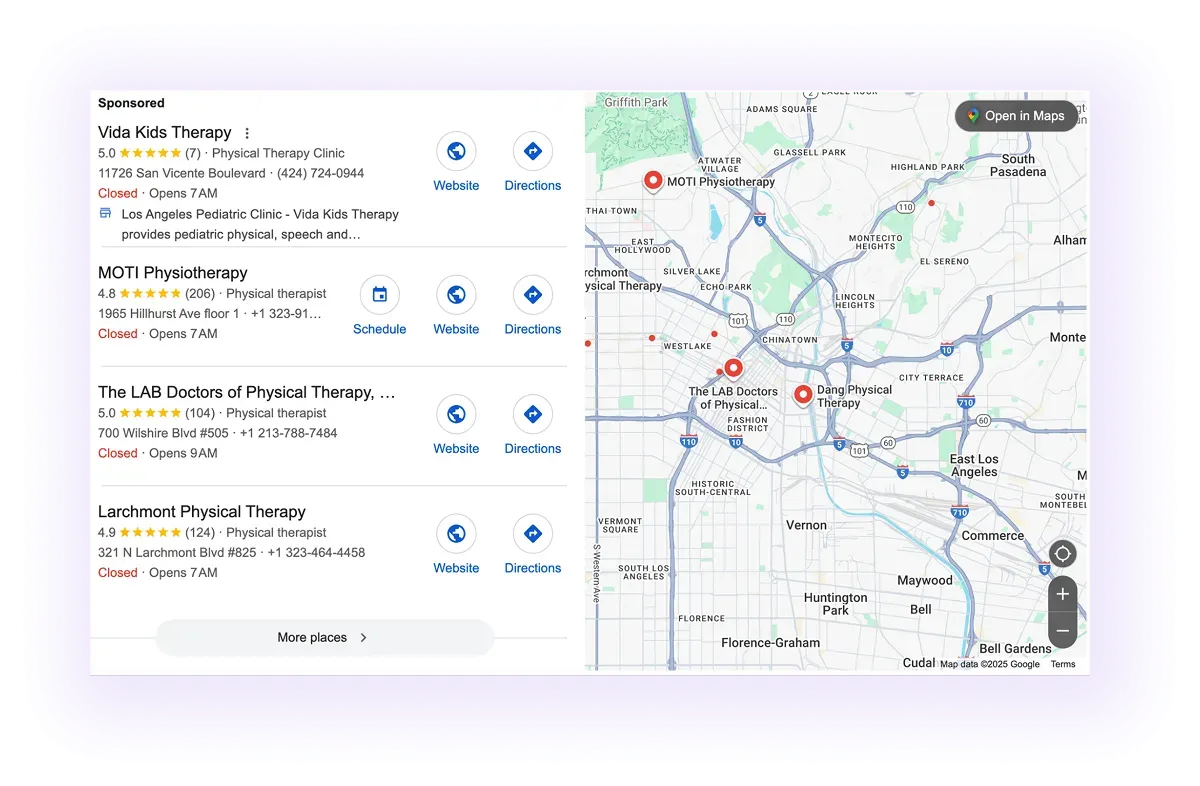
When people search for physiotherapists with local intent, Google often displays Map results that pull directly from Google Business Profiles (GMB), so your clinic needs a complete and optimized profile to show up and attract nearby patients.
To improve your Google Maps visibility:
- Use the exact same name, address, and phone number (NAP) as your website.
- Add your website URL.
- Write a full description that explains your clinic, your physiotherapists, and your main treatments.
- List your services in the Products/Services section, such as sports rehabilitation therapy and post-operative physiotherapy.
- Ask patients for reviews, since many rely on real experiences when choosing a clinic.
- Check the Q&A section often and answer questions quickly.
- Link your social profiles to build trust and give patients more ways to learn about you.
- Upload clear photos of your clinic, treatment rooms, equipment, and team to help patients feel comfortable before they visit.
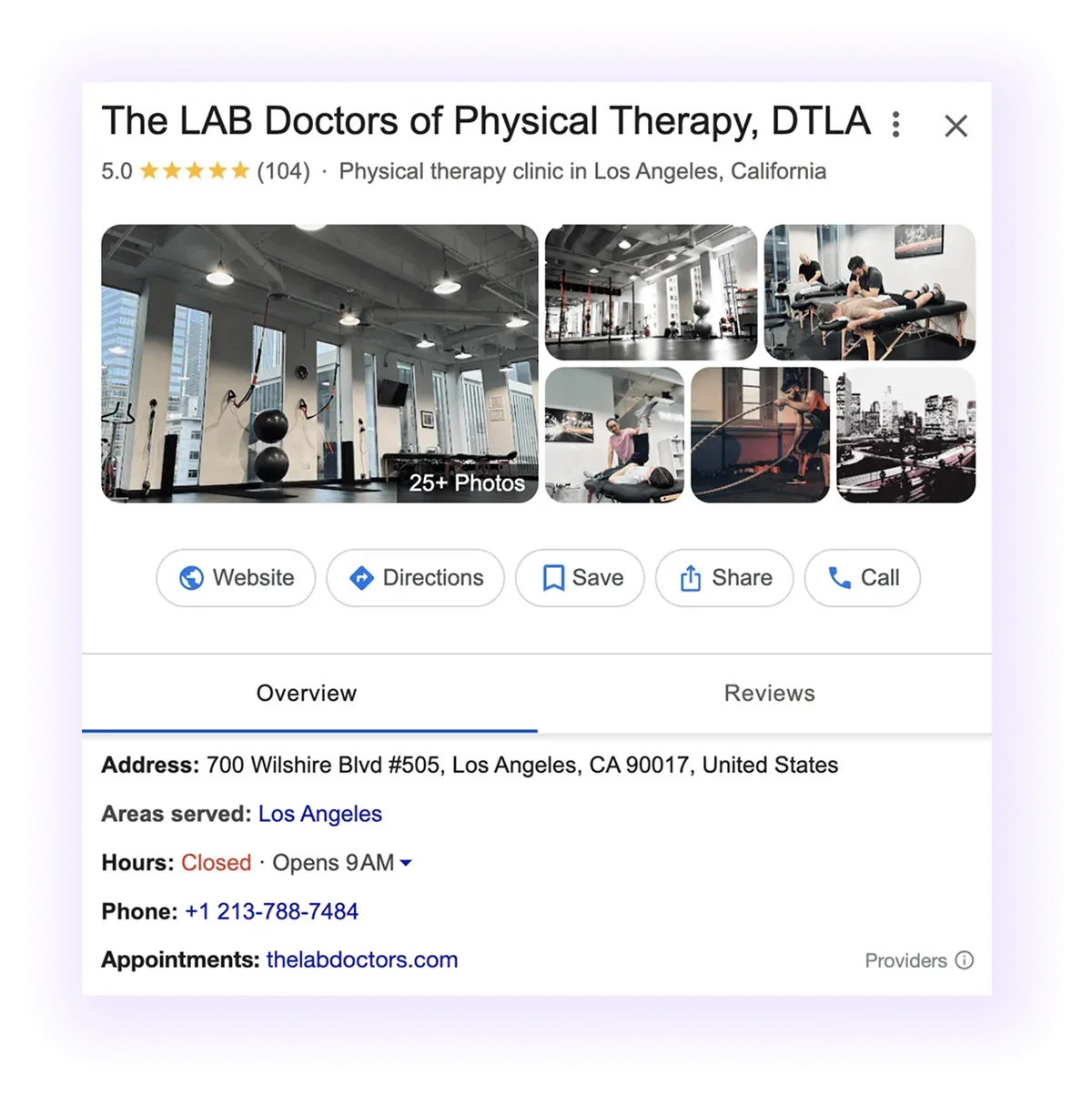
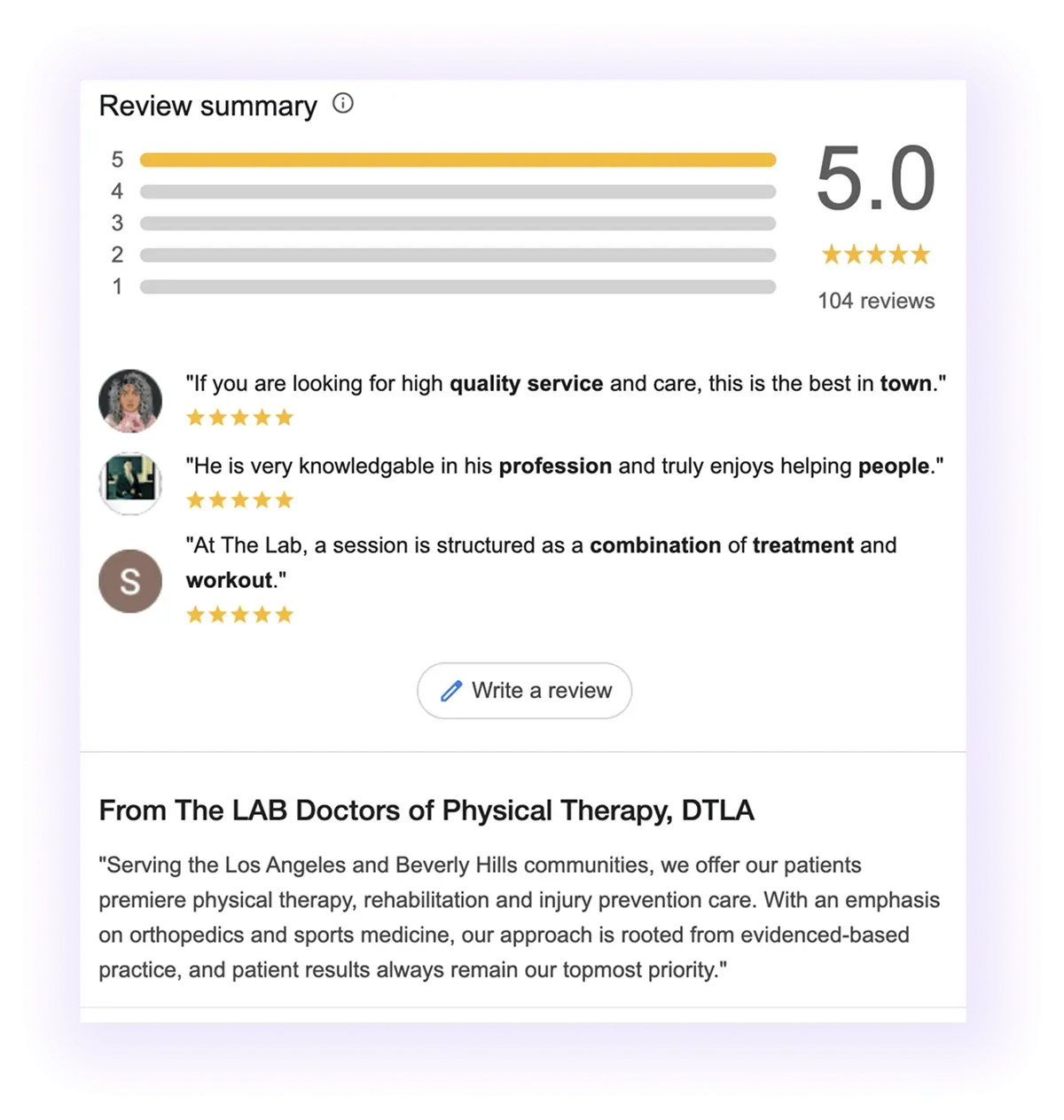
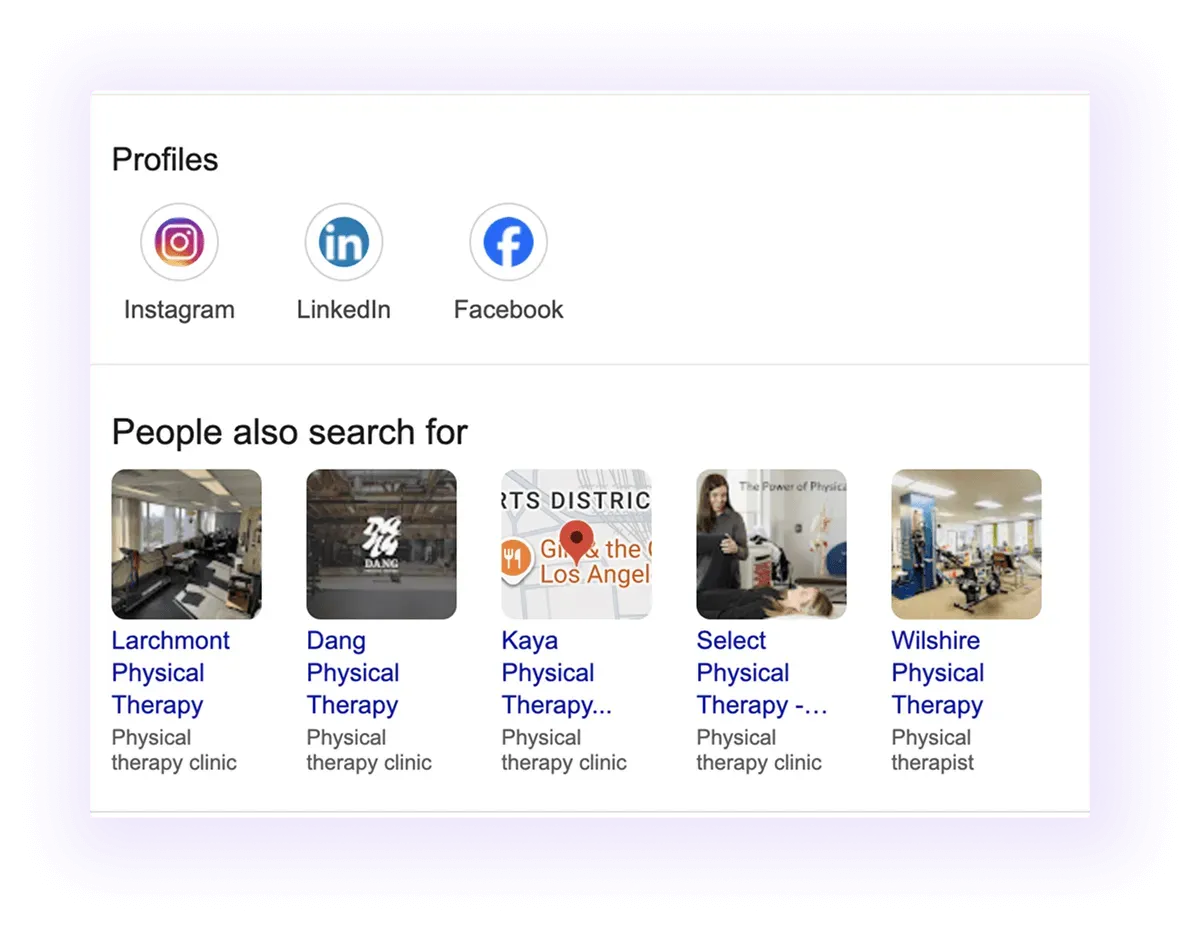
By optimizing your GMB, you boost your chances of appearing in the Google Map Pack for searches like “physiotherapy near me,” bringing more local patients through strong physio SEO.
Build High Quality Content for Your Physical Therapy Website
To rank well on Google, your physiotherapy site needs more than a solid structure and strong local pages. You also need clear, original content across every page.
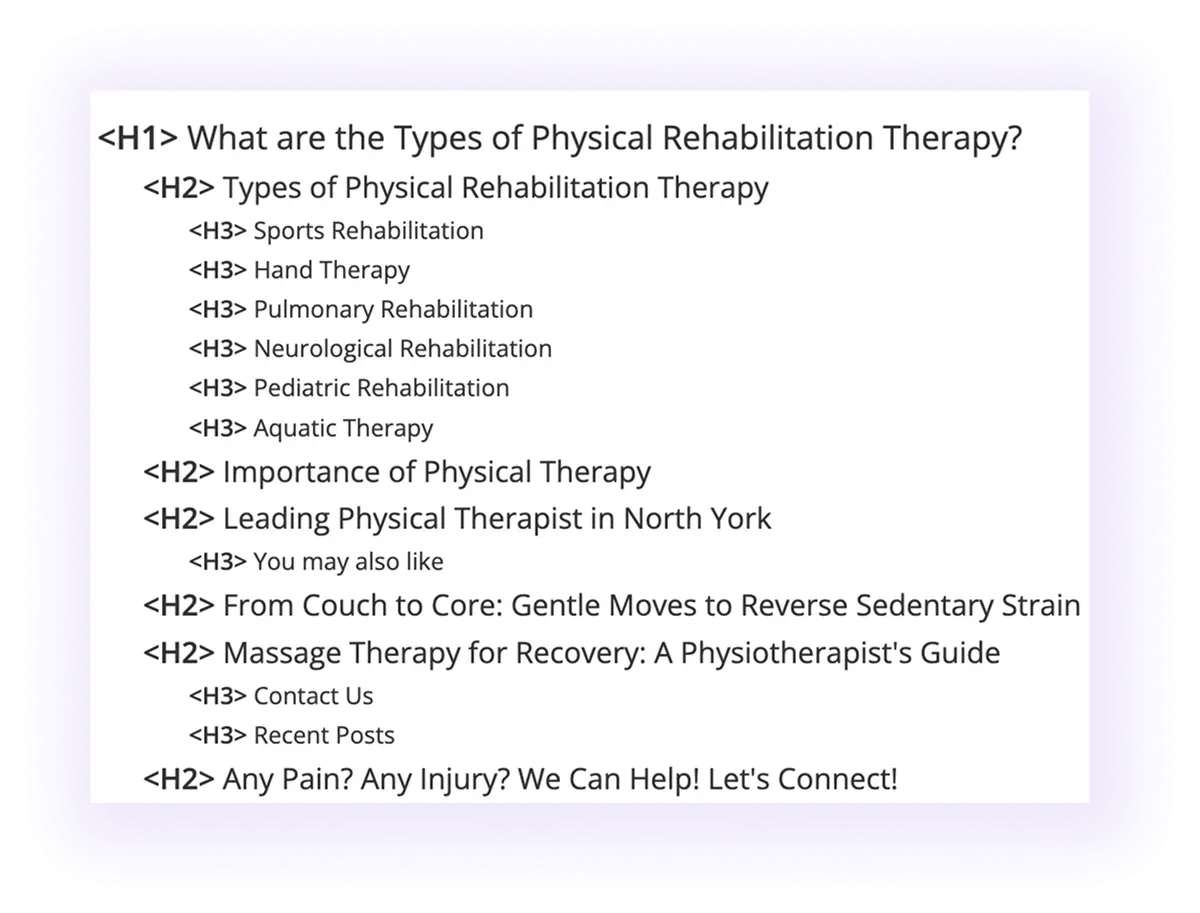
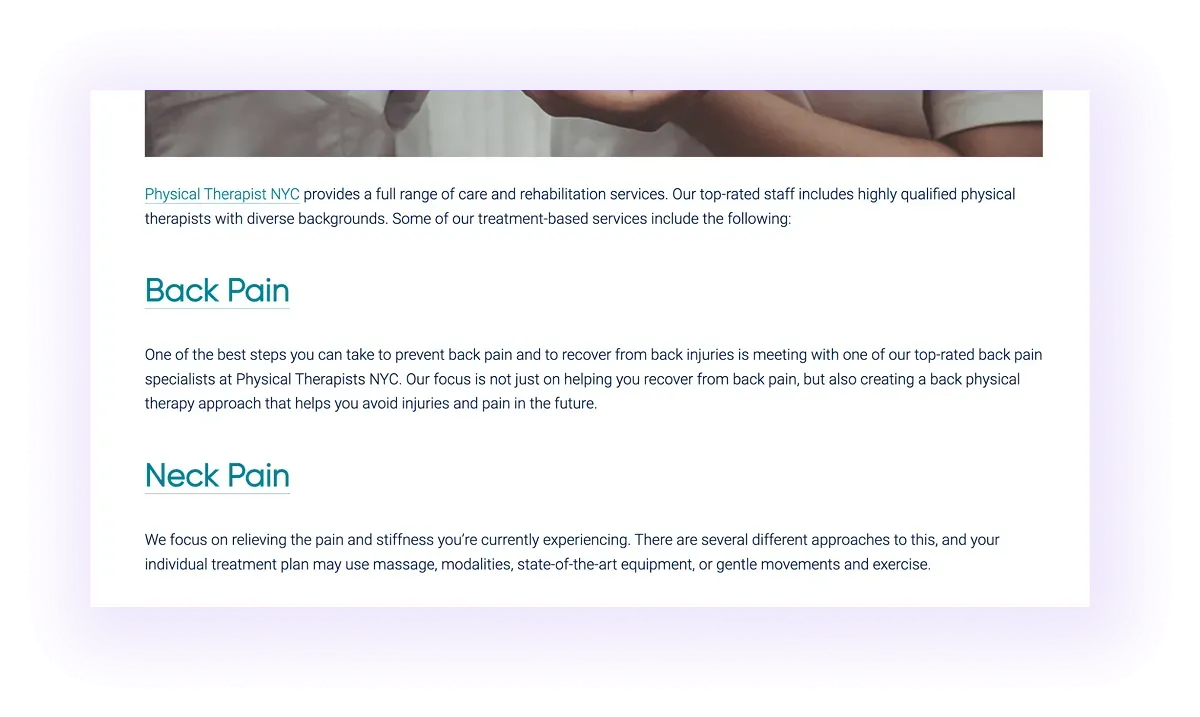
Each service page should be unique, easy to skim and read (measure it with our readability score checker tool), and organized with proper headings (H1-H4). Speak directly to the patient’s problem, describe where they feel pain, and explain how your treatment helps. This matters even more because physiotherapy is treated as YMYL content, meaning Google looks for strong trust signals.
You can build that trust by adding:
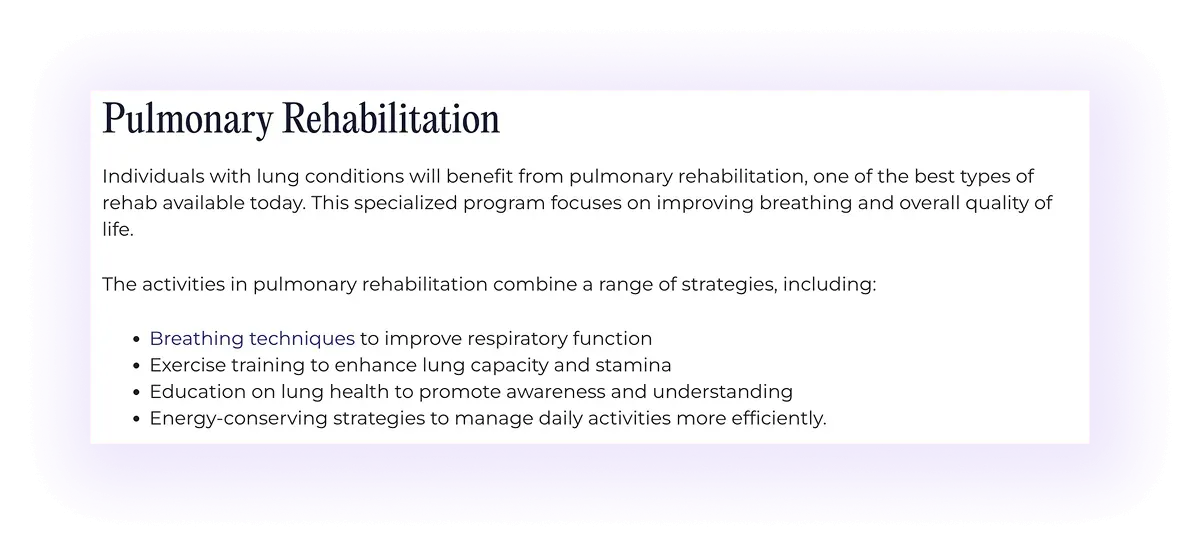
- Testimonials (written or video) that show real results.

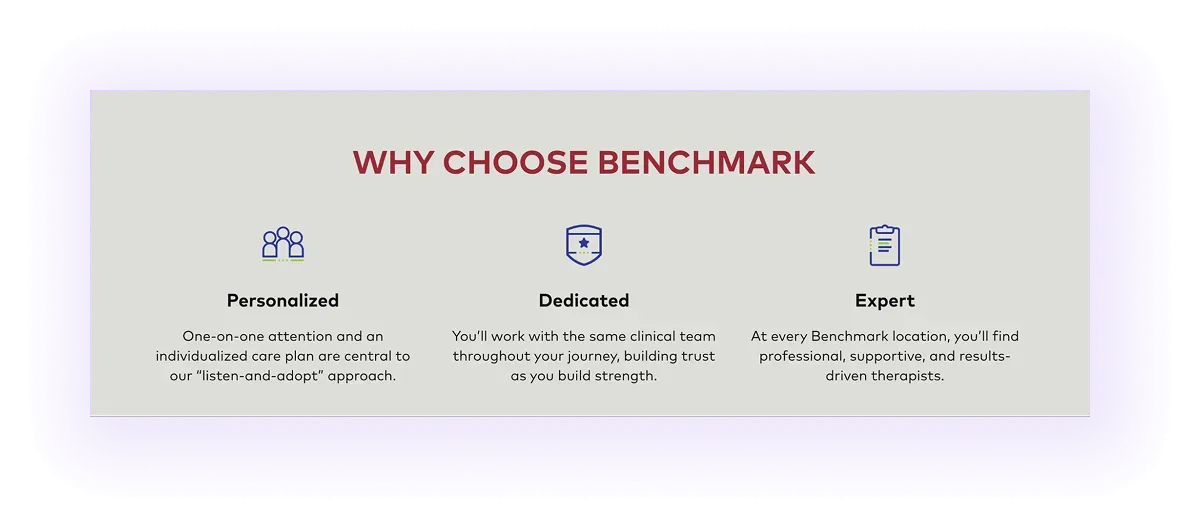
- A clear clinic message that explains what makes your care different.
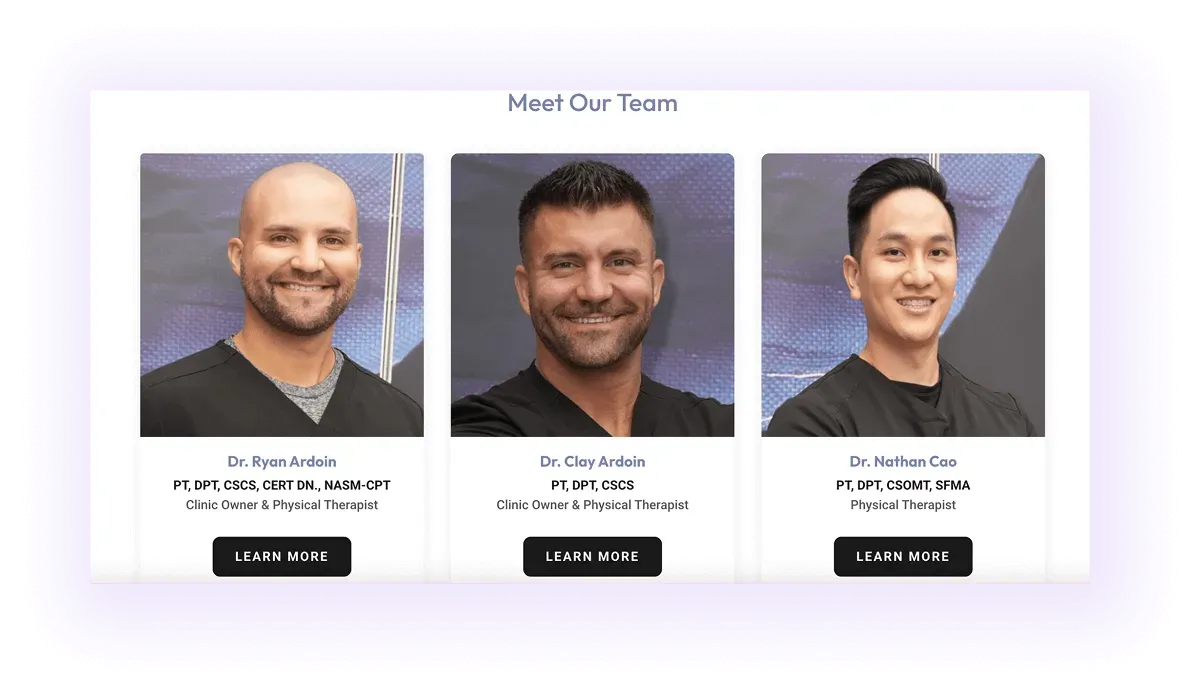
- Physiotherapist profiles with qualifications and experience.
- Media mentions that highlight outside recognition.

- Insurance details so patients know what you accept upfront.

- Experience metrics such as patients treated or clinics operated.

- Partner organizations that support your credibility.

- A “Who we serve” section for groups like dancers, youth athletes, or active adults.

- Interactive pain-area visuals to help users identify their issue quickly.

Strong, trustworthy content like this improves patient confidence and supports your overall SEO for physical therapists.
Blog Posts
Your blog also plays a bigger role in your content strength, helping reinforce your service pages and showing Google the depth of your expertise.
To do this, use a pillar–cluster structure. In this content strategy, you should choose one core page, like sports rehabilitation, as the pillar, then create related blogs as clusters, such as:
- How long does sports rehabilitation take?
- What exercises are included in sports rehabilitation?
- Do athletes need physiotherapy after a sports injury?
- What is the difference between sports rehabilitation and regular physiotherapy?
Each cluster blog links back to the pillar page, helping Google understand that you cover every angle of the topic. This topical depth is an excellent signal for SEO for physiotherapy.
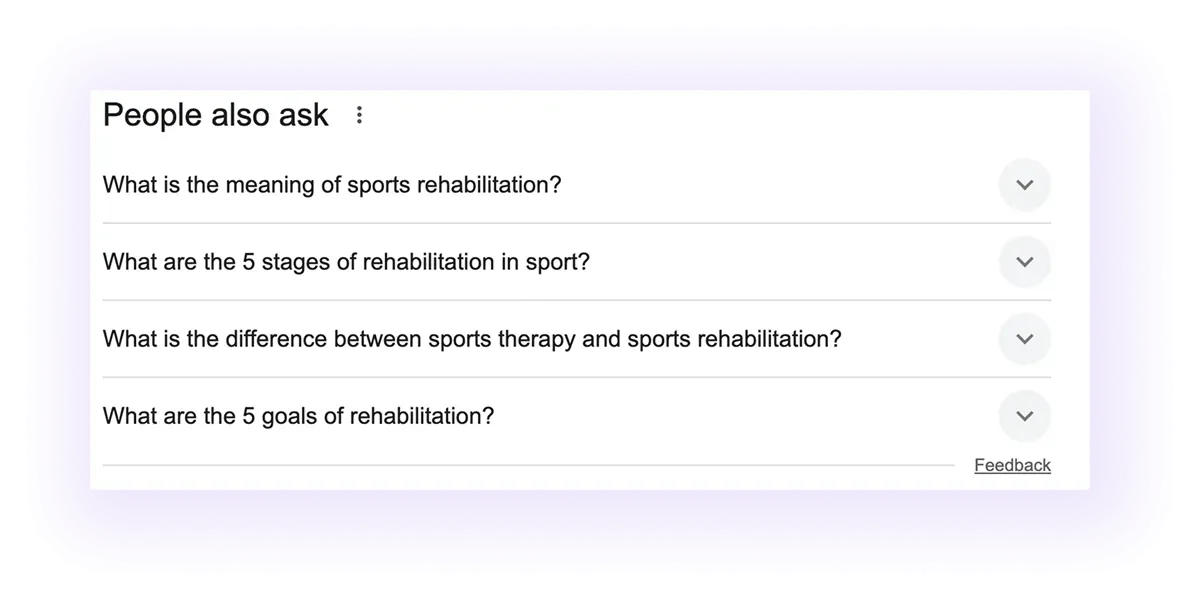
Tools like Ahrefs Questions, Google’s People Also Ask, and competitor blogs can help you find strong cluster ideas.
To make sure your blogs rank well:
- Keep every article original.
- Aim for clear readability.
- Use your keywords naturally in the title, headings, description, and body.
- Add insights from your physiotherapists.
- Include photos or videos.
- Use a clean H1-H4 structure.
- Cite any data or statistics.
- Use lists or tables to keep sections easy to digest.
Implement Technical SEO for Your Physiotherapy Clinic
Your content can only work if Google can crawl and index your pages, and if your site loads quickly without errors or confusing navigation. These elements fall under the technical SEO health plan for physios.
XML Sitemap and Robots.txt
Start by creating a clean XML sitemap that lists your key pages (your homepage, treatment pages, doctor profiles, about, blog posts, and location pages) so Google can crawl them easily.
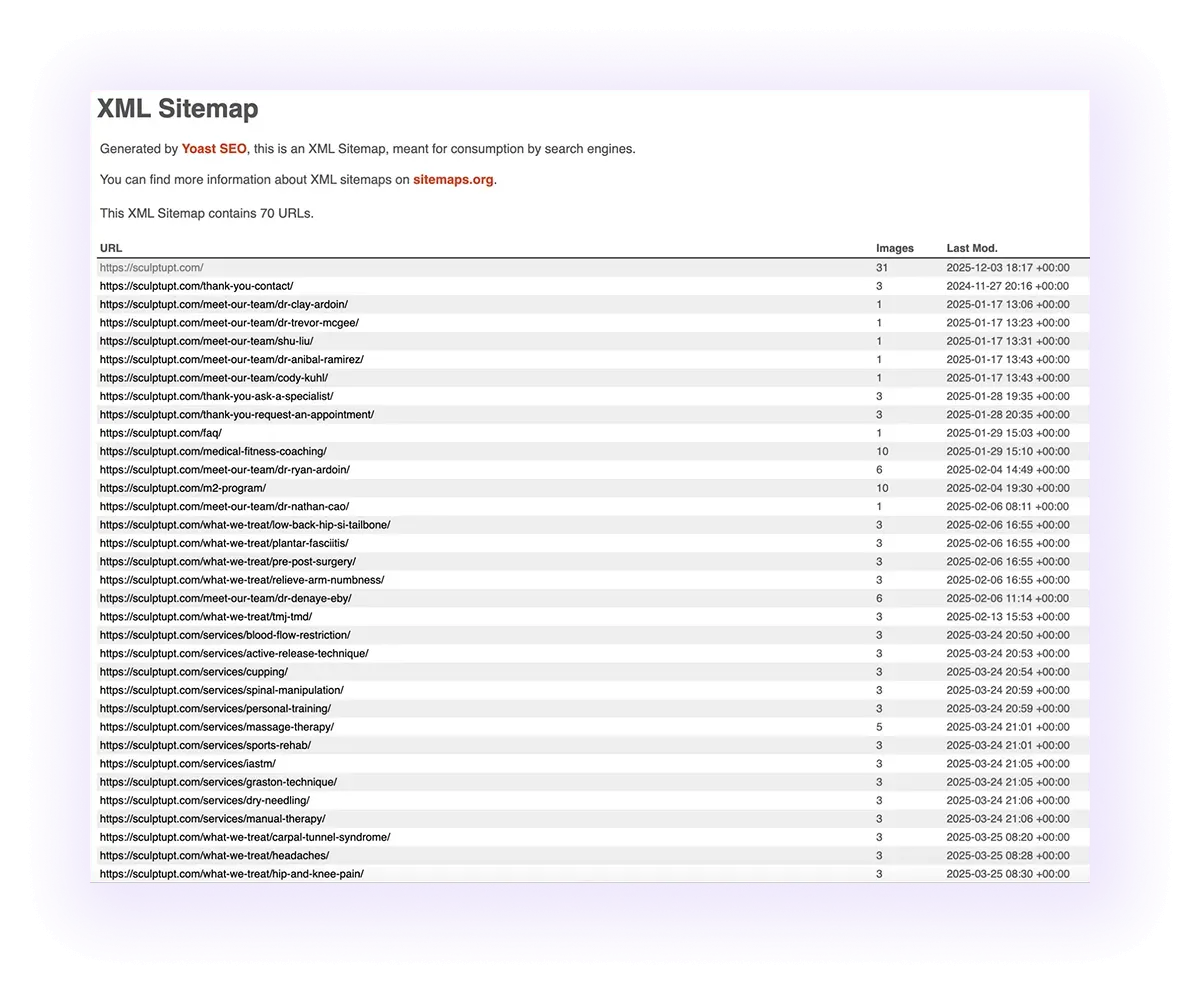
If you have patient-only, admin-only, or non-public pages, block them in your robots.txt file to keep Google focused on the pages that matter for your physiotherapy SEO.
Schema Markup and Structured Data
Schema markup helps Google better understand your pages and can display elements like FAQs, reviews, and treatments directly in search results.
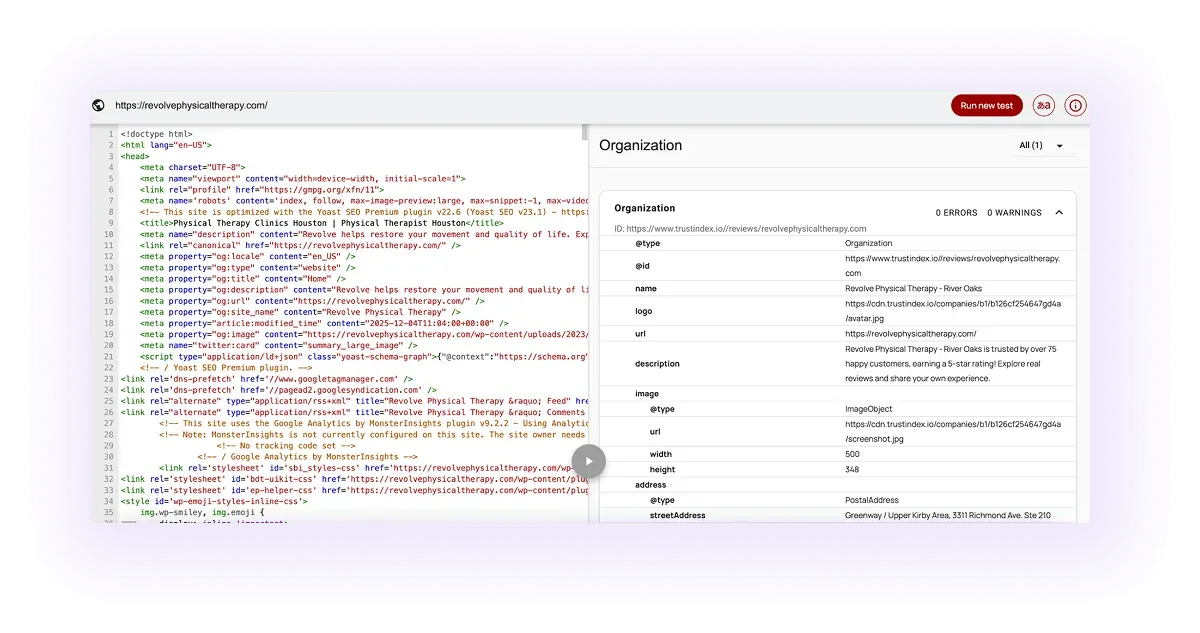
Proper SEO for physical therapists schema types include:
- MedicalBusiness: Shows your clinic as a medical service provider.
- MedicalOrganization: Identifies your practice as a healthcare group.
- Medical Specialty: Highlights your focus area, such as physiotherapy.
- Physician: Used for individual physiotherapist profiles.
- FAQPage: Lets your FAQs appear as rich results.
- AggregateRating: Displays your clinic’s review score.
- LocalBusiness: Helps Google understand your location and service area.
- BreadcrumbList: Adds breadcrumb paths for more precise navigation.
URL Structure
Your physiotherapy website should use clear, descriptive URLs that include your primary keywords and separate words with hyphens, not underscores, numbers, or random characters.
Good URL: yourclinic.com/services/knee-pain-physiotherapy-new-york
Bad URL: yourclinic.com/p=2847_kneePAIN#service
A clean URL structure helps users and Google understand the page instantly and supports stronger SEO for physical therapy clinics.
Internal Link Building for Physiotherapy Websites
Pillar clustering links your blogs back to your service pages (we discussed earlier), but there are other internal linking methods that help your physiotherapy site share authority across pages. Here are the most useful approaches:
- Navigation links help users, and Google reach your main pages, such as your homepage, which links to “Services,” “About us,” and “Contact.”
- Blog-to-blog links connect related posts to keep readers engaged, like a shoulder rehab article linking to a knee injury recovery guide.
- Blog-to-service links pass authority from informational content to core services, such as a post-surgery tips blog linking to your post-operative care page.
- Service-to-service links guide users between related treatments and show topic depth, like a back pain physiotherapy page linking to neck pain physiotherapy.
- Service-to-location links show where each service is offered, such as sports rehabilitation linking to sports rehabilitation in LA.
- Service-to-physiotherapist links build trust by highlighting your team’s expertise, like a knee pain physiotherapy page linking to Dr. Smith’s profile.
Mobile Optimization for a Physiotherapy Clinic Website
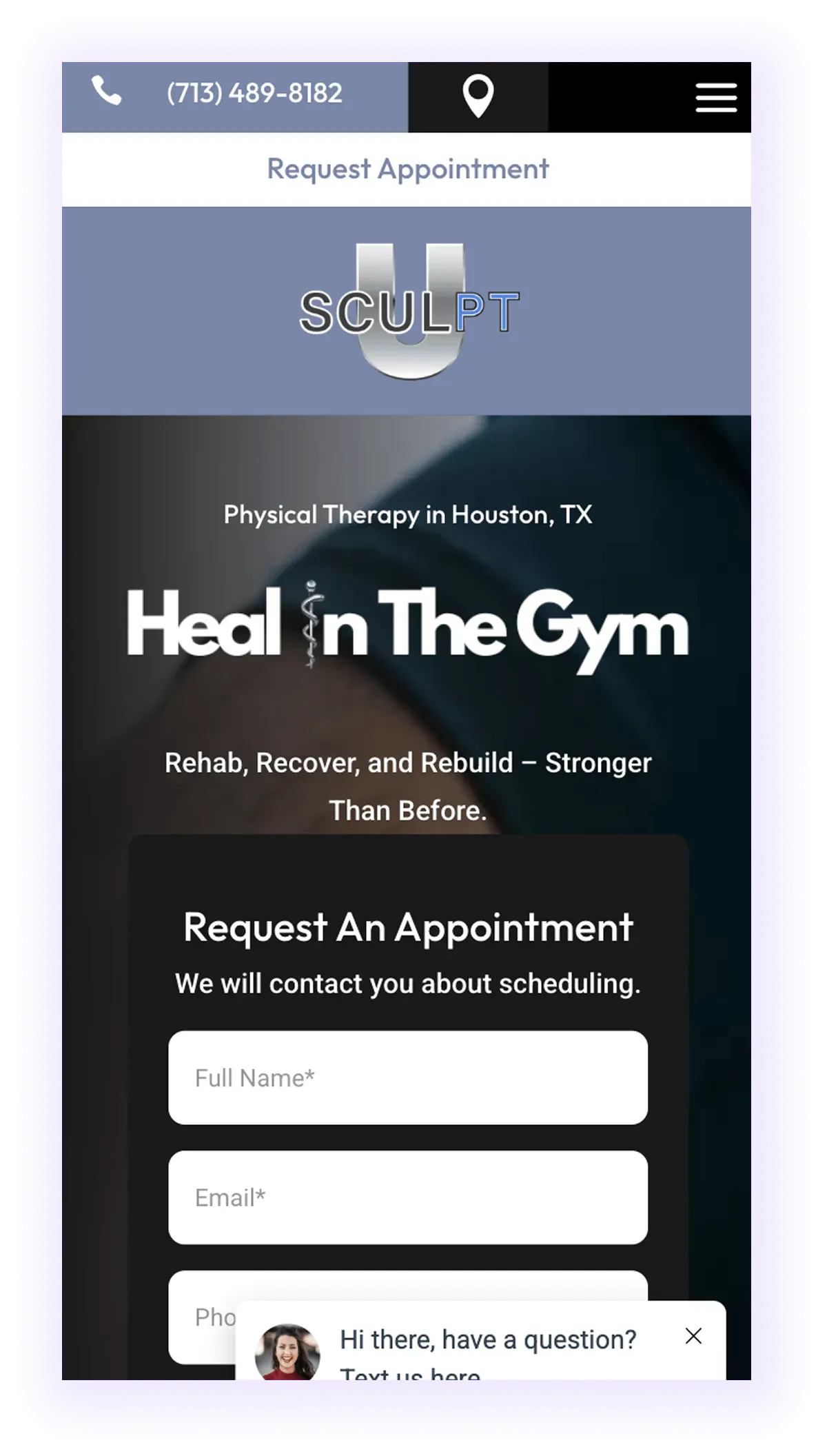
Most patients start their search on a phone, and Google ranks mobile-friendly sites higher, so your website must adapt smoothly to smaller screens. For effective mobile design:
- Use large, easy-to-tap buttons.
- Keep font sizes at 16px or higher.
- Use a simple hamburger menu for navigation.
- Compress images for faster loading.
- Add clear call-to-action buttons for calling or booking.
Optimizing mobile for search engines and users supports your overall SEO for physiotherapy and helps patients reach you without frustration.
Website Speed & Performance (Core Web Vitals)
Google favors fast websites because speed improves user experience and can boost your rankings. To keep your site quick:
- Compress images and use modern formats like WebP or AVIF. (Check our visual files optimization checklist for more advanced tips.)
- Use reliable hosting and a CDN to improve load times across regions.
- Enable server-side rendering for content-heavy pages.
- Use lightweight videos and lazy-load images below the fold.
- Minify JavaScript, CSS, and HTML to reduce page weight.
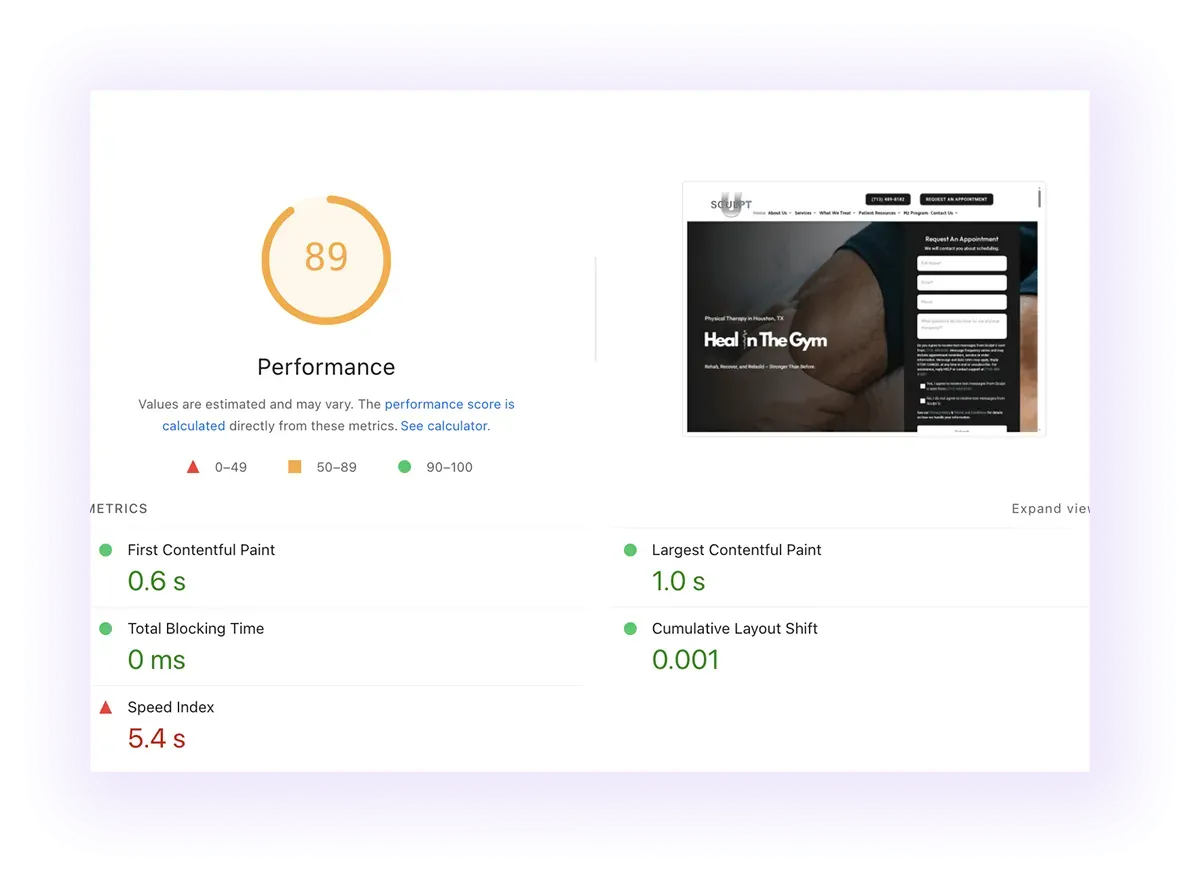
After optimizing, test your site with Google PageSpeed Insights and track Core Web Vitals:
- LCP: under 3 seconds
- FCP: under 1 second
- CLS: close to 0
Frequent Technical Audits
Physiotherapy sites change often (new locations, new services, fresh blogs, design updates) and each update can affect site health, so monthly technical audits help keep everything running smoothly. During each audit:
- Check for duplicate content with Copyscape or Screaming Frog and remove repeats.
- Fix broken links and 404 pages using Screaming Frog.
- Resolve redirect issues in Screaming Frog or Ahrefs.
- Use Google Search Console to spot indexing problems.
- Confirm mobile usability through Search Console and PageSpeed Insights.
- Monitor LCP, FCP, and CLS in PageSpeed Insights.
- Test your schema with Google’s Rich Results tool.
Consistent auditing supports SEO for physiotherapists, and if you prefer not to manage these checks yourself, our physio SEO agency can handle the tough tech audits for you.
Link Building for Physiotherapy Websites
The next step in your physiotherapy SEO plan is building authority through backlinks from trusted, high-quality websites. We use three main backlink outreach strategies, which we’ll walk you through now.
Guest Posting and Link Insertion
Start by finding well-known, high-authority sites in health, therapy, or sports injuries, such as:
- Health and Wellness: healthline.com
- Sports Injury: blog.nasm.org
- Health Information: webmd.com
Once you have your list, choose between guest posting or link insertion:
- Guest posting means writing a new article related to your services and requesting a backlink from the editor. For example, writing “Effective post-surgery physiotherapy techniques” and asking physiopedia.com for a link.
- Link insertion means adding a helpful insight to an existing article on their site, then contacting the editorial team to request a link, for example, adding “Back pain physiotherapy tips for athletes” to a page on sportsInjurylinic.net and requesting a backlink.
Our agency offers special link insertion services for physical therapy clinics that don’t have enough time to spend on their link building process.
Directory Listings for Physiotherapy Clinics
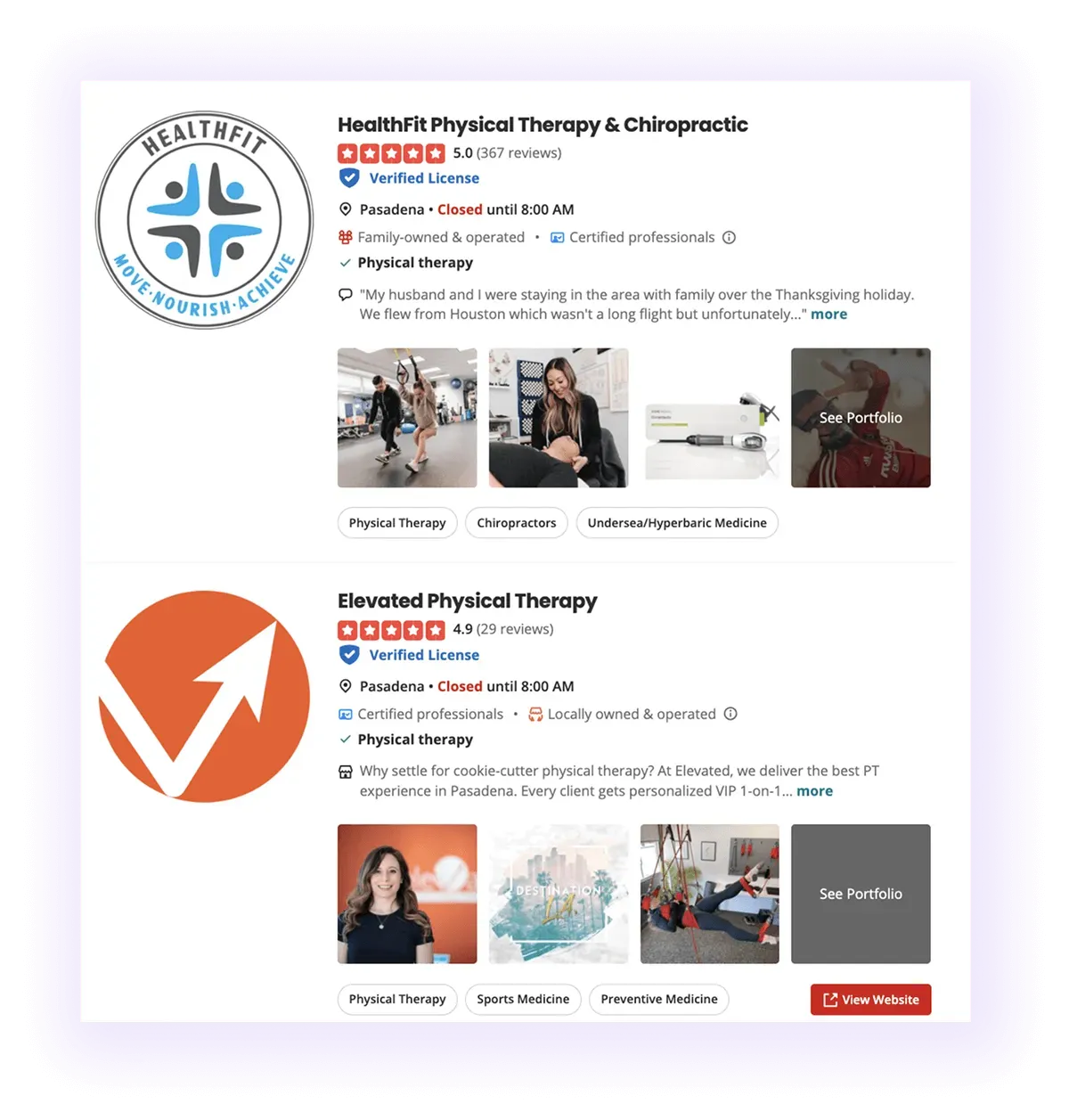
Directory listings are a valuable opportunity to earn local backlinks and another way to build authority for your physiotherapy website. Examples include:
- Doctor Directories: healthgrades.com
- Physiotherapist Directories: choose.physio
- Local Business Directories: yelp.com
To optimize each listing:
- Use the same name, address, and phone number as your website and GMB.
- Add your website link.
- Write a clear description and highlight your treatments.
- Upload photos of your team, awards, and certifications.
- List every service you offer.
- Respond to reviews to build trust.
Firm directory profiles support overall SEO for physios and help patients feel confident choosing your clinic.
Digital PR for Physical Therapy Websites
Digital PR is a powerful way to build authority by securing backlinks from major news sites like Forbes and industry outlets like world.physio. To make this work:
- Choose a newsworthy physiotherapy topic. For example: “How shoulder pain recovery differs between professional swimmers and weekend athletes.”
- Gather real data through physiotherapist insights, athlete surveys, or patient feedback.
- Write a clear, engaging article that journalists can scan quickly.
- Craft a concise pitch explaining your data and why the topic matters.
- Reach out to reporters or editorial teams; if they find it relevant, they’ll publish it and link back to your site.
With strategies like this in place, you now have the foundation for strong SEO for physical therapists.
We can help you with this process by offering professional outreach and link building services for physiotherapists.
How to Track the Success of Your Physical Therapy SEO Strategy
With your physio SEO in place, the final step is tracking how well it performs by using different SEO reporting tools and software:
- Google Search Console: Monitor indexing, clicks, impressions, and how your treatment keywords are ranking.
- Ahrefs or SEMrush: Check your backlink growth, compare it with local physiotherapy competitors, and find new link opportunities.
- Google PageSpeed Insights: Ensure key pages (e.g., services and locations) load quickly for patients searching on mobile devices.
- Google Analytics: See which treatments bring the most traffic and track bookings or calls from your site.
- Hotjar or Microsoft Clarity: Review heatmaps and click patterns to understand how patients navigate your treatment pages.
- Google Tag Manager: Track actions that matter, such as form submissions, call clicks, or appointment button taps.
Partner with a Physiotherapy SEO Company That Knows Your Industry
It’s not enough to just offer great physiotherapy services; you need to make sure people can find you when they’re searching. That’s where our physiotherapy SEO agency can help! We create proven SEO strategies for orthopedic clinics, chiropractors and any other medical website. And we have a specialized plan for you, too!
We have a specialized plan for you! So, contact us, and we’ll share the secrets of SEO for physiotherapists with you, helping your clinic get the attention it deserves and attract more local patients.
Submit the form - Get Free Proposal
%202.png)
24 hours
FAQ


Submit the form - Get Free Proposal
24 hours
.svg)