SEO for Orthopedics Industry Strategies and Keywords by Orthopedic SEO Company
Backed by wins from top clinics, our orthopedic SEO experts use proven orthopedic SEO strategies to drive more calls, appointments, and high-value cases.
5.0




With 27,000 orthopedic surgeons in the U.S., staying visible and keeping a healthy patient flow is tougher every year. Many patients delay care because they’re scared of surgery, which leads to late-stage cases, more challenging recoveries, and shakier revenue for your clinic.
You’re also competing with chiropractors, massage therapists, and stem-cell clinics that pull patients away early in their search. Add weekend athlete injuries, CrossFit spikes, unrealistic recovery expectations, and AI “self-diagnosis,” and patients often end up confused or misinformed before they reach you.
Strong orthopedic SEO fixes this, builds steady visibility, addresses patient concerns before they escalate, and positions your clinic ahead of local competitors.
In this guide, you’ll see the same approach our professional SEO service-providing company used with 60+ orthopedic surgeons and centers seeking reliable traffic and a steadier flow of qualified patients.
Why Do Orthopedic Doctors Need to Invest in SEO?
SEO brings steady, high-intent patients by ranking your pages for the conditions and treatments they search for, helping you maintain a predictable patient flow year-round:
- It reaches patients early by guiding them through blogs, service pages, and FAQs before they turn to chiropractors, PTs, or stem-cell promises.
- It puts you in front of urgent injury searches, like CrossFit and weekend-athlete cases, through fast, local “near me” visibility.
- It lets you set clear expectations on pain, healing timelines, and outcomes before patients arrive.
- It counters AI “self-diagnosis” by giving patients accurate information they can rely on.
- It protects revenue by keeping you visible when patients research symptoms at the earliest stages.
- Long-term SEO costs less than paid ads, which average $75 per acquisition and stop the moment the budget pauses.
Next, we’ll walk you through each step so you can put this orthopedic SEO plan into action. In addition to this guide, go check out proven strategies for physical therapy SEO.
Do Keyword Research and Competitive Analysis for Your Orthopedics Website
First, list every service or procedure your clinic offers. These become the base of your keyword list. Examples include:
- arthroscopic surgery
- orthopedic arthroscopy
- shoulder surgery
- knee replacement
- rotator cuff repair
- ACL reconstruction
- hip replacement
- surgery consultation
- MRI review
Next, run each service keyword through tools like Ahrefs, SEMrush, or Google Keyword Planner. You’ll see what patients search most, which variations have strong demand, and which terms competing clinics rank for.
Focus on high-intent, high-volume keywords with lighter competition. They bring in the most qualified patients. Pair them with broader terms like “orthopedic center,” “orthopedic doctor,” or “orthopedics” to grow overall authority. This is where SEO for orthopedics starts to pay off.
Here are some search terms patients commonly use for arthroscopic surgery that have high traffic and CTR potential:
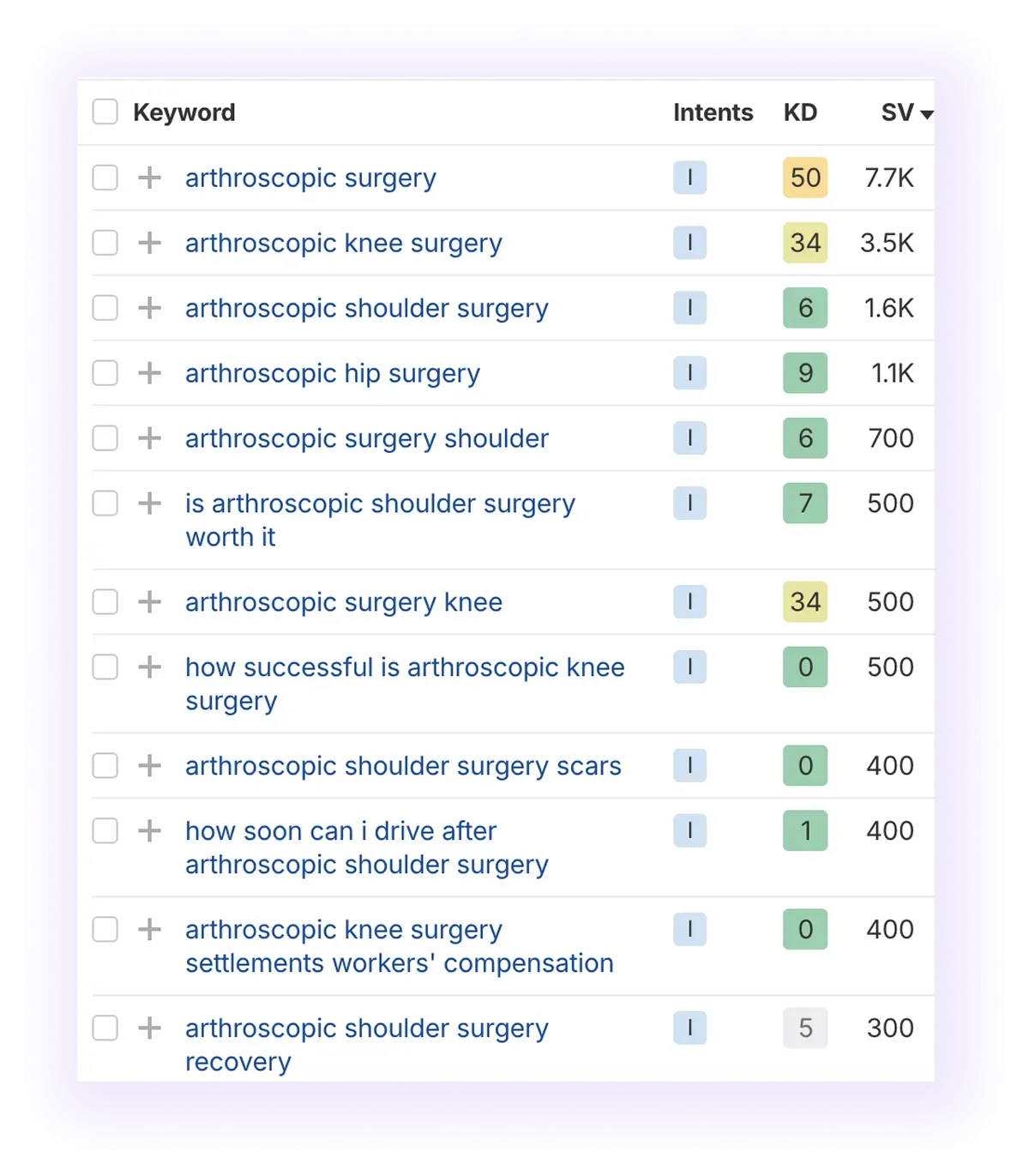
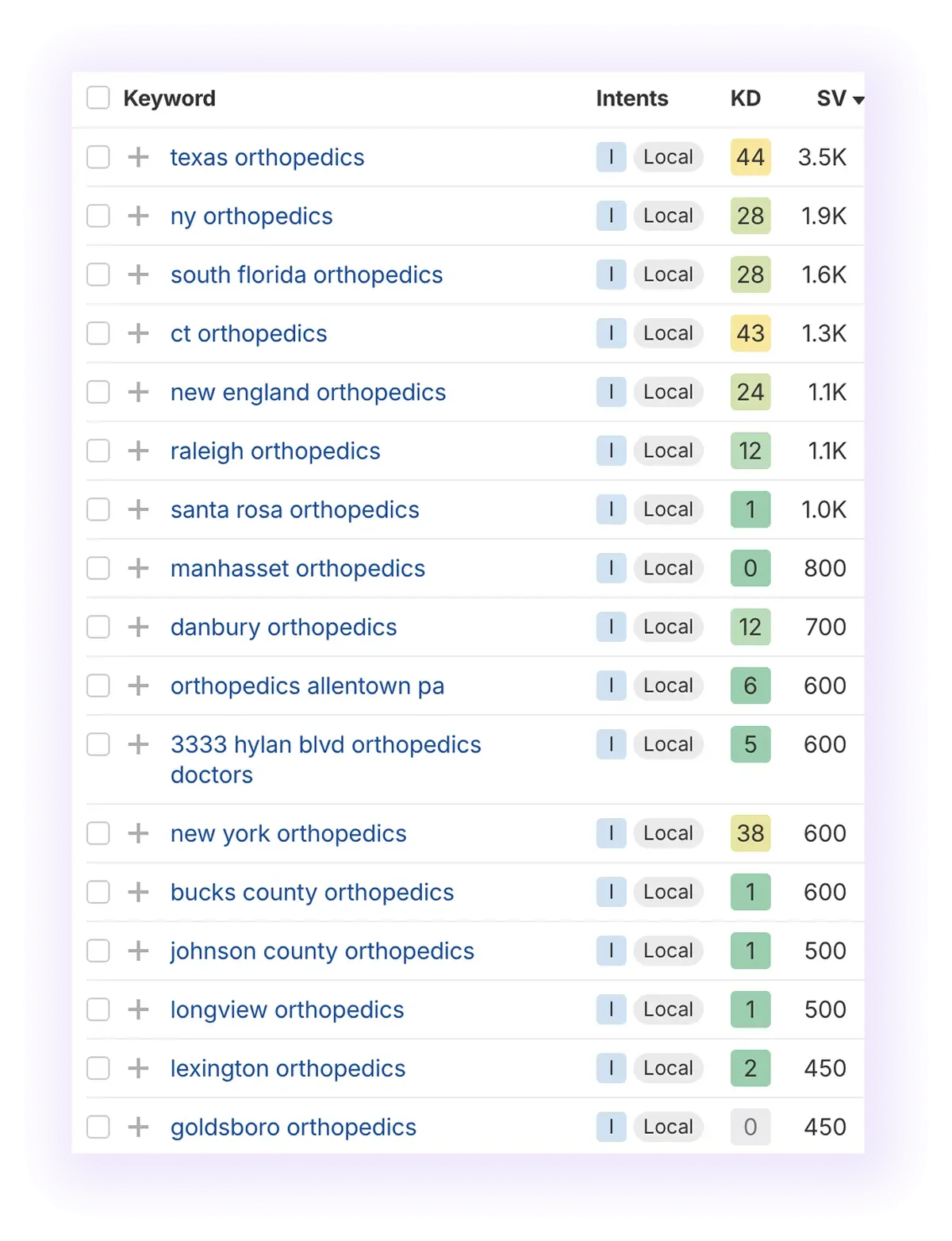
You can also filter by location to spot areas with strong search demand. This helps you expand service pages, target nearby cities, or reach patients willing to travel for care. When you want to add new service or location pages to your website, open our search term research checklist and follow all steps to avoid missing any opportunities.
Below are the strongest U.S. locations for the “orthopedics” keyword:
Top 30 Real Keywords for Orthopedics
Transactional for Targeting Potential Patients
- shoulder replacement surgery
- reverse shoulder replacement surgery
- frozen shoulder surgery
- arthroscopic shoulder surgery
- knee surgery
- knee replacement surgery
- total knee replacement surgery
- acl reconstruction surgery
- rotator cuff repair surgery
- hip replacement surgery
- hip resurfacing surgery
- joint replacement surgery
- ankle joint replacement surgery
- spine surgery
- cervical spine surgery
Informational for Educating Patients
- how to relieve knee pain
- early signs of hip arthritis
- what causes shoulder impingement
- best exercises for sciatica
- how ACL injuries happen
- preventing rotator cuff tears
- post knee replacement recovery
- why joints make noise
- managing chronic joint inflammation
- natural treatments for tendonitis
- causes of lower back stiffness
- when to see orthopedist
- how cartilage damage progresses
- best treatments for bursitis
- common sports injury symptoms
Before we move on to your site structure, a quick reality check: even with the best keywords, you won’t automatically rank on page one. You still need the right orthopedic SEO experts to guide your keyword strategy and overall execution. If you want support, feel free to reach out.
Outline Your Orthopedics Website Hierarchy and Menu Structure
Let’s put our keyword on the right pages. Each keyword reflects a patient’s search path, so your site needs pages that answer their questions from start to finish.
Before building service-specific pages, every orthopedic clinic should have three core pages in place:
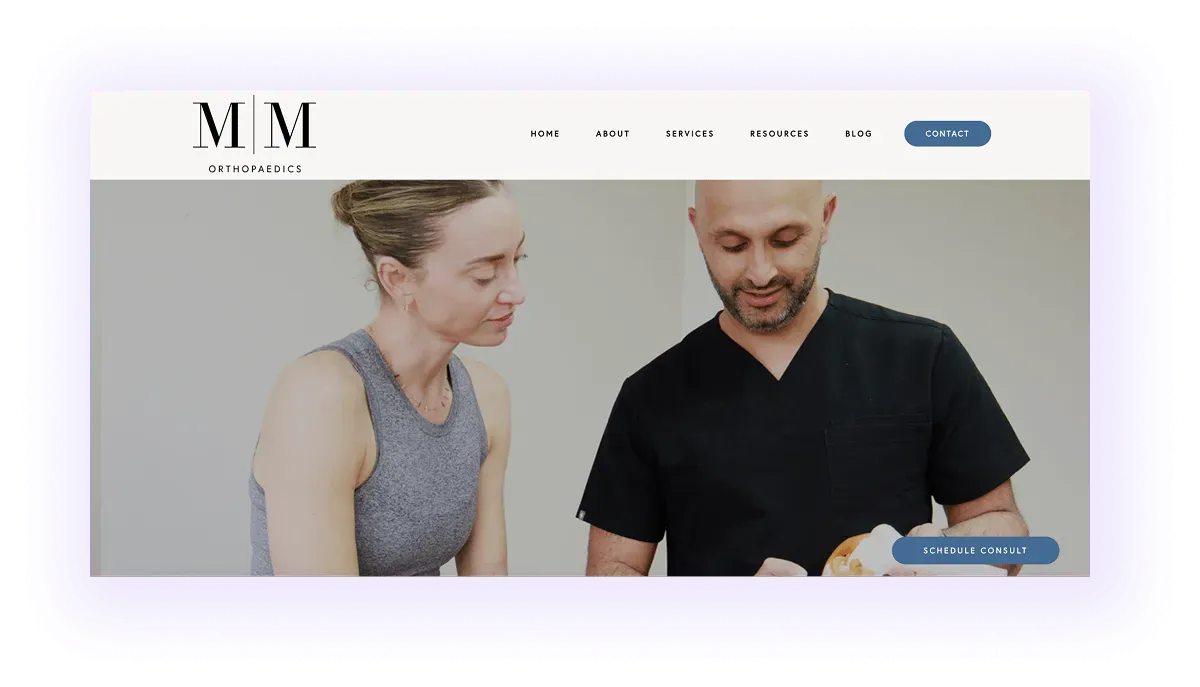
- Homepage: Target broad terms like “orthopedic,” “orthopedic center,” and “orthopedic doctor.” Give a clear snapshot of your clinic, the conditions you treat, and the procedures you offer. If you’re a single doctor, keep the overview simple and focused on the conditions you see most.
- About Us: Build trust with certifications, team photos, short bios, and your doctor or clinic story. If allowed, include before-and-after results to reinforce expertise.
- Contact Us: Keep this page clean and direct: contact form, call button, email, and WhatsApp if you use it.
Place all three pages in your main navigation to ensure patients can access them without friction.
Service Pages and Treatments
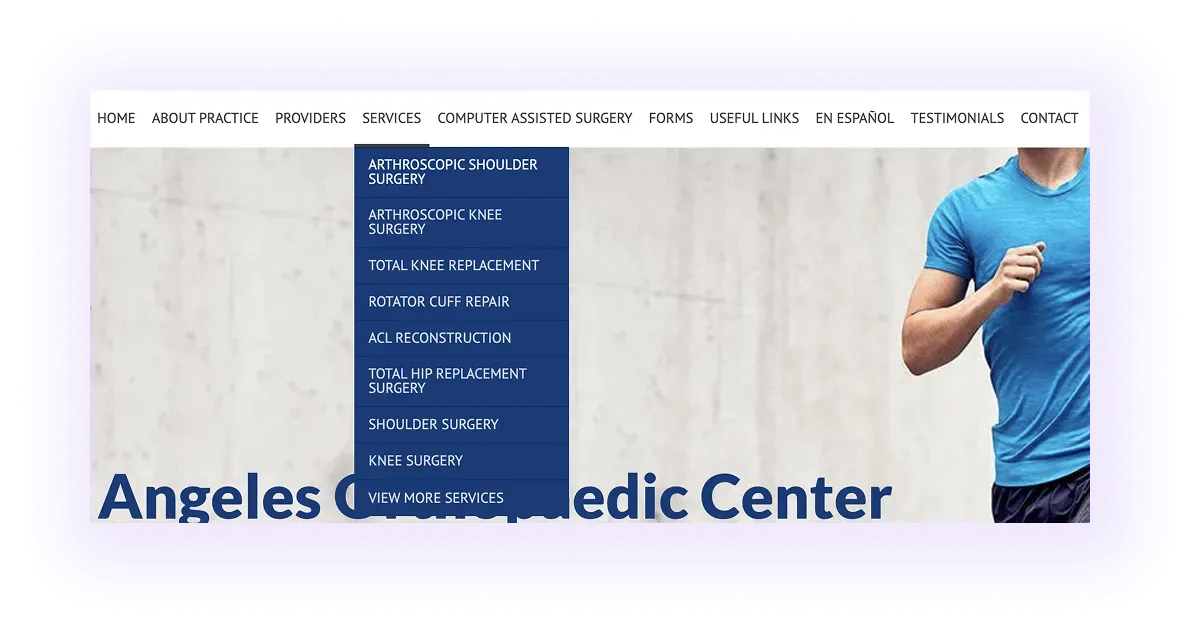
Patients searching for arthroscopic shoulder surgery have very different needs from those searching for arthroscopic knee surgery. That’s why your site needs separate pages for every treatment or procedure you offer. To help each service rank on its own, create individual pages such as:
- Rotator cuff repair
- Total knee replacement
- Hip surgery
- Shoulder surgery
- Knee surgery
- Arthroscopic shoulder surgery
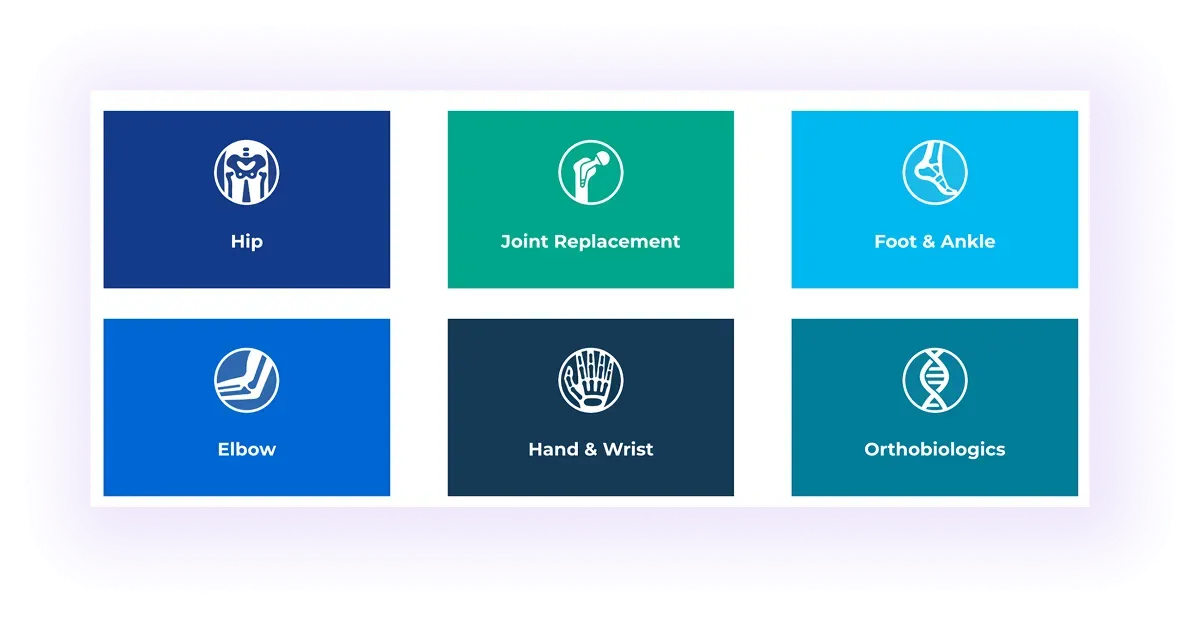
Add each new page to your navigation under “Services” or “Treatments” so patients can find it quickly, and your site remains well-structured. This is where orthopedic search engine optimization becomes even more effective.
Pages for Your Doctors and Orthopedic Surgeons
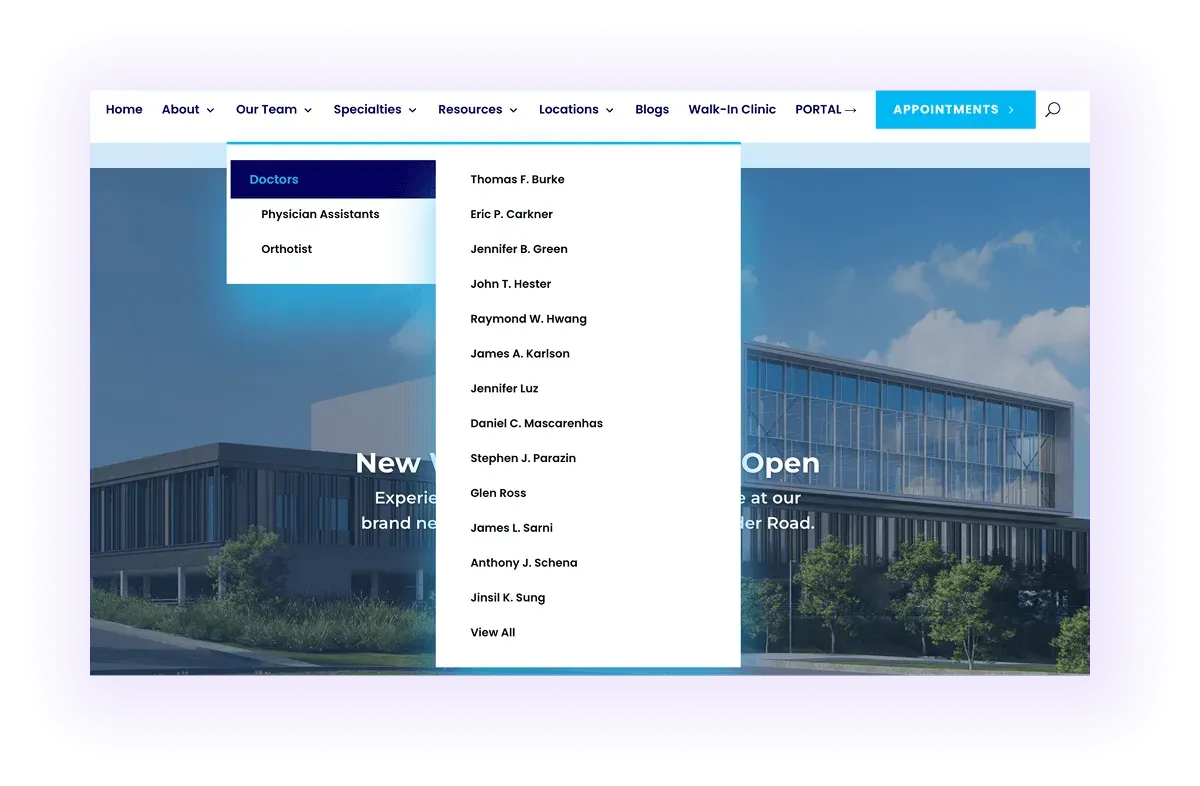
Create individual pages for each doctor, PA, and orthotist. These pages help Google confirm your medical expertise, as patients rely on this information when making health decisions (the YMYL standard). Naming education, experience, certifications, and specialties gives Google clear signals that your clinic is backed by real experts.
These pages also capture name-based searches. Many patients look up an orthopedic surgeon after hearing about them from friends or another provider, and a dedicated profile page turns those searches into new appointments.
You can place these pages in your main menu or group them inside an “Our doctors” section. Many clinics hire an orthopedic SEO company later in the process to help expand these pages, but you can start building them right away.
Local Pages
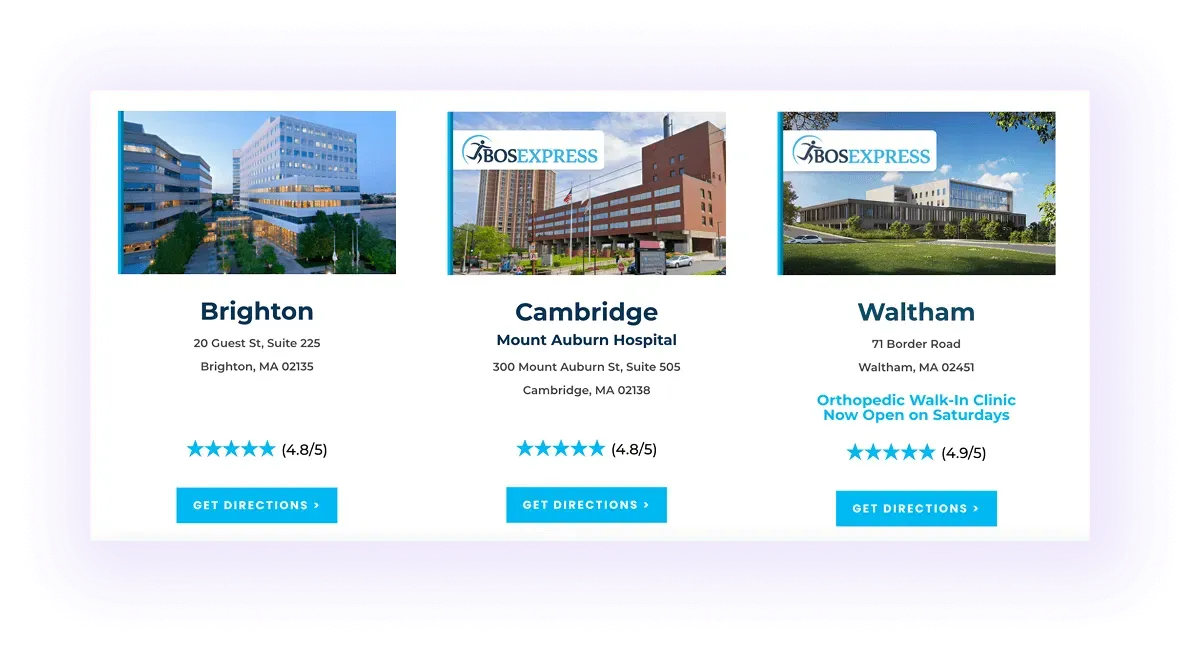
Create location pages only for areas where patients are actively searching as the first item in the local search playbook. If you see terms like there, then each city needs its own page:
- rotator cuff repair los angeles
- hip surgery new york
- shoulder surgery boston
If there’s search demand in nearby suburbs or neighborhoods, build pages for those smaller areas as well, so you can appear for hyper-local terms.
After you create them, place these pages in your main menu or group them inside a “Locations” section so patients can find them quickly.

Blog Pages
Many patients start by searching for clarity, not procedures. They want to understand their symptoms for knee pain, shoulder pain, spine pain, or mobility issues, and often look for answers like:
- Do I need surgery for knee pain?
- Why does my shoulder hurt when lifting?
- How long does spine pain last?
Create blog posts that answer these questions in a clear, helpful way. These articles attract early-stage patients to your site, build trust, and reinforce your medical expertise, thereby strengthening your overall orthopedic SEO.
Stop Guessing Your Orthopedic Website Structure—We Will Show You Exactly What Pages You Need
You’ve built all the right pages. Great start! But SEO for orthopedics goes deeper: each page needs proper technical setup, strong content, and clear trust signals. We’ll cover these next, but if you want expert help, contact our orthopedic SEO company to stay competitive.
How to Do Local SEO for Orthopedics
Your local SEO plan depends on how far you want to reach. Some clinics focus on a single physical location, while others aim for visibility across several cities or nearby regions. Let’s explore both cases.
Local Orthopedics
If your clinic serves one city, make it unmistakably clear to Google. Your homepage and service pages should use location-based keywords so you show up for searches in your exact area.
For instance, for a Los Angeles clinic, your homepage might target:
- orthopedic la
- orthopedic center in los angeles
- los angeles orthopedic center
- orthopedic doctors la
Your treatment pages should follow the same pattern:
- arthroscopic shoulder surgery la
- arthroscopic knee surgery los angeles
- acl reconstruction los angeles
Work these terms naturally into meta titles, descriptions, headings, and page content to reinforce that your clinic is the right orthopedic provider for that city.
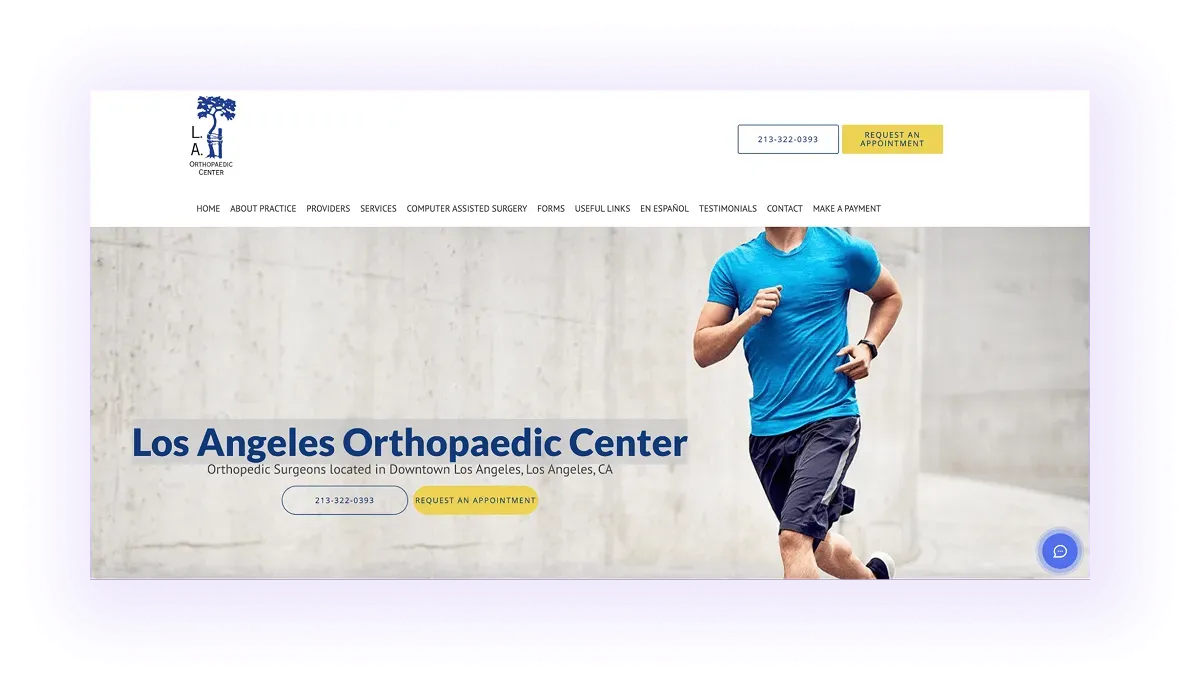
National or Multi-Area Orthopedic Clinics
Clinics serving multiple cities or neighborhoods need dedicated pages for each area. Add the location to your main keyword and build a separate page for every market you want to reach, such as:
- orthopedics los angeles
- orthopedics boston
- orthopedics new york
These pages help you appear in each city’s search results. Create a central “Locations” page as well, and link to every city page from there.
Use the keyword + city naturally in each location page’s meta title, meta description, headers, and content so Google knows exactly which area that page serves.
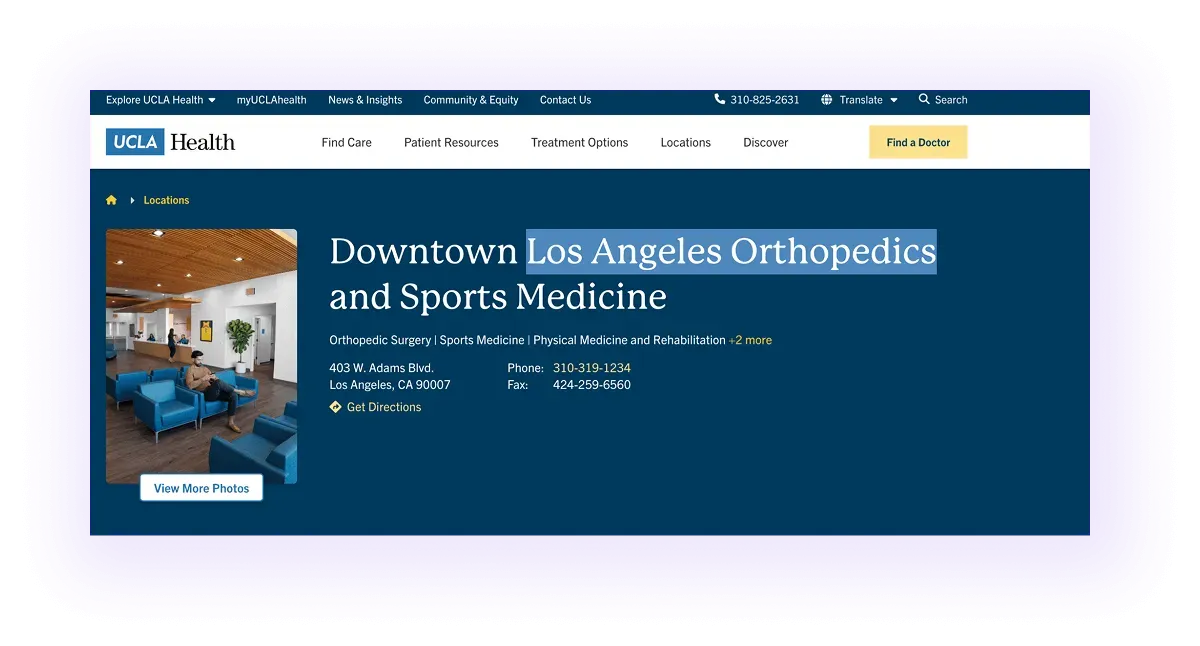
A strong location structure matters here, which is why many clinics treat this as a core part of their orthopedic search engine optimization work.
Keep your URLs clean with a simple folder structure like:
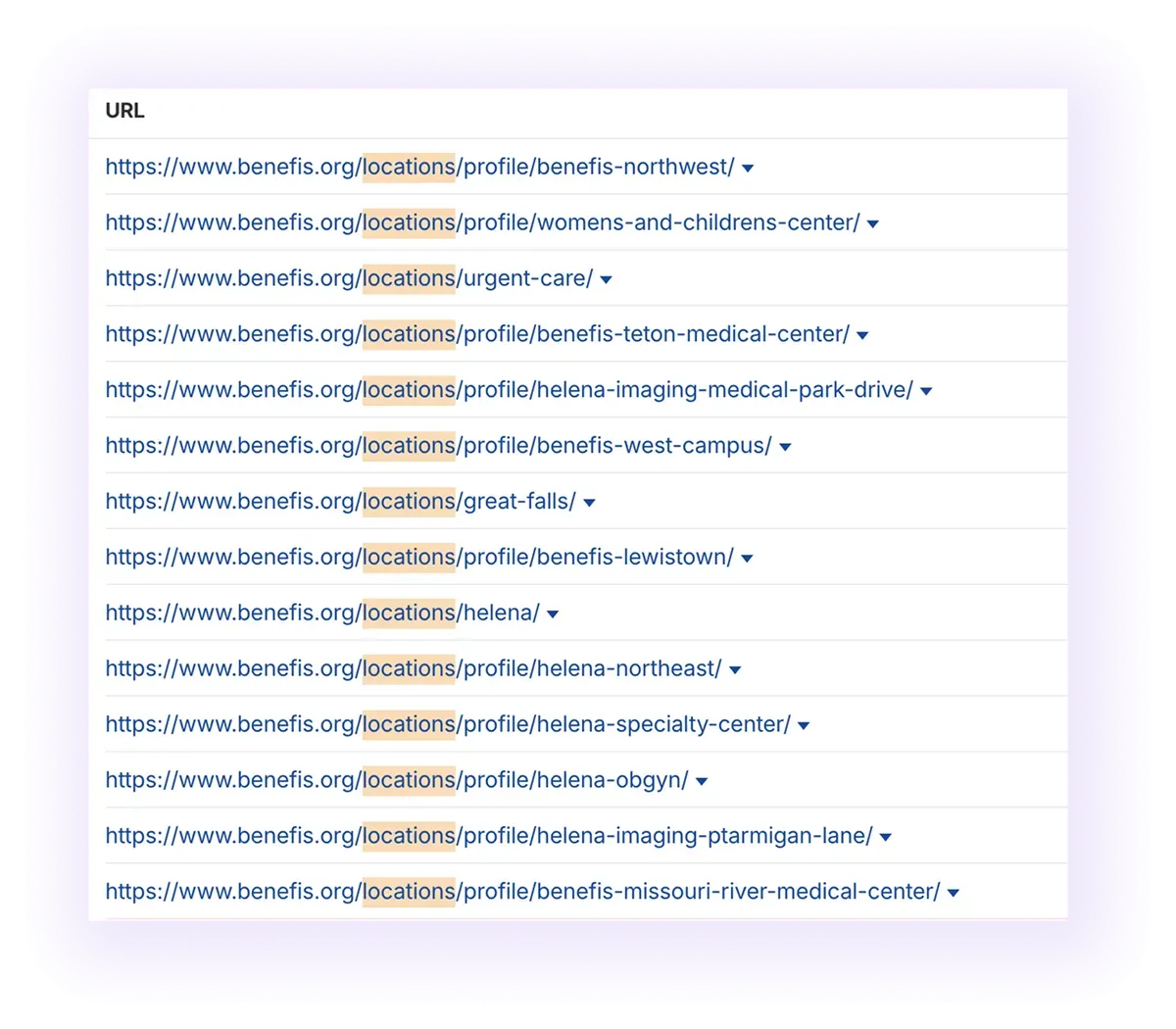
If this seems hard and time-consuming, we can help you with our local SEO services.
Set up Your Google Business Profile and Optimize it for Google Maps
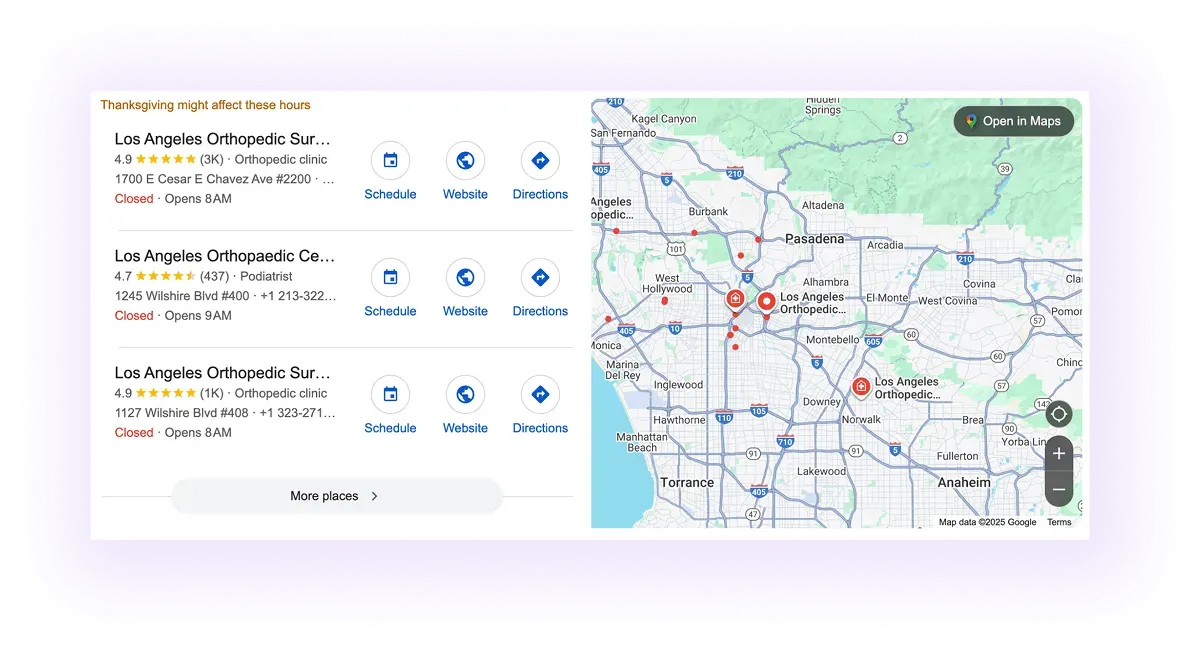
About 64% of people searching for doctors click on Google Maps to read reviews, check clinic details, and build overall trust. If your orthopedic clinic doesn’t show up there, you’ll miss a large portion of ready-to-book patients. Here’s how to set up and fine-tune your Google Business Profile (GBP):
- Use consistent Name, Address, and Phone (NAP). Match the information on your site and every online listing.
- Add your website URL and write a clear description. Mention your treatments, specialties, and key doctors to build trust.
Example: “We provide orthopedic care for shoulder, knee, hip, and spine conditions. Our clinic offers arthroscopic surgery, joint replacement, sports injury treatment, and fracture care. Led by Dr. James Carter and Dr. Elena Ruiz, our team focuses on accurate diagnosis, personalized treatment plans, and supportive follow-up care.” - Encourage and respond to reviews. Reviews strongly influence rankings, so ask patients to share their experience and reply to each review professionally.
- Connect your social media links. Add Facebook, Instagram, YouTube, or any platform where you stay active.
- Monitor your Q&A section. Patients ask real questions here. Answer them with accurate, helpful information.
- Upload high-quality photos. Include images of your doctors, clinic interior, equipment, and treatment rooms to build credibility.
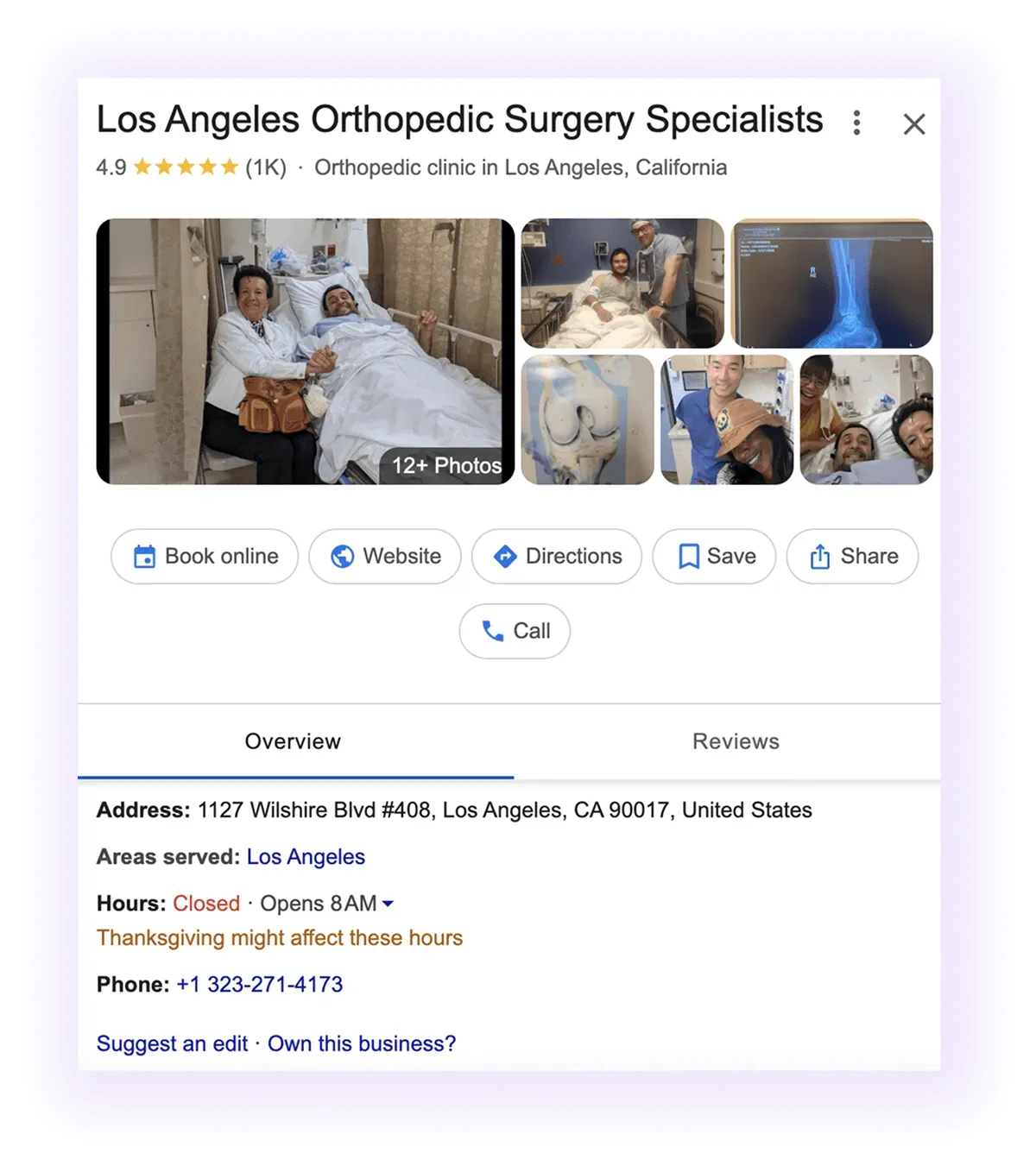
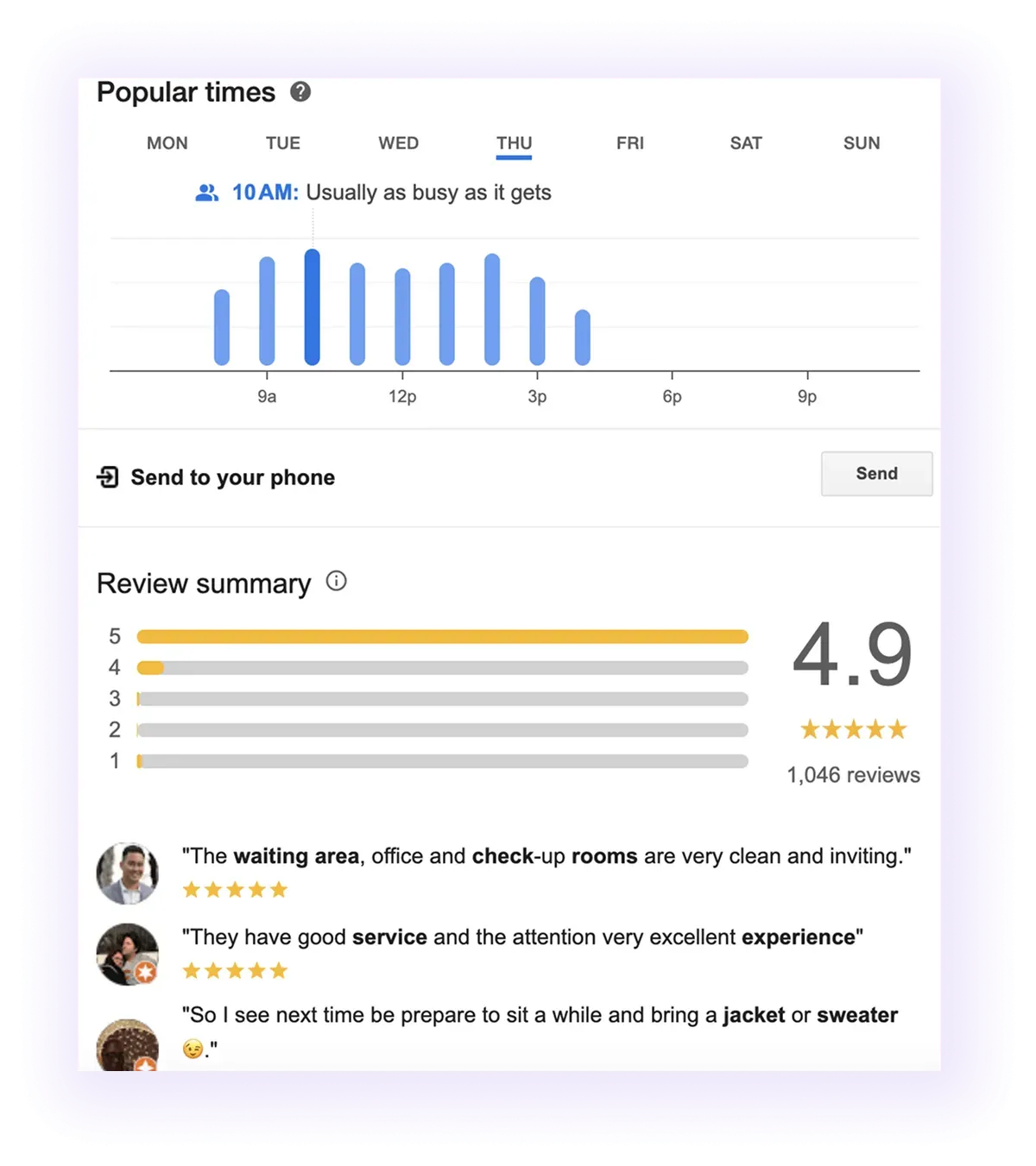
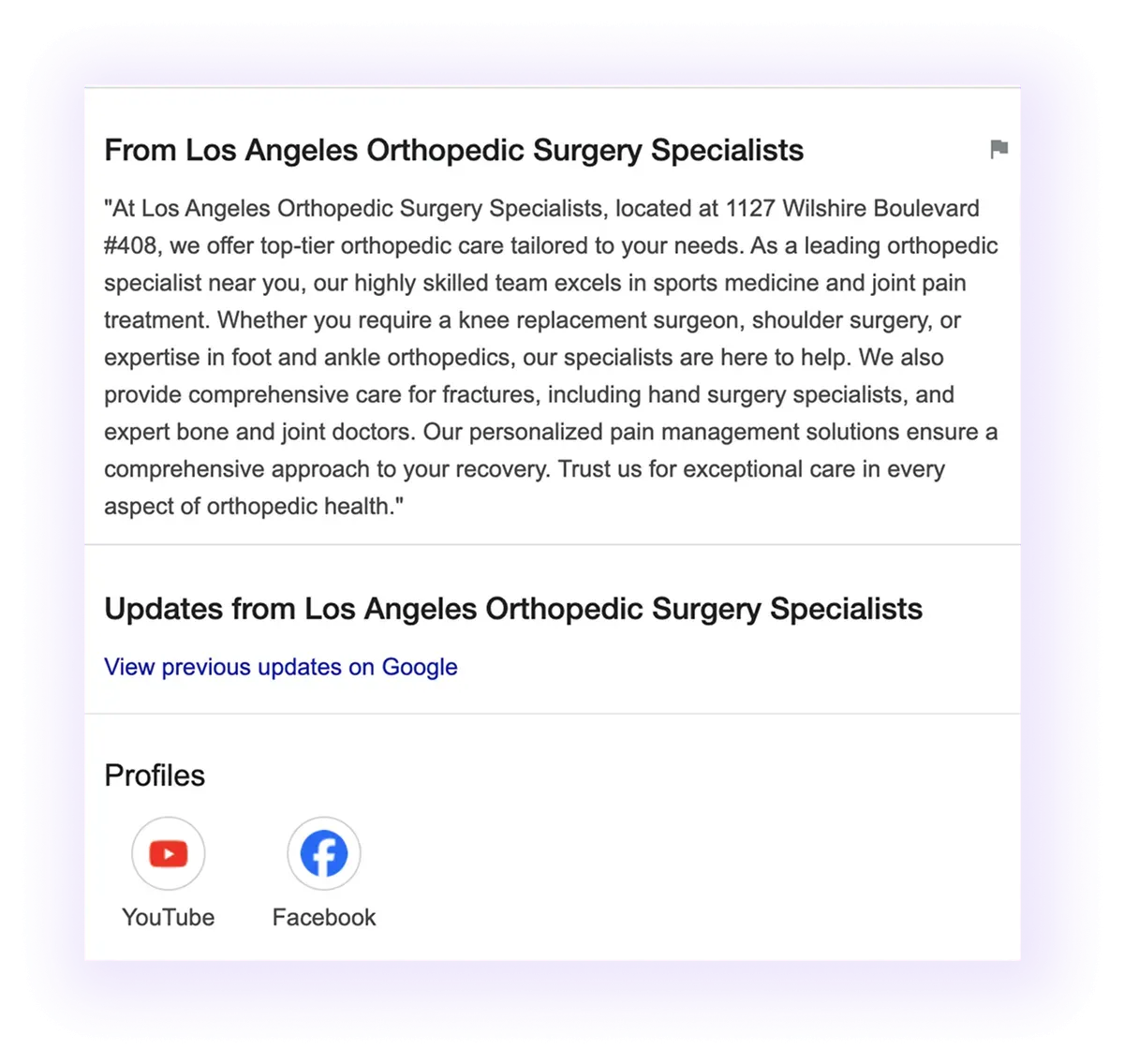
These steps strengthen your visibility on Google Maps and support your broader orthopedics SEO efforts by making it easier for patients to find you, check your reputation, and contact your clinic directly.
Build High Quality Content for Your Orthopedic Website
With your pages in place, ensure each delivers real value. Write original, clear content that explains your services and naturally incorporates your target keywords in the copy, meta titles, meta descriptions, and headings.
Because orthopedics falls under Google’s YMYL category (as we mentioned earlier), add strong trust signals throughout your site, such as:
- Affiliations and Partners: List respected hospitals or medical groups you work with.

- Awards: Include recognitions like “Top doctors” or “Super doctors.”

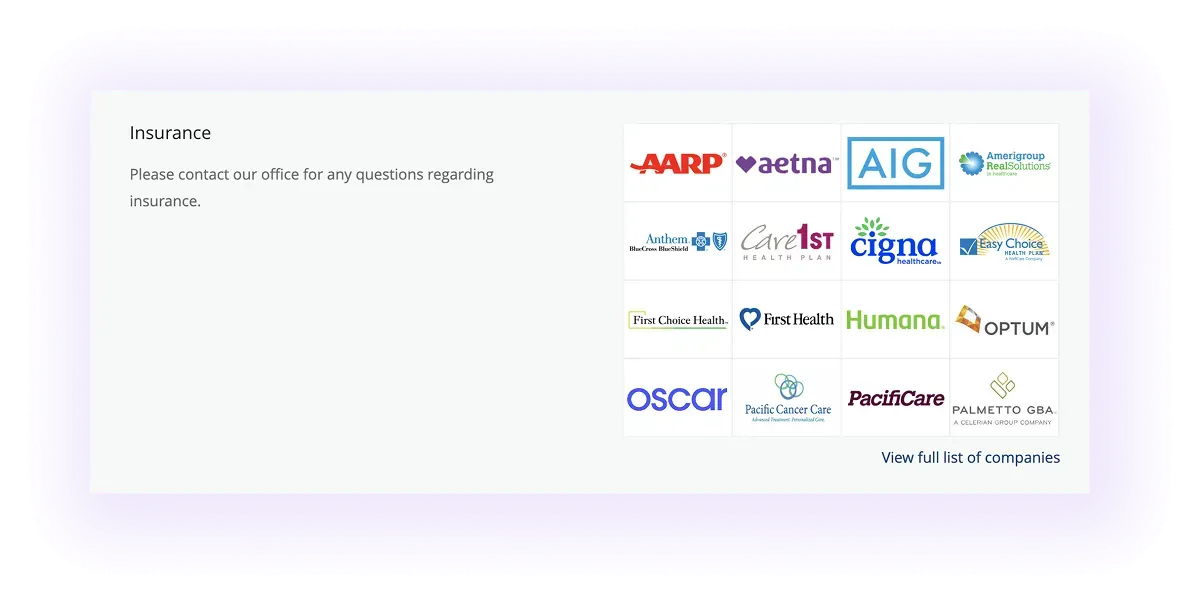
- Insurance Providers: Show which insurance plans you accept to ease patient concerns.
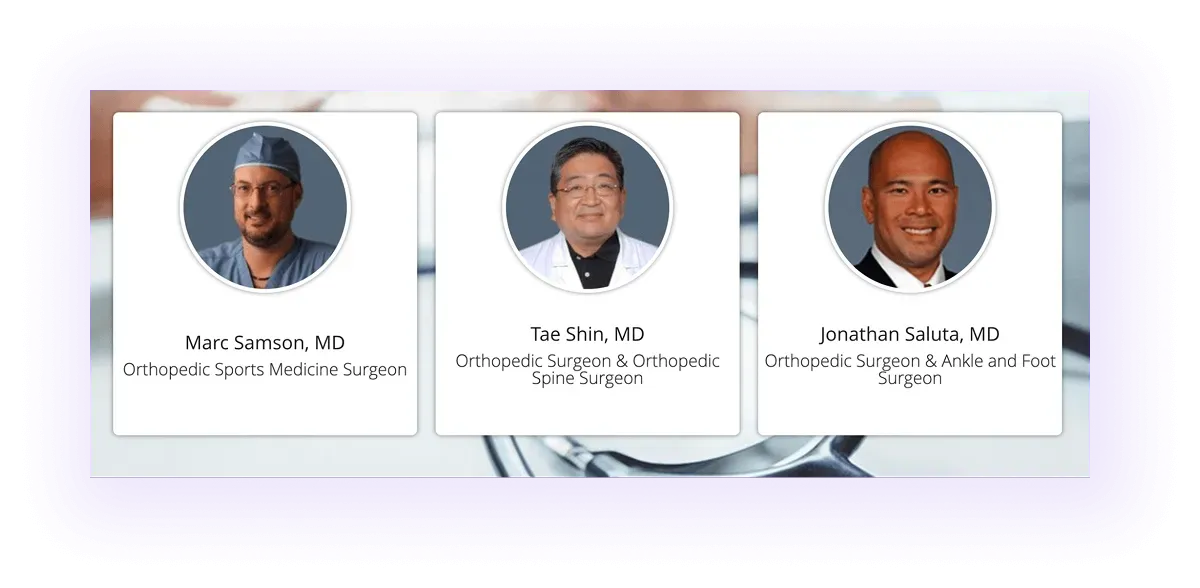
- Doctor Names and Specialties: Highlight qualifications and focus areas for full transparency.
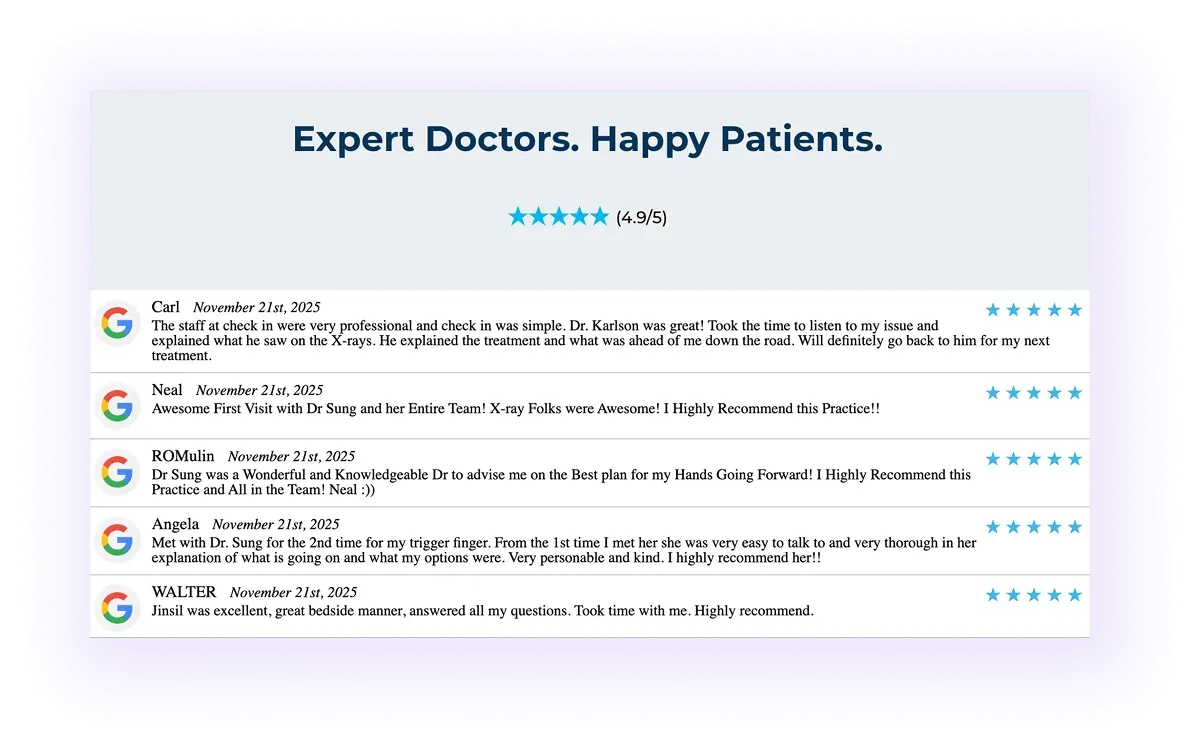
- Testimonials: Use text or video reviews to show real patient experiences.
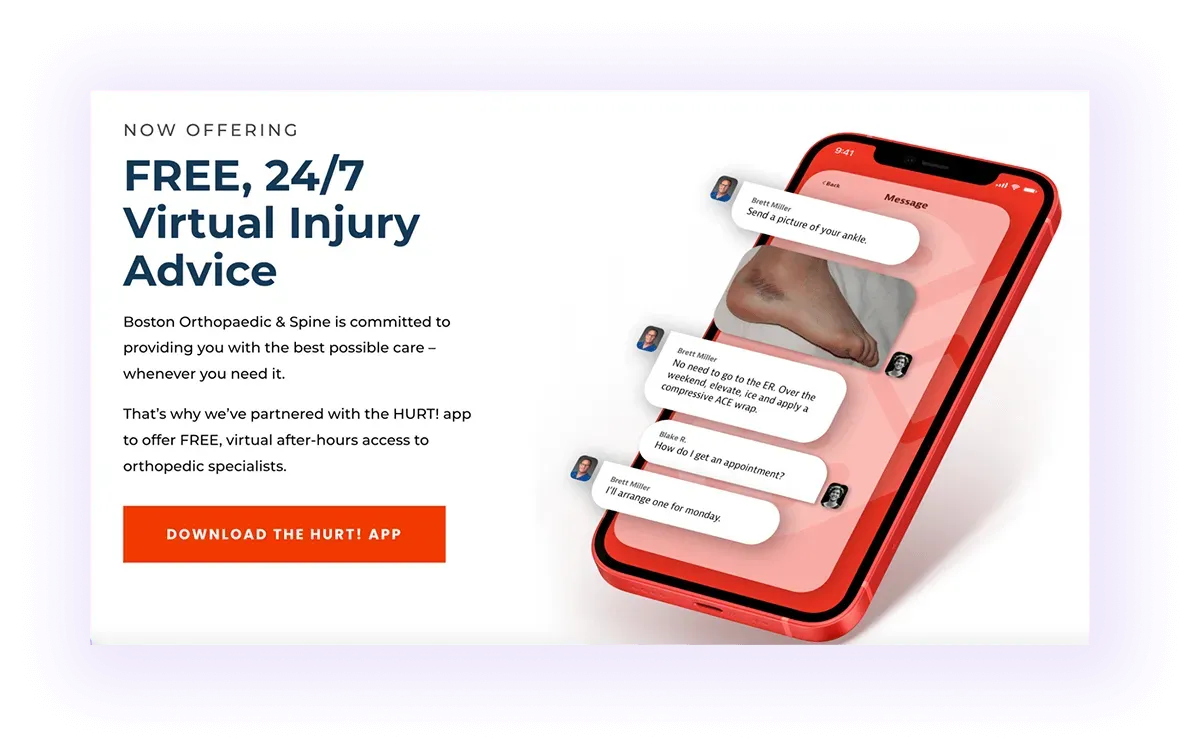
- Helpful Tools/Apps: Features like virtual injury advice or online consultations make care easier to access.
These elements help patients feel confident in choosing your clinic and are often the focus of orthopedic SEO experts when strengthening site credibility.
Blog Posts
As we said earlier, blog posts are an important part of your search-optimized content, since they boost your site’s traffic and strengthen your main service pages by supporting them with related topics.
The best way to structure this is through a simple pillar-cluster model.
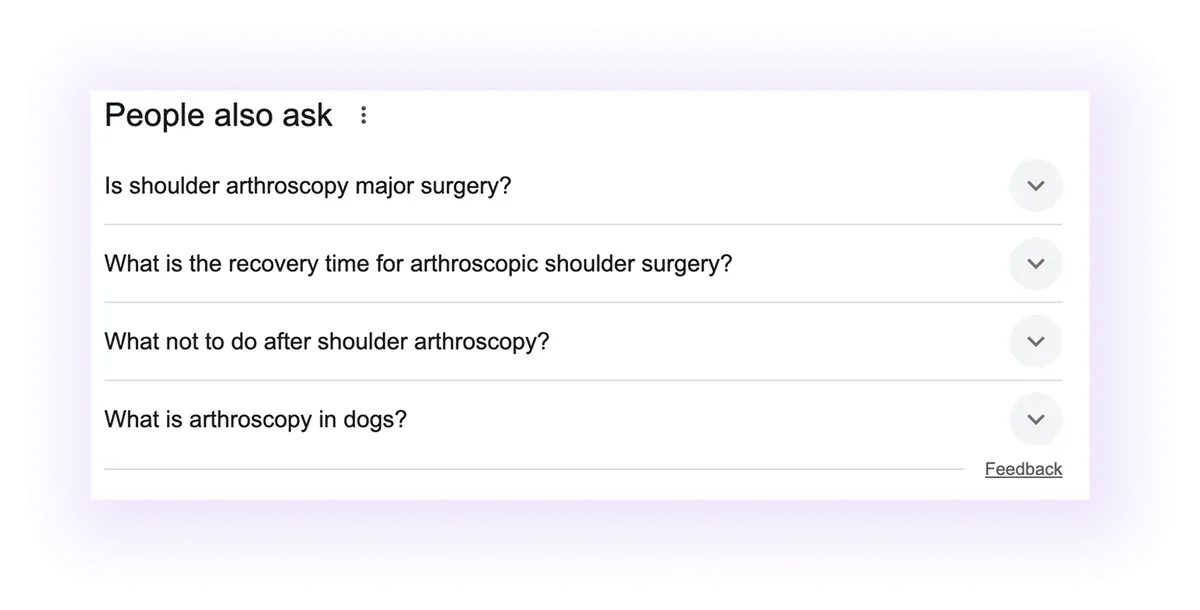
Your pillar page is the main service page for a procedure such as arthroscopic shoulder surgery. Cluster pages are supporting posts that answer related questions, like:
- Recovery tips after arthroscopic shoulder surgery
- What not to do after shoulder arthroscopy
- Physical therapy exercises for shoulder rehabilitation
Each cluster post should link back to the main service page to reinforce its authority.
Tools like Ahrefs, SEMrush, or Google’s People Also Ask can help you find strong cluster ideas. This internal linking structure is also where SEO for orthopedics becomes especially effective.
To optimize each blog post:
- Write clear, original content that helpfully explains the topic and uses your target keywords naturally in titles, headings, and meta descriptions.
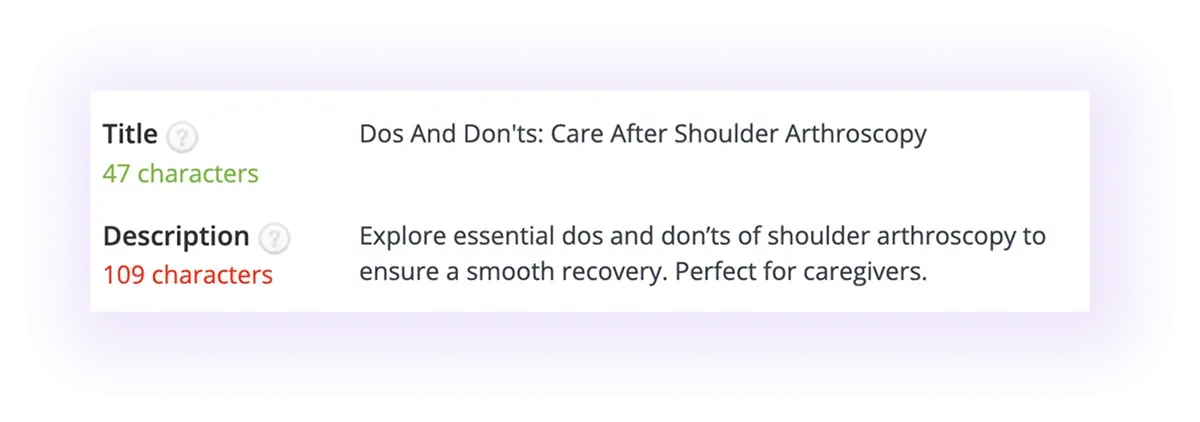
- Add insights from trusted orthopedic doctors to strengthen credibility.
- Use photos, videos, or illustrations to explain procedures or recovery steps.
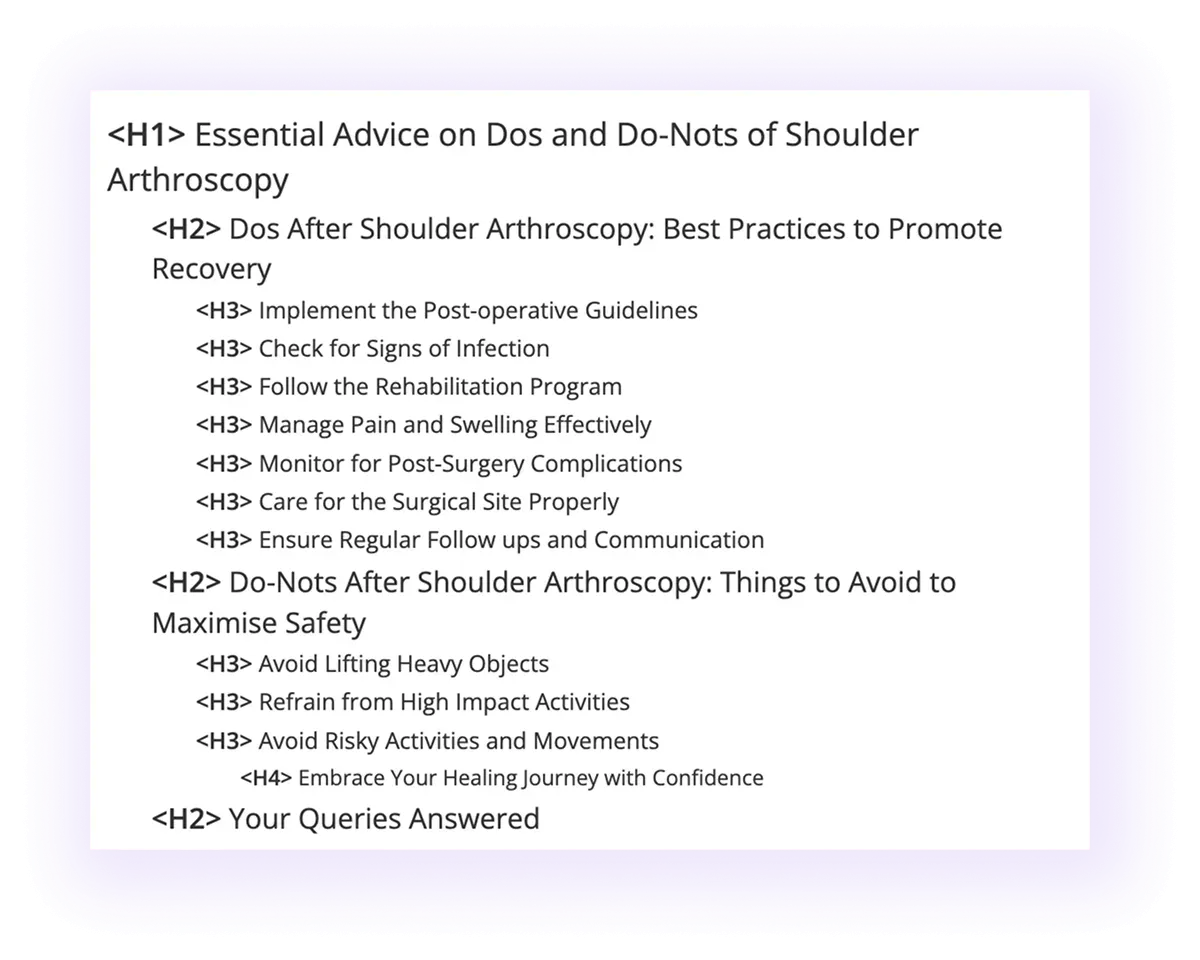
- Follow a clean heading hierarchy (H1-H4) so the content is easy to follow.
- Cite statistics or research with proper sources to meet YMYL standards (a must for healthcare SEO).
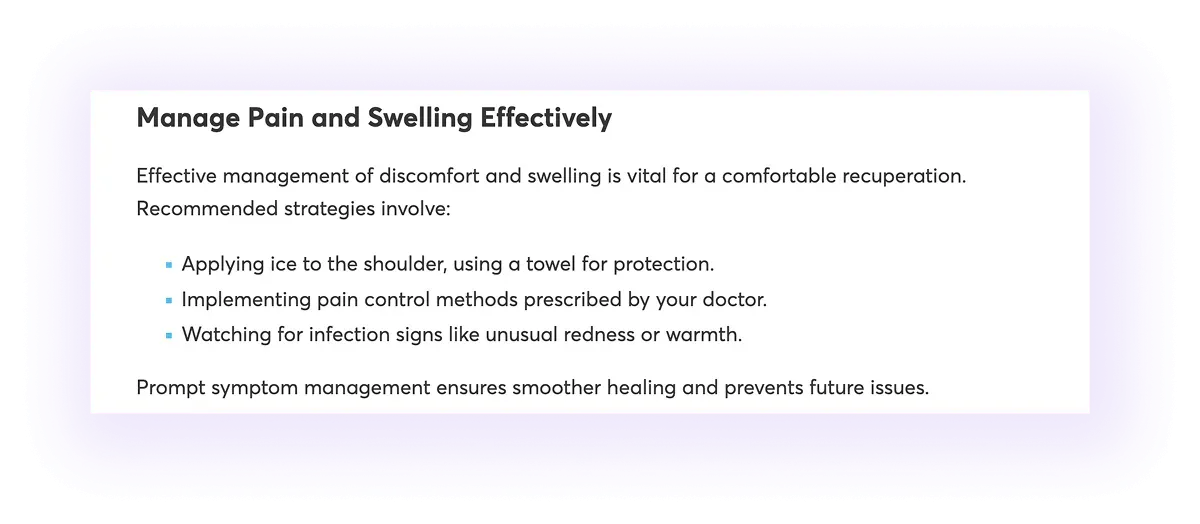
- Use lists, tables, and other formatting tools to keep everything skimmable for patients.
Implement Technical SEO for Your Orthopedic Clinic
Completing the on-site technical SEO checklist is the final piece of your on-page orthopedic search engine optimization. Let’s see how to make Google index every page without issues.
XML Sitemap and Robots.txt
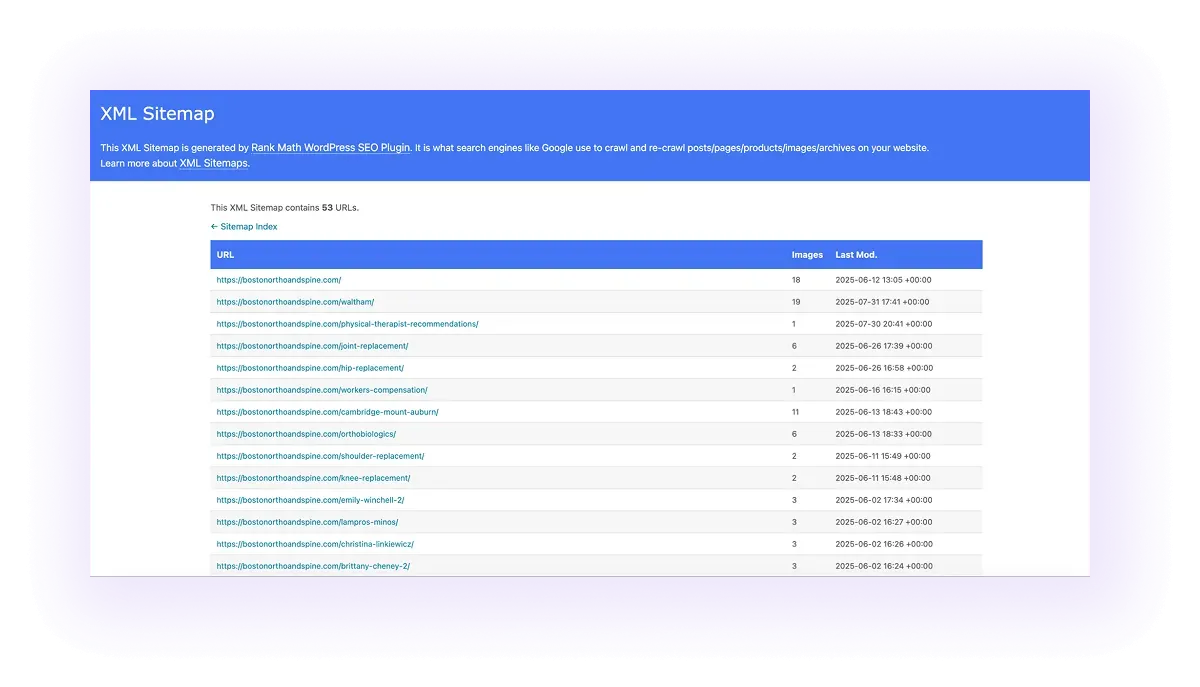
Create a clean XML sitemap that includes your homepage, treatment pages, location pages, doctor profiles, and blog posts so Google can crawl and index everything correctly.
If there are pages you don’t want indexed, such as patient portals, event pages, or admin areas, block them in your robots.txt file.

Schema Markup and Structured Data
Schema helps Google understand your orthopedic clinic and display rich results, such as FAQs and reviews. Adding it strengthens visibility and makes your search listings more helpful for patients.
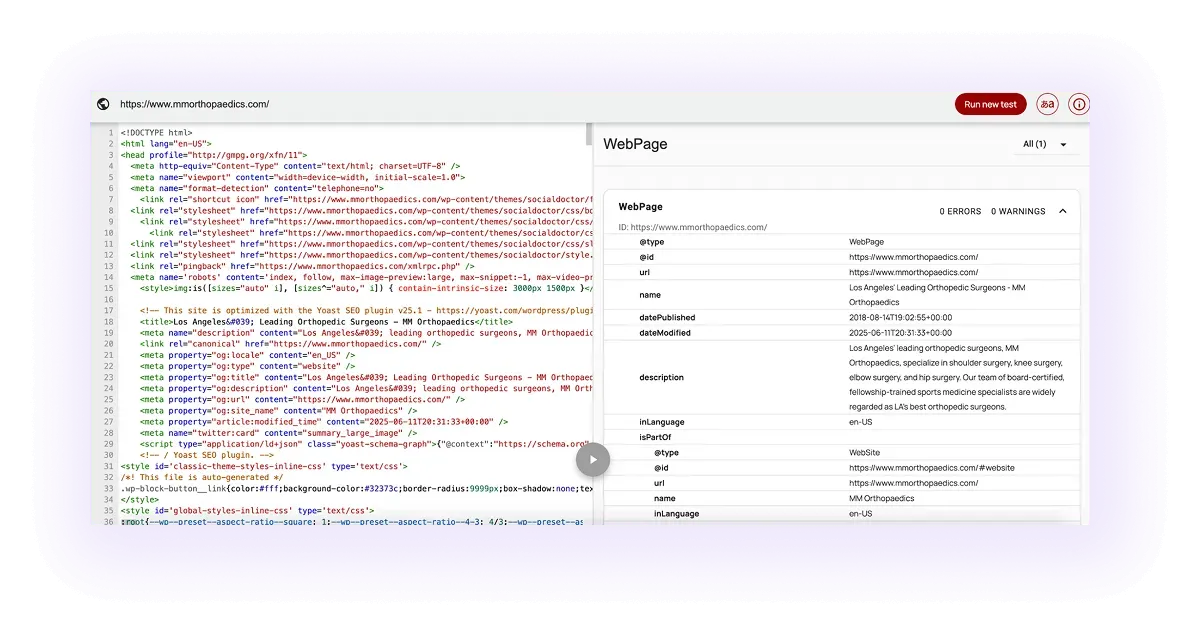
Useful schema types for orthopedic websites include:
- MedicalBusiness: Identifies your site as a medical practice.
- MedicalOrganization: Highlights your clinic, specialties, and services.
- FAQ: Displays common questions directly in search results.
- AggregateRating: Shows your clinic’s overall rating to build trust.
- LocalBusiness: Shares your location and contact details for local searches.
- BreadcrumbList: Displays your site’s structure to users and Google.
URL Structure
Your URLs should be short, clear, and easy for both patients and Google to understand. Use keywords, separate words with hyphens, and avoid random characters or numbers.
- Good URL: www.yourorthopedicclinic.com/services/arthroscopic-shoulder-surgery
- Bad URL: www.yourorthopedicclinic.com/page?id=12345&ref=abc/
Internal Link Building for Orthopedic Websites
Internal links help your higher-competition pages rank better by showing Google how your content connects and how fully you cover your treatments and patient questions.
You can use several types of internal links, each with its own purpose:
| Link Type | Purpose | Example |
|---|---|---|
| Navigation Links | Give users and Google direct access to the main pages. | Menu linking to services, doctors, locations |
| Blog-to-Blog Links | Connect related posts and build topical depth. | Knee pain post linking to ACL injury post |
| Service-to-Service Links | Show Google how treatments relate. | Rotator cuff repair page linking to shoulder arthroscopy page |
| Blog-to-Service Links | Send authority from educational posts to service pages. | “Do I need ACL surgery?” linking to ACL reconstruction page |
| Service-to-Location Links | Strengthen local relevance for treatment pages. | ACL reconstruction page linking to ACL reconstruction Los Angeles page |
Mobile Optimization for an Orthopedic Center Website
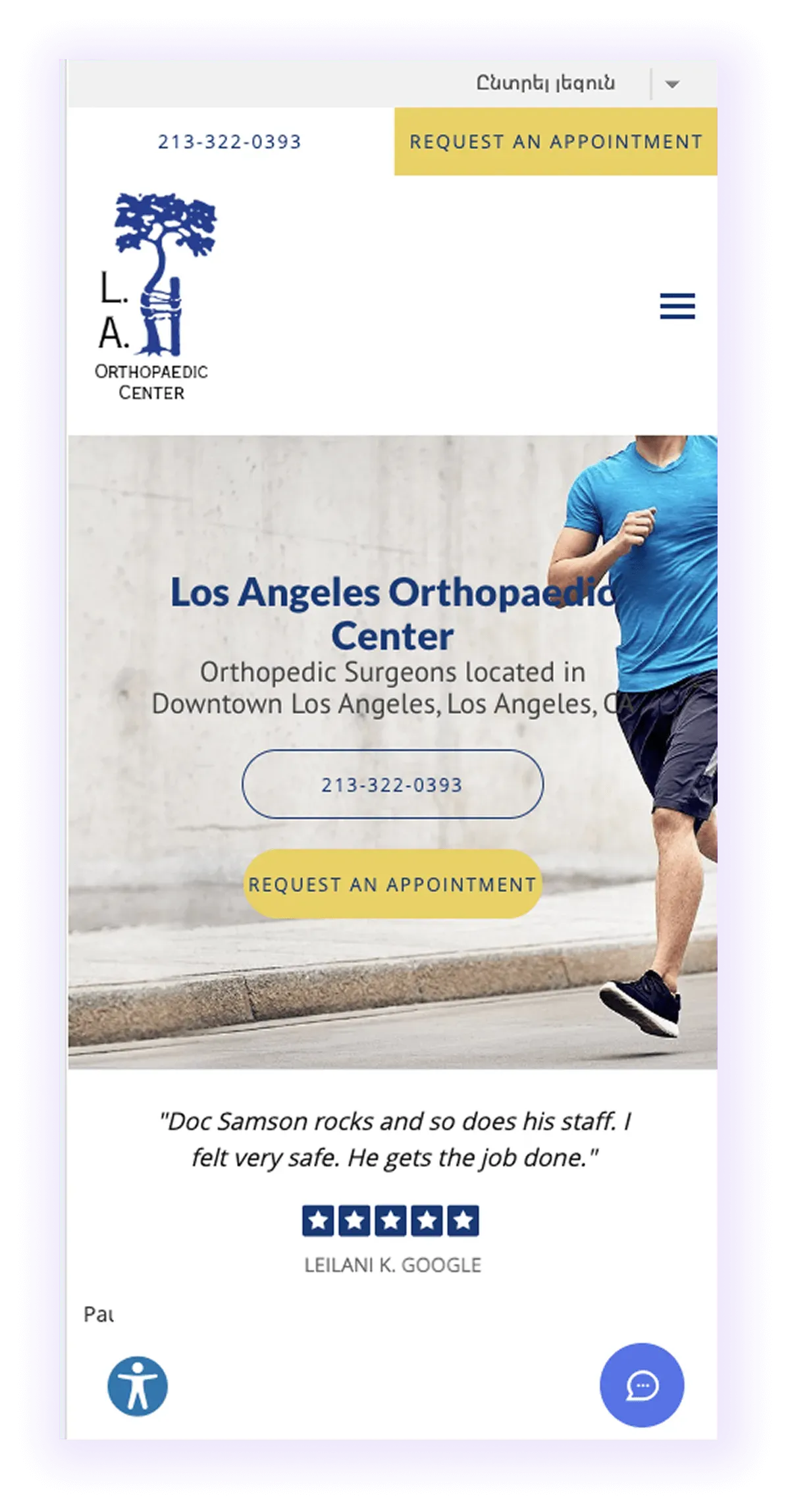
Many patients search for knee, shoulder, or spine pain directly on their phones, so your site must work flawlessly on mobile devices. Keep it responsive and easy to use with these mobile optimization steps:
- Use a design that adjusts smoothly to smaller screens
- Compress images for faster loading
- Make buttons large enough to tap comfortably
- Keep text at least 16px for easy reading
- Use a simple hamburger menu
- Add clear calls to action
- Include tap-to-call buttons so patients can reach you instantly
Website Speed & Performance (Core Web Vitals)
Website speed is a major ranking factor and plays a significant role in patient experience. Keeping your site fast also supports strong SEO for orthopedics. Focus on:
- Avoiding large image and video files.
- Enabling lazy loading for images below the fold.
- Compressing and optimizing images without hurting quality.
- Using solid hosting and a CDN for fast loading in all regions.
- Using server-side rendering for heavier pages.
- Minifying CSS, JavaScript, and HTML.
- Testing performance with PageSpeed Insights or GTmetrix.
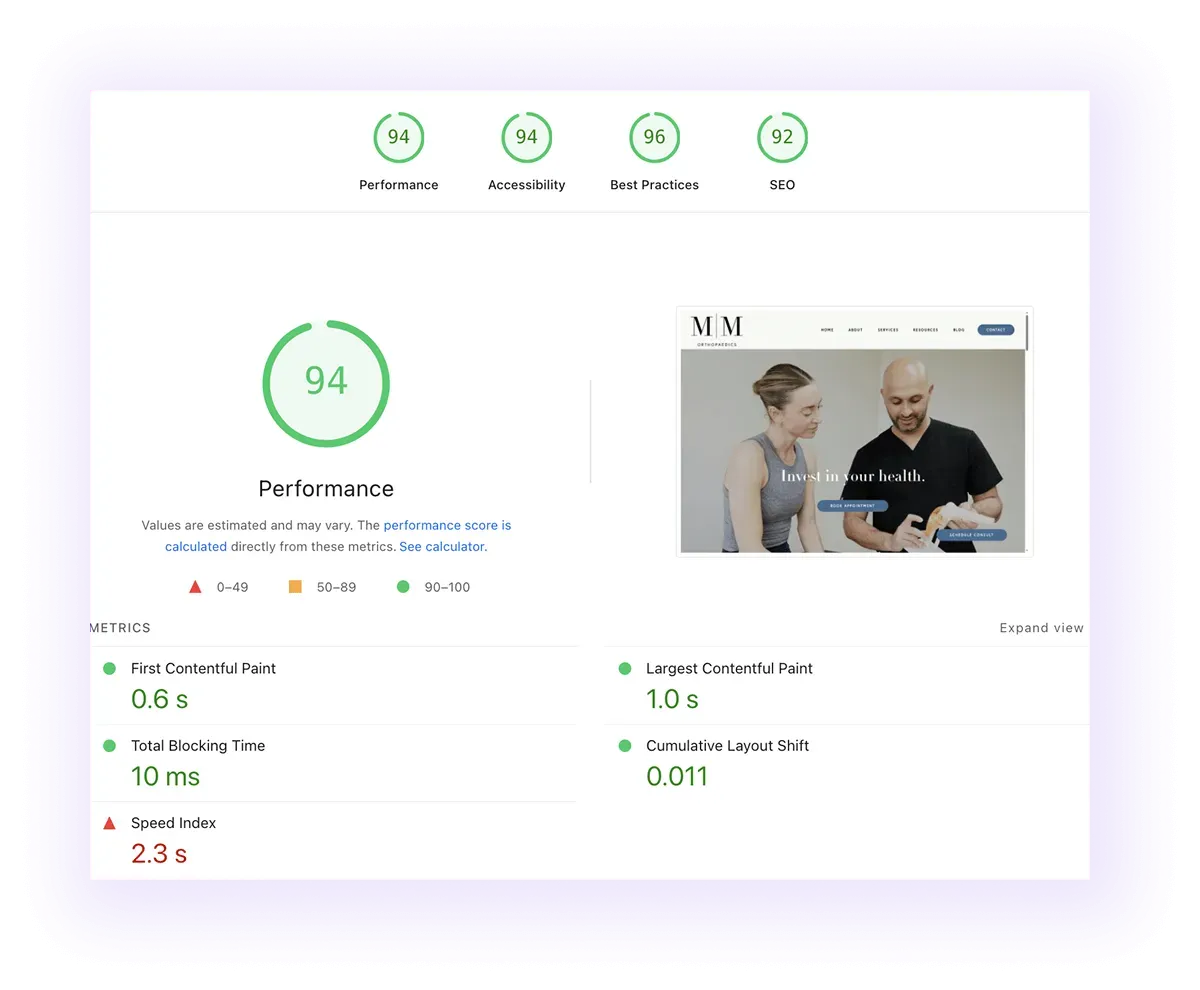
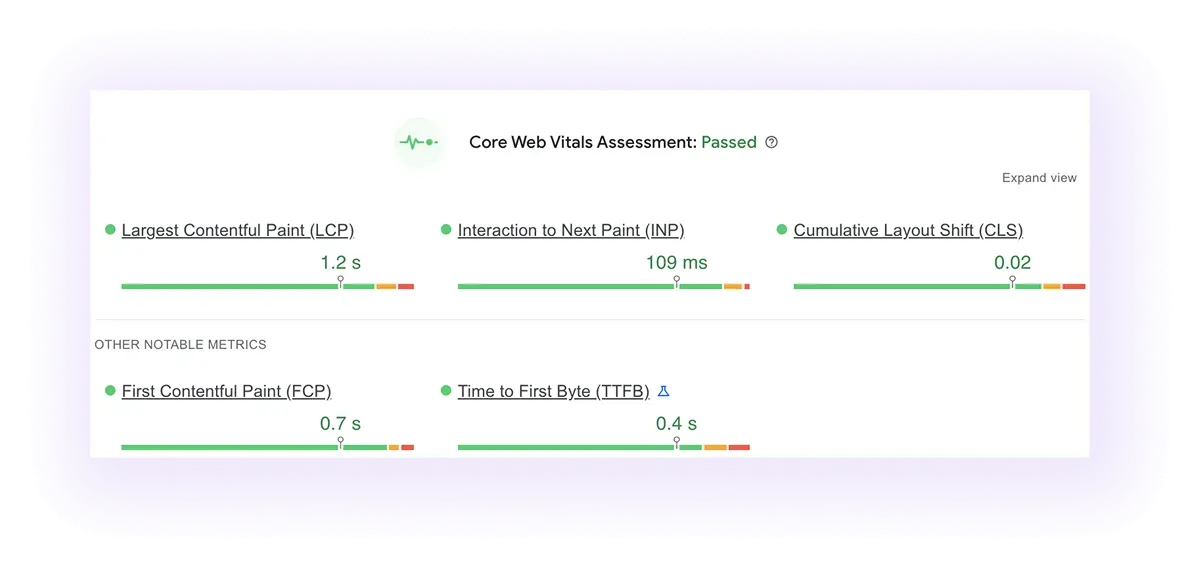
And aim for these Core Web Vitals targets:
- LCP: under 3 seconds
- FCP: under 1 second
- CLS: as close to 0 as possible
Frequent Technical Audits
Any update to your site (new services, fresh blogs, deleted pages) can create technical issues. Keep your site healthy by running regular audits and checking for:
- Redirect errors (Ahrefs, Screaming Frog)
- Broken pages (4xx/5xx)
- Broken links
- Duplicate content (Copyscape)
- Indexing issues (Google Search Console)
- Mobile usability problems (Search Console, PageSpeed Insights)
- Crawl errors (Screaming Frog)
- Core Web Vitals issues (PageSpeed Insights)
- Slow pages or oversized images (GTmetrix, PageSpeed Insights)
- Schema errors (Google’s Rich Results Test)
These audits take time and tools, which is why many clinics let our orthopedic SEO company handle full technical checks and ongoing support.
Link Building for Orthopedic Websites
Once your site is fully optimized, you’ll need authority to rank, earned through backlinks from strong, relevant websites. Let’s explore the three main link building strategies.
Guest Posting and Link Insertion
For both strategies, look for reputable sites in orthopedics, health, wellness, physical therapy, or medical education. Examples include:
| Type | Example Website |
|---|---|
| Wellness | mindbodygreen.com |
| Healthcare | healthline.com |
| Physical Therapy | choosept.com |
| Medical Websites | webmd.com |
Once you’ve found solid prospects, choose between guest posting or link insertion:
| Guest Posting | Link Insertion |
|---|---|
| You write a new, original article relevant to orthopedics. | You add expert insight to an existing article. |
| Your content includes your orthopedic link naturally. | You fill a missing perspective or clarify information. |
| Works well for keywords like “signs you need shoulder surgery” or “knee pain causes.” | Works best on pages already covering joint pain, sports injuries, or post-surgery care. |
For faster results, we can help you with our managed link building SEO services.
Directory Listings for Orthopedics
Patients don’t rely solely on Google Maps. Many compare orthopedic clinics across multiple directories to read reviews and confirm credibility. That’s why your practice needs accurate listings on trusted directories:
| Directory Type | Example |
|---|---|
| Orthopedic Directories | aaos.org |
| Health & Wellness Directories | wellness.com |
| Doctor Directories | doximity.com |
| Local Business Directories | yelp.com |
When getting local backlinks and setting up each listing, keep everything consistent:
- Use the same business name, address, and phone number as your website and Google Business Profile.
- Add your website URL.
- Write a clear description of your orthopedic clinic.
- Upload photos of your doctors, certifications, and awards.
- List all treatments you offer, such as knee replacement, shoulder arthroscopy, or sports injury care.
- Highlight what sets your clinic apart, such as its experience or minimally invasive methods.
- Respond to all reviews to show professionalism and reliability.
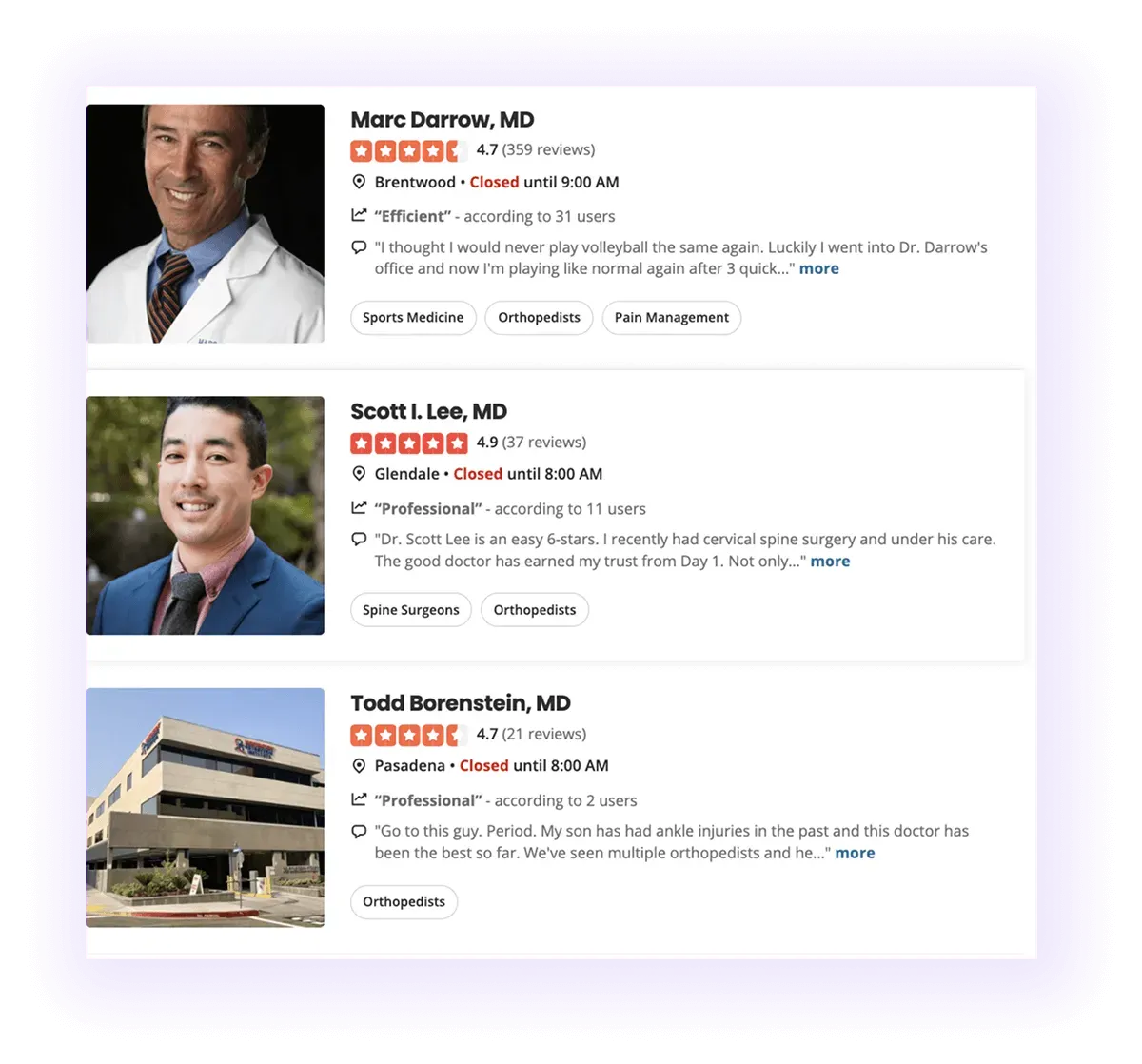
These directories often form the trust layer that orthopedic SEO experts rely on to strengthen your reputation across the web.
Digital PR for Orthopedic Websites
Digital PR is one of the strongest ways to earn high-authority backlinks. The goal is to get your clinic or doctors featured on reputable sites, major outlets like Forbes, national news sources, medical magazines, or niche orthopedic publications such as Orthopaper.
To launch an effective digital PR campaign:
- Choose a newsworthy, data-backed topic. It must be timely and clearly tied to orthopedics; for example, “The rise of hip injuries in young athletes linked to long hours of sitting during online classes; new orthopedic data reveals hidden risks.”
- Collect real data from your doctors, clinic stats, or patient surveys.
- Create a simple, clear article structure so journalists can grasp the story fast.
- Write a concise pitch that explains the angle, the data, why it matters now, and how it helps their readers.
- Send it to journalists who cover pain, health, orthopedics, sports medicine, wellness, or medical research.
Once the story is published, you earn a valuable backlink from a trusted, high-authority site.
How to Track the Success of Your Orthopedic SEO Strategy
The last step is tracking your results. This shows what’s working, what needs improvement, and how your efforts are paying off. Use these reporting and monitoring tools:
| Tool | What to Check |
|---|---|
| Google Search Console | Keyword movement, indexing, page coverage, impressions, search visibility, click-through rate |
| Google Analytics 4 | Traffic, user actions, conversions, engagement rate, top pages, acquisition, leads |
| Ahrefs / SEMrush | Backlink profile, competitor analysis, keyword ranking, site health |
| Screaming Frog | Duplicate headings, 404 errors, missing meta tags, broken links, crawl issues, orphan pages |
| PageSpeed Insights / GTmetrix | Core Web Vitals, performance issues, page load speed |
| Microsoft Clarity | Scroll depth, user behavior, session recordings, heatmaps, clicks, tags |
| Google Tag Manager | Adding triggers for calls, form submissions, clicks, conversions, and custom events |
Partner with an Orthopedic SEO Company That Knows Your Industry
If this feels like a lot to manage on your own, that’s normal. Most clinics struggle to keep up with the ongoing work.
We’ve helped 60+ orthopedic practices put these steps in place the right way. If you want the
same clarity and support, just contact us, and our orthopedic SEO experts can review your site and map out a clean, realistic plan for you.
Submit the form - Get Free Proposal
%202.png)
24 hours
FAQ


Submit the form - Get Free Proposal
24 hours
.svg)