SEO for Plastic Surgeons Industry Strategies and Keywords by Plastic Surgery SEO Agency
Get your website ranking higher with proven plastic surgery SEO methods: on-page, backlinks, and local SEO designed to bring more patients your way.
5.0

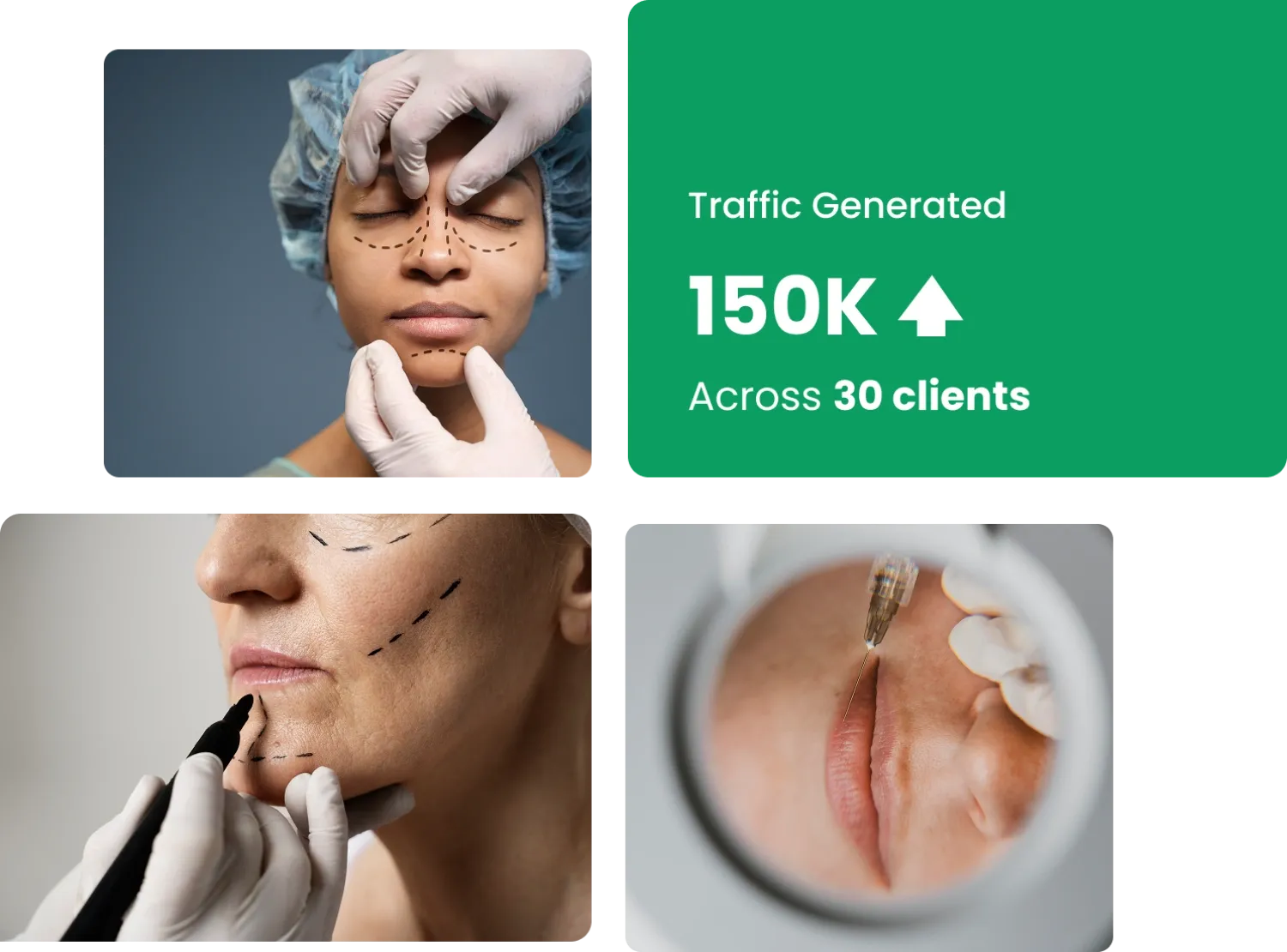


Plastic surgeons compete with local clinics and major medical tourism hubs, driving up marketing costs. PPC and social ads can cost $5,000 for procedures such as rhinoplasty, BBLs, or mommy makeovers.
Surgeons also spend hours clearing up misinformation, while state medical boards limit what can be said. Trends shift quickly, celebrity moments can trigger sudden spikes in demand, and all medical SEO content must remain accurate under YMYL rules.
A focused plastic surgery SEO plan will help you cut through this pressure. After working with 30+ plastic surgeons, we’ve built a system that boosts rankings, reduces lead costs, and attracts patients who are ready to move forward.
This guide walks you through the same approach our SEO team uses when delivering SEO for plastic surgeons.
Why Do Plastic Surgeons Need to Invest in SEO?
- Ranking for high-intent searches like “rhinoplasty near me” reduces reliance on expensive CPC ads and helps you compete with clinics in major medical-tourism markets.
- Blogs, FAQs, and procedure pages answer recovery and risk questions upfront, reducing the need for repetitive consults with unsure patients.
- YMYL- and EEAT-aligned content keeps your site trustworthy and compliant with each state’s medical advertising rules.
- Average monthly SEO costs are lower than paid campaigns that often run $75-$200 per inquiry.
- Updating pages for trending treatments, such as fox eye lift or BBL alternatives, helps you capture new search demand quickly.
- SEO makes it easier for patients to find the advanced devices you’ve invested in, rather than discovering them only during a consult.
- Ranking for variations of each procedure spreads your traffic out, making trend-driven surges easier to manage.
- Strong organic visibility reduces dependence on pay-to-play sites like RealSelf or Zocdoc, giving you control over your traffic.
You definitely need SEO services for plastic surgeons. Now, let’s see the strategy that will help you reach the best results.
Do Keyword Research and Competitive Analysis for Your Plastic Surgery Website
Strong SEO for plastic surgeons starts with knowing how patients search. Begin by listing every procedure you offer. Common examples include:
- Rhinoplasty
- Breast augmentation
- Liposuction
- Facelift
- Blepharoplasty
Use tools like Ahrefs, SEMrush, or Google Keyword Planner to uncover the questions and search patterns tied to each procedure.
Prioritize high-intent keywords with stronger long-term organic reach that attract qualified patients, while still keeping broader terms like “plastic surgeon” and “plastic surgery” to support your overall visibility.
For example, blepharoplasty patients often search for the keywords listed below.
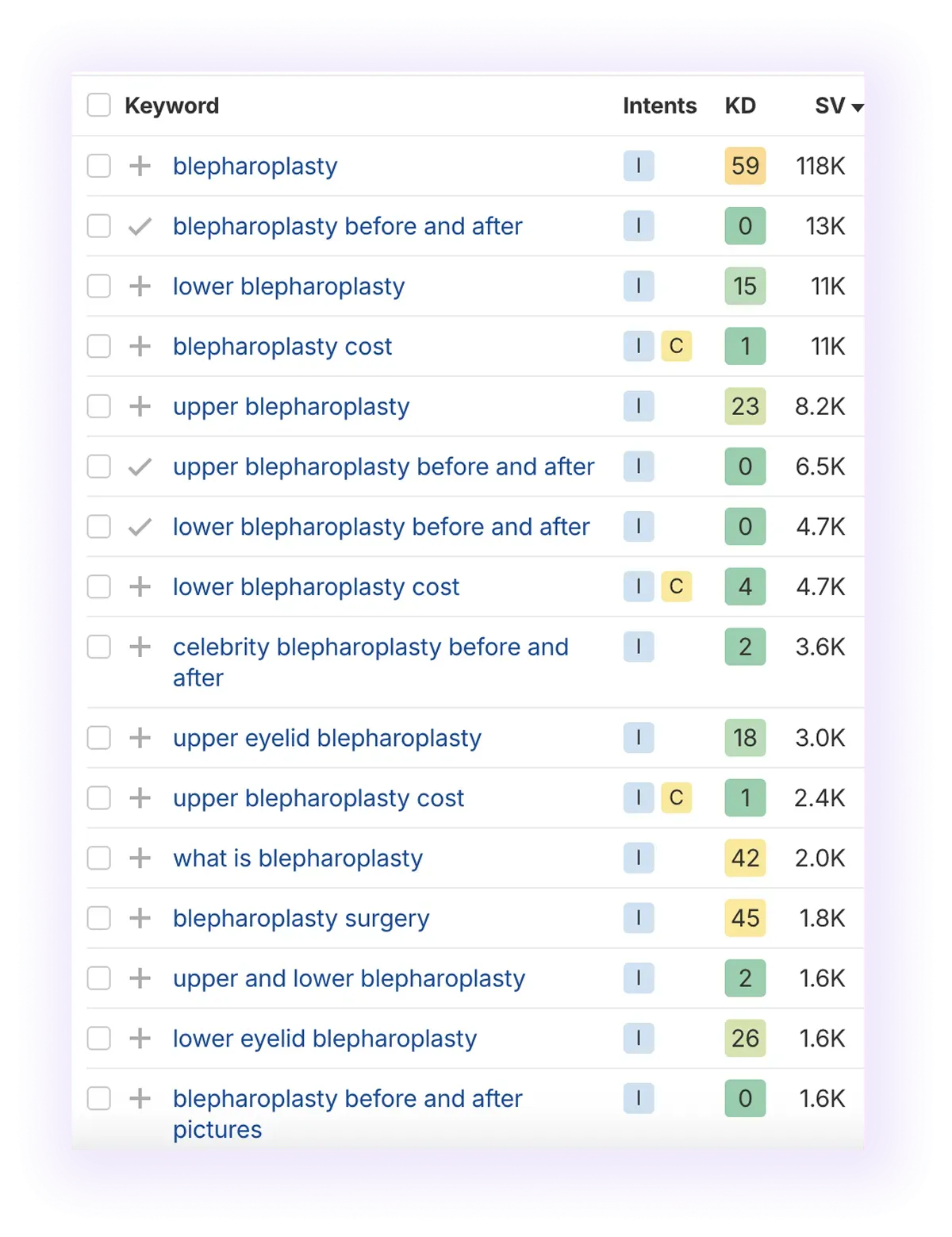
Your next step in the keyword research process is to check the location filters in Ahrefs to identify which states or cities show the most demand for each procedure. This makes it easier to target areas with strong interest, boosting plastic surgeon SEO.
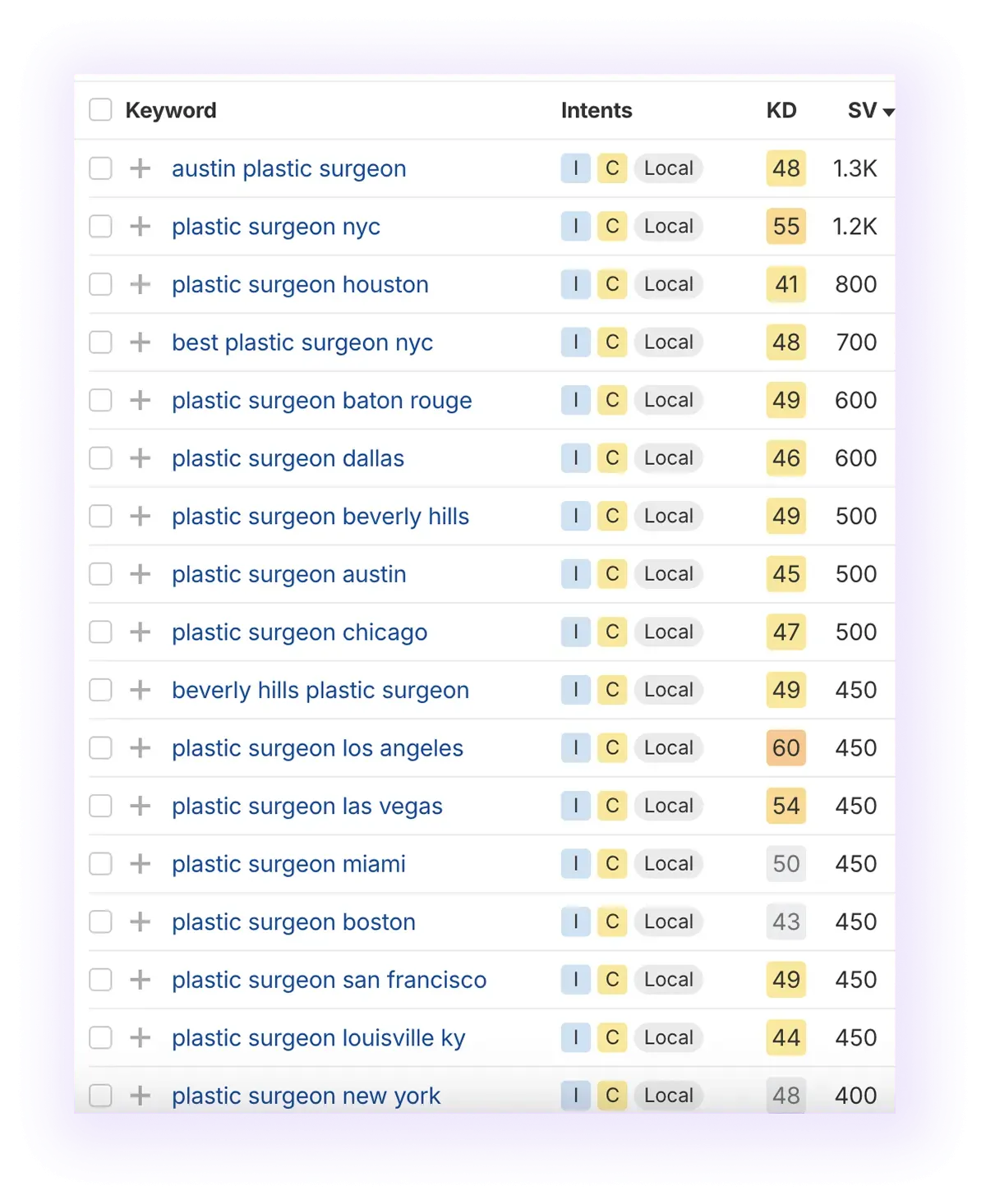
Top 30 Real Keywords for Plastic Surgeon SEO
Transactional
- scar revision surgery
- face lift surgery
- rhinoplasty
- ultrasonic rhinoplasty
- closed rhinoplasty
- rhinoplasty surgeon
- best facelift surgeon
- neck lift surgery
- arm lift surgery
- laser blepharoplasty
- blepharoplasty surgery
- liposuction surgery
- liposuction for men
- breast lift surgery
- breast reduction and lift
Educational and Informational
- how to improve scar
- scarring after revision surgery
- what is scar revision
- facelift recovery timeline explained
- what does facelift involve
- how long facelift lasts
- what to expect rhinoplasty
- rhinoplasty recovery timeline guide
- how to choose rhinoplasty surgeon
- what is ultrasonic rhinoplasty
- ultrasonic rhinoplasty versus traditional
- what is closed rhinoplasty surgery
- how to find best facelift surgeon
- neck lift surgery recovery timeline
- breast lift vs implants differences
With these keywords in hand, you’re already closer to strong SEO for plastic surgeons. But to match them to your city, your practice, and your procedures, you’ll need more than a list. Reach out now, and we’ll build a full plastic surgery SEO plan tailored to you.
Outline Your Plastic Surgery Website Hierarchy and Menu Structure
After gathering your plastic surgery keywords (“rhinoplasty,” “tummy tuck,” “eyelid surgery,” and more), you need to decide where each one belongs.
A clear structure supports SEO for plastic surgeons by helping Google identify which pages cover the main topics and which expand on them.
Every plastic surgery site should have three core static pages:
- Homepage: Targets terms like “plastic surgeon,” “plastic surgery,” and “plastic surgery in houston.” This page should feature your main procedures, introduce your surgeons, and guide visitors to your service pages.
- About Us Page: Builds trust through certifications, awards, surgeon photos, detailed bios, accepted insurance, and other proof that patients look for before booking.
- Contact Us Page: Must be simple to use. Add a short form, a click-to-call button, office hours, and your clinic location so visitors can reach you quickly.
Place these pages in your main navigation menu so patients can navigate the site easily and Google can crawl your site's structure without confusion.
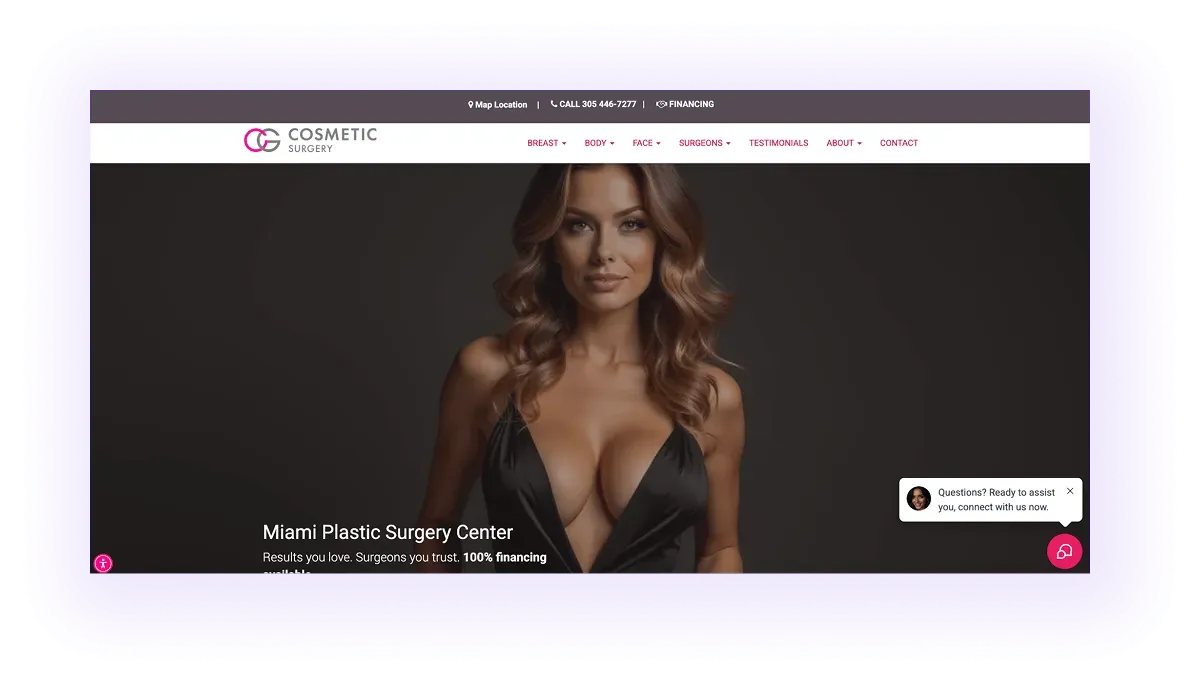
Service Pages
Each plastic surgery procedure has its own search behavior, so rhinoplasty keywords won’t match what tummy tuck or eyelid surgery patients type in.
To target each group accurately, create a dedicated page for every procedure you offer. Common pages include:
- Rhinoplasty
- Breast augmentation
- Tummy tuck (abdominoplasty)
- Liposuction
- Blepharoplasty (eyelid surgery)
Place these pages in your main menu so patients can reach them quickly. You can group them under surgical or non-surgical services.
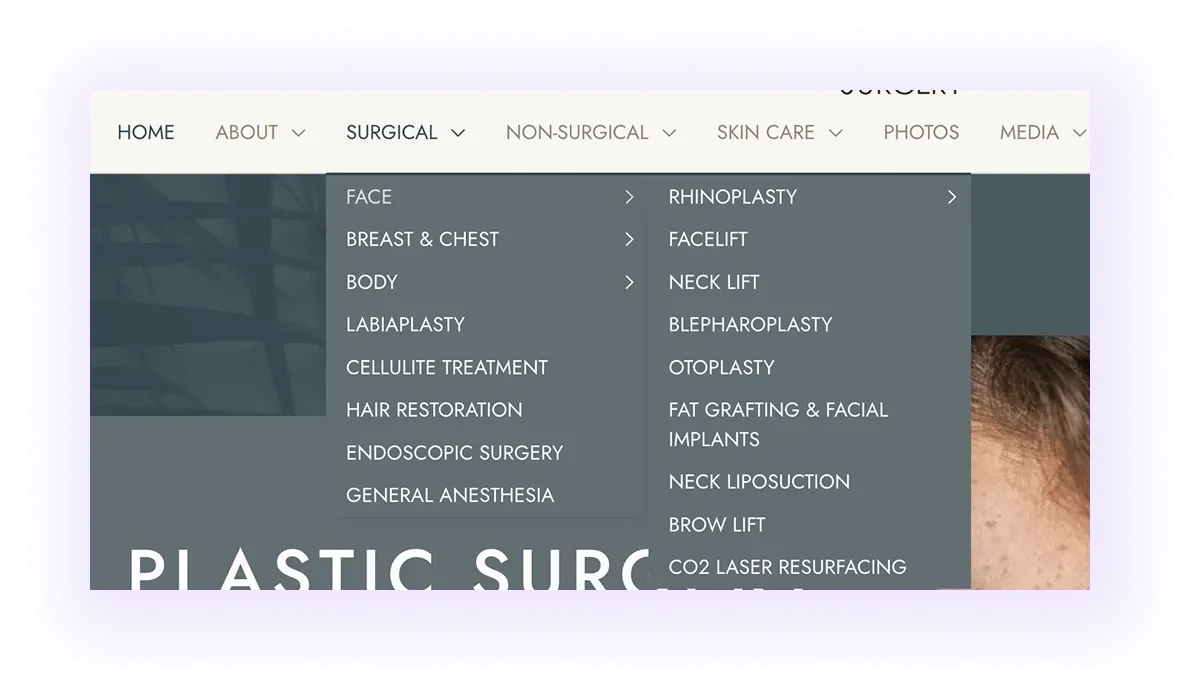
You can also sort them by procedure type: breast, face, or body.
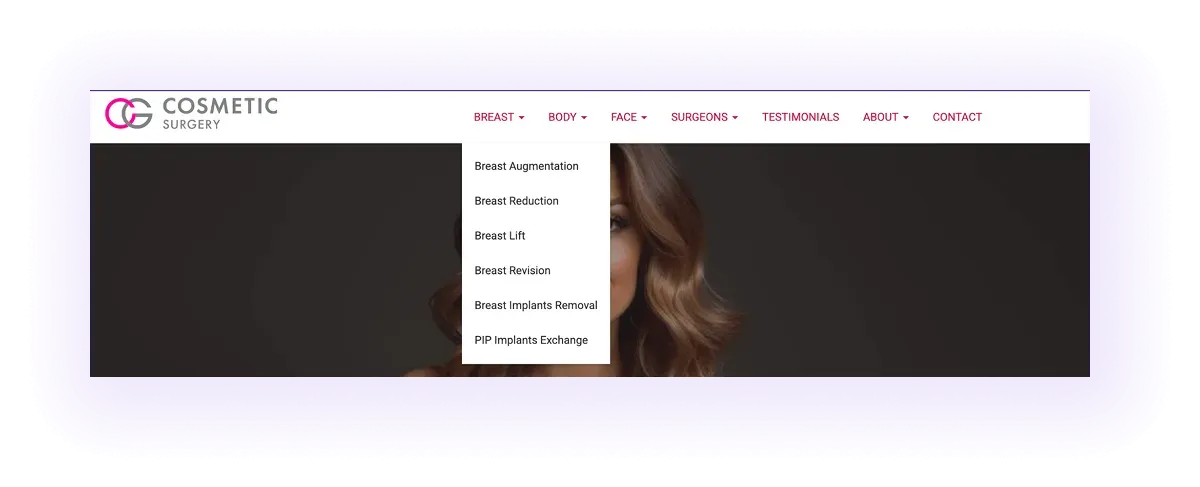
Pages for Your Doctors and Surgeons
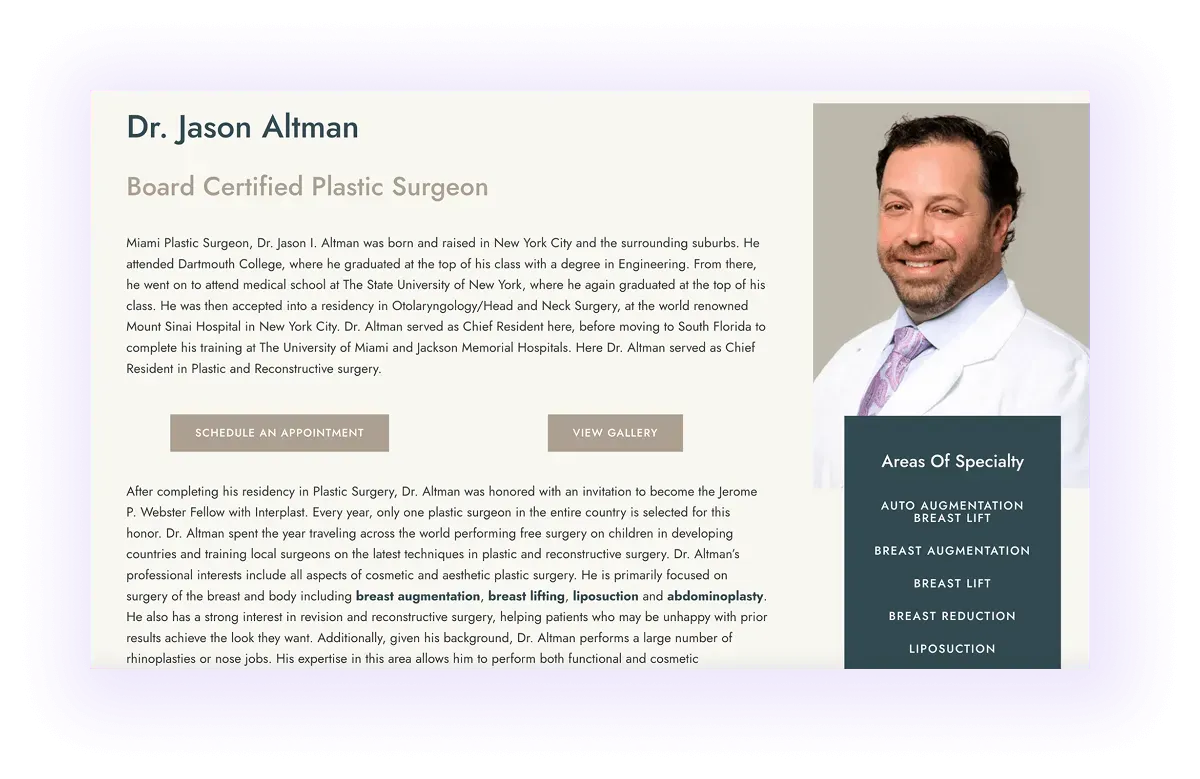
Plastic surgery sites fall under Google’s Your Money, Your Life (YMYL) standards, so your clinic needs clear signals of safety and trust. One of the most effective ways to demonstrate this is to create a separate page for each surgeon in your practice.
Each surgeon's page should include:
- Specialty areas such as rhinoplasty, breast surgery, or facial procedures.
- Gender, if it helps patients choose someone they’re comfortable with.
- Education, training, and board certifications.
- A detailed bio that explains experience and patient care style.
These pages also help plastic surgeon SEO by providing Google with high-trust content linked to real medical providers.
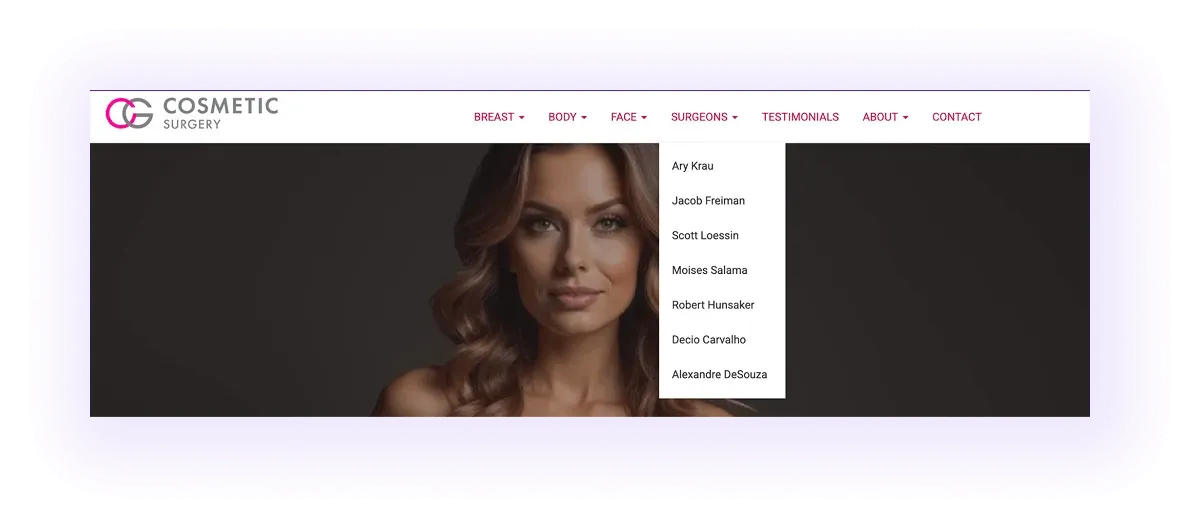
Add a “Surgeons” or “Our doctors” section to your navigation so both patients and Google can quickly find these high-trust pages.
Local Pages
When patients are ready to book a facelift or liposuction consult, they usually add a location to their search. Common examples include “facelift surgeon in houston,” “liposuction near me,” and “best plastic surgeon in dallas.”
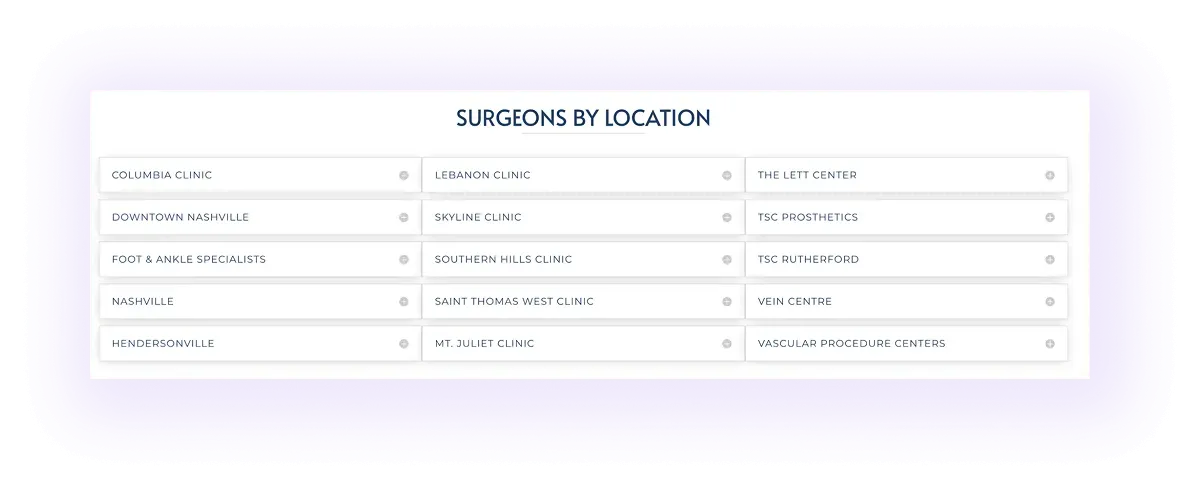
To reach these high-intent searches, you need to step into the local SEO process, starting with creating a separate location page for every city or area you serve. These pages show Google where you operate and help you rank for city-based and “near me” terms.
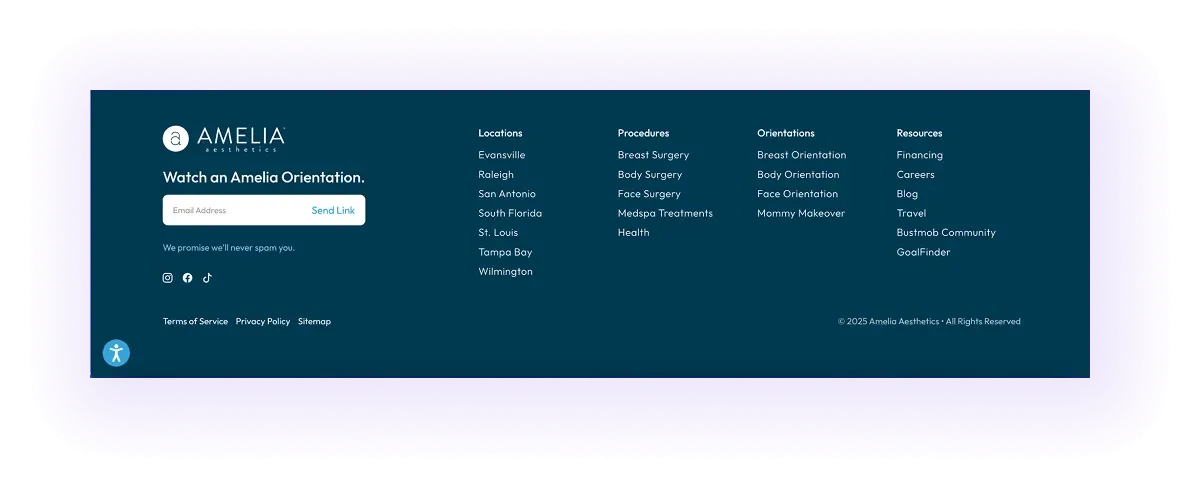
You can place location pages in your main navigation, footer, or on a location hub page that links to every service area. This setup keeps local pages easy for patients and search engines to find.
Blog Pages
Patients researching rhinoplasty, facelifts, breast augmentation, or neck lifts often start with basic questions. Common searches include:
- What to expect after rhinoplasty?
- Facelift recovery timeline
- Breast augmentation risks and benefits
- How long does facelift surgery take?
Publishing blog posts that answer these questions brings in early-stage visitors, builds trust, and shows patients you understand their concerns. These posts also strengthen your topical depth and support your main procedure pages through internal links.
A whole blog strategy will come later to help you use this content for more substantial rankings.
Stop Guessing Your Plastic Surgery Website Structure—We Will Show You Exactly What Pages You Need
We’ve mastered SEO services for plastic surgeons and supported 30+ providers just like you, helping them grow steady, high-intent traffic. If you’d like the same support, feel free to reach out, and we’ll walk you through your next steps.
How to Do Local SEO for Plastic Surgeons
Local strategy plays a big role in plastic surgery search engine optimization because patients often look for surgeons near where they live or where they plan to travel. Your approach will differ depending on whether you serve one city, several regions, or patients nationwide.
Here’s how to shape your local discoverability plan so you attract high-intent patients in every area you cover.
Local Plastic Surgeons
If your clinic serves one city, like New York, focus your content on location-based keywords that match how patients search.
Use keywords such as:
- plastic surgeons in new york
- new york plastic surgery
- new york plastic surgeons
Update each procedure page the same way with city-specific phrasing, such as:
- breast augmentation new york
- rhinoplasty new york
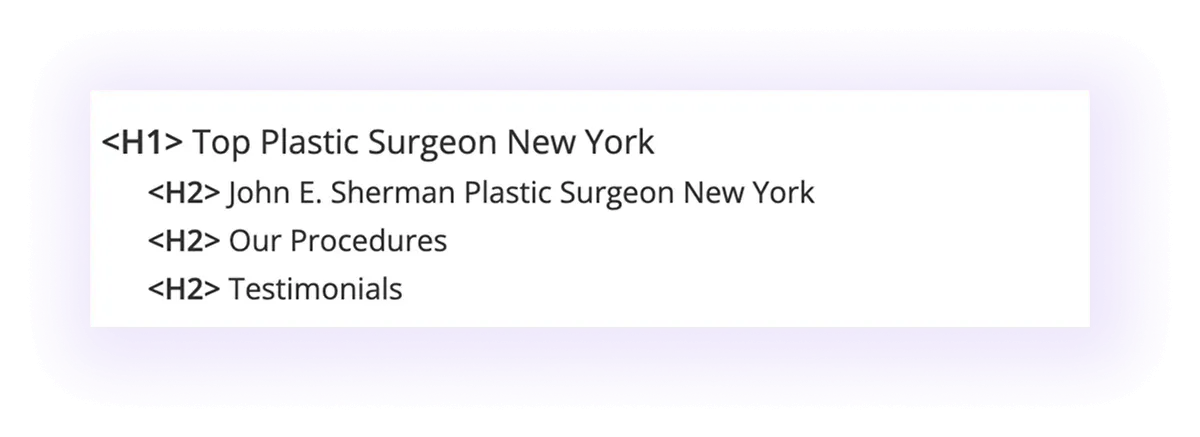
Add these terms naturally to your meta titles, meta descriptions, and headings to strengthen your local relevance and help your pages appear for nearby patients.

Multi-Area Plastic Surgery Centers
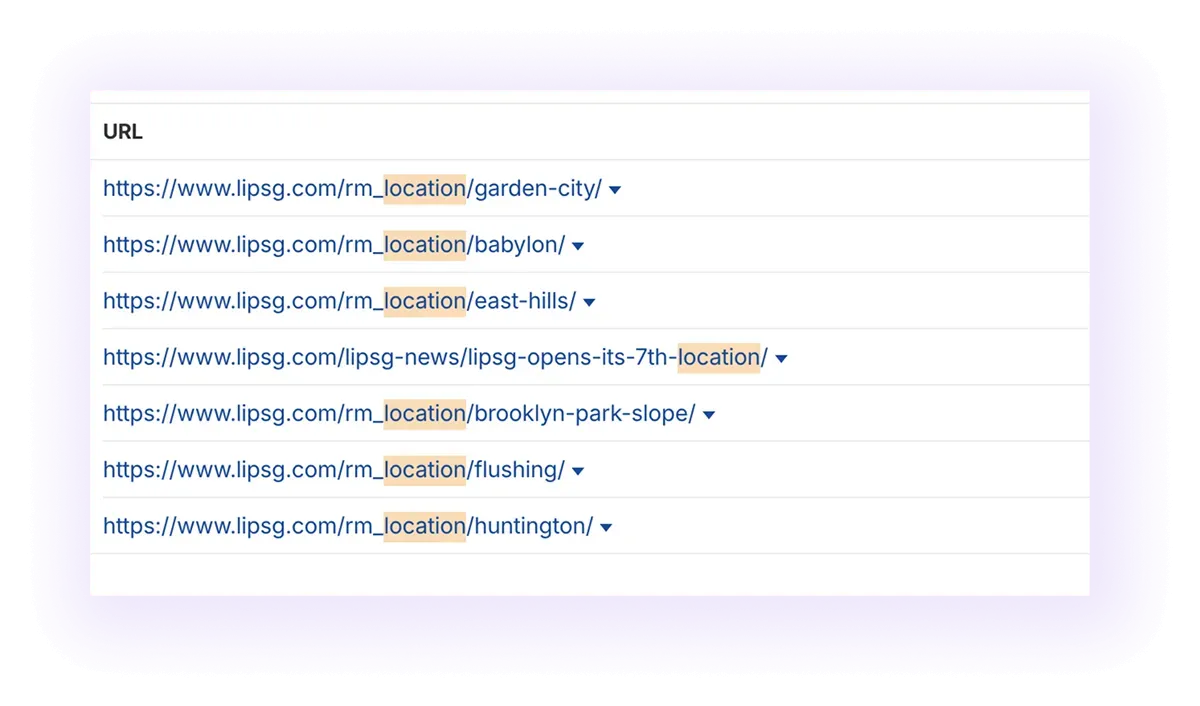
If your clinic serves more than one neighborhood, city, or state, create a separate page for each location. Each page should clearly and directly target its city.
Use keywords such as:
- plastic surgery in florida
- breast augmentation boynton beach
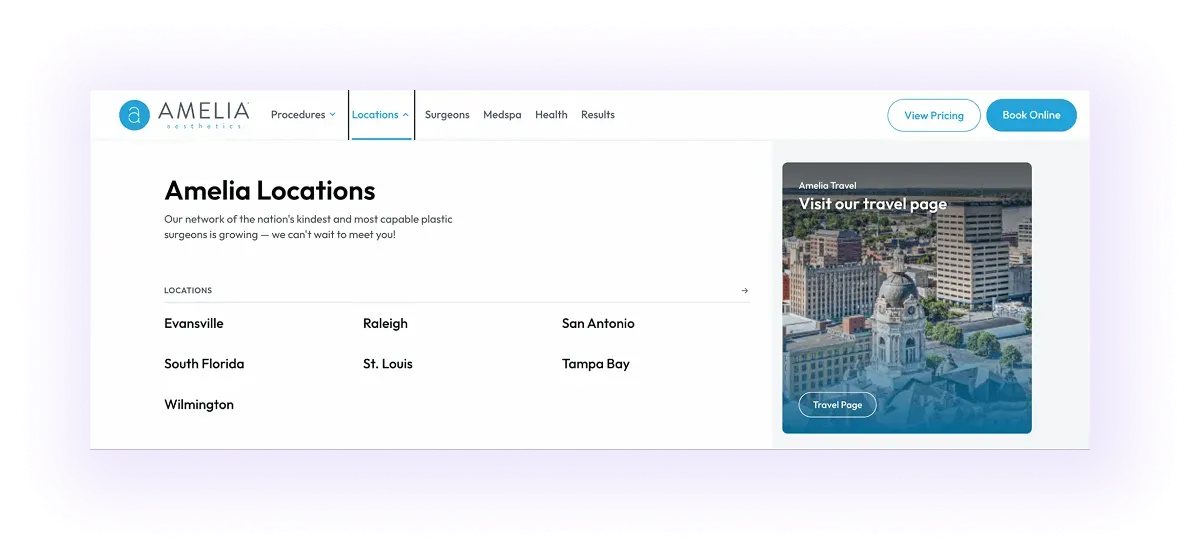
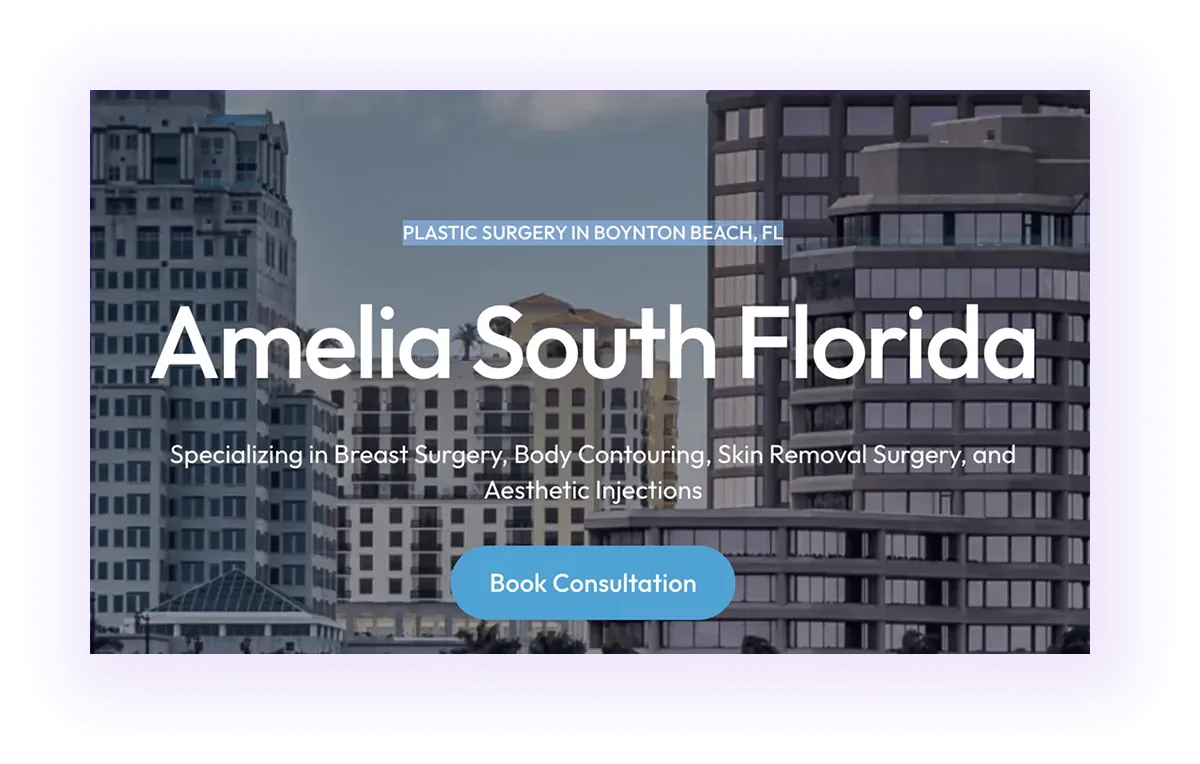
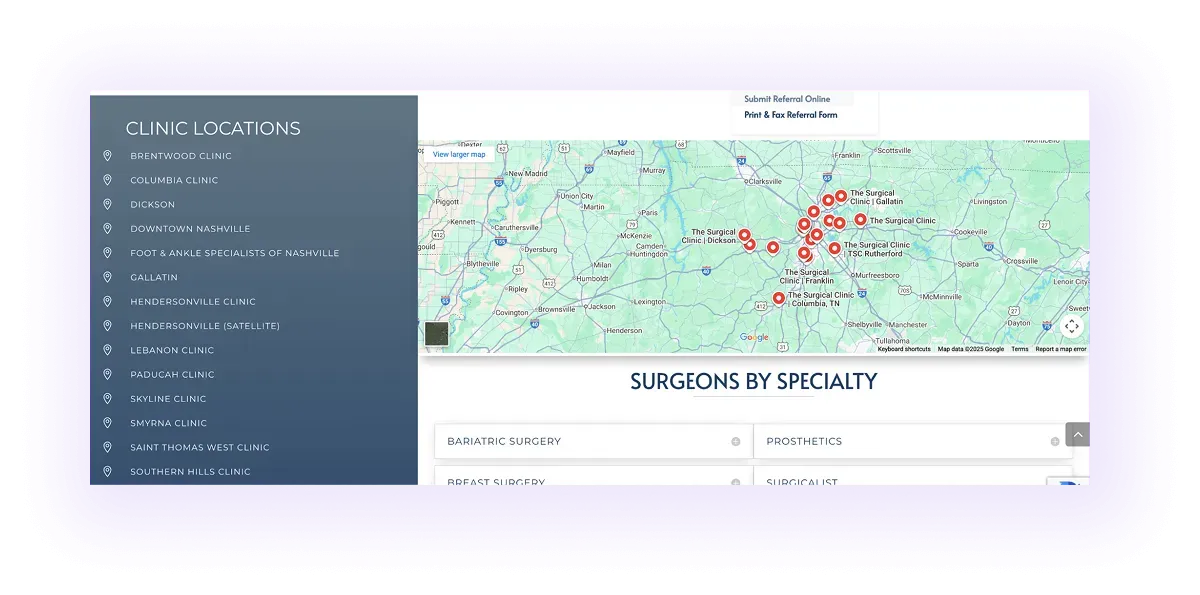
For a smoother experience, include an interactive map to help visitors find the correct location quickly.
Use a clean URL structure for the same reason.
Set up Your Google My Business Profile and Optimize it for Google Maps
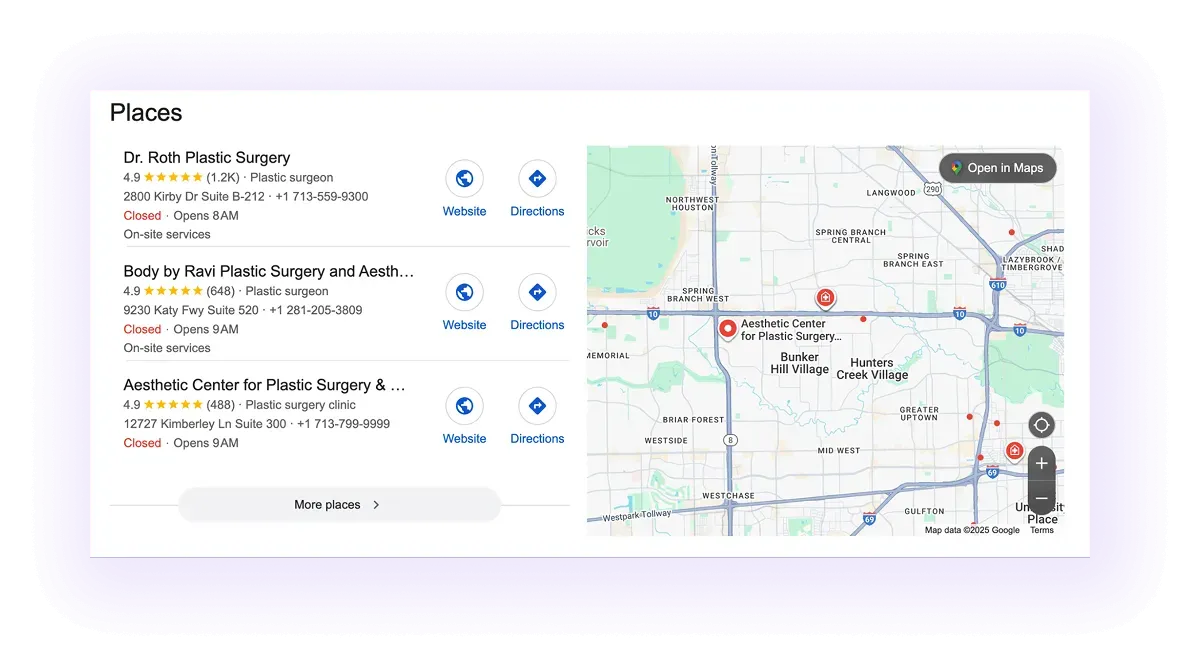
Patients ages 30-44 check online reviews 65% of the time before choosing a plastic surgeon. Most of them search phrases like “plastic surgeon near me” or “plastic surgeon in new york” and look directly at Google’s Map Pack.
A fully built Google Business Profile (GMB) listing is a core part of plastic surgery SEO because it helps you capture high-intent searches.
Key steps to optimize Google My Business profile:
- Use the same name, address, and phone number everywhere.
- Add your website link, office hours, and booking method.
- Write a clear description highlighting your surgeons and procedures.
- List your services, such as facelift and liposuction.
- Link your social media accounts.
- Reply professionally to reviews and Q&A.
- Upload high-quality photos of your clinic and treatment areas.
- Encourage satisfied patients to leave five-star reviews.
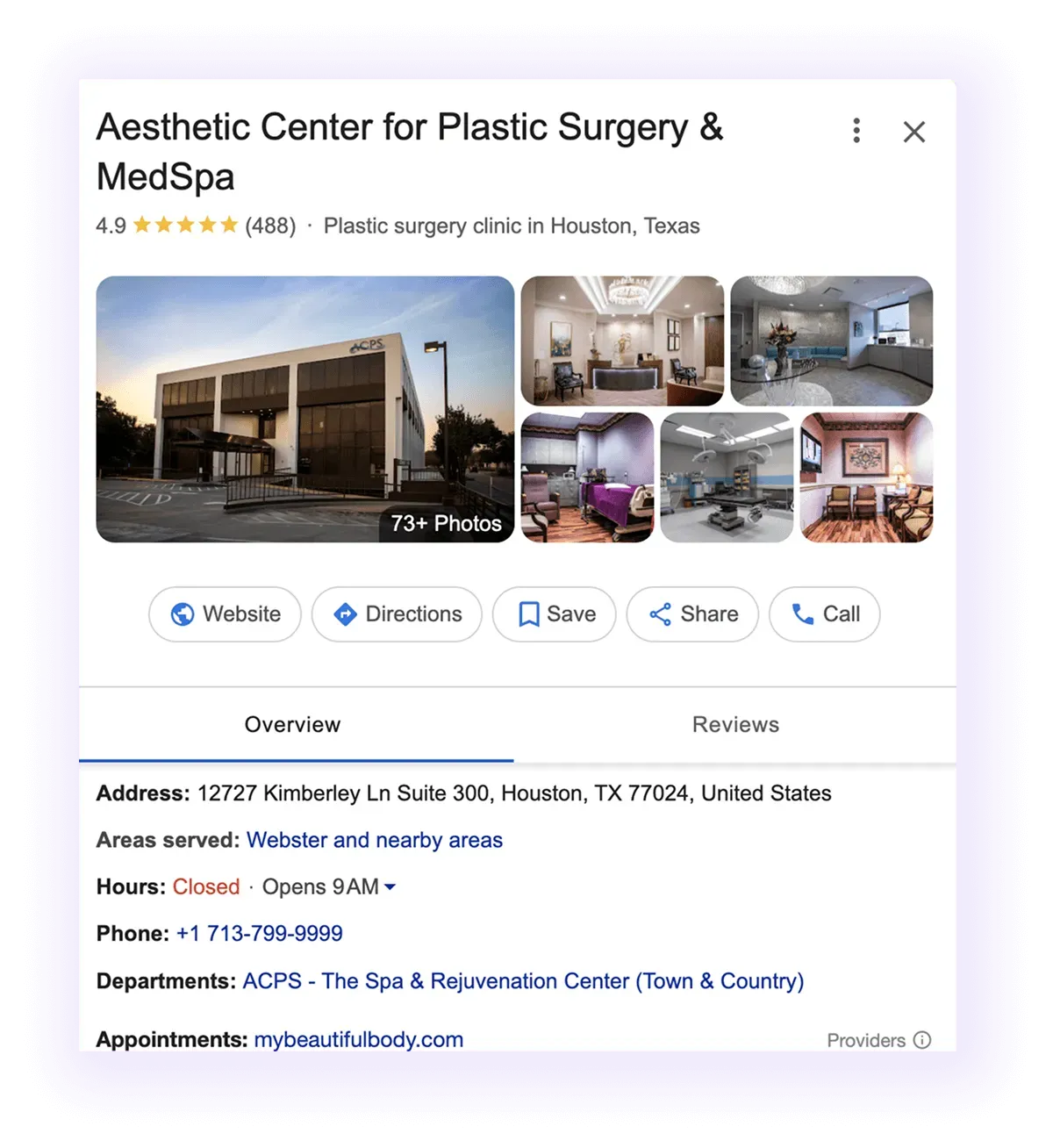
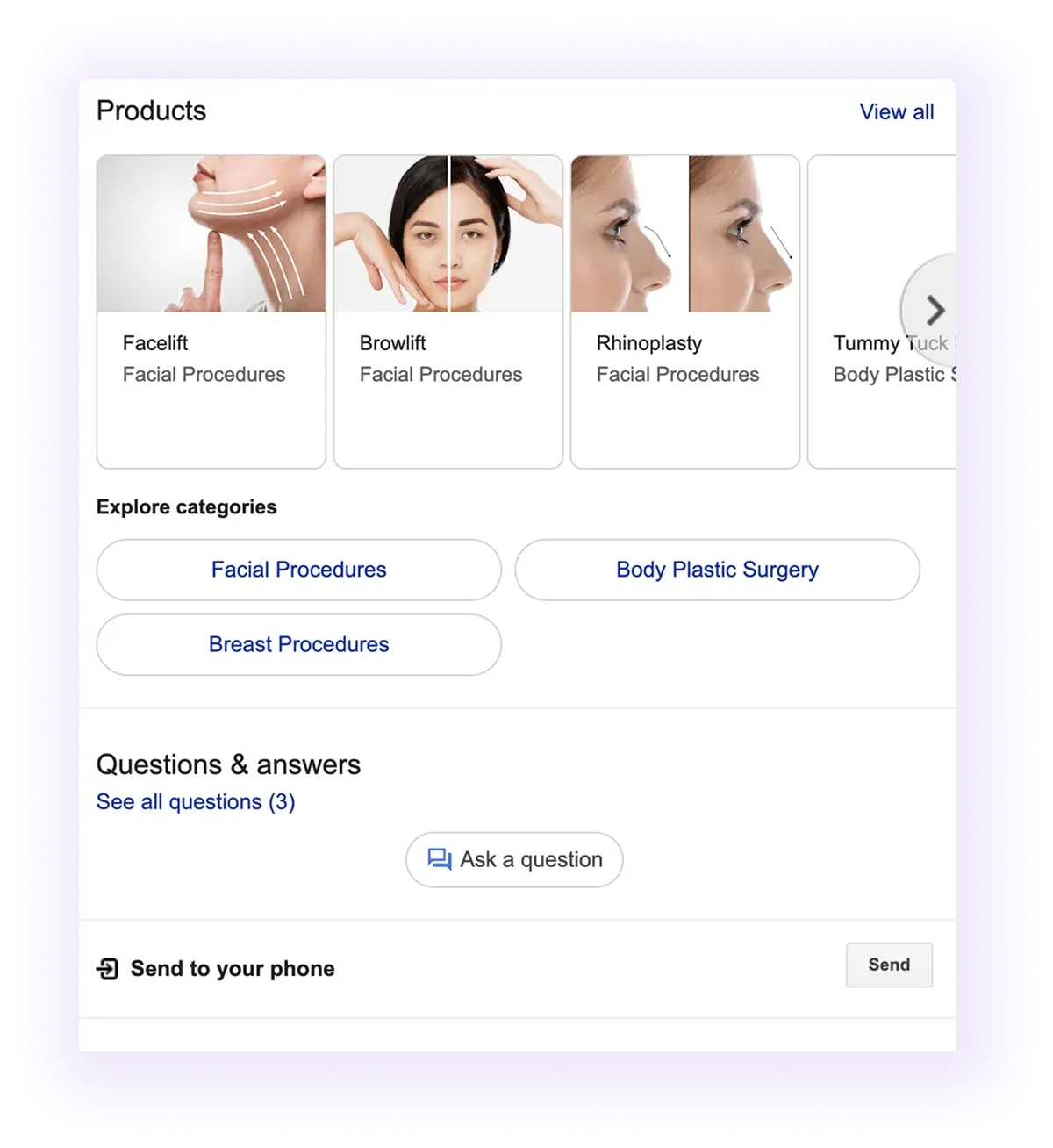
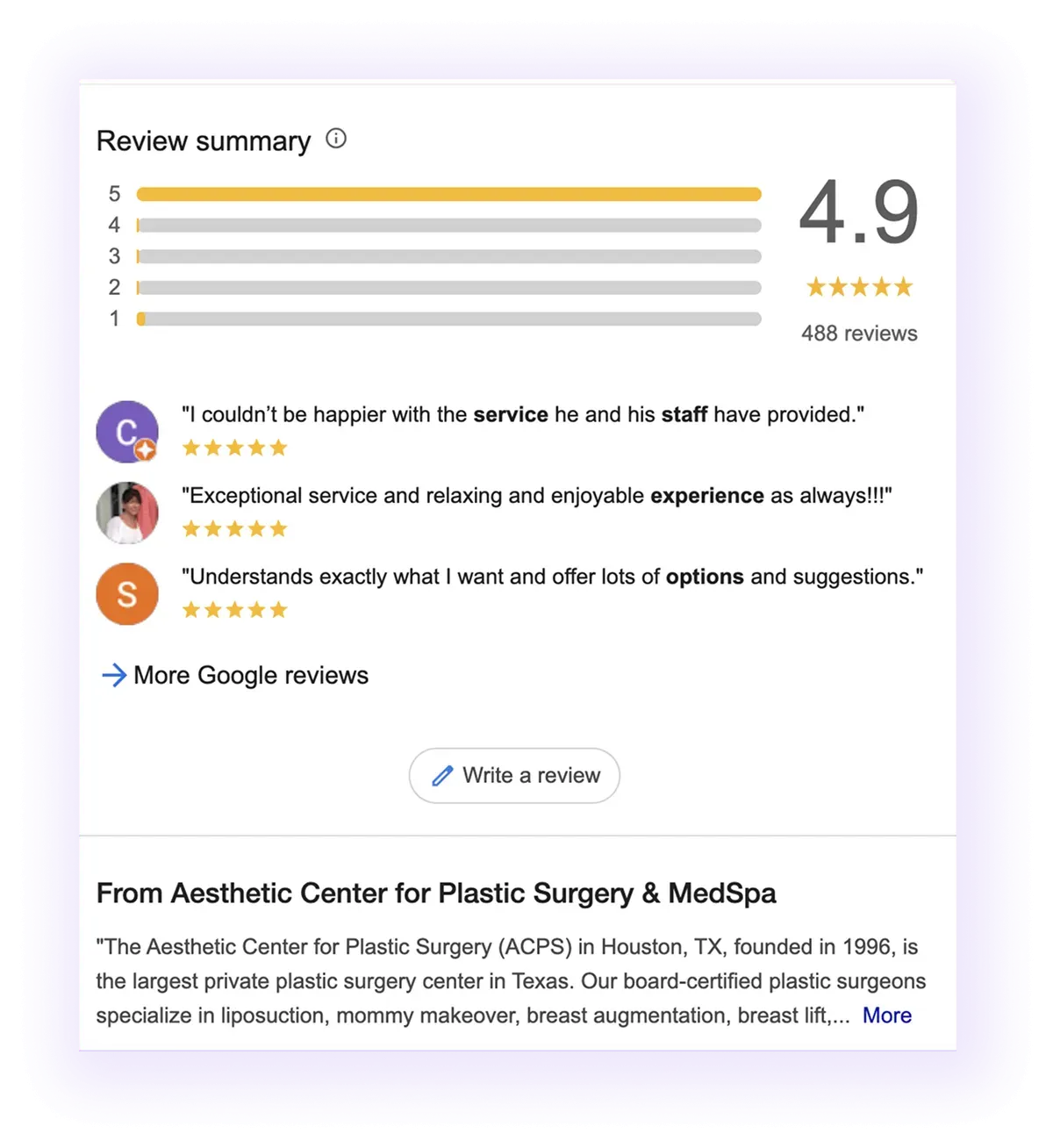
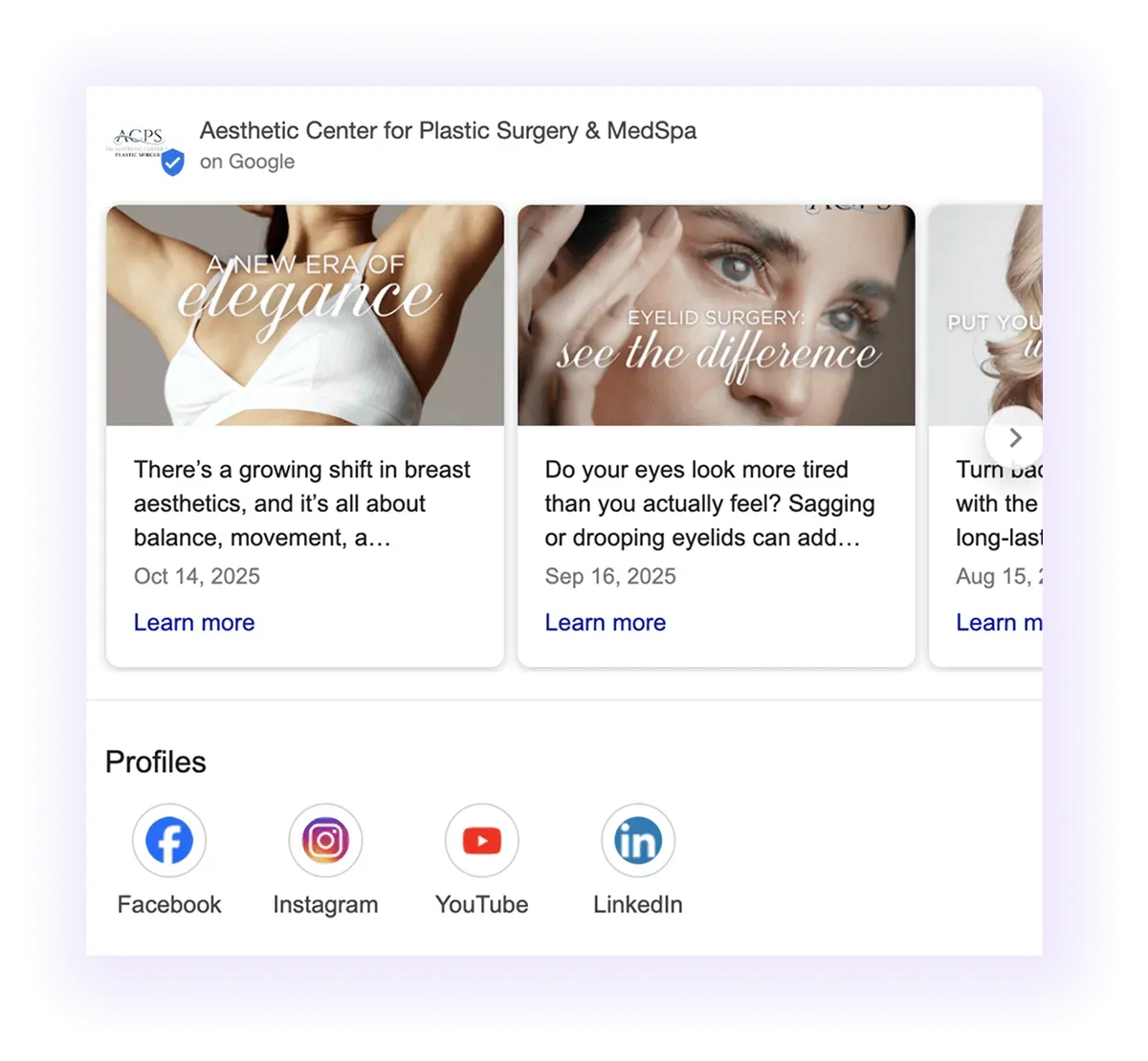
After you optimize your plastic surgery GMB profile, your listing is far more likely to appear for local searches and present your surgeons as a trusted choice in the area.
Build High Quality Content for Your Plastic Surgery Website
Google won’t rank a plastic surgery site unless it has original, accurate, medically trustworthy, and highly readable content.
Strong content also supports plastic surgery SEO by showing patients and Google that your clinic is a reliable medical source. Credibility builders to include:
- Awards: List the recognitions your clinic or surgeons have earned.

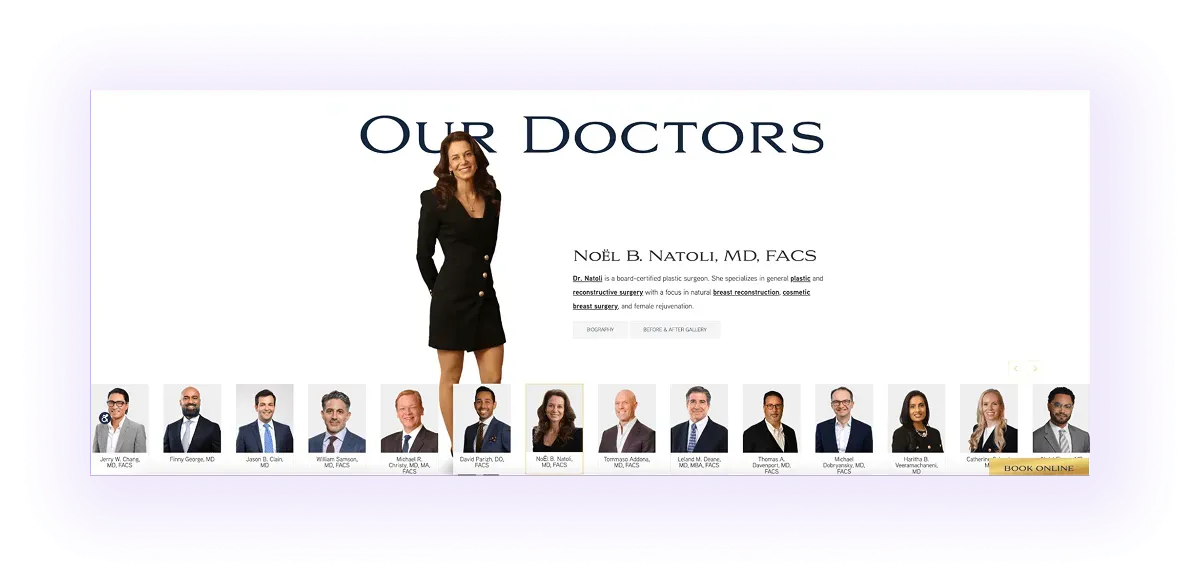
- Doctors & Surgeons: Share credentials, experience, and areas of focus.
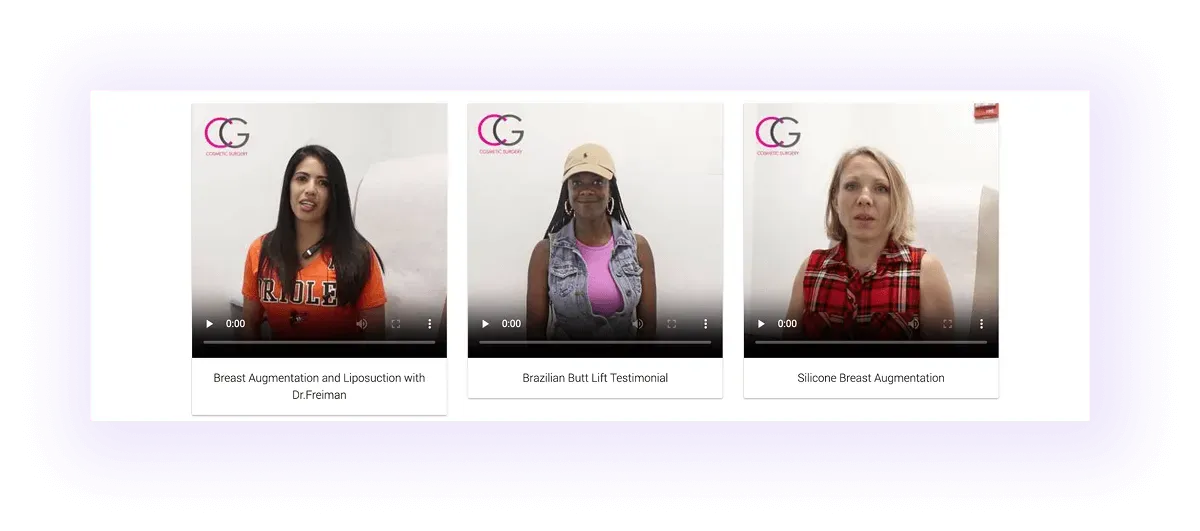
- Testimonials: Add text and video stories from real patients.

- Experience & Locations: Mention your surgeons’ years in practice and each office location.
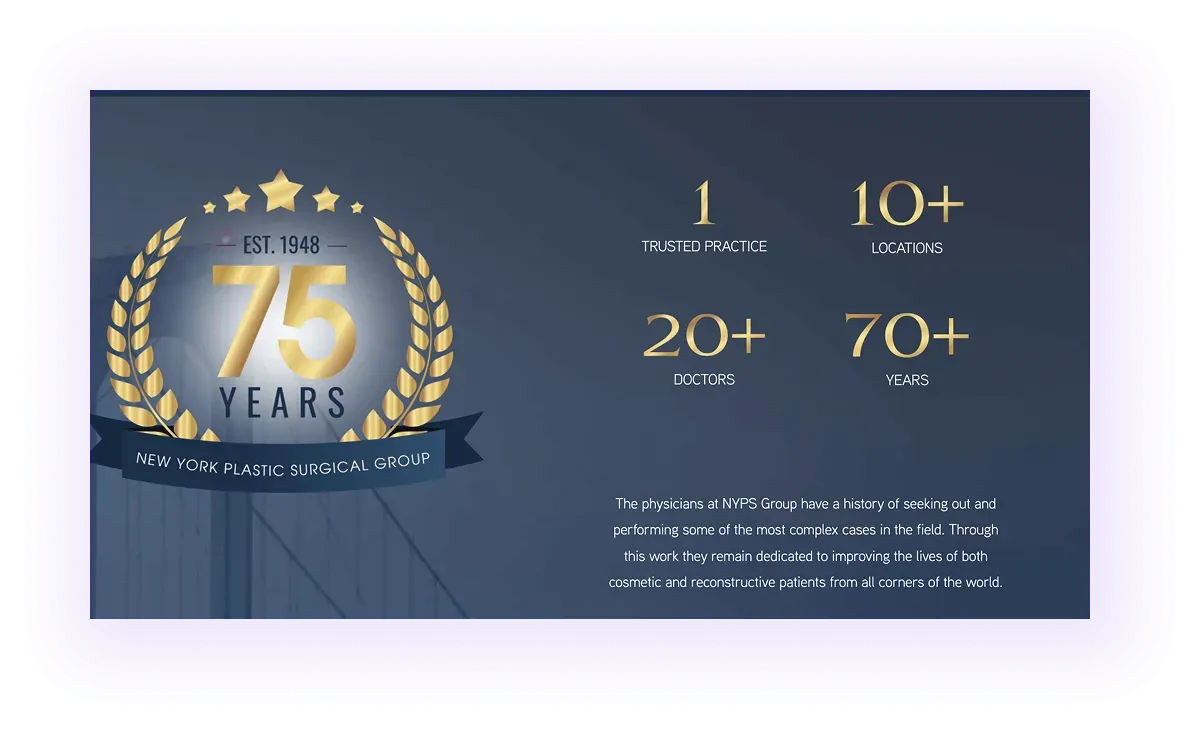
- Partners, Groups, & Specialties: Include affiliations and professional groups tied to your work.

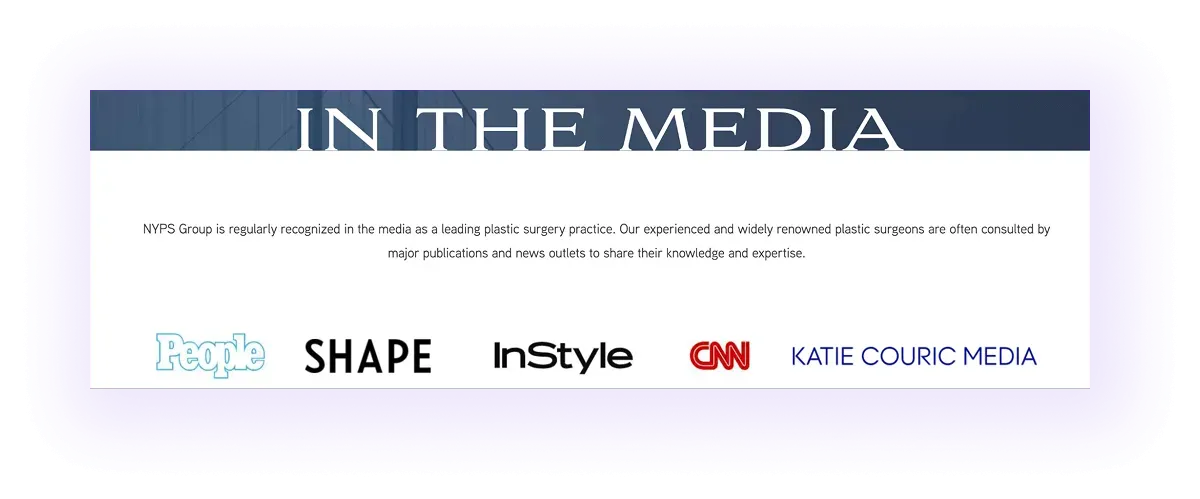
- Featured Media: Add any press mentions.

- Case Studies / Before-After Photos: With patient consent, show clear examples of your results.

Once your content is set, place your target keywords naturally in:
- Meta titles that clearly describe each page.
- Meta descriptions that summarize the page and encourage clicks.
- Headings (H1-H4) that break the content into simple, logical sections.
Blog Posts
Patients often search for procedure details before booking. Queries like “How long is facelift recovery?”, “Rhinoplasty procedure steps” and “Breast augmentation downtime” are common.
Your blog can capture this early interest and support SEO for cosmetic surgeons by strengthening each post on a main service page.
There are various content strategies for SEO, but we recommend a simple pillar structure: one main page for the procedure, followed by individual posts that answer related questions. For example, if the main page for the “breast augmentation” keyword, blogs could be:
- Breast augmentation recovery timeline
- Risks and benefits of breast augmentation
- Breast implant types and differences
This setup builds apparent topical depth and helps your service pages rank higher.
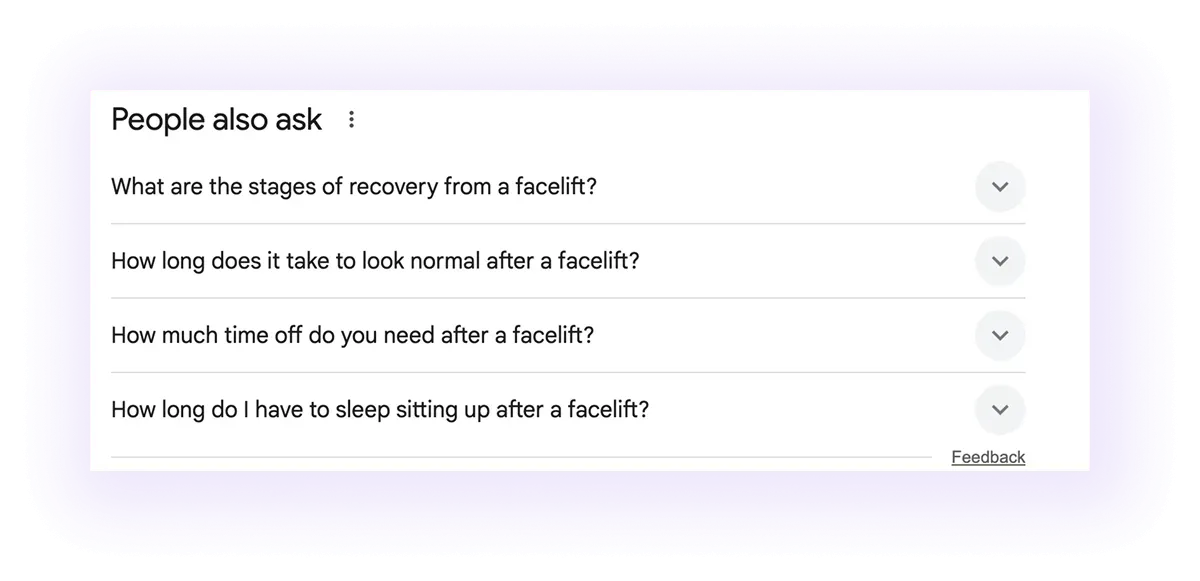
To find topics, ask patients what they’re unsure about, and check Google’s People Also Ask.
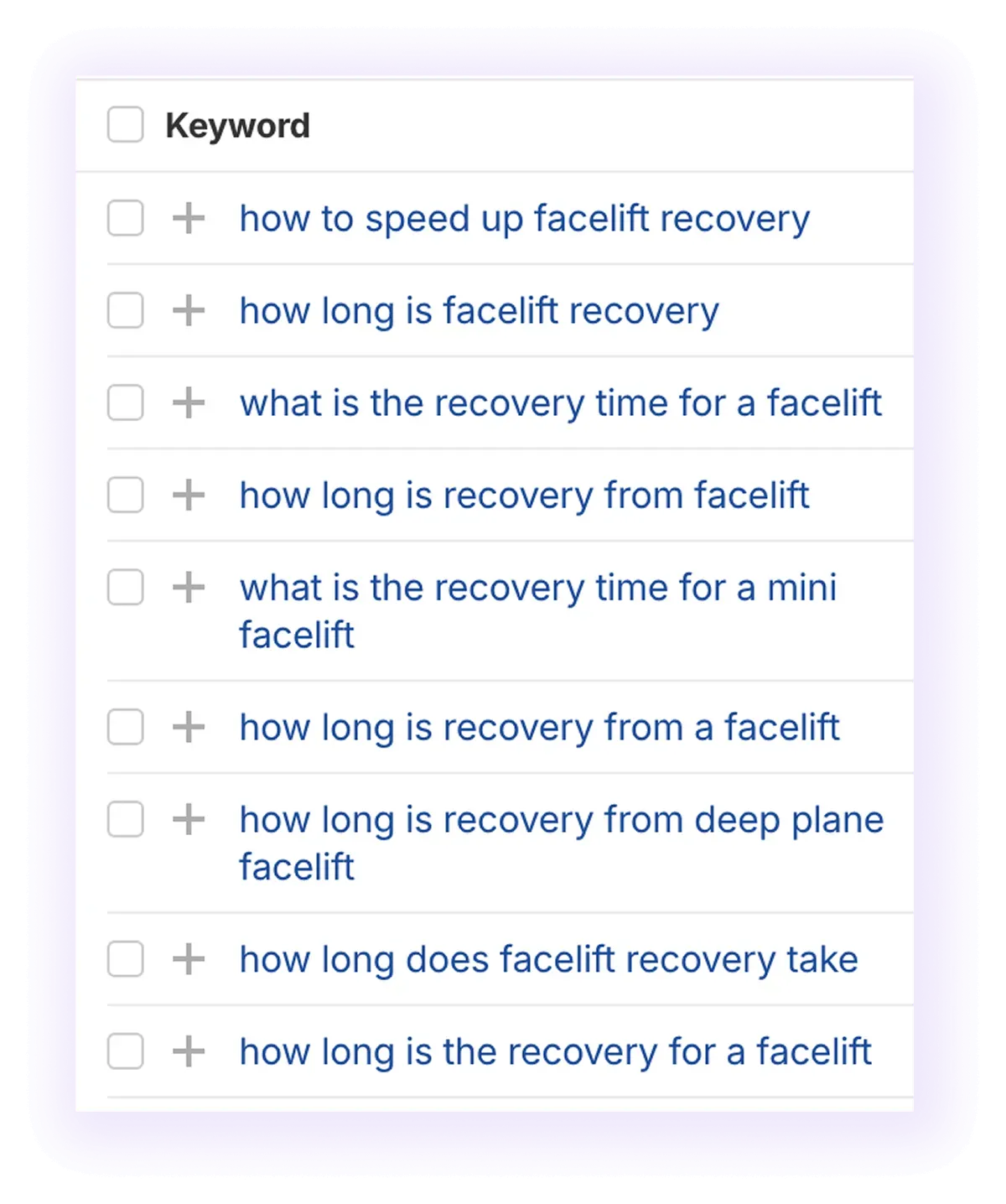
You can also review the Questions tab in Ahrefs.
When writing:
- Keep every post original.
- Place keywords naturally in headings, meta titles, and meta descriptions.

- Add short quotes or explanations from certified surgeons.
- Use visuals such as videos or patient photos (with consent).
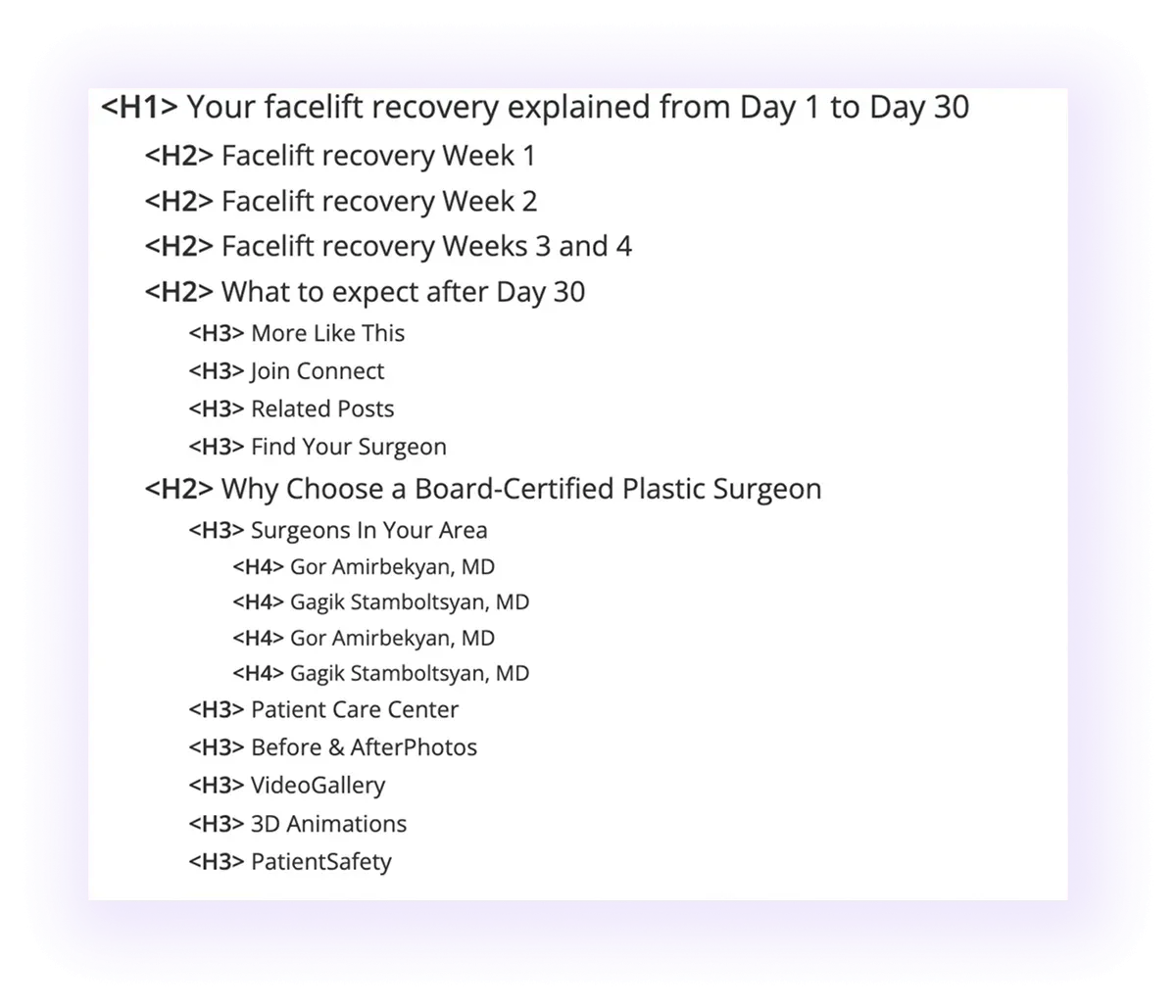
- Follow a clean H1-H4 structure.
- Link to reliable medical sources when citing data.
- Use lists or tables they clarify the content.
Implement Technical SEO for Your Plastic Surgery Website
As you build your plastic surgeon SEO plan, your site also needs a solid technical SEO foundation so patients and Google can navigate each page smoothly. Focus on improving:
- Crawlability and indexing
- Site speed
- UI & UX
- Mobile responsiveness
Let’s talk about each.
XML Sitemap and Robots.txt
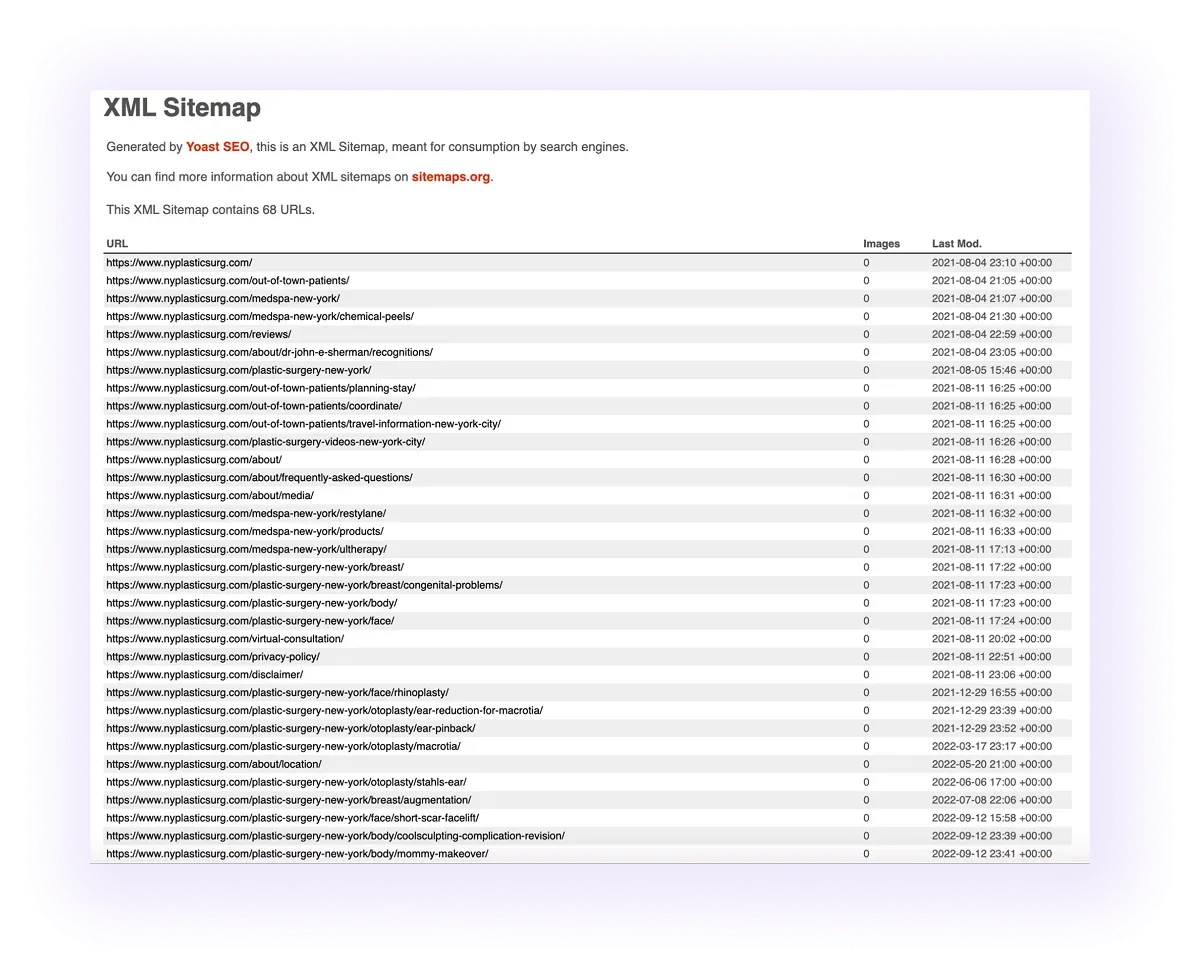
A clean XML sitemap is a core part of SEO for cosmetic surgeons because it helps Google crawl your site and index the pages patients look for.
Include your home page, about page, procedure pages, doctor profiles, and location pages, and assign priority levels so Google can see which pages you want to carry more weight.
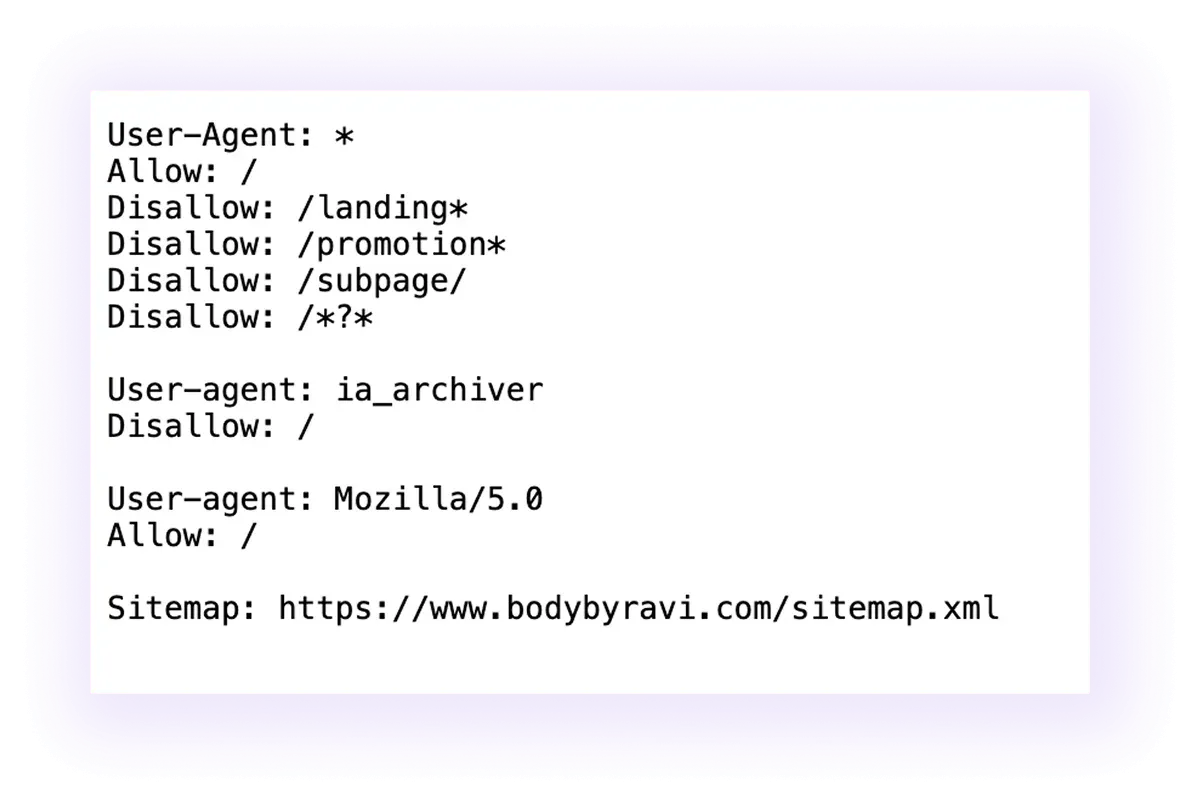
Your robots.txt file should handle the pages you don’t want indexed: admin areas, duplicates, and anything unrelated to patient searches.
Schema Markup and Structured Data
Schema markup helps Google display your FAQs, reviews, and services in rich results, boosting clicks and supporting your plastic surgery SEO. It also tells Google exactly what your clinic, surgeons, and procedures are about.

Best schema types for a plastic surgery website are:
- MedicalBusiness: Marks your clinic as a licensed medical provider.
- HealthAndBeautyBusiness: Covers your cosmetic and aesthetic services.
- LocalBusiness: Connects the clinic to your physical location for local searches.
- AggregateRating: Shows patient ratings in search results. (If ratings only appear on third-party sites, don’t use this.)
- FAQPage: Structures common patient questions and answers.
- Service: Defines each surgical or non-surgical procedure you offer.
- Person: Features the surgeon’s credentials, training, and experience.
URL Structure
Clear URLs help patients navigate your plastic surgery site and give Google a clear view of your procedure hierarchy.
Do’s
- Keep URLs short and readable, using hyphens. For example: /procedures/breast-augmentation
- Add a relevant keyword, such as a procedure or city. For example: /procedures/rhinoplasty-new-york
- Follow a logical structure that mirrors your site. For example: /procedures/breast/breast-augmentation
- Use lowercase letters.
Don’ts
- Don’t use long strings with numbers or symbols. For example: /page?id=12345
- Skip underscores or spaces.
- Avoid stop words like “and,” “the,” or “for.”
- Don’t create multiple URLs pointing to the same procedure.
Internal Link Building for Plastic Surgeons' Websites
Internal links help your plastic surgery site pass authority between pages and guide patients to related procedures, services, and educational content. They also show Google how your pages connect and which ones matter most.
| Link Type | Purpose | Example |
|---|---|---|
| Navigation | Sends visitors to main service pages and helps Google crawl them. | Homepage → Procedures → Breast augmentation page |
| Procedure → Procedure | Connects related surgeries within the same category. | Liposuction → Tummy tuck |
| Blog → Blog | Links related articles to strengthen topical depth. | “Breast augmentation recovery timeline” blog → “Breast implant types and differences” blog |
| Blog → Procedure | Supports procedure pages and builds relevance. | “Breast augmentation recovery timeline” blog → Breast augmentation page |
| Service → Location | Shows where a procedure is available. | Breast augmentation page → Breast augmentation in Houston page |
Breast augmentation page → breast augmentation in Houston page
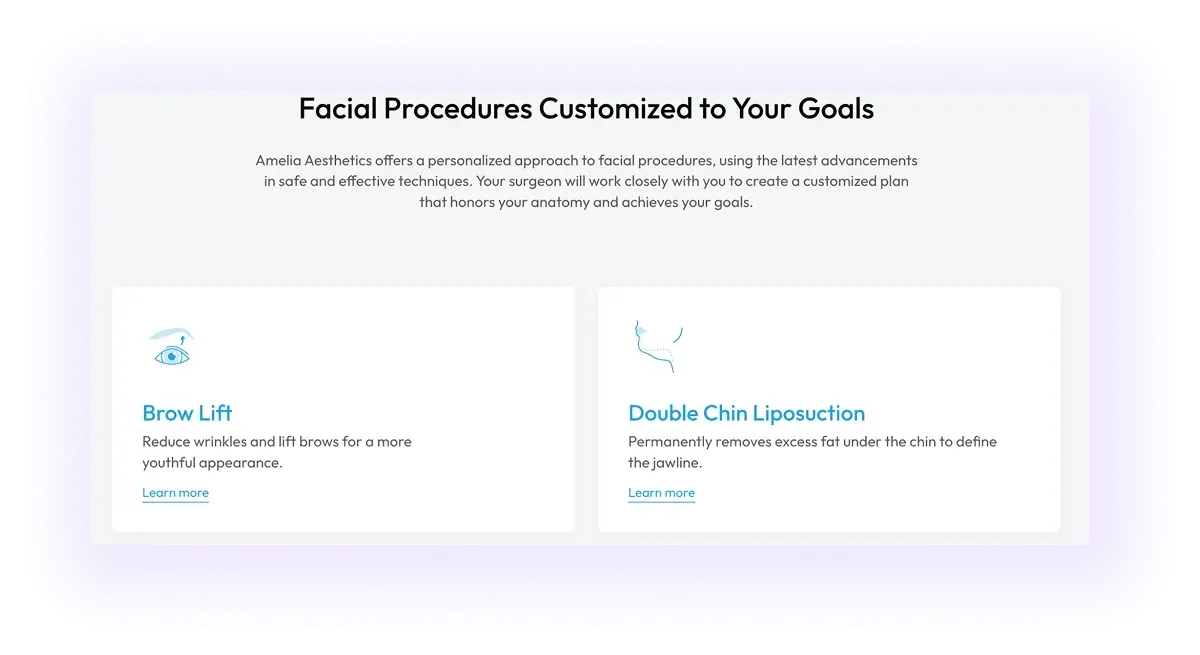
Here’s one more example: your main face plastic surgery page can link directly to your brow lift and double chin liposuction pages to guide patients deeper into related treatments.
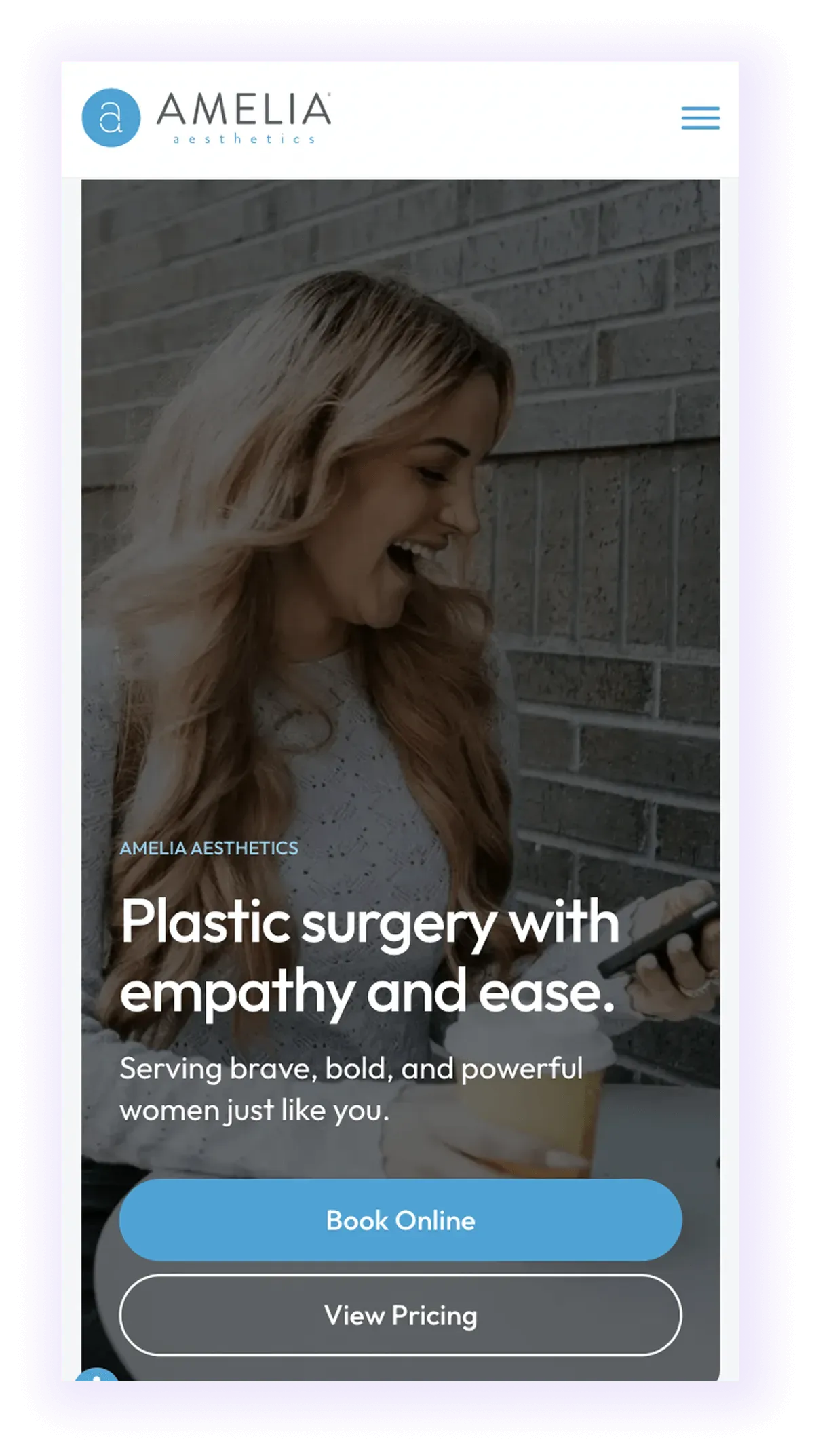
Mobile Optimization for a Plastic Surgery Services Website
Mobile usability plays a major role in plastic surgery SEO because patients often browse on their phones to compare procedures and check before-and-after photos.
Your site needs to load fast, look clean on any device, and make it easy for patients to take the next step. To do so, you should have:
- Responsive design that fits any screen size
- Optimized images that stay sharp and load quickly
- Tappable buttons suited for small screens
- Readable text (16px or larger)
- A simple hamburger menu
- Clear call-to-action buttons
For more advanced optimization, we suggest following our expert mobile SEO checklist.
Website Speed & Performance (Core Web Vitals)
Fast pages matter to patients who are comparing procedures, checking before-and-after photos, or booking a consult, and strong speed signals also support SEO for plastic surgeons. Focus on these improvements:
- Minify CSS, JavaScript, and HTML to shrink file sizes.
- Use fast hosting and a CDN for quicker delivery.
- Use server-side rendering for heavier pages when possible.
- Compress and optimize media without harming clarity.
- Keep videos high-quality but low in size.
- Lazy-load pictures below the fold so top content appears quickly.
Test your updates with Google PageSpeed Insights or GTmetrix and monitor:
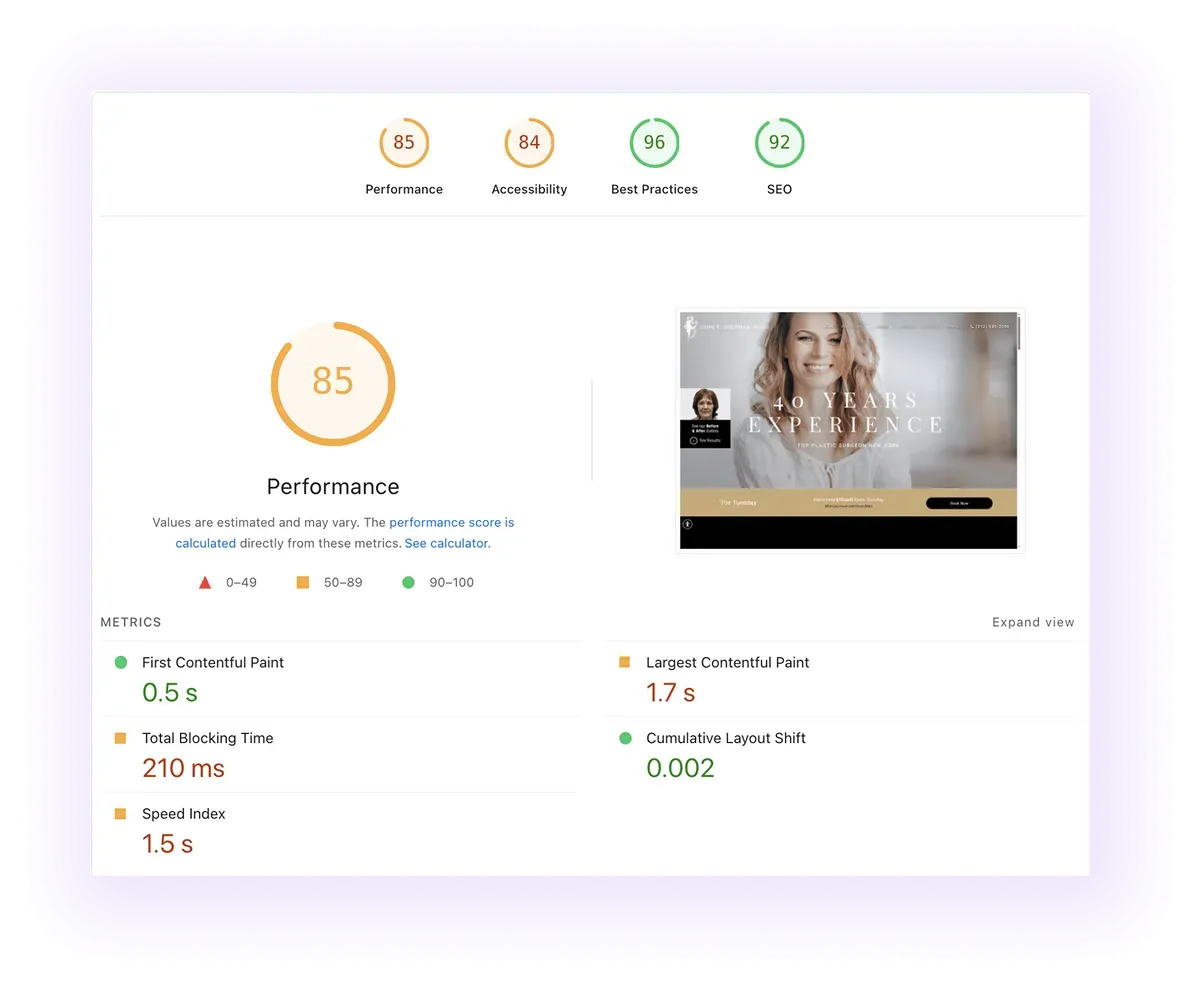
- LCP: under 3 seconds
- FCP: under 1 second
- CLS: near 0
When your Core Web Vitals pass, your plastic surgery site feels fast and easy to use, which helps patients stay engaged and move toward booking.
Frequent Technical Audits
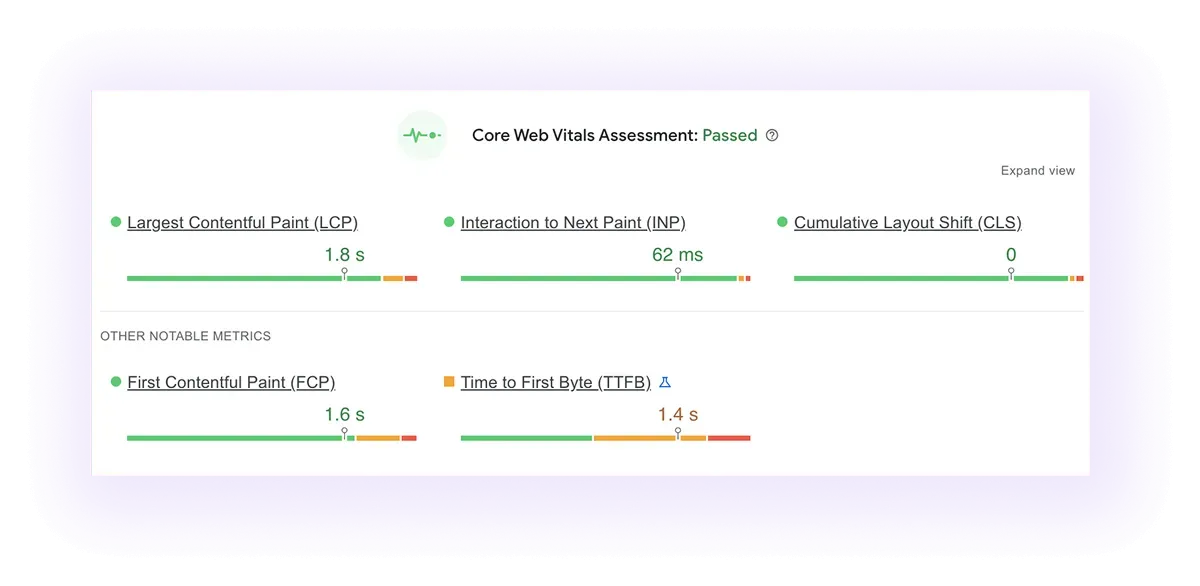
Each time you update your site, add new procedures, or open a new location, run a monthly technical SEO audit to keep your plastic surgery site healthy and easy for Google to crawl. Key areas to review:
- Broken Links: Check with Screaming Frog.
- Redirect Errors: Review in Ahrefs or SEMrush.
- Duplicate Content: Scan with Copyscape or SEO tools.
- Indexing Issues: Monitor in Google Search Console.
- Mobile Visibility: Review mobile reports in Search Console.
- Crawling Errors: Identify with Screaming Frog.
- Page Speed and Large Images: Test with PageSpeed Insights or GTmetrix.
- Core Web Vitals: Track LCP, FCP, and CLS in PageSpeed Insights.
- Schema Validation: Test with Google’s Rich Results tool or schema.org.
Consistent audits help your site stay fast, clean, and reliable as you grow.
If you want help reviewing your setup, we can conduct a comprehensive technical audit and outline the updates with the greatest impact.
Link Building for a Plastic Surgeon’s Website
For effective plastic surgery SEO, your site needs strong backlinks to build real authority with Google. The goal is to secure links from trusted health, wellness, and plastic surgery sources that reinforce your clinic’s credibility.
These links signal to Google that your content comes from a reliable medical provider, which helps your pages rank higher in search results. Here are the best authority link building methods for SEO.
Guest Posting and Link Insertion
Beauty and wellness sites like Merz Aesthetics, DermEngine, and SELF often seek expert input from plastic surgeons, making them strong targets for backlinks.
Guest Posting
Write a fresh article for one of these sites and include a link to your clinic. A simple angle could be “5 things to know before your first rhinoplasty” with a link to your rhinoplasty page.
Link Insertion
Add expert insight to an existing article that needs more depth. A short note on facelift recovery timelines inside a “Top anti-aging treatments” piece can earn a link to your facelift page.
When you contact editors, keep your message short:
- Point out the value your addition gives their readers.
- Share your credentials.
- Add a data point that supports your suggestion.
As an experienced SEO link building agency, we have managed to help plastic surgeons boost their authority and traffic. If you need help with your link building, reach out.
Directory Listings for Plastic Surgeons
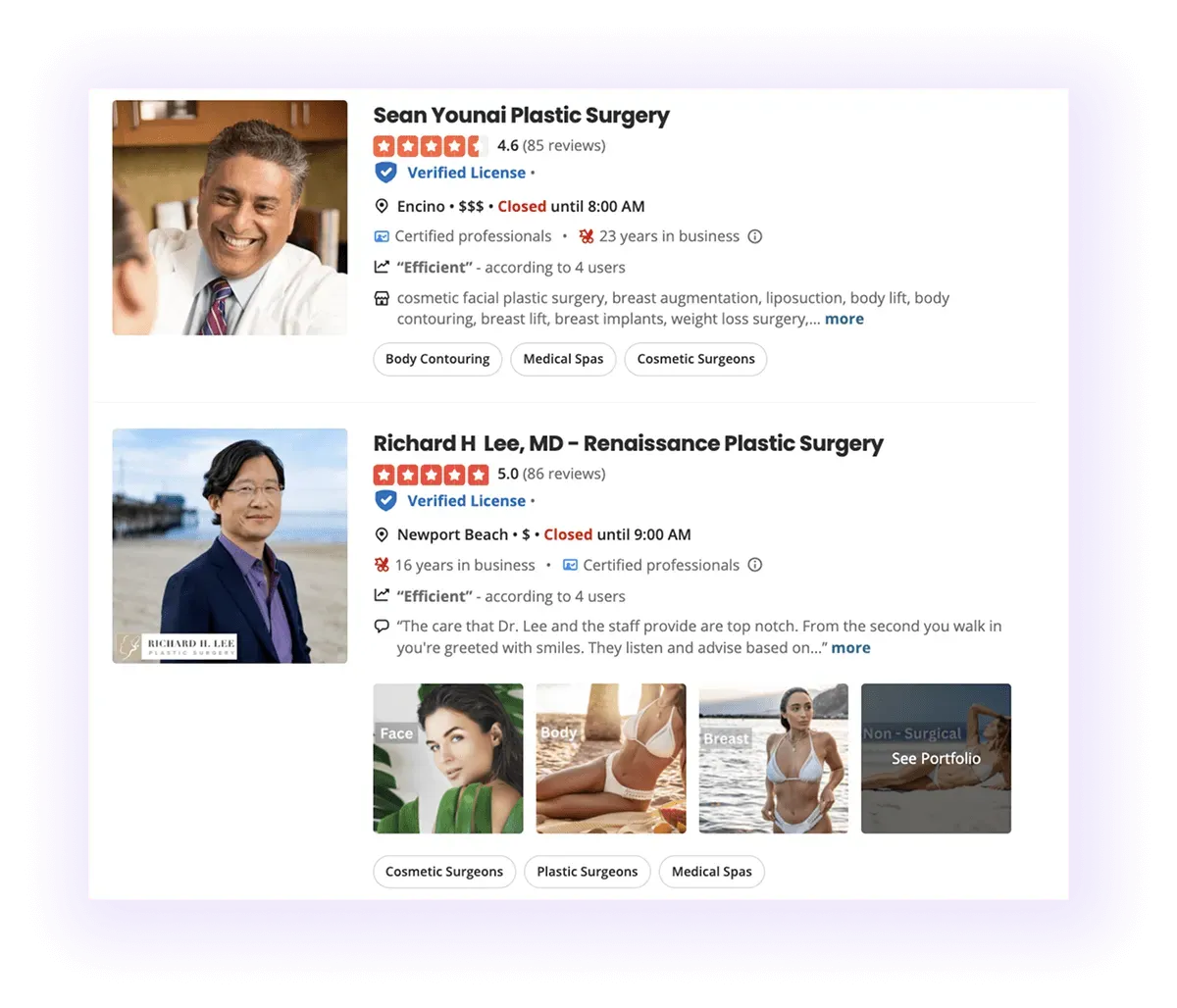
Getting local backlinks and adding your clinic to trusted directories helps build authority and attracts patients who compare providers outside Google Maps. Recommended directories for plastic surgeons are:
- Health and wellness directories like MedlinePlus
- Local business sites such as Yelp
- Medical directories like Vitals
- Plastic surgery directories such as PlasticSurgery.org
When creating your profile, include:
- Correct clinic name, address, and phone number
- Website link
- Working hours and contact details
- Credentials, certifications, and awards
- Full list of services
- A short description of your clinic
Digital PR for Plastic Surgery Websites
Digital PR links can push a plastic surgery site forward quickly, especially when they come from outlets like Forbes or specialty groups like The Aesthetic Society.
Choose an angle reporters want, something tied to real patient trends, like “Millennials turning to minimally invasive facelifts.”
Back it up with data from journals, health databases, or your clinic’s anonymized numbers to ground the story. Write a clear article with your insights and a short expert quote. Keep it easy for an editor to run.
Then pitch the piece with a short note explaining why your audience will care, and include the article or a brief comment.
A strong placement earns you a backlink that lifts your plastic surgery site.
How to Track the Success of Your Plastic Surgery SEO Strategy
Once your plastic surgery SEO plan is live, keep an eye on performance so you can adjust quickly. These report tools for SEO help you stay on top of what matters:
- Google Search Console: Watch keyword movement, impressions, clicks, and indexing status.
- Google Analytics: See traffic patterns, user paths, and conversion activity.
- Screaming Frog: Run technical checks and spot broken links.
- Ahrefs and SEMrush: Review competitor tactics and your backlink profile.
- GTmetrix and PageSpeed Insights: Check speed scores and Core Web Vitals.
- Hotjar and Microsoft Clarity: View heatmaps and session recordings to understand user actions.
- Google Tag Manager: Track calls, form fills, and click events.
If any section needs further trimming or a new tone, just send it over.
Partner with a Plastic Surgery SEO Agency That Knows Your Industry
It’s not enough to offer exceptional plastic surgery results; you need to ensure patients can find you when they’re searching for a surgeon they can trust.
That’s where we step in. Contact us, and we’ll help your clinic gain the visibility it deserves and attract more qualified local patients with a tailored plastic surgery search engine optimization strategy!
Submit the form - Get Free Proposal
%202.png)
24 hours
FAQ


Submit the form - Get Free Proposal
24 hours
.svg)