Stop Losing Leads 2026 Dentist SEO Guide + Keywords From Dental SEO Agency
Local rankings that stick: we help you use precise keywords, get fast pages, and create conversion-first content, guided by a dental SEO expert team!
5.0



More than 200,000 dentists compete for the same patients, and cancellations create steady gaps in the schedule. You need high-intent patients who book fast.
Payer delays push treatment out, so dentists rely more on private-pay patients who move forward quickly. When implants or lab work run late, the practice still needs patients ready for other profitable services. And because post-op visits take time, dentists want fewer low-value leads and more cases that match their tech investment.
This is why SEO services for dentists matter. Our professional SEO approach has helped 50+ dental practices across the U.S. maintain steady patient flow and attract higher-value cases.
Why Do Dentists Need to Invest in SEO?
- When local dentists retire or cut hours, strong SEO helps your practice capture the open search demand and win more local patients.
- Dental SEO highlights what independents offer (personal care, direct access to the doctor, and no corporate rules), so patients choose you over chains.
- Better visibility brings in patients ready to book, not people calling with free “quick questions.”
- Even if equipment fails or a day gets lost, your rankings keep working and continue sending new patient leads.
- Many dentists spend $5,000 a month on paid ads that stop the moment their budget runs out. The average SEO budget is generally lower than for paid ads, yet it continues to drive high-intent patients without increasing ad costs.
- SEO helps you target terms like “implants,” “cosmetic dentistry,” “emergency dentist,” and other profitable treatments, so your schedule fills with better cases.
- Ranking at the top of Google with strong reviews builds instant trust, especially for first-time patients.
Together, these points show why a focused dental practice SEO plan gives dentists a clearer path to steady growth. Let’s start our dental SEO expert guide.
Do Keyword Research and Competitive Analysis for Your Dental Website
List every service you offer:
- general dentistry,
- pediatric dentistry,
- oral surgery,
- dental implants,
- periodontics, and
- anything else patients can book.
Then enter each service into tools like Ahrefs, SEMrush, or Google Keyword Planner. You’ll see what patients type into Google, which related terms matter, and which dental websites you’re up against.
Focus on high-search, low-competition keywords because they bring targeted traffic without a long wait to rank. Still include broader terms like “dentist” or “dental services” since they boost your overall visibility.
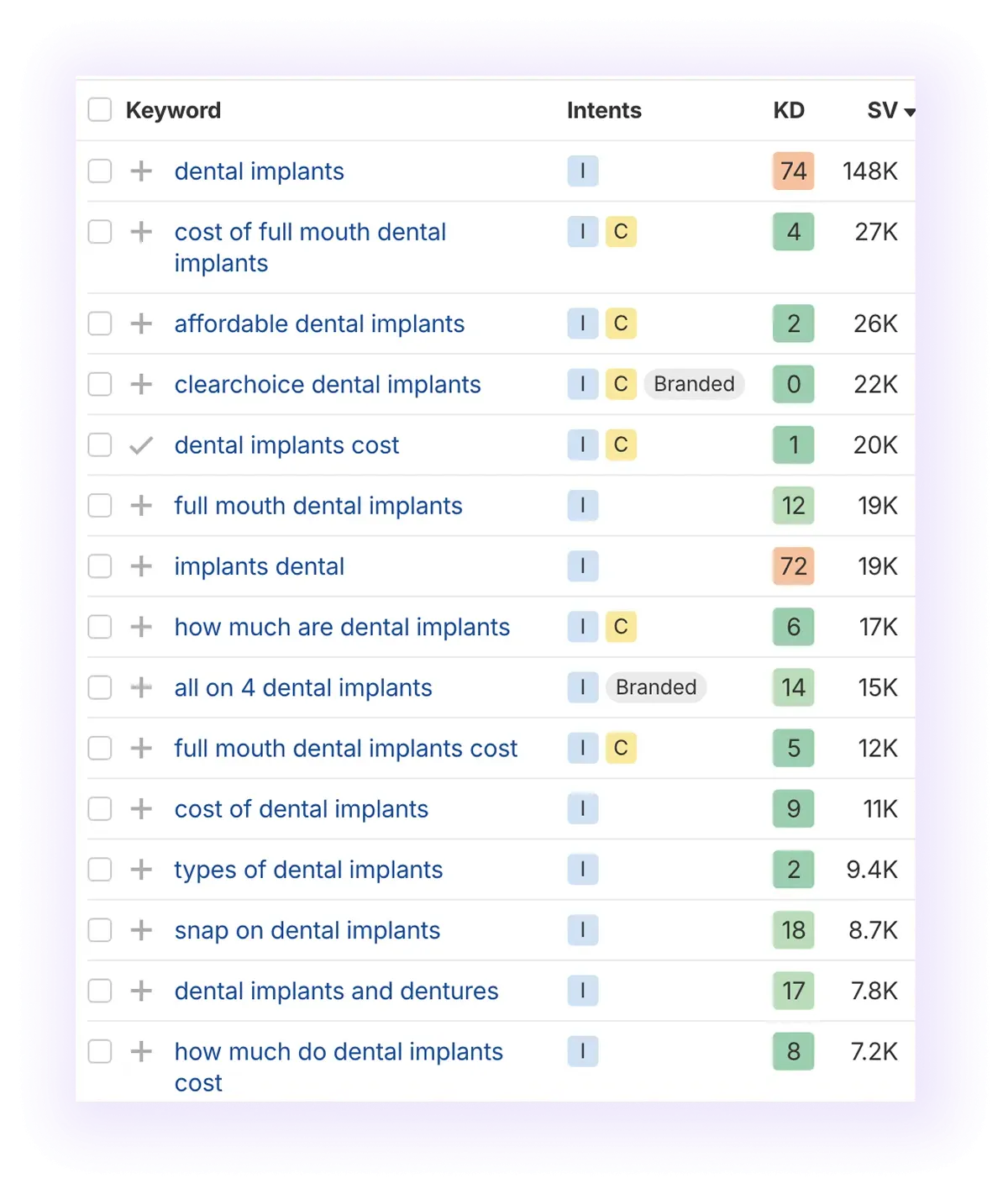
When we enter, let’s say, “dental implants” into Ahrefs, we get search volume, difficulty, and real patient questions tied to that service. See below.
We also recommend using our keyword traffic potential estimation tool to estimate how much traffic you can generate by targeting a specific keyword.
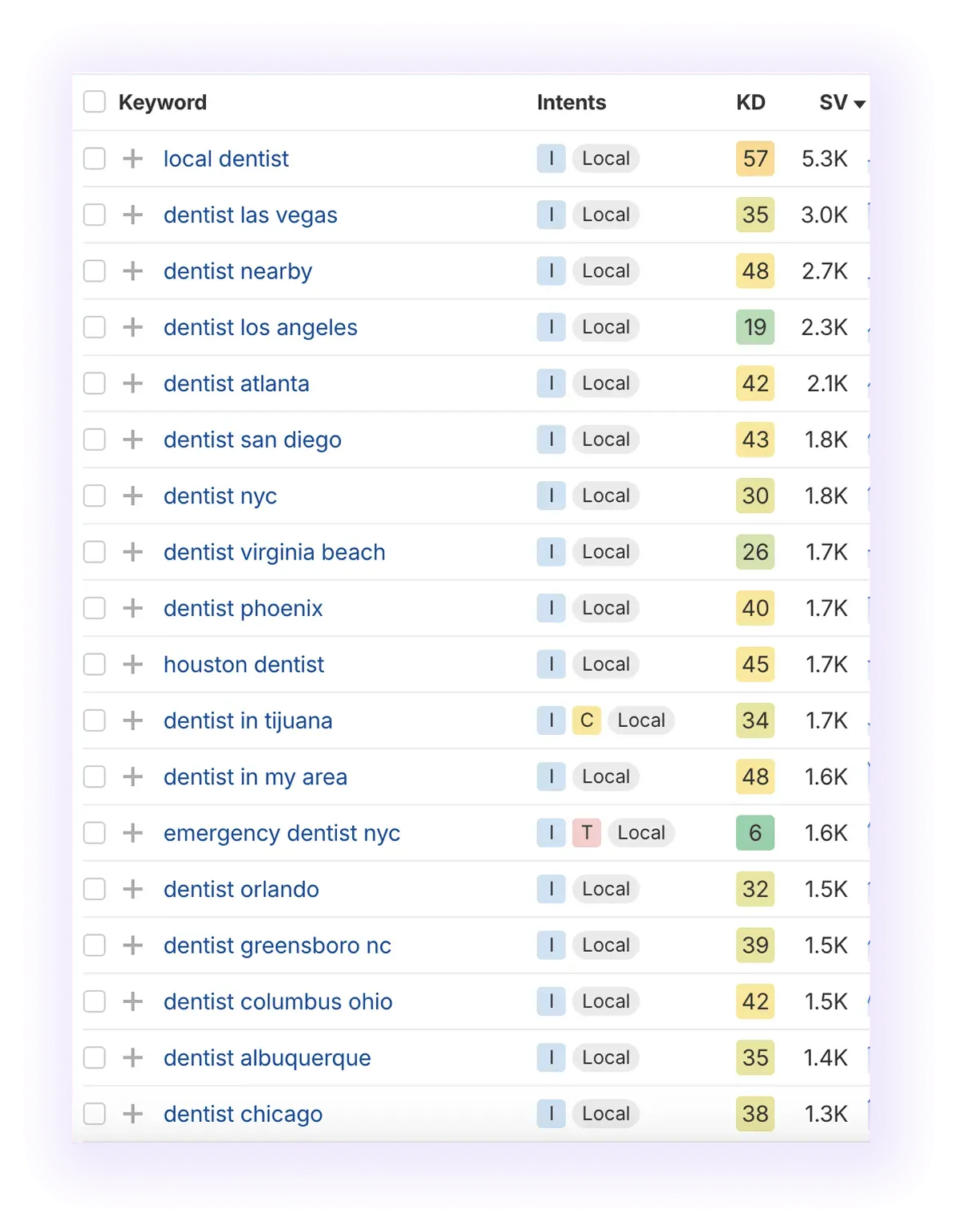
Use the local filters in these tools to find nearby areas with strong demand for each treatment. This helps you target your content to locations that drive reliable patient flow.
Use our SEO keyword discovery checklist to support your research process.Top 30 Real Keywords for Dentists
Transactional for Targeting Potential Patients
- local dentist
- dental implant surgery
- full mouth dental implant
- children's dentist
- pediatric dentist
- cosmetic dentist
- cosmetic dentist services
- local cosmetic dentist
- general dentistry
- general dentistry services
- periodontics
- dental services
- emergency dental services
- best dentist
- restorative dentistry
Informational for Educating Patients
- how dental implants work
- signs of gum disease
- best teeth whitening options
- what causes tooth sensitivity
- how root canals work
- preventing cavities in adults
- kids dental care tips
- how dental crowns help
- benefits of fluoride treatment
- importance of regular cleanings
- oral hygiene tips daily
- how veneers are placed
- managing dental anxiety safely
- reasons for tooth extraction
- treating cracked tooth pain
Keywords are a must-have in any dentist SEO services strategy, but they’re not as simple as they look. You need the right tools, budget, time, and real SEO know-how to use them well. We can handle that for you, so reach out to our dental SEO company anytime.
Outline Your Dental Website Hierarchy and Menu Structure
With all your keywords (like “general dentistry,” “periodontics,” “emergency dentistry,” and more) gathered, you’ll want to place each one on the right page of your site.
A clear hierarchy helps with understanding your content. You’ll have main service pages and supporting pages that branch off them.
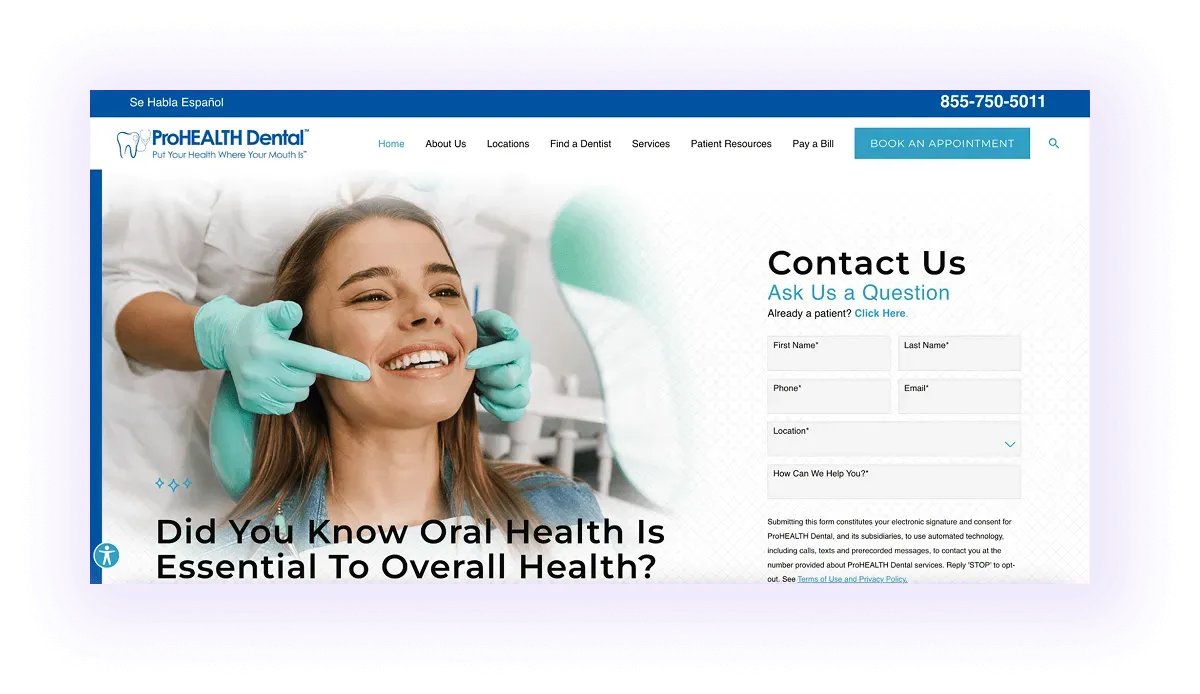
Every dental SEO expert will recommend that you have three core pages in the main navigation:
- Home Page: Target broad terms like “dentist,” “dental services,” and “dentist + [your city].” Highlight your top treatments and link to their individual pages.
- About Us Page: Share your credentials, certifications, doctor photos, bios, and optional before-and-after cases to build trust.
- Contact Us Page: Include a simple form, click-to-call button, office hours, and a map so patients can reach you fast.
Once you have those pages, place them in your main navigation bar.
Service Pages
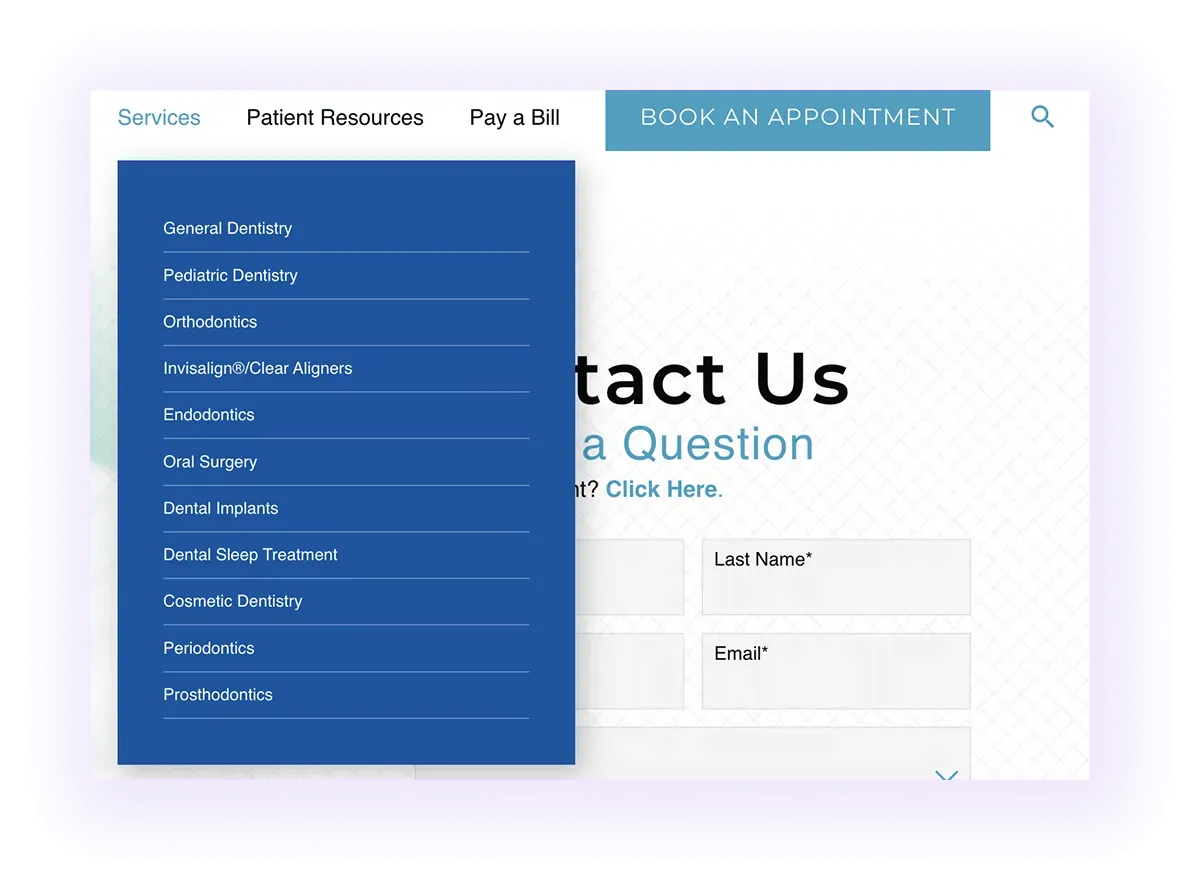
Create a dedicated page for every treatment you offer:
- dental implant surgery
- children’s dentist
- pediatric dentist
- cosmetic dentist
- periodontics
This way, each one can rank for its own keyword.
Also, place them under a simple “Services” tab in your main navigation so patients can find them quickly. If you offer orthodontic services as well, check out our orthodontic SEO guide.
Pages for Your Dentists
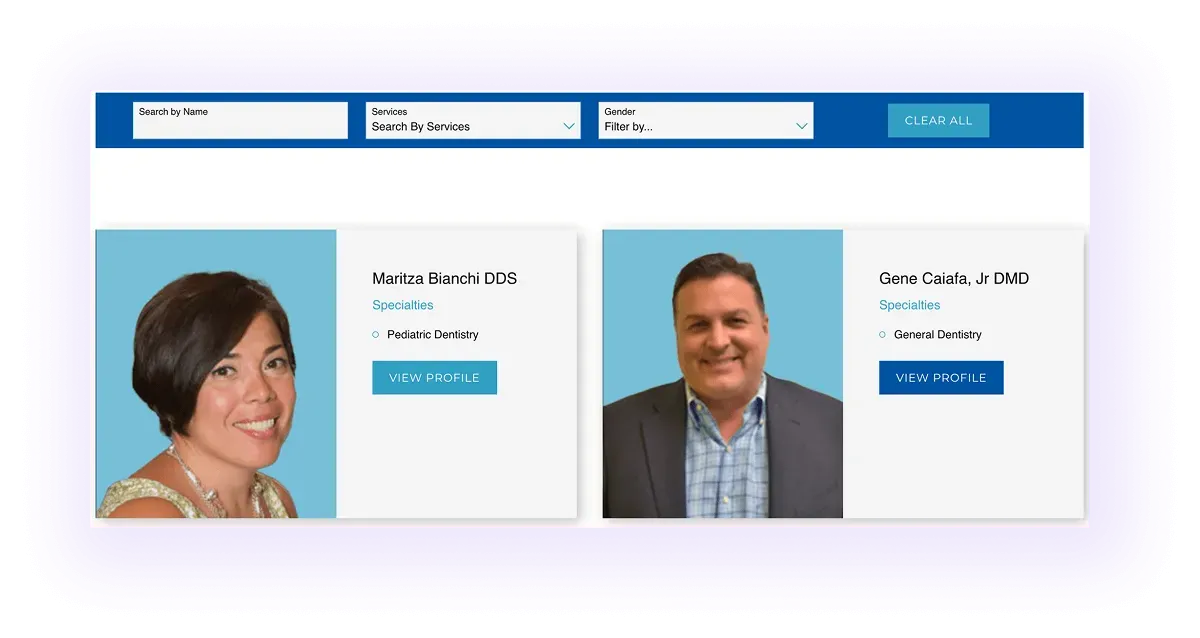
Your dentists should have individual profile pages to make your dental practice SEO prominent. These pages help in two important ways:
- Google classifies dental websites as Your Money or Your Life (YMYL) content, meaning anything that can affect a person’s health or well-being. Because of this, Google expects stronger trust signals. Detailed dentist profiles (credentials, education, real photos) help establish that credibility.
- Patients often search for dentists by name, and these dedicated pages help your clinic show up for those searches.
After setting up the individual profiles, add a main “Our dentists” page where patients can browse by filters such as:
Local Pages
Patients don’t want to drive for hours to see a dentist. They need someone close to home, so they search locally by combining services with locations, like:
- dentist in new york
- dentists in la
- dental implant in arizona
They can even go more specific with neighborhood searches like Huntington, New York, or Astoria, New York. So, create individual location pages for every area your patients search for.
Well-built pages like this are a core part of dentist SEO services and often bring in the highest local intent. Add them to your main navigation so patients can reach them fast.
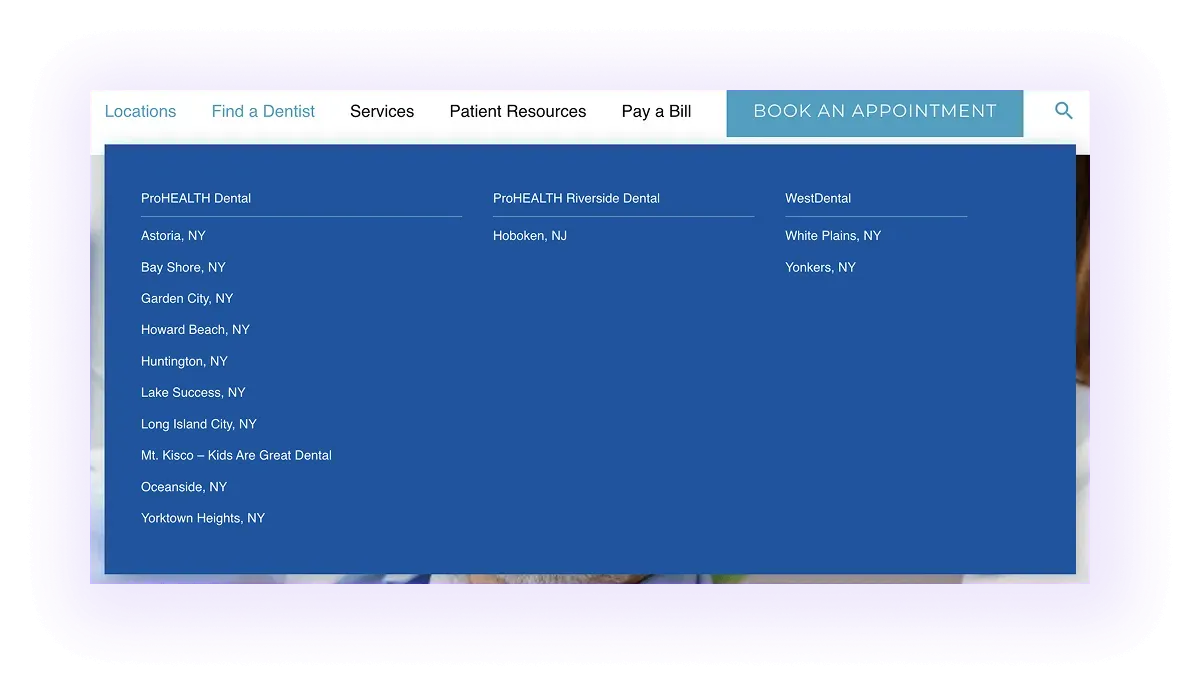
This is how you start your local search growth and SEO process. Later in this guide, we will show you how to fully optimize your dental website for local search.
Blog Pages
For visitors aren’t ready to book yet (the ones tyring to understand a dental problem or learn more about a procedure for themselves or a family member), you should answer questions like:
- How do dental implants work
- Best ways to prevent cavities in children
- What to expect after a root canal
You answer these with blog pages that:
- Bring steady traffic to your site
- Build trust with people who may book later
- Support your service pages by linking back to them
We’ll go deeper on this soon.
Stop Guessing Your Dentist Website Structure—We Will Show You Exactly What Pages You Need
All of this may look simple at first, but it takes time once you see how strong the competition is. To get the best outcome, you need solid dental SEO services and a dental SEO company that knows how to support your clinic.
Contact us, and we’ll help you the same way we’ve helped 50+ dental practices across the country.
How to Do Local SEO Marketing for Dentists
You need to understand which dental practice SEO setup fits your clinic when working on your location pages:
- Single-location dentist or dental center
- Multi-location or national clinic
Local Dentists
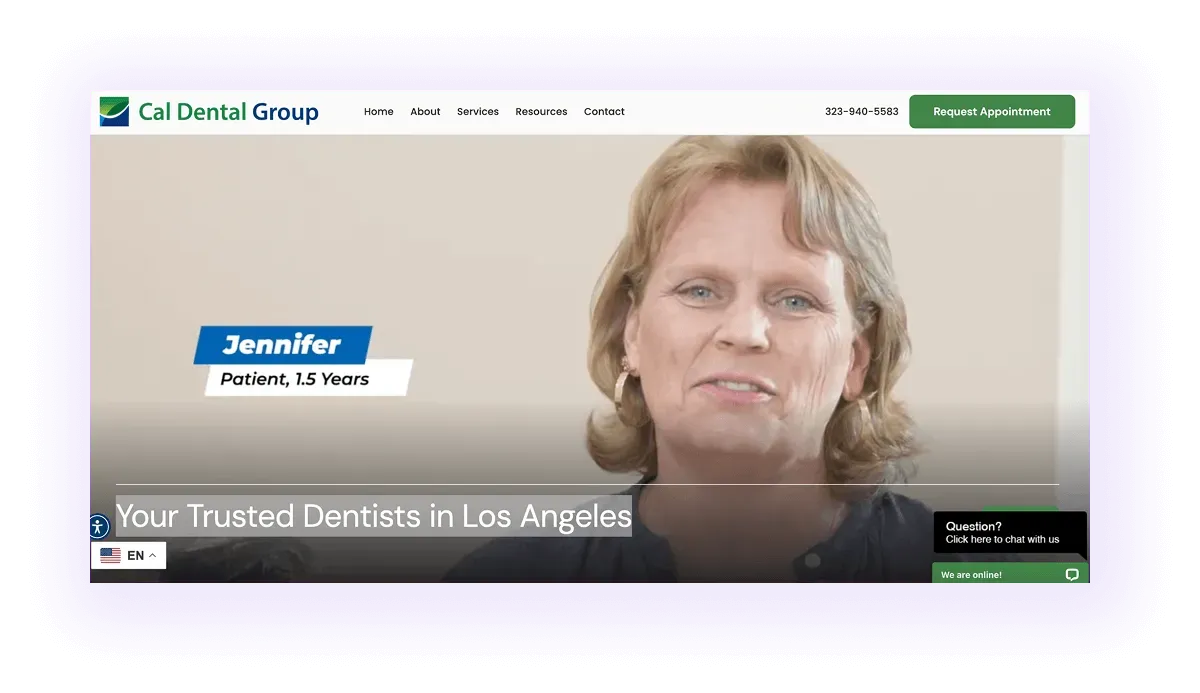
Let’s say you work only in LA. Your homepage should target “dentist in los angeles” or “dental services in los angeles.” Service pages should also use local keywords:
- dental implants los angeles
- cosmetic dentistry los angeles
- emergency dentist los angeles
Use these keywords in your meta title, meta description, and headings so Google can see where you offer care.
National or Multi-Area Dental Clinics
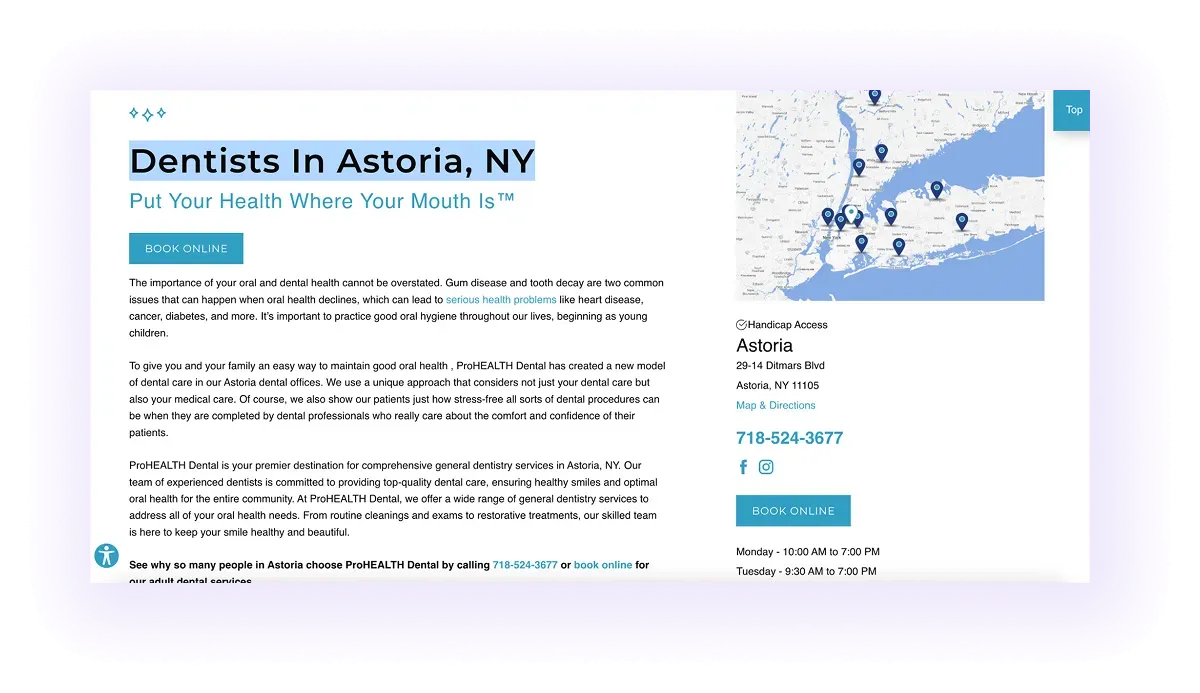
Serving more than one area? Give each location its own page.
For example, you might target:
- dentist in astoria new york
- dentist in bay shore new york
- dentist in garden city new york
Still, use these keywords in your meta title, meta description, and headings.
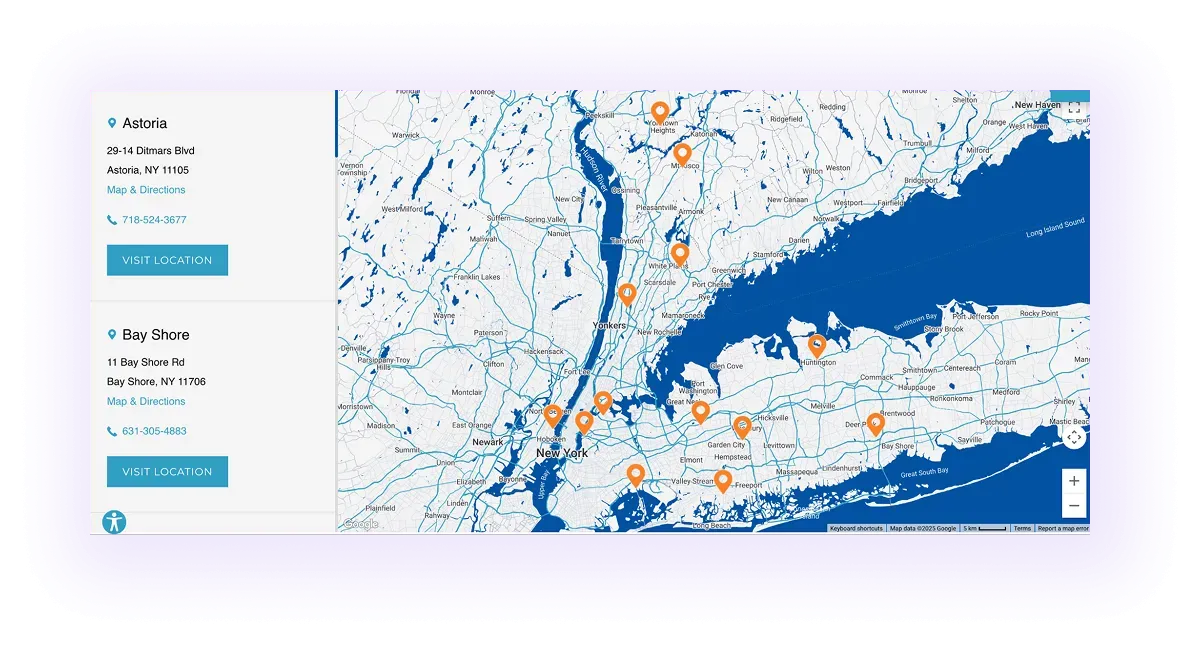
You can also add an interactive map to show all the areas you cover in New York.
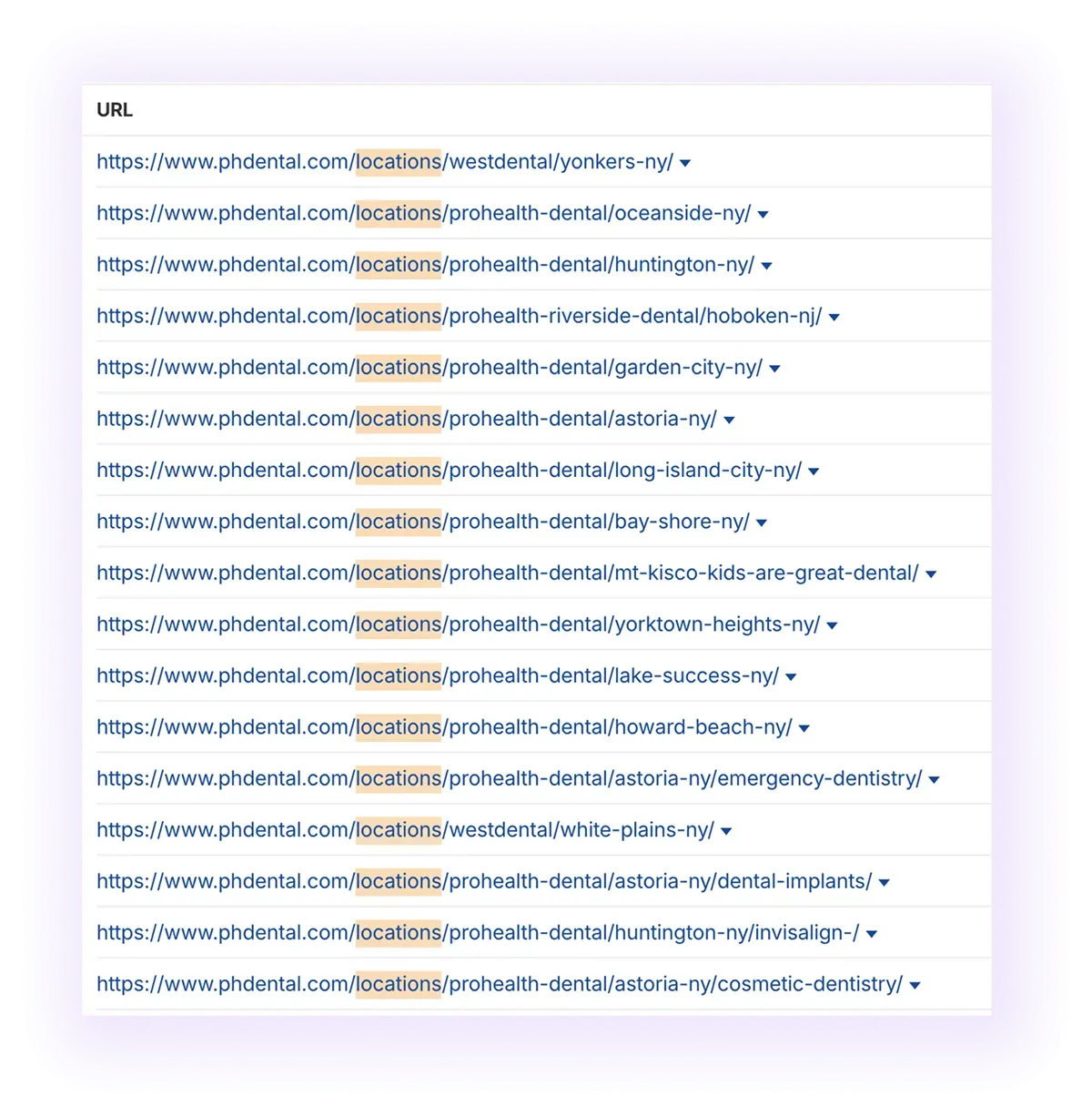
Dental SEO Expert Tip: Keep your URLs clean so it’s clear the page sits under your locations section.
If you still feel it would be best to have professionals handle local SEO, we can offer our local search optimization services and help you reach local searchers faster.
Set up Your Google My Business Profile and Optimize it for Google Maps
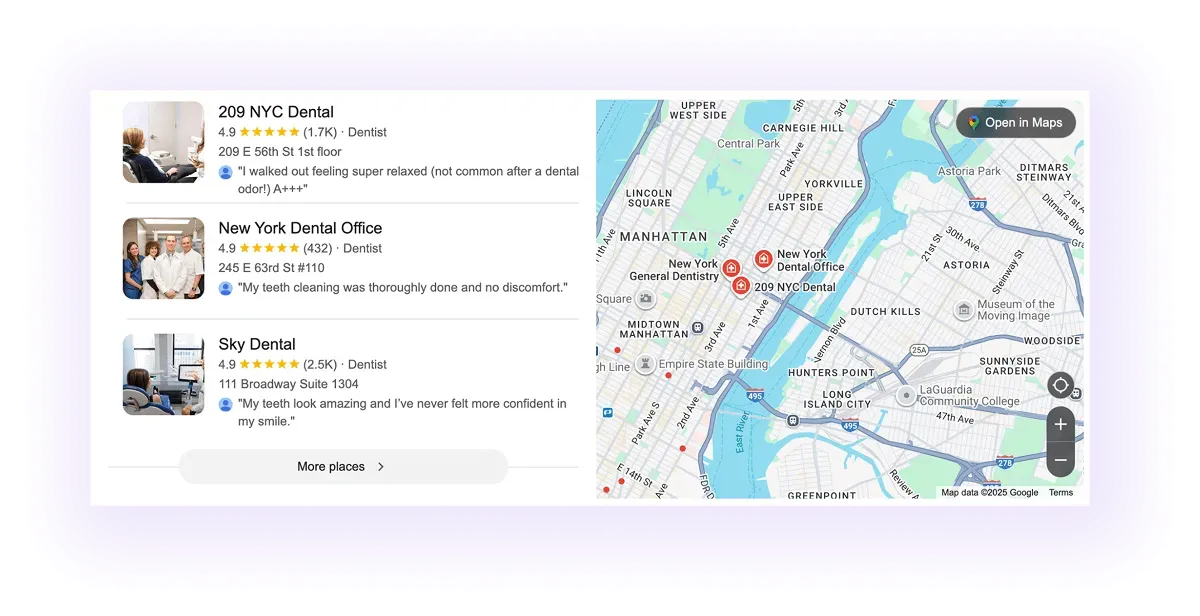
About 90% of patients read reviews before choosing a dentist. Most start with “dentists near me,” check Google Maps, and compare reviews.
To show up there and collect more feedback, set up and fully complete your Google Business Profile (GMB). Here’s what to add:
- Use the same name, address, and phone number everywhere
- Write a clear description that mentions your services and doctor names naturally (helpful for pediatric dentists)
- Add your social media links
- Reply to reviews and stay active in the Q&A section
- Upload sharp photos of your office, dental units, nurses, and doctors
- Ask happy patients to leave a review on your GMB profile
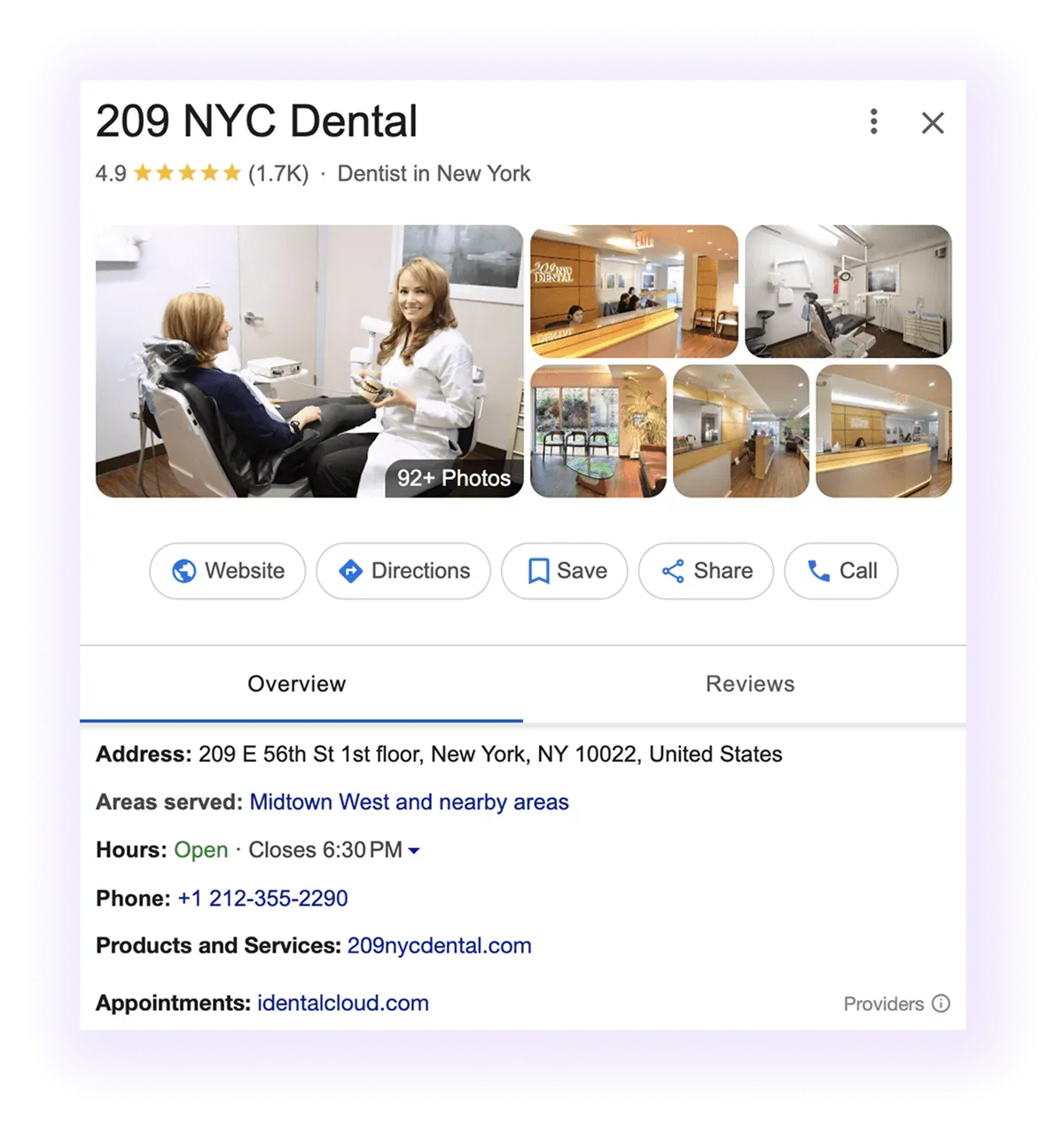
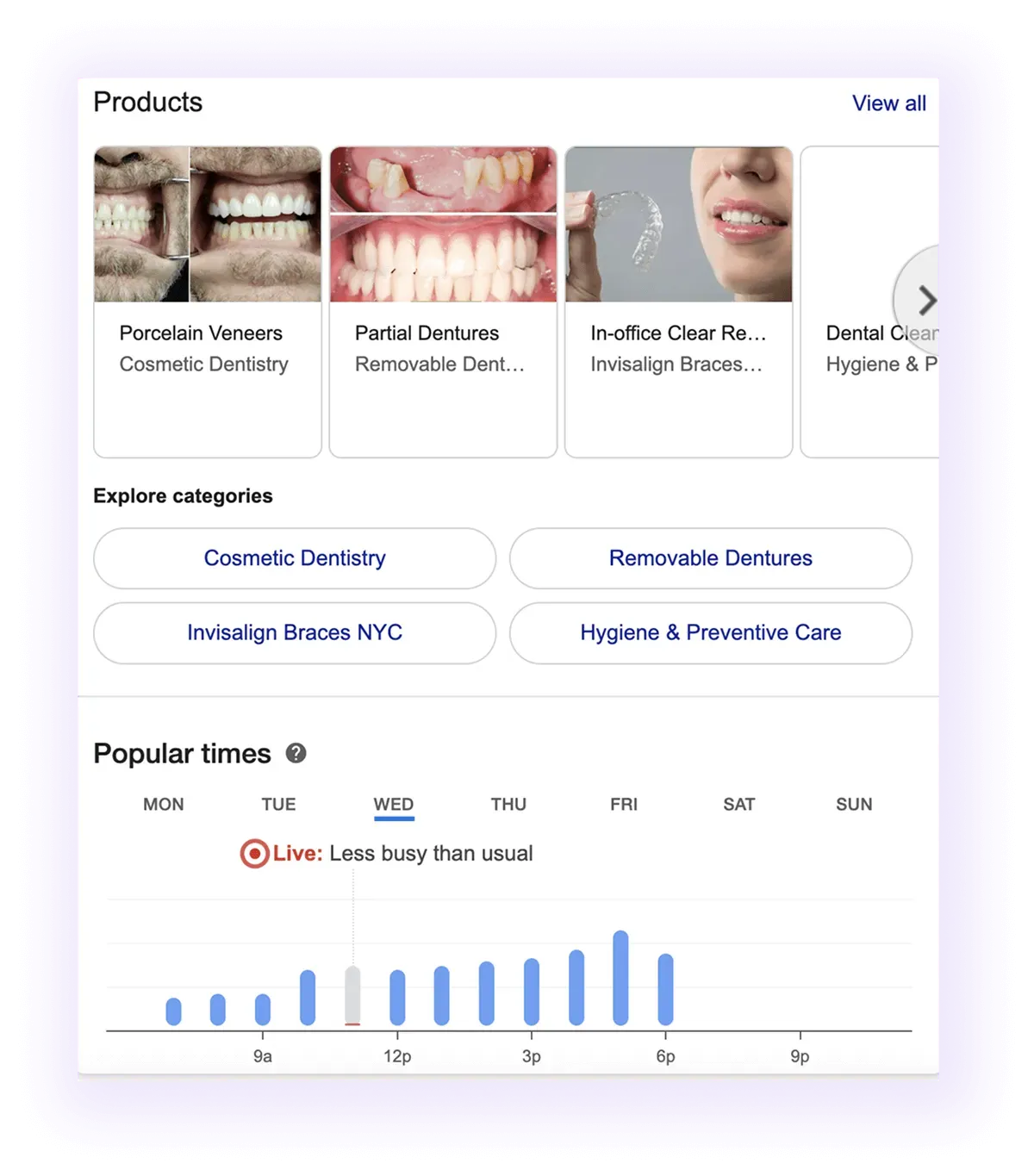
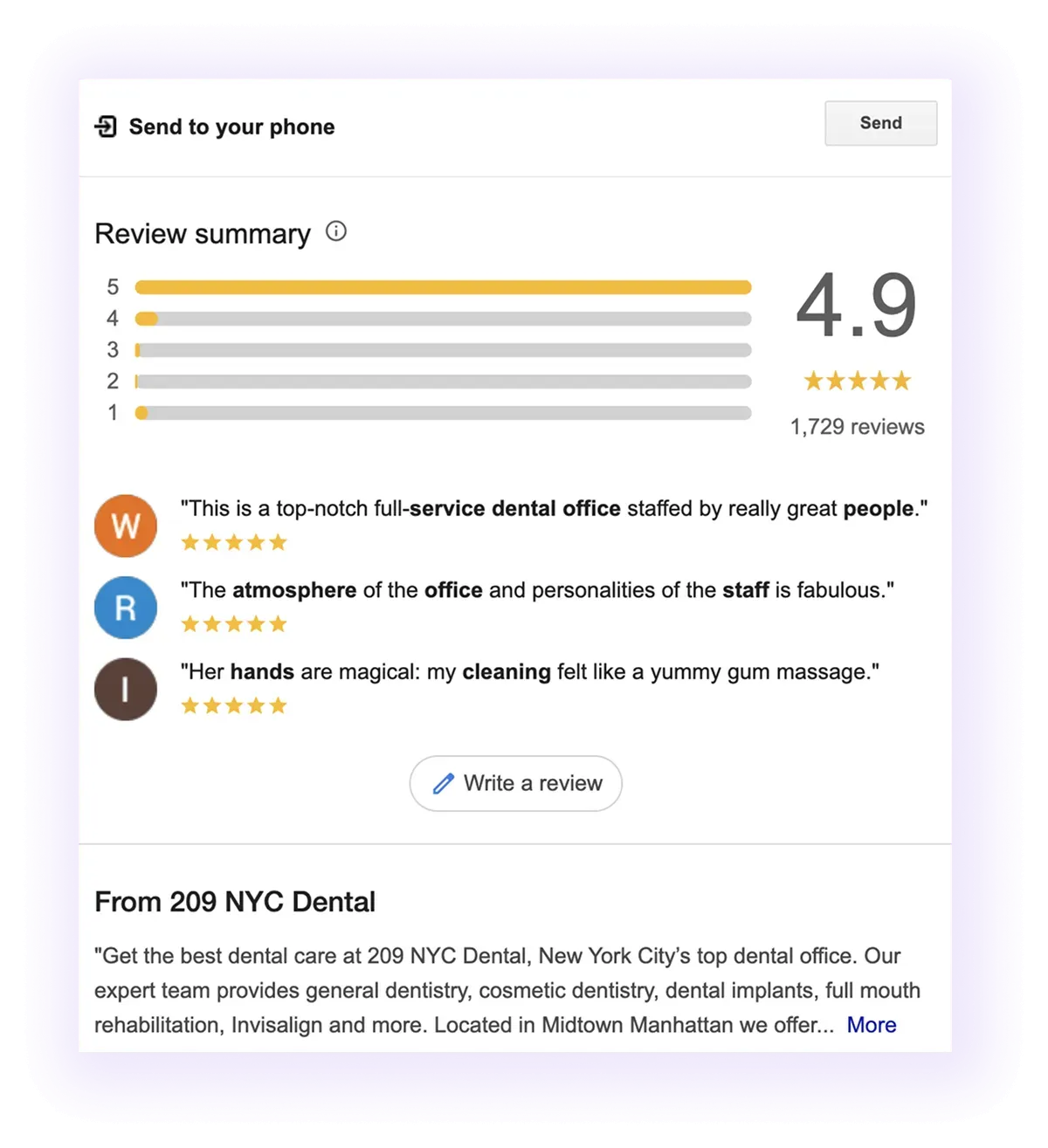
Once your GMB is fully filled out and active, your clinic will start appearing in local Google searches, including Google Maps and the Google Business section, making it easier for nearby patients to contact you.
Build High Quality Content for Your Dental Website
Strong content helps your homepage and service pages rank, and it’s one of the first things a good dentist SEO agency focuses on.
Write unique content for every page, even when topics overlap. Use a readability checker tool to ensure your content is easy to read. Add your keywords naturally, use a clear heading structure, and place your terms in the meta title, meta description, and headings.
Because dental sites fall under Google’s YMYL standards, add extra trust signals throughout your pages (this is a good tip for healthcare SEO in general):
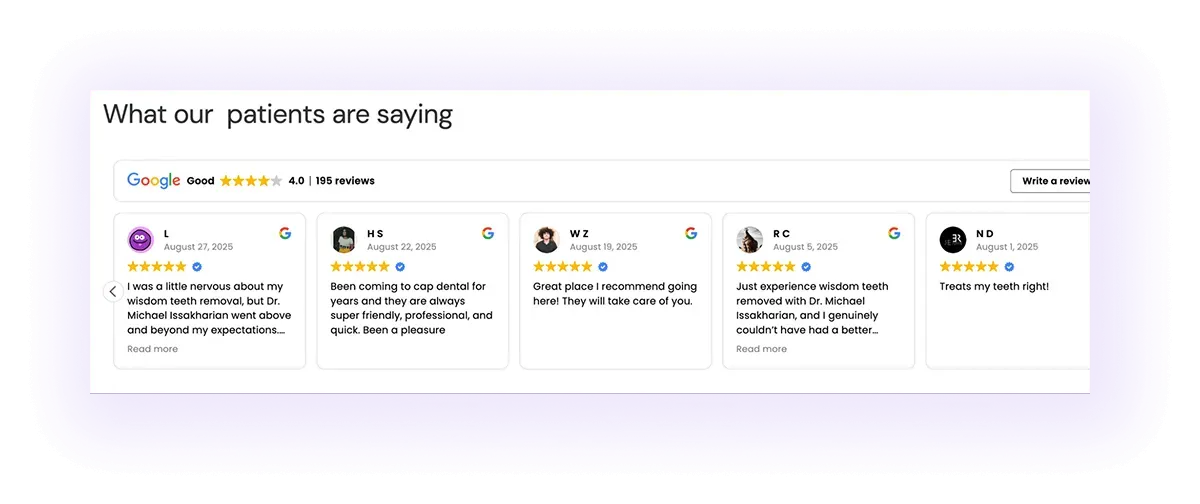
- Testimonials: Patient stories that show real outcomes (video or text).

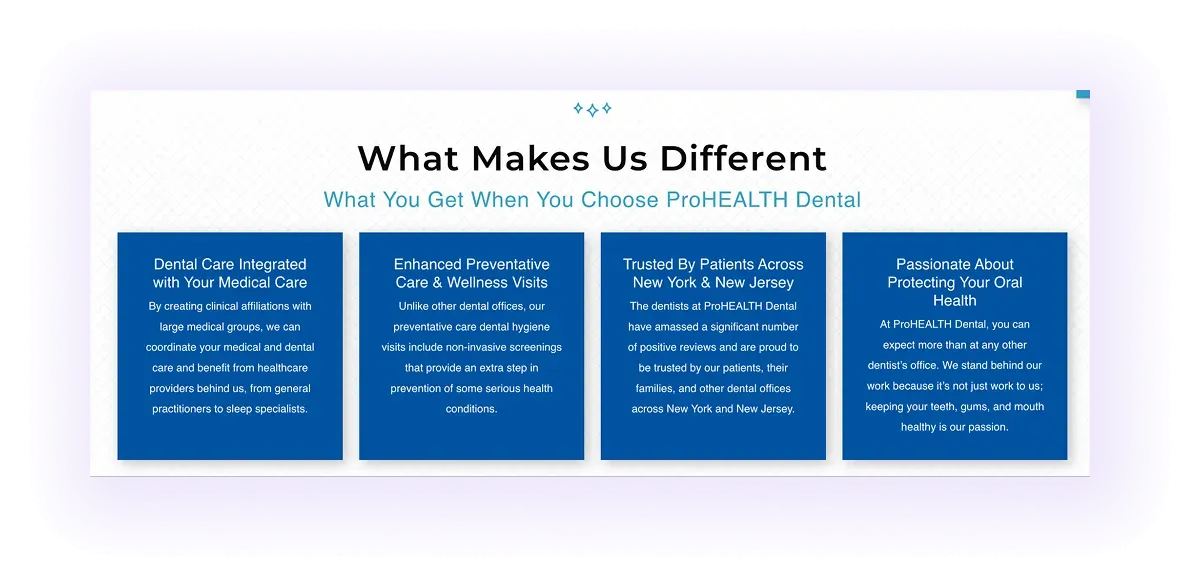
- Value Points: What sets your clinic apart, such as your approach or tech.
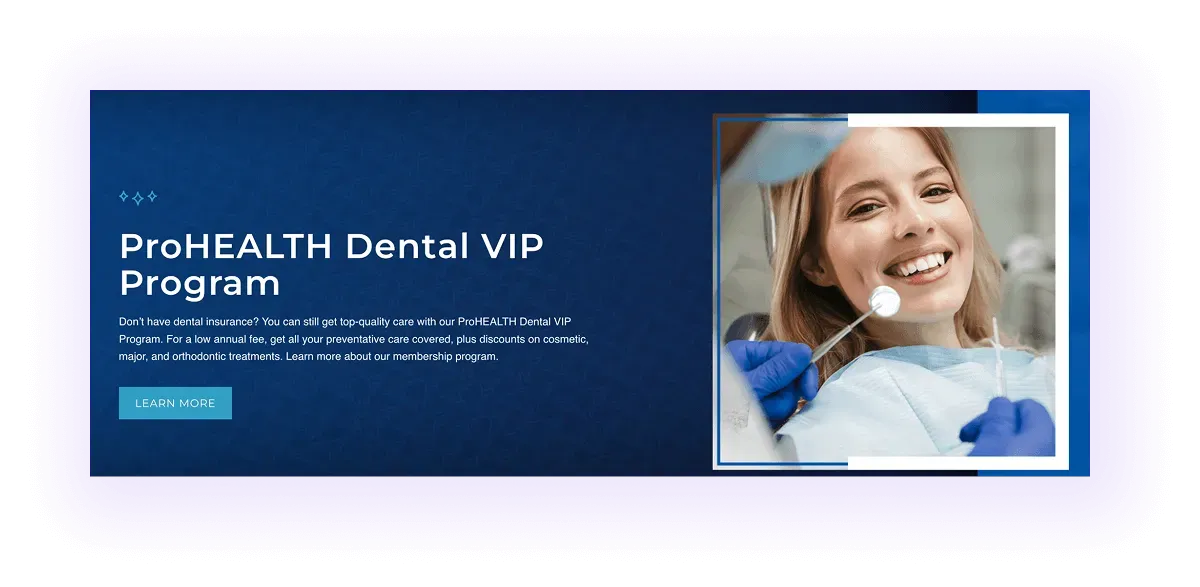
- Special Dental Programs: Senior care, pediatric plans, cosmetic packages.
- Years in Practice: Shows how long you’ve been helping patients.

- Number of Patients Served: Simple social proof.
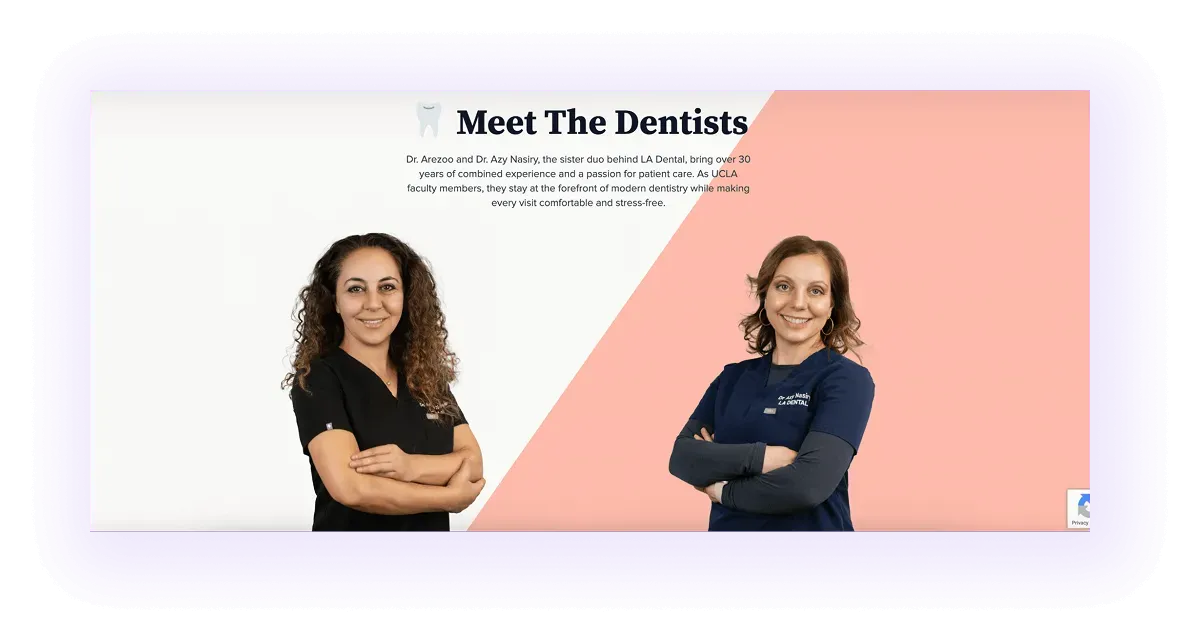
- Your Dentists: Profiles with credentials, specialties, and photos.
- Partners or Media Mentions: Any public recognition.
- Awards: Show your clinic’s strengths.

- Insurance Coverage: List plans you accept.

- Membership in Health Groups: Shows involvement in the dental community.

- Before-and-After Photos: With consent, show results for implants or other treatments.
Blog Posts
Now that you know your site should include a blog that answers real patient questions, here’s how to build posts that strengthen your rankings and support your service pages.
Use a simple pillar-cluster setup, which is one of the best content strategies for SEO:
Pillar Page: Your main service page (for example, “dental implants”)
Cluster Blogs: Posts on related topics that link back to that page:
- how dental implants work step by step
- recovery tips after dental implants
- cost of dental implants in city
- benefits of implants vs dentures
You can find strong topics using Google’s People Also Ask section or tools like Ahrefs.
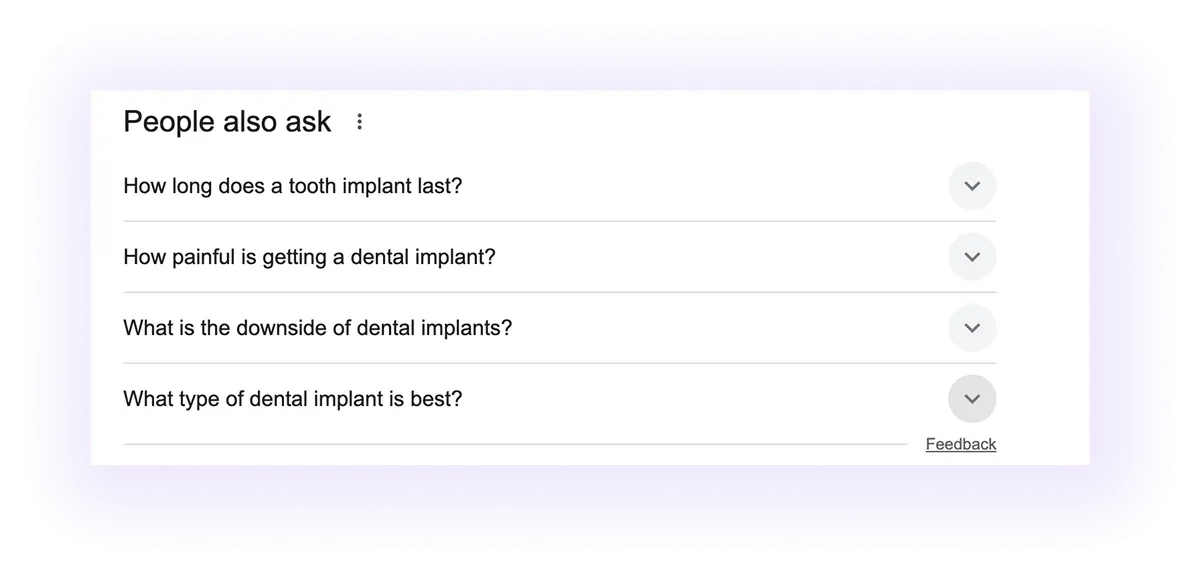
When writing each blog, make sure it’s:
- Unique and helpful
- Using keywords naturally in titles, headings, and meta tags
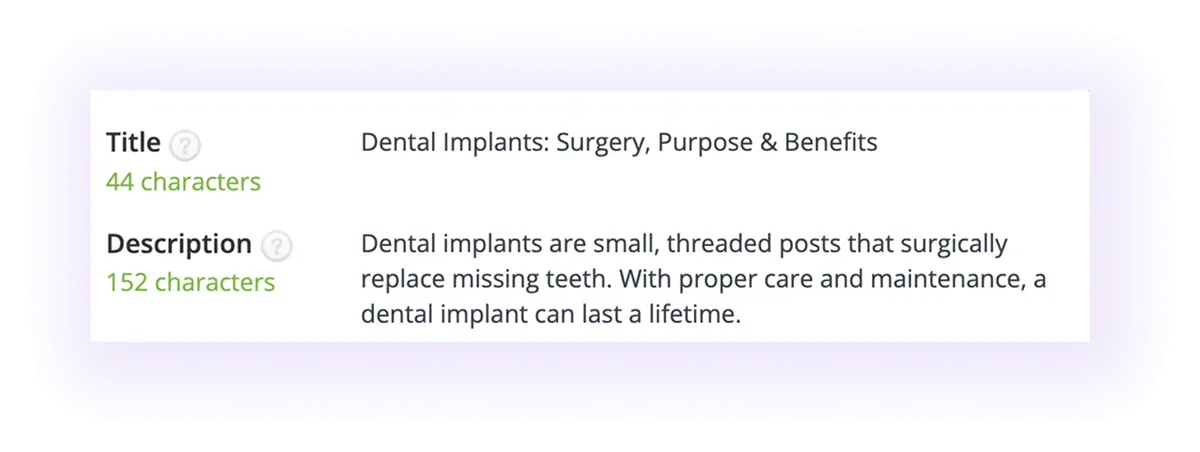
- Supported by comments from a certified dentist
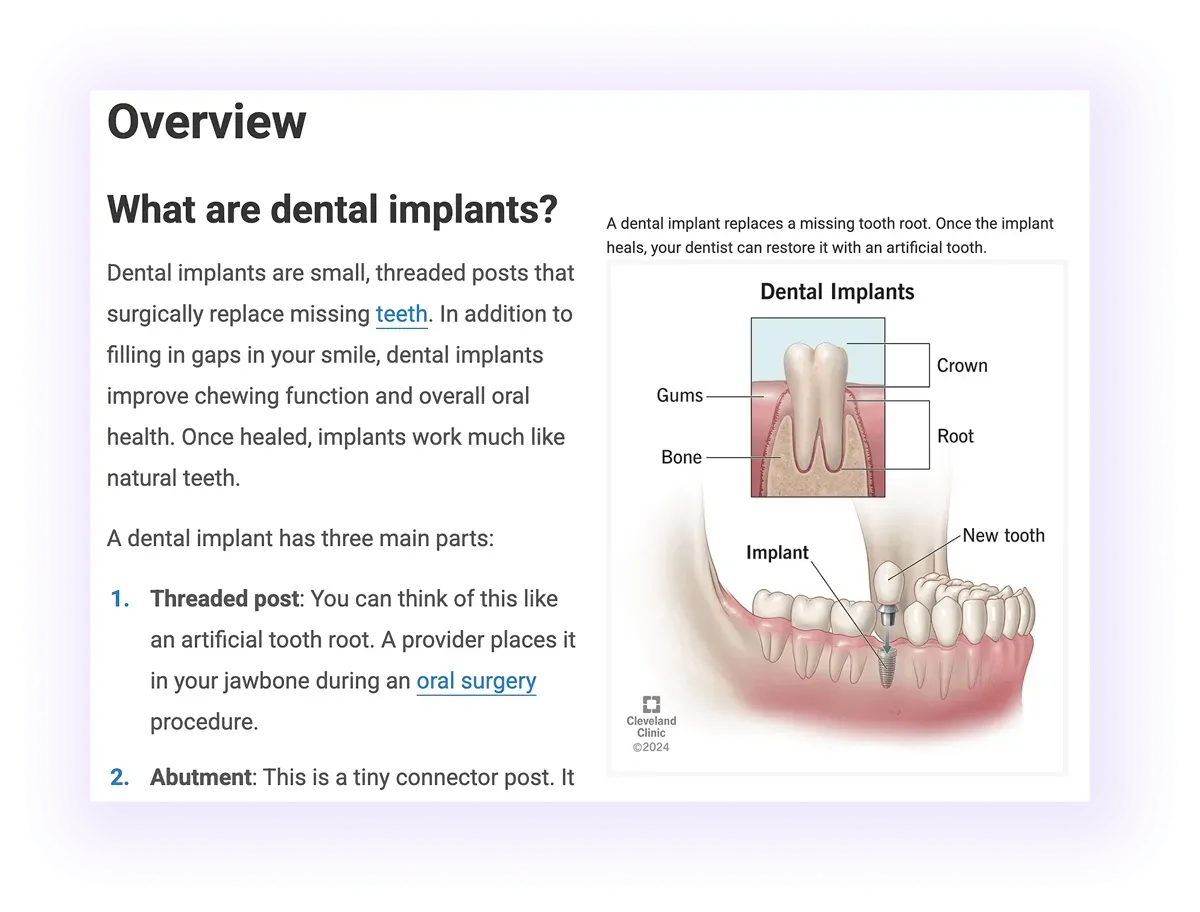
- Paired with photos, illustrations, or short videos
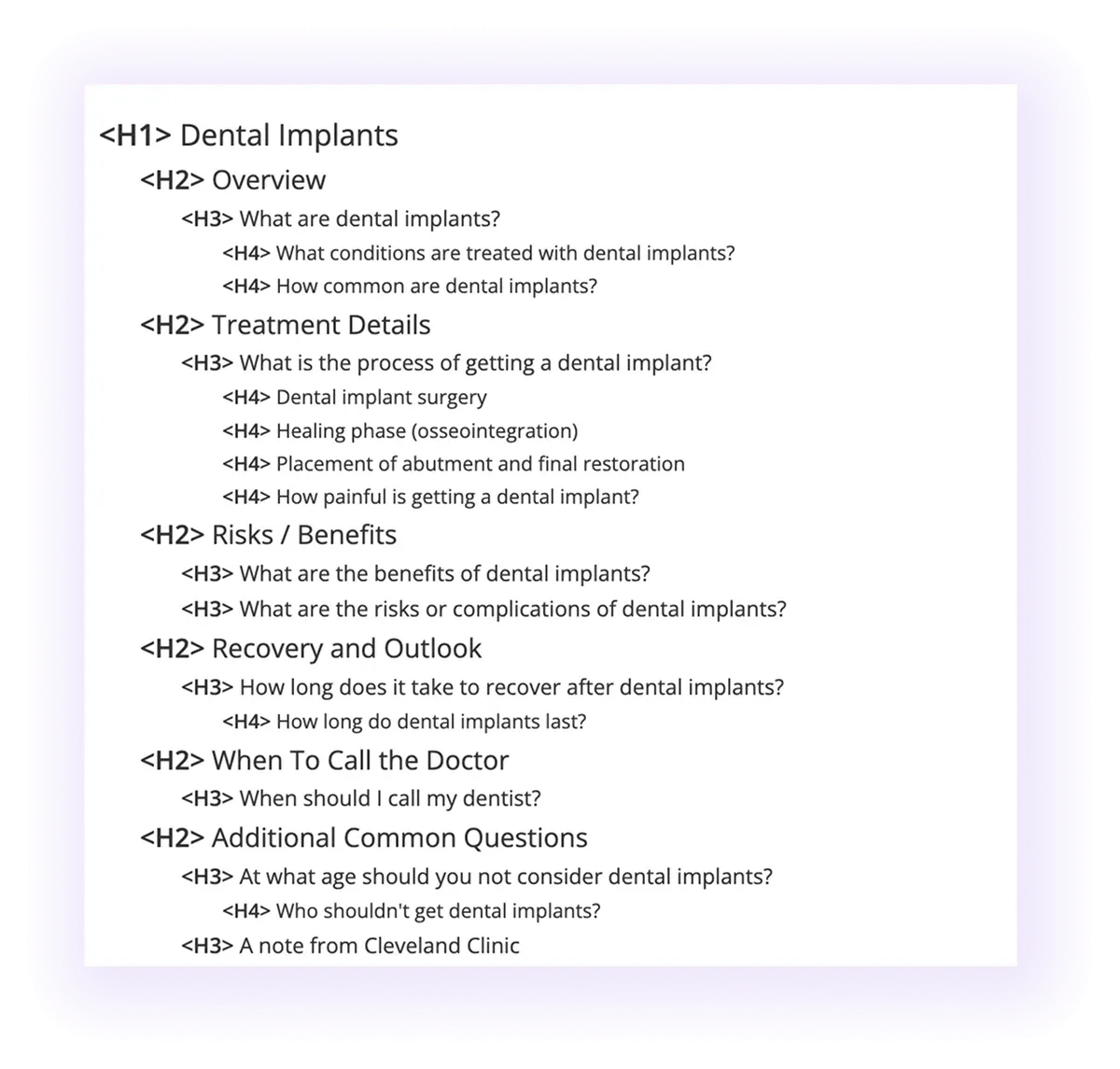
- Organized with clean headings (H1-H2-H3-H4)
- Backed by credible medical sources when citing data
- Easy to skim with lists or tables
This approach helps your blog drive steady traffic and strengthen the service pages it supports.
Implement Technical SEO for Your Dental Clinic
The last part of dental on-page SEO is the technical side: how fast your site loads, how well it works on mobile, and how clear your site structure is. It also affects how easily Google can crawl, understand, and index your pages.
A dental SEO expert usually checks all of these areas before making content changes. Let’s see how to ensure yours is well set up by following our technical SEO audit checklist.
XML Sitemap and Robots.txt
Create an XML sitemap so Google can find and index your pages. Include all important sections of your site: your homepage, service pages, location pages, dentist pages, and blog posts.
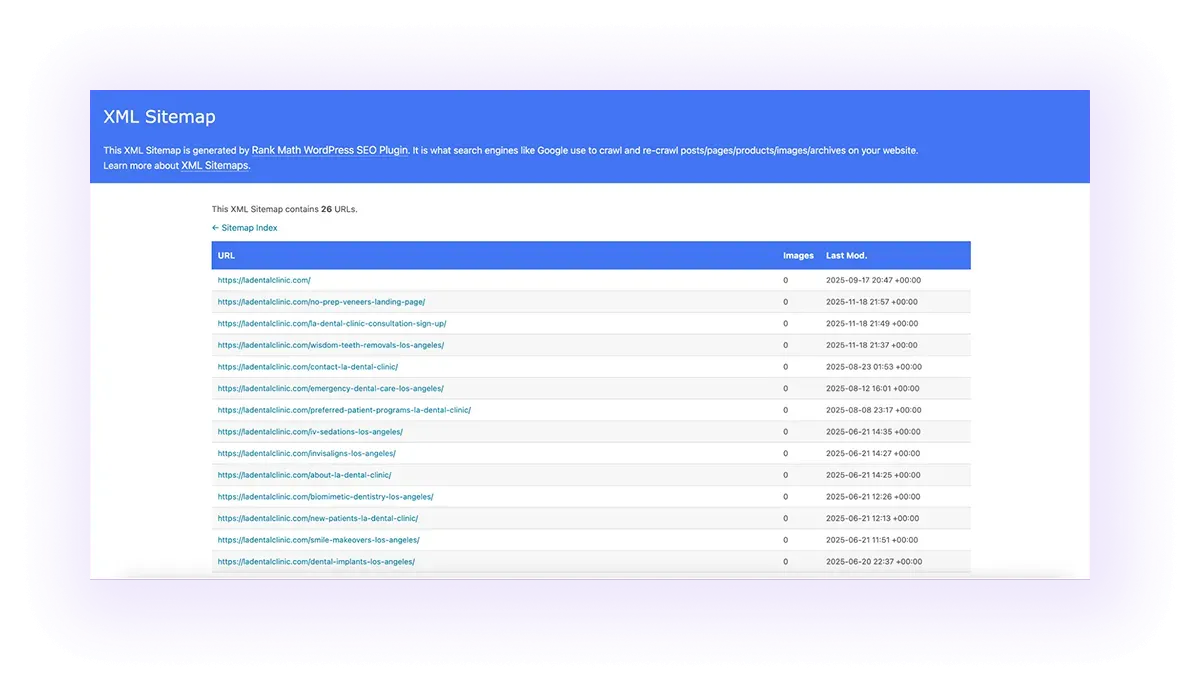
If you have pages that shouldn’t appear in search results, such as admin pages, member-only sections, or anything sensitive, block those URLs in your robots.txt file so Google doesn’t crawl or index them.

Schema Markup and Structured Data
If you want Google to show FAQs, reviews, or other rich results next to your pages, add the right schema markup.
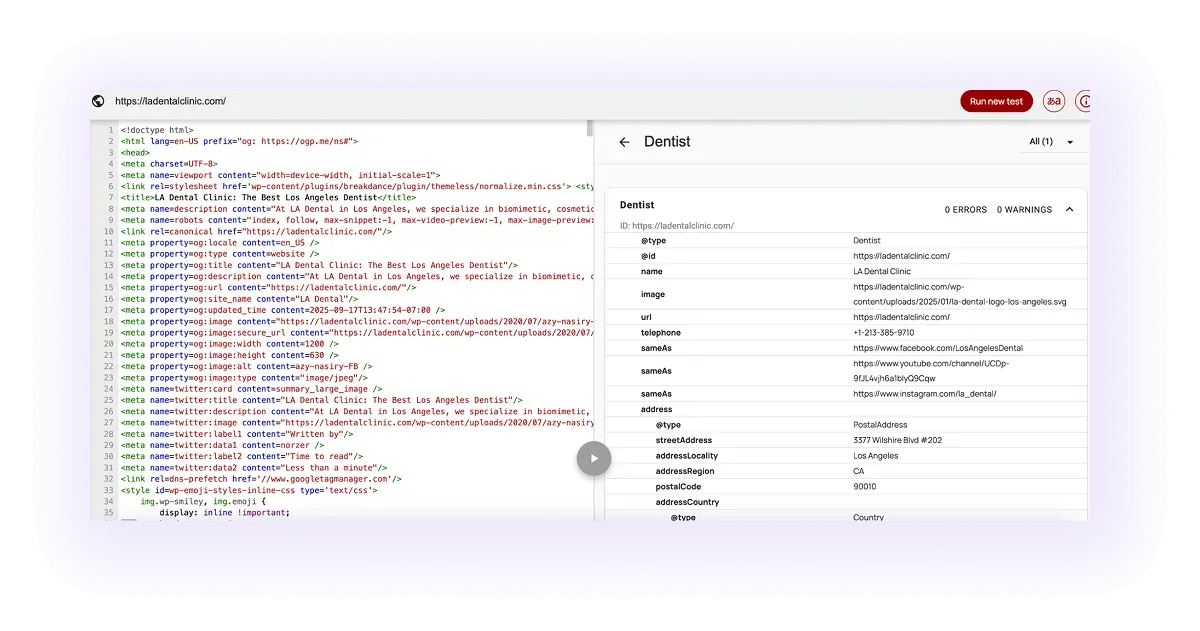
The most useful schema types for dental clinics include:
- MedicalBusiness / MedicalOrganization: Tells Google your clinic provides medical care.
- Dentist: Shows that your office is a dental clinic.
- Service: Describes each treatment you offer, such as implants or teeth whitening.
- FAQPage: Lets your questions and answers appear directly in Google results.
- AggregateRating: Displays your average star rating and total review count.
- LocalBusiness: Connects your clinic to your physical location for local search and Maps.
- BreadcrumbList: Helps Google read your navigation paths and show them in search results.
URL Structure
Your dental website URLs should be clear for both Google and your visitors. Keep them short, descriptive, easy to read, and include the page’s target keyword. Use hyphens instead of other characters.
This is a basic part of SEO services for dentists and helps Google understand your pages faster.
Good URL: yourwebsite.com/services/dental-implants
Bad URL: yourwebsite.com/p123?ref=456&cat=9
Internal Link Building for Dental Websites
Internal links help your pages support each other and build stronger topical depth. A dental SEO company will always set up these connections because they help Google see how your content fits together.
You can use several types of internal links, shown in the table below.
| Link Type | Purpose | Example |
|---|---|---|
| Navigation links | Help users and Google reach your main sections. | Services, Locations, and Contact in the top menu. |
| Service → Service | Show the connection between related treatments. | Dental implants page linking to bone grafting page |
| Blog → Blog | Connect related topics and keep readers moving through your site. | “Implant recovery tips” blog linking to a blog on how implants work |
| Blog → Service | Send strength from informational posts to your service pages. | “Types of dental implants” blog linking to the main dental implants page. |
| Service → Location | Show where each service is offered. | “Teeth whitening page linking to Los Angeles teeth whitening. |
Mobile Optimization for a Dental Services Website
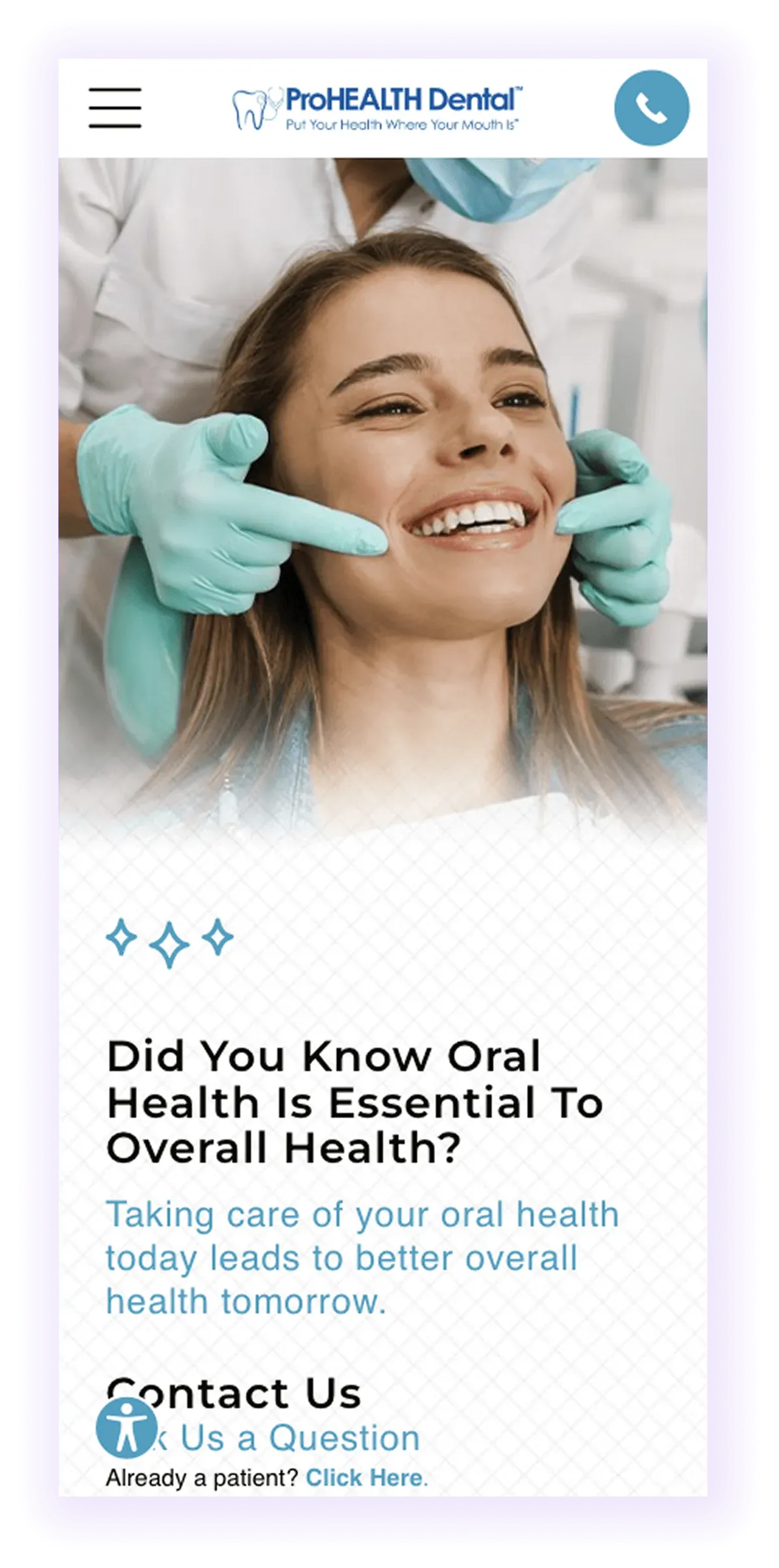
Many people search for dental care on their phones, so Google checks how well your site works on mobile. A dental SEO agency reviews this first because it affects rankings and conversions. Make sure your site feels smooth on every device by following the mobile optimization steps:
- Use a responsive design.
- Compress images for fast loading.
- Add tappable buttons and a simple hamburger menu.
- Use clear call-to-action buttons for one-tap calls.
Website Speed & Performance (Core Web Vitals)
Your site’s load time plays a big role in dental practice SEO and rankings. Faster pages help your dental website appear higher on Google. To improve speed, make sure you:
- Avoid large video files that slow pages down.
- Lazy-load images so only the top section loads first.
- Use reliable hosting and a CDN to deliver pages quickly across regions.
- Enable server-side rendering (SSR) so the first load is fast.
- Compress images before uploading them. We also recommend you check our image optimization checklist for more advanced tips.
- Minify CSS, JavaScript, and HTML to reduce file sizes.
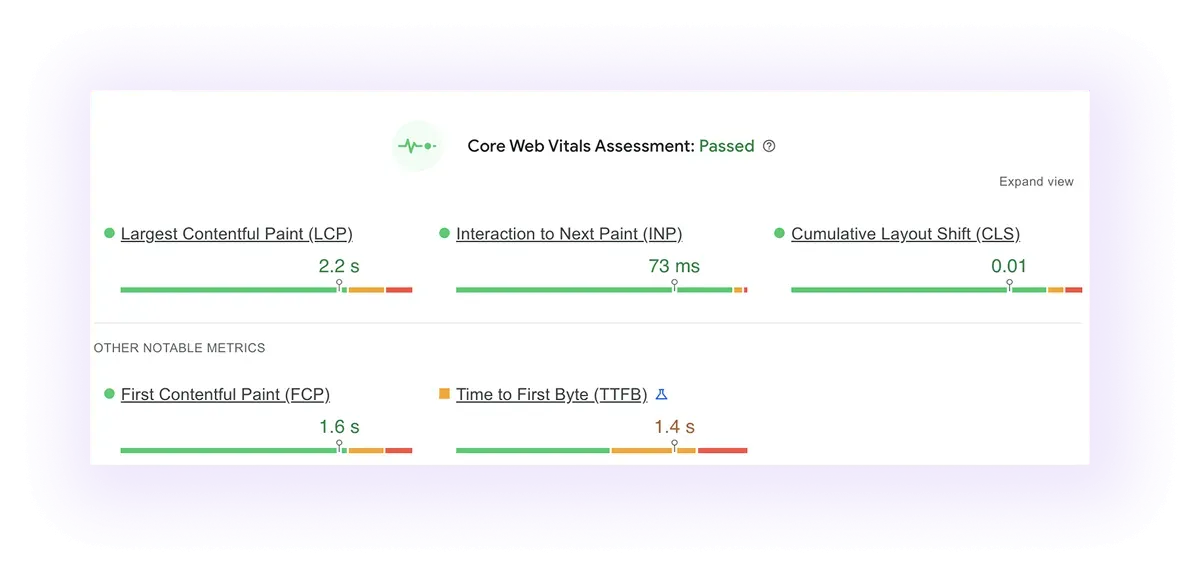
After making these updates, test your site with tools like Google PageSpeed Insights and GTmetrix. Check your Core Web Vitals:
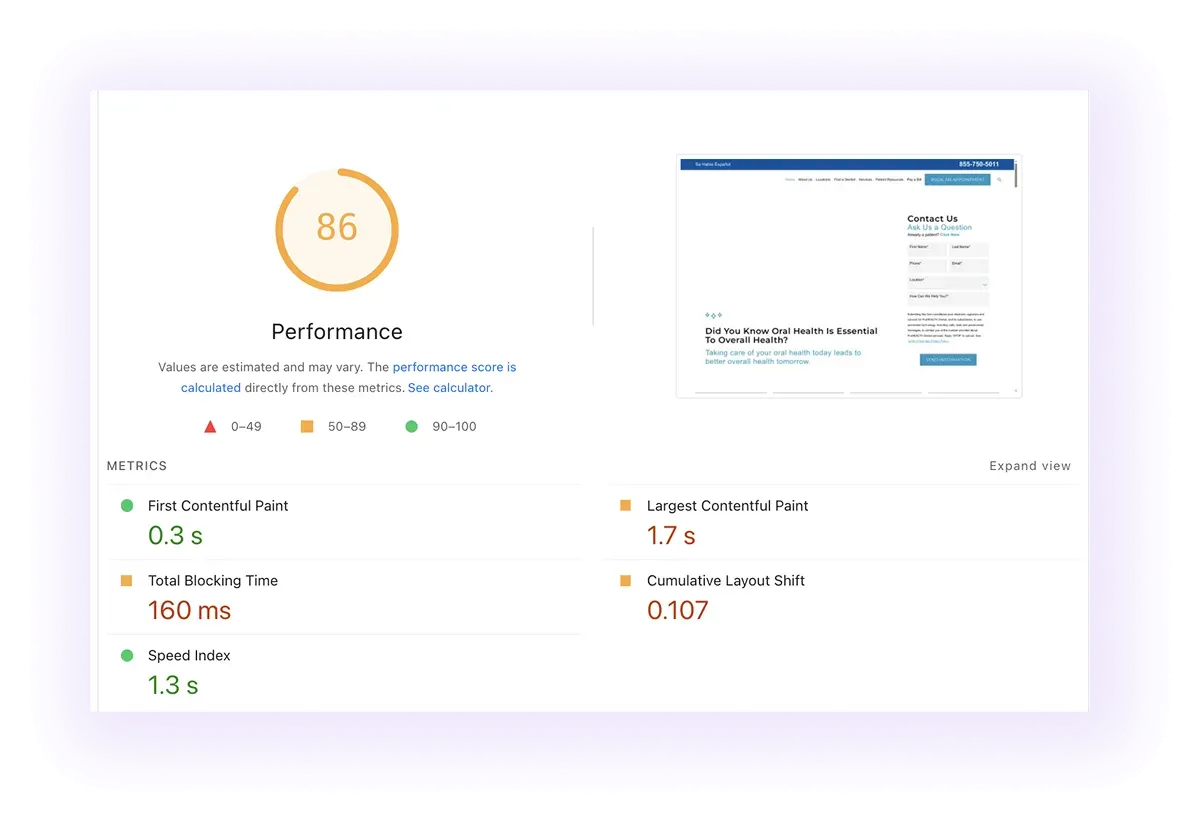
- LCP under 3 seconds (main content loads).
- FCP under 1 second (first element appears).
- CLS at 0 (no unexpected shifts).
If your site meets these numbers, you’ll see a “Passed” result in the Core Web Vitals report.
Frequent Technical Audits
Any time you update your dental website, add a new service such as laser gum therapy, refresh dentist profiles, or expand to new locations, technical issues can arise.
Monthly audits help prevent problems and keep your site running smoothly. Check for:
- Broken Links: Use Screaming Frog to find and fix them.
- Redirect Errors: Confirm all redirects work in Ahrefs.
- Orphan Pages: Spot pages with no internal links in Ahrefs.
- Duplicate Content: Scan for repeats with Copyscape.
- Indexing Issues: Review Google Search Console.
- Mobile Visibility: Confirm pages load correctly on phones.
- Crawl Errors: Catch and fix them with Screaming Frog.
- Large Images or Slow Pages: Test with PageSpeed Insights or GTmetrix.
- Core Web Vitals: Check LCP, FCP, and CLS.
- Schema Markup: Verify using Google’s Rich Results Test.
Regular checks like these keep your site fast, visible, and free of errors.
If you prefer to hand this off, our team offers dentist SEO services that include a full technical audit and a clear plan to keep your site in good shape month after month.
Link Building for Dental Websites
Once your on-site work is set, the next step is off-site dentist SEO. This part focuses on building credibility for your dental website through strong backlink strategies.
The best dentist SEO agency focuses on high-value links instead of long lists of weak ones. So let’s get you these links as well.
Guest Posting and Link Insertion
The first step is finding well-known sites that fit the dental space. Examples include:
A good dentist SEO company uses two main methods to earn strong links from sites like these:
| Type | Example |
|---|---|
| Dental websites | dental.com |
| Wellness websites | wellandgood.com |
| Healthcare news platforms | healthcareittoday.com |
| Family-focused platforms | parents.com |
1. Guest Posting: You write a full article for the site and include a link back to your clinic. This brings new visitors and shows readers you know the subject well.
Example: A post on Well+Good about tips for healthy teeth in children that links to your pediatric dentistry page.
2. Link Insertion: Instead of creating a new post, you find an existing article that’s missing helpful details. You contact the editor with added insights or data and request a natural link placement. You contact the editor with added insights or data and request a niche-relevant link placement.
Example: Spotting an article on healthcareittoday.com that barely covers dental implants, you offer clearer information and request a link to your dental implants page.
When reaching out to editors, include:
- Who you are and what your clinic does
- The added value you can bring to their article
- Where your link fits naturally
- Any past work, press mentions, or credentials that support your request
You can also reach out to us if you don’t have time to secure quality backlinks yourself, and we will help with our contextual backlink services.
Directory Listings for Dentists
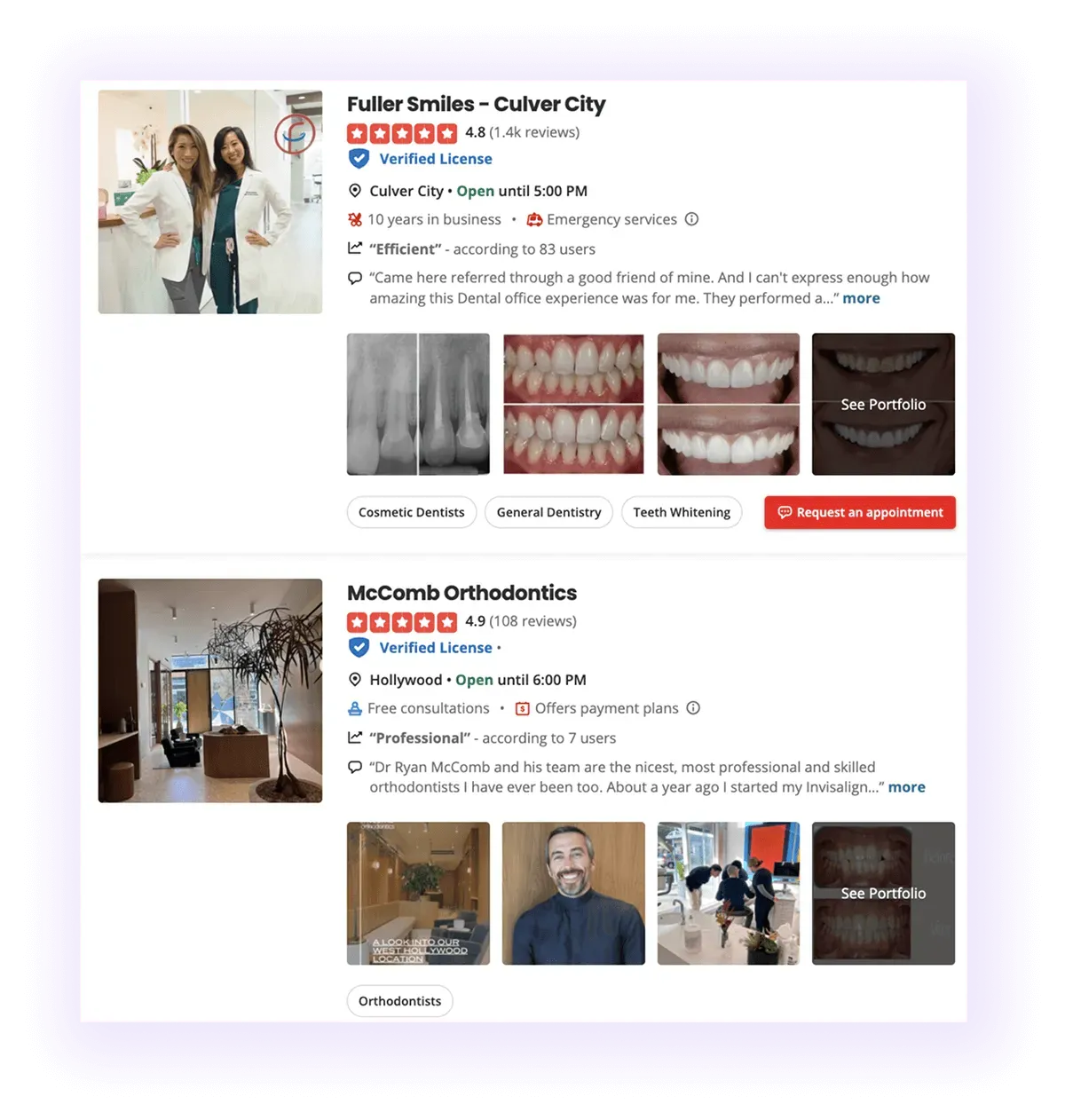
Many patients read more than Google reviews. They also consult online directories to verify trust and reliability. Securing high-quality local backlinks and listing your clinic on the right platforms help strengthen your presence. Examples include:
- Dental-Specific Directories: Dentwoo
- Health and Wellness Directories: MedlinePlus
- Doctor and Medical Directories: Vitals
- Local Business Directories: Yelp
When creating your profiles, include:
- Accurate clinic details (name, logo, address, phone number, and hours)
- Full list of services, like “dental implants,” “cosmetic dentistry,” “pediatric dentistry,” “emergency dentistry”
- Clear clinic description (what patients can expect when they visit)
- Certificates, awards, and professional affiliations
- Dentist bios and achievements
- Professional replies to reviews
- A direct link to your website
Digital PR for Dental Websites
Many clinics include digital PR as part of their dentist SEO services because it brings strong visibility and steady referral traffic. It involves getting featured on well-known sites like Forbes or trusted dental publications such as dentistryiq.com.
To build a solid digital PR campaign:
- Choose a Strong Topic: Pick a subject that catches a journalist’s attention and helps readers learn something useful.
Example: “How new imaging tools are changing dental diagnostics for patients.” - Back it with Solid Data: Add statistics, patient surveys, and quotes from recognized dentists.
- Write a Simple, Readable Article: Keep it organized, easy to follow, and friendly for both journalists and everyday readers.
- Create a Short Pitch: Summarize your topic, highlight the data, and suggest angles a journalist can develop into a story.
- Reach Out to Journalists: When your topic feels timely and helpful, they may publish it and link back to your site, giving your clinic more visibility and steady traffic.
How to Track the Success of Your Dental SEO Strategy
Now your dental practice SEO is set. The final step is tracking how well your strategy performs. These SEO performance and report tools give you a full picture and are often included in SEO services for dentists:
- Google Search Console: Check keyword movement, indexing, and page coverage.
- Google Analytics 4: Monitor traffic, conversions, and user actions.
- Ahrefs & SEMrush: Review your backlink profile and follow keyword changes.
- Screaming Frog: Spot broken links, duplicate headings, and 404 errors.
- PageSpeed Insights & GTmetrix: Test site speed and Core Web Vitals.
- Microsoft Clarity & Hotjar: View heatmaps, clicks, and session recordings.
- Google Tag Manager: Track calls, form submissions, and button clicks.
Using these tools together helps you measure progress, fix issues early, and keep your dental site performing well.
Partner with a Dentist SEO Agency That Knows Your Industry
If you want support putting this whole strategy into motion, our dental SEO agency is here to help. We’ve helped 50+ dentists grow their patient flow, and we’re ready to do the same for you.
Reach out anytime, and our dentist SEO company will shape a plan that brings in steady, high-intent patients all year long.
Submit the form - Get Free Proposal
%202.png)
24 hours
FAQ


Submit the form - Get Free Proposal
24 hours
.svg)