
SEO for Law Firms Strategies and Keywords by Law Firm SEO Agency
Bring in more qualified clients with law firm SEO, trusted by 75+ attorneys and firms nationwide to increase visibility and win more cases!
5.0




Running a U.S. law firm is stressful because income, marketing, and operations sit outside your control as much as the legal work itself.
After large settlements, firms face banking, tax, and fund administration issues. Billing pressure increases as clients push routine work to ALSPs and lower-cost legal software.
Marketing adds friction. State bar ad rules make ROI hard to track, while privacy expectations block client stories, testimonials, and real case examples.
Bottom line: firms need predictable income and qualified leads. That’s why attorney SEO matters. In this guide, we share the strategy our law firm SEO agency has used to help 75+ lawyers and law firms attract consistent, high-intent leads, while staying within bar rules.
Why Do Lawyers and Law Firms Need to Invest in SEO?
- Lawyer SEO creates a steady flow of qualified clients over time, reducing income swings caused by credentialing delays, missed cases, or referral gaps.
- Paid ads keep getting more expensive. SEO costs remain steady and compound, generating leads without constant ad spend.
- SEO puts your firm in front of searchers in the right cities and practice areas, cutting missed work tied to jurisdiction limits or remote notarization rules.
- Ranking above ALSPs and legal software helps firms attract higher-value cases and protect revenue.
- PPC can cost around $810,000 and stops the moment you pause spending. Law firm SEO continues driving traffic and inquiries long after the work is done.
- Rankings, traffic, and engagement show what’s working, giving firms a clearer ROI than most traditional marketing.
But if results were automatic, every law firm would already rank. They aren’t, and that’s why the knowledge from an attorney SEO agency could help.
Let’s get practical and start where lawyer SEO begins: keyword research.
Do Keyword Research and Competitive Analysis for Your Law Firm’s Website
Start by listing your core practice areas, then break them down into the specific case types clients search for.
Instead of stopping at broad labels like “personal injury” or “employment law,” drill down to real problems:
- dog bite
- car accident
- workplace discrimination
- wrongful termination
- land use and zoning disputes
You can also add industry-focused areas, like “agricultural law” or “banking and finance law,” based on the clients you want to attract.
Next, pair each service with “lawyer” or “law firm.” Think “dog bite lawyer” or “land use law firm.” Enter those terms into SEMrush, Ahrefs, or Google Keyword Planner. You’ll see:
- What people search
- How often do they search
- How hard will it be to rank
- Which firms dominate results
When we run “injury lawyer” in Ahrefs, the data quickly shows which related searches bring demand and which are overcrowded.
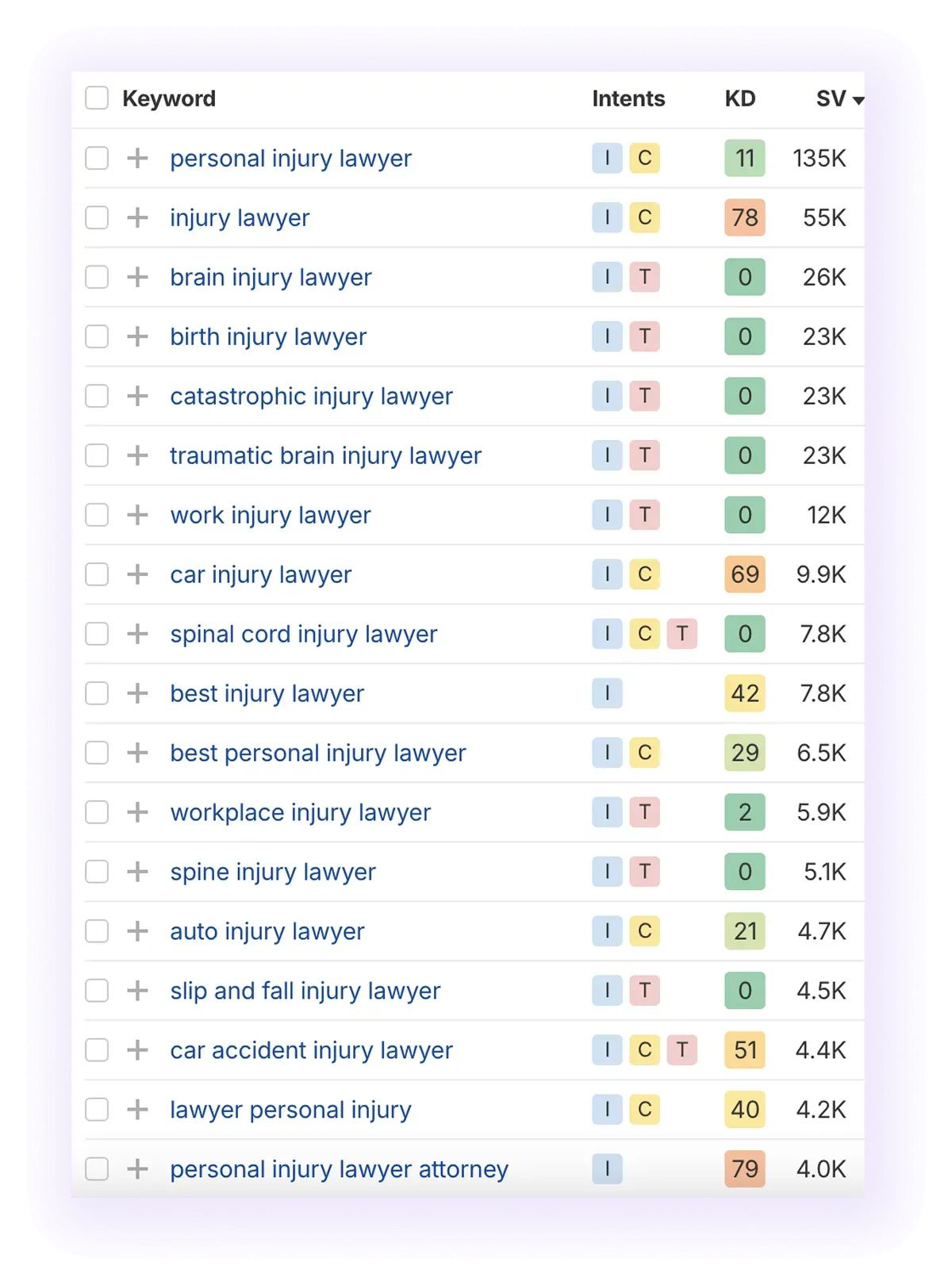
Don’t ignore longer searches tied to urgency or outcomes. These come from people actively looking for legal help. Our CTR calculator helps estimate traffic and case potential for each term.
Also, review broad terms like “lawyer” and “law firm.” Apply location filters to spot which practice areas drive demand in specific cities or counties, and where competitors leave gaps.
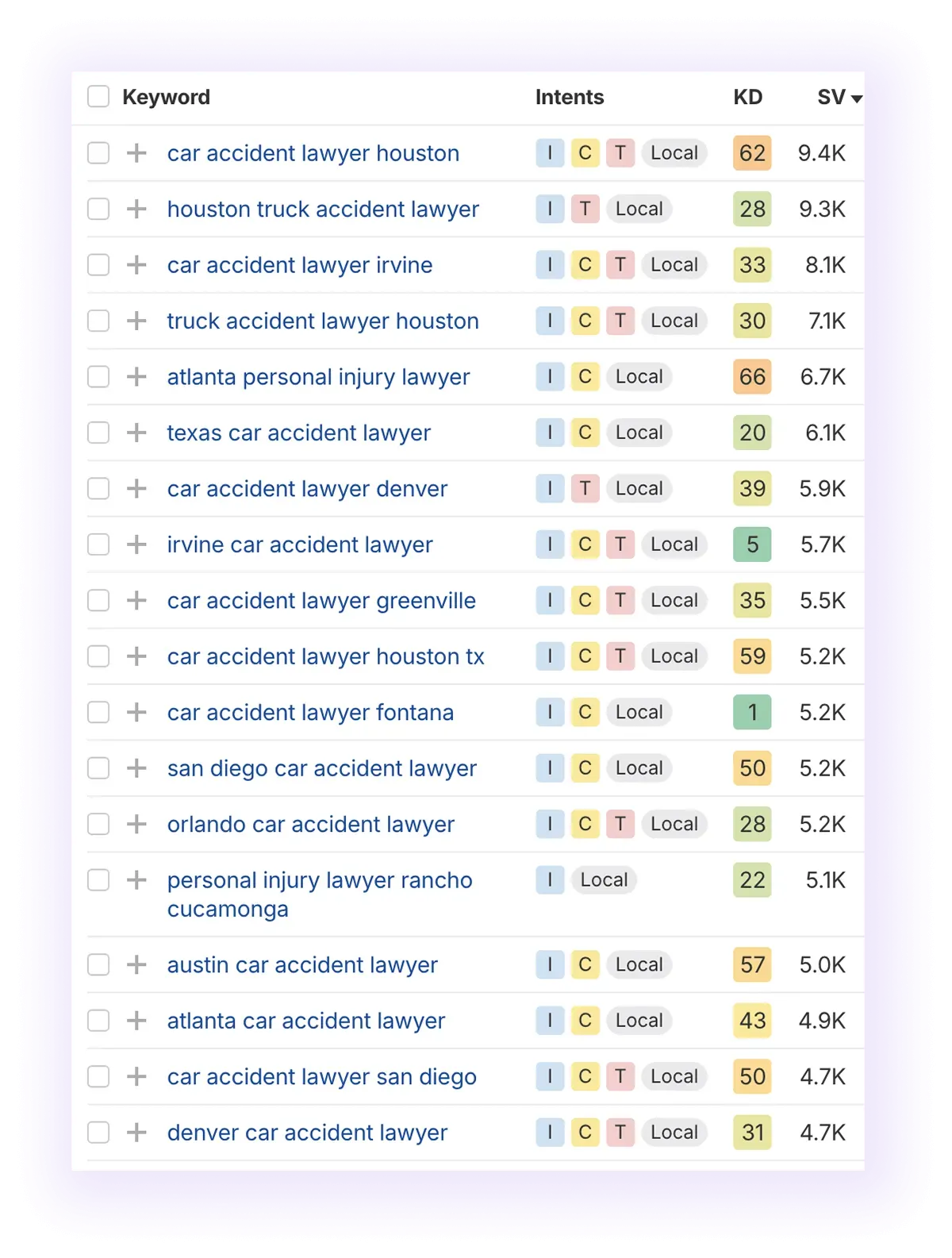
We recommend using our keyword research checklist to walk through the process step by step so you don’t miss any important details.
Top 30 Real Keywords for Law Firms
Transactional for Potential Clients
- education lawyer
- financial lawyer
- agriculture lawyer
- insurance claim lawyer
- investment lawyer
- personal injury lawyer
- employee rights lawyer
- sexual abuse lawyer
- lawyer for car accidents
- dog bite lawyer
- class action lawsuit
- slip and fall lawyer
- real estate lawyer
- land use lawyer
- energy lawyer
Informational or Educational
- what happens after arrest
- how to file lawsuit
- steps to appeal sentence
- what is reasonable doubt
- rights after police search
- how long statute limitations
- understanding personal injury settlements
- how to request records
- what does discovery mean
- how to expunge record
- how child custody decided
- what is punitive damages
- understanding breach of contract
- what is contributory negligence
- how to challenge evidence
With around 30 strong keywords in hand, you’re ready to start law firm SEO. The next step is to use them in the right places and the right way.
That’s where guidance from someone who’s been providing attorney SEO services matters. If you need support, reach out and share your goals. Our SEO agency for law firms will help you turn those keywords into measurable results.
Outline Your Law Firm Website Hierarchy and Menu Structure
Website hierarchy is how you organize pages around keyword intent so both users and search engines can navigate your site without friction. Every law firm site needs three core static pages:
- Homepage: Targets broad terms like “law firm,” “lawyers,” or “law company,” while clearly showing your main practice areas so visitors know what you do at a glance.
- About Us: Tells your firm’s story and builds trust through credentials, experience, awards, and notable attorneys.
- Contact Us: Makes it easy to reach you with a simple form, click-to-call buttons, and options such as WhatsApp, where relevant.
Add these pages to your main navigation and link them cleanly so they’re easy to find and crawl.

Service Pages (Practice Area Pages)
When someone needs a lawyer, they search for the exact problem they’re facing. To match that intent, your site needs a dedicated page for each service, such as:
- personal injury lawyer
- divorce lawyer
- finance lawyer
- real estate lawyer
Add these pages under a “Services” or “Practice areas” menu so they’re easy to find.
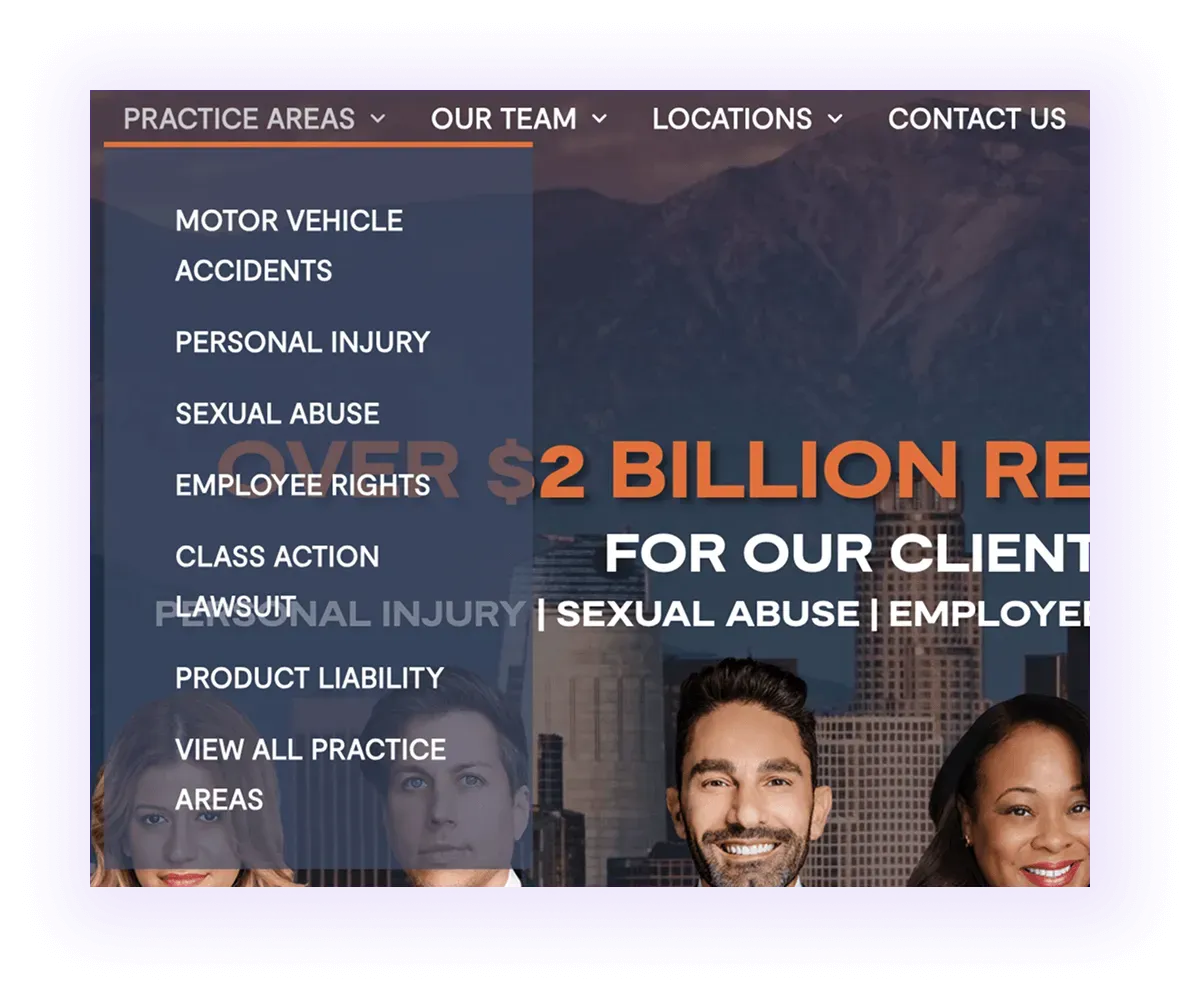
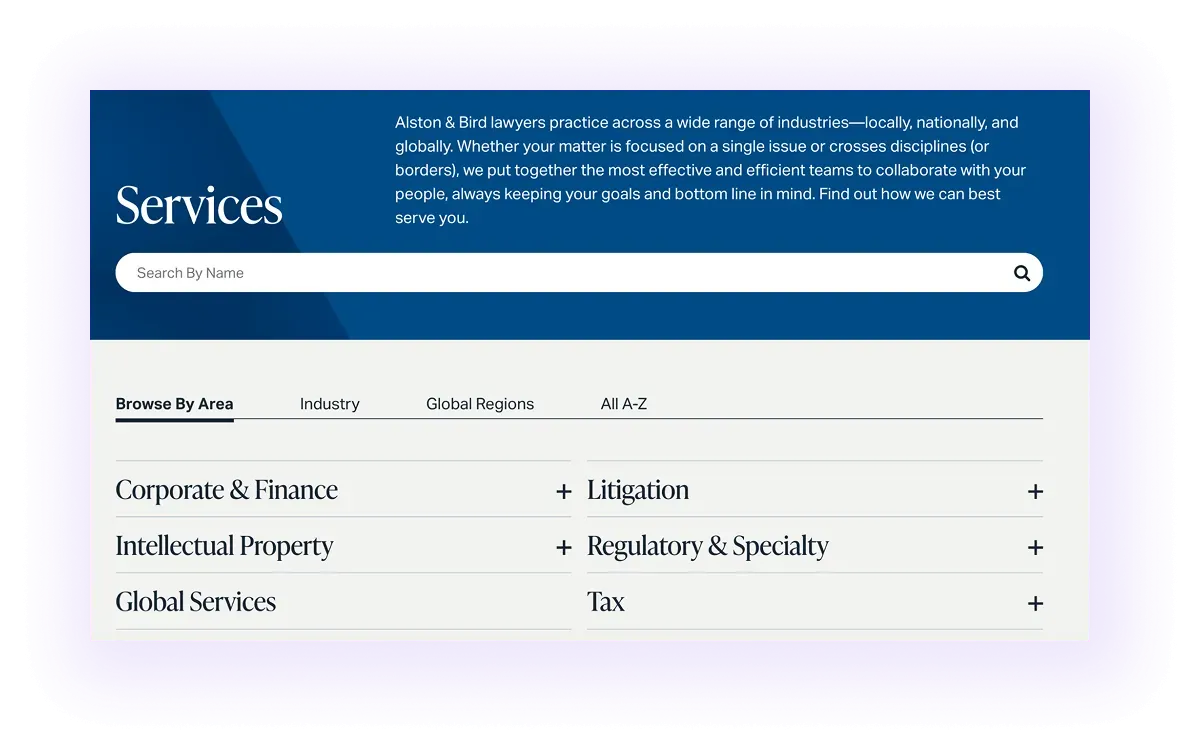
It also helps to create a service hub page that lets visitors browse or filter all services in one place.
Pages for Your Lawyers and Attorneys
Individual attorney pages are a strong asset for lawyer SEO. Many searches target specific lawyers or experience, and dedicated bios capture that demand and drive leads.
These pages often outrank service pages because Google treats attorney bios as more authoritative than conversion-focused practice pages.
List them in your navigation under “Team,” “Legal team,” or “Partners.”

You can also add short bio snippets on service or location pages that link to each profile. This improves navigation, strengthens internal linking, and reinforces each lawyer’s experience.

Local Pages
Keyword research often shows apparent geographic demand; searches like “car accident lawyer in houston” or “personal injury lawyer in atlanta” attract real volume. To capture it, create a dedicated page for each city or area you serve.
These pages signal to Google where you practice. Link to them from your navigation or related pages so they’re easy to find and crawl.

This is the foundation of local attorney SEO. We’ll cover advanced tactics later. For now, review our local SEO checklist before moving on.
Blog Pages
When legal issues come up, people often start with questions (not a lawyer search). They want clarity on the process and their options before reaching out. Common searches include:
- How do I know if I can file a personal injury claim?
- What steps are involved in contesting a traffic ticket?
- When can I sue for breach of contract?
Answering these questions on your site drives early-stage traffic, demonstrates legal expertise, and builds trust. These pages also support your service pages and increase the chance that readers return when they’re ready to hire counsel.
Stop Guessing Your Law Firm Website Structure—We Will Show You Exactly What Pages You Need
All of these page types matter for lawyer SEO. What matters more is how each one is set up, not just that it exists.
If you want help getting that right, we can support you as an SEO consultant for law firms. Reach out to us about our attorney SEO services, and let’s talk.
How to Do Local SEO for Lawyers and Attorneys
U.S. law is state-specific, yet many firms rank in the wrong cities or states because their service-area signals are unclear. Clients want lawyers who are licensed and experienced in the jurisdiction where their case is filed.
A New York attorney can only practice in New York. A California lawyer can’t represent clients outside that state. That’s why searches often look like:
- law firm near me
- lawyers in [city]
- dog bite lawyer in my area
To show up in these results, you need local SEO for law firms. The first step is to define your model (local, multi-location, or national) so Google understands where you practice.
If you’d rather not manage this yourself, contact our attorney SEO agency about our local SEO services. We’ll make sure your firm appears in front of the right clients, in the right locations.
Local Law Firms
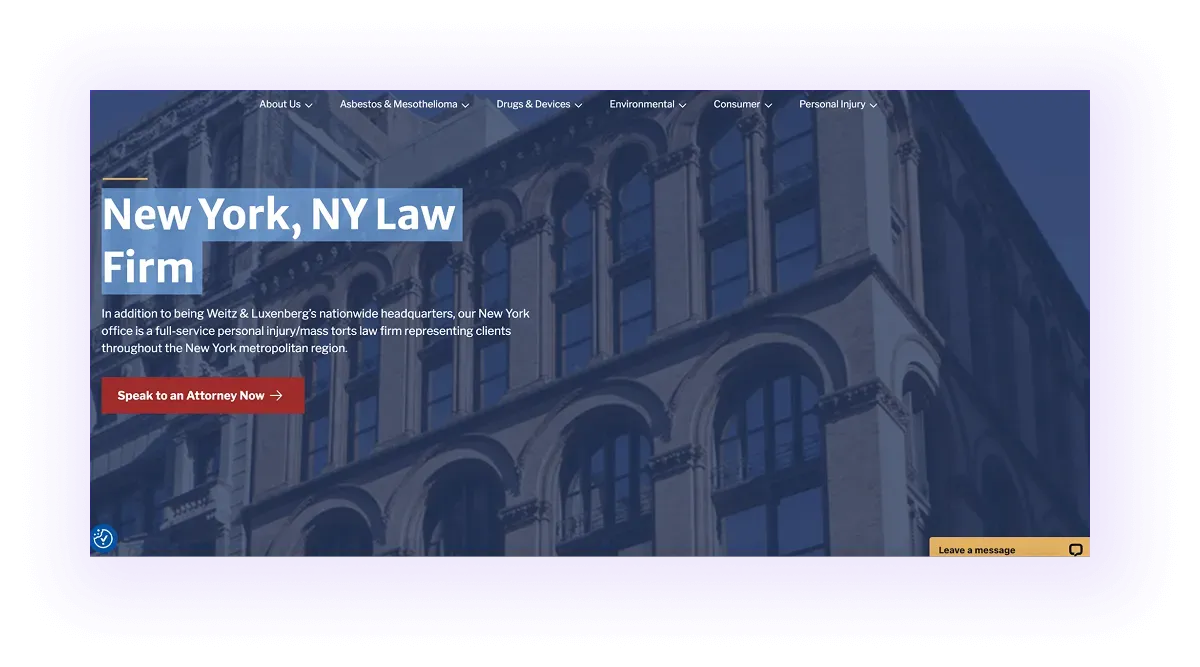
If your law firm practices in a single state, make that location clear across your site. Your homepage and service pages should pair services with your city or state, such as:
- law firm ny
- lawyers in new york
- family lawyers new york
Once selected, place these terms in title tags, meta descriptions, headings (H1-H3), and page content. This signals both service and location relevance, helping your firm rank in local searches.
National or Multi-Area Law Firms
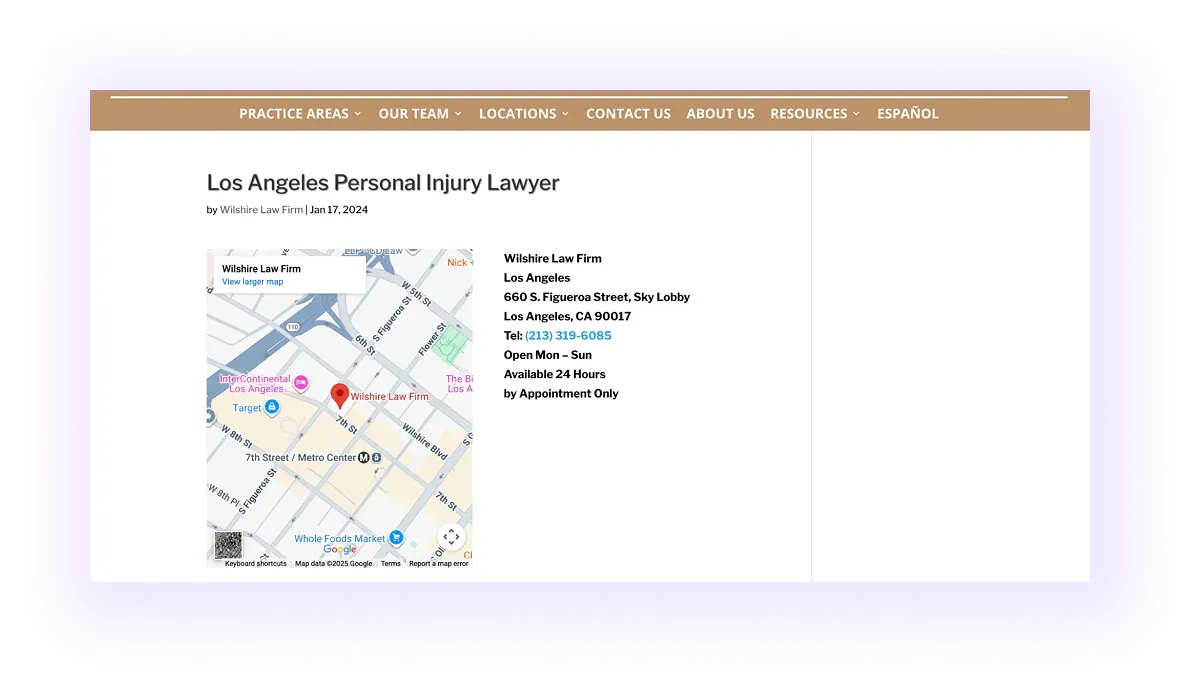
If your firm serves multiple cities or states, create a dedicated location page for each area. Each page should pair the service with the location, such as:
- land-use lawyer in los angeles
- dog bite lawyer in chicago
- car accident lawyer in atlanta
- personal injury lawyer in miami
Use these terms naturally in title tags, meta descriptions, headings, and page content, without overuse.
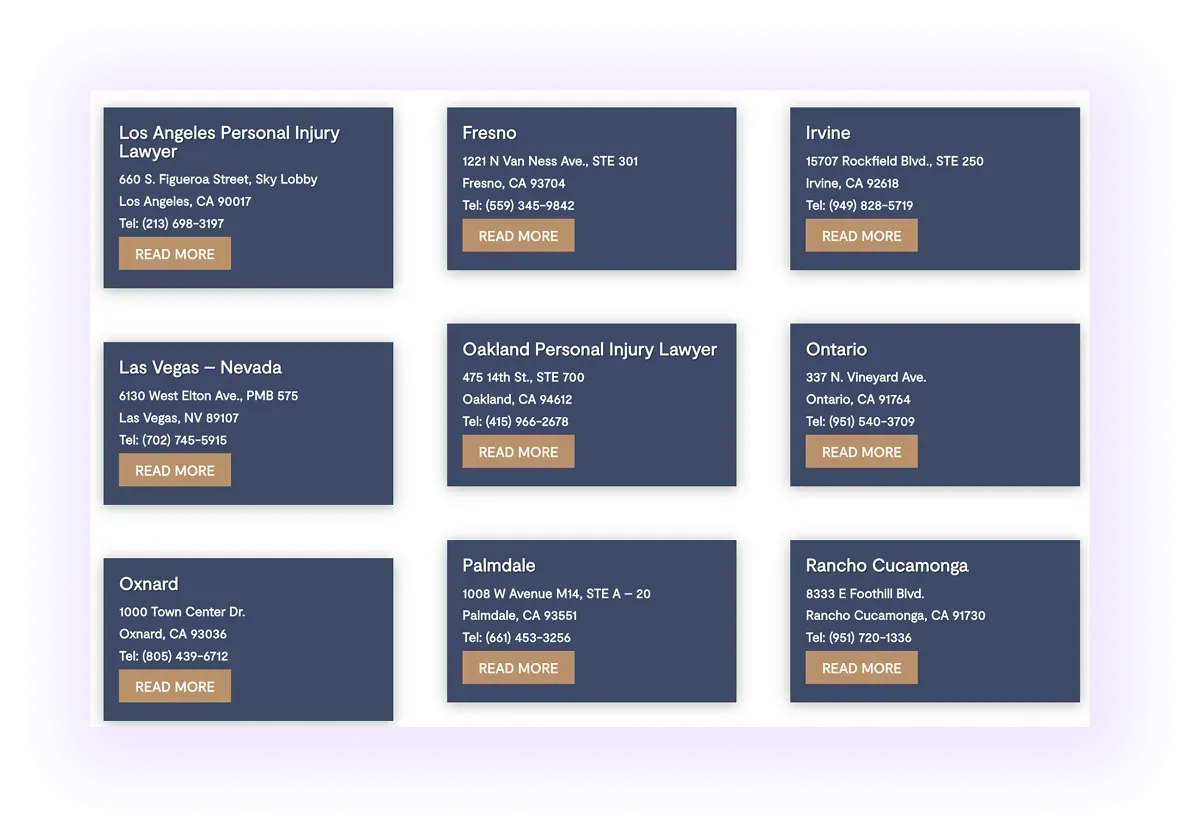
It also helps to add a location hub page that lists all service areas.
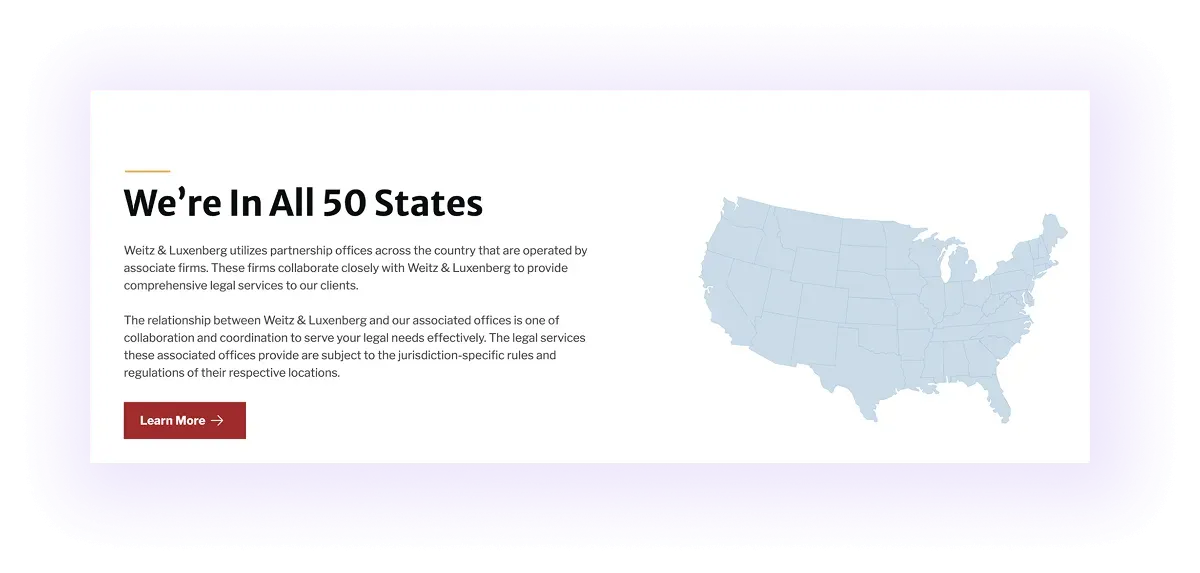
An interactive map can improve navigation.
Make sure your URL structure clearly reflects each location page so both users and search engines understand its relevance.

Set up Your Google Business Profile and Optimize it for Google Maps
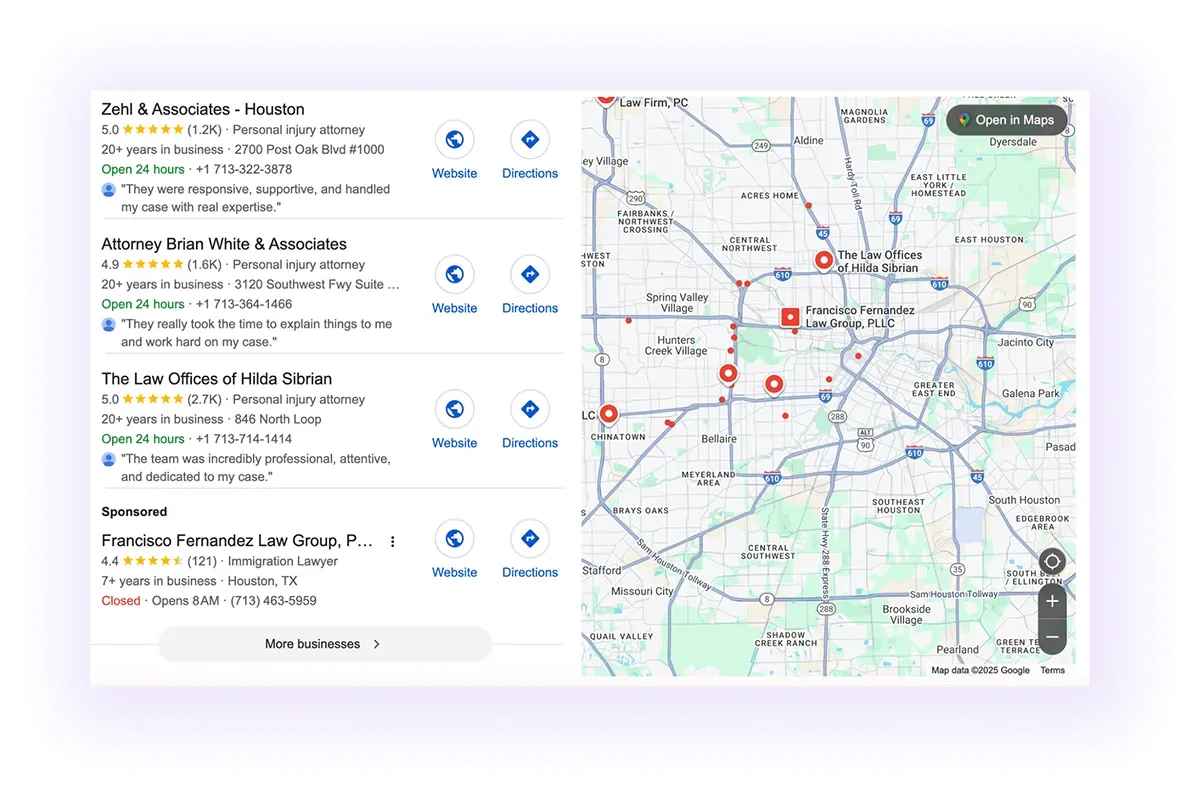
When people search for lawyers nearby, Google shows map results first. An optimized Google Business Profile (GMB) helps your firm appear in the Map Pack and capture local leads. To improve visibility:
- Keep your name, address, and phone number consistent across your site and listings.
- Use one clear address format. Inconsistent suites or office names weaken trust signals.
- Add your website URL.
- Write a clear description of your practice areas, attorneys, and services.
Example: “Harrison&Cole Group is a New York-based firm representing individuals in personal injury, employment disputes, and commercial litigation. Our attorneys bring decades of courtroom experience and a history of favorable outcomes.” - List services in the Products section, like car accidents, dog bites, or divorce cases.
- Ask satisfied clients for reviews; 90% of people read law firm reviews.
- Monitor and respond to profile Q&A.
- Link social profiles if relevant.
- Upload high-quality photos of your attorneys, office, and awards.
There are additional ways to optimize your GMB (developed by our law firm SEO company), but these steps build a strong foundation for local visibility and leads.
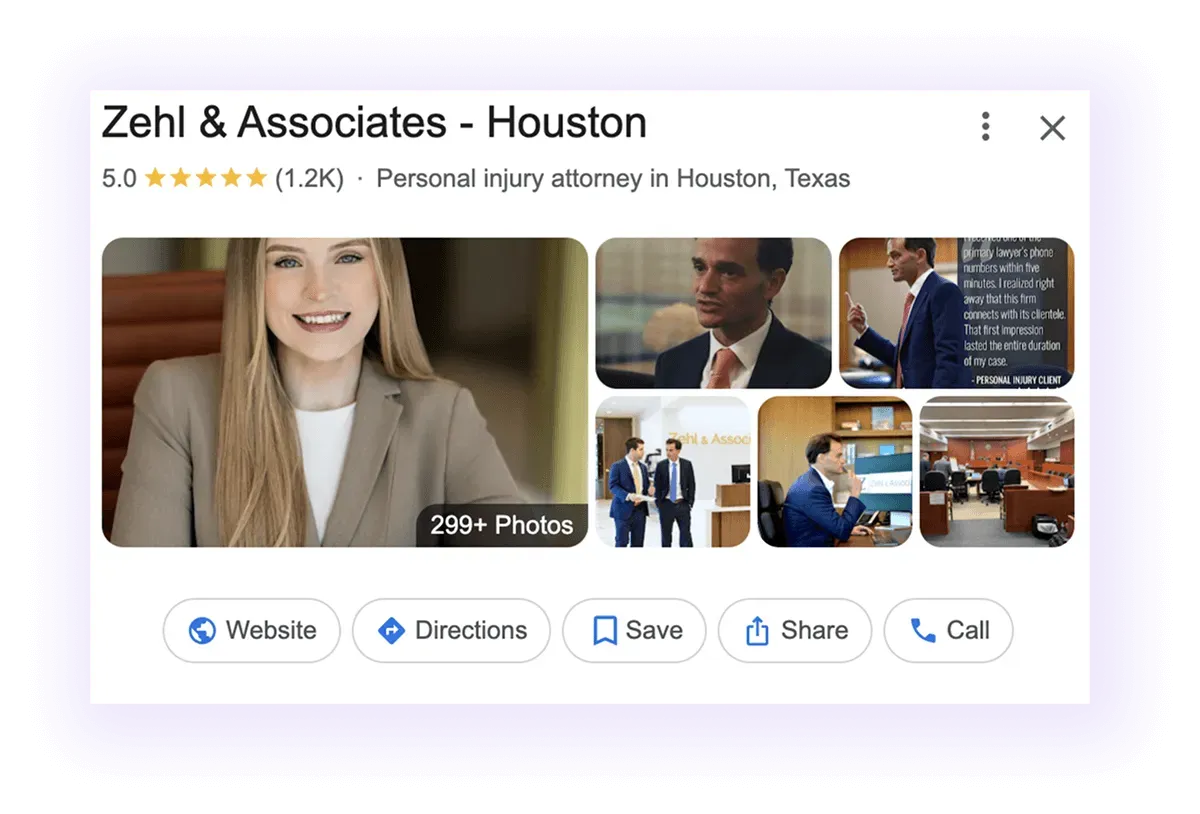
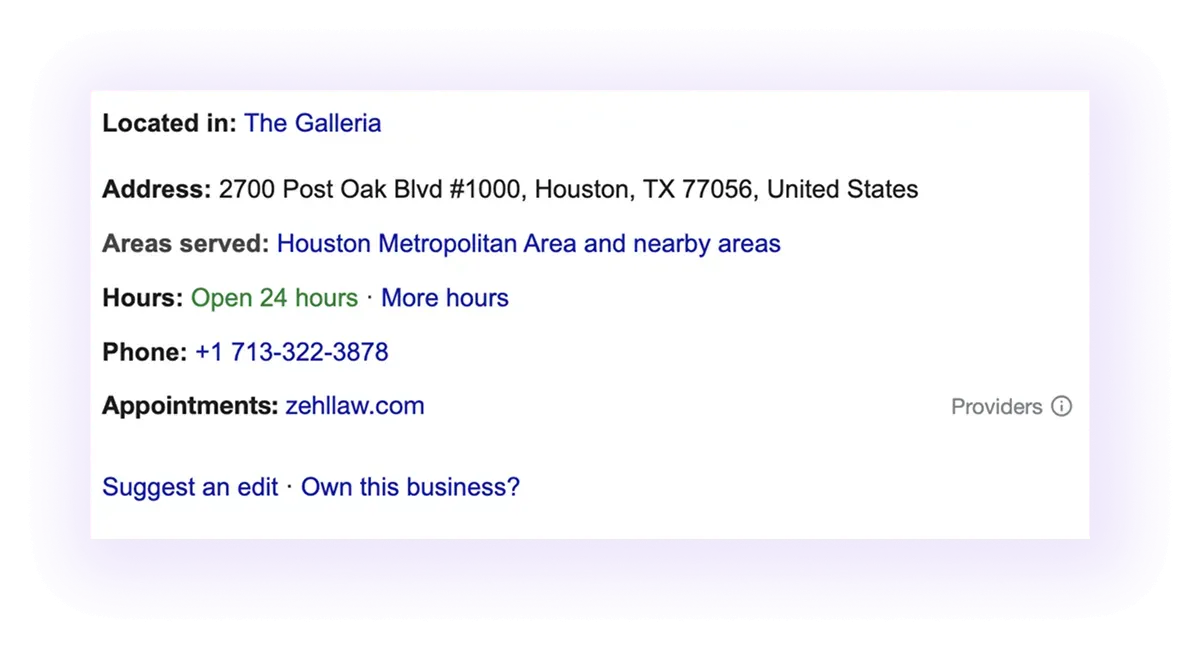
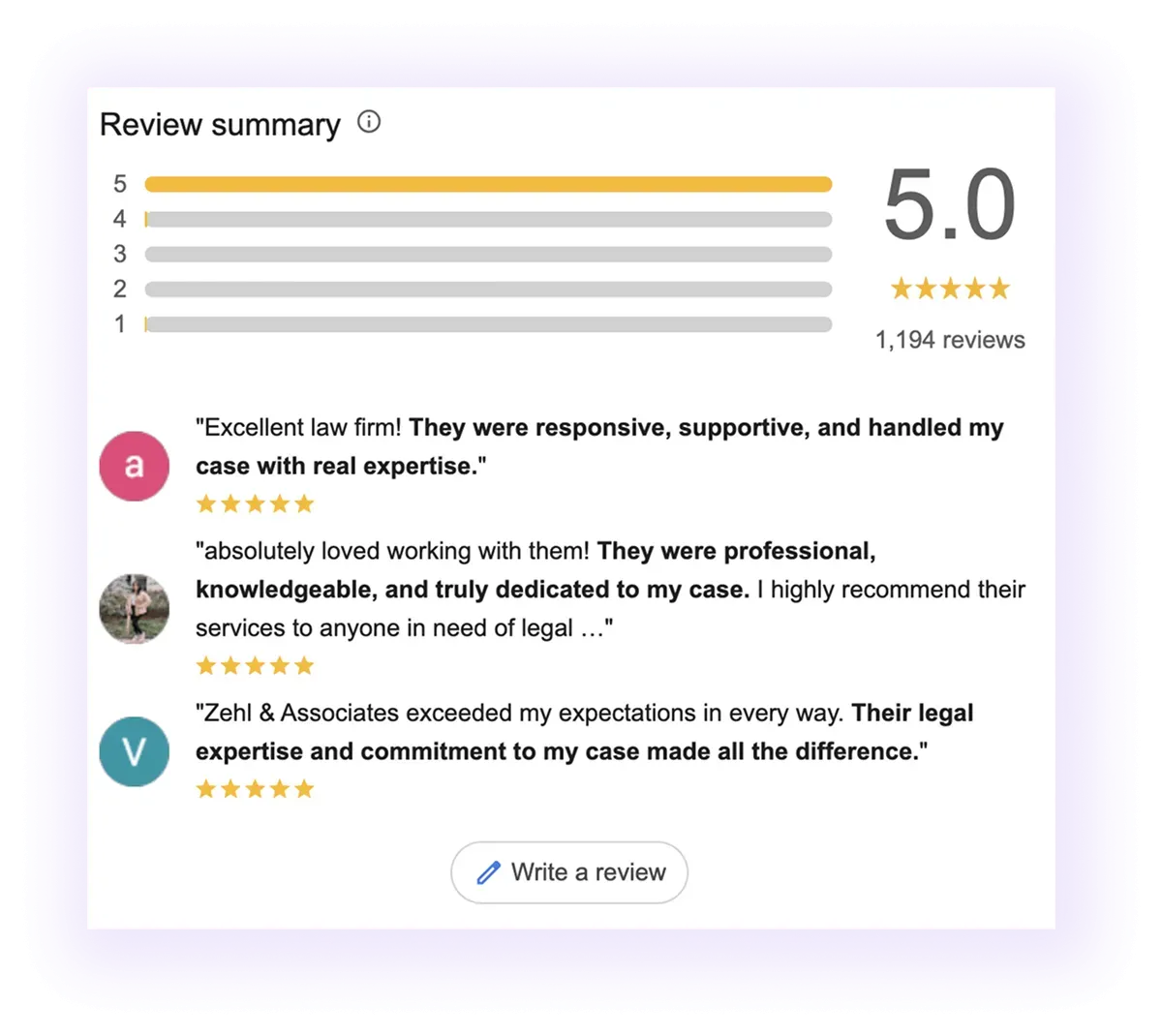
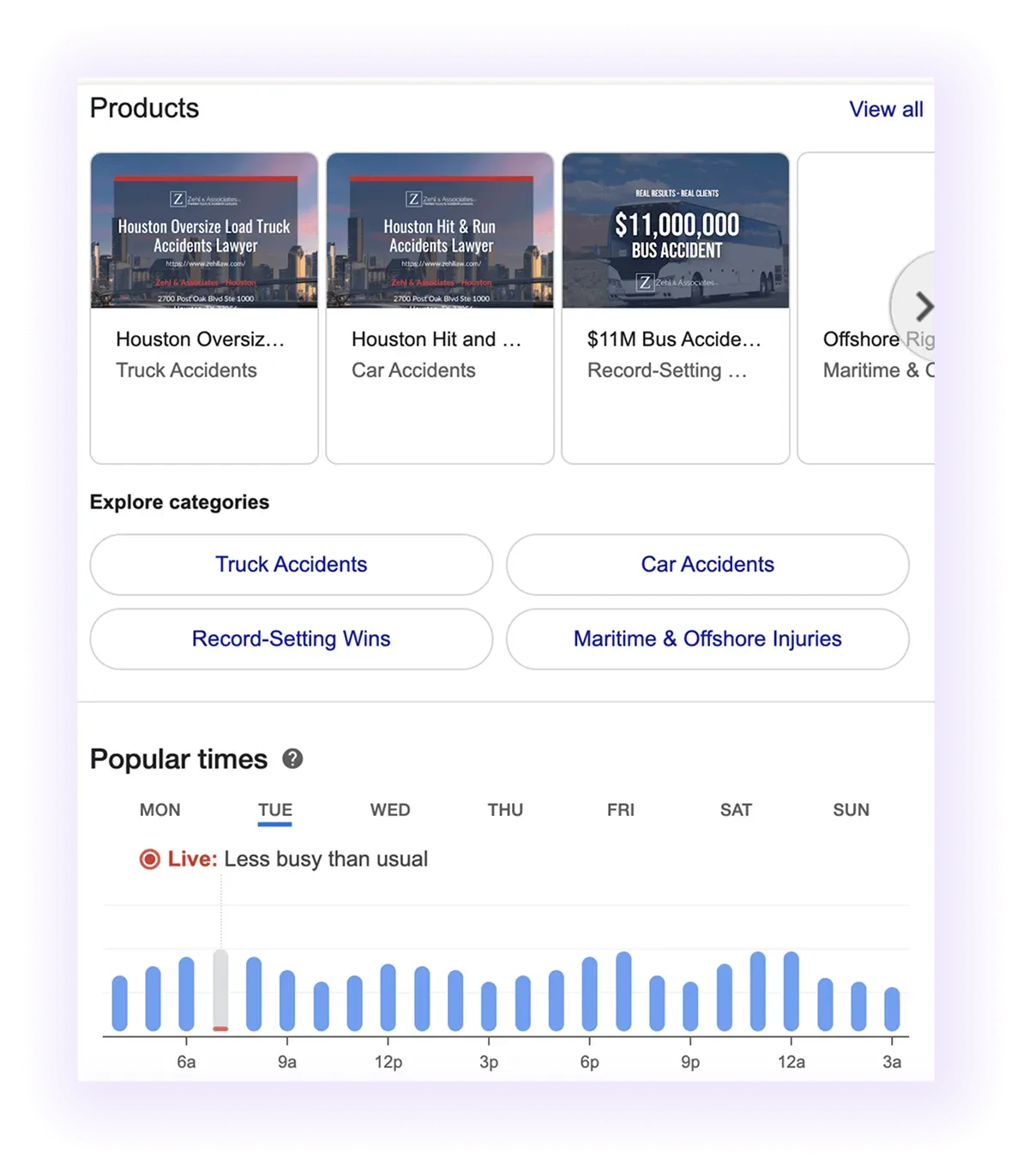
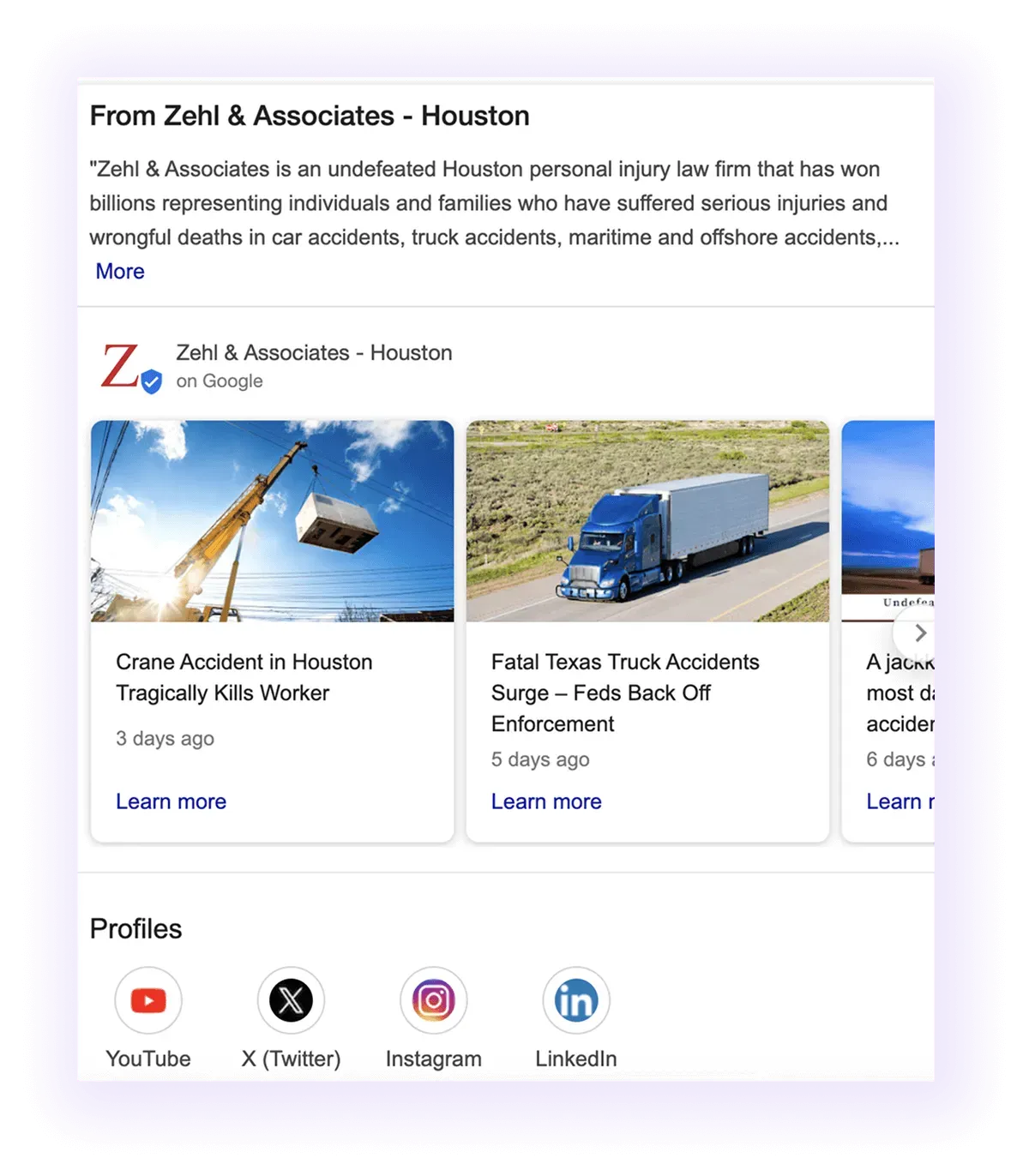
Once your GMB is optimized, your firm can appear in Google’s Map Pack results.
Alternatively, an experienced law firm SEO agency can support you in your local SEO journey!
Build High Quality Content for Your Law Firm’s Website
To rank service and attorney pages, you need content that Google treats as genuinely helpful. That means original writing, a strong readability score, and evidence that you understand your audience, state laws, and how legal problems are resolved.
Use a clean heading structure (H1-H4). Place keywords naturally in titles, meta descriptions, headings, and body copy, without forcing them. These help with lawyer SEO.
Because legal services involve risk and money, trust signals matter. Build them directly into your pages:
- Media Features: Show mentions in publications, news outlets, or legal journals.

- Why Choose Us: Explain what makes your firm different and trustworthy.
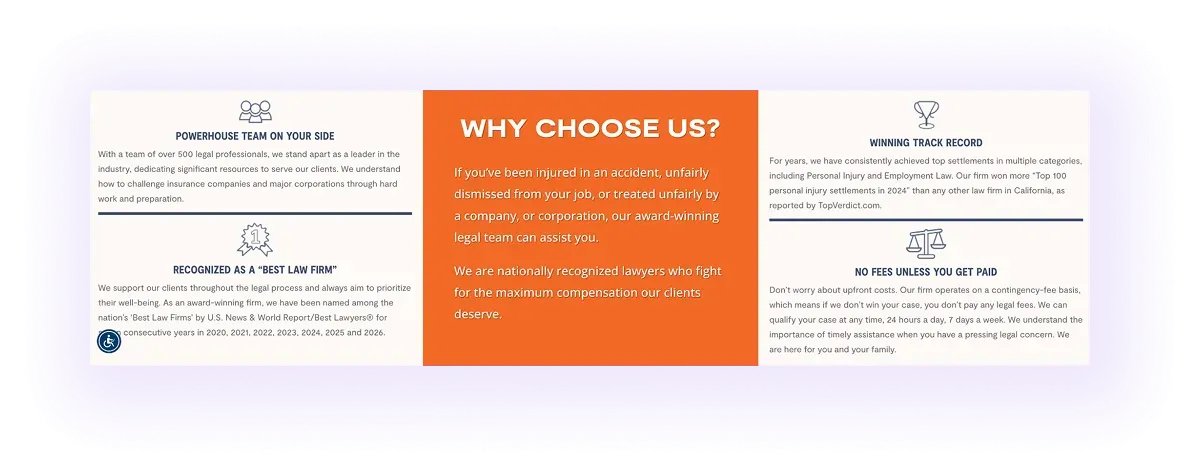
- Awards and Credentials: Display certifications and recognitions.

- Attorney Bios: Highlight experience, credentials, and focus areas.

- Client Testimonials: Use written or video feedback where allowed.

- Free Case Evaluation: Add a clear, low-friction call to action.

- Case Examples: Share anonymized wins that show how you handle real problems.

Blog Posts
A strong SEO content strategy for law firms often follows a pillar-cluster model: one core service page serves as the pillar, and blog posts support it by answering related questions and linking back to it.
Blogs attract search traffic. Internal links pass authority to the service page. Over time, this builds topical coverage around a practice area, an approach commonly used in attorney SEO.
Example: For a dog bite lawyer service page, supporting blogs might cover:
- How to prove negligence in a dog bite case
- Common injuries from dog attacks and legal options
- How dog bite settlements are calculated
- Statute of limitations for dog bite claims
To find topics, search for your service on Google and review the People Also Ask section, or use Ahrefs Questions.
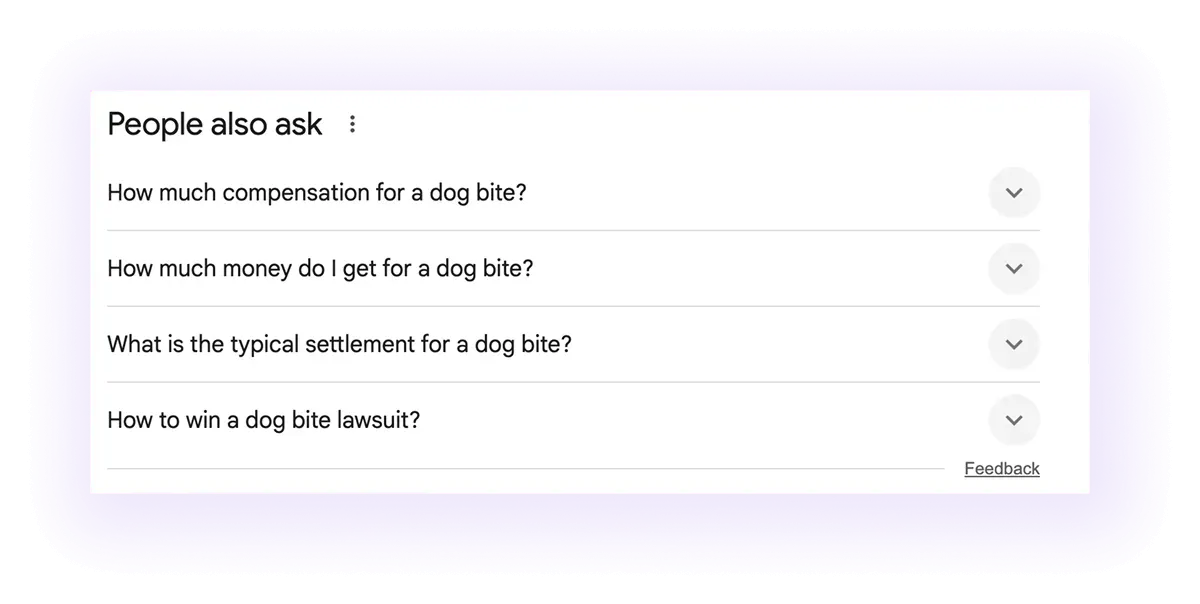
To help blog posts rank:
- Write original, easy-to-read content.
- Use keywords naturally in titles, meta descriptions, headings, and copy.
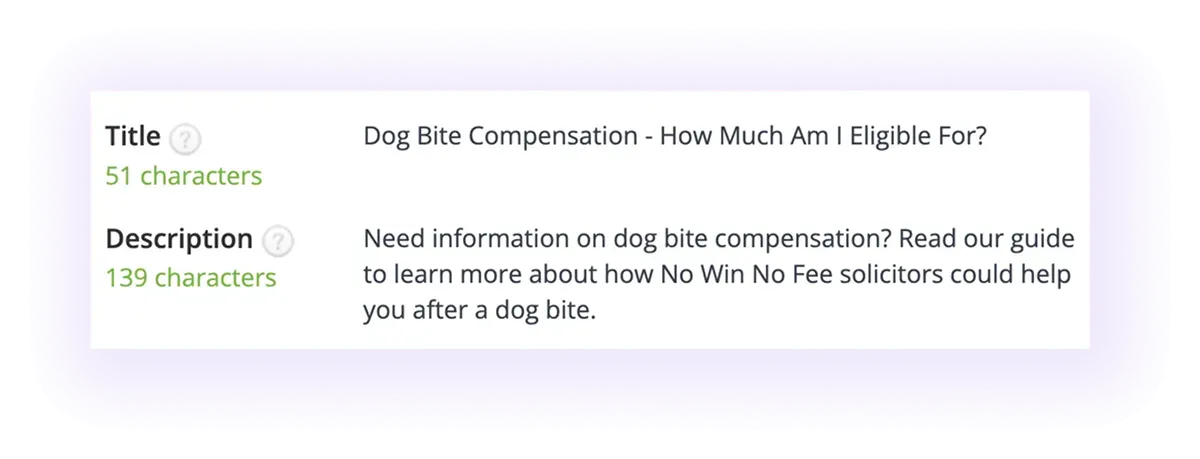
- Follow a clear heading structure (H1-H4).
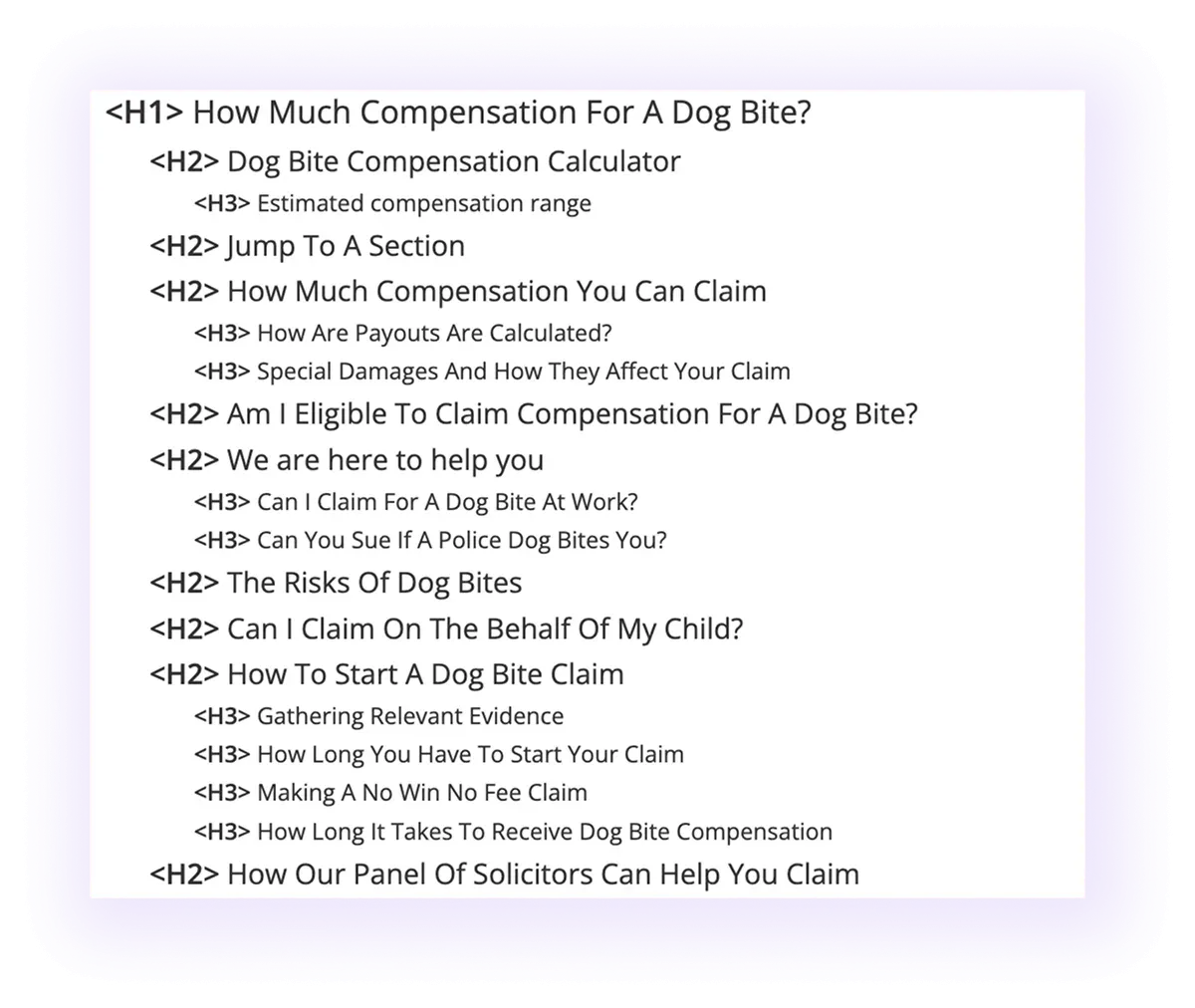
- Include insights or quotes from practicing attorneys.
- Reference credible sources when needed.
- Use visuals, tables, and lists to explain complex points.
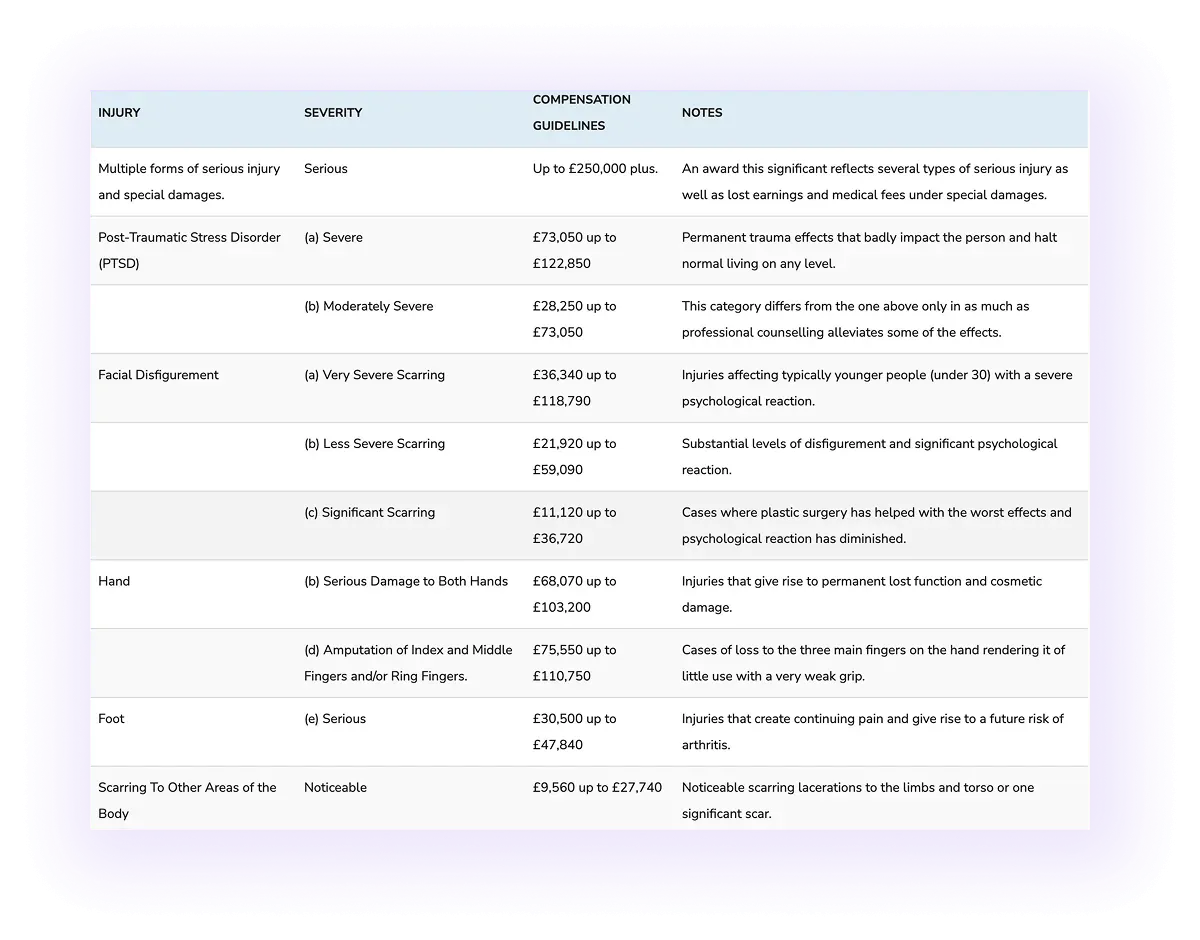
This structure improves readability, authority, and rankings, the same framework an experienced SEO agency for law firms uses to turn blog traffic into qualified leads.
Implement Technical SEO for Your Law Firm Website
The next step in lawyer SEO is technical setup. Your site must be easy for search engines to crawl and index, fast to load, clearly structured, and simple to navigate.
We’ve created a full technical SEO checklist for deeper audits. Below are the core technical tasks law firms should prioritize to start improving their sites immediately.
XML Sitemap and Robots.txt
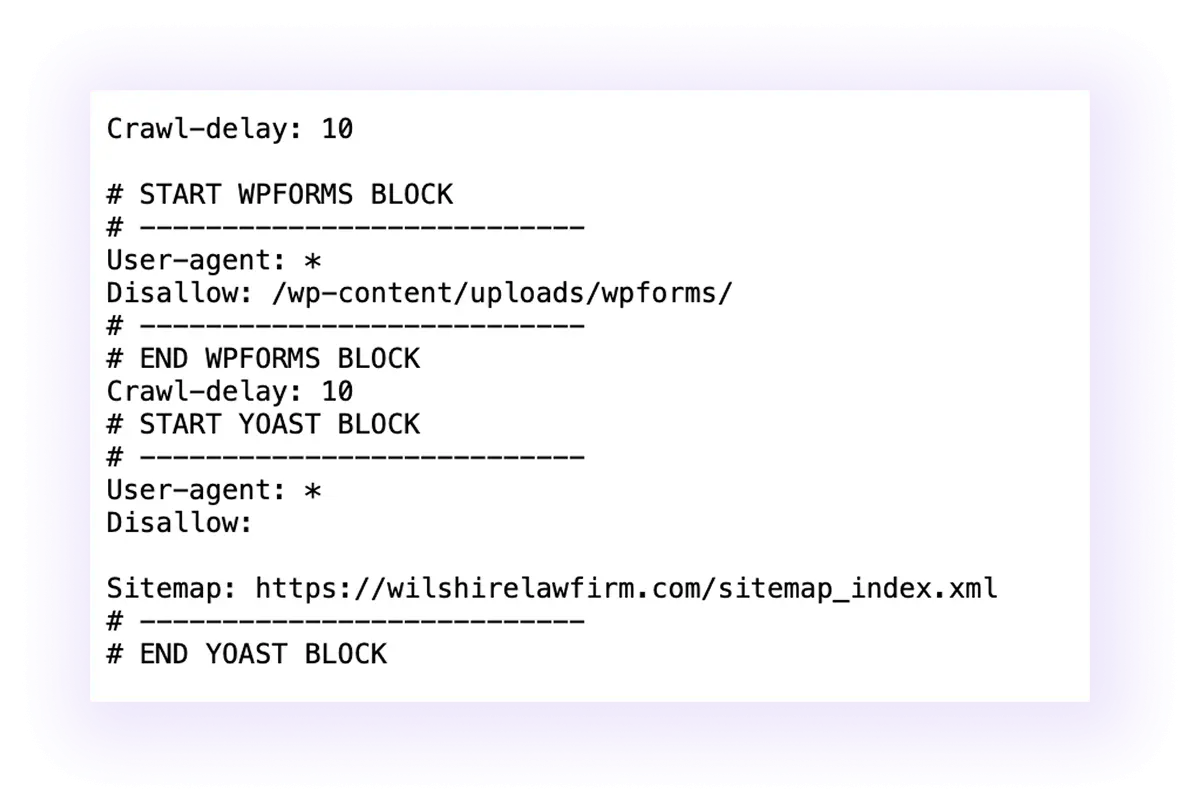
Your XML sitemap tells Google which pages to crawl and index: your homepage, service pages, attorney bios, and location pages. Keep it clean and current, so search engines understand your site structure.
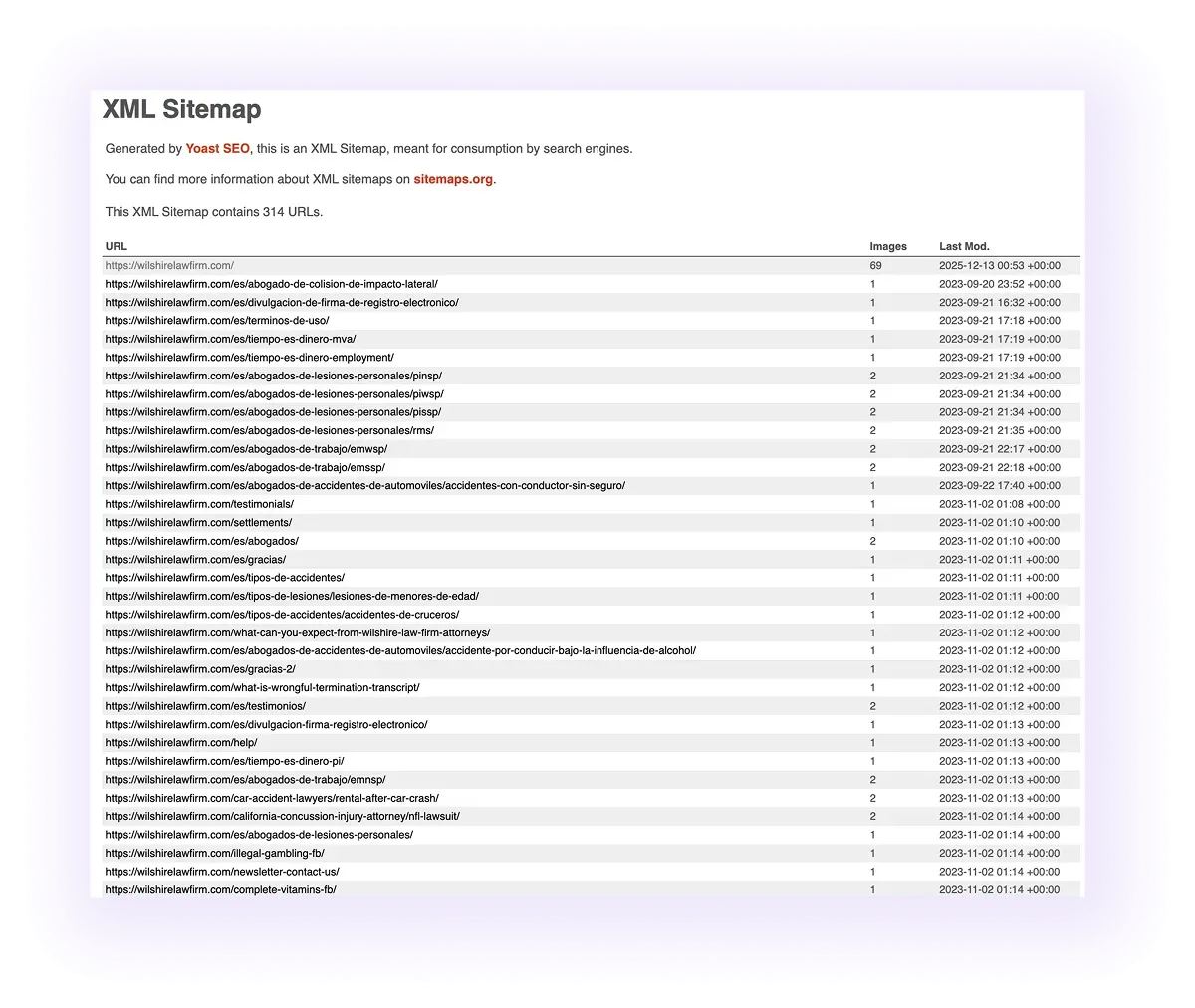
Use your robots.txt file to block pages that don’t add value, like admin areas, system files, dashboards, and login-only sections.
Schema Markup and Structured Data
To display FAQs, service pages, and attorney profiles with enhanced search features, such as review stars, you need schema markup. Schema helps Google understand what your firm offers, who you serve, and how your site is structured, which can lift visibility and click-through rates. Key schema types for law firms:
- Organization: Defines your firm’s name, logo, and contact details.
- LocalBusiness: Clarifies office location, service areas, and local signals.
- LegalService: Identifies practice areas and services.
- Attorney: Highlights individual lawyers, credentials, and roles.
- Aggregate Rating: Displays review ratings in search results.
- FAQ: Surfaces common questions directly in search.
- Breadcrumb: Shows page hierarchy and improves usability.

URL Structure
Your law firm's site also needs a clear URL structure. Use descriptive, keyword-focused URLs with hyphens. Avoid random numbers, extra parameters, or special characters that confuse users and search engines.
Good URL Example: www.yourlawfirmwebsite.com/services/personal-injury-lawyer
Bad URL Example: www.yourlawfirmwebsite.com/page?id=8473&cat=law123
Internal Link Building for Lawyers' Websites
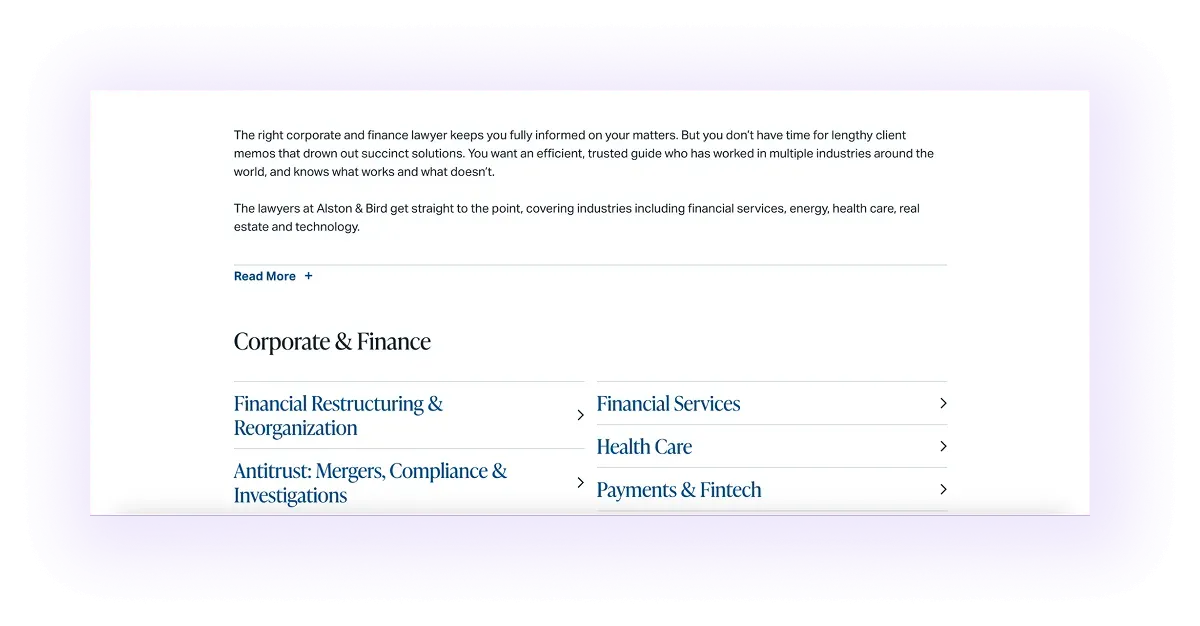
Internal links serve two purposes on a law firm site: they help visitors find what they need, and they pass authority between pages to support law firm SEO. Use these core internal link types:
- Navigation Links: Connect to services, attorneys, locations, About, and key firm pages.
- Blog-to-Blog Links: Tie related articles together, like car accident steps and injury claims.
- Blog-to-Service Links: Point educational content to relevant service pages.
- Service-to-Service Links: Connect related practices, such as car accidents to personal injury.
- Service-to-Location Links: Link services to city pages, such as a personal injury lawyer page on a Houston-focused service page.
- Service-to-Attorney Links: Connect each service to the lawyers who handle the cases associated with that service.
When used consistently, internal links improve usability and rankings across your site.
Mobile Optimization for a Law Firm Website
Legal searches often happen in moments of urgency (after an accident, injury, or sudden business issue), and many start on a phone. That makes mobile optimization critical for both rankings and conversions. If your site isn’t mobile-friendly, visitors leave. To perform well on mobile:
- Use a fully responsive design.
- Add large, easy-to-tap buttons.
- Keep text 16px or larger.
- Use a hamburger menu for simple navigation.
- Compress images to improve load speed.
- Show clear, visible calls to action.
For greater improvements, review our mobile SEO checklist.

Website Speed & Performance (Core Web Vitals)
User experience is a major ranking factor, and page speed is central to it. Slow pages drive visitors away and make it harder to compete in search results, which is why many firms turn to attorney SEO services. To improve speed and performance:
- Compress and optimize images without losing quality.
- Use reliable hosting and a CDN.
- Replace heavy media with lightweight videos.
- Apply server-side rendering on complex pages.
- Enable lazy loading for below-the-fold images.
- Clean up JavaScript, CSS, and HTML.
After updates, test your site with GTmetrix or Google PageSpeed Insights.
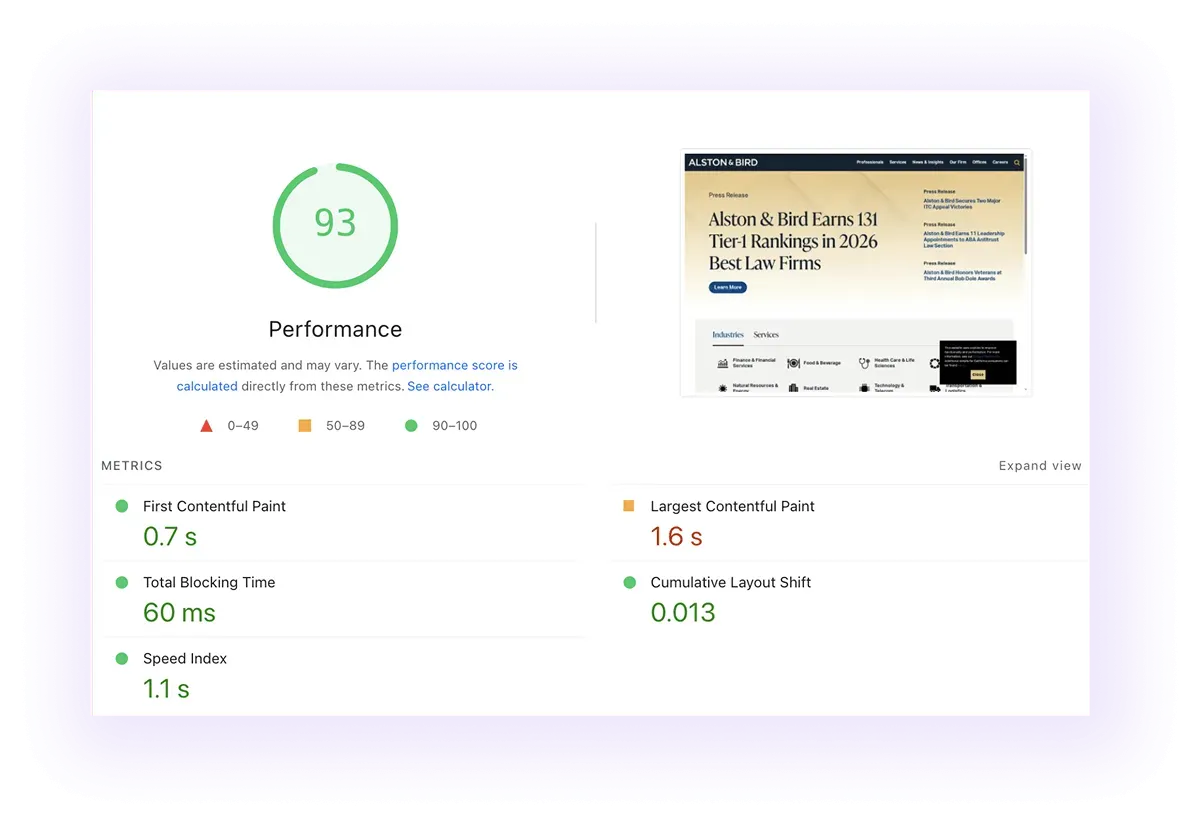
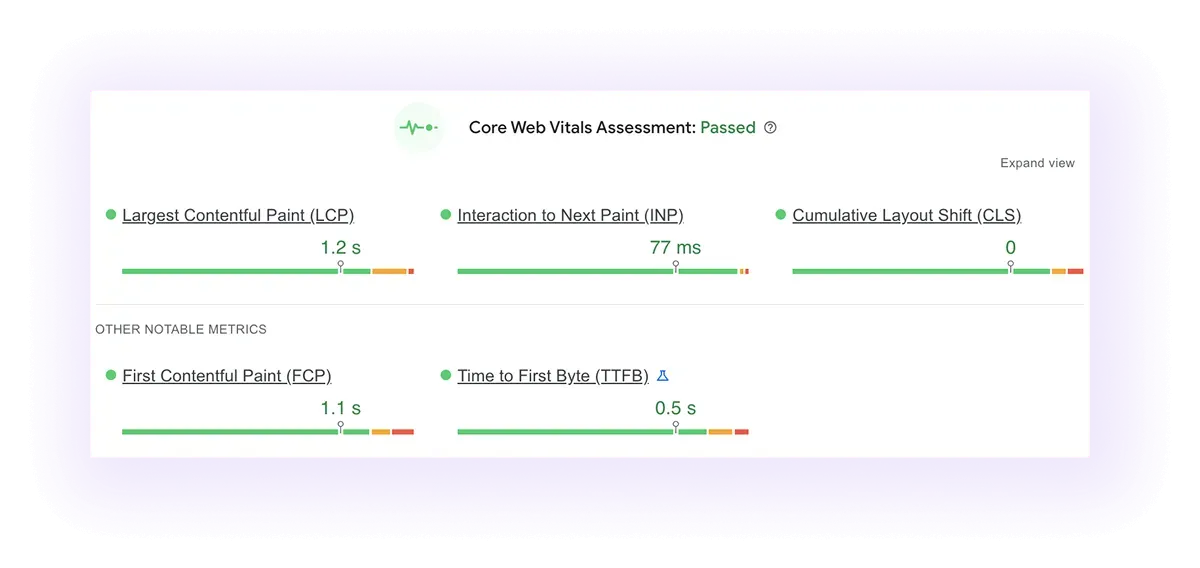
These tools track Core Web Vitals Google cares about:
- Largest Contentful Paint (LCP): under 3 seconds
- First Contentful Paint (FCP): under 1 second
- Cumulative Layout Shift (CLS): as close to 0 as possible
Frequent Technical Audits
Technical SEO for law firms isn’t a one-time task: ongoing audits matter because content changes and each update can affect rankings and crawlability. Run monthly technical checks to catch issues early:
- Scan for duplicate content with Copyscape or Screaming Frog.
- Find broken links and 404s using Screaming Frog.
- Review and fix redirects with Ahrefs or Screaming Frog.
- Monitor indexing issues in Google Search Console.
- Recheck mobile performance and speed in Google PageSpeed Insights.
- Validate schema with Google’s Rich Results Test.
Miss these, and minor issues compound. If you’d rather not manage it in-house, our attorney SEO agency can handle ongoing technical audits.
Link Building for Lawyers SEO
The final piece of lawyer SEO is authority. It’s built through off-page SEO and backlinks from trusted, high-quality sites Google already values. When reputable websites link to your firm, rankings improve.
To help U.S. law firms build authority, we use three proven link-building strategies. We’ll break them down next, or you can rely on our law firm SEO agency’s link-building services instead.
Guest Posting and Link Insertion
Your first link-building move is targeting authoritative legal sites: blogs and publications focused on lawyers, law firms, and legal work. Examples include Legal Talk Network and Attorney at Work. Once you’ve identified the right sites, choose between guest posting and link insertion.
Guest posting means:
- Writing an original, high-quality article tied to legal practice.
- Pitching it to the site’s editorial team.
- Placing a contextual link back to your firm.
Example: Publish an article on how technology is changing personal injury law and link to your personal injury service page.
Link insertion means:
- Finding an existing article relevant to your services.
- Spotting a gap where your legal insight adds value.
- Requesting a natural link from the editor.
Example: Add a legal clarification to an article on dog bite liability and link to your dog bite lawyer page.
Directory Listings for Lawyers and Law Firms
Clients often read reviews on legal directories, and many of these sites rank for city-level searches. That makes links from reputable platforms essential. Key examples include Justia, BCGSearch, and FindLaw. Local directories like Yelp also help with visibility, trust, and referral traffic.
Treat directory profiles like your GMB. Optimize each one:
- Keep your name, address, and phone number consistent.
- Write a clear firm description.
- List all legal services.
- Add attorneys, photos, awards, and certifications.
- Respond to reviews.
- Include your website URL.
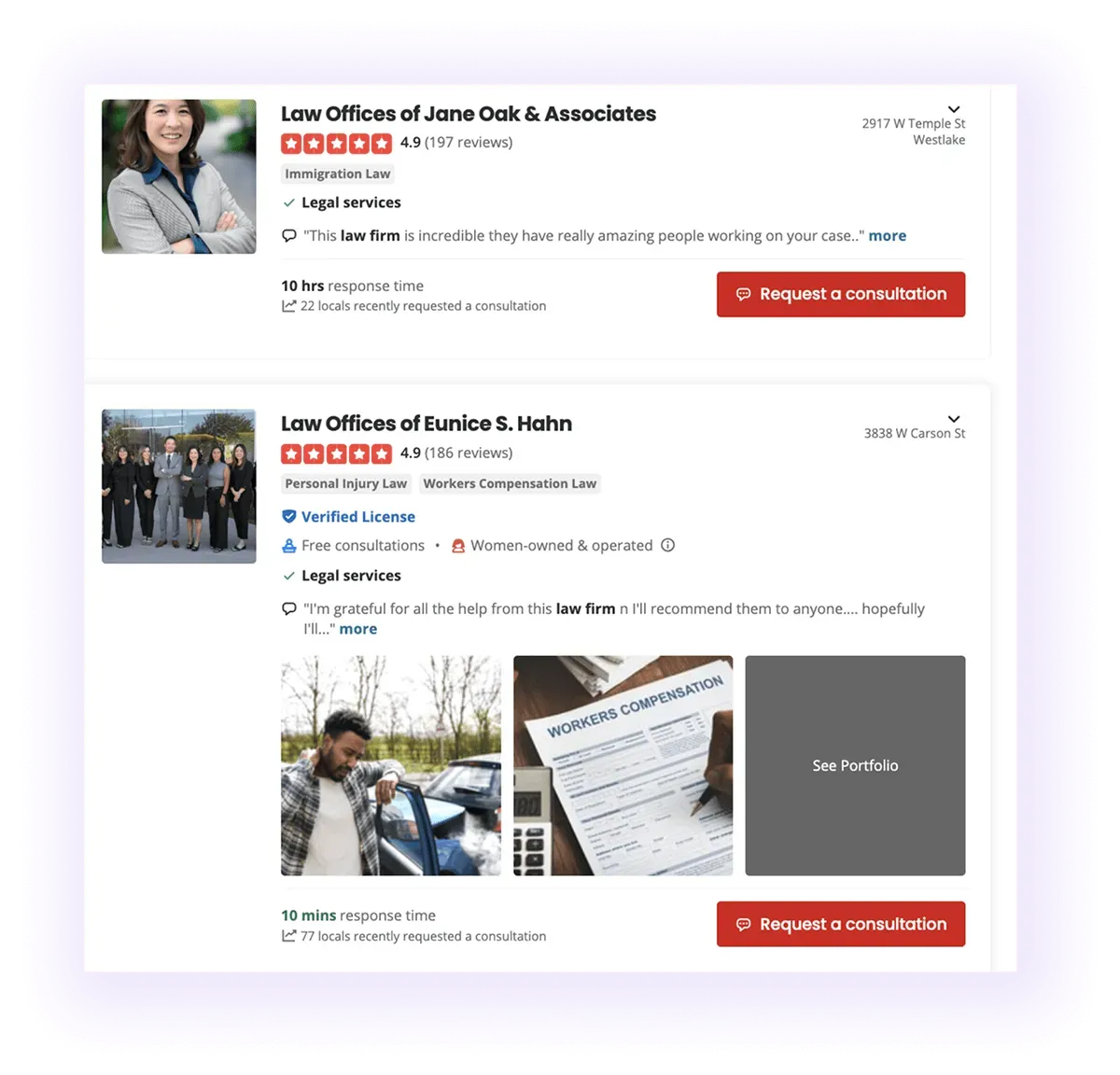
If managing listings and earning links feels time-consuming, our law firm SEO company offers local link-building services to help law firms build authority, rankings, and visibility.
Digital PR for Law Firms
Digital PR is one of the most effective ways to earn high-authority backlinks. It can secure links from major outlets, such as Forbes or legal publications like Law360. These links carry strong trust signals and can quickly improve rankings. To run a digital PR campaign:
- Pick a newsworthy angle, a topic journalists care about, like a data-backed look at personal injury claim trends across major U.S. cities.
- Gather credible data. Pull insights from attorneys, public records, surveys, or government sources.
- Write the piece in a clear, concise, and easy-to-extract format.
- Craft a sharp pitch. Explain why the story matters and what makes your data worth covering.
- Pitch the right outlets. Reach out to journalists who already cover legal or business topics.
Digital PR takes time and experience. Knowing what stories land and how to pitch them makes the difference. That’s why our SEO agency for law firms offers dedicated digital PR services to help law firms earn high-authority links and increase visibility where it counts.
How to Track the Success of Your Law Firm SEO Strategy
Your attorney SEO is now in place; tracking performance is non-negotiable. The right metrics show what’s working, where results stall, and what to adjust to keep growth steady. Focus on these signals using best SEO reporting tools:
- Track indexing, clicks, impressions, keyword rankings, and volatility for service and location pages using Ahrefs or Google Search Console.
- Review backlinks and compare competitor link profiles in Ahrefs or SEMrush to spot gaps and opportunities.
- Check mobile usability and page speed for service, location, and attorney pages with Google PageSpeed Insights.
- Measure traffic and conversions in Google Analytics.
- Study user behavior (heatmaps, scroll depth, and clicks) using Hotjar or Microsoft Clarity.
- Track actions like form submissions and call clicks with Google Tag Manager.
Consistently done, this keeps your law firm SEO grounded in results!
Partner with a Law Firm SEO Company That Knows Your Industry
At this point, you have everything you need to get started with lawyer SEO. Once you begin, you may realize that execution is more complex than it appears, especially given the industry-specific rules and nuances. You may need support from an SEO consultant for law firms.
If that’s the case, feel free to reach out. We’ll walk through your goals and show how our attorney SEO services can support them.
Submit the form - Get Free Proposal
%202.png)
24 hours
FAQ


Submit the form - Get Free Proposal
24 hours
.svg)