
SEO for Financial Services Strategies and Keywords by Finance SEO Agency
Make your financial brand impossible to ignore with SEO for financial websites, trusted by 30+ firms.
5.0




With over 1,067,276 finance-related businesses like banks, lenders, and investment platforms competing online, standing out as a financial service is difficult. Complex financial products often confuse prospects, leading to low engagement, early drop-offs, and high bounce rates even when traffic is steady.
Many financial service providers in the United States struggle to attract high-value, qualified clients without expensive ads, while ongoing compliance with the SEC, FINRA, and CFPB leaves little time for marketing.
Finance SEO solves this. Our professional SEO company helped 30+ financing companies generate consistent, qualified leads using the proven approach we’ll share next.
Why Do Financing Companies Need to Invest in SEO?
- High-Value Client Acquisition: Attracts high-value clients organically by capturing search demand from users already researching financial solutions, reducing reliance on paid ads.
- Market Differentiation at Scale: Helps your firm stand out in a crowded market by ranking for intent-driven, niche terms competitors miss through SEO for finance.
Product Education & Trust: Pre-qualifies prospects by breaking down complex financial products with search-focused content that builds understanding and confidence before conversion. - Long-Term Cost Control: Delivers sustained lead flow without ongoing ad spend. SEO continues working after launch, unlike PPC, and our SEO pricing calculator shows the long-term return clearly.
- Always-On, Compliant Visibility: Keeps marketing active even with limited internal resources by letting compliant, evergreen content perform without daily involvement.
- Retention Through Ongoing Visibility: Supports client retention by staying visible across the full decision cycle, reinforcing trust beyond rate comparisons.
- Qualified Traffic, Lower Bounce Rates: Brings in better-fit visitors by aligning search intent, content, and structure through SEO for financial websites, increasing meaningful engagement.
Next, we’ll review the financial SEO strategies our agency uses to deliver these results for clients.
Do Keyword Research and Competitive Analysis for Your Finance Website
For doing SEO for finance companies, everything starts with clarity: you need a clear picture of what you offer and who you serve. List each core service:
- financial advisory services
- student financial services
- business financial services
- financial planning
- retirement planning
- tax planning
Treat every service as its own growth opportunity.
Next, run each service through keyword tools like Ahrefs, SEMrush, or Google Keyword Planner. This shows how people search for these services and reveals demand you can capture with finance SEO.
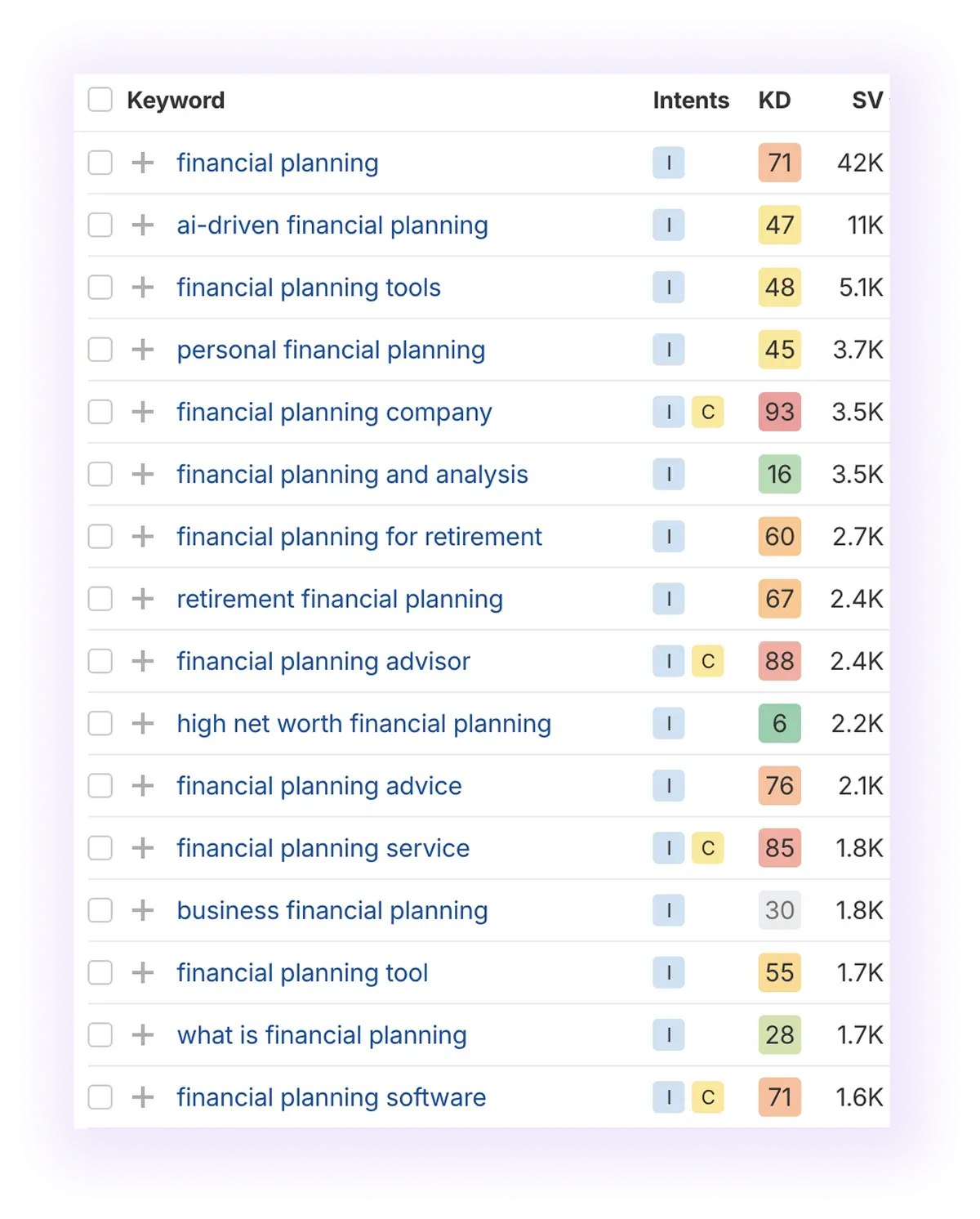
As you build your list, focus on three signals: search volume, keyword difficulty, and realistic traffic estimates using a traffic potential calculator.
Then narrow it further by reviewing search intent and location data to see where demand is strongest and which regions offer the best opportunities.
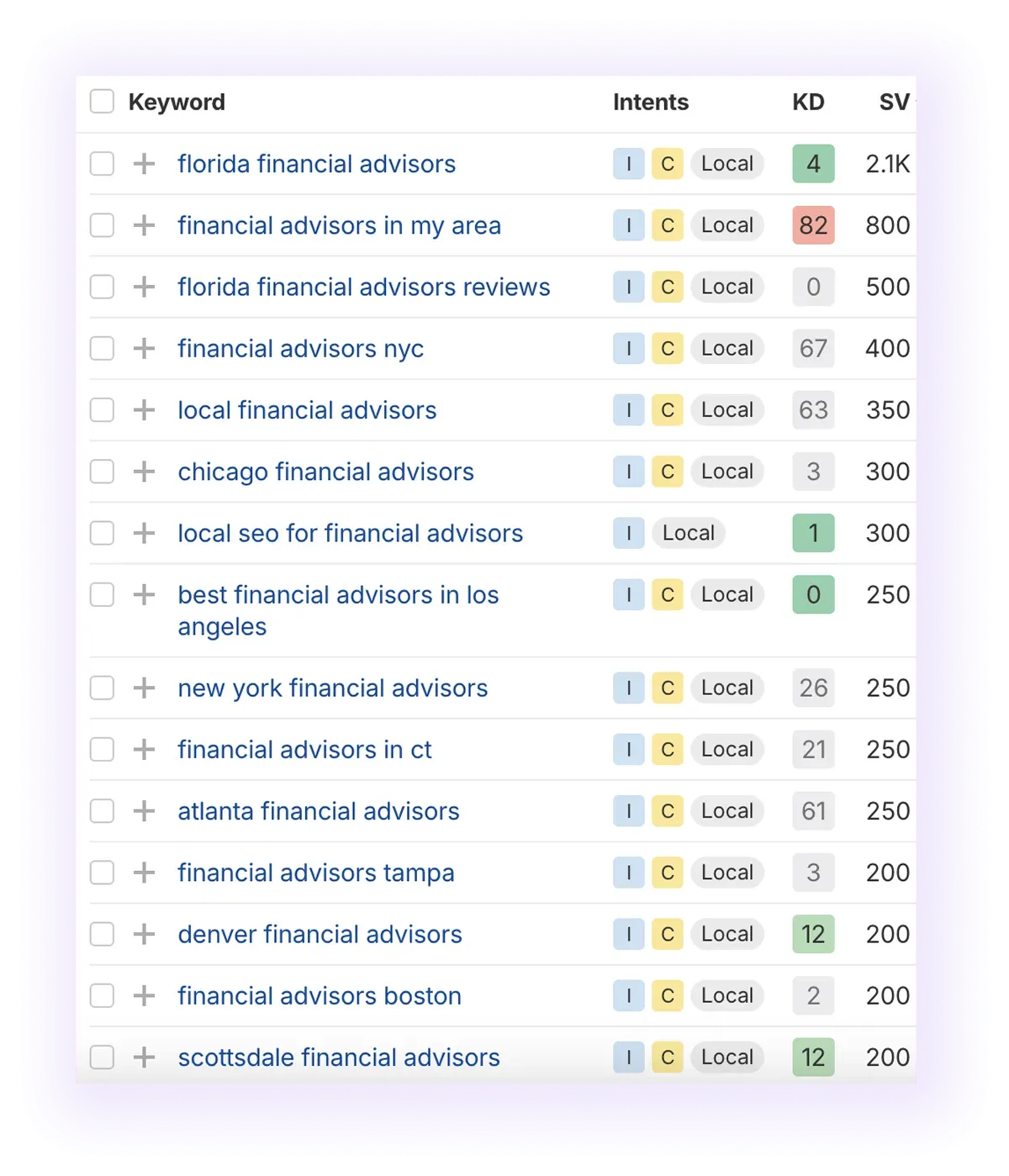
Because the keyword research process requires both judgment and accuracy, we’ve built a repeatable system designed specifically for financing websites. You can use this process anytime you need to uncover keywords that match real demand for your financial services.
Top 30 Real Keywords for Financing Companies
Transactional Keywords
- financial services
- financial advisory services
- professional financial services
- student financial services
- financial consulting services
- business financial services
- financial services outsourcing
- financial planning
- retirement planning
- investment management
- tax planning
- wealth management services
- asset management
- business loans
- personal loans
Informational Keywords
- how to choose loans
- best investment strategies
- tips for financial planning
- personal finance basics
- how credit scores work
- retirement planning advice guide
- budgeting for financial success
- saving money for college
- how to refinance mortgage
- choosing the right investment
- tax-saving strategies for businesses
- managing debt with loans
- financial tips for millennials
- guide to home insurance
- investment risk tolerance
Your first step is complete, but there’s more ahead. To outperform competitors, you’ll need support from an experienced finance SEO agency. If you’re ready, contact us, and we’ll guide you through the next steps.
Outline Your Finance Services Website Hierarchy and Menu Structure
Because financial needs vary between individuals and business owners, search behavior depends on the exact solution someone needs at that moment. To capture this demand, your finance website needs a clear structure that supports usability.
Every finance website should start with three core pages:
- Homepage: Targets broad terms like “financing company” and “financing services” while highlighting your primary offerings.
- About Us: Shows your experience, introduces your advisory team, explains who you serve, and builds trust.
- Contact Us: Makes it easy to reach you with a simple form and direct options like phone calls.
Place these pages in your main navigation. This helps search engines crawl your site and lets visitors quickly understand who you are, what you offer, and how to contact you.

Service Pages
People search for financial services based on their specific needs: business owners, individuals, and students all seek different solutions. To match that intent, each service needs its own dedicated page focused on the problem it solves. This structure supports user clarity and strengthens SEO for finance.
Essential service pages for finance websites include:
- financial consulting services
- business financial services
- financial planning services
- retirement planning services
- investment management services
- tax planning services
- wealth management services
These pages should live under a Services tab in your main navigation.
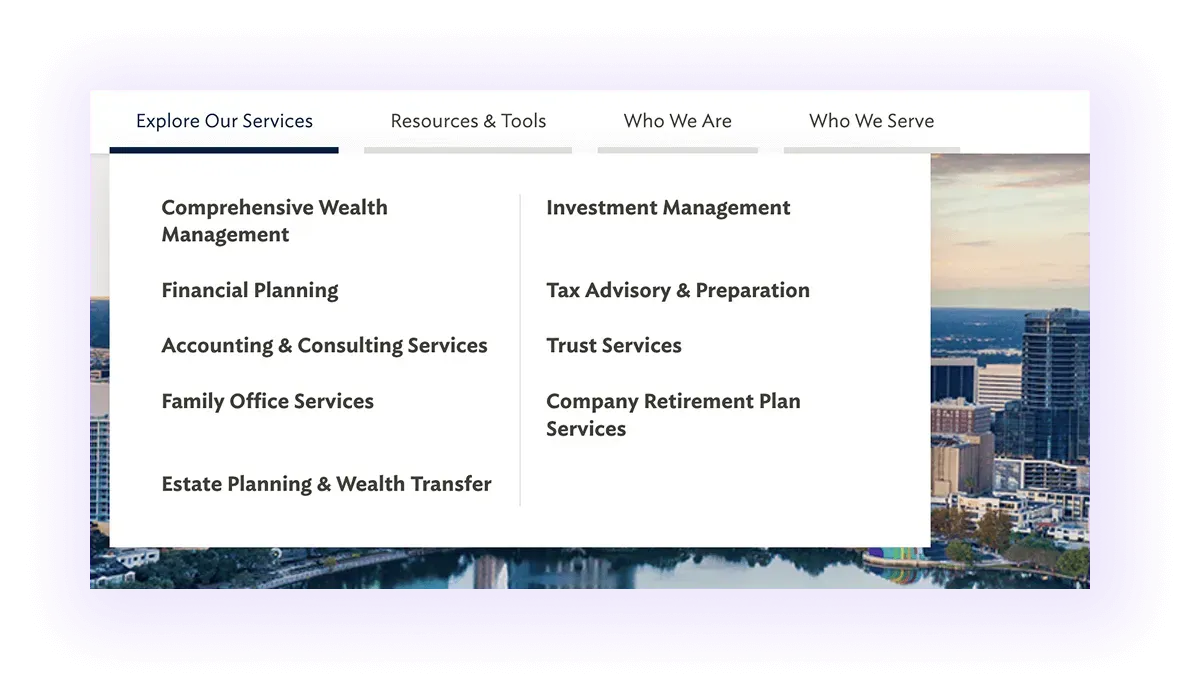
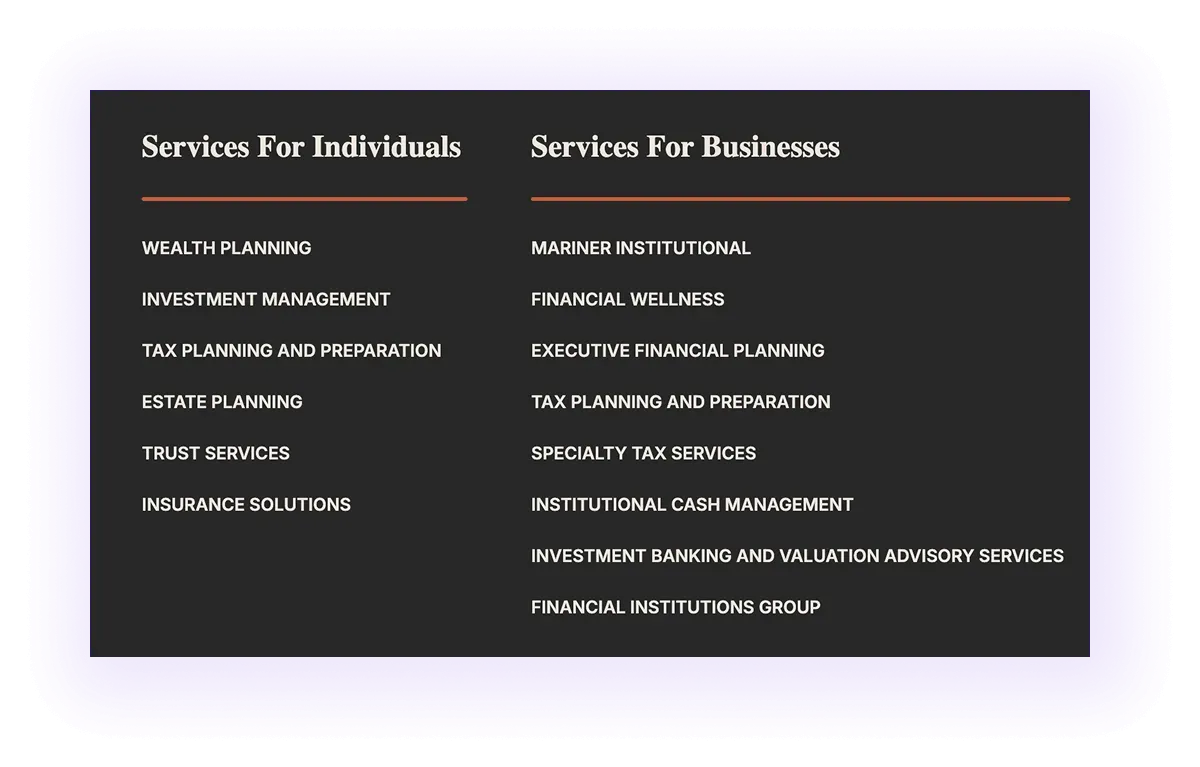
Depending on your business model, you can group them by audience, such as services for individuals or businesses, so visitors find what matters to them and search engines can clearly read your site structure.
Calculators
Before choosing a financial services provider, many people want to run their own numbers: loan payoffs, mortgage refinancing, savings growth, or long-term goals. These visitors are still researching, but they often become high-intent clients later.
A dedicated calculator page supports this behavior and strengthens SEO for financial websites. Housing all your calculators in one place makes it easy for users to explore scenarios, understand their options, and start building trust in your expertise.

Local Pages
Many people search for financial services using service-plus-location terms, which makes local intent a major factor in financial SEO.
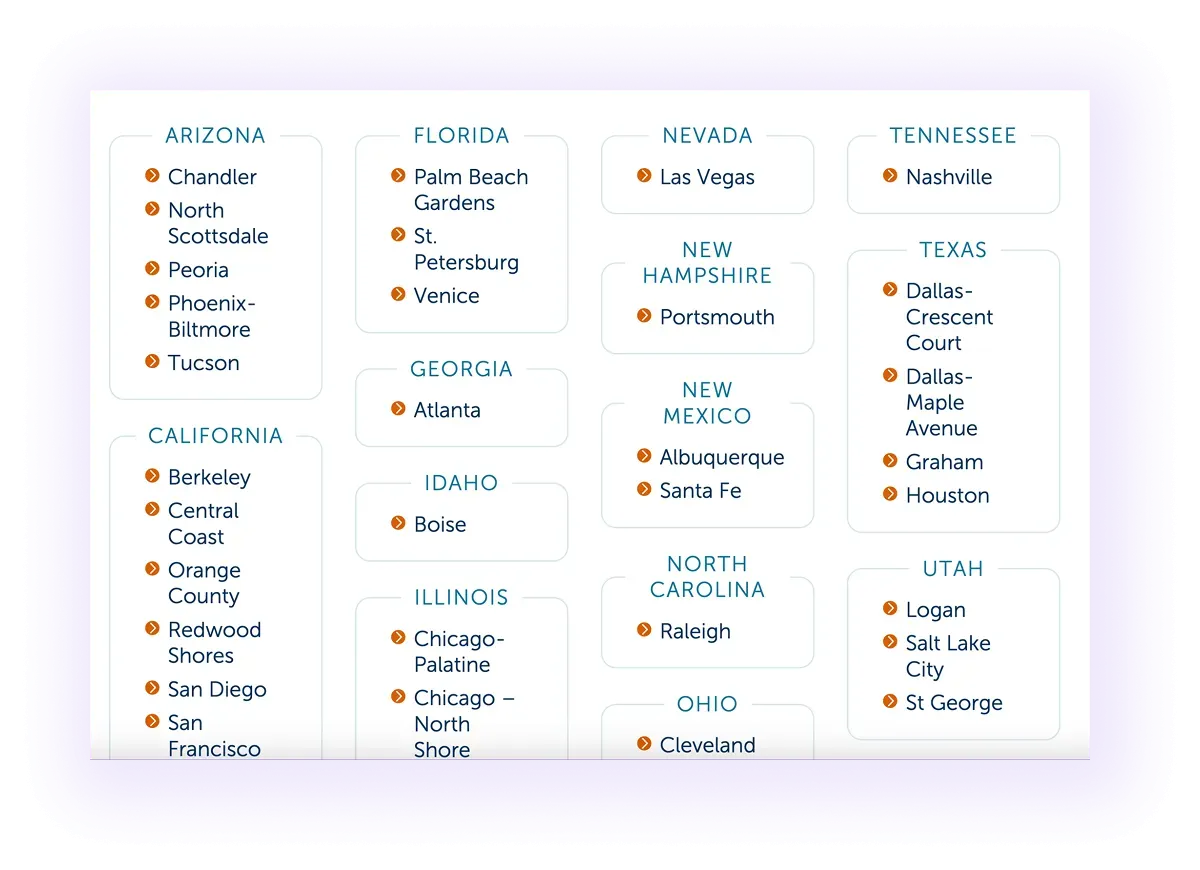
As the first step in your local SEO roadmap, create dedicated pages for every city, state, or region you serve. Each page should focus on its specific location and be easy to find through your navigation, either by listing locations directly or linking to a central “View our locations” hub.

You can also add a single section that links to all location pages in one place. This helps visitors find nearby services faster and improves internal linking and crawlability for search engines.
Blog Pages
Many people (including business owners) research financial topics before choosing a provider. They look for answers, compare options, and try to understand which services fit their situation. These searches usually come with informational intent.
Blog pages help capture this audience and support SEO for finance companies. By answering common questions, blogs build trust, reinforce your service pages, and guide visitors toward becoming clients. Common searches include:
- What is the best financial planning strategy for small businesses?
- How do I choose the right investment management service?
- What are the benefits of starting retirement planning early?
Stop Guessing Your Financial Website Structure—We Will Show You Exactly What Pages You Need
With your key pages in place, you’re set up for success. To stay ahead of competitors and get the strongest results, support from a specialized finance SEO agency makes the difference. Reach out to us, and we’ll help you move forward with confidence.
How to Do Local SEO for Financial Websites
The financing market is crowded, especially in the United States. To compete, you need visibility where intent is highest, local search. Targeting users who search for nearby financing companies attracts prospects who are ready to act.
That’s where finance SEO focused on local intent comes in. Through our local SEO services, we’ve built and applied proven strategies for financing websites that increase local visibility, attract qualified leads, and help clients get found first in their service areas; then turn that attention into real inquiries.
Local Financing Companies
If your financing company only serves California, your local SEO should reflect that. Add your location keyword to your homepage and each service page so search engines clearly understand where you operate.
Use location-based terms like:
- financial services california
- financial advisors california
- wealth management california
- tax planning california
Work these keywords naturally into page content, headings, title tags, and meta descriptions. This helps Google match your services to local searches, making it easier for clients in California to find you.

Multi-Area and National Financing Companies
If your firm serves multiple cities or states, your SEO strategy needs to reflect every market you cover. Target each service area with location-specific keywords as part of SEO for finance.
Examples include:
- financial advisors in orlando
- business financial services in new york
- tax planning services in houston
Use these terms naturally in page content, headings, title tags, and meta descriptions based on each page’s focus.
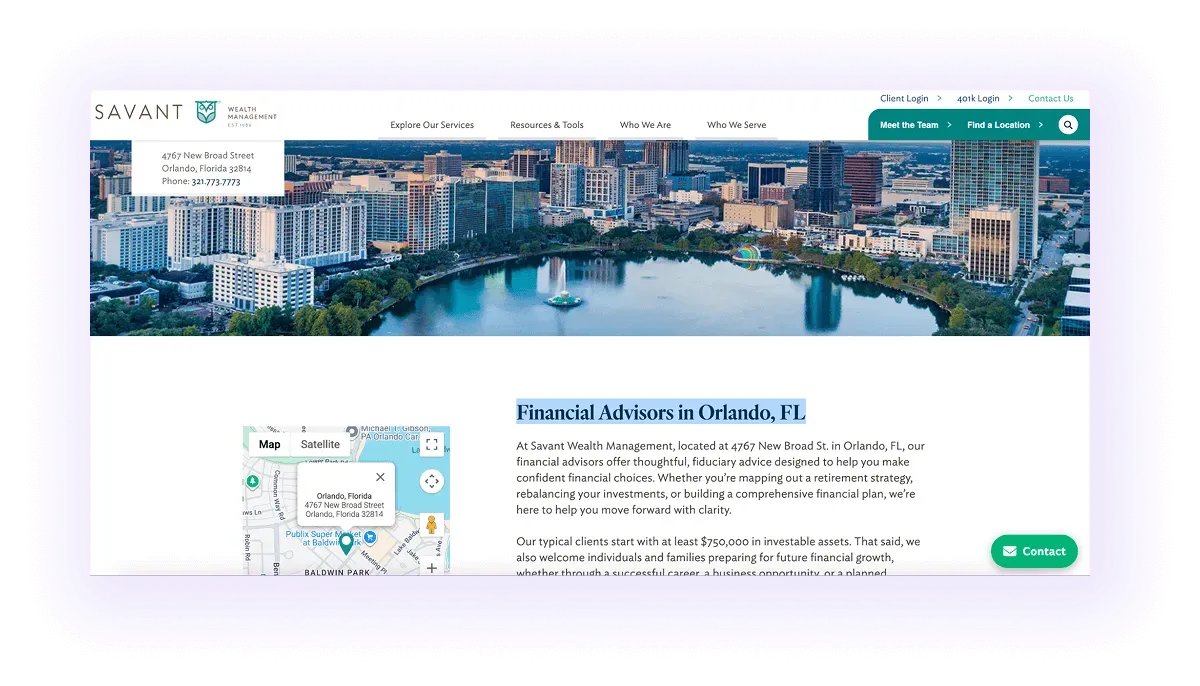
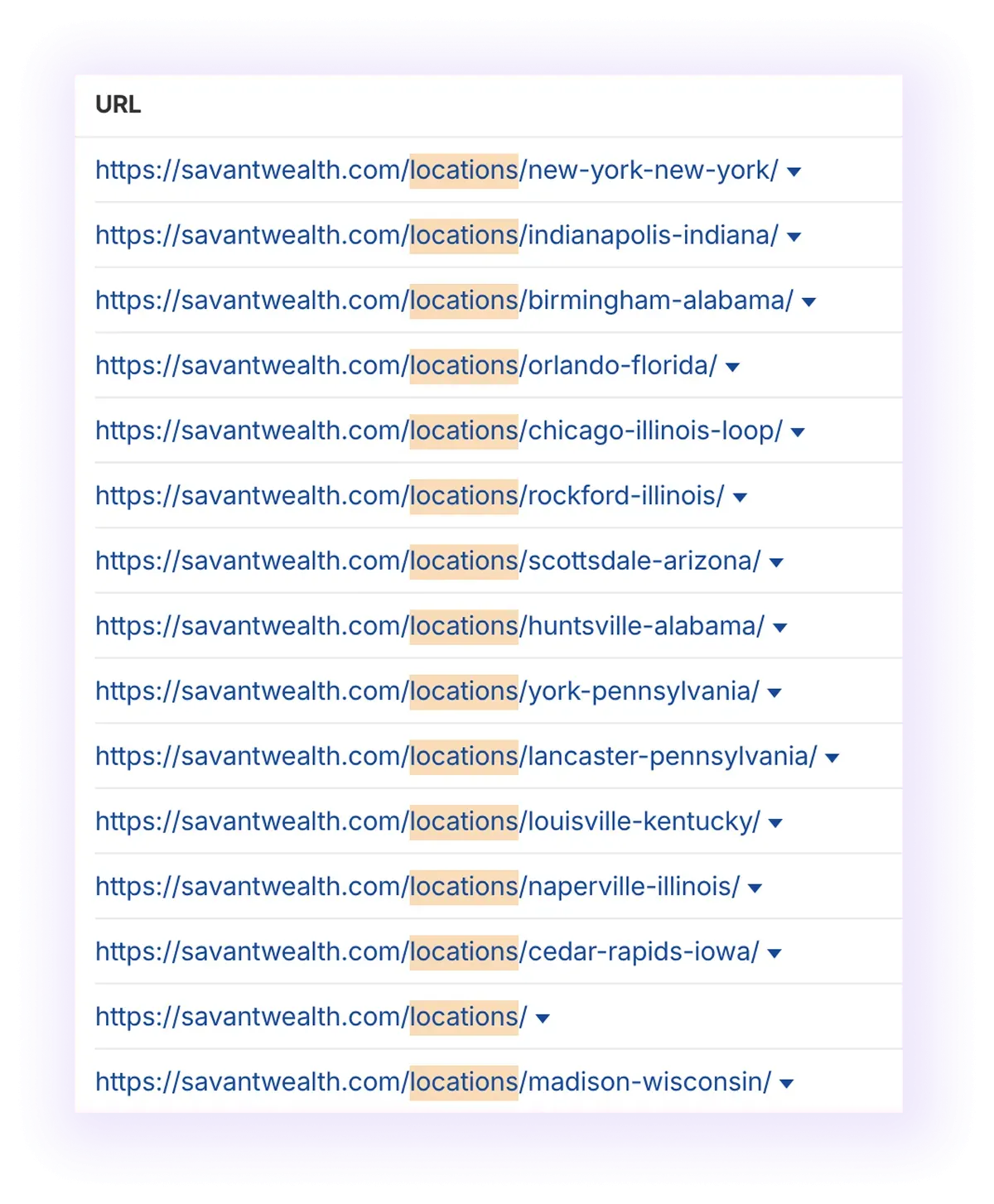
To support usability and help search engines read your structure, include locations directly in your URL paths.
Set up Your Google Business Profile and Optimize it for Google Maps
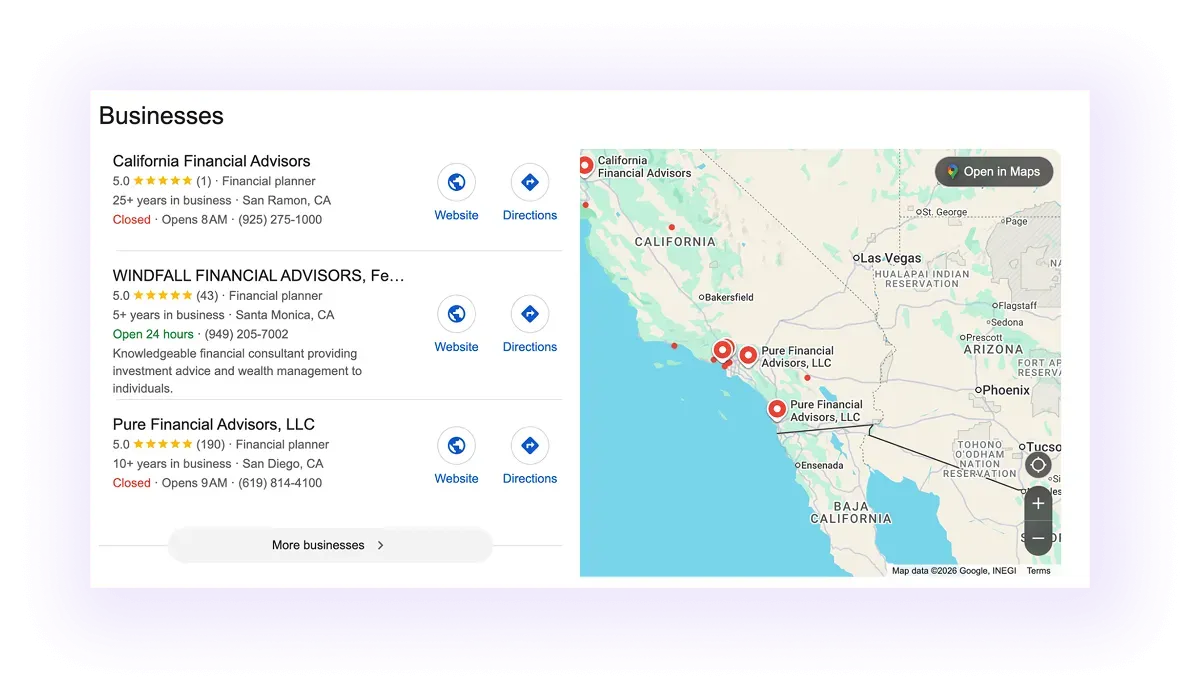
To complete your local presence, create a Google Business Profile (GMB). Then, follow our clear GMB setup checklist. This helps your firm appear in Google’s Map 3-Pack, where many local searches for financing services end, and where reviews often influence the final choice.
A strong profile also supports SEO for financial websites by reinforcing local relevance and trust. Make sure your profile includes:
- A consistent Name, Address, and Phone number that matches your website
- A complete list of services in the Products section
- A clear, professional business description
- Your website link and working hours
- High-quality photos of your advisors and office
- Links to your social profiles
- Regular responses to reviews
- A completed Q&A section



Getting these details right helps your financing business show up in local searches and attract clients from the areas you serve.
Build High Quality Content for Your Finance Firm’s Website
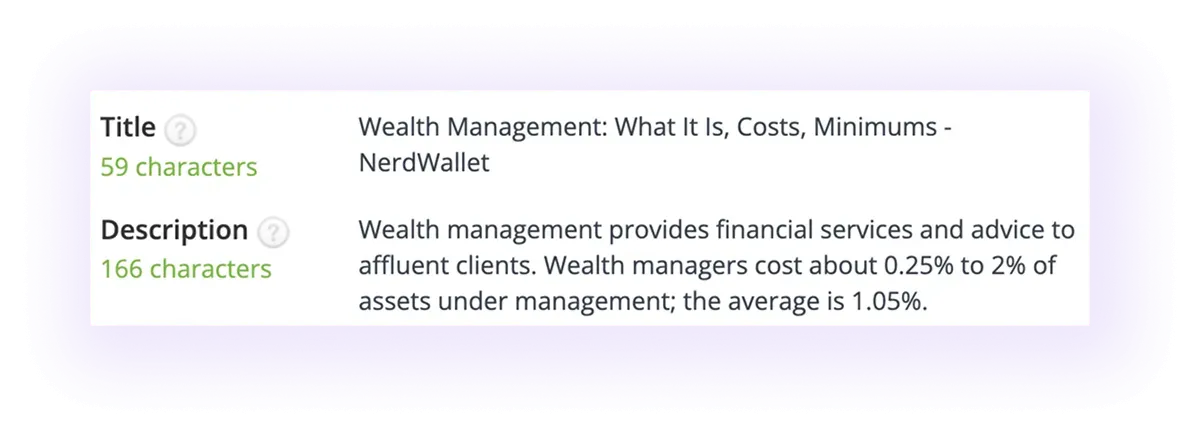
Strong content is non-negotiable: a finance website won’t rank without content that’s original, easy to understand, and that clearly explains how you solve client problems. That foundation is critical for financial SEO. Follow a clear content structure:
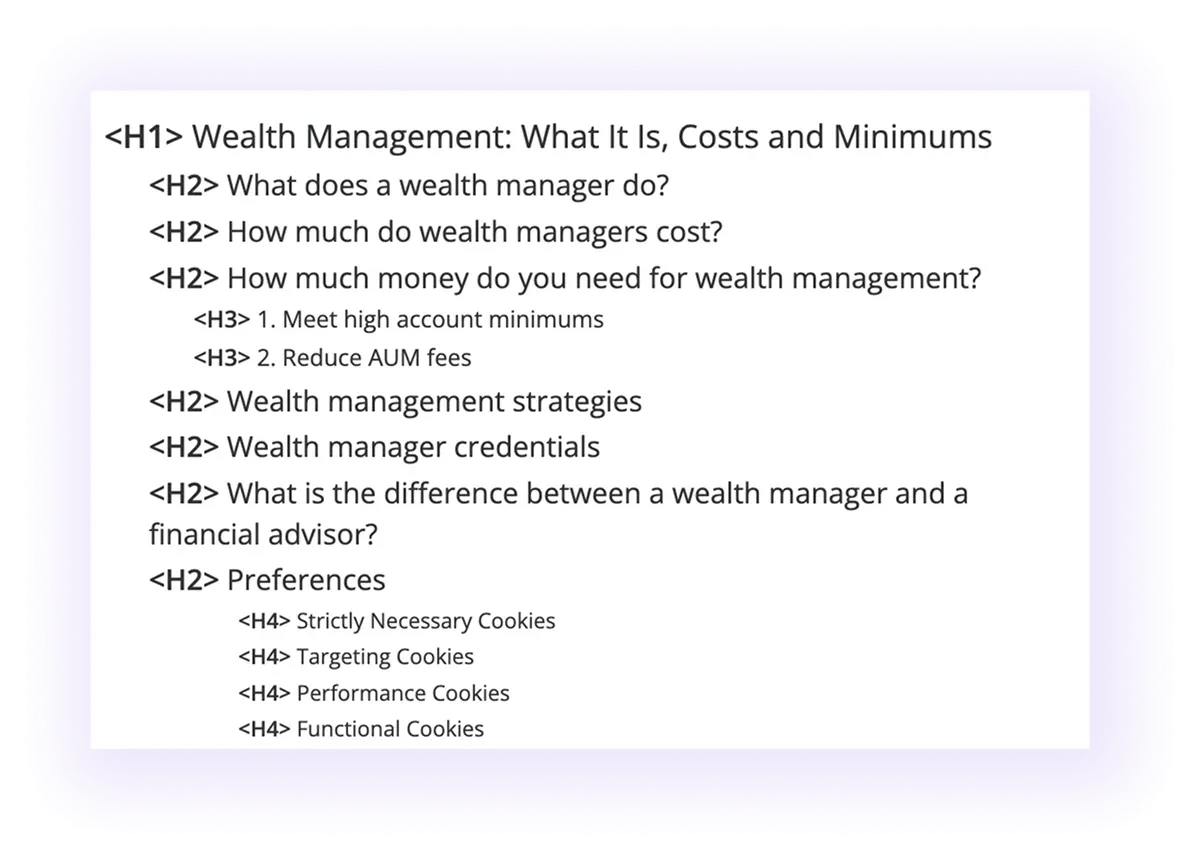
- Use ordered headings from H1 to H4
- Check clarity and flow with a text readability score checker
- Add target keywords naturally to headings, page content, title tags, and meta descriptions
Because finance sites fall under Google’s Your Money or Your Life (YMYL) standards, credibility matters just as much as structure. YMYL pages cover topics that can directly affect a person’s finances or well-being, so Google applies higher quality and trust requirements before ranking them.
- Media features showing coverage by reputable publications

- Awards or industry recognitions

- Value proposition and experience explaining why clients choose you

- Process pages outlining how your services work

- Partners that signal reliability

- Advisors and team bios with credentials

- Client testimonials and success stories

- Special offers, such as a free retirement review

- Featured rates displayed clearly

- Video content introducing your firm or advisors

Blog Posts
One of the best content strategies for SEO on finance websites is pillar clustering. This method attracts informational traffic while strengthening related service pages, an approach that works especially well for SEO for finance companies.
Start by choosing a core service, such as wealth management. Then create supporting blog posts around real questions people ask, like:
- How do I start a wealth management plan?
- What investment strategies support long-term growth?
- How do wealth management services support retirement planning?
You can uncover these topics through Google’s People Also Ask results or the Questions tab in SEMrush.

To help your blog posts perform:
- Write original, easy-to-read content that teaches, not sells
- Add keywords naturally to titles, headings, meta descriptions, and body copy
- Keep heading order clean from H1 to H4
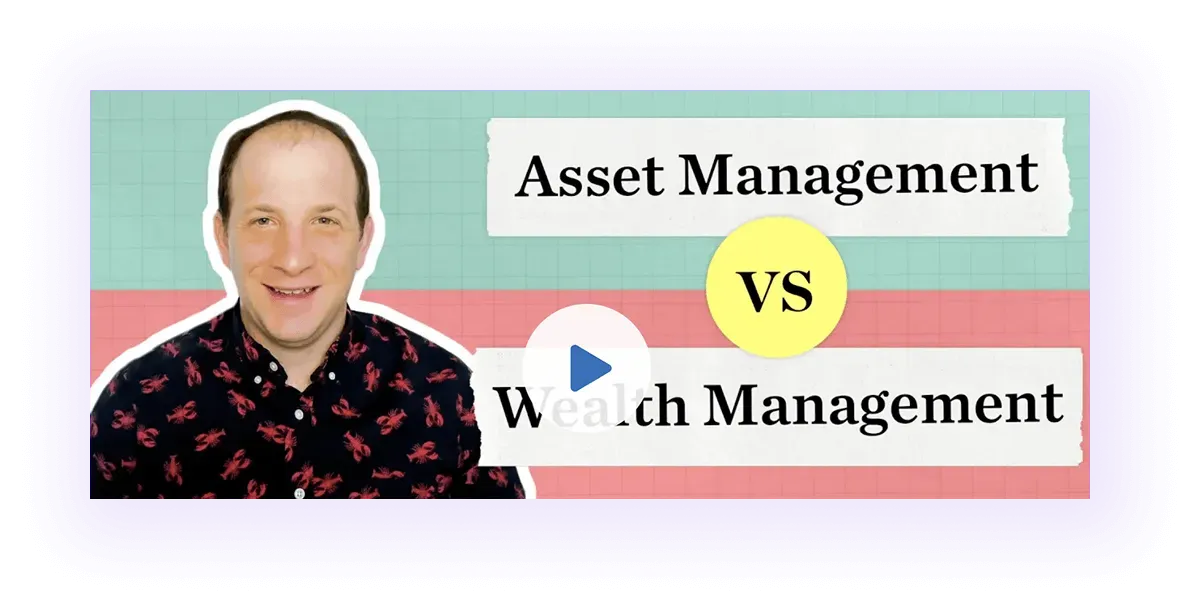
- Use images and videos to explain ideas visually
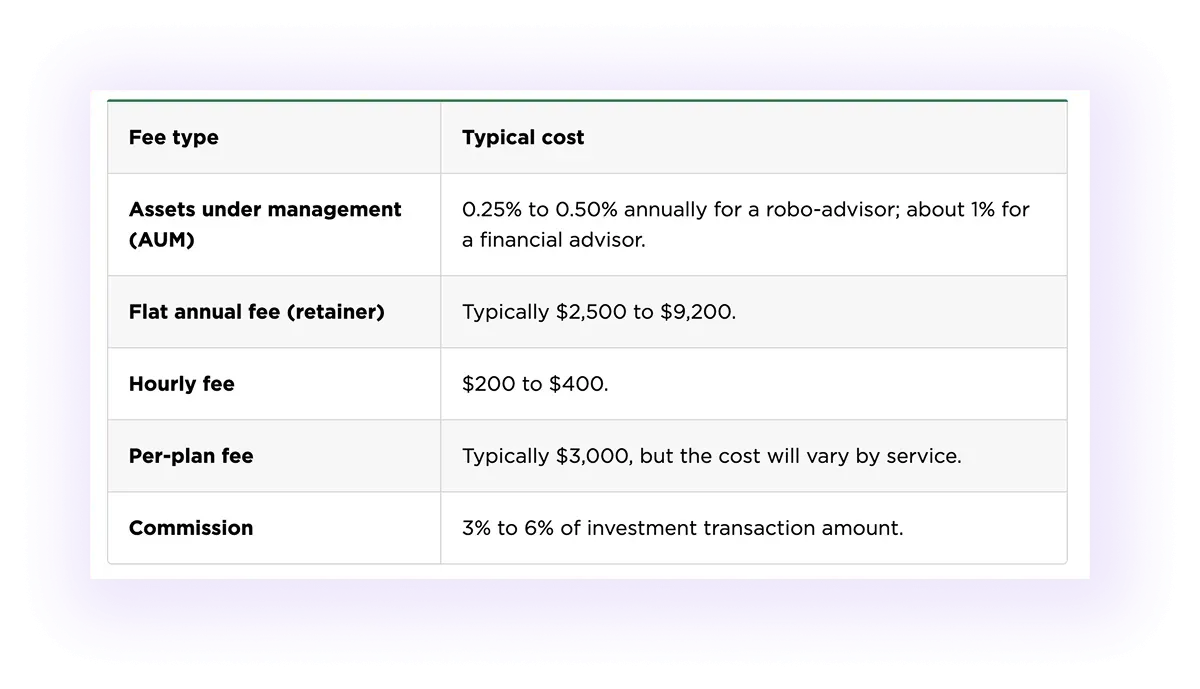
- Break up content with lists and tables
- Cite any data or sources you reference
This structure helps blogs rank, support service pages, and guide readers toward becoming clients.
Implement Technical SEO for Your Financing Website
This is where your technical SEO roadmap begins. The goal is simple: make your site easy for Google to crawl and easy for users to navigate.
A well-built financing website loads quickly, works smoothly across devices, and helps visitors find information without friction. This foundation is often where a finance SEO agency creates the biggest performance gains.
XML Sitemap and Robots.txt
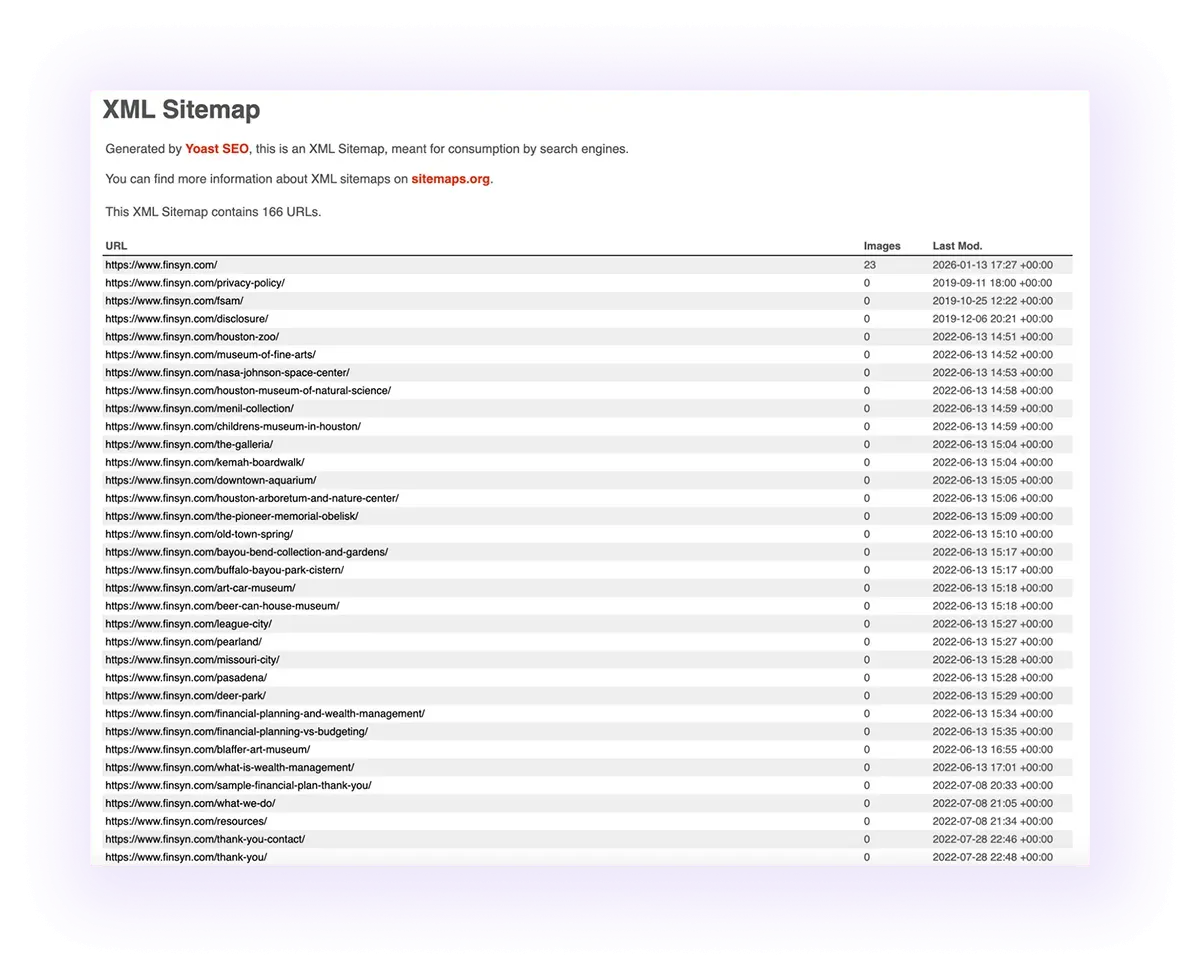
Start by showing Google which pages matter. Create an XML sitemap that includes your key finance pages: services, location pages, blog content, and any page you want indexed.
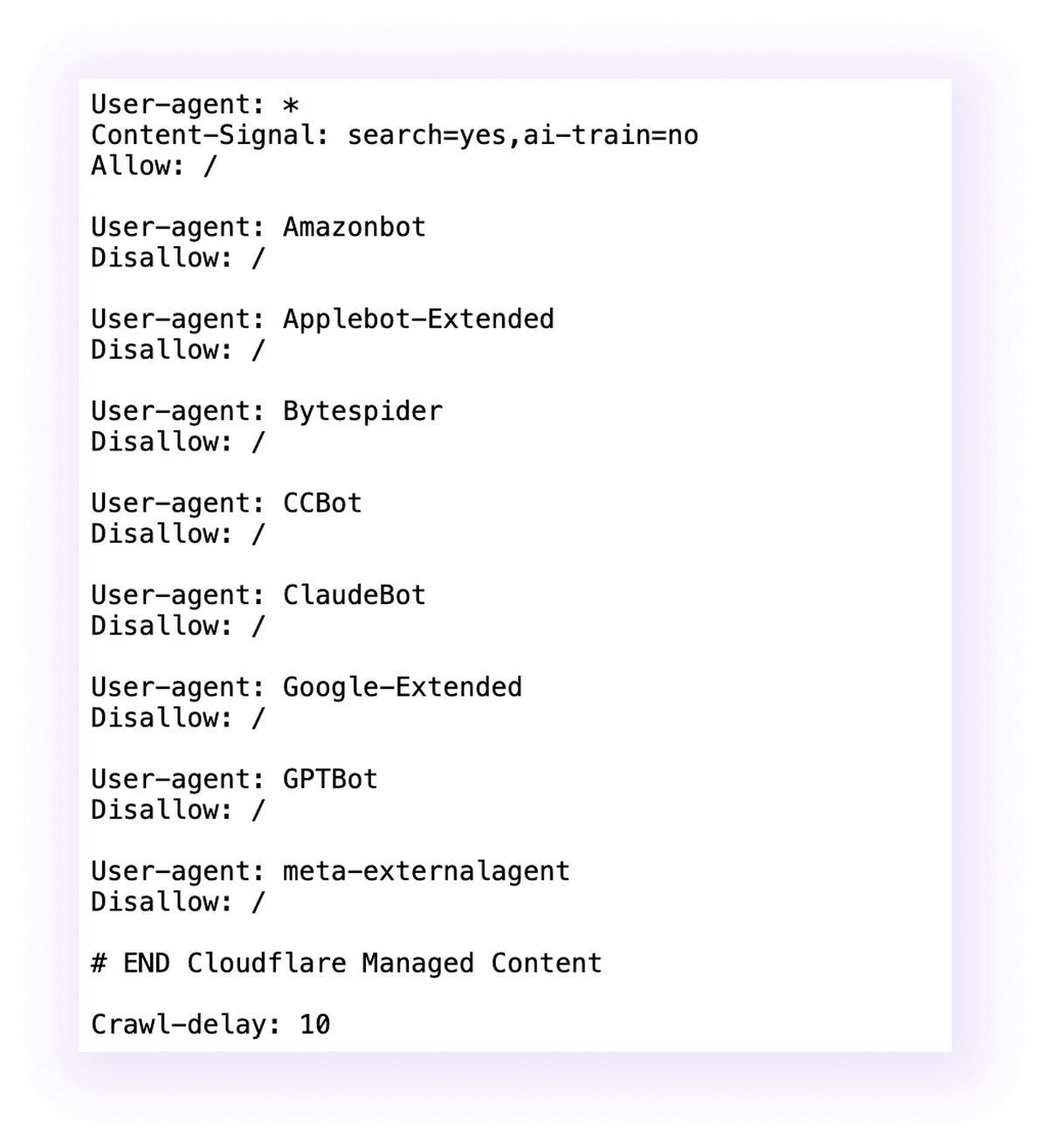
Next, use a robots.txt file to block low-value or private pages, such as admin areas or thin content. This keeps crawl focus on your most important financial pages and helps search engines use their resources efficiently.
Schema Markup and Structured Data
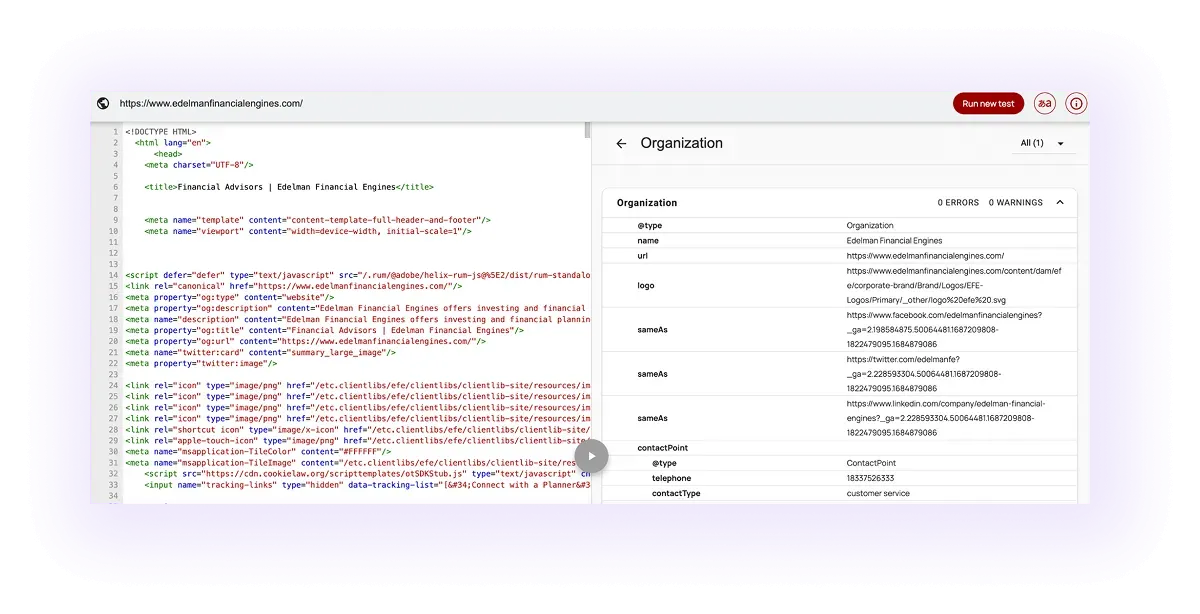
Schema markup helps Google clearly understand what your finance firm offers and who you serve. It also enables enhanced search results, such as FAQs, reviews, and highlighted services, key visibility wins for finance SEO.
Recommended schema types for financial websites include:
- FinancialService: Identifies your firm and its offerings
- LocalBusiness: Confirms your location and supports local visibility
- Organization: Shares core business details like name, logo, and contact info
- AggregateRating / Review: Displays ratings and reviews to build trust
- FAQPage: Enables FAQ rich results in search
- BreadcrumbList: Clarifies site structure and breadcrumb paths
- Person: Highlights advisor credentials and expertise
- Service: Defines individual financial services
- Article / BlogPosting: Improves visibility for blog and educational content
URL Structure
Create clean, user-friendly URLs that follow your site’s hierarchy. This makes navigation easier for visitors and helps search engines read your structure, an important part of SEO for finance.
URLs should be descriptive and include keywords naturally, without clutter. Avoid numbers, random characters, or unnecessary parameters that confuse users and search engines.
Example:
- Good: www.yourfinancewebsite.com/services/financial-planning
- Bad: www.yourfinancewebsite.com/page123?id=456
Internal Link Building for Finance Websites
Every page on your finance website (blogs, service pages, and location pages) should connect to related content through internal links. This helps visitors move through your site easily and passes authority from stronger pages to those that need support.
Common internal link types include:
- Main Menu Links: Navigation links to core pages like your homepage, services, locations, or blog (e.g., linking service hub page with all service pages).
- Service-to-Service Links: Connect related offerings (e.g., linking the financial planning page to the retirement planning page).
- Service-to-Location Links: Tie services to specific regions (e.g., linking the wealth management service page to the wealth management in California page).
- Blog-to-Blog Links: Connect related educational content (e.g., linking “How to start wealth management” blog to a blog on investment strategies for beginners).
- Blog-to-Service Links: Guide readers from articles to relevant services (e.g., linking “What is tax planning?” blog to your Tax Planning service page).

Mobile Optimization for a Finance Services Website
Website optimization for mobile devices is now essential, especially for finance firms, since many users search and compare services on their phones. A strong mobile experience also supports SEO for financial websites.
To build a mobile-friendly finance site:
- Use a responsive design that adapts to all screen sizes
- Add a hamburger menu for easy access to services
- Include large, tap-friendly buttons
- Set body text to at least 16px for readability
- Improve load speed by compressing images
These steps help users navigate comfortably and engage with your services on any device.

Website Speed & Performance (Core Web Vitals)
Page speed plays a major role in user experience, and slow sites don’t rank well. Faster load times keep visitors engaged and signal quality to Google.
To improve performance:
- Optimize and compress images without sacrificing quality
- Keep video files lightweight
- Enable lazy loading for below-the-fold images
- Minify JavaScript, CSS, and HTML
- Use reliable hosting and a Content Delivery Network (CDN)
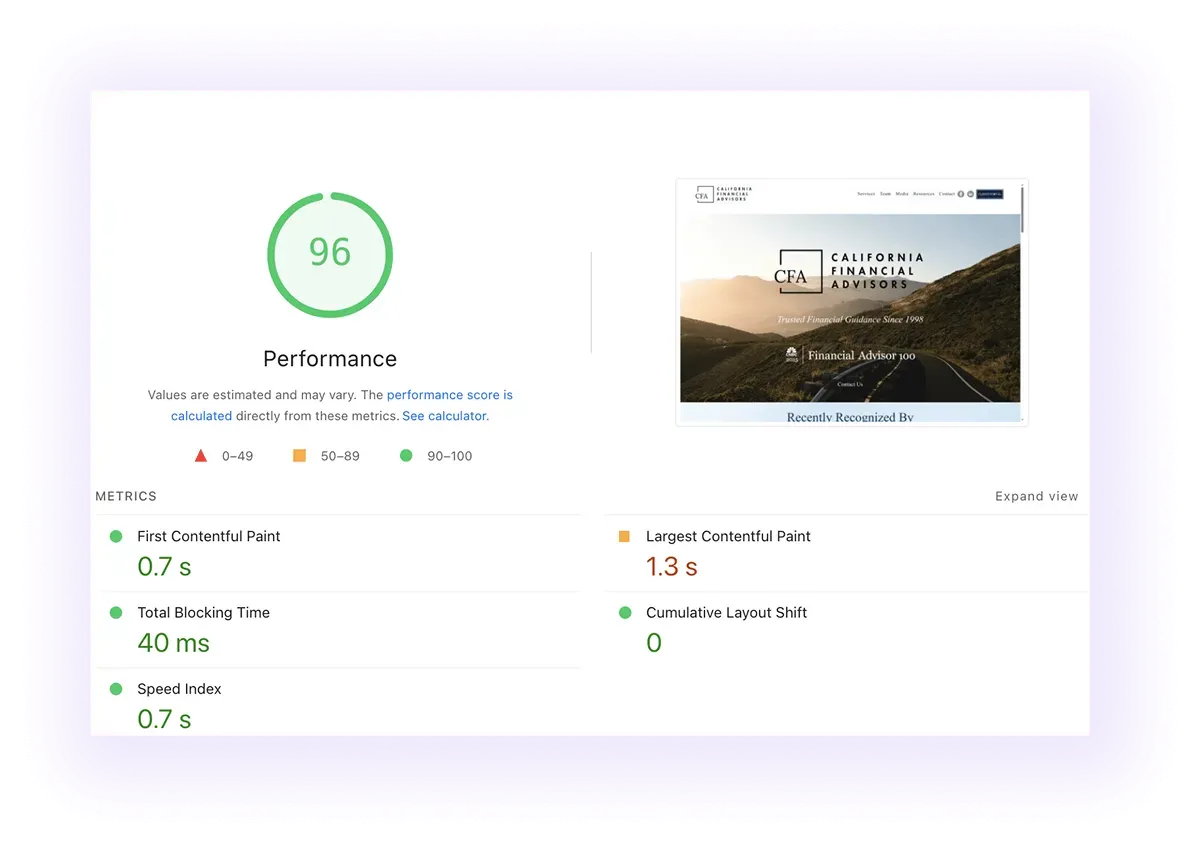
After making updates, test your site with GTmetrix and Google PageSpeed Insights. Aim for these Core Web Vitals benchmarks:
- Largest Contentful Paint (LCP): under 3 seconds
- First Contentful Paint (FCP): under 1 second
- Cumulative Layout Shift (CLS): as close to zero as possible
Meeting these thresholds improves usability and search performance.
Frequent Technical Audits
Finance websites change often: new blog posts, updated services, added locations, refreshed offers, or event pages. Regular technical audits keep those updates from creating hidden issues that hurt performance in financial SEO.
Run a technical audit at least once a month and review:
- Duplicate content and page uniqueness using Screaming Frog
- 404 errors, broken links, and orphan pages with Screaming Frog
- Redirect accuracy through Google Search Console
- Indexing and crawl status in Google Search Console
- Site performance after updates using Google PageSpeed Insights
- Schema validity with Google Rich Results Test
Small technical issues add up quickly when they’re missed. If you want this handled consistently, a specialized finance SEO agency can manage audits and fixes before problems compound.
Link Building for Finance SEO
Backlinks are a major trust signal for Google and play a key role in how reliable your financing company appears. They show how many credible websites vouch for your business, an important factor in SEO for finance companies.
Our expert link builders use proven link-building tactics to increase authority, attract qualified traffic, and strengthen search rankings over time. Let’s review them.
Guest Posting and Link Insertion
One of the most effective link-building approaches is guest posting and link insertion. Start by finding high-authority websites relevant to finance, such as:
- dakota.com for investment-related topics
- connection.avenue.us for financial education
- abacuswealth.com for wealth management
- humbledollar.com for fund and retirement content
Once you’ve identified target sites, choose the right approach:
- Guest Posting: Write a new, high-value article for the site and include a contextual link back to your service or content.
- Link Insertion: Add value to an existing article by filling content gaps or expanding insights, then place a relevant link to your site.
For both methods, reach out to the site’s editorial team and pitch your content clearly so it can be published or updated.
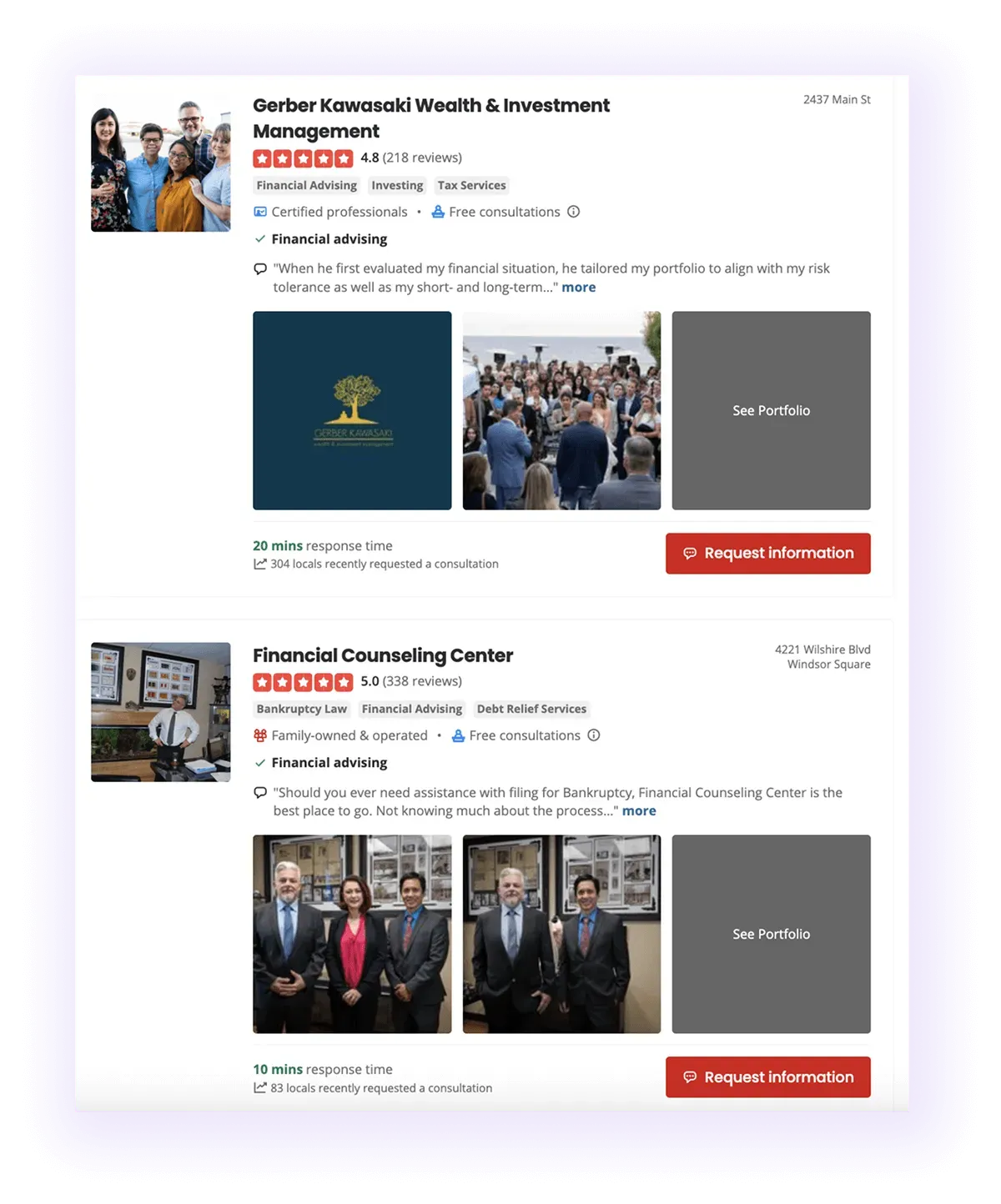
Directory Listings for Finance Websites
Building local backlinks starts with listing your firm in trusted directories. These listings boost authority, send referral traffic, and strengthen trust with both Google and potential clients.
Useful directory types include:
- Professional directories like Expertise under the finance category
- Local platforms such as Yelp
- AI company finders like Inven
Just like your GMB, each listing needs proper setup:
- Match your Name, Address, and Phone number exactly
- Write a clear, professional firm description
- Highlight services, credentials, and mentions
- Upload high-quality photos of your team and awards
- Respond to reviews
- Add your website URL
A finance SEO agency can manage this process to keep listings consistent, optimized, and working together, strengthening your local presence.
Digital PR for Finance Businesses
Digital PR earns high-authority backlinks from trusted publications, an effective way to strengthen SEO for finance. Examples include placements on sites like Investment News or major finance outlets such as Yahoo Finance.
To secure these links:
- Identify newsworthy topics relevant to the finance industry
- Collect original data through research, surveys, or user interviews
- Create a data-backed article with clear insights
- Write a focused pitch explaining the angle, relevance, and methodology
- Reach out to journalists and earn backlinks when coverage is published
These links boost authority while positioning your firm as a credible source.
How to Track the Success of Your Finance SEO Strategy
Tracking performance shows what’s working, what’s slipping, and where to adjust. Ongoing measurement is essential for SEO for financial websites.
Use these SEO analytics tools and metrics to stay on track:
- Google Search Console: Monitor clicks, impressions, rankings, and indexing
- Ahrefs and SEMrush: Review backlink gains, losses, and competitor profiles
- Google PageSpeed Insights: Check mobile usability and site speed
- Google Analytics: Track traffic, bounce rate, leads, conversions, and session duration
- Microsoft Clarity and Hotjar: Analyze heatmaps, scroll depth, and click behavior
- Google Tag Manager: Set up custom events like calls, form submissions, and key interactions
Consistent tracking turns financial SEO data into clear decisions and steady performance gains.
Partner with a Finance SEO Agency That Knows Your Industry
With these steps in place, you’re positioned to rank. To make sure clients choose you, not your competitors, guidance from a finance SEO agency with real experience can make the difference. If you’re ready, contact us and let’s start bringing the right clients your way.
Submit the form - Get Free Proposal
%202.png)
24 hours
FAQ


Submit the form - Get Free Proposal
24 hours
.svg)