
SEO for Banks Strategies and Keywords by Banking SEO Agency
Attract qualified banking clients before they choose a competitor with our specialized banking SEO strategies!
5.0




U.S. banks compete in a crowded market: nearly 4,000 community banks and 134 regional banks are chasing the same checking and savings customers. Most prospects now compare rates and terms online before contacting a banker.
Branch traffic continues to decline, so digital channels must replace in-person trust. When fees, eligibility, or disclosures are unclear, prospects exit early and form negative perceptions of credibility.
Internal competition makes it worse: mortgage, auto, and personal banking pages often compete for the same searches, confusing customers and fragmenting internal focus. Relationship-driven models struggle online, prompting banks to rely on rate-only comparisons with fintechs.
SEO for banks addresses these gaps. Below are the exact strategies our professional SEO company uses to attract qualified demand, clarify offerings, and convert digital research into funded accounts for your bank.
Why Do Banks Need to Invest in SEO?
- Win Stable Deposits Online: Banking SEO positions checking and savings products in front of rate-shopping consumers before they choose a competitor.
- Replace Branch Traffic with Qualified Demand: As in-person visits drop, SEO becomes a primary source of account discovery and acquisition.
- Reduce Product Confusion: Clear search-intent mapping keeps mortgage, auto, and personal banking pages from competing with one another.
- Establish Trust Before Contact: Search-visible content that clearly explains fees, eligibility, and disclosures builds credibility early.
- Control Long-Term Costs: With bank marketing budgets ranging from $437,000 to $2.9 billion, SEO compounds over time. Use our SEO budget calculator to estimate your investment.
- Stand Apart from Fintechs: Bank SEO highlights relationship-driven value, not just rates.
- Reach Younger Buyers Early: Targeted search content meets Millennials and Gen Z during credit research and account comparison.
- Align Every Revenue Channel. SEO for banks integrates checking, lending, and personal banking under a single demand strategy.
You know the “why.” Next: the “how” behind banking SEO that converts search into funded accounts.
Do Keyword Research and Competitive Analysis for Your Bank’s Website
Start with a clean inventory of what your bank offers in your service area. List each product separately:
- personal checking
- business accounts
- nonprofit banking
- wealth services
- fraud protection
- home equity loans
Skip broad groupings. They hide demand.
Next, test each product using tools such as Ahrefs, Google Keyword Planner, or SEMrush. This shows how people really search, not how banks label products.
You’ll see demand, competition, and related queries. A term like “business savings account” can outperform generic phrases like “banking services” because it signals intent and faces less competition.
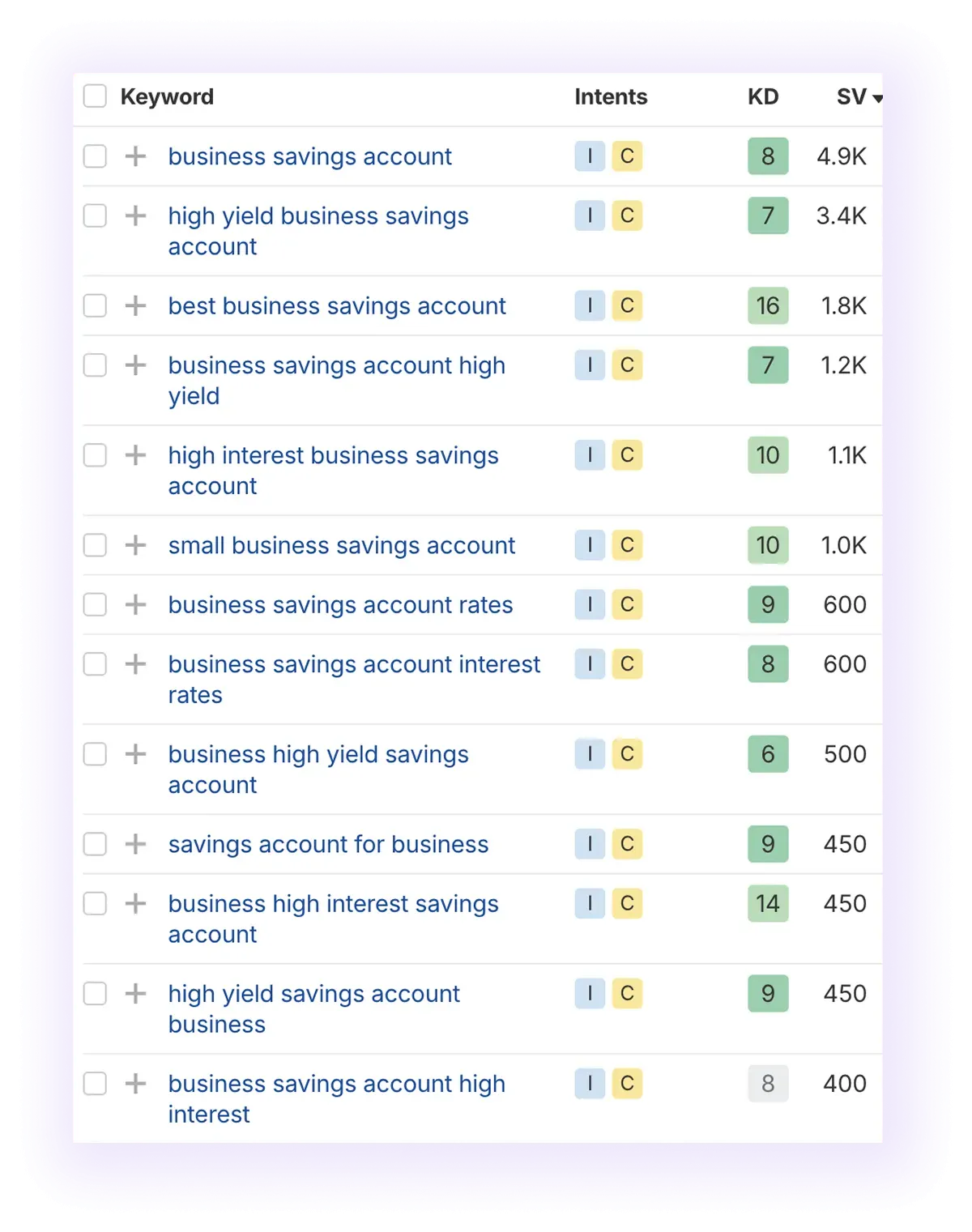
Volume alone isn’t enough. Calculate organic CTR to see how much qualified traffic a keyword can realistically deliver.
Then layer in location filters. Demand changes by market. Home equity loans may trend in one state and stall in another. Local data keeps the effort focused on where accounts are opened.
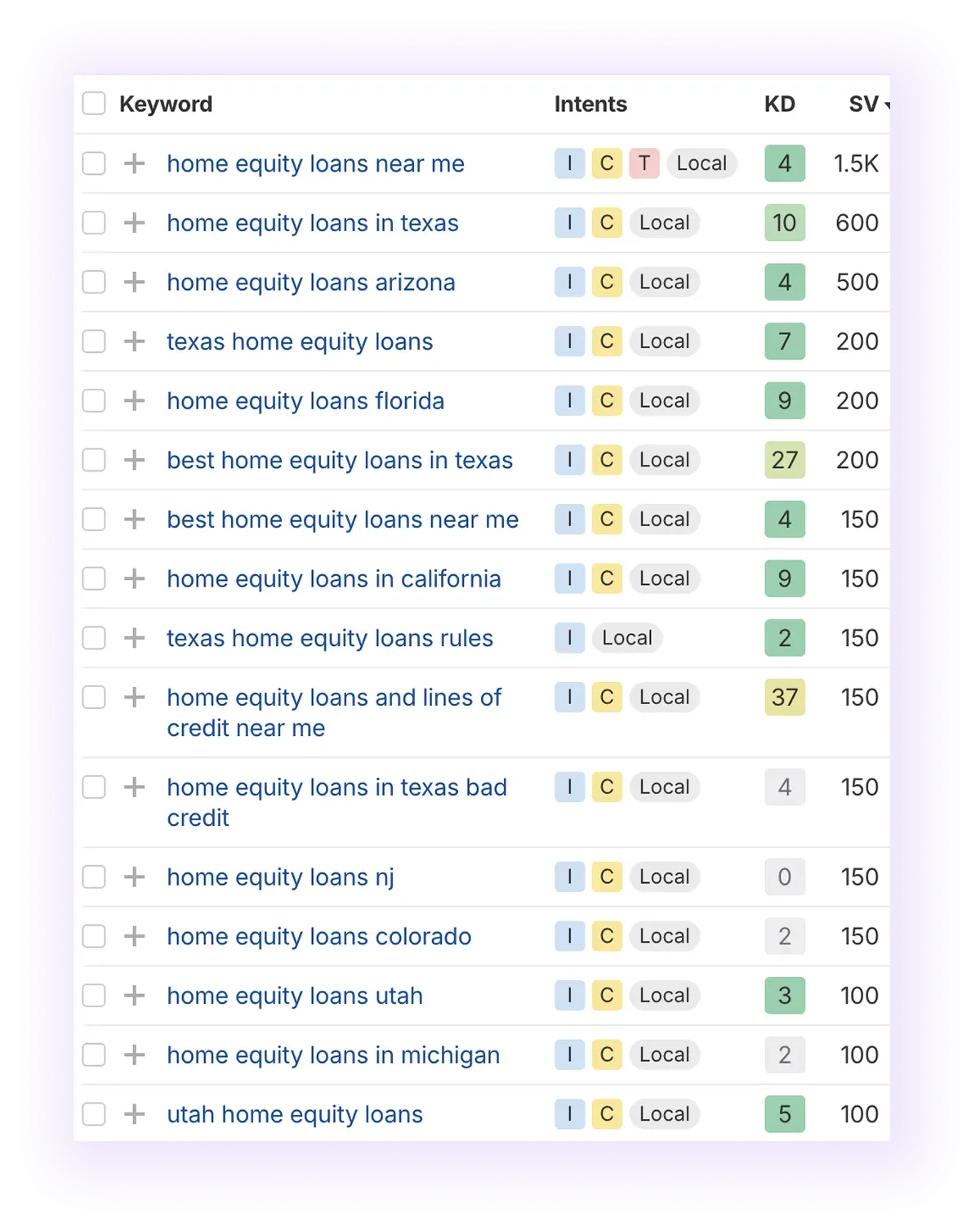
To make this easier, we use a repeatable keyword research framework that speeds analysis and avoids guesswork.
Top 30 Real Keywords for Banks
Transactional
- business banking
- personal banking
- wealth management
- business loans
- non profit banking
- commercial banking
- business loans
- business savings account
- fraud prevention
- home equity loans
- mortgage loans
- checking accounts
- auto loans
- certificate of deposite
- money market account
Informational and Educational
- what is apy meaning
- how interest rates work
- difference between checking savings
- how credit scores work
- what is fractional banking
- how loans are approved
- how banks manage risk
- what affects mortgage rates
- how compound interest works
- how online banking works
- what is fdic insurance
- what is apr meaning
- how wire transfers work
- what is credit utilization
- how savings accounts grow
Your first 30 banking SEO keywords are ready to go. If you want help applying them to drive real demand, reach out. We’ll show you how an experienced bank SEO agency turns search traffic into account openings.
Outline Your Bank’s Website Hierarchy and Menu Structure
People search for banks with different goals. Some want a checking account. Others need a business loan, fraud help, or financial guidance. Your site structure should route each visitor to the right product fast.
That starts with a clear hierarchy as a base. Every bank website needs four non-negotiable pages:
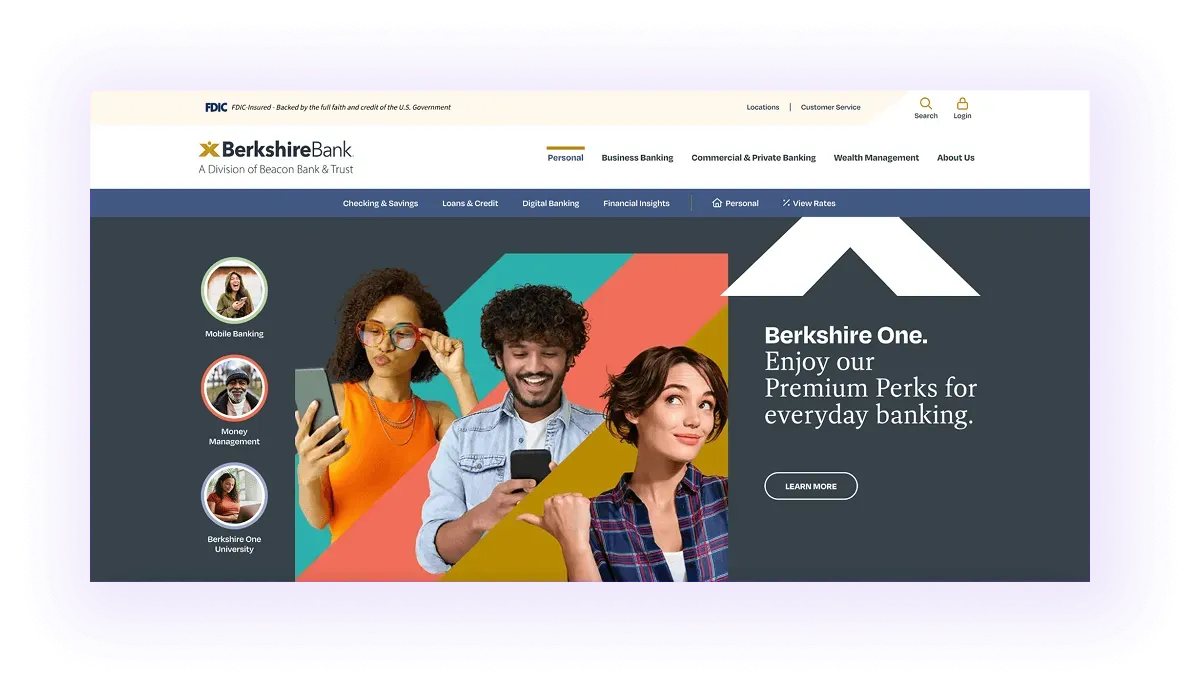
- Homepage: Targets broad terms like “community bank,” “regional bank,” and “banking services.” It should surface your priority products and set expectations at a glance.
- About Us: Builds credibility. Share when your bank was founded, who you serve, and why customers trust you with their money.
- Contact Us: Removes friction. Make it easy for prospects and customers to ask questions, report issues, or get clarity on banking products.
- Security: Reinforces trust. Clearly explain encryption, multi-factor authentication, fraud monitoring, and compliance standards such as PCI DSS.
Link these pages directly in your main navigation. Visitors find answers faster, and search engines understand your structure without guesswork, both critical for SEO for banks.
Banking Products and Service Pages
Search intent changes by product. A business owner searching “business checking” wants something very different from a consumer searching “home equity loan.” Your site has to reflect that.
Create a dedicated page for every banking product:
- business loans
- business lines of credit
- business savings accounts
- personal checking accounts
- personal savings accounts
- mortgage loans
- auto loans
Each page targets one clear keyword tied to that service, helping search engines match the right offer to the right searcher. Add every product page to your main navigation so they’re easy to find.
Organize by audience that your bank SEO identifies:
- Personal Banking: One navigation tab with a dropdown listing all consumer products.
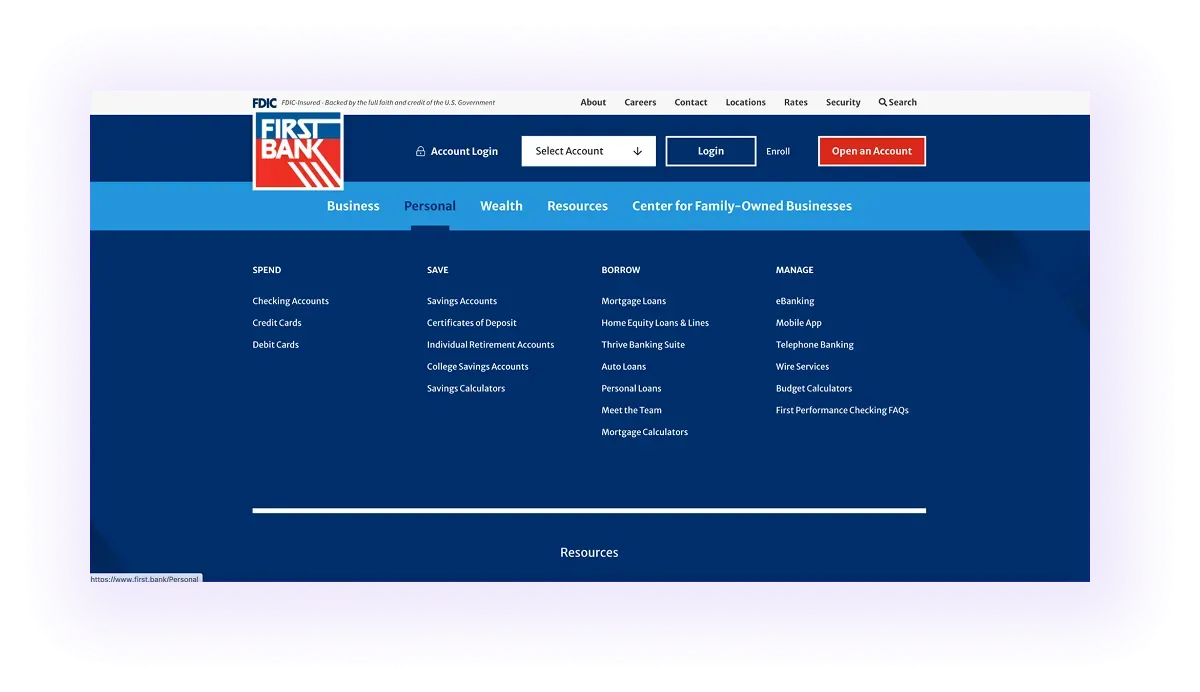
- Business Banking: A separate tab listing every business account and lending option.
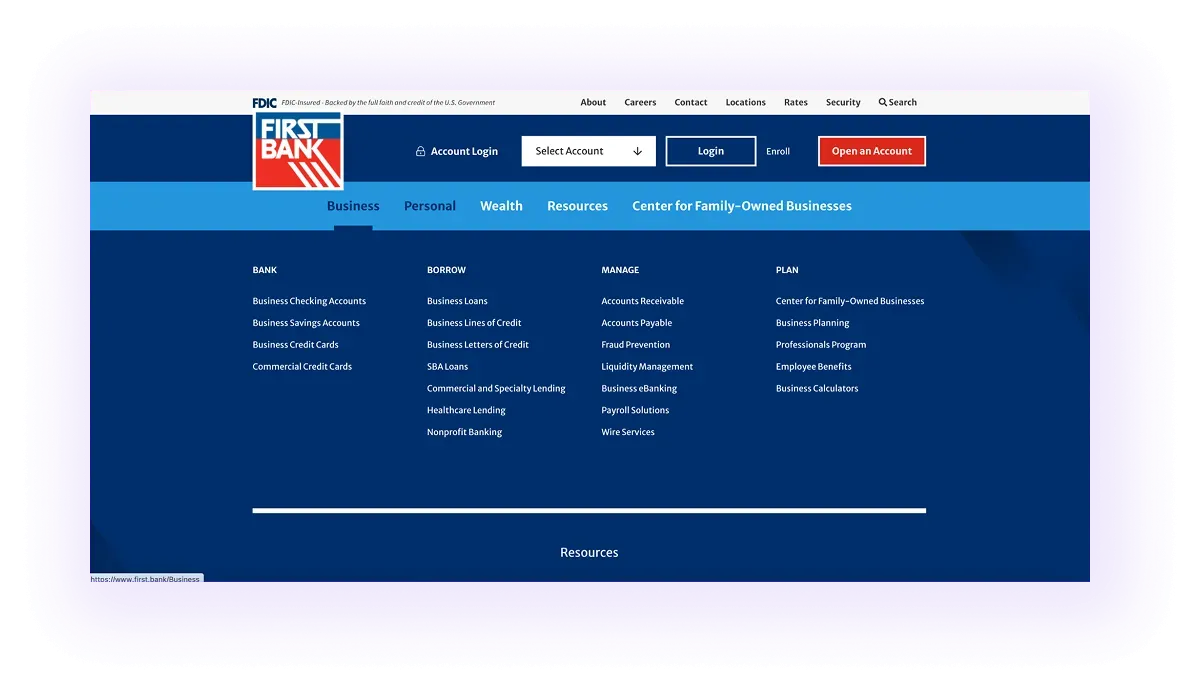
If you offer investments or advisory services, add a “Wealth services” section with its own pages.
This structure shortens time-to-answer, reduces friction, and keeps SEO for banking aligned with real buyer intent.
Rates Page
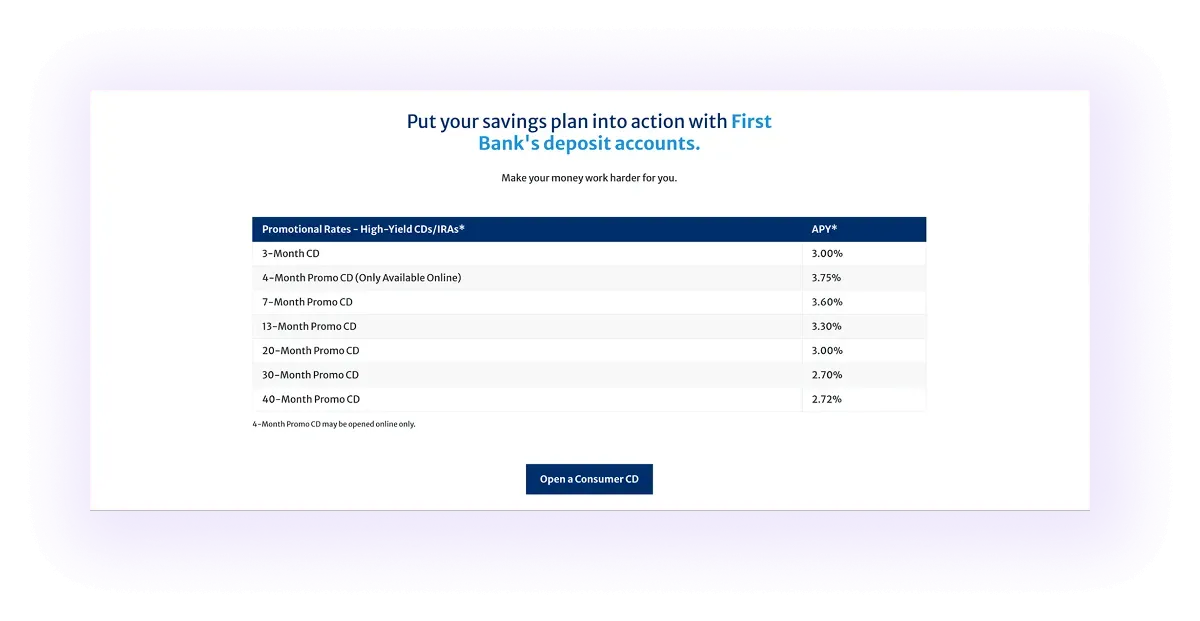
Most prospects compare rates before contacting a bank. A dedicated rates page removes friction and keeps them on your site. List current rates clearly and update them often. Make comparison easy across core products:
- personal checking account rates
- savings account rates
- home equity loan rates
- auto loan rates
- CD (certificate of deposit) rates
Clarity here directly affects trust, time on site, and conversion, which in turn boosts your banking SEO.
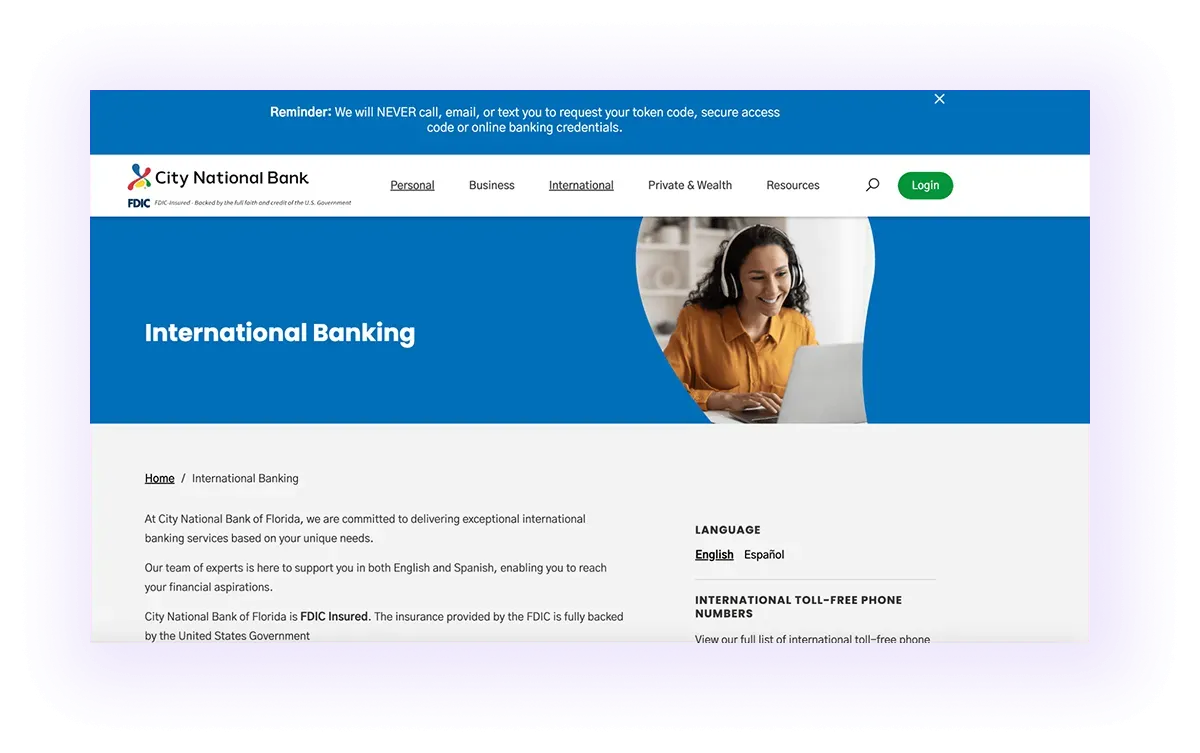
International Banking Page
If your bank offers international services, publish a dedicated page for them. Tourists, students, and foreign workers actively search for banks that support international accounts.
Local Pages
National banks often capture local search demand before community and regional banks can. When you enter a new county or MSA without local signals, it is hard to earn relevance, especially ahead of a branch opening or rebrand.
Location-specific pages fix that. Create a page for each area you serve to establish early presence and support local SEO for banking.
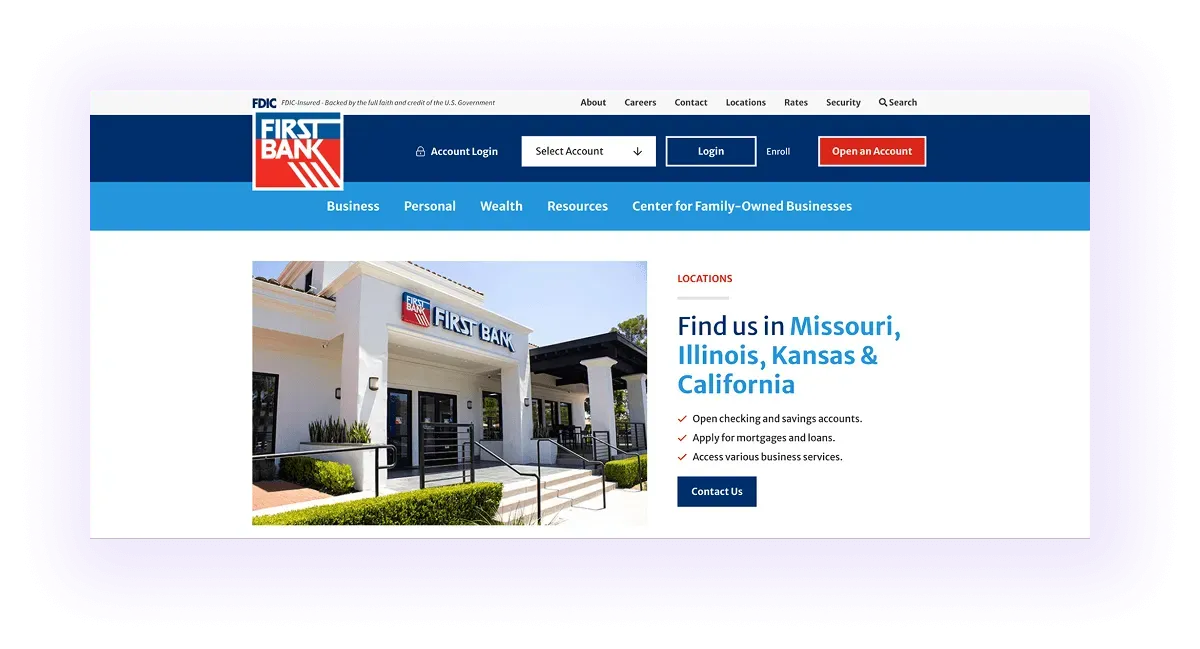
These pages anchor your local SEO roadmap.
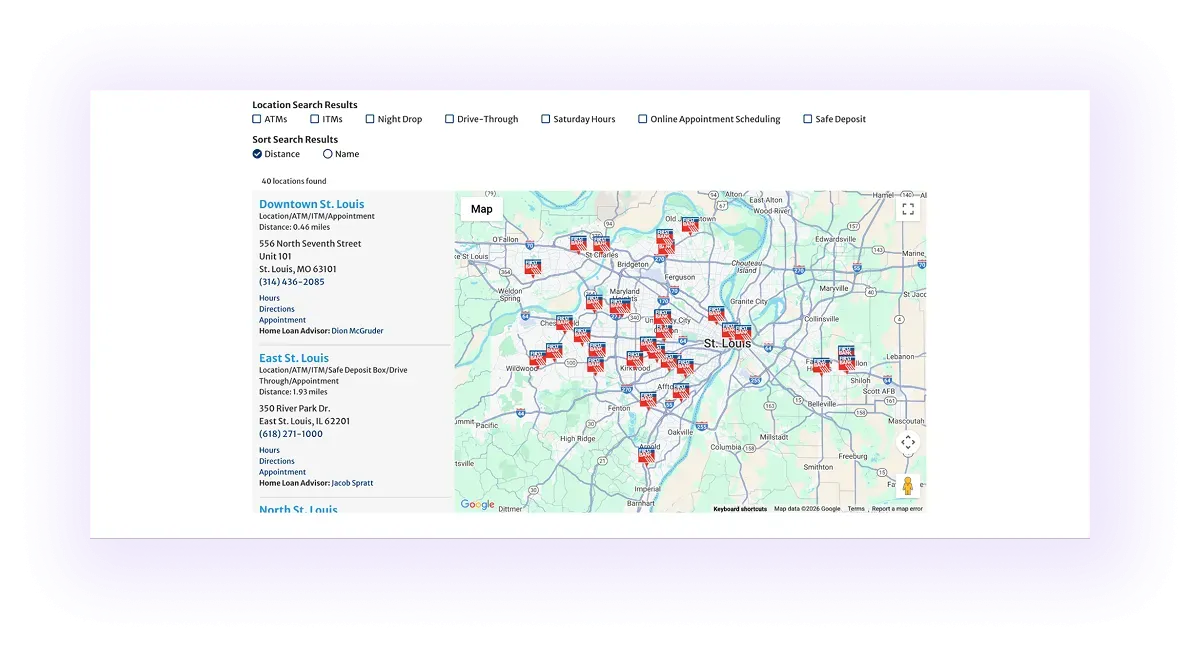
Adding an interactive map helps users orient quickly and reinforces geographic relevance.
Blogs and Financial Education Pages
Customers search daily for answers about rates, eligibility, and program changes. When banks don’t publish those answers, branches and call centers absorb the load.
A focused blog or education hub captures search demand and reduces repeat questions for your banking site. Cover topics customers ask before opening an account, like:
- What’s the difference between a fixed-rate and an adjustable-rate mortgage?
- How do I qualify for a business loan at this bank?
- What fees apply when opening a checking account?
Clear answers save staff time, attract qualified traffic, and guide prospects before they ever speak to a banker.
Stop Guessing Your Bank’s Website Structure—We Will Show You Exactly What Pages You Need
When you map all the pages we’ve covered, it’s clear that the work goes beyond publishing those pages. Each one needs the right structure, technical setup, internal links, and targeting to reach the right audience. If you want help pulling it all together, contact us. Our banking SEO agency will guide the process end-to-end.
How to Do Local SEO for Banks
Many customers search for banks they can visit in person, using queries like “banks in florida” or “business checking in new york.” Ranking for these searches requires a focused local SEO for banking.
As local SEO experts, we break down proven local SEO approaches for community, regional, and national banks below.
Local and Community Banks
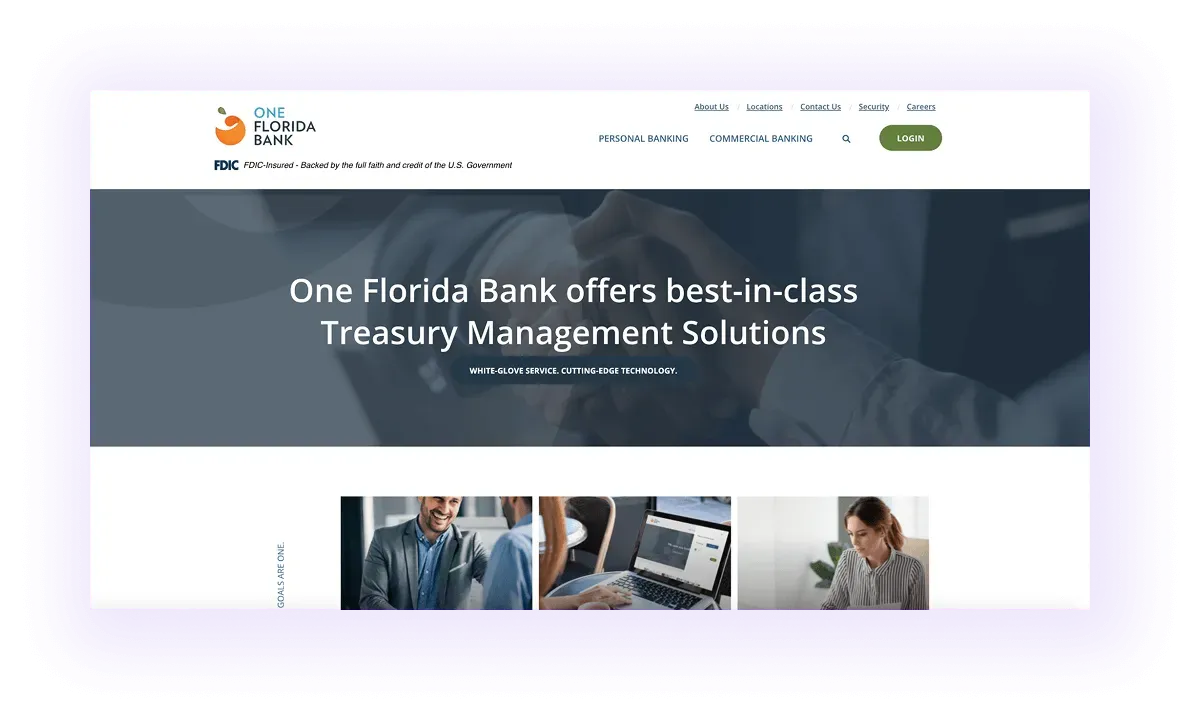
Let’s say you’re a community bank serving only Florida. You should target state-based keywords across its homepage and product pages. Examples include:
- home equity loans in florida
- personal banking services in florida
- business checking accounts in florida
- personal savings accounts in florida
- certificates of deposit in florida
- mortgage loans in florida
Use these terms in page copy, title tags, meta descriptions, and headings. This keeps your pages visible for local searches and aligned with in-state demand.
National Banks
On the other hand, if your bank is national and offers services across multiple states, areas, and neighborhoods, your approach will be different.
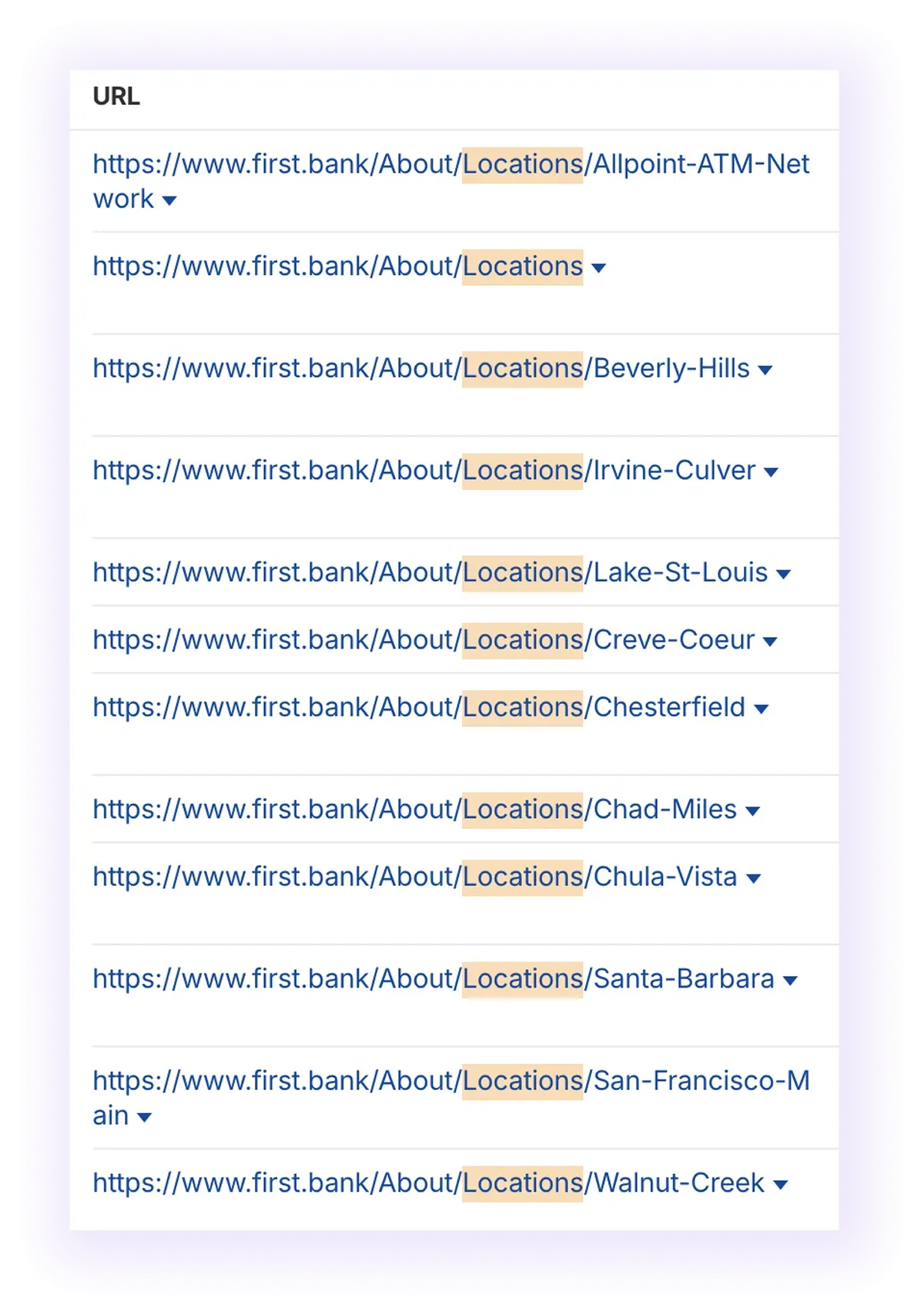
In this case, create a locations hub page that lists all your branches. Then, create individual pages for each branch, targeting keywords relevant to the areas you serve. For example, you’ll target keywords like:
- banking services in california
- banking services in new york
- banking services in [other states/regions]
Make sure to use these location-specific keywords in your page titles, meta descriptions, headings, and text to improve search visibility.
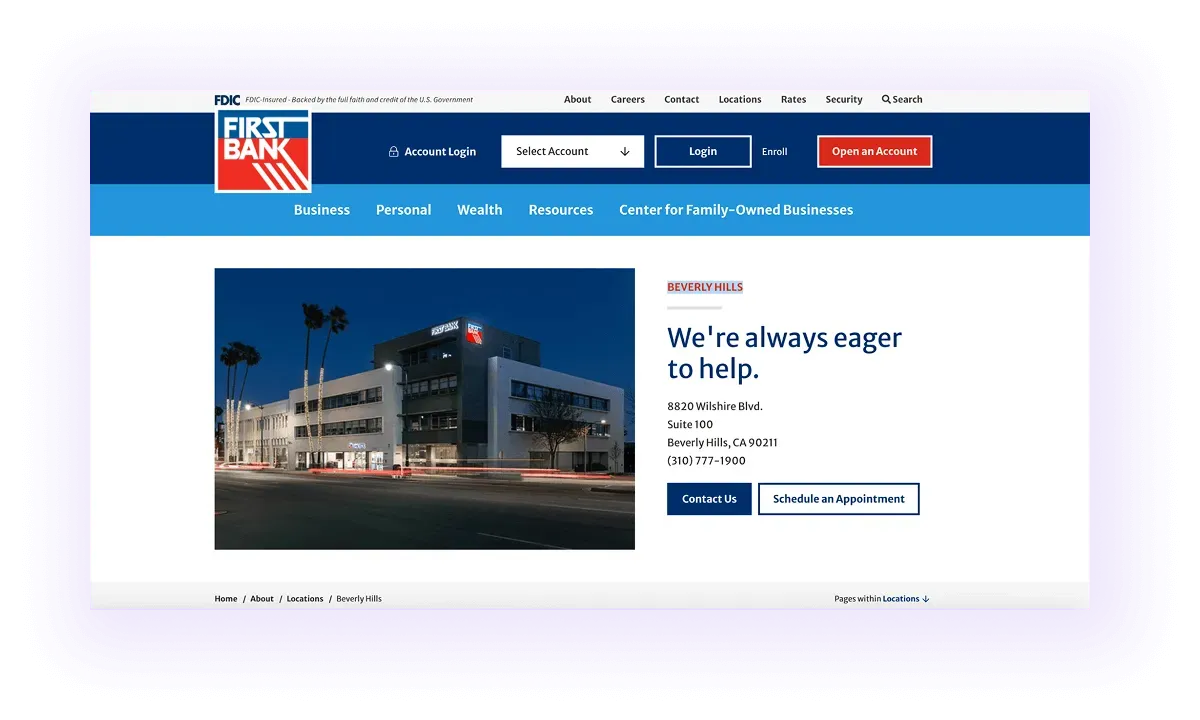
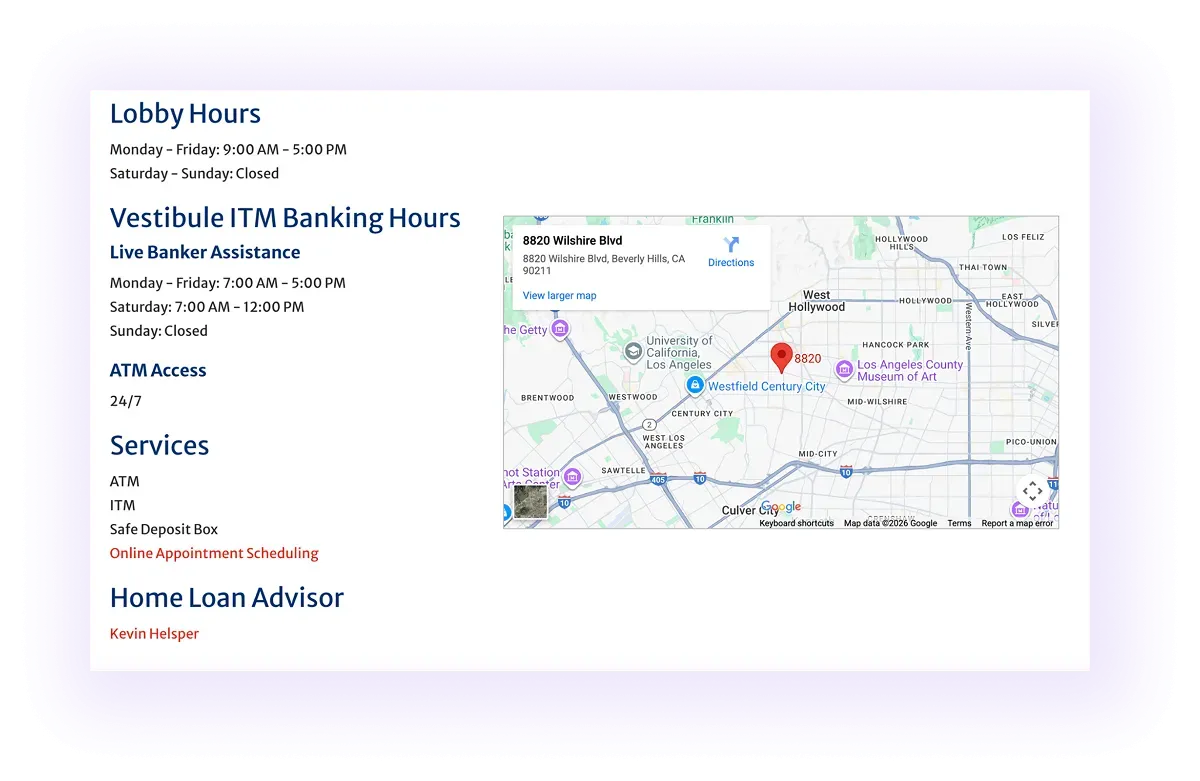
Each service page should surface practical details: location map, lobby hours, ATM access, RTM hours, and available services.
Use a clear URL structure with a dedicated locations subfolder. This helps users navigate faster and helps Google understand your site.
Set up Your Google Business Profile and Optimize it for Google Maps
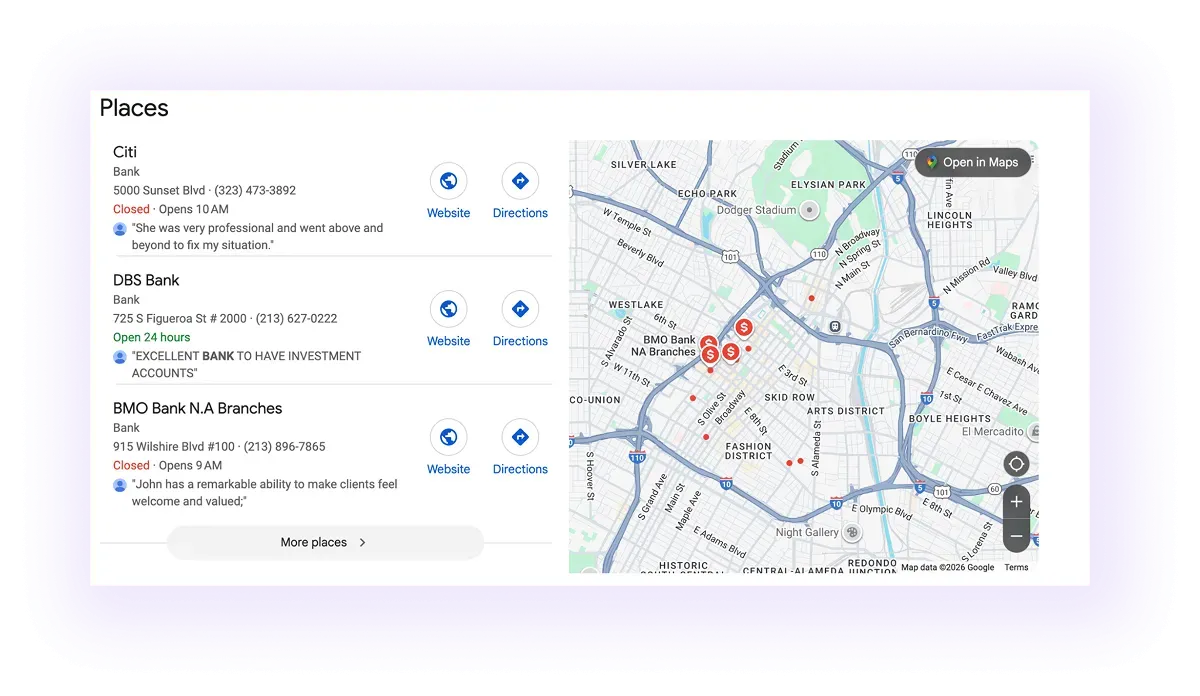
When people search “car loans near me” or “car loans in new york,” Google often shows the Maps 3-Pack before organic results. Showing up there is non-negotiable for SEO for banks.
To qualify and compete, optimize your Google Business Profile (GMB):
- Match your bank’s name, address, and phone number to your website
- Add your website link
- Write a clear, plain-language description
- List every service and product offered
- Upload branch and interior photos
- Monitor and respond to reviews
- Connect social profiles, if available
- Answer questions in the Q&A section
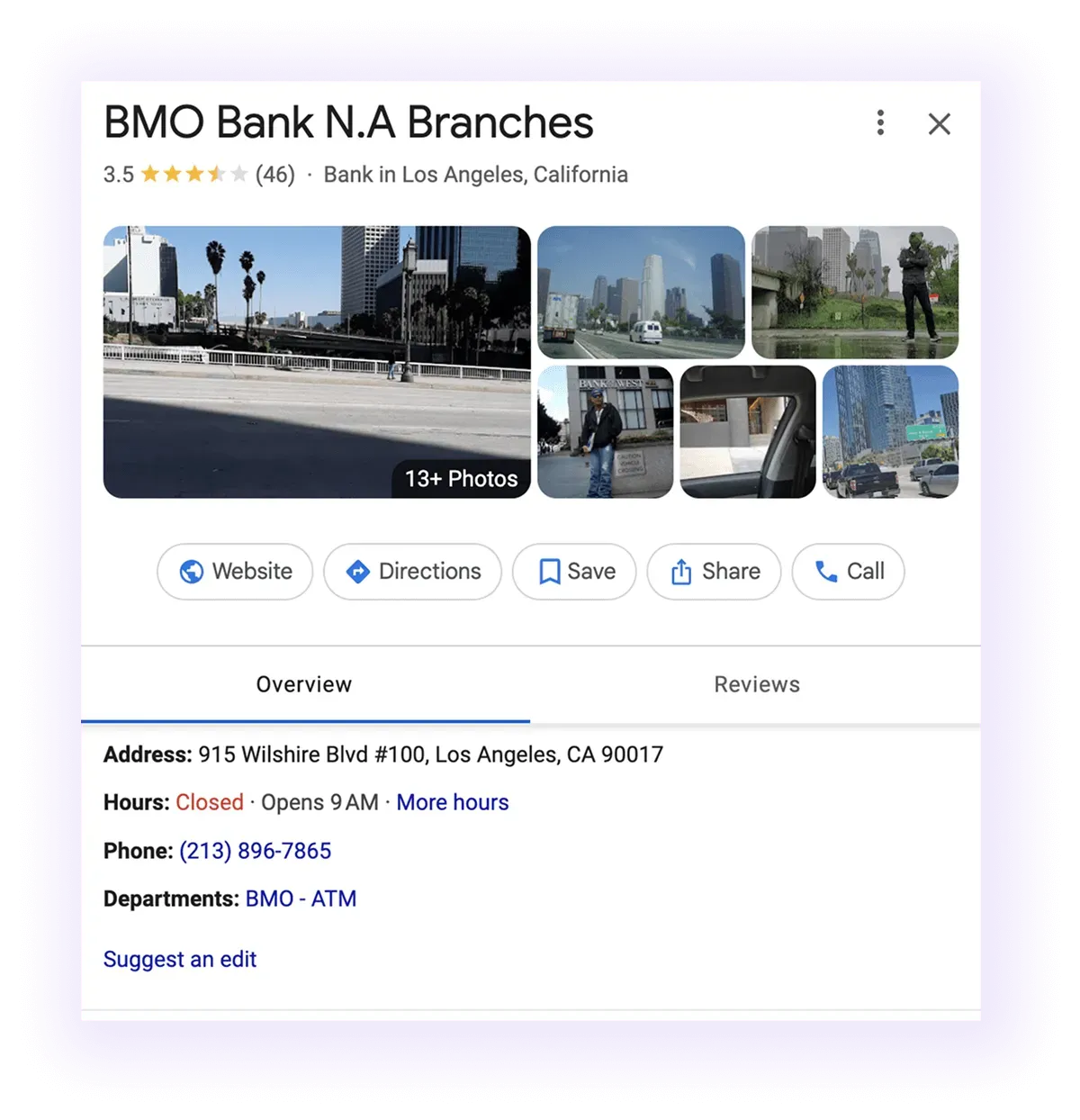
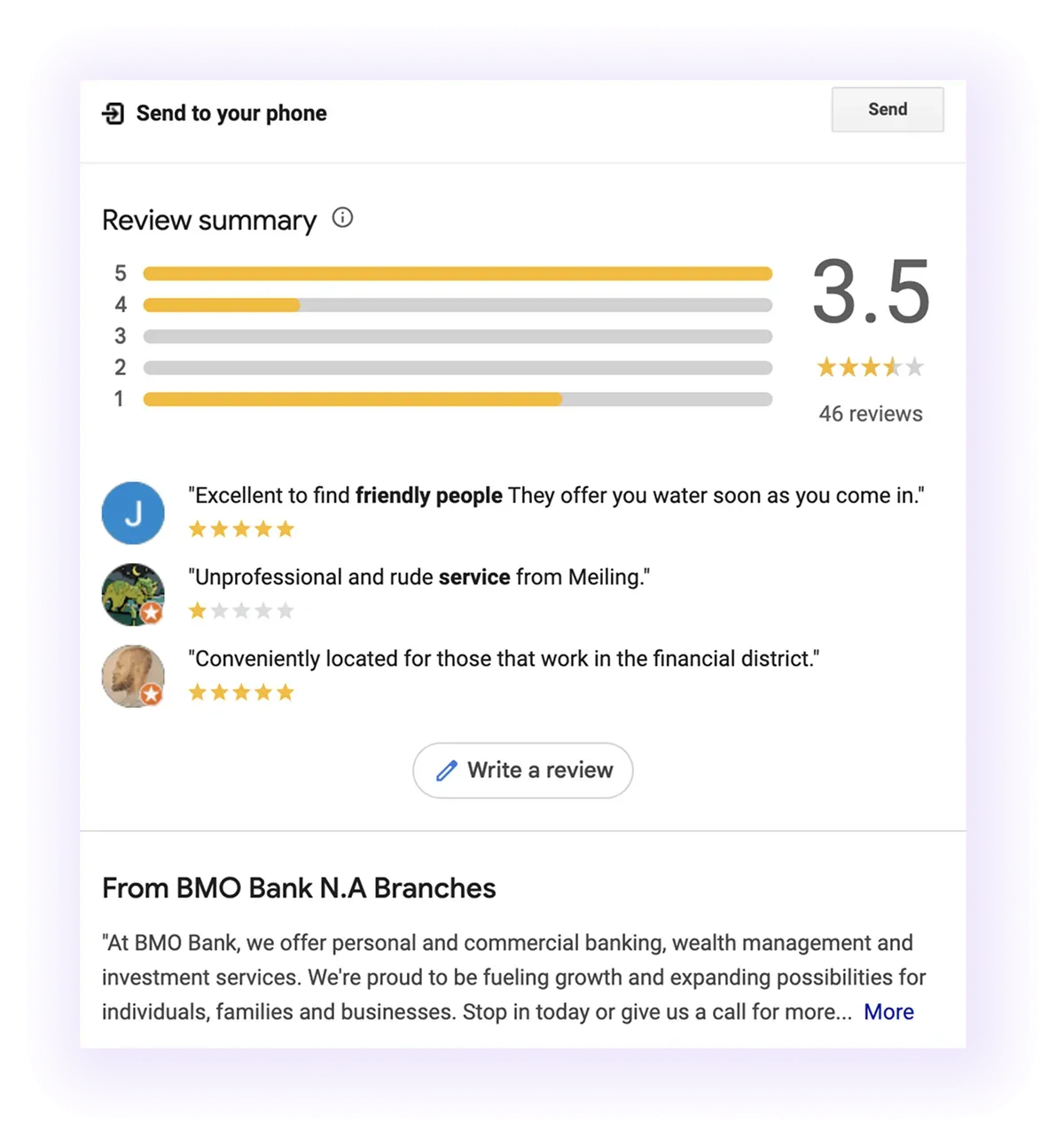

A well-maintained and optimized GMB profile improves local visibility, attracts high-intent searches, and builds trust before a customer ever clicks through.
Build High Quality Content for Your Bank’s Website
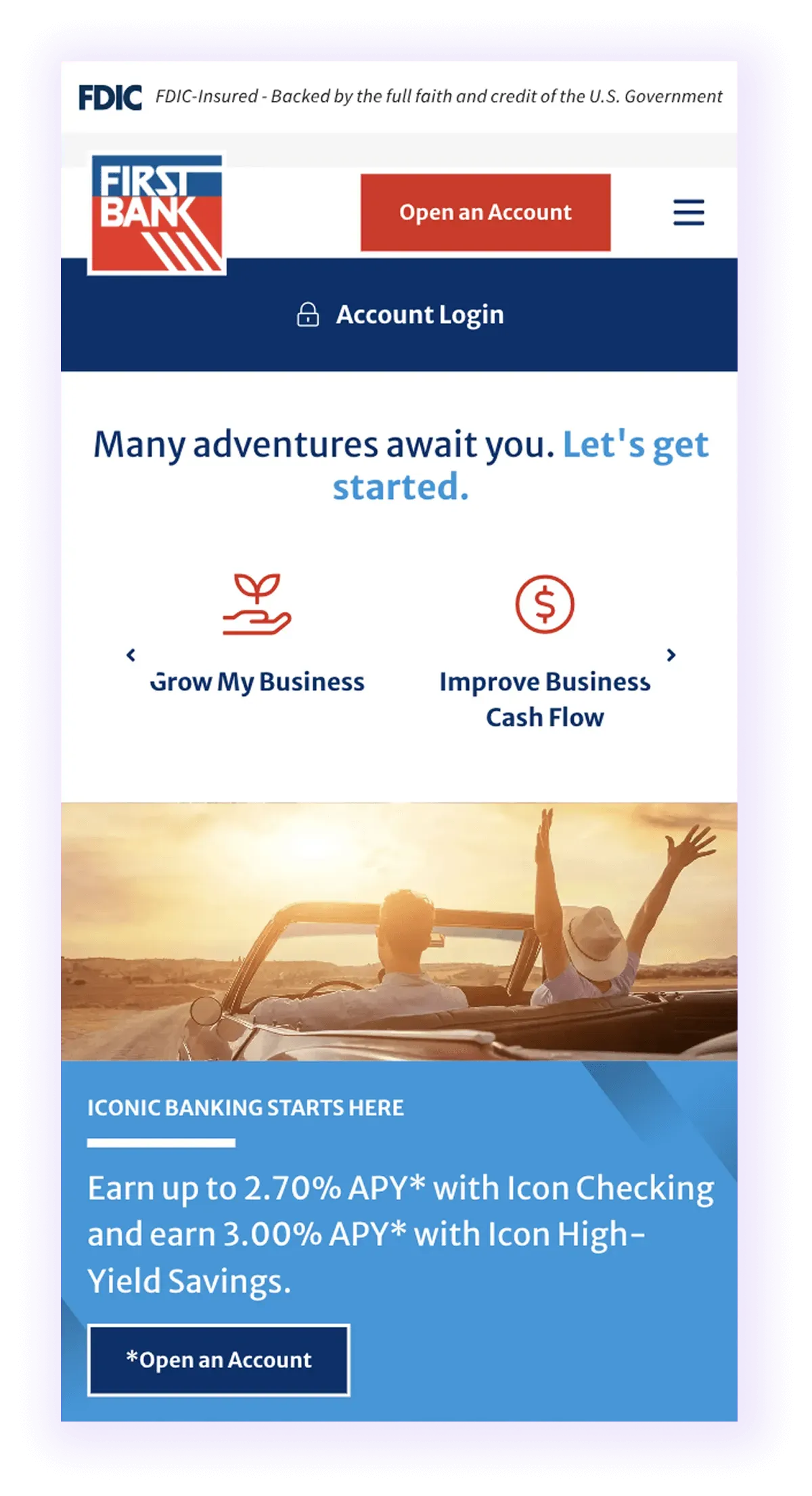
To rank and convert, your site needs clear, original content that explains your products and builds trust. Because banking content affects financial decisions, credibility matters. Trust signals aren’t optional. Strong banking SEO content includes:
- Rates (APY): Publish current deposit and loan rates to help customers compare options

- Debit Card Perks. Call out rewards, bonuses, or local benefits tied to your cards.

- Financial Wellness Tools: Offer calculators, budgeting tools, and planning resources
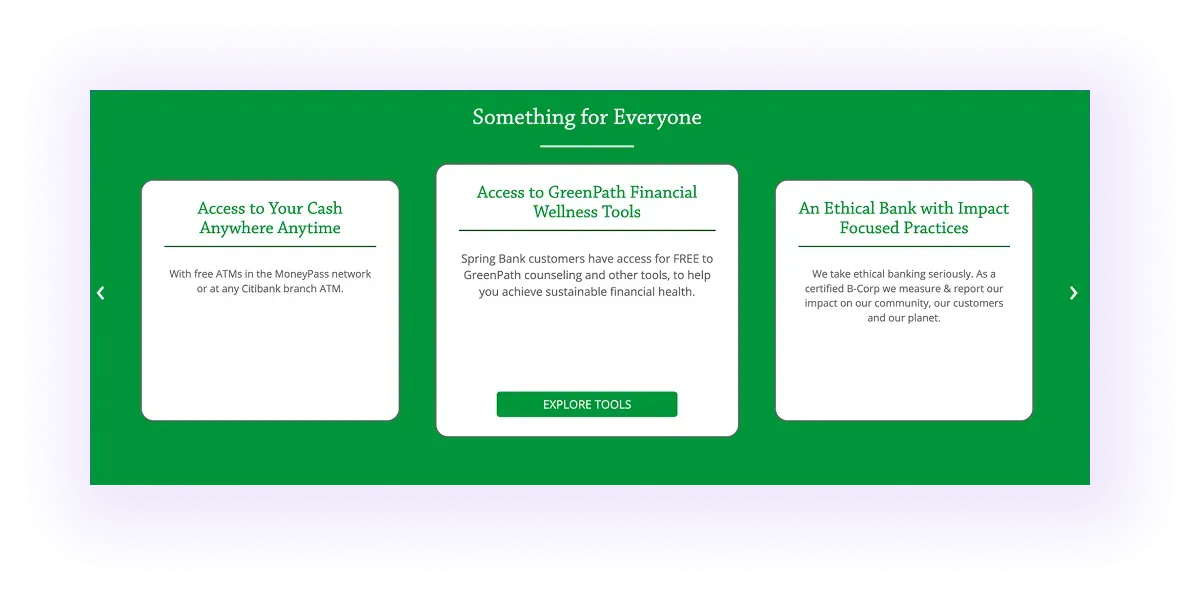
- Community Rewards: Highlight programs that reflect your role as a local bank.
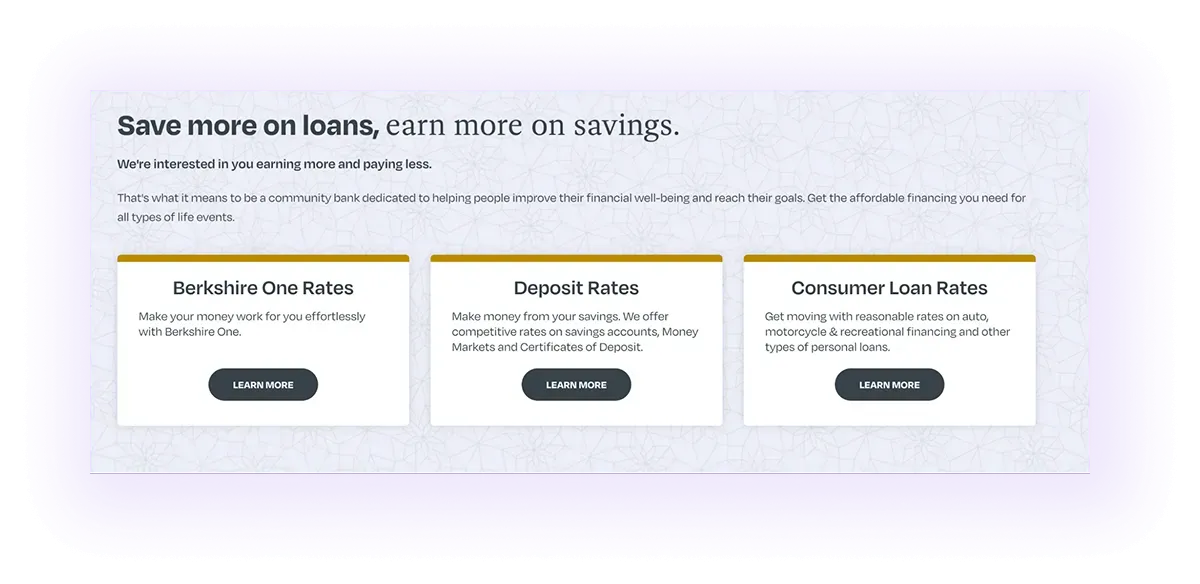
- Rate Summaries with Links: Show key numbers and link to full product pages.
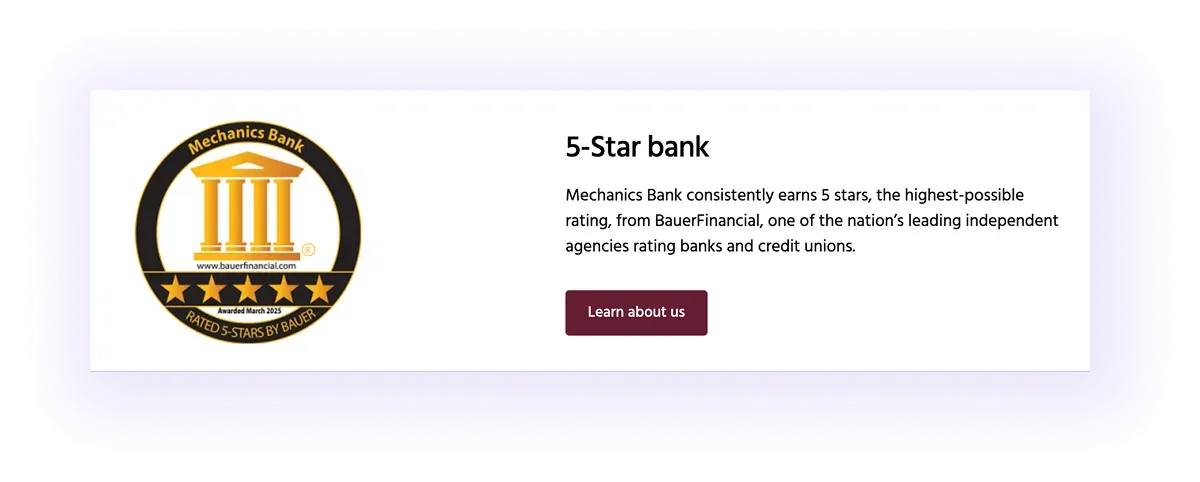
- Customer Testimonials: Use real feedback from personal and business clients.

- Insurance Details: Explain coverage and protections to reduce uncertainty.
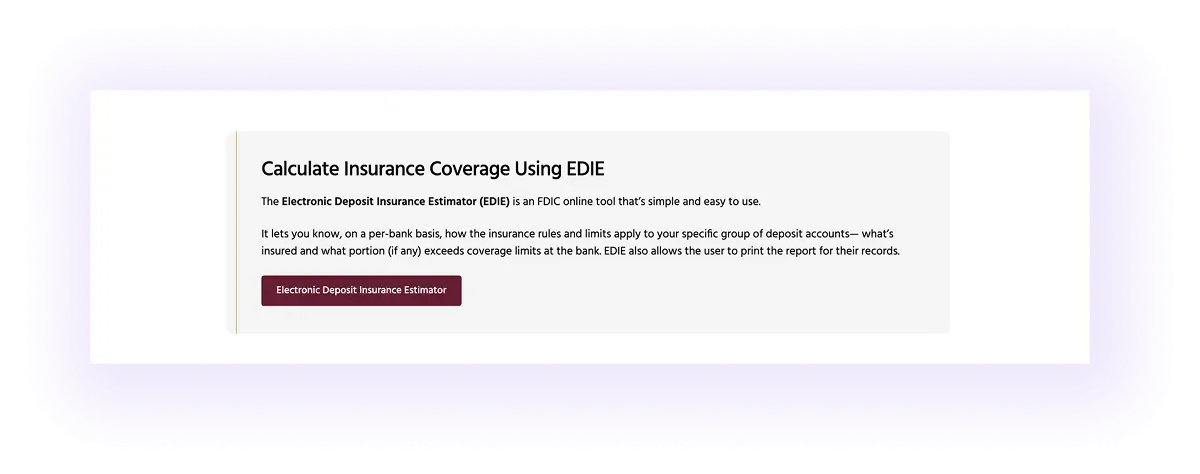
Organize content with clear headings and short sections. Run pages through a readability analyzer to keep language simple and compliant. Use banking keywords naturally to improve visibility without overstuffing.
Blog Posts (Financial Education)
Educational financial content supports your product pages and answers the questions customers ask before applying. One of the most effective banking SEO content approaches is pillar clustering.
Start with one product, such as a car or business loan. Then publish short educational posts that answer common questions and link back to the main service page. For car loans, that might include:
- Secured vs. unsecured car loans
- How credit scores affect car loan rates
- Leasing vs. financing a vehicle
Find topics using Google’s People Also Ask or question data in Ahrefs and SEMrush. These tools surface real searches from real borrowers.
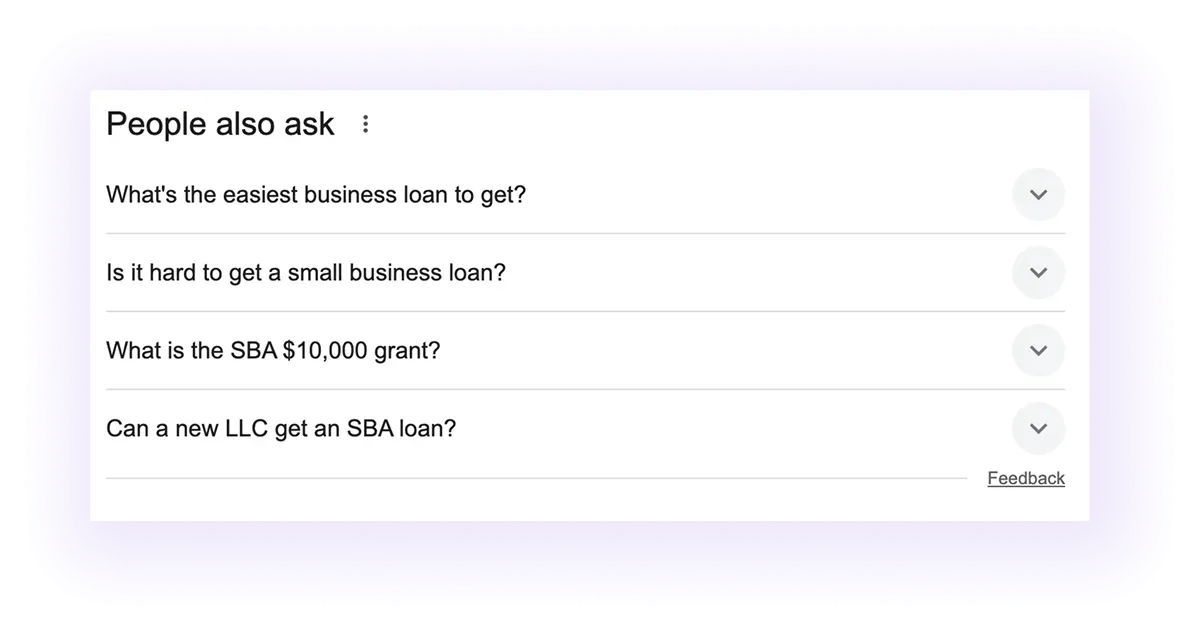
To keep these pages visible:
- Write original content with clear takeaways
- Use keywords naturally in titles, headings, meta descriptions, and copy
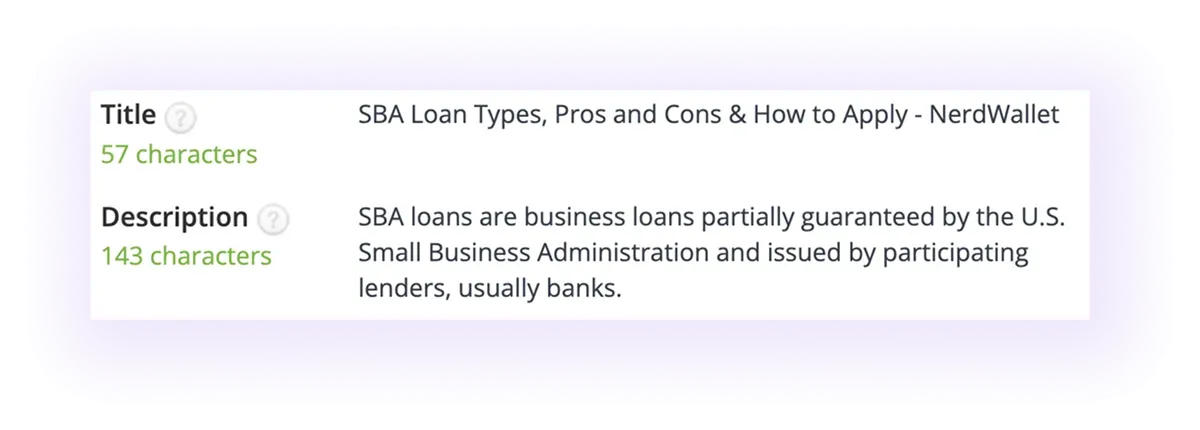
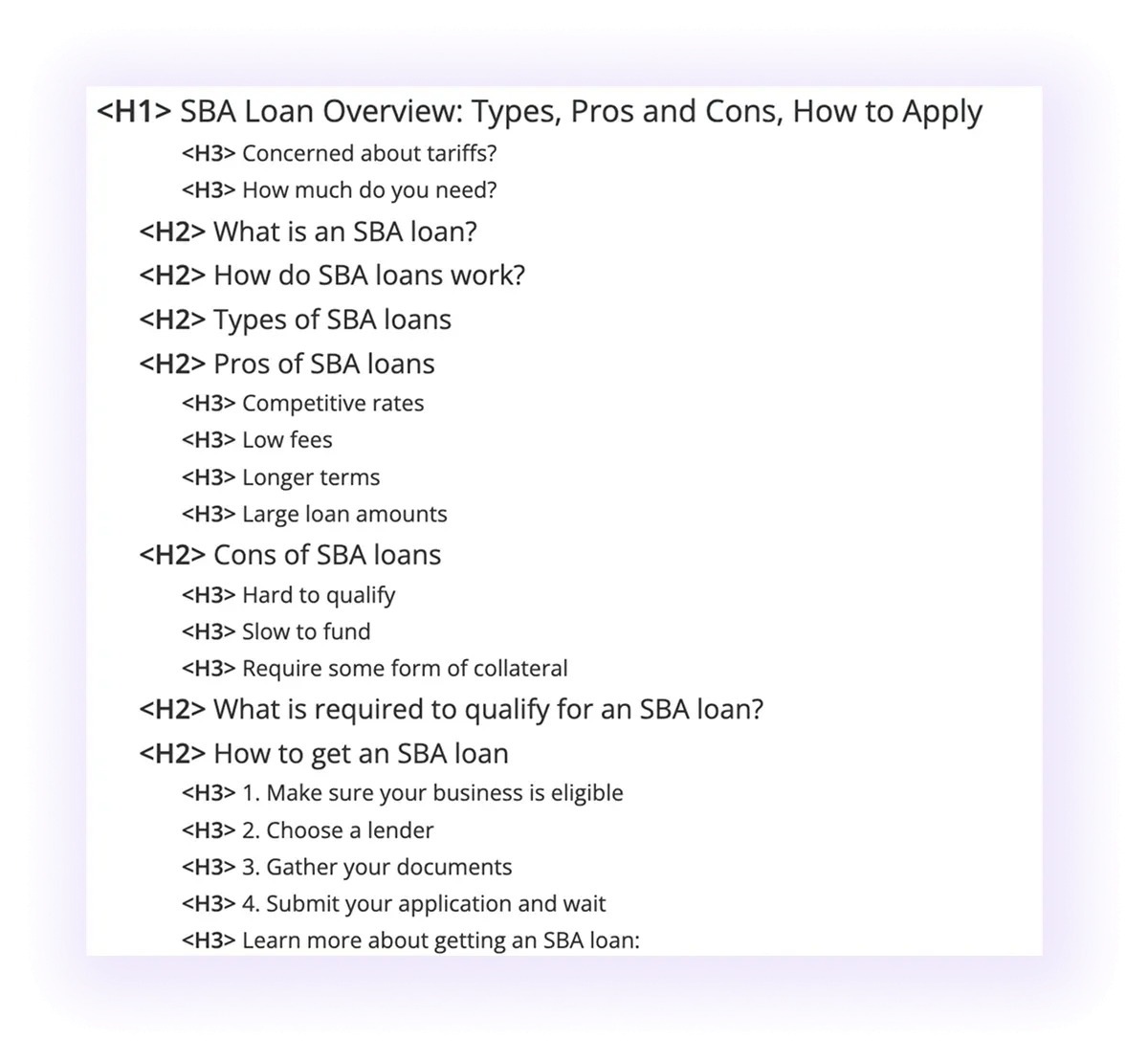
- Structure headings logically (H1 through H4)
- Add visuals when they help explain concepts
- Use lists and tables to make information easier to scan
Implement Technical SEO for Your Banking Website
Strong SEO for banking depends on a clean technical foundation. A technical SEO audit checklist confirms your pages are crawlable, indexed, fast, and easy to navigate, for both Google and banking customers.
XML Sitemap and Robots.txt
Create an XML sitemap to guide Google to your priority pages: services, locations, security, rates, and other key content.
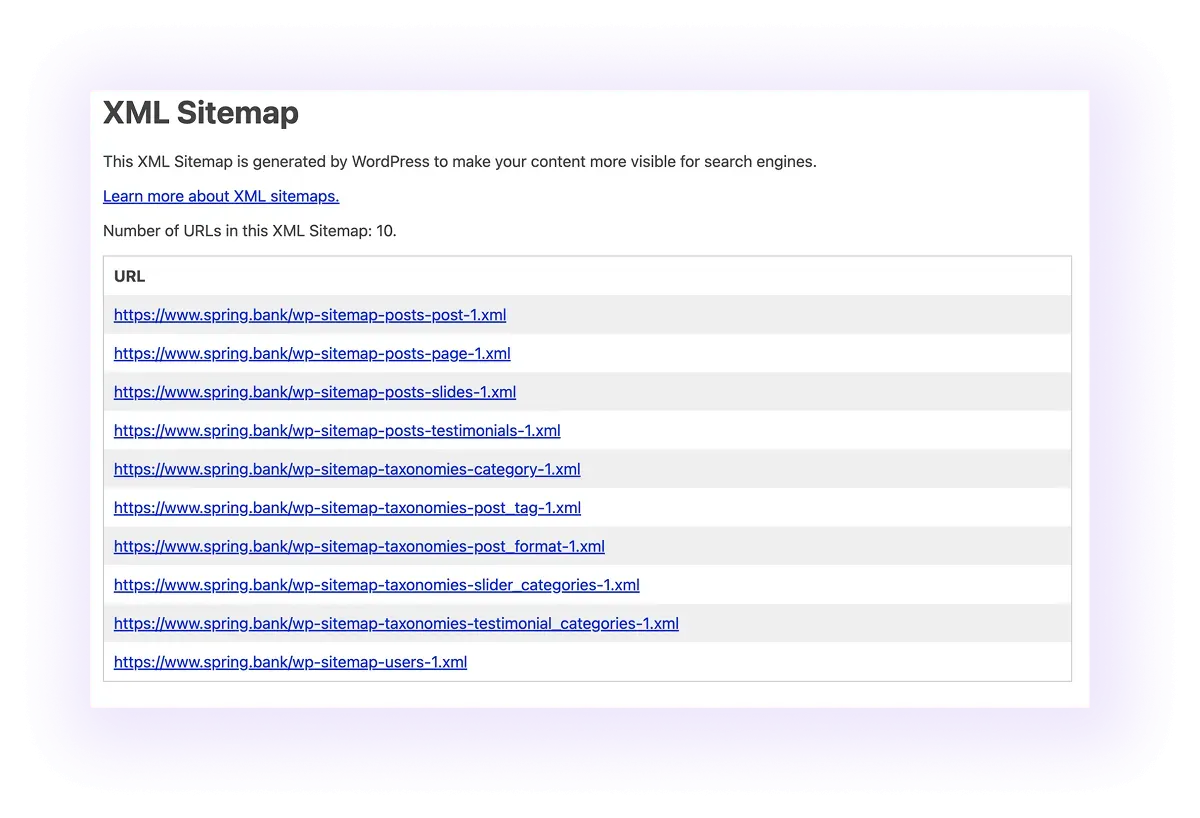
Use robots.txt to block pages that shouldn’t appear in search, such as admin areas, customer dashboards, and internal tools.
Schema Markup and Structured Data
Rich results like FAQs, reviews, and highlighted services help banks stand out in Google search. To qualify, Google needs clear signals that your site represents a regulated financial institution. That’s where structured data matters for SEO for banks.
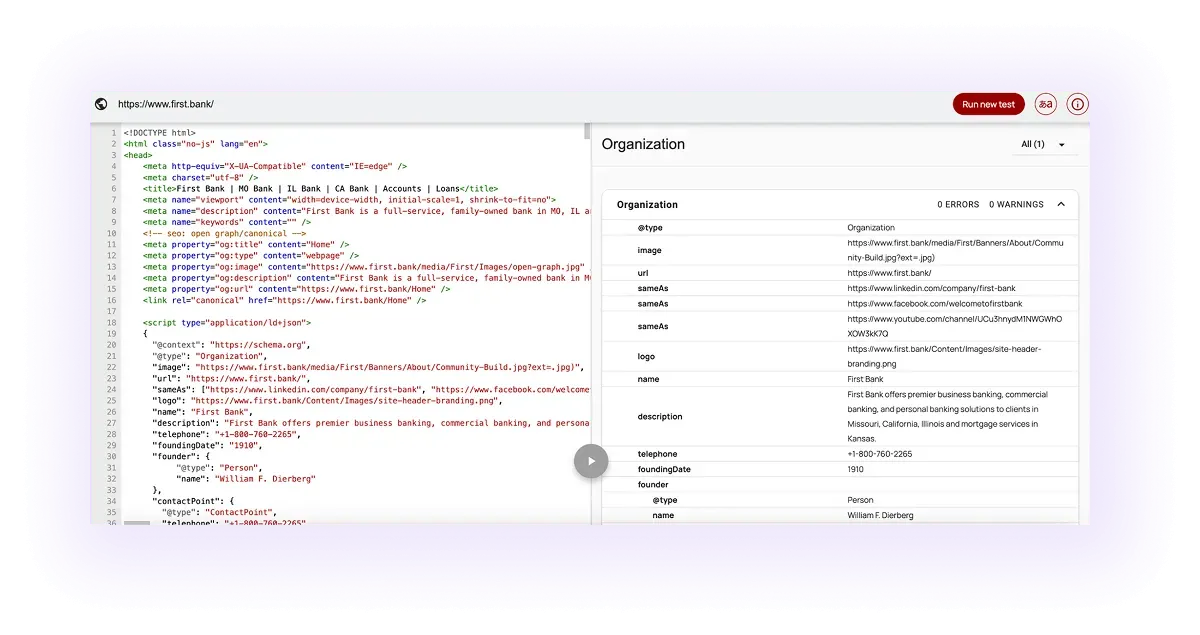
Use schema markups for banks to define who you are and what you offer:
- FinancialService: Identifies your bank as a regulated financial entity.
- BankOrCreditUnion: Signals institutional legitimacy for community banks, regional banks, and credit unions.
- Organization: Confirms brand identity, ownership, and official URLs.
- Service: Marks offerings like checking accounts, savings, mortgages, auto loans, and business banking.
- Product: Applies to deposit and loan products with structured details.
- Offer: Supports Product with APY, APR, fees, balances, and term data.
- BreadcrumbList: Clarifies complex banking hierarchies (Personal → Checking → Interest Checking).
- Review / AggregateRating: Use only at the brand or branch level, not on regulated advice pages.
For deeper guidance, review the dedicated schema markups for banks and apply only those that fit regulatory requirements.
URL Structure
URLs should make the page's intent clear to users and readable to Google. For strong bank SEO, use plain language, relevant keywords, and hyphens. Avoid IDs, symbols, or random numbers.
Good: yourbank.com/businesses/business-checking-accounts
Bad: yourbank.com/page?id=12345&cat=banking
Internal Link Building for Bank Websites
Internal links help search engines understand page relationships and help users move between related banking products.
Use these core link types:
- Main Navigation Links: Point to key pages like personal banking, business banking, and product pages.
- Service-to-Service Links: Connect related products, such as business checking to business savings.
- Service-to-Location Links: Tie products to branches or markets, like auto loans → auto loans in Los Angeles.
- Education-to-Service Links: Link financial education posts to relevant financial product pages.
- Education-to-Education Links: Connect related topics, such as the credit score basics blog to the credit improvement tips blog.
This structure guides users, distributes authority, and supports stronger banking search visibility.
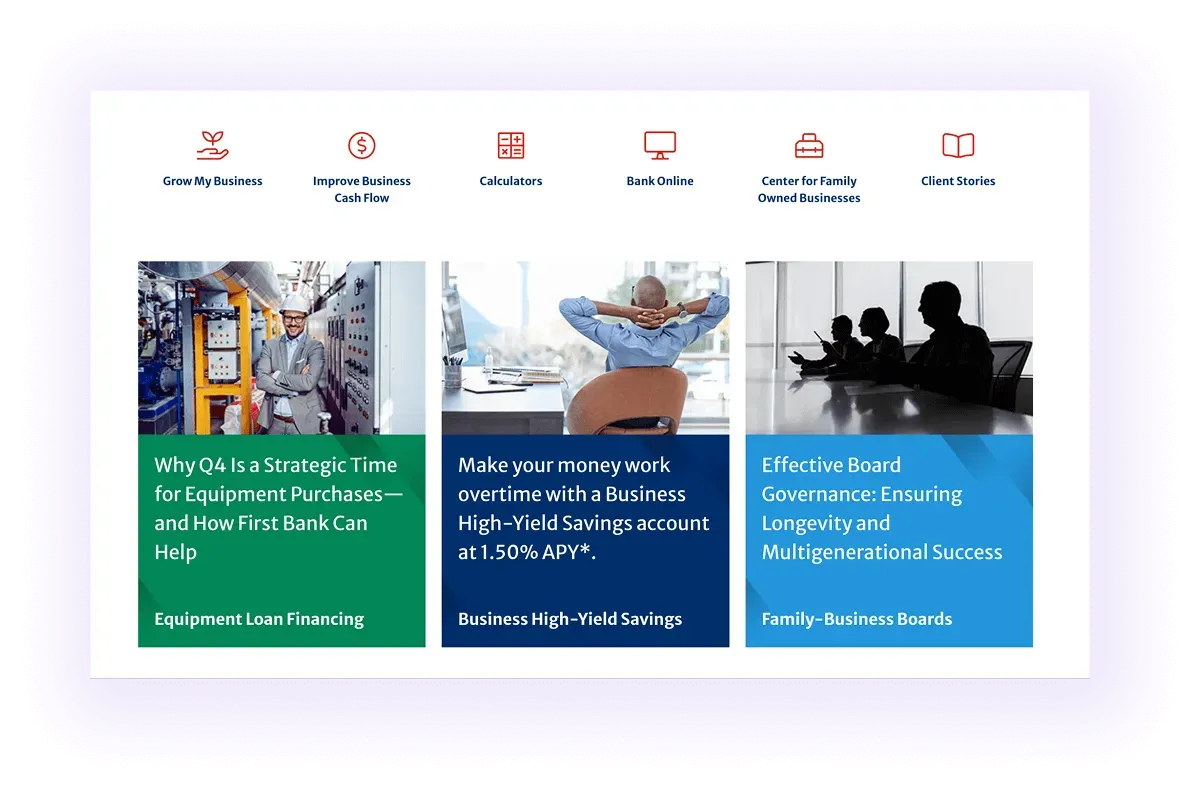
Mobile Optimization for a Banking Website
Most customers check balances, compare rates, and search for loans on mobile. Strong banking SEO depends on a mobile experience that works fast and clean on any screen.
Focus on these essentials from our expert mobile SEO checklist:
- Responsive Design: Pages adapt to all screen sizes.
- Hamburger Menu: Keeps navigation simple on mobile.
- Readable Text: Use at least 16px font size.
- Compressed Images: Improve load speed.
- Large Tap Targets: Make buttons and links easy to use.
Mobile-friendly pages improve engagement, build trust, and drive conversions.
Website Speed & Performance (Core Web Vitals)
Website speed directly affects user experience (UX), which is why Google uses Core Web Vitals as ranking signals. Faster pages keep users engaged and reduce drop-off, especially for rate comparisons and account research.
To improve speed and UX:
- Optimize images. Compress every file. Check out our image optimization checklist.
- Use lightweight videos. Avoid large media files.
- Choose reliable hosting. Server speed matters.
- Add a Content Delivery Network (CDN). Deliver content faster across regions.
- Use server-side rendering. Speed up heavy pages.
- Enable lazy loading. Delay images below the fold.
- Minify code. Reduce the size of HTML, JavaScript, and CSS.
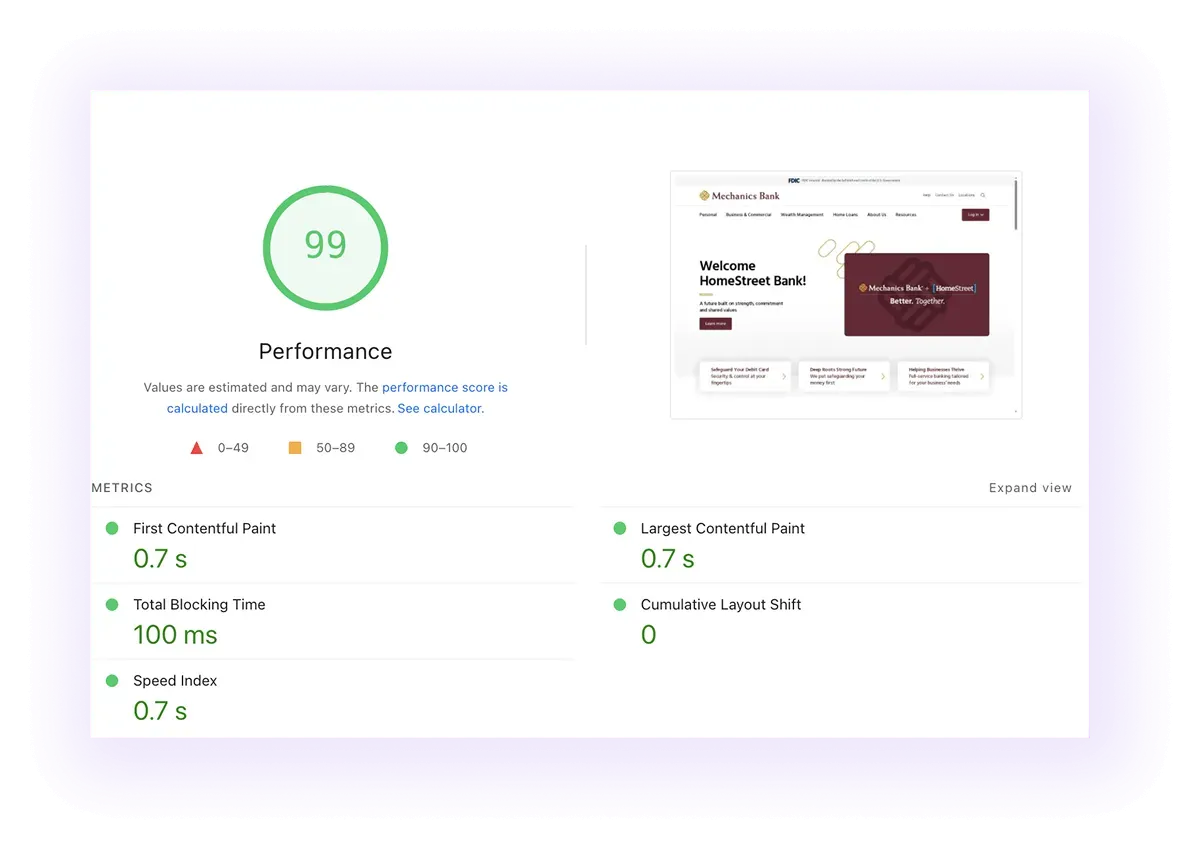
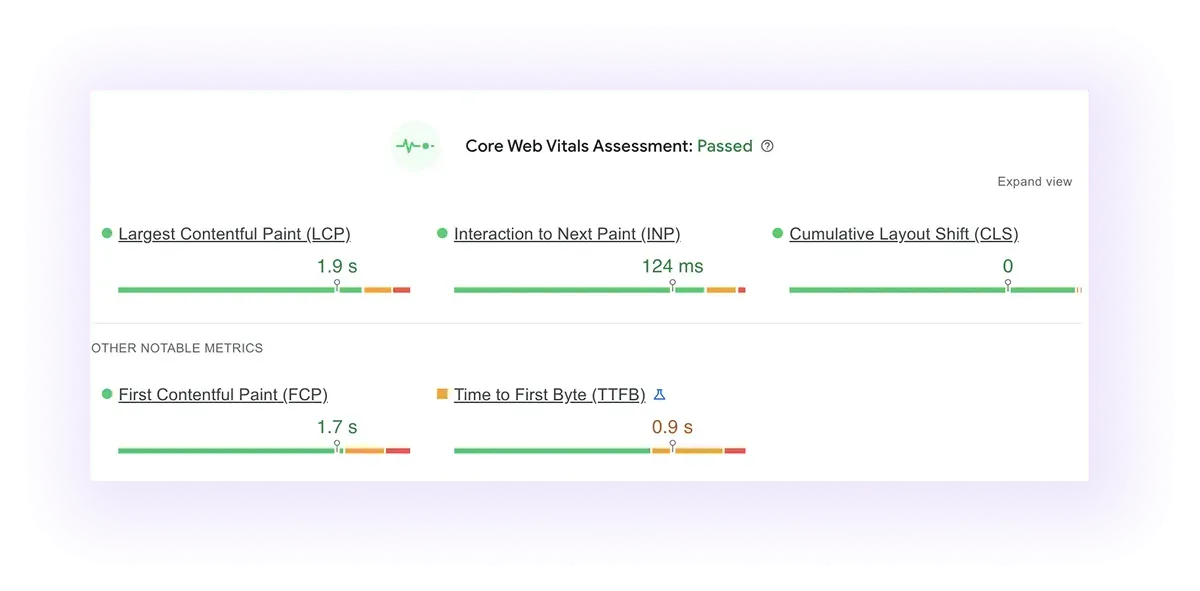
Test your performance in GTmetrix or Google PageSpeed Insights. Aim for:
- Largest Contentful Paint (LCP): Under 3 seconds
- First Contentful Paint (FCP): Under 1 second
- Cumulative Layout Shift (CLS): As close to zero as possible
Frequent Technical Audits
Bank websites change often: rates update, products shift, disclosures evolve. Without regular audits, technical issues quietly pile up and affect visibility. That’s why monthly checks matter for bank SEO. Check these areas consistently:
- Site Speed and UX: Pages should load fast and meet Core Web Vitals.
- Site Health in Ahrefs: Fix errors and broken links; aim for 95+.
- Redirects: Confirm Google reads redirects correctly.
- Indexing in Search Console: Catch pages that fail to index.
- Broken Links: Use tools like Screaming Frog to find and fix them.
- Orphan Pages: Connect pages that lack internal links.
- Structured Data: Validate schema to avoid errors.
- Mobile Usability: Ensure every page renders cleanly on mobile.
When audits slip, small issues compound: hurting visibility for rates, branches, and product pages. If you want this handled end-to-end, our banking SEO agency can consistently and carefully manage technical audits.
Link Building for Bank SEO
To earn rankings and trust, banks need off-page SEO. Backlinks you have signal credibility to both Google and potential customers.
There are three proven link building techniques banks can use. To drive faster results, our SEO link building services apply these methods at scale, delivering measurable results.
Guest Posting and Link Insertion
Effective SEO for banks includes earning links from trusted finance and business sites, places Google already trusts. Target relevant publishers, such as:
- Investment and budgeting platforms like Quicken.com
- Banking and fintech outlets like IBSintelligence.com
- Business organizations like ACG.org
Then choose the right approach:
- Link Insertion: This means inserting a link into an existing article by adding missing context or updated insights, then coordinating with the editorial team.
- Guest Posting: Write a new, useful article for the site. The publisher includes a backlink when it goes live.
Both methods earn high-quality links that strengthen authority and improve rankings for banking pages.
Directory Listings for Banks
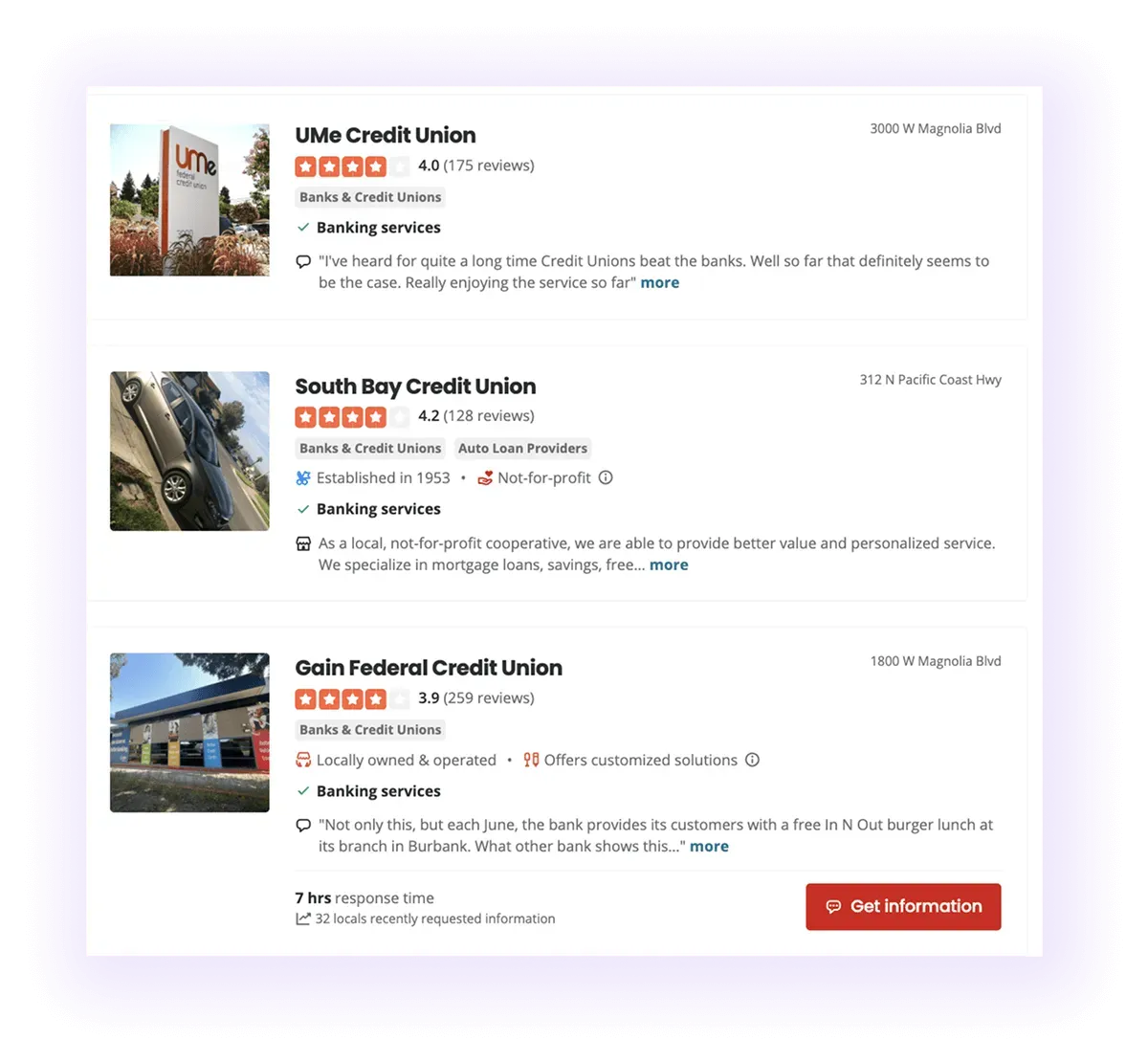
For community banks and financial institutions, directory listings build trust and capture local demand. They’re one of the strongest local link-building tactics, and many customers still use them to find credible banks.
List your bank on trusted platforms, including:
- Bank-focused directories like BanksDAILY
- Regulatory sources like FDIC
- Financial industry directories like AFP Treasury and Finance Marketplace
- Local platforms like Yelp
Optimize each profile the same way you would your GMB:
- Match your name, address, and phone number to your website
- Write a clear bank description
- List all services offered
- Upload branch photos
- Respond to reviews
- Include your website link
Digital PR for Banks
Digital PR is the most powerful link-building channel for banks. It earns coverage and backlinks from high-authority outlets such as national news outlets (New York Times, Business Insider, and others), financial publishers (like Yahoo! Finance), and banking trade media (like Banking Dive), signals that matter for SEO in banking.
Effective digital PR follows a clear process:
- Identify a newsworthy banking or financial topic
- Support it with real data from surveys or industry trends
- Shape the insight into a clear, publishable story
- Pitch journalists with a concise, value-driven angle
- Earn coverage with a backlink to your site
These links build authority fast, but digital PR takes time, data, and media relationships. That’s why we offer digital PR services for banks, so you get consistent coverage without pulling internal teams off core priorities.
How to Track the Success of Your Bank SEO Strategy
Lastly, you should track your performance; it’s a non-negotiable banking SEO requirement. Use SEO reporting software to see what’s working and where to adjust. Monitor these core metrics:
- Indexing, Clicks, Impressions, and Rankings: Track performance in Google Search Console.
- Backlink Analysis and Competitor Insights: Use Ahrefs or SEMrush to review gained and lost links, as well as competitor profiles.
- Page Speed and Mobile Usability: Test with Google PageSpeed Insights.
- Website Traffic and Engagement: Measure sessions, leads, and events in Google Analytics.
- User Behavior Analysis: Analyze heatmaps and scroll depth with Hotjar or Microsoft Clarity.
- Call and Form Tracking: Track conversions using Google Tag Manager.
Consistent reporting keeps your SEO for banks focused on tangible outcomes.
Partner with a Bank SEO Agency That Knows Your Industry
Knowing this banking SEO strategy is step one. Consistently executing it is where banks win. If speed, clarity, and qualified account growth matter, a specialized bank SEO agency can help you get there faster. Contact us! Let’s review your goals and achieve them together.
Submit the form - Get Free Proposal
%202.png)
24 hours
FAQ


Submit the form - Get Free Proposal
24 hours
.svg)