
Video Marketing Statistics 2026: ROI, Short-Form, AI & Conversion Data



Video remains one of the highest-ROI and most widely adopted marketing channels in 2026. Usage and ad spend continue to rise, even as some sentiment metrics soften slightly. Short-form formats now dominate ROI rankings, and AI is reshaping how teams script, edit, caption, and scale production.
Curated by our B2B SEO agency team — the same expertise behind our digital PR campaigns work.
This guide breaks down the latest video marketing statistics across adoption, ROI, short-form performance, AI usage, consumer behavior, platform benchmarks, budgets, and B2B trends.
It’s designed for marketers, founders, and growth teams who need current benchmarks to guide budget allocation, format decisions, and platform strategy.
We keep things up to date with fresh data every quarter. This is the Q1 2026 edition.
Key Video Marketing Statistics (Overview)
- 93% of marketers say video has given them a good ROI, with 49% ranking short-form video as the top ROI format.
- 82% of businesses say video increased web traffic, 85% report it generated leads, and 83% say it directly boosted sales.
- Short-form videos generate 2.5× more engagement than long-form on social platforms.
- Videos under ~90 seconds retain about 50% of viewers on average.
- 63% of video marketers use AI tools to create or edit videos.
- 78% of people prefer learning about a product via a short video.
- 87% of consumers say video convinced them to buy.
Based on the data, we can clearly conclude that video is no longer a support channel. It’s confidently involved in a stable revenue channel. Now, let’s go deeper into video marketing statistics.
Video Marketing Adoption Statistics
How Many Businesses Use Video Marketing?
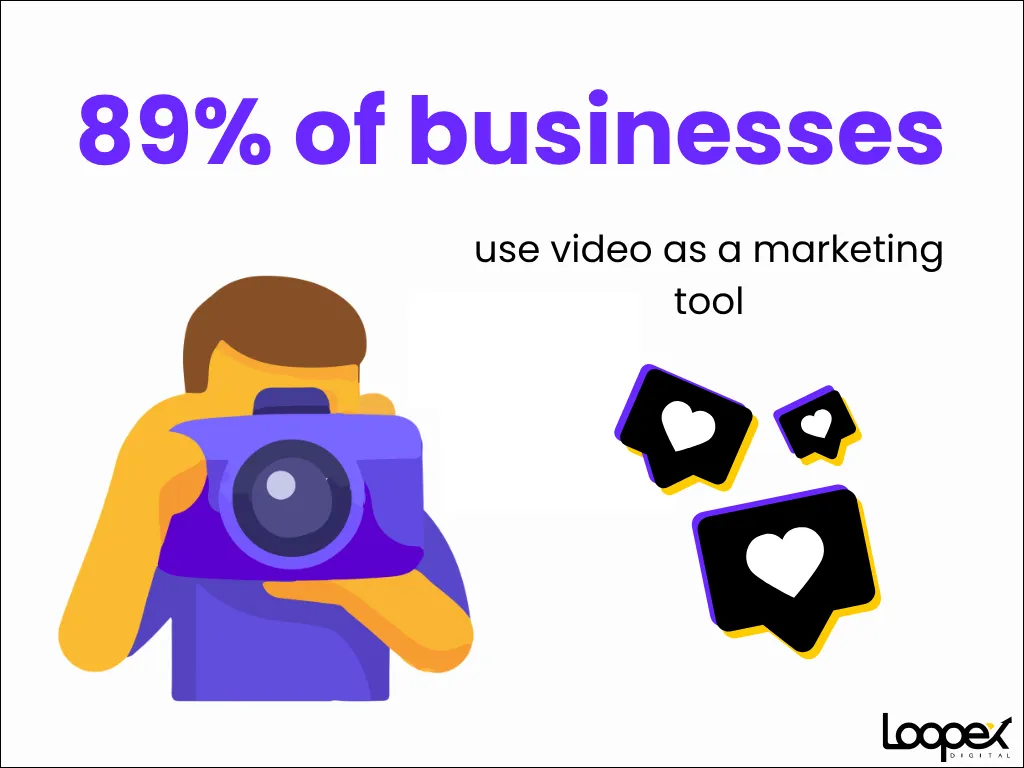
Wyzowl’s 2026 research shows that 89% of businesses use video as a marketing tool. At this level of adoption, competitive advantage comes from how you use video, not from simply using it
How Important Is Video to Marketing Strategy?
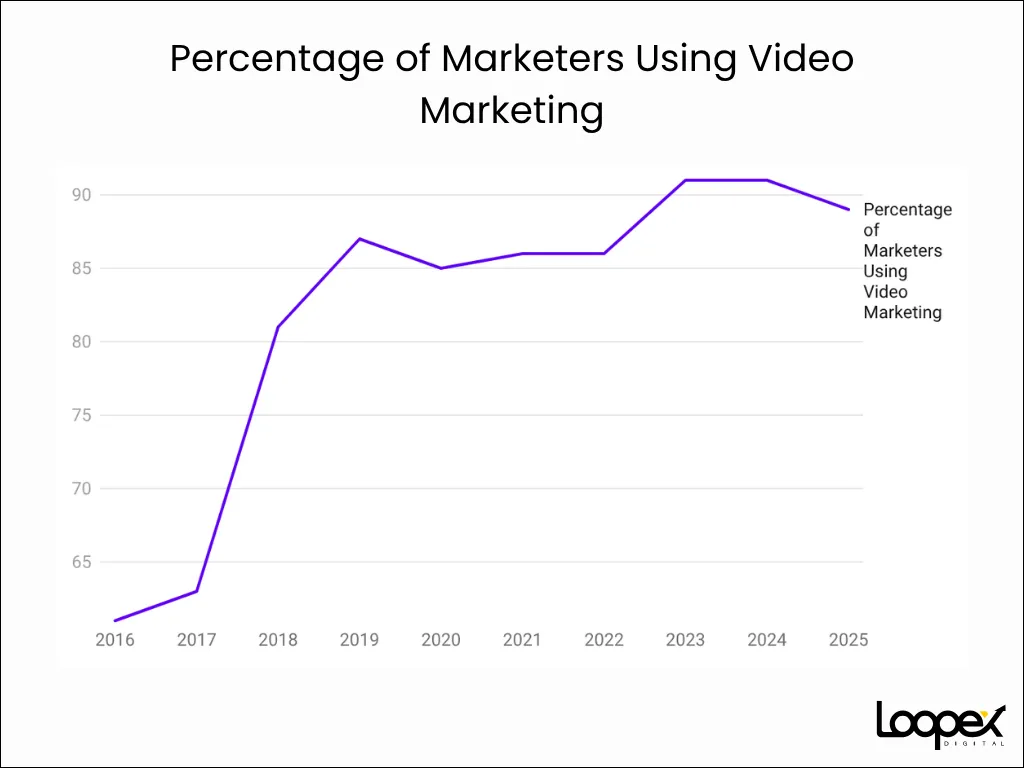
- 95% of video marketers say video is an important part of their strategy, the same report shows.
- In 2024, 88% of businesses called video crucial, down from 96% in 2023.
As you see, although there are some minor fluctuations, overall importance score is high after 2018.
Why Some Marketers Still Don’t Use Video
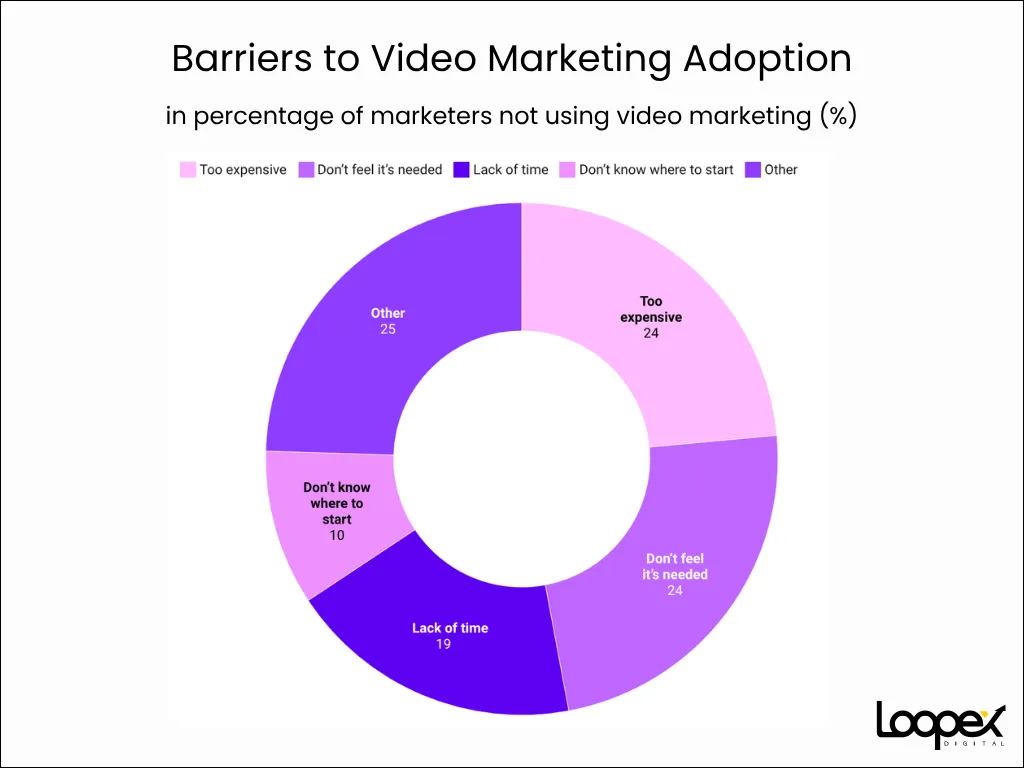
Key barriers include lack of time, perceived cost, and uncertainty about where to start, with the cost leading the reasons (Source):
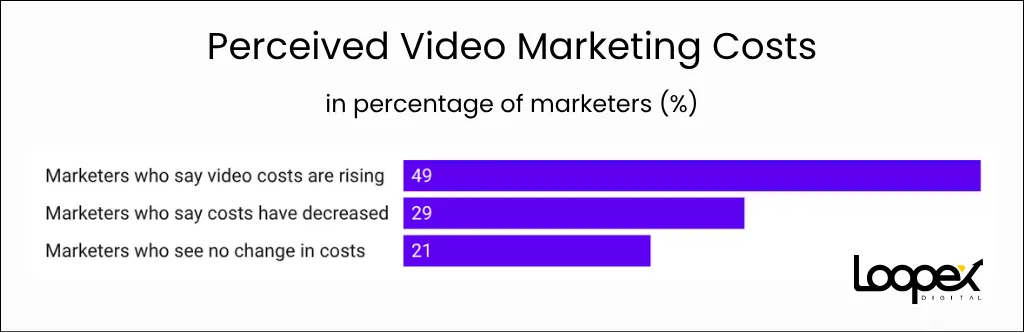
- 49% say video costs are rising.
- 29% say costs have decreased.
- 21% see no change.
The main barrier is execution, not a lack of belief in effectiveness:
Video Marketing ROI & Revenue Statistics
- 93% of marketers report good ROI from video (Source: Wyzowl).
- AI-driven video marketing sees an 82% increase in ROI compared to traditional workflows.
- US digital video ad spend is $72.4B, growing 14% YoY.
Conversion Rate Impact
Multiple studies have shown that video improves both engagement and action (Sources: Wyzowl, SellersCommerce):
- Adding an explainer video can boost landing page conversions by up to 80%.
- Video increases average time on page by up to 2 minutes.
- AI-generated product demos can lift conversions by 40%.
Lead Generation & Sales Impact
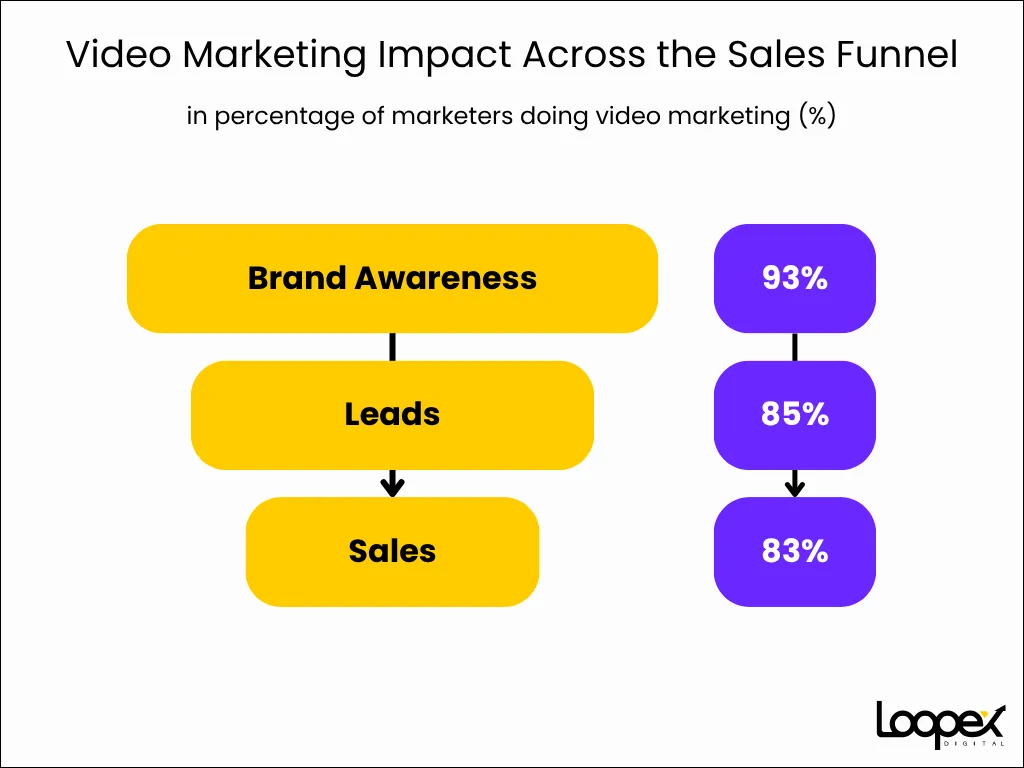
Video marketing statistics show that videos support the full sales funnel (Source: Wyzowl):
- 93% say it increases brand awareness.
- 85% say video helps generate leads.
- 83% say video directly increases sales.
Video Statistics By Video Type
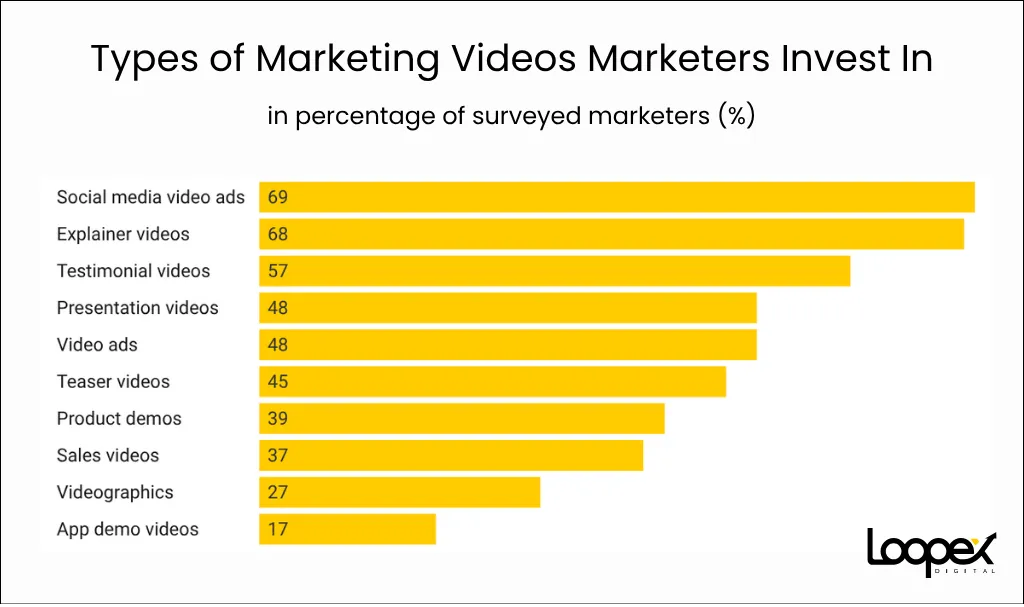
69% of marketers have spent in-house or outsourced finances on social media video ads, and videos in the following categories (Source):
- Explainer videos (68%)
- Testimonial videos (57%)
- Presentation videos (48%)
- Video ads (48%)
- Teaser videos (45%)
- Product demos (39%)
- Sales videos (37%)
- Videographics (27%)
- App demo videos (17%)
Social Media Ads
Based on the latest video marketing statistics, if your paid social mix is broad “by default,” the market reality still pulls budget toward Meta, while TikTok grows fastest in revenue (Source):
- Social media ad spend across major platforms reached $70.68B in Q2 2025.
- Meta (Facebook + Instagram) captured 65.8% of social ad spend in Q2 2025.
- TikTok’s social ad revenue hit $8.25B in Q2 2025, up 40% YoY.
Explainer Videos
Explainers lead because they reduce decision friction. When most buyers use video to understand a product, explainers become the default “first-touch” asset on landing pages and in nurture flows (Source 1, Source 2):
- 73% of businesses use explainer videos in their marketing strategy.
- Explainer videos are used 4% more than the next most popular video type, making them the only format, after social media ads, with adoption above 65%.
- 91% of consumers watch explainer videos to learn about products or services.
Many explainer videos use animation because it simplifies complex concepts. In fact, animated explainer videos consistently rank among the highest-ROI marketing formats, particularly for SaaS and technical products where visual storytelling improves comprehension and retention (Source).
Testimonial Videos
- 72% of customers trust a brand more when they see positive video testimonials.
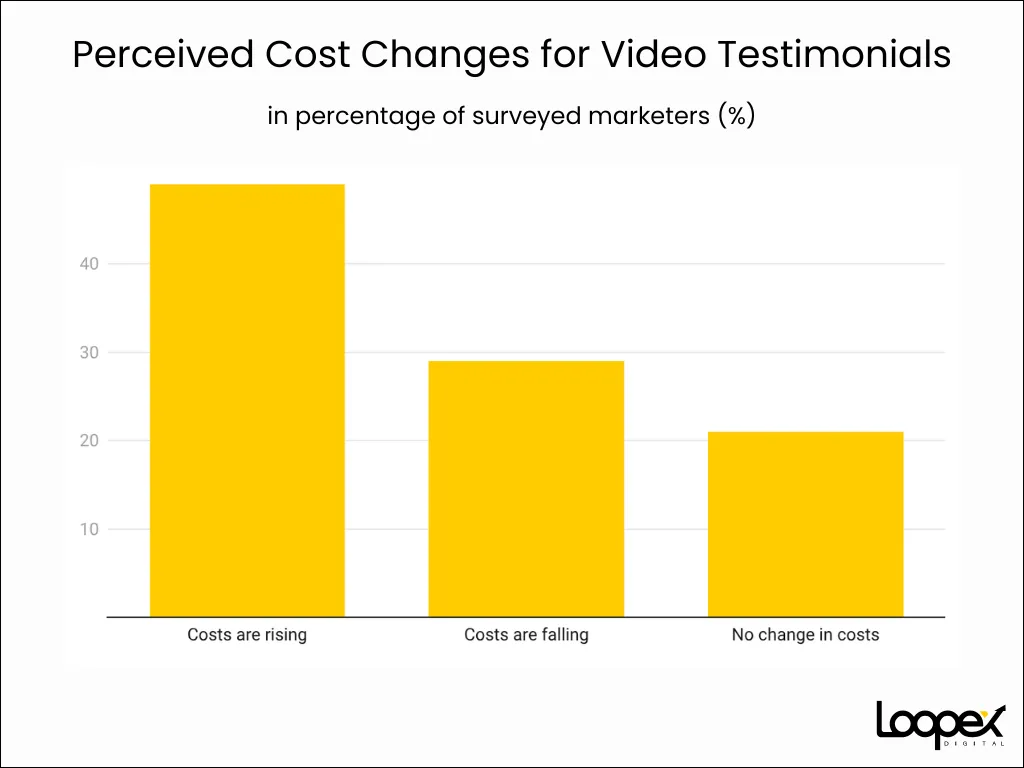
- 44% of marketers spend over $15,000 on a single video testimonial, and 49% say costs are rising, while 29% see them falling and 21% report no change (Source).
Product Demo Videos
Demos tie directly to conversion behavior, which makes them one of the easiest formats to justify with funnel math (Source).
- Landing pages with embedded demo videos convert at 4.8% vs 2.9% without, a 65% lift.
- Prospects who engage with product demo videos convert at 7.9× higher rates than those who don’t.
Short-Form Video Statistics (The Highest ROI Format)
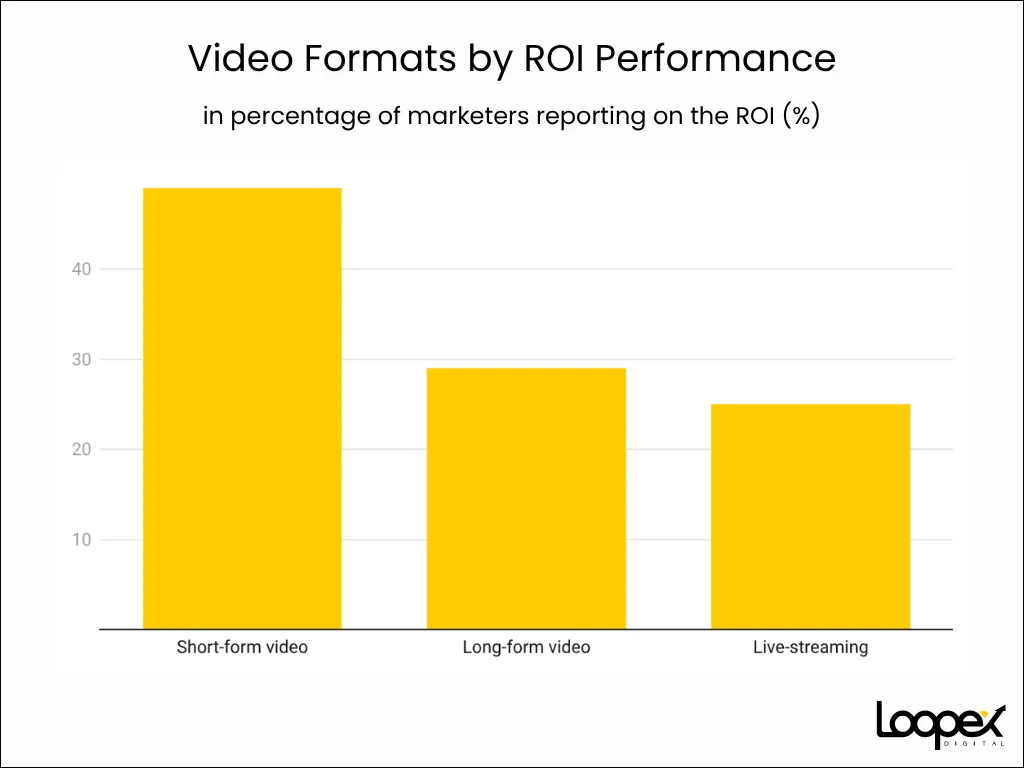
Short-form video has shown the most effectiveness (Source 1, Source 2):
- 49% rank short-form as the top ROI format.
- Long-form ranks at 29%.
- Live-streaming at 25%.
- Short-form generates 2.5× more engagement.
Best Video Length Statistics (Engagement & Retention)
- ~60% of short-form videos are watched 41-80% of the duration.
- 30% of short-form videos achieve watch rates above 81%.
- Videos under 90 seconds retain ~50% of viewers.
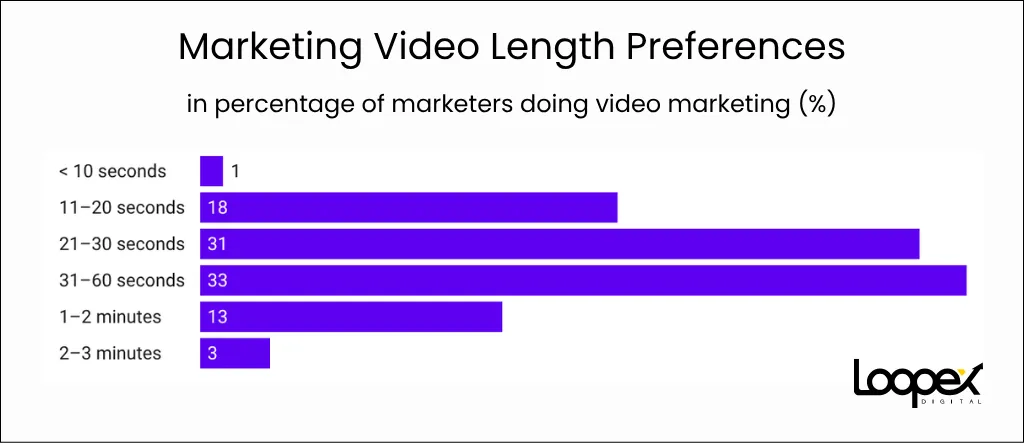
In fact, completion rates also support algorithm visibility, so these video marketing statistics should be considered.
Consumer Preference for Short Videos
- 78% prefer short videos to learn about products.
- 73% prefer short-form video over other formats (Source: Fraser Communications).
Platform Performance for Short-Form Videos
The information on this depends largely on the primary dataset the study chooses to analyze, since the datasets lead to different conclusions.
A recent study also breaks down the engagement per platform (Source):
- TikTok engagement: 2.80%, projected 3.15%.
- Instagram Reels: ~0.65% engagement.
- YouTube Shorts: ~0.30-0.40% in some datasets.
A separate benchmark paints a different picture: YouTube Shorts at 5.91%, TikTok at 5.75%, Facebook Reels at 2% (based on Marketing LTB dataset).
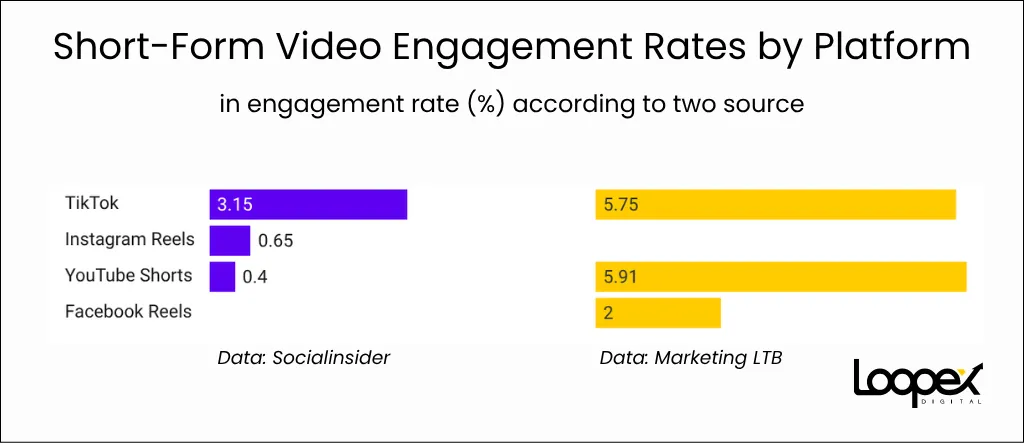
We can conclude that benchmarks vary by dataset, but TikTok consistently leads in many cross-platform studies.
AI in Video Marketing Statistics
How Many Marketers Use AI for Video?
In 2026, AI has moved from experimentation to standard workflow:
- 63% of marketers use AI tools for video creation/editing, which cuts their costs compared to traditional methods.
- 49% of marketers use AI daily for image/video generation (Canva/Morning Consult).
- 41% of businesses use AI to create videos.
Most Common AI Use Cases in Video Marketing
AI is used for editing, content generation, subtitles, voiceovers, and personalization (Source):
- 58% of marketing videos use AI-generated voiceovers.
- AI-generated subtitles can boost retention by 65%.
AI’s Impact on Cost and Speed of Videos In Marketing
- Video marketing with AI shows an 82% ROI increase.
- 96% of marketers report positive ROI from AI-powered video.
- 30% of outbound marketing messages will be synthetically generated by the end of 2026.
Consumer Video Behavior Statistics
When learning about products, consumers choose speed and clarity:
Watching Videos Without Sound:
Another behavioral pattern marketers must account for is silent viewing.
According to recent stats, 85% of mobile videos, including YouTube, are watched without audio. On mobile devices, autoplay typically starts muted, so captions, visual storytelling, and clear on-screen text have become really important elements of video marketing performance.
Video Marketing and Buyer’s Journey Statistics
Then, when the consumer moved to the next stage, videos also influence their consideration and decision stages in the sales funnel:
- 96% have watched an explainer video.
- 87% say video convinced them to buy.
- 64% of consumers are likely to purchase after a branded social video.
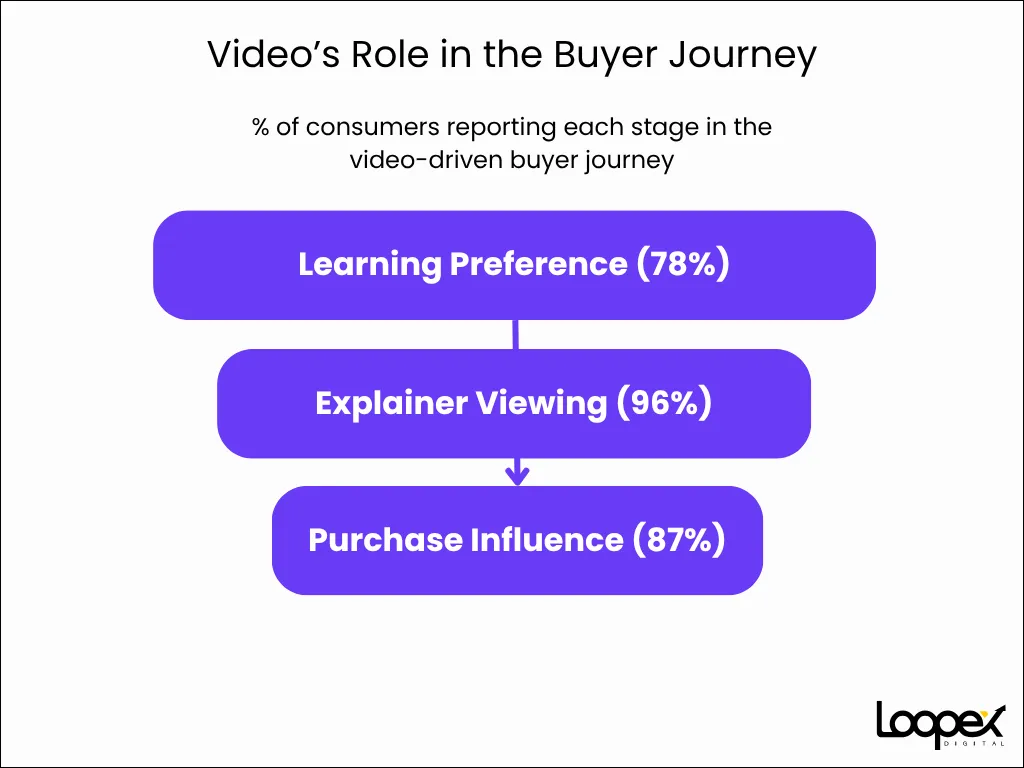
Plus, video holds attention up to 5× longer than static images, and that attention duration supports message retention.
Social Media Video Statistics and Consumption Trends by Platform
Video is already one of the most consumed forms of online content, and its growth continues to accelerate across algorithm-driven platforms such as Facebook, Instagram, YouTube, TikTok, and Douyin (Source).
Let’s check what video marketing statistics say about platforms like YouTube, Instagram, TikTok, and LinkedIn in terms of video consumption trends and engagement signs:
- 76% of consumers are on YouTube.
- YouTube Shorts hit 200 billion daily views last year and continues at the same pace.
- 24% use YouTube to discover new products (Sprout Social).
- The best posting time on YouTube is Tuesdays around 4 PM.
- 83% of users find TikTok video ads entertaining.
- Roughly 48% of users take action after watching a product video on Instagram.
- The best posting times for Instagram Reels are 7-9 AM and 11 AM-1 PM (local time zone).
- Videos have become the most shared content type on LinkedIn (Source).
- Educational videos generate 3× more engagement than promos, since LinkedIn users prioritize learning.
Video Marketing Budget & Cost Statistics
A deeper video market analysis from 2025 and early 2026 shows that digital video advertising continues to grow faster than many other advertising channels. As brands shift budgets toward social platforms, streaming environments, and creator collaborations, video is becoming a central pillar of digital media planning rather than a supporting format.
US digital video ad spend was $72B in 2025. If we look at the global market for short-form/online video ad spend, it reaches ~$80B.
Based on a recent marketer survey, here are perceptions regarding video marketing cost (Source):
- 38% say video costs are rising.
- 30% say costs decreased.
- 32% see no change.
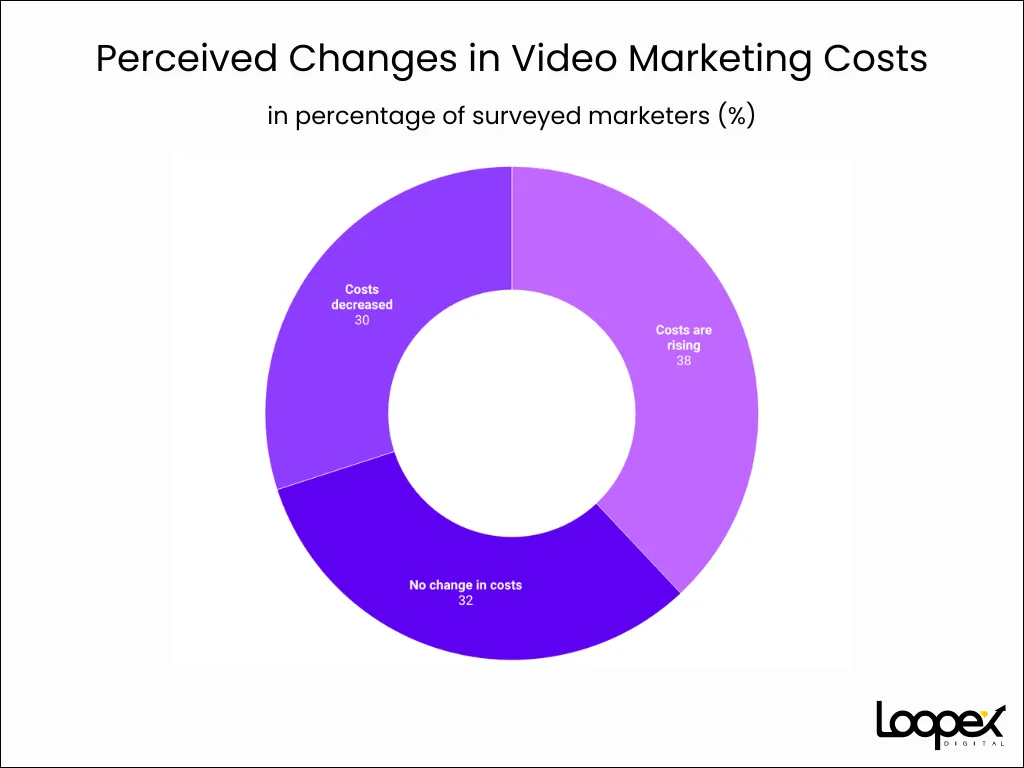
Online video advertising trends show that brands are steadily increasing their allocation to video-based formats, especially within social media feeds, streaming platforms, and short-form environments. Many advertisers now prioritize video in performance campaigns because of its higher engagement and conversion potential compared to static ads.
B2B Video Marketing Statistics
Video is central to B2B buyers’ research behavior (Source):
- 98% of B2B decision makers have watched explainer videos.
- 87% of B2B buyers say video influenced purchase decisions.
Video is up there with the most used of B2B content marketing channels for the past year:
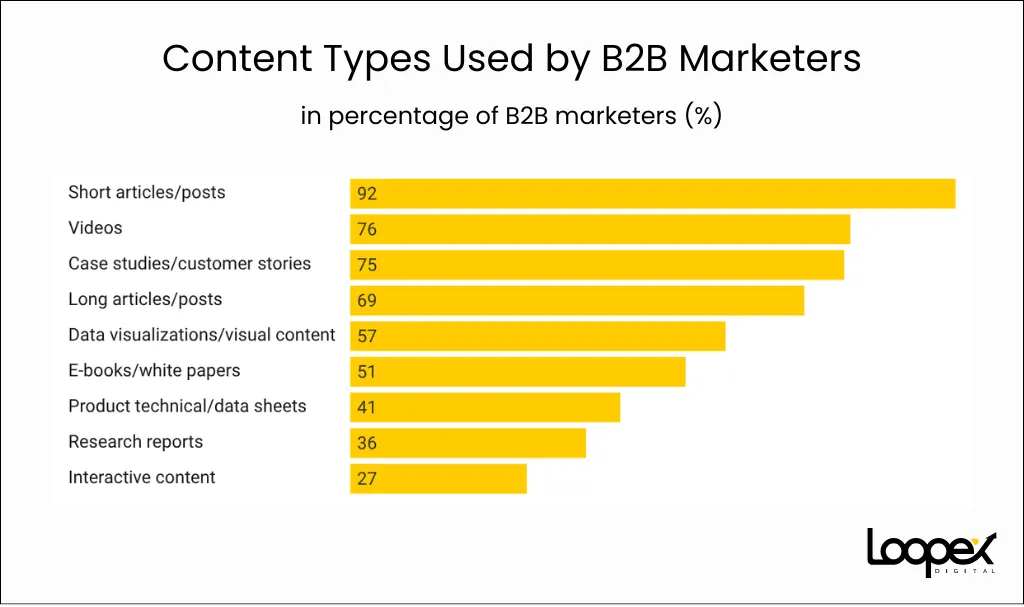
It’s regarded as the most effective among these channels (Source):
- Videos - 58% effectiveness
- Case studies/customer stories - 53% effectiveness
- E-books/white papers - 45% effectiveness
- Research reports - 45% effectiveness
- Short articles/posts - 43% effectiveness
So, videos are the most popular and most planned B2B content type.
Video SEO Statistics
Video content also plays an increasingly important role in search visibility.
Research shows that pages with embedded video are 53× more likely to rank on the first page of Google, and video thumbnails in search results significantly improve click-through rates. If you’re thinking about video from a searchability perspective, the video SEO statistics are pretty convincing (Source):
- Video boosts engagement, which often leads to longer time on page and up to a 157% increase in organic traffic.
- 26% of Google search results feature video thumbnails.
- Pages that include video are 50× more likely to rank on Google’s first page than pages with text alone.
Platforms like YouTube are also search engines themselves, since users search for product reviews, tutorials, and demonstrations before making purchase decisions.
Video Marketing Trends and Insights to Watch in 2026
Based on all the video marketing statistics we analyzed, several clear trends are shaping how brands invest in video:
- Short-form video continues to dominate engagement and ROI, particularly on TikTok, Reels, and Shorts.
- AI-powered production is becoming standard, reducing editing time, enabling automated captions, and scaling video output.
- Search-driven video discovery is increasing, especially on YouTube and within Google results.
- Silent viewing behavior is reshaping video design, making captions and strong visual storytelling essential.
- Video is expanding across the entire funnel, from awareness ads to product demos and onboarding content.
Methodology
This video marketing statistics report compiles publicly available data from Wyzowl, HubSpot, IAB, MAGNA, Socialinsider, Sprout Social, LinkedIn, SellersCommerce, and DigitalMarketer, along with related industry analyses from 2024–2026.
We prioritized recent datasets and excluded outdated statistics when no 2024-2026 update was available. Where precise splits were not publicly published, we explicitly noted the absence of fresh data.
“Video marketing” in our guide includes owned, earned, and paid video content across short-form, long-form, live, and AI-assisted formats.
Final Takeaways
So, based on the video marketing statistics we explored, there are a few key things to keep in mind when working on your marketing strategy:
- Short-form video is now the highest-ROI format, delivering 2.5× engagement and making it the default performance engine.
- Video adoption is near universal. You should shift your attention from “whether to use video” to how well you can execute it to stand out among the competition.
- AI integrations, such as AI captions, measurably improve ROI and make production more efficient. This turns video into a scalable asset.
- YouTube remains foundational for reach and time spent, while TikTok leads in engagement intensity.
- Video directly influences buying decisions, compressing the path from awareness to conversion.
So, if you want your brand to grow the fastest in 2026, treat video as infrastructure. And if you need help with your overall visibility, optimizing your website for CRO, or making yourself visible on the web in general, feel free to contact us for a free consultation.
References
- AIOSEO. SEO Statistics. Accessed on February 20, 2026.
https://aioseo.com/seo-statistics/ - AutoFaceless AI. Short-Form Video Statistics 2026. Accessed on February 20, 2026.
https://autofaceless.ai/blog/short-form-video-statistics-2026 - ALM Corp. Video SEO Ranking: YouTube & Google Search. Accessed on February 20, 2026.
https://almcorp.com/blog/video-seo-ranking-youtube-google-search-rank-your-videos-at-the-top/ - Bearded Fellows. 5 Reasons Your Brand Needs Video Marketing Right Now. Accessed on February 20, 2026.
https://www.beardedfellows.co.uk/articles/5-reasons-your-brand-needs-video-marketing-right-now - Bind Media. TikTok Ads Statistics You Need to Know in 2024. Accessed on February 20, 2026.
https://bind.media/insights/tiktok-ads-statistics-you-need-to-know-in-2024 - eMarketer. Almost Majority of Marketers Use AI to Create Images and Videos. Accessed on February 20, 2026.
https://www.emarketer.com/content/almost-majority-of-marketers-use-ai-create-images-videos - eMarketer. Digital Video Ad Spend Thrives Despite Advertising Headwinds. Accessed on February 20, 2026.
https://www.emarketer.com/content/digital-video-ad-spend-thrives-despite-advertising-headwinds - Famewall. Video Testimonial Stats. Accessed on February 20, 2026.
https://famewall.io/statistics/video-testimonial-stats/ - Fraser Communications. The Rise of Short-Form Videos. Accessed on February 20, 2026.
https://www.frasercommunications.com/blog/the-rise-of-short-form-videos - Gartner. Gartner Says 30 Percent of Enterprises Will Automate More Than Half of Their Network Activities by 2026. Accessed on February 20, 2026. https://www.gartner.com/en/newsroom/press-releases/2024-09-18-gartner-says-30-percent-of-enterprises-will-automate-more-than-half-of-their-network-activities-by-2026
- Global Pictures. 72% of Consumers Prefer to Learn About Products and Services Via Video. Accessed on February 20, 2026.
https://www.globalpictures.com.au/post/72-of-consumers-prefer-to-learn-about-products-and-services-via-video - GRIN. Instagram Video Marketing. Accessed on February 20, 2026.
https://grin.co/blog/instagram-video-marketing/ - Gudsho. Video Editing Statistics. Accessed on February 20, 2026.
https://www.gudsho.com/blog/video-editing-statistics/ - HubSpot. Marketing Statistics. Accessed on February 20, 2026.
https://www.hubspot.com/marketing-statistics - IAB. Video Ad Spend Report 2025. Accessed on February 20, 2026.
https://www.iab.com/insights/video-ad-spend-report-2025/ - InnerSpark Creative. Global Digital Ad Spend Statistics 2025. Accessed on February 20, 2026.
https://www.innersparkcreative.com/news/global-digital-ad-spend-statistics-2025-verified - Insivia. Video Marketing Statistics You Must Know in 2025. Accessed on February 20, 2026.
https://www.insivia.com/video-marketing-statistics-you-must-know-in-2025/ - Krisha Studio. Explainer Video Ads: Best Formats. Accessed on February 20, 2026.
https://www.krishastudio.com/explainer-video-ads-best-formats/ - LinkedIn. The Rise of B2B Video Marketing 2025. Accessed on February 20, 2026.
https://www.linkedin.com/pulse/rise-b2b-video-marketing-2025-aviddemand-jv7bc/ - LinkedIn. Why Video Content Is Dominating Digital Marketing. Accessed on February 20, 2026.
https://www.linkedin.com/pulse/why-video-content-dominating-digital-marketing-talha-haroon-ealtf - LinkedIn Marketing Blog. B2B Video Marketing in 2025: The Top Trends. Accessed on February 20, 2026.
https://www.linkedin.com/business/marketing/blog/trends-tips/b2b-video-marketing-in-2025-the-top-trends - Loopex Digital. Instagram Reels Statistics. Accessed on February 20, 2026.
https://www.loopexdigital.com/blog/instagram-reels-statistics - Loopex Digital. LinkedIn Statistics. Accessed on February 20, 2026.
https://www.loopexdigital.com/blog/linkedin-statistics - Loopex Digital. YouTube Shorts Statistics. Accessed on February 20, 2026.
https://www.loopexdigital.com/blog/youtube-shorts-statistics - MarTech. 41% of Brands Using AI for Video. Accessed on February 20, 2026.
https://martech.org/41-of-brands-using-ai-for-video-up-from-18-last-year/ - MarketingLTB. Short Form Video Statistics. Accessed on February 20, 2026.
https://marketingltb.com/blog/statistics/short-form-video-statistics/ - Net Influencer. Wyzowl. Accessed on February 20, 2026.
https://www.netinfluencer.com/wyzowl/ - Ngram. Product Demo Videos That Convert. Accessed on February 20, 2026.
https://www.ngram.com/blog/article/product-demo-videos-that-convert - SellersCommerce. Video Marketing Statistics. Accessed on February 20, 2026.
https://www.sellerscommerce.com/blog/video-marketing-statistics/ - Simpleshow. 7 Explainer Video Trends to Watch in 2025. Accessed on February 20, 2026.
https://simpleshow.com/blog/7-explainer-video-trends-to-watch-in-2025/ - Socialinsider. LinkedIn Benchmarks. Accessed on February 20, 2026.
https://www.socialinsider.io/social-media-benchmarks/linkedin - Socialinsider. TikTok vs Reels vs Shorts. Accessed on February 20, 2026.
https://www.socialinsider.io/blog/tiktok-vs-reels-vs-shorts/ - Sprout Social. 2026 Social Media Content Strategy Report. Accessed on February 20, 2026.
https://sproutsocial.com/insights/data/2026-social-media-content-strategy-report/ - Sprout Social. Sprout Social Insights Index. Accessed on February 20, 2026.
https://sproutsocial.com/insights/index/ - Statista. Global Social Networks Ranked by Number of Users. Accessed on February 20, 2026.
https://www.statista.com/statistics/272014/global-social-networks-ranked-by-number-of-users/ - SundaySky. 2025 Video Marketing Statistics. Accessed on February 20, 2026.
https://sundaysky.com/blog/2025-video-marketing-statistics/ - The Economic Times. YouTube Shorts Has Hit 200 Billion Daily Views, CEO Neal Mohan. Accessed on February 20, 2026. https://economictimes.indiatimes.com/tech/technology/youtube-shorts-has-hit-200-billion-daily-views-ceo-neal-mohan/articleshow/121968947.cms?from=mdr
- TrueFan. Enterprise Video ROI Metrics Guide. Accessed on February 20, 2026.
https://www.truefan.ai/blogs/enterprise-video-roi-metrics-guide - We Are Sculpt. Share of Social Media Ad Spend Q2 2025. Accessed on February 20, 2026.
https://wearesculpt.com/blog/share-of-social-media-ad-spend-q2-2025 - WiserReview. Video Testimonial Statistics. Accessed on February 20, 2026.
https://wiserreview.com/blog/video-testimonial-statistics/ - Wix. Video Marketing Statistics. Accessed on February 20, 2026.
https://www.wix.com/blog/video-marketing-statistics - Wyzowl. Video Marketing Statistics. Accessed on February 20, 2026.
https://wyzowl.com/video-marketing-statistics/
Maria Harutyunyan is the Co-founder and Head of SEO at Loopex Digital. She specializes in general SEO and strategy for SaaS, e-commerce, and B2B brands. An expert in on-page (onsite) SEO with more than 10 years in search, she is recognized by the SEO community as one of the top voices in the field. She has been featured in Forbes, quoted as an SEO expert on Shopify, and writes for Convince & Convert, SE Ranking, and Mangools (KWFinder). She is also the founder of Armenia's first SEO Academy, having trained 500+ marketers.
Submit the form - Get Free Proposal
%202.png)
24 hours





Submit the form - Get Free Proposal
24 hours

